Keystone Cells and Cell Processes (The Chemical Basis for Life) Module 1 Anchor 2
 Call Kai
 Learn
Learn Practice Test
 Spaced Repetition
 Match
Match Flashcards
 Knowt Play
1/44

There's no tags or description
Looks like no tags are added yet.
Name | Mastery | Learn | Test | Matching | Spaced | Call with Kai | Chat |
|---|
No analytics yet
Send a link to your students to track their progress
45 Terms
ATOM
A basic unit of all physical material.
ELEMENT
A pure substance made of only one kind of atom
ION
A form of an element in which the number of electrons is greater or less than the number present in its neutral atomic form.
MOLECULE
A chemical combination of atoms of one or more elements.
COMPOUND
A combination of atoms of more than one element that are always present in the same ratios and arrangement.
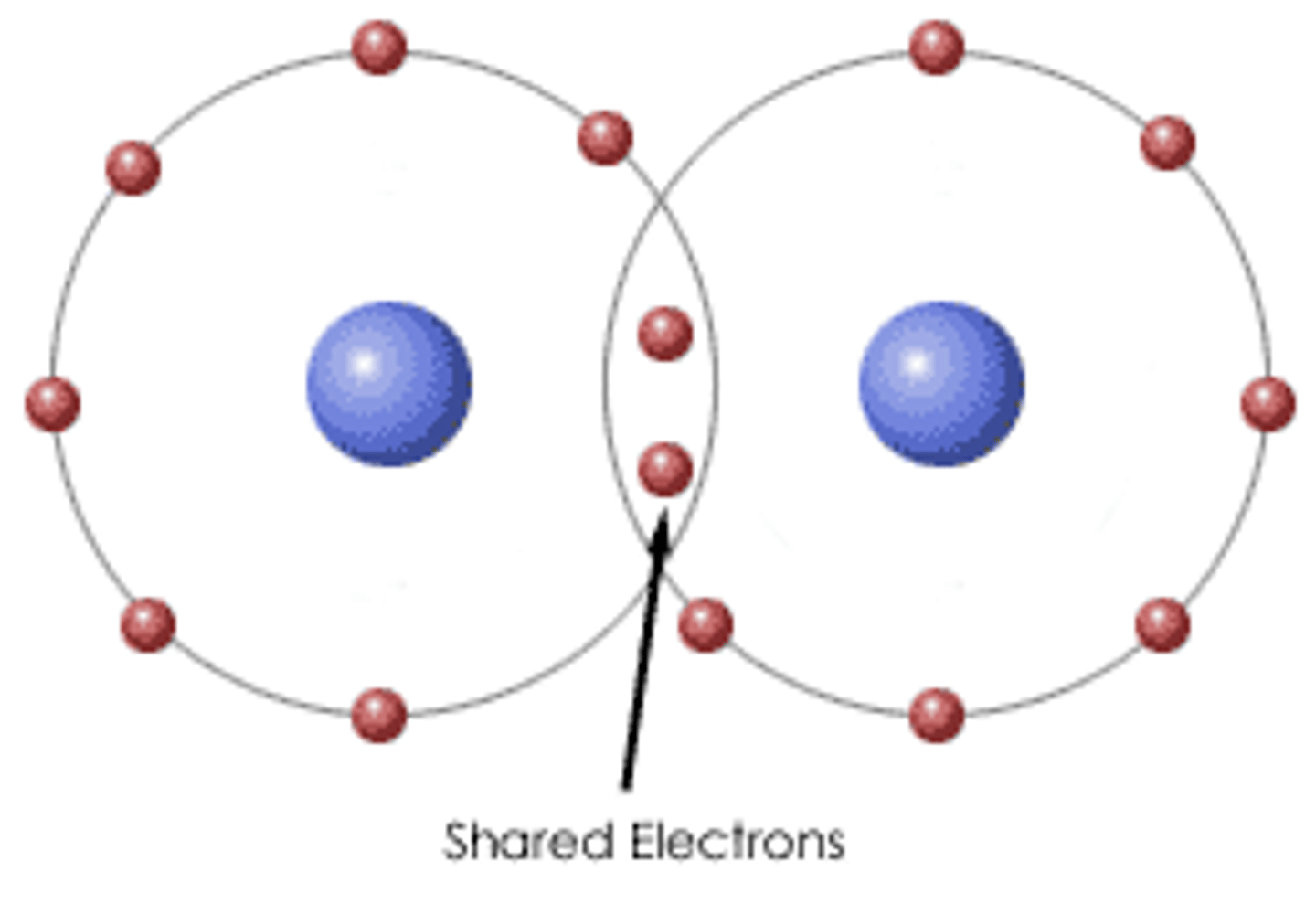
COVALENT BOND
A form of chemical bond in which electrons are shared by a pair of atoms.
CHEMICAL REACTION
the process by which one or more substances change to produce one or more different substances
ORGANIC MOLECULE
A molecule that contains carbon.
MACROMOLECULE
A very large molecule formed from smaller organic molecules joined by chemical bonds.
MONOMER
A small molecule that serve as the basic unit of macromolecules. Makes up polymers.
POLYMER
A chain of repeating monomers linked together.
DEHYDRATION SYNTHESIS
A chemical reaction in which monomers are linked together by removing one water molecule from each linked pair. (Builds monomers into polymers)
HYDROLYSIS
A chemical reaction in which a water molecule splits another molecule. (Breaks down polymers)
CARBOHYDRATE
An organic macromolecule composed of carbon, hydrogen, and oxygen atoms, usually in a ratio.
PROTEIN
A large organic molecule made up of amino acids, composed mainly of carbon, hydrogen, oxygen, nitrogen, and sometimes sulfur.
AMINO ACID
A carbon compound that is a building block of proteins.
ENZYME
A protein that enables or speeds chemical reactions in cells; a biochemical catalyst.
LIPID
An organic macromolecule that is composed of hydrogen, carbon, and oxygen and makes up fats, oils, and waxes.
NUCLEIC ACID
An organic macromolecule made up of carbon, hydrogen, oxygen, nitrogen, and phosphorus; stores and transmits information. Examples include DNA & RNA.
NUCLEOTIDE
A unit of a nucleic acid, made up of a nitrogenous base, a 5-carbon sugar, and a phosphate group.
DEOXYRIBONUCLEIC ACID (DNA)
The nucleic acid that transmits genetic information from parent to offspring and contains the instructions for cellular activity and the formation of proteins. DOUBLE STRANDED
RIBONUCLEIC ACID (RNA)
The nucleic acid that is responsible for copying the information for protein production from DNA and transporting it to ribosomes. SINGLE STRANDED
REACTANT
An atom, molecule, or compound that enters into a chemical reaction.
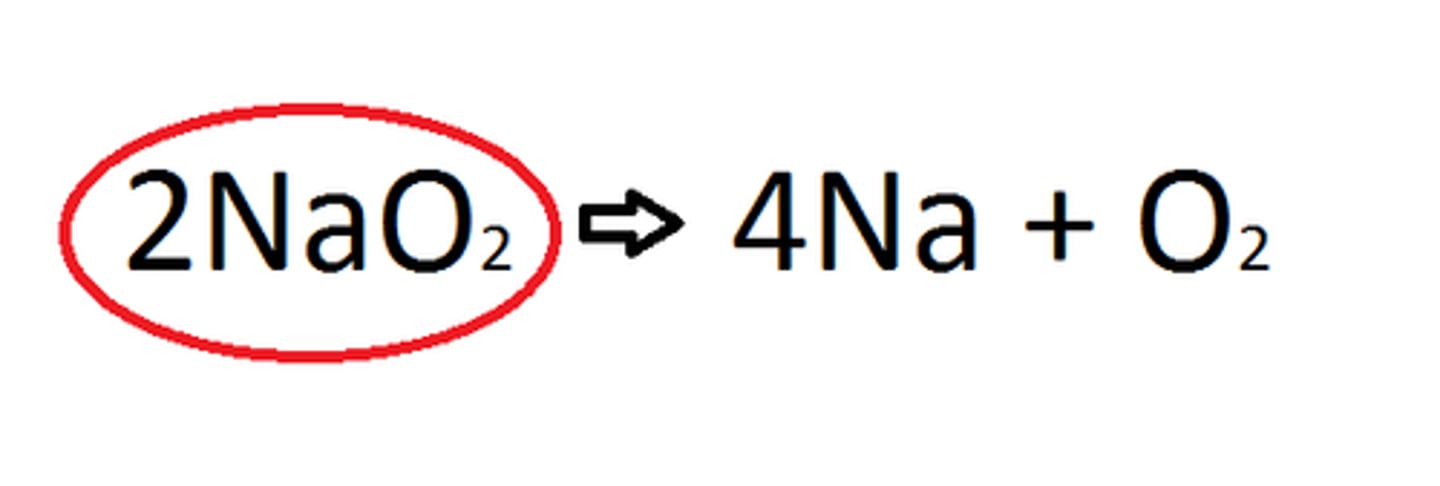
PRODUCT
An atom, molecule, or compound that results from a chemical reaction.
CATALYST
A substance that allows a chemical reaction to occur faster or under different conditions than otherwise possible, without itself being changed by the reaction.
SUBSTRATE
A reactant that is affected by an enzyme in an enzyme-catalyzed reaction.
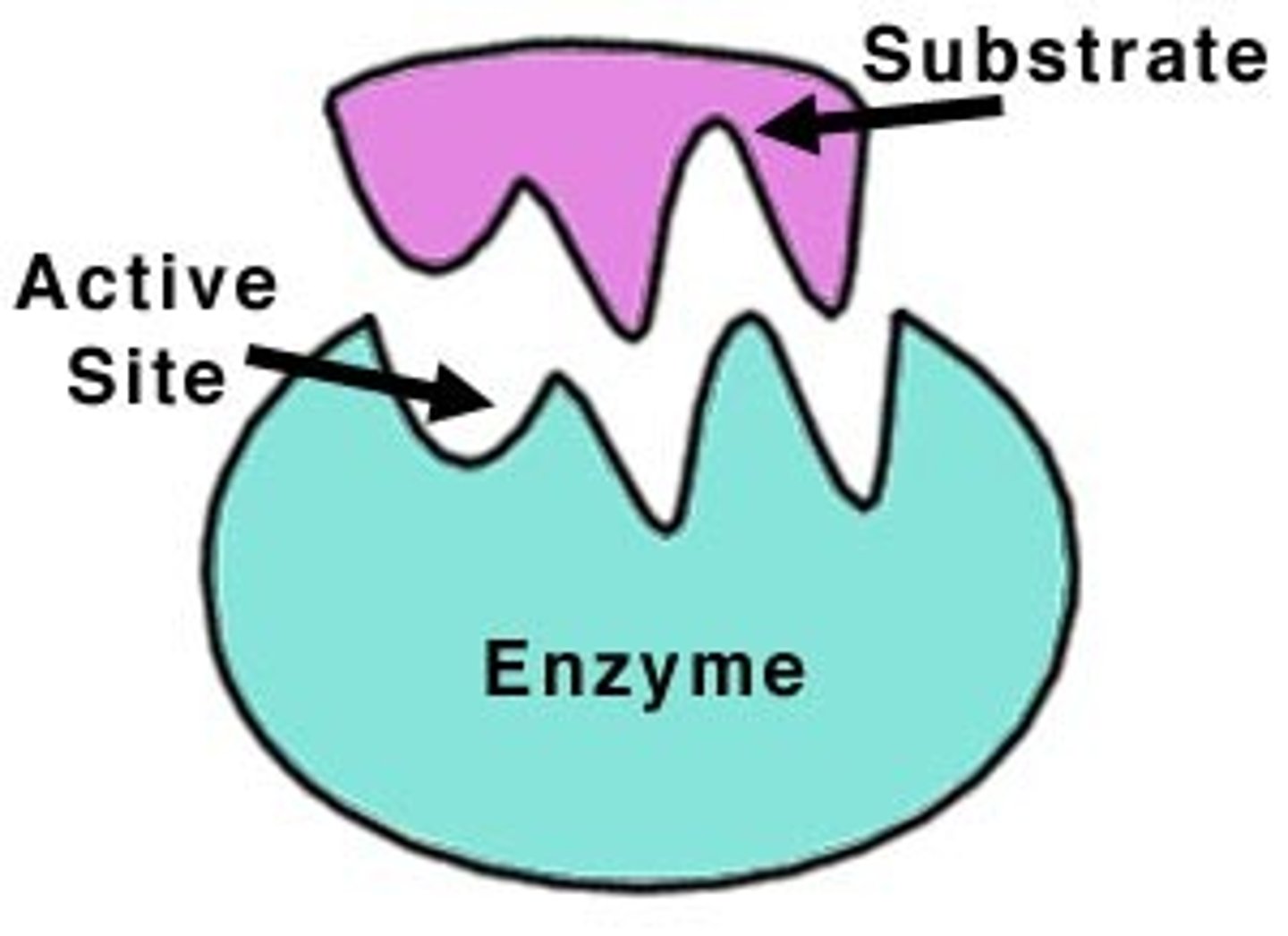
ACTIVE SITE
The part of an enzyme to which the substrates bind.
ACTIVATION ENERGY
The minimum amount of additional energy that molecules need in order to react.
pH
A measure of how acidic or basic a solution is, commonly using a number from 0 (acidic) to 14 (basic).
BUFFER
A substance that keeps pH levels in the right range for useful resources to occur.
CONCENTRATION
A measurement of how much solute exists within a certain volume of solvent
INFERENCE
An idea formed by applying evidence, observation, and knowledge to a situation.
DATA
Pieces of information collected during an investigation.
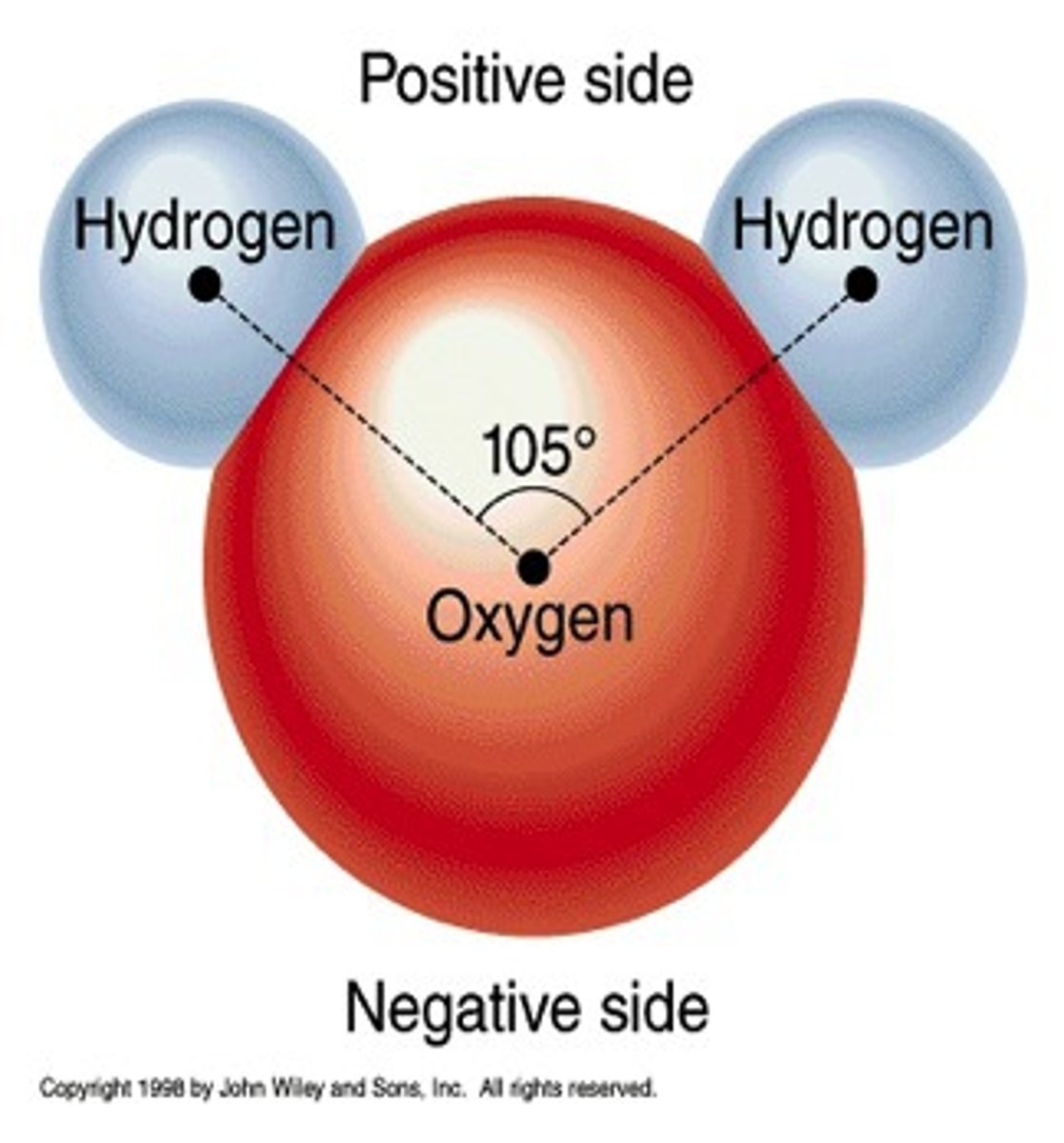
POLAR MOLECULE
A molecule that has opposite charges in different regions.
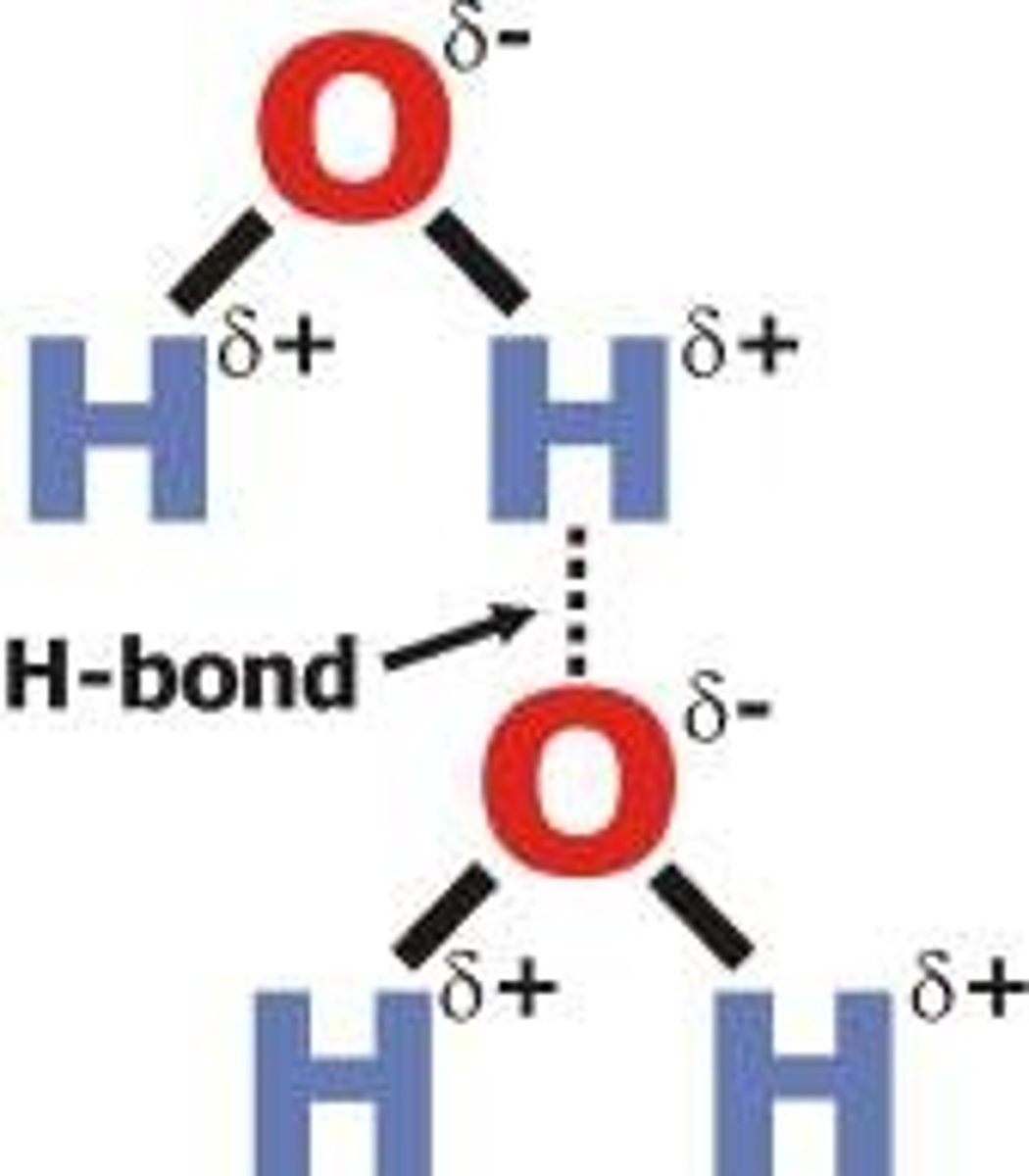
HYDROGEN BOND
An attractive force between certain polar molecules containing hydrogen.
BOILING POINT
The temperature at which a substance in its liquid state begins to form rising bubbles and change to a gas.
EVAPORATION
The change of a liquid to a gas at the surface of the liquid.
FREEZING POINT
The temperature at which a substance changes from a liquid to a solid.
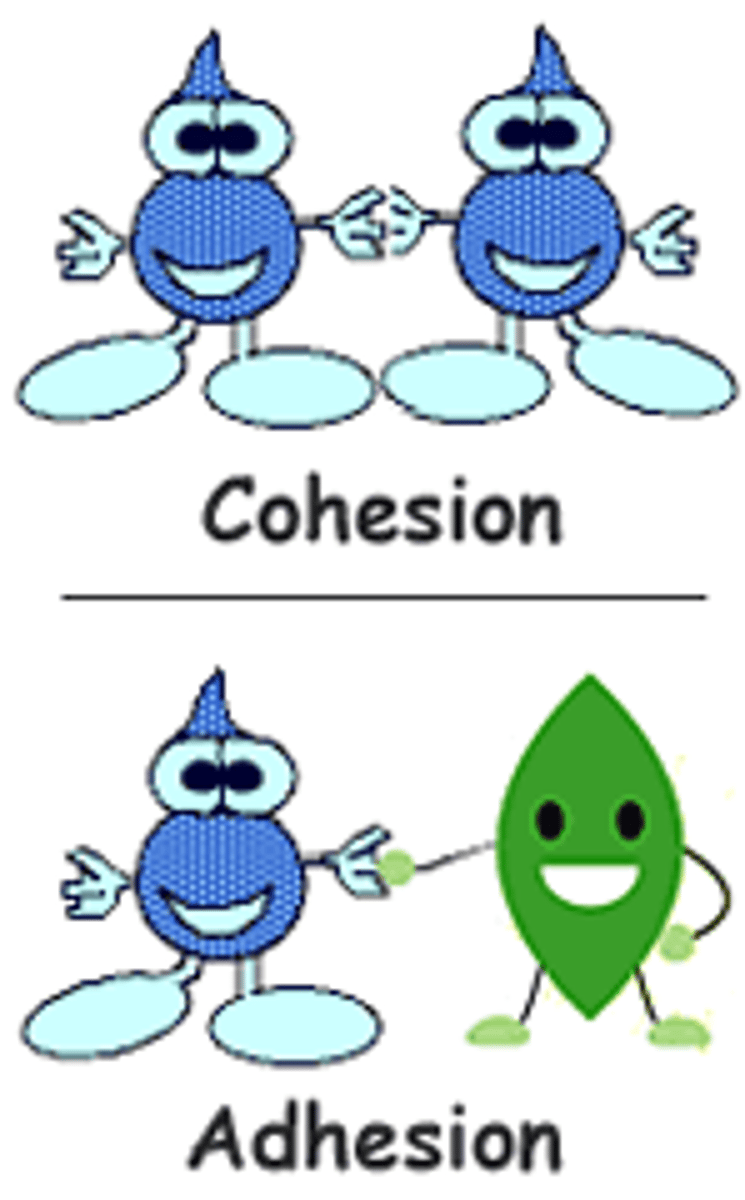
COHESION
The tendency of particles of a substance to stick together.
SURFACE TENSION
The ability of a liquid to resist a force at its boundary.
ADHESION
The tendency of particles of a substance to stick to other substances.
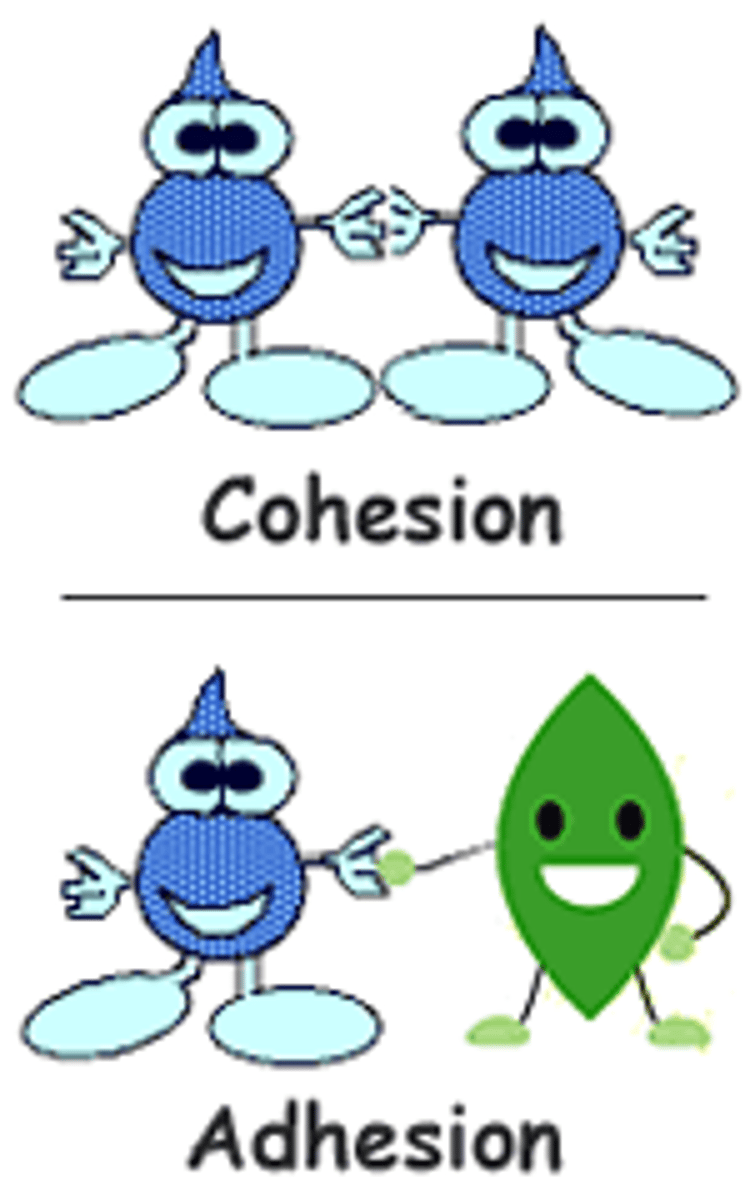
CAPILLARY ACTION
The movement of a liquid in contact with a solid against the force of gravity, due to forces of adhesion and cohesion.
SPECIFIC HEAT
The amount of energy required to raise the temperature of 1 gram of a substance by 1 degree celcius.
SOLVENT
A substance in which other substances dissolve to form a solution. Water is a great one!
HYPOTHESIS
A proposed, testable explanation for an observable aspect of the natural world; a possible answer to a testable scientific question.