CMMA Unit 1
 Call Kai
 Learn
Learn Practice Test
 Spaced Repetition
 Match
Match Flashcards
 Knowt Play
1/66

There's no tags or description
Looks like no tags are added yet.
Name | Mastery | Learn | Test | Matching | Spaced | Call with Kai | Chat |
|---|
No analytics yet
Send a link to your students to track their progress
67 Terms
Identify the roles, responsibilities, scope of practice, and titles of medical assistants.
Supporting a patient’s understanding of medications, managing clinic inventory, and, at times, administering medications are all important aspects of the medical assistant’s role
What do medical assistants ask when referring a patient to a medical specialist?
ask about understanding and concerns
identify focus of concern
fill in gaps of mis used knowledge
explain the referral including risk, benefits and examples of the type of care
convey urgency to improve their health condition
give all info for scheduling location and etc.
explain whether the patient should call or the office should call
tell patient to contact office if something arrives
What are MA’s roles?
The role of an MA is primarily to work alongside a provider in an outpatient or ambulatory health care setting, such as a medical office. The MA can be cross-trained to perform both administrative and clinical duties.
What are the administrative roles of an MA?
Administrative duties include greeting patients, scheduling, handling correspondence, and answering telephones. In addition, the MA is often responsible for obtaining medical histories from patients, providing patient education, performing laboratory tests, and preparing and administering immunizations.
What are the primary clinical responsibilities of an MA?
Collecting and processing lab specimens
Performing diagnostic testing (EKG, spirometry)
Preparing and cleaning examination rooms
Preparing the patient for evaluation and procedure
Measuring vital signs
Preparing medications and administering immunizations
What are the primary administrative responsibilities of an MA?
Scheduling patient appointments
Patient registration (demographics, payer information, compliance forms)
Updating and working in patient records
Sending claims to insurance
Collecting patient responsibility amounts (copays, coinsurance, deductible)
What is the scope of pratice of MAs?
The scope of practice for the MA does not include the practice of medicine. Medical assistants should not perform duties they have not been trained or certified to do. The state mainly determines the scope of practice of MAs.
What is the difference between DO and MDs?
Medical doctors are allopathic providers and the most widely recognized type of doctor. They diagnose illnesses, provide treatments, perform procedures such as surgical interventions, and write prescriptions.
Doctors of osteopathy complete requirements like those of MDs to graduate and practice medicine. In addition to modern medicine and surgical procedures, DOs use osteopathic manipulative therapy to treat patients.
What is unique about DO and MDs?
PA and RN have to all work under DO and MDs!
Licensure vs. Certification
A medical school graduate must be licensed before beginning the practice of medicine. Licensure is regulated by state statutes through the medical practice acts. Some states grant the license to practice medicine by reciprocity, which automatically recognizes that the requirements were met from another state.
Certification is generally optional, but some states require official education and training for a medical assistant to administer medication or perform phlebotomy procedures.
Whats the difference between inpatient vs outpatient?
Inpatient refers to things done when a patient is admitted. Outpatient refers to things done when a patient is not admitted. Ambulatory care refers to any care received in an outpatient facility. This includes many types of care settings.
What are the different types of clinics?
Primary care : Clinics are clinics for routine check ups, prevention counseling, chronic conditions, medication management, and other minor needs.
Specialty care : Clinics are clinics which involve specific types of care for complex or special diseases. They are seen routinely by doctors who specialize in the disease or body part.
What is home care?
Home health care is related to specific types of care for patients who cannot leave their home easily. Goals are set by the primary care provider and once the goals are met home health care is stopped. HHC is also only typically used in wake of an acute incident. Therapies such as occupational, speech and mobility therapies are used to support the patient to normal function.
What are Mobile Health Units?
Mobile health units are units which are sent to areas where healthcare is not readily accessible. Although mainly used for strokes, COVID-19 introduced vaccination health units and others.
What is Hospice
Hospice care is care meant for patients who have chronic illness and is primarily focused on comfort rather than recovery. Typically patients begin in hospice outpatient than inpatient.
What is Patient-Centered Medical Home?
PCMH is a team based care model designed by Primary care providers to provide patients the care they need. This can include wellness and prevention to acute and end of life care.
What is telehealth? And when is it appropriate?
Telehealth is health care via video call. It is appropriate for follow ups on medication, chronic condition discussion/review, patient education, minor skin concerns, and discussion of lab results. Any form of diagnostic testing or pain requires in person communication. MA’s can schedule telehealth although it may be more difficult and time consuming to do so.
What are patient portals?
Patient portals are electronic interfaces where patient health records are uploaded to. Sometimes MA’s will need to upload to these portals and help patients set up their portals.
What are value based plans?
Insurance coverage that changes the amount of reimbursement based on health outcomes of patients and the quality of the service they received.
What is managed care?
System used by private and public insurance plans that controls health care cost and improves preventive care for its patients by having contracts with providers and medical organizations.
What is capitation? (May be useless)
Patients are assigned a per-member, per-month payment based on age, race, sex, lifestyle, medical history, and benefit design. Payment rates are tied to expected usage regardless of how often the patient visits. Like bundled payment models, providers are incentivized to help patients avoid high-cost procedures and tests to maximize their compensation. Under partial- or blended-capitation models, only specific types or categories of services are paid based on capitation.
What are HMOs?
This plan contracts with a medical center or group of providers to provide preventive and acute care for the insured person. HMOs generally require referrals to specialists, as well as precertification and preauthorization for hospital admissions, outpatient procedures, and treatments.
What is a PPO?
These plans have more flexibility than HMO plans. An insured person does not need a PCP and can go directly to a specialist without referrals. Although patients can see providers in or out of their network, an in-network provider usually costs less.
What is a (POS) plan?
POS plans allow a great deal of flexibility for patients. They can self-refer to specialists and do not need an assigned PCP. Like PPO, the cost depends on whether the providers they see are within the plan's panel.
What are General practitioners?
General practitioners are general medical doctors who take care of patient’s acute or chronic needs. These general practioners consider psycho social biological factors when helping their patients.
What are family practioners?
Family practitioners offer help to all age ranges and they mainly focus on prevention.
What are internist?
Internist provide complete care for adults ranging from chronic to acute diseases. They also offer preventative care. They must know a lot about the body and focus mainly on adults and pediatric medicine.
What are ancillary services?
Ancillary services are added to increase patient convenience and revenue for hospital organizations. They include :
Urgent care : An alternative to emergency services for non life threatening acute injuries or diseases. They are more flexible, cost less and have shorter wait times.
Lab services : Provides diagnostics for bodily fluids.
Diagnostic imaging : Provides diagnostics using machines.
Occupational therapy : Assist patients with conditions that leave them mentally, emotionally, developmentary or physically unable to function.
Physical therapy : Helps with patients mobility.
What are complimentary therapies?
Acupuncture, involves pricking of the skin.
Chiropractic medicine, involves spinal rearrangement.
Energy fields? And dietary supplements.
What are analgesics for? What medications?
Relieve pain | Acetaminophen, hydrocodone, codeine |
What are Antacids/anti-ulcer for? What meds?
Antibiotics | Bacterial infections | Amoxicillin, ciprofloxacin, sulfamethoxazole |
What are anticholinergics?
Smooth muscle spasms | Ipratropium, dicyclomine, hyoscyamine |
What are anticoagulants?
Delay blood clotting | Warfarin, apixaban, heparin |
What are anticonvulsants?
Prevent or control seizures | Clonazepam, phenytoin, gabapentin |
What are antidepressants?
Relieve depression | Doxepin, fluoxetine, duloxetine, selegiline |
What are Antidiarrheals?
Reduce diarrhea | Bismuth subsalicylate, loperamide, dipehnoxylate/atropine |
What are Antiemetics?
Reduce nausea, vomiting | Metoclopramide, ondansetron |
What are Antifungals?
Fungal infections | Fluconazole, nystatin, miconazole |
Oral hypoglycemics
Reduce blood glucose | Metformin, glyburide, pioglitazone |
Diuretics
Eliminate excess fluid | Furosemide, hydrochlorothiazide, bumetanide |
Antivirals
Viral infections | Acyclovir, interferon, oseltamivir |
Anti-inflammatories
Reduce inflammation | Ibuprofen, celecoxib, naproxen |
Antipyretics
Reduce fever | Acetaminophen, ibuprofen, aspirin |
What are schedules?
Schedules are schedules of which drugs are prescribed to patients. Some drugs on certain schedules are never prescribed or used.
The federal Controlled Substances Act (CSA) created five schedules for controlled substances according to their potential for abuse and addiction. Only controlled substances are classified as scheduled.
Schedule III, IV, and V controlled substances may not be filled or refilled more than 6 months after the date on which the prescription was issued and may not be refilled more than five times in 6 months.
What is schedule 1?
Schedule I includes substances with a high potential for abuse and currently no approved medical use in the U.S. They are illegal, and providers may not prescribe them. These include heroin, mescaline, and lysergic acid diethylamide (LSD). Schedule I still includes cannabis (marijuana) even though it is legal for medical use with a prescription in many states.
What is schedule 2?
Schedule II includes substances that have a high potential for abuse, are considered dangerous, and can lead to psychological and physical dependence. Unlike schedule I drugs, schedule II drugs are approved for medical use. Schedule II drugs include morphine, methadone, oxycodone, hydromorphone, hydrocodone, fentanyl, and amphetamine. Schedule II prescriptions must be signed by hand, except as rules allow regarding distribution of electronic or printed prescriptions.
What are schedule 3 drugs?
Schedule III includes substances with moderate to low potential for physical and psychological dependence. These include ketamine, anabolic steroids, acetaminophen with codeine, and buprenorphine.
What are schedule 4 drugs?
Schedule IV includes substances that have a low potential for abuse and dependence. These include tramadol and benzodiazepines including diazepam, alprazolam, chlordiazepoxide, and clonazepam.
What are schedule 5 drugs?
Schedule V includes substances that contain limited quantities of some narcotics, usually for antidiarrheal, antitussive, and analgesic purposes. These include diphenoxylate with atropine, guaifenesin with codeine, and pregabalin.
What are the key specialist?
Gastroenterologist | Manages diseases of the GI tract (stomach, intestines, esophagus, liver, pancreas, colon, and rectum) | |
Gynecologist | Diagnoses and treats internal reproductive system and fertility disorders | |
Hematologist | Diagnoses and treats blood and blood-producing organs, patients who have anemia, leukemia, and lymphoma | |
Hepatologists | Studies and treats diseases related to the liver, biliary tree, gallbladder, and pancreas | |
Neonatologist | Provides care of newborns, specifically those who are ill or premature | |
Nephrologist | Manages diseases and disorders of the kidney and its associated structures | |
Obstetrician | Provides care of patients during and after pregnancy | |
Oncologist | Treats and provides care for patients who have cancer | |
Orthopedist | Treats injuries and diseases of the bones, joints, muscles, tendons, and ligaments | |
Neurologist | Treats diseases and disorders of the brain and nervous system | |
Otolaryngologist | Treats diseases and conditions of the ear, nose, and throat | |
Anesthesiologist | Manages pain or administers sedation medications during surgical procedures | |
Radiologist | Uses and interprets imaging to detect abnormalities in the body | |
Urologist | Manages disorders of the urinary tract |
What are Indications?
Indications are the problems for which a doctor prescribes a certain type of medication.
What are contraindications?
Problems or symptoms that indicate a medicine should not be taken.
Side effects vs adverse effects
Side effects are effects which may or may not be harmful to the patient and usually aren’t too serious.
Adverse effects are effects which are very harmful to patients and should be reported.
What is the difference between interactions and contraindications?
Another important consideration is how a medication interacts with food or other medications. For example, grape juice interacting with a multitude of medications resulting in toxicity or hypersensitivity, etc. Another example are anti depressants such as monoamine oxidase inhibitors (MAOIs) also may interact with other anti depressants and cause dangerous symptoms. Even more common are medications that interact with other medications.
what system is used to measure medications?
The metric system and standard system.
How do you calculate how much medication to take?

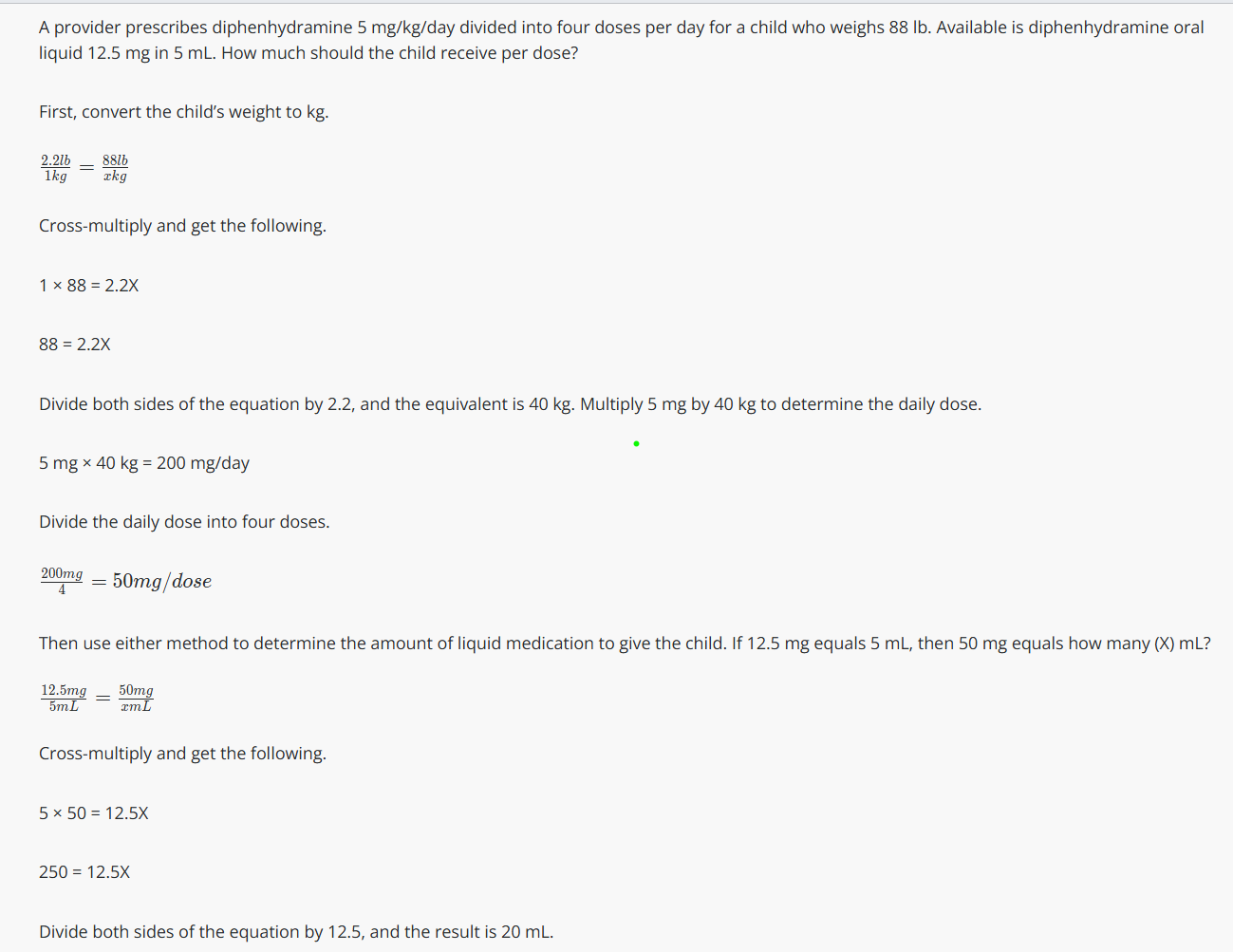
How do you calculate how much medication to take by weight?
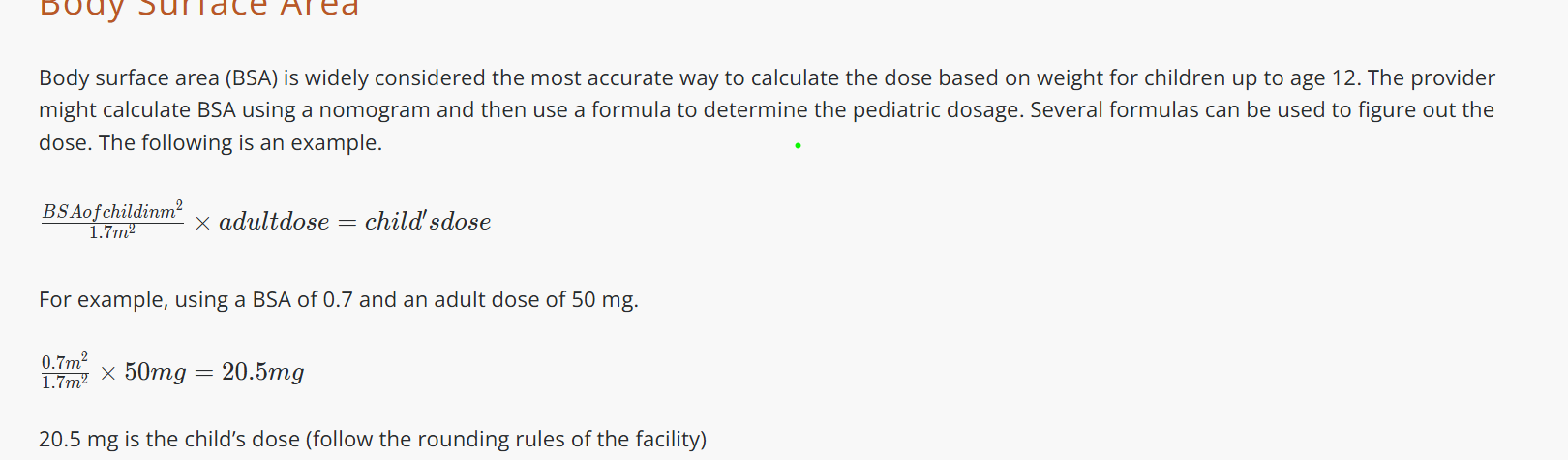
How do you calculate how much medication to take by BSA?
What are foams and suppositories used in (type of meds)?
Foams | Vaginal |
Suppositories | Vaginal, rectal |
What three checks are required before any amount of medication is prescribed?
Check the medication against the prescription when the medication is selected.
Check the medication and prescription when preparing the dose.
Recheck the medication before restocking the bottle.
What are strategies to avoid mislabeling or reading medications?
Do not use abbreviations for medication names.
Use “tall man” (mixed case) letters to emphasize parts of medication names that could cause confusion (cefoTEtan and cefOXitin).
Change the appearance of look-alike medication names to alert staff to their differences.
Create labels with indications or purposes for use, such as adding a “diuretic” label to hydrochlorothiazide packaging.
Store look-alike or sound-alike medications in separate areas in medication cabinets or rooms.
Alter computer selection screens to avoid having look-alike medication names appear consecutively.
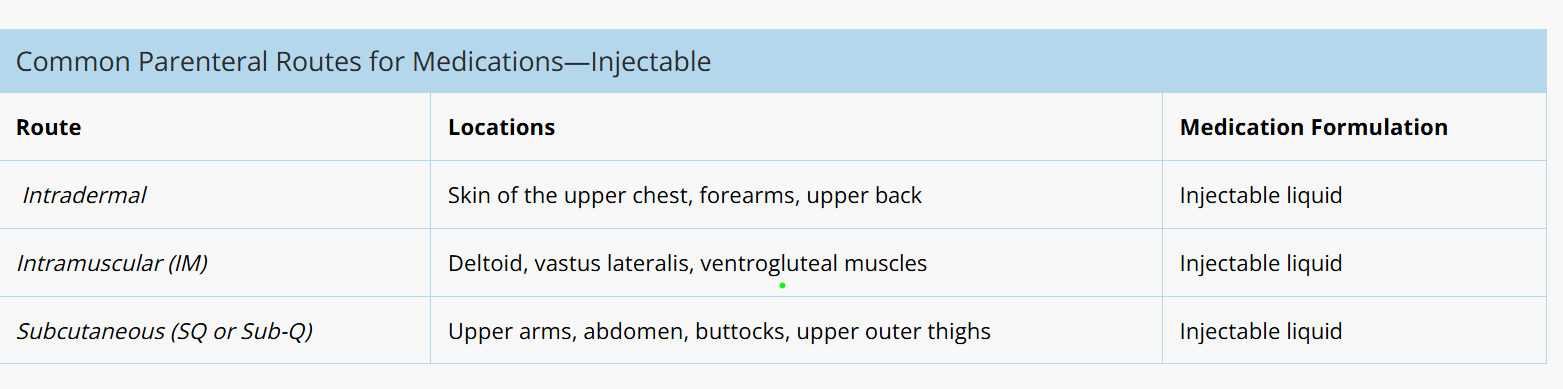
What are common routes of injection?
What are Pharmacokinetics?
The study how medications move through out the body.
The four actions of pharmacokinetics are absorption, distribution, metabolism, and excretion. Understanding these help with understanding medication’s onset activity, peak time of their effects and how long they’ll last.
What is absorption? IN relation to PHARMOK.
can occur through the stomach, which might take more time because of food and the need to break down the medication. Blood through injection or IV, which is the fastest because of circulation. And topical, which also gets in the blood. Fat solubility also matters because that means more medication will travel through cells faster.
What is Distribution? IN relation to PHARMOK.
is how the medication moves through the body. The primary way medication moves through the body is blood. The main barriers to distribution is the blood brain barrier. The placenta however is very easy to get through for some medications.
What is metabolism? IN relation to PHARMOK.
Involves the liver and kidney turning the medication chemicals into waste products. Infants and elderly people have slower metabolisms which affects medication dosage. Note that many other facts affect this.
What is Excretion? IN relation to PHARMOK.
Is the process of removal of metabolites from the body. The kidneys take care of this but so does bile, feces, breast milk, etc. A medication’s half life is how long it takes both this and metabolism to get rid of half the medication. If a patient does not receive the next dose before the half-life time, the therapeutic level of the medication will be too low (below the therapeutic range) to be effective.