Rad Bio 1
 Call Kai
 Learn
Learn Practice Test
 Spaced Repetition
 Match
Match Flashcards
 Knowt Play
1/61

Earn XP
Description and Tags
There are also note cards that go with this.
Name | Mastery | Learn | Test | Matching | Spaced | Call with Kai | Chat |
|---|
No analytics yet
Send a link to your students to track their progress
62 Terms
atom
basic unit of a chemical element & smallest unit of matter
element
more than one hundred substances that cannot be chemically interconverted or broken down into simpler substances and are primary constituents of matter.
each one is distinguished by its atomic number (number of protons)
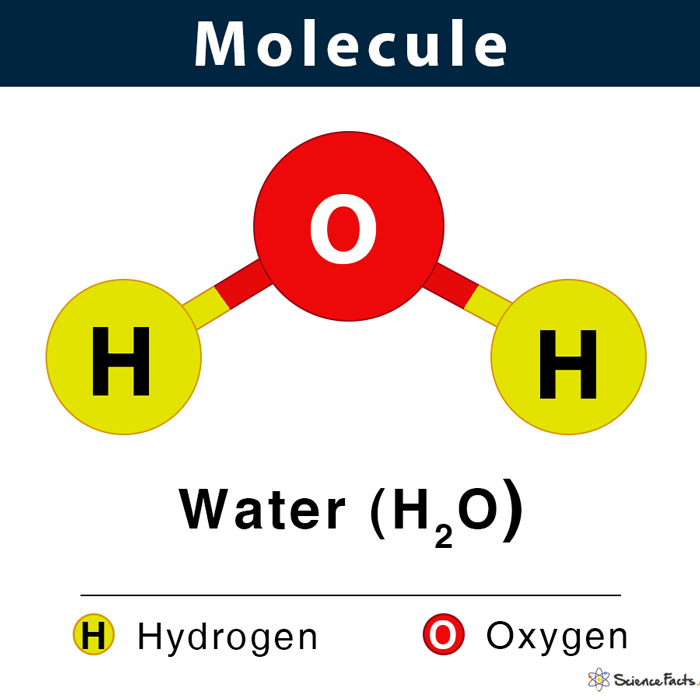
molecule
~ a group of atoms bonded together, representing the smallest fundamental unit of a chemical compound that can take part of a chemical reaction
~ water (70-80% of cell)
ion
an atom or molecule that has an electrical charge because it has either lost or gained electrons.
valence shell
on what shell of the atom is an electron gained or lost to become an ion?
cation
~ positively charged ion
~ formed when an atom loses electrons
anion
~ negatively chared ion
~ formed when an atom gains electrons
outside electrons
compton effect interacts mostly with the _______ of an atom.
radiation therapy
compton effect is more often seen in….
photoelectric effect
what photon interaction is important to diagnostic radiology to achieve the contrast between bones and other soft tissue
photoelectron
what is the ejected electron called after photoelectric effect has taken place (photon has come in and knocked inner shell electron from its tightly bound shell)
photoelectric effect
low energy photon collides with matter it can transfer ALL of its energy to tightly bound, inner shell electron, and eject it. the resultant vacancy can be filled by an electron from other shell that results in the generation of characteristic x-rays.
bigger
photoelectric effect depends on the atomic #Z and actual the ______ the number is, the greater the probability will be of it getting hit by an electron
Comptom effect
when high energy x -rays or y-rays (gamma rays) pass through matter, part of their kinetic energy is absorbed by outer electrons, which recoils and are ejected from the atom causing ionization of the matter. the incident photon scatter with the remainder of its energy (less energy) in the different path which is important to radiation therapy.
atoms
interaction site for radiation
molecules
~ source of free radicals after radiation
~ DNA (critical target for radiation damage)
DNA
what is the critical target for radiation damage?
cells
~ basic unit of life
~ site of radiation-induced injury, repair, or death
tissues
~ groups of cells working together
~ tissue radiosensitivity varies (bone marrow v.s. muscle)
organ
~ radiation effects on organs determine clinical outcomes (side effects, tumor control)
~ will have cells providing function and cells + tissues that provide structure
cells
where is the primary target of radiation?
nucleus
houses DNA; the primary target for radiation damage. Acts as a main overseer of all cytoplasmic events
nucleolus
involved in RNA synthesis
Mitochondria
energy producers, can generate reactive oxygen species (ROS) that amplify radiation effects
endoplasmic reticulum & golgi apparatus
important for protein synthesis/transport, sometimes indirectly affected by radiation
ribosomes
protein synthesis
lysosomes
can release enzymes leading to cell death if damaged
cell membrane
boundary, regulates entry/exit, damage alters permeability
~ forms outer surface of cell
~ composed of proteins, lipids, and carbohydrates
~ arranged in a polarized bi-layer that has an internal and external surface
~ has receptors on the membrane
cytoplasm
contains organelles and water (main medium for indirect radiation)
G1
~ restriction point
~ goes if growth factors, energy, and DNA intact
~ stops if DNA damage or lack of signals
S
~ RNA reads DNA & makes exact copy
synthesis
what does the “S” in S phase mean?
G2
~ Go if DNA replicated correctly
~ Looks at cell as whole
~ Stop if DNA damage or incomplete replication
G0
a cell not worried about replication
Mitosis
the process by which a single cell divides into two identical daughter cells
~ ensures accurate distribution of genetic material (DNA)
Prophase
chromosomes condense and spindle fibers form
Metaphase
chromosomes align at the cell’s equator and spindle fibers connect to the center (centromere) of each chromosome
Anaphase
sister chromatids separate and move to opposite poles
telophase
nuclear membranes reform; chromosomes decondense
cytokinesis
cytoplasm divides into two identical daughter cells
meiosis
cell division for reproduction; specialized type of cell division that produces gametes (sperm, egg)
~ reduces chromosome number by half (diploid into haploid)
~ produces four non-identical haploid cells
prophase 1
homologous chromosomes exchange DNA → genetic variation
Meiosis 1
homologous chromosomes separate (reduction division)
Meiosis 2
sister chromatids separate (similar to mitosis)
cell cycle
refers to the entire sequence of events a cell goes through to grow, replicate DNA, and divide
~ includes interphase → G1,S,G2 (growth +DNA replication) and M phase → mitosis and cytokinesis
~ = interphase + mitosis (or meiosis)
G1 phase
~ cell grows, produces proteins and organelles
~ prepares for DNA replication
~ decides whether the cell will divide
S phase
~ DNA is replicated (chromosomes copied)
~ critical for passing identical genetic material to daughter cells
G2 phase
~ cell prepares for mitosis
~ checks for DNA replication errors and repairs damage
~ ensures readiness for division
differentiation
the process by which unspecialized cells (often stem) become specialized in structure and function
~ involves changes in gene expression, structure, and function
specialization
result or state of differentiation; refers to the specific role or function a cell has once it’s differentiated
right angles
electric and magnetic waves move in planes that are _______ to each other
wavelength
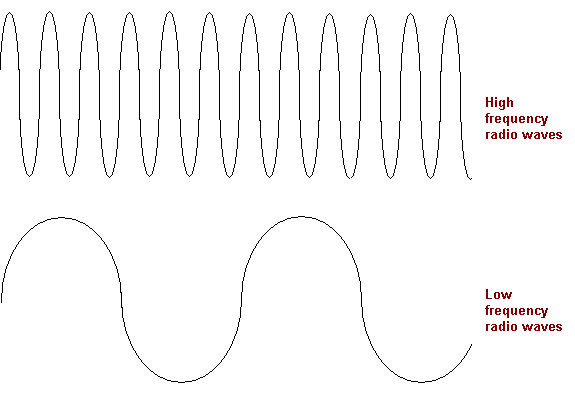
distance between peaks of each wave

frequency
number of waves passing a fixed point per second
x-rays
~ produced outside the nucleus
~ widely used in radiation therapy imagine and treatment
gamma rays (y-rays)
~ emitted from the nucleus of radioactive isotopes (ex: Cobalt-60)
~ Historically used in teletherapy units, still used in brachytherapy and nuclear medicine
indirect ionization
interact with matter to produce fast-moving electrons, which then cause ionization
proton
~ +1 charge
~ large mass is 2000x and e-
~ Mass 1 amu
~ need more complex equipment to accelerate (cyclotron)
~ used for cancer treatment
~ part of natural background
neutron
~ neutral charge
~ emitted as a by-product if heavy radioactive atom is split
~ it has very high penetrating power and has very low ionization power
~ neutrons have a mass of 1 amu
~ inside nucleus, neutrons appear to be stable, the average life of an isolate neutron is about 1000 seconds
~ indirectly ionizing, significant biological impact
alpha particle
~ nuclei of helium atoms
~ 2 protons and 2 neutrons
~ + 2 charge
~ emitted during decay of heavy naturally occurring radionuclides (uranium and radium)
~ natural background radiation = radon gas
~ low penetration and high LET
beta
~ small
~ can be accelerated close to speed of light using linac/betatron
~ used for cancer therapy
~ electron/positron
~ moderate penetration
carbon ions
~ heavy charged particles
~ carbon, neon, argon, iron
~ positive charge
~ can be accelerated but more complex than protons
CT scans
medical radiation is now the #1 source of man-made radiation exposure in the U.S. with _______ leading the dose contribution.