BMS2042 - W1: Introduction to Genetic Inheritence
 Call Kai
 Learn
Learn Practice Test
 Spaced Repetition
 Match
Match Flashcards
 Knowt Play
1/8

There's no tags or description
Looks like no tags are added yet.
Name | Mastery | Learn | Test | Matching | Spaced | Call with Kai | Chat |
|---|
No analytics yet
Send a link to your students to track their progress
9 Terms
Define the following: Trait, phenotype, genotype, locus
Trait: Characteristic of an organism (e.g. seed colour)
phenotype: Appearance of an organism (e.g. Yellow seeds)
Genotype: Genetic composition of an organism (e.g. YY)
Locus: specific place on a chromosome occupied by a gene
What is monogenic (Mendelian) vs polygenic?
Monogenic: involves one gene
Polygenic: involves many genes
What is the principle of uniformity?
The traits do not blend. The phenotype is either one or the other. (Not the case for all genes)
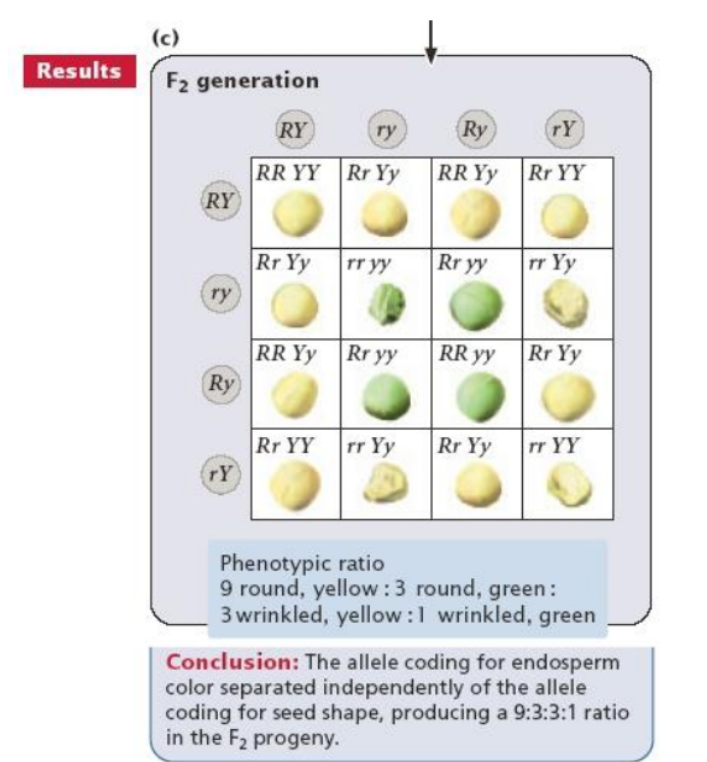
What is the principle of independent assortment?
Alleles coding for different traits separate independently.
relates to two or more genes
random independent assortment between alleles
Define proband and consultand
Proband: an affected individual who first brings a family's genetic condition to the attention of a healthcare professional
Consultand: an individual seeking genetic evaluation
They may be unaffected (e.g. sibling, child)
Commonly, the consultand is also the proband but not always
Autosomal recessive disorders:
relates to a gene on one of the 22 autosomes
phenotype only expressed in homozygous
typically loss of function variants
increased incidents in parental consanguinity
tends to skip generations
what is consanguinity?
People having the child are related
(inbred, incest - idk if these are bad terms or not)
increases chance that mating couple carries same disease causing variant
Dominant inheritance:
Affected person usually has at least 1 affected parent
can affect either sex
one affected one unaffected parent = child has 50% chance of being affected
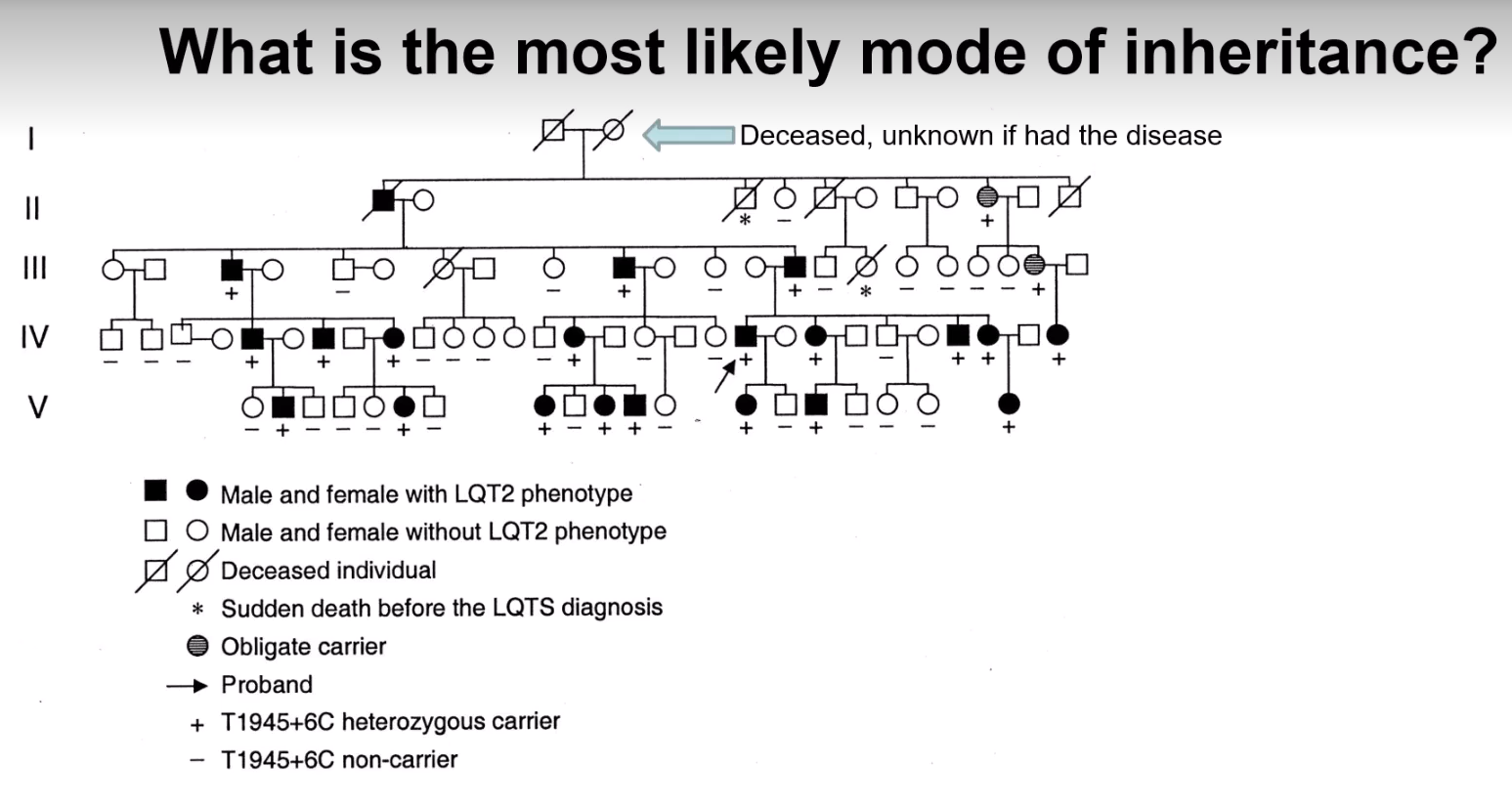
Autosomal Dominant
Mostly doesn’t skip generations
similar number of affected males and females
male passes to both males and females
affected children born to affected parents