Gross Anatomy Unit 1 Osteology
 Call Kai
 Learn
Learn Practice Test
 Spaced Repetition
 Match
Match Flashcards
 Knowt Play
1/70

There's no tags or description
Looks like no tags are added yet.
Name | Mastery | Learn | Test | Matching | Spaced | Call with Kai | Chat |
|---|
No analytics yet
Send a link to your students to track their progress
71 Terms
What are the five regions of typical vertebrae
Cervical, thoracic, lumbar, sacral, coccygeal
How many vertebrae are their total in the 5 regions?
There are typically 33 vertebrae in total across the five regions: 7 cervical, 12 thoracic, 5 lumbar, 5 sacral (fused), and 4 coccygeal (fused).
what is the largest vertebrae
L5
what vertebrae looks like a triceritops
lumbar
What vertebrae looks like a sloth
cervical
What vertebrae looks like a giraffe
thoracic
What is the functions of the vertebral colum
maintain posture, protect spinal cord and nerves, provide support for movement of head trunk and limbs.
What does the vertebral body do?
major weight bearing element of the spine
cancellous bone surrounded by compact bone
what do vertebral end plates do?
cover the superior and inferior surfaces (hyaline cartilage)
That lies in between the vertebral bodies
intervertebral discs
what is the vertebral arch
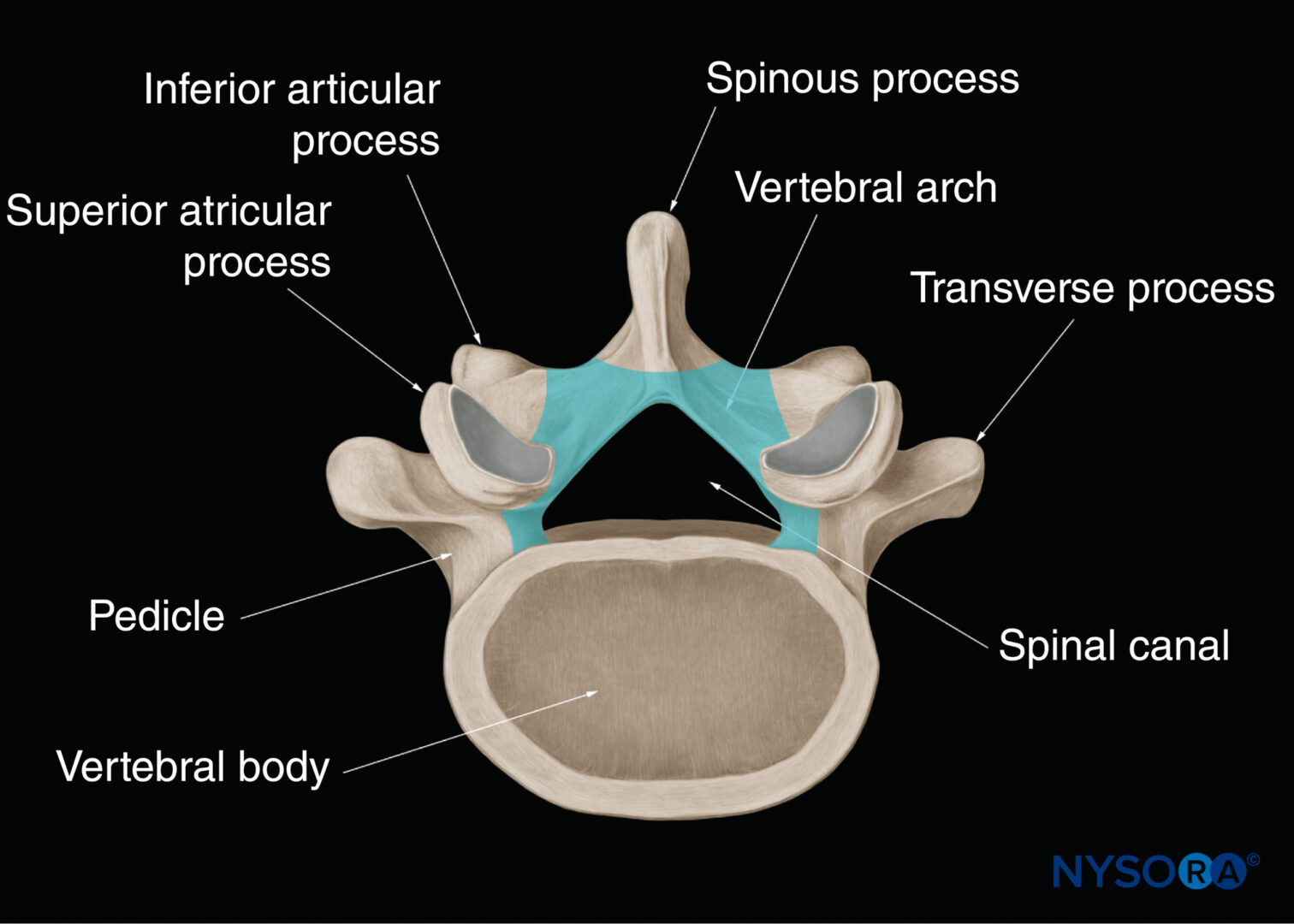
What are the two components of the vertebral arch?
pedicles and laminae
What are pedicles
Bony pillars that anchor the vertebral arch to the posterior vertebral body
What are the laminae
Flat portions of bone that extend from each pedicle
vertebral foramen
Opening surrounded by the vertebral arch and posterior surface of the body
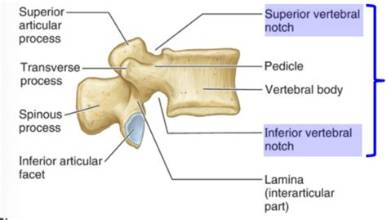
What are the two vertebral notches
superior and inferior notch
vertebral notches
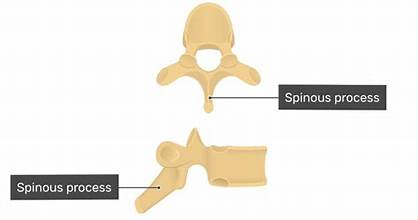
Spinous process of the vertebrae
What are the kinds of inferior articular processes
inferior and superior
What joint do the articular processes make?
zygaphophyseal joint
role of articular processes
limit motion/guide motion
Third process of the vertebrae
transverse processes
transverse process
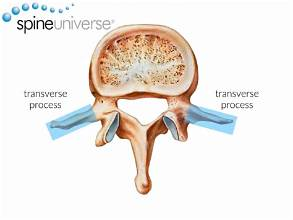
Transverse process function
attachment site/ site articulation
What are the clavicles?
Bones that suspend the upper limb on the axial skeleton
Functions of the clavicle
protect underlying nerves, arteries, and veins
increase shoulder girdle range of motion
Provide surface area for muscle attachement
Transfer force from upper limbs to axial skeleton
What is special about the orientation of the clavicles?
long axis is oriented about 20-30 degrees posterior to the frontal plane
two ends of the clavicle
sternal and acromial
sternal end
articulares with clavicular facet of the manubrium
what joint does the sternal end make with the sternum
sternoclavicular joint
acromial end
flattened expansion with small oval facet at the tip
what joint does the acromial end create with the acromion process
acromioclavicular joint
which side of the clavicle is bony?
The inferior side
costal tuberosity?
attachment for the costoclavicular ligament
groove on the clavicle?
subclavius muscle attachment
Where is the costal tuberosity and groove located
medial third of the clavicle
What is on the lateral third of the clavicle
Conoid tubercle and trapezoid line
conoid tubercle
attachment for conoid ligament, also the medial component of the coracoclavicular ligament
costal tuberosity
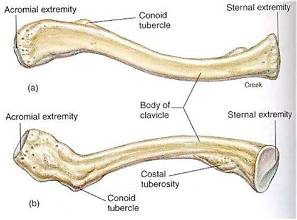
conoid tubercle
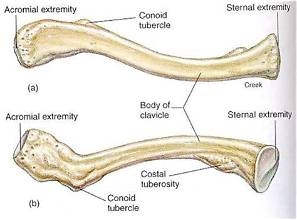
trapezoid line
attachment for trapezoid ligament, lateral component of the coracoclavicular ligament
Trapezoid line
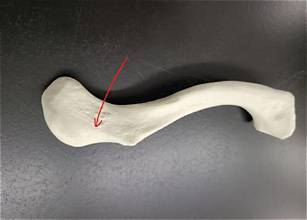
What kind of bone is the scapula?
flat triangular bone
Where is the scapula located
posterolateral chest wall
What does the scapula help do?
facilitate movement in the upper limb
plane of the scapula
oriented 30-35 degrees relative to the frontal plane
what direct does the scapula direct the glenoid fossa in?
anterolateral
another word for scapular plane abduction?
scaption
Angles of the scapula
inferior and and superior
superior angle of the scapula
about at T2 vertebral level
covered by the trapezius and levator scapulae muscle
inferior angle
about T8 vertebral level
Easily palpated and visible as it moves during arm elevation
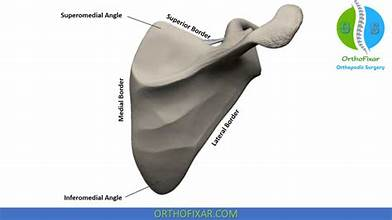
borders of the scapula
Medial (vertebral) body , Lateral (axillary) border, superior border
pic border of scapula
Components of the spine of the scapula
Root, spine, acromion process, supraspinous fossa, infraspinous fossa
what level is the root of the scapula at
T3 spinous process
Func of acromion process
Provides proximal attachment for middle deltoid, covers the head of the humerus, has clavicular facet on medial border.
supraspinous fossa
almost entirely filled by supraspinatus muscel
levator scapulae attached along medial border from root to superior angle
infraspinous fossa
almost entirely filled by infraspinatus muscle
Rhiomboid major and minor attach alon the medial border from root to inferior angle
teres major and minor attached along lateral border
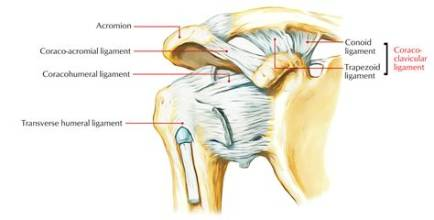
coracoid process
site for 3 ligaments and 3 muscles
3 muscles that attach at the coracoid process
biceps brachii, pectoralis minor muscle,coracobrachialis
3 ligaments that attach at the coracoid process
coracoacromial ligament, coracohumeral ligament, coracoclavicular ligament
what does the coracoacromial logament form
coracoacromial arch
coraco humeral ligament does what
reinforces superior joint capsule
coracoclavicular ligament is made of what tow ligaments
trapezoid(lateral) ligament and conoid(medial) ligament
ligaments of the coracoid process
suprascapular notch
Indentation just medial to the base of the coracoid process
what does the suprascapular notch do?
Converts a notch into a foramen, passage way for suprascapular nerve.
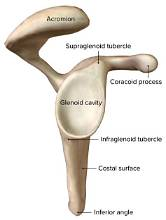
Glenoid fossa
articular surface for the head of the humerus. faces slightly upward, forward and laterally
supraglenoid tubercle
attachment for long head of biceps brachii
infraglenoid tubercle
attachemnt for long head of triceps brachii
glenoid fossa and tubercles pic