IPFC 1 - Pharmacology: Contraception, Fertility, Pregnancy, and Menopause
 Call Kai
 Learn
Learn Practice Test
 Spaced Repetition
 Match
Match Flashcards
 Knowt Play
1/66

There's no tags or description
Looks like no tags are added yet.
Name | Mastery | Learn | Test | Matching | Spaced | Call with Kai | Chat |
|---|
No analytics yet
Send a link to your students to track their progress
67 Terms
____________ is precursor hormone for steroid hormones
Cholesterol
Naturally occurring estrogens include:
• Estradiol (most potent)
• Estrone
• Estriol
How are estrogens formed
Estrogens are formed from androstenedione or testosterone through aromatization of the A ring by aromatase enzymes
Pre-menopause, the main source of estrogen is from ___________
ovary (estradiol)
Post-menopause, the main source of estrogen is from _________________
adipose tissue (estrone)
Progesterone is synthesized in which places and from what?
In the ovaries, testes, adrenal, and placenta from cholesterol
Also synthesized from the corpeus luteum in the ovary in the second half of the menstrual cycle
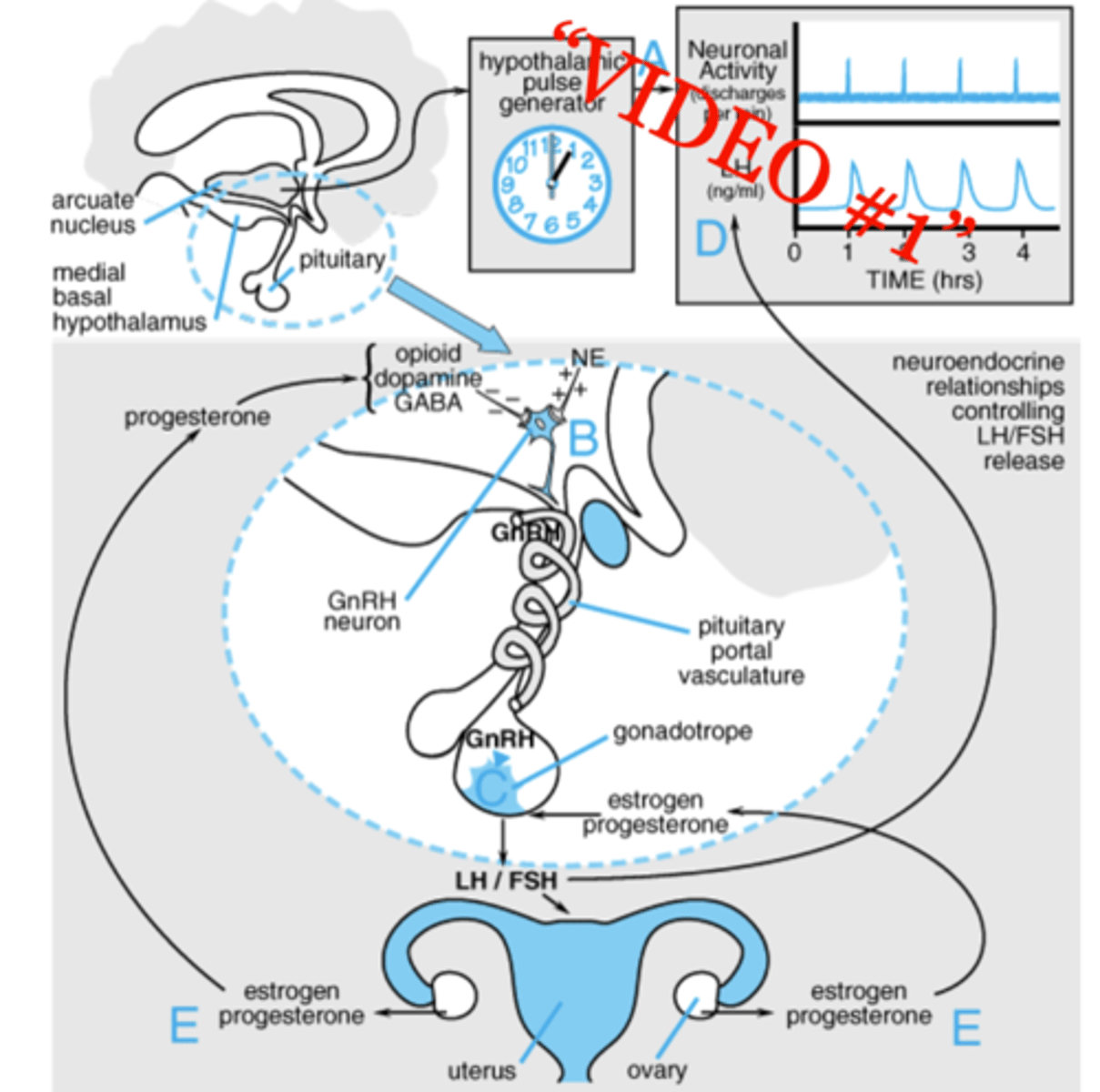
The ovarian production of estrogen and progesterone is controlled by a classic neuroendocrine cascade:
• Hypothalamus
• Pituitary
• Ovaries
The frequency of GnRH pulses controls...
Relative amount of synthesis of LH and FSH changes over the phases of the menstrual cycle
LH and FSH role
affect maturation of follicles and ovarian production of estrogen/ progesterone
Estrogen and progesterone provide ____________ feedback to the pituitary and hypothalamus
negative
FSH role, and what inhibits it?
At the beginning of the cycle, FSH promotes follicular enlargement
Estrogen inhibits further FSH release (so the other follicles regress)
Estrogen promotes ...
endometrial growth
Estrogen receptors are __________ receptors
nuclear
There are 2 "classic" estrogen receptors:
ERα and ERβ
ER α is most abundant in:
• the female reproductive tract
• mammary gland
• hypothalamus
• endothelial cells
• vascular smooth muscle
ER β is present in:
• Ovaries (and in lower levels in lung, brain, bones, vasculature)
• Each receptor subtype has different effects on transcription of several target genes
Explain what happens when an estrogen receptor agonist binds to a receptor
1. An estrogen receptor agonist (e.g. estradiol) enters the cell and binds to ER
2. ER dissociates from heat shock proteins and forms a homodimer (ERα/ERα or ERβ/ER β) or a heterodimer (ERα/ERβ)
3. The ER dimer binds to estrogen response elements (EREs) on target genes
- This leads to recruitment of co-activators, facilitating gene transcription
In addition to the "classic" estrogen receptors, estrogen can also bind ____________
GPCRs
What happens when estrogen binds to a GPCR versus a classic estrogen receptor?
These receptors facilitate faster, non- genomic, estrogenic activity
There are 2 progesterone receptors, both derived from the same gene:
- PR-A and PR-B
- Both have identical ligand-binding domain
PR-A is missing the first 165 N-terminal amino acids found in PR-B
PR-B
- stimulation of progesterone activity by recruitment of co- activators
PR-A
- inhibits actions of PR-B by recruitment of co-repressors; can also inhibit transcriptional activity of other steroid receptors
Explain what happens when a progesterone receptor agonist binds to a receptor
• PR is present in the nucleus in an inactive state, bound to heat shock proteins
• Progesterone receptor agonists enter the nucleus and bind to PR, leading to dissociation of heat shock proteins
• Receptor dimers form and bind to protesterone response elements (PREs) on target genes
• Homodimers (PR-A/PR-A or PR-B/PR-B) or heterodimers (PR-A/PR-B)
Physiological effects of Estrogen
Estrogen:
• Causes endometrial proliferation
• Increases amount and water content in cervical mucous
• Increases differentiation of osteoblasts, reduces activity of osteoclasts in bone
• Changes in lipid levels
• Changes blood clotting factor levels
Physiological effects of Progesterone
• Causes endometrial differentiation, inhibition of proliferation caused by estrogen
• Opposes the effects of estrogen on cervical mucus
• Involved in the “maintenance” of pregnancy
• Decline in progesterone at the end of the menstrual cycle results in onset of menstruation
Other ovarian hormones
Androgens
• Small amounts of testosterone and other androgens are produced
Inhibin
• Alpha-Beta dimer peptide that inhibits FSH production and release
• Also has local effects in the ovaries
Activin
• Beta-Beta dimer version that promotes FSH release
Relaxin
• Found throughout the female reproductive system, released in
response to LH, has multiple effects
Progesterone receptor antagonists (AKA antiprogestins) which bind and block progesterone receptors
E.g. mifepristone (AKA RU-486) is used to terminate pregnancy
E.g. ulipristal acetate is a partial agonist
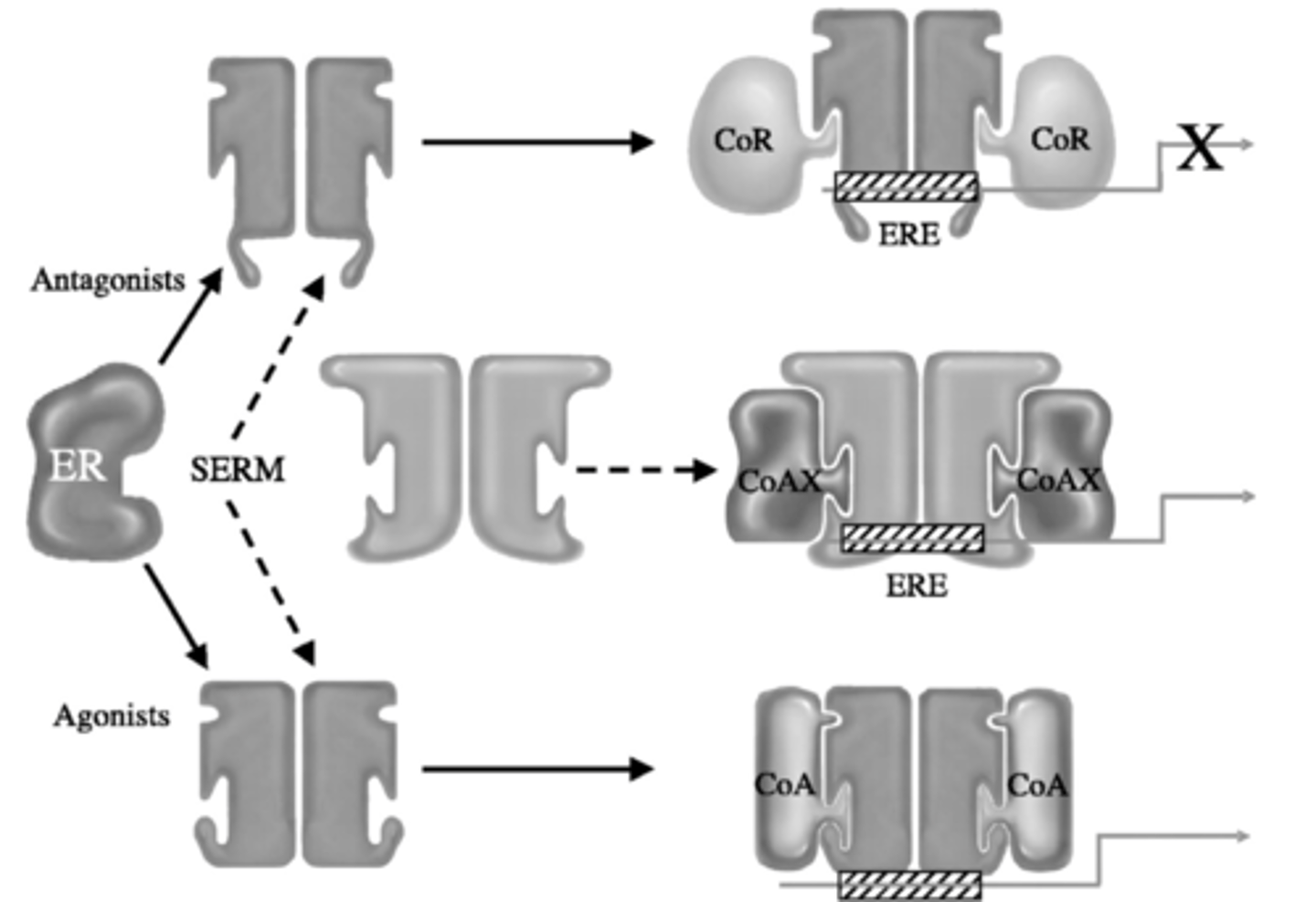
How can ligand binding to estrogen receptors lead to activation vs. inhibition?
ER receptor agonists (relatively) recruit co-activators:
• Proteins with histone acetyltransferase activity are recruited
• Histone acetylation relaxes chromatin structure, allowing transcription machinery to initiate transcription
ER receptor antagonists (relatively) recruit co-repressors:
• Proteins with histone deacetylase activity are recruited
• Histone deacetylation leads to tight chromatin structure, such that transcription machinery cannot bind and initiate transcription
Selective estrogen response modulators (SERMs)
Ligands at estrogen receptors which:
• Alter the conformation of ERα and/or ERβ
• Conformational change is distinct from that caused by either agonists or antagonists
• May lead to interaction with different co- activators and/or co-repressors in a cell- specific and promoter-specific manner
SERMs activity
SERMs are usually partially estrogenic in some tissues, and either have no activity or anti- estrogenic activity in other tissues
ex. tamoxifen (breast cancer), raloxifene (osteoporosis)
Aromatase inhibitors MOA
block production of estrogens, used for the treatment of breast cancer
• Do not have positive effect on bone (like tamoxifen)
• Often used as an add-on/second line to tamoxifen treatment
ex. exemestane, anastrozole
Plant-derived compounds (phytoestrogens):
• Isoflavones (e.g. found in soy, red clover), coumestan derivatives (e.g. found in alfalfa), lignans (found in flax)
• Soy isoflavones are used to manage menopausal symptoms
Hormonal Contraceptive types
• Estrogen/progestin combinations
• Progestin-only formulations
• Oral, vaginal, IM, transdermal, implantation formulations
Combined oral contraceptives Typically consists of:
• an estrogen (e.g. ethinyl estradiol)
• a progestin (usually a 17α-alkyl nortestosterone derivative)
• Some contain progestins with less androgenic activity (e.g. desogestrel) or that antagonizes the mineralocorticoid receptor (e.g. drospirenone)
Combined oral contraceptives primary mechanisms of action:
• Estrogen inhibits FSH secretion via negative feedback early in the cycle to inhibit follicular development
• Progestins inhibit LH secretion, including the LH surge that stimulates ovulation
Combined oral contraceptives secondary mechanisms of action:
- Progestins alter cervical mucous and impede sperm passage
- Estrogens and progestins alter the endometrium and decrease the likelihood of implantation of fertilized eggs
Effects of oral contraceptives include:
• Cervical hypertrophy
• Breast enlargement
• Increased hormone-binding protein levels including corticosteroid-binding protein
and thyroxine-binding globulin
• Increase in plasma renin activity
• Increased pigmentation of the skin
• Decreased acne
• Decreased hair growth
• Increases in clotting and other factors including VII, VIII, IX, X, and antithrombinIII
• Reduced bile flow and secretion
• Increased triglyceride levels
• Increased basal insulin levels, reduced GI carbohydrate absorption
• Increased cardiac output, blood pressure, heart rate
Progestin only contraceptives
Inhibition of progesterone-dependent aspects of ovulation:
• Changes in cervical mucous to inhibit fertilization
• Changes in endometrial lining to inhibit implantation
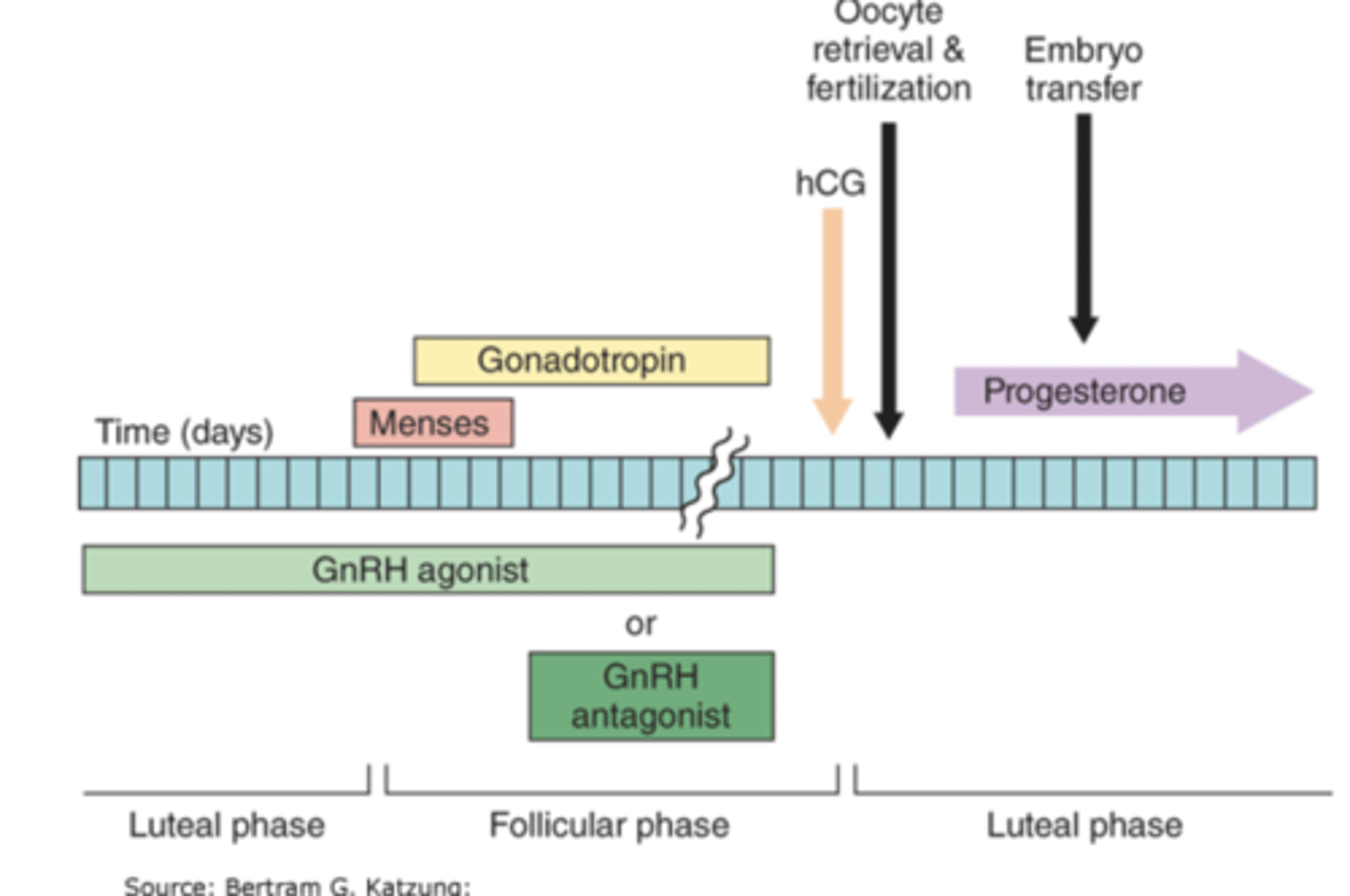
Fertility agents
Clomiphene Citrate
Gonadotropins
Clomiphene Citrate
• Estrogen receptor antagonist used to treat anovulation
• Inhibits the negative feedback of estrogen at the hypothalamus and pituitary
• Results in an increase in FSH levels that enhances follicular maturation
• Typically used between day 2 and day 5
Clomiphene Citrate down side for fertility
• Clomiphene increases ovulation but inhibits estrogen’s action at the endometrium, which makes it non-optimal for fertilization and implantation
• Can cause ovarian hyperstimulation syndrome, multifetal gestations
Gonadotropins
• Gonadotropins are used to induce ovulation
• Daily injections of FSH, given until 1-2 mature follicles have developed
• This is followed by injection of hCG to complete follicular maturation and induce ovulation
• Fertilization is then attempted (by intercourse or intrauterine insemination)
Clomiphene Citrate ADRs
• ovarian cysts
• hot flashes
• headache
• blurred vision
Folic Acid deficiency may be caused from...
• Chronic malnutrition
• Chronic alcohol use
• Vitamin C deficiency
• Chronic liver disease
• Malabsorption due to any cause
Folic acid biological roles
• Folic acid is required for purine biosynthesis, thymidine biosynthesis, DNA methylation, and other metabolic reactions
• Folic acid acts as a cofactor for 1-carbon transfer reactions (for carbons 2 and 8 of the purine ring, 5-position of uracil/thymidine)
• In the purine reaction, folic acid is regenerated, however in the thymidine reaction it is not
What drug classes can be used for N/V in pregnancy?
Antihistamines
Antipsychotics
Pro-motility Agents
5-HT3 Receptor Antagonists
Cannabinoids
Antihistamines for pregnancy induced n/v
• Doxylamine is an H1 antagonist with anti-emetic effects in general and specifically against vestibular disturbance-induced nausea, others: dimenhydrinate, diphenhydramine
• A first-generation anti-histamine also causes sedation and may be used as a sleep-aid in pregnancy
• Pyridoxine, vitamin B6 may also have anti-nausea effects and is combined with doxylamine (Diclectin)
• Promethazine is a phenothiazine antihistamine used as an anti- emetic to treat morning sickness
Antipsychotics for pregnancy induced n/v
Mechanism of action is D2 receptor antagonism at the CTZ
• Some possess antihistaminic and anticholinergic activities
• Chlorpromazine was the first antipsychotic widely used
• Used to treat morning sickness and during labour to promote analgesia and amnesia
• adverse effects (e.g. extra-pyramidal syndrome) have been observed in newborns born to mothers using chronically
• Use during near-term may be problematic
Promotility Agents for pregnancy induced n/v
E.g. metoclopramide, domperidone
Mechanism of action:
• Dopamine D2 receptor blockade
• In the GI tract, activation of dopamine receptors inhibits cholinergic smooth muscle stimulation
• Blocking this effect is responsible for prokinetic mechanism
• This leads to enhanced gastric emptying, with no effect on intestinal motility
• These drugs also block dopamine D2 receptors centrally, in the chemoreceptor trigger zone/area postrema
Promotility Agents ADRs
Increased prolactin levels (galactorrhea, gynecomastia, impotence, menstrual disturbances)
Metoclopramide only: Extrapyramidal effects (restlessness, dystonia, Parkinsonian symptoms), drowsniness, insomnia, anxiety, agitation, tardive dyskinesias
Domperidone: Does not cross blood brain barrier, therefore rare neuropsychiatric and extrapyramidal side effects
5-HT3 Receptor Antagonists MOA for pregnancy N/V
• Primary mechanism is blockade of 5-HT3 receptors on vagal and spinal afferent nerves from the GI tract
• Secondary mechanism is blockade of central 5-HT3 receptors in the vomiting center and chemoreceptor
trigger zone
• No effect on dopamine or muscarinic receptors or on gastric motility
Cannabinoids
Cannabinoids have demonstrated efficacy to treat chemotherapy-induced nausea and vomiting ONLY
• There is no evidence for efficacy in treating other types of nausea and vomiting, including in pregnancy
Emergency Contraception
• Levonorgestrel is progestin used in combination oral contraceptives, used in implant birth control, or used alone at high doses in emergency contraceptives
• Primary mechanisms of action are to prevent ovulation and to impede sperm by increasing cervical mucous viscosity
• Yuzpe Regimens include both progestins and estrogens, typically ethinyl estradiol and levonorgestrel
• In addition to the progestin effects, the estrogen may also interfere with implantation of a fertilized egg
Mifepristone
• AKA RU-486
• Binds to and blocks progesterone (and glucocorticoid) receptors
• Causes thinning of the endometrium, cervical ripening and dilation
• Used in combination with PGE1 or misoprostol, which induces uterine smooth muscle contraction
Prostaglandins
• Misoprostol is a synthetic, PGE1-like prostaglandin
• PGE1, PGE2, PGF2alpha, and misoprostol all cause cervical ripening and dilation
Misoprostol vs. PGE2: actions are very similar, misoprostol binds prostaglandin receptors EP2, EP3, and EP4, PGE2 binds those too, plus EP1
• Prostaglandins have multiple uses including inducing labour, medical abortion, or as a treatment post-miscarriage
Oxytocin
• Oxytocin is naturally-produced (posterior pituitary) to increase uterine contractions during labour
• Exogenous oxytocin also promotes uterine contraction when administered parenterally
• ADRs include uterine hyper-contraction (too frequent, intense) and water conservation (antidiuretic) that can increase the risk of hyponatermia during labour
Methotrexate
Used + surgery for ectopic pregnancy
• MOA: inhibits rapidly dividing tissue
• Methotrexate disrupts folic acid production by inhibiting dihydrofolate reductase, resulting in nucleic acid deficiencies and a slowing of cell division
• In a typical pregnancy, methotrexate would be CI as it would have similar effects on an embryo or fetus developing in the uterus
Tocolytics
A tocolytic drug delays or prevents labour
Several classes of drugs have tocolytic effects, they typically cause uterine smooth muscle relaxation or prevent pro-contraction signaling
Menopause
Ovaries "retire" and the symptoms of estrogen deficiency manifest:
• Hot flashes
• Night sweats
• Vaginal dryness, etc.
• Reduced bone mineral density/ osteoporosis
Menopause symptoms can be reversed by ...
supplementing with exogenous hormones, consisting of estrogen with our without progesterone
Estrogens used for menopause include:
Conjugated estrogens (oral, vaginal, injectable)
17 β –estradiol (transdermal, vaginal)
Progesterone may be included to reduce endometrial hyperplasia caused by estrogen, and thereby to offset the risk of endometrial cancer
Why or why not use SERMs in menopause
SERMs can increase bone mineral density and affect other symptoms
However, they may worsen vasomotor symptoms and increase the risk of thromboembolism
- May be combined with estrogen
Tibolone menopause
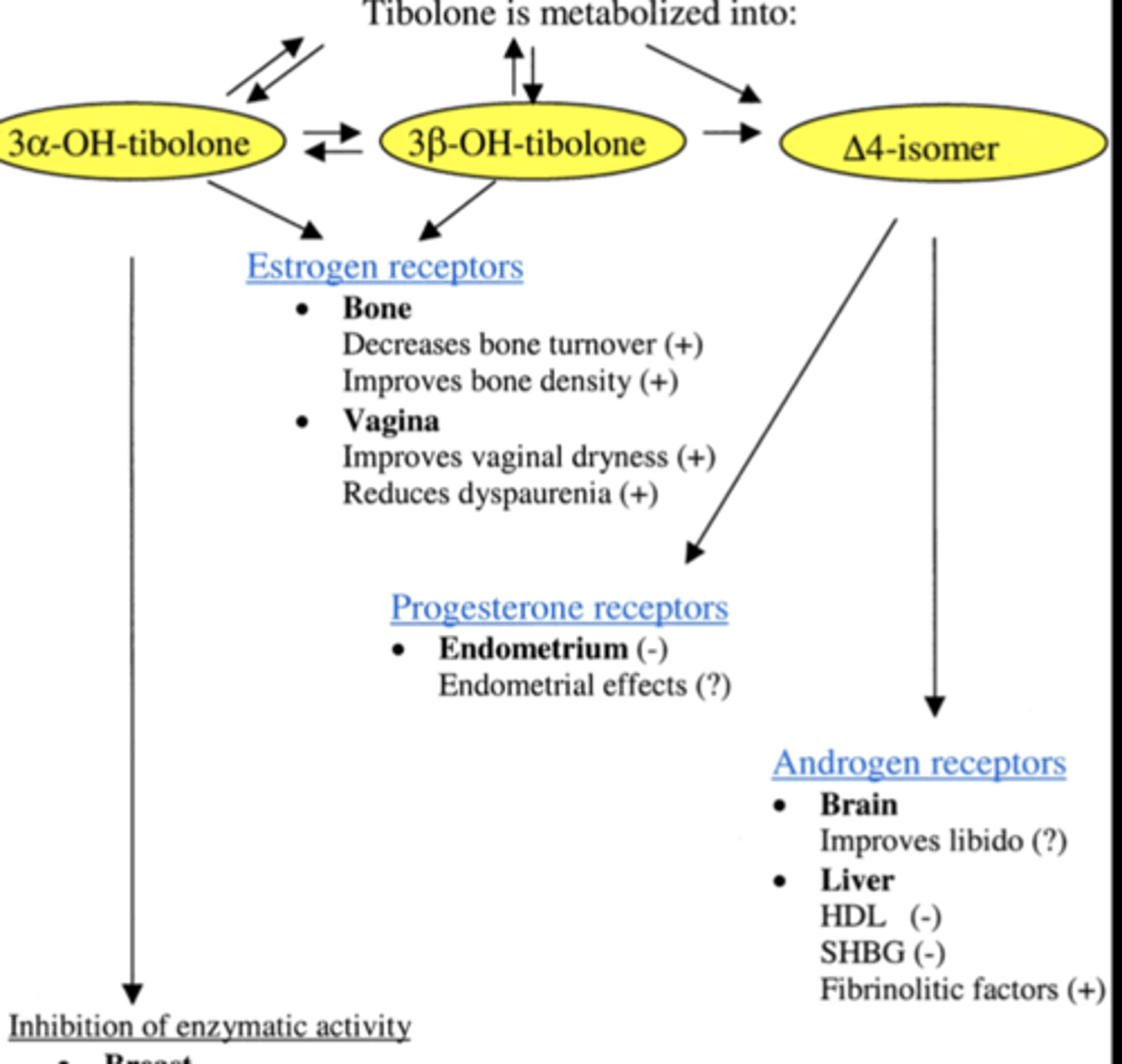
Tibolone is synthetic progestin that acts as a STEAR (selective tissue estrogenic activity regulator)
• Prodrug that is metabolized to three active metabolites: 2 have estrogenic activity and the third has activity at androgen and progesterone receptors
Tibolone MOA (3alpha-hydroxy metabolite)
The 3alpha-hydroxy metabolite is formed in breast, bone, and vaginal tissue
• Acts as an inhibitor of estrogen formation in breast tissue
• Binds estrogen receptors in bone to have beneficial effects on bone density
• Binds estrogen receptors in vaginal tissue to reduce dryness and pain associated with intercourse
Tibolone MOA (3beta-hydroxy metabolite)
The 3beta-hydroxy metabolite is formed in bone and vaginal tissue but not in breast tissue
• Binds estrogen receptors in bone to have beneficial effects on bone density
• Binds estrogen receptors in vaginal tissue to reduce dryness and pain associated with intercourse
Tibolone MOA (delta4 isomer metabolite)
progestin and androgenic activities
• Some progestin activity, may cause vaginal bleeding as an adverse effect
• Androgenic activity is linked to improved libido and sexual function, increased LDL cholesterol
Ospemifene
• Non-steroidal estrogenic SERM
• Antagonist activity in breast and the
endometrium, agonist activity in bone
• More significant vaginal compared to other SERMS
• Increases intermediate and superficial vaginal cells