LU 5.1 Burns
 Call Kai
 Learn
Learn Practice Test
 Spaced Repetition
 Match
Match Flashcards
 Knowt Play
1/19

There's no tags or description
Looks like no tags are added yet.
Name | Mastery | Learn | Test | Matching | Spaced | Call with Kai | Chat |
|---|
No analytics yet
Send a link to your students to track their progress
20 Terms
What are the factors that impact burn wound healing? / What are things to focus on when treating burn wounds
Metabolic responses to injury
Nutritional status
Presence of systemic infection
Other systemic insults such as pain and stress
What are the types of burn?
Burns : caused by radiation, dry heat, electric current, extreme cold, friction
Scalds : thermal injuries caused by wet heat or vapor
Inhalation burns : inhaling hot soot
What are the functions of skin?
As a barrier
Stress response
Fluid balance
Electrolytes balance
Temperature control
Neurosensory
What are the function of epidermis ?
neurosensory
fluid balance
protection from toxins
protection from bacterial injury
what are the functions of dermis?
protection from trauma
fluid balance
thermoregulation
what are the pathophysiology of burns?
skin loss
airway & lung injuries
inflammatory & circulatory changes
other changes : kidneys & stomach
Explain about the pathophysiology of burns in terms of skin loss / effects of skin loss
skin loss lead to loss of protective barrier
this can cause i) entry of microorganisms ii) loss of fluids iii) loss of heat iv) immunosuppresion
explain about the pathophysiology of burns in terms of injuries to the airway & lungs / effects of injuries to the airway & lungs
injuries to the airway and lungs are caused by fire or blast
this can lead to inhalational injury, carbon monoxide poisoning and mechanical block on rib movement
explain about the pathophysiology of burns in terms of inflammatory & circulatory changes / effects to the inflammatory & circulatory changes
the changes are loss of skin and increase vessels permeability
loss of skin cause direct fluid loss while the increased vessels permeability cause third space fluid collection and non burn tissue oedema
both of this will lead to circulatory shock
Explain the physiology of burn wounds according to Jackson’s burn model
zone of coagulation: zone of severe damage
zone of stasis : comprises less damaged tissue
zone of hyperemia : tissue with intense vasodilation and increased blood flow
What are the complications of burn induced skin barrier loss?
increased heat loss
increased infection risk
loss of skin elasticity
loss of sensation
increased evaporative water loss
wound dehydration
What are the effects of burn injuries to the renal system?
it can cause metabolic acidosis due to poor renal perfusion
it can cause acute kidney injury (AKI) . AKI can occur due to hypovolemia (due to severe burns that cause fluid loss due to plasma leakage)
cause oliguria as a response to hypovolemia and reduced renal perfusion
if untreated, can lead to complete renal failure
what are the burn severity assessments?
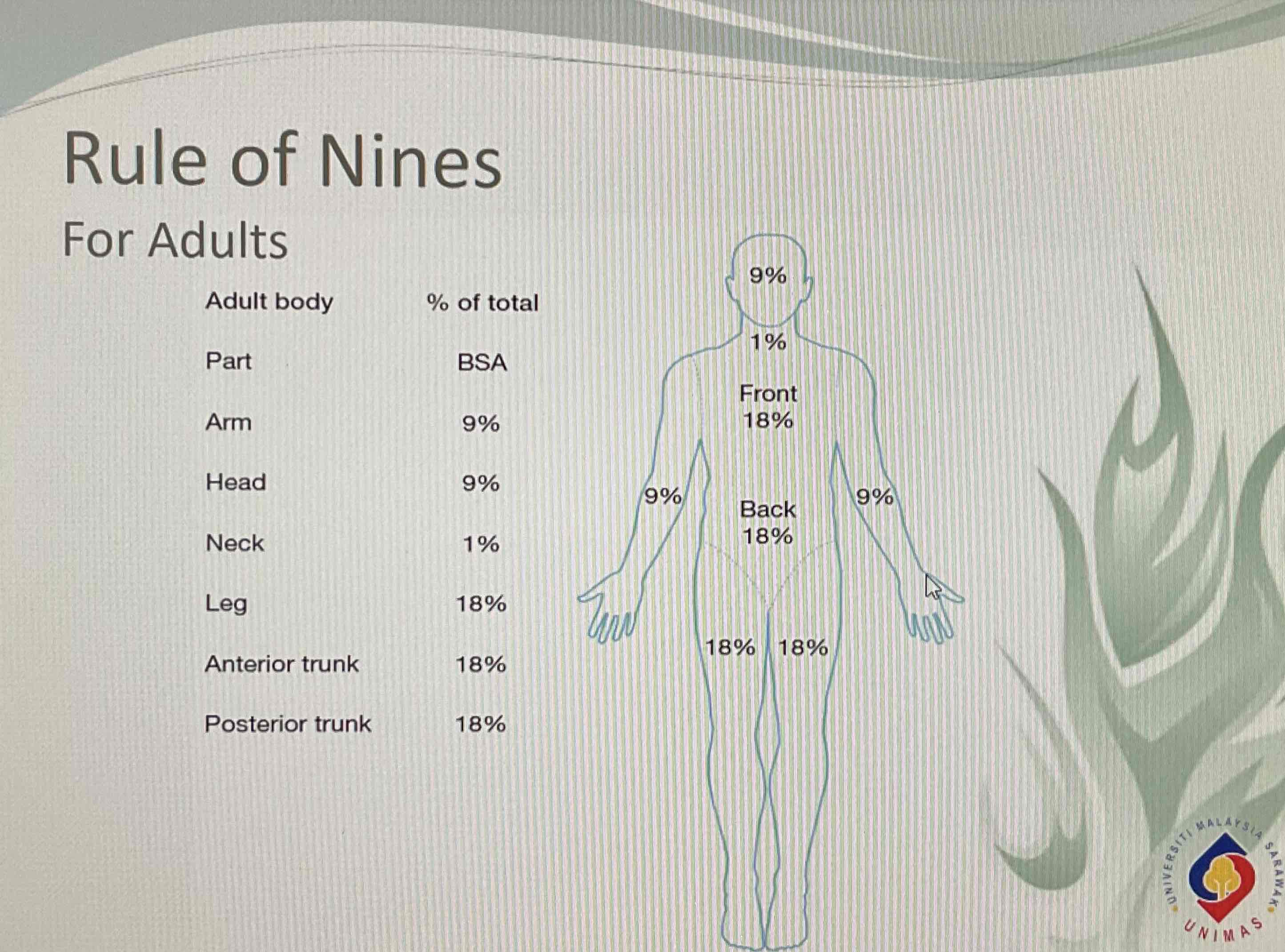
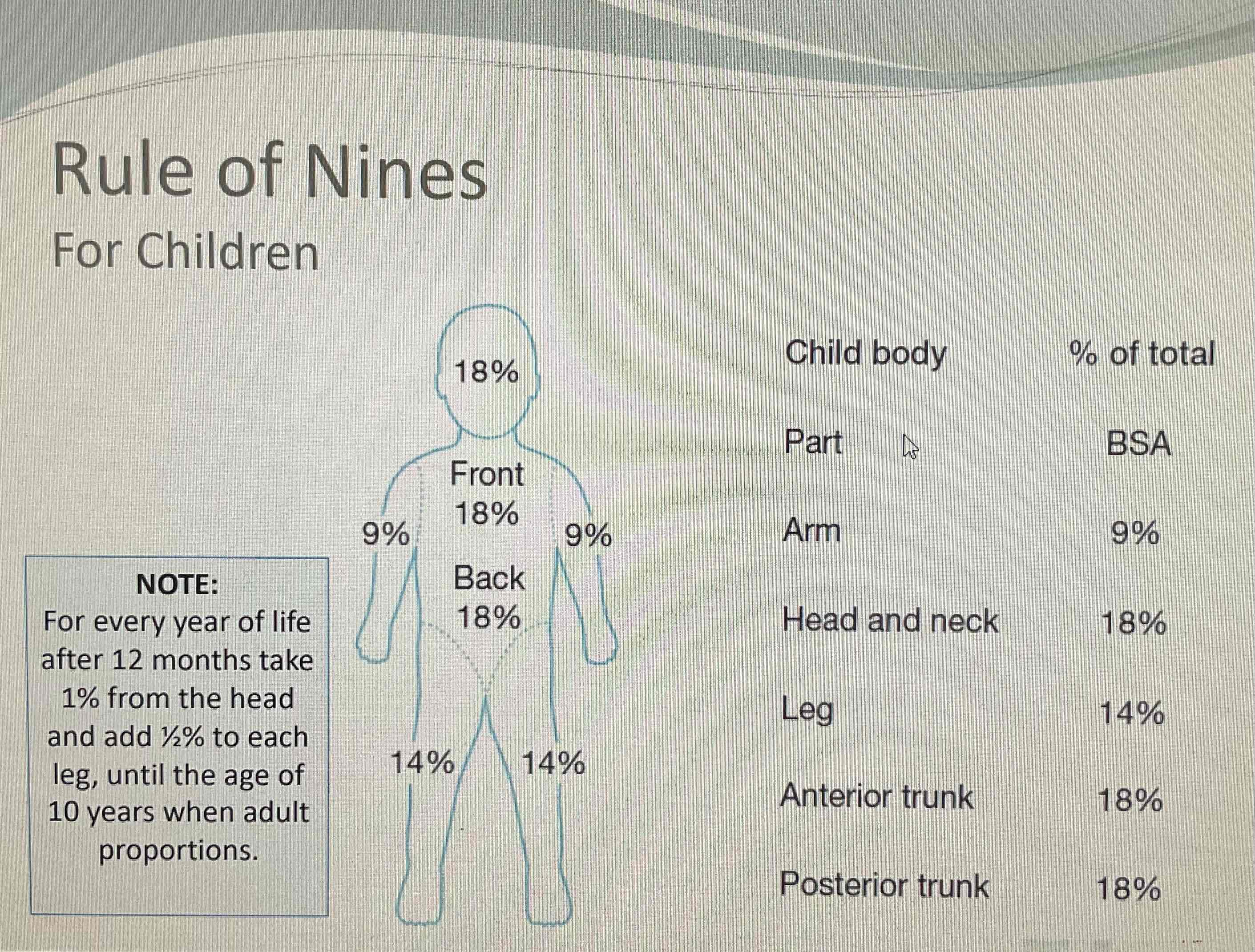
Rule of Nines
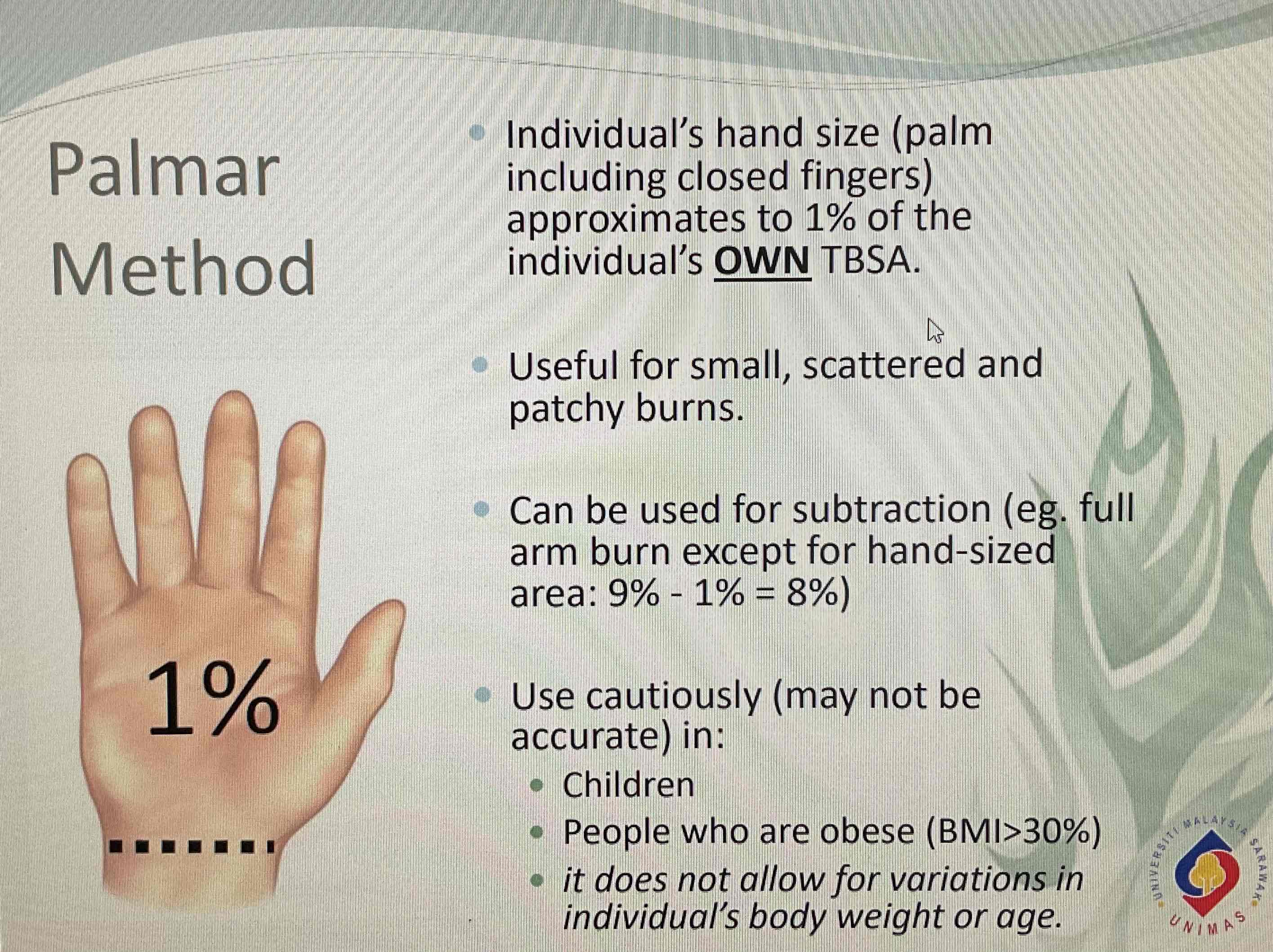
Palmar Method
Lund and Browder Chart
What is the burn size for adults based on total body surface area according to Rule of Nine?
What is the burn size for children based on total body surface area according to Rule of Nine?
What is Palmar Method?
What are the type of burn depth according to traditional classification?
first degree burn : epidermis only
second degree burn : epidermis & dermis
third degree burn : epidermis & dermis & subcutaneous
What are the type of burn depth according to descriptive system / Australian and New Zealand Burn Association (ANZBA)?
Epidermal : classified as superficial epidermal & heal within 3-7 days
superficial dermal : classified as superficial partial thickness & heal within 14 days
mid dermal : classified as partial thickness & heal within 14-21 days
deep dermal burn : classified as deep partial thickness & heal over 21 days
full thickness : healing need surgical intervention
What are the pre-hospital care in emergent care?
stop the burning process
cool the burn wound
wash the wound
cover the wound
cover patient with blanket
check for other injuries
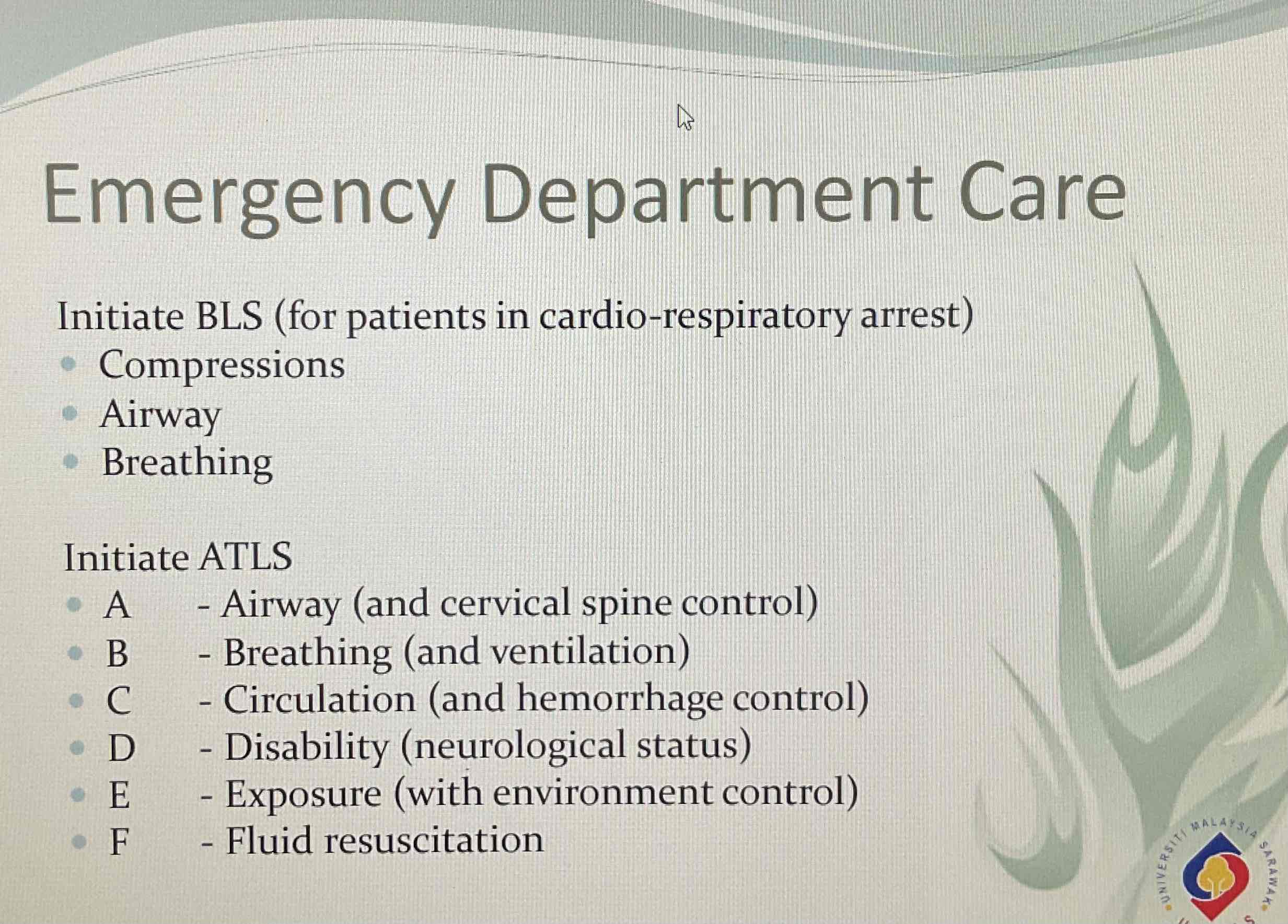
In emergency department care, what are the things need to be initiated when receiving patients with burn injuries?