L2 | Vertebra
 Call Kai
 Learn
Learn Practice Test
 Spaced Repetition
 Match
Match Flashcards
 Knowt Play
1/11

There's no tags or description
Looks like no tags are added yet.
Name | Mastery | Learn | Test | Matching | Spaced | Call with Kai | Chat |
|---|
No analytics yet
Send a link to your students to track their progress
12 Terms
Q: The typical vertebra consists of a body, a vertebral arch, and ……
A. Cartilaginous attachments
B. Ligamentous borders
C. Fibrous joints
D. Muscular or Articular connections
D. Muscular or Articular connections
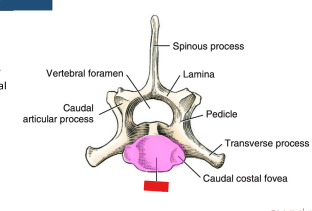
Q: The ……. of a typical vertebra is constricted centrally and has a slightly convex cranial articular surface and a centrally depressed caudal articular surface.
A. vertebral arch
B. body
C. articular connections
D. vertebral foramen
B. body
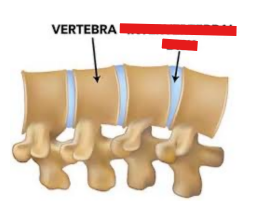
Q: The …… consists of fibrocartilage located between adjacent vertebrae.
A. Interarcuate ligament
B. Intervertebral disc
C. Synovial joint
D. Vertebral arch
B. Intervertebral disc
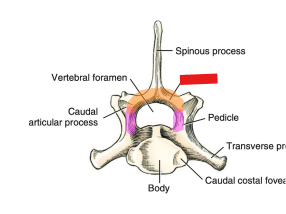
Q: The vertebral arch consists of two pedicles (pink) and two …… (orange)
A. transverse processes
B. articular processes
C. lamina
D. spinous processes
C. lamina
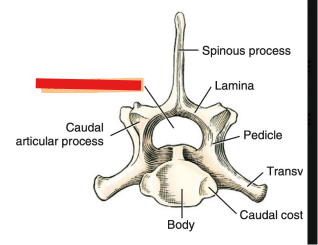
Q: Vertebral Arch: …… - all the vertebral foramina concur to form the vertebral canal.
A. intervertebral discs
B. transverse foramina
C. articular processes
D. Vertebral foramen
D. Vertebral foramen
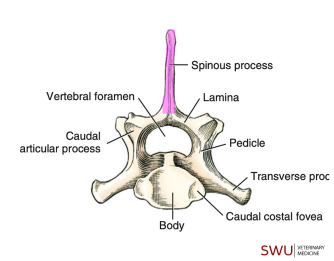
Q: In the vertebral arch, most processes arise from the ……
A. vertebral body
B. vertebral arch
C. articular surface
D. spinal cord
B. vertebral arch
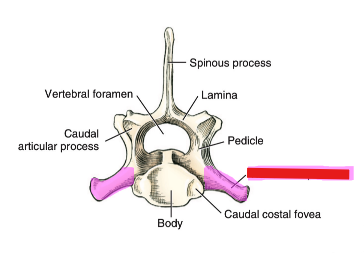
Q: According to the diagram of the VERTEBRA ARCH, the structure that is highlighted in pink is the ......
A. Spinous process
B. Lamina
C. Pedicle
D. Transverse process
D. Transverse process
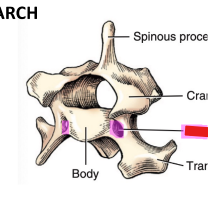
Q: In the vertebral arch, at the root of each transverse process in the cervical region EXCEPT C7 is the ……
A. Transverse foramen
B. Lateral vertebral foramen
C. Alar foramen
D. Dorsal sacral foramen
A. Transverse foramen
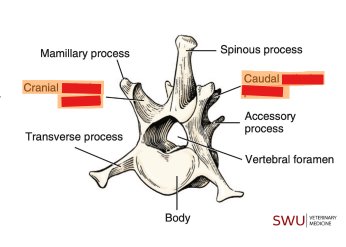
Q: In the articular connections, paired …… are present at both the cranial and caudal surface of a vertebra.
A. transverse processes
B. spinous processes
C. articular processes
D. accessory processes
C. articular processes
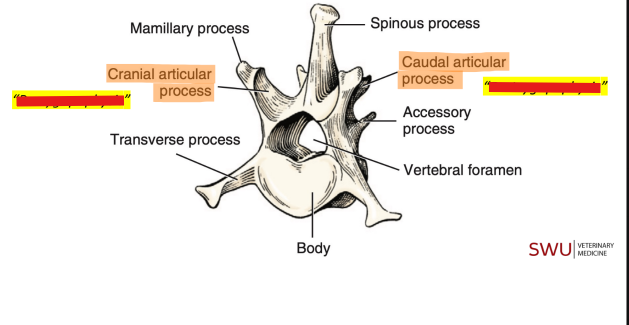
Q: The cranial articular process is also known as the ……
A. Prezygapophysis
B. Postzygapophysis
C. Mamillary process
D. Accessory process
A. Prezygapophysis
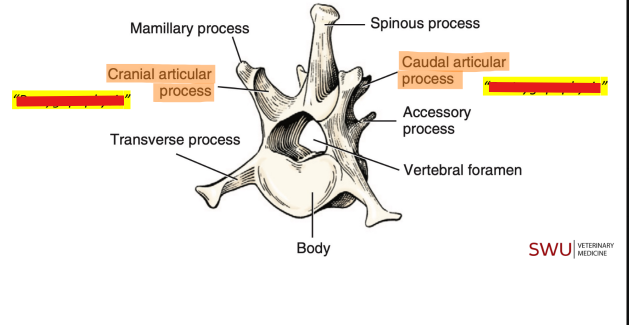
Q: The caudal articular process is also known as the ……
A. Accessory process
B. Prezygapophysis
C. Postzygapophysis
D. Mamillary process
C. Postzygapophysis
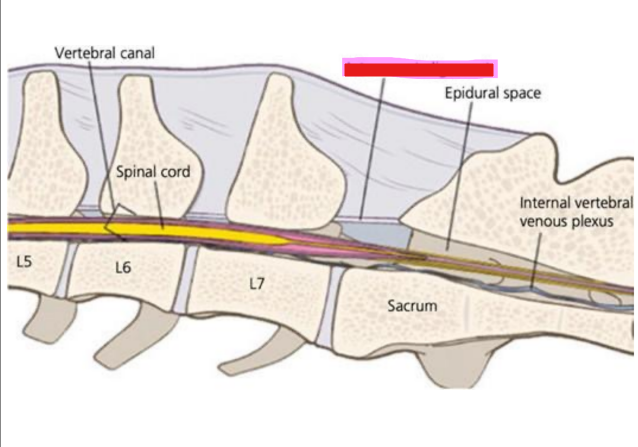
Q: According to the image, the structure highlighted in red is the ......
A. Epidural space
B. Vertebral canal
C. Interarcuate ligament
D. Internal vertebral venous plexus
C. Interarcuate ligament