Preanaesthetic assesment pre med iv and inhalant anaesthetic
 Call Kai
 Learn
Learn Practice Test
 Spaced Repetition
 Match
Match Flashcards
 Knowt Play
1/80

There's no tags or description
Looks like no tags are added yet.
Name | Mastery | Learn | Test | Matching | Spaced | Call with Kai | Chat |
|---|
No analytics yet
Send a link to your students to track their progress
81 Terms
Confidential Enquiry into Perioperative Small Animal Fatalities (CEPSAF) risks for healthy dog cat and rabbit
Dog 1 in 1849 (0,05%)
Cat 1 in 895 (0,11%)
Rabbit 1 in 137 (073%)
Equine fatalities within 7 days of anaesthesia (CEPEF)
1,9% (when emergency exploratory laparotomy exclusief 0,9%)
What increases the risk of anaesthetic related death
-fluid therapy in cats
-inhalation induction of anaesthesia
-controlled ventilation
-endotracheal intubatuin in cats
-increases duration of procedures
What decreases risk of anaesthetic related death
-monitoring cardiovascular function via pulse rate, heart rate and blood pressure
-use a pulse oximeter
-recording cardiac rhythm (ECG)
-pre med with medetomidine/acepromazine (compared to no pre med)
-IV catheter for easy admin of medications
Breed dispositions which may influence anaesthesia
Persian cat: polycystic kidney disease
Giant breed dog: dilated cardiac myopathy (DCM), atrial fibrillation
Bulldog: brachychephalic airway syndrome
Sighthounds: altered metabolism of barbiturates
Why is age of the animal significant for anaesthesia
Neonatal and young animals have poorly developed renal/hepatic function, an immature cardiovasculair system, are prone to hypothermia and hypoglycaemia and drug distribution and drug effects may vary.
Geriatric animals may have reduced cardiorespiratory reserve and increased risk of concurrent disease
What is baseline data for an anaesthetic record
Pulse rate/quality, mucous membrane color, respiratory rate, presence of ocular/nasal discharge, temperature
What is a geriatric animal
Animal with >80% of anticipated lifespan
When would you withhold water from an animal coming for anesthesia
Prior to endoscopy of the gastrointestinal tract
What is the fasting time for a healthy dog or cat
4-6 hours for adults
1-2 hours in paediatric patients less than eight weeks of age or those less than 2kg in body weight
Why not fast longer (than 4-6hrs)
May be associated withan increased risk of regurgitation
What is the anesthetic triad
Narcosis, muscle relaxation and analgesia
(To achieve this you need multiple agents to create a balanced anaesthesia)
Pharmacokinetics
What the body does to the drug
What are the stages of pharmacokinetics
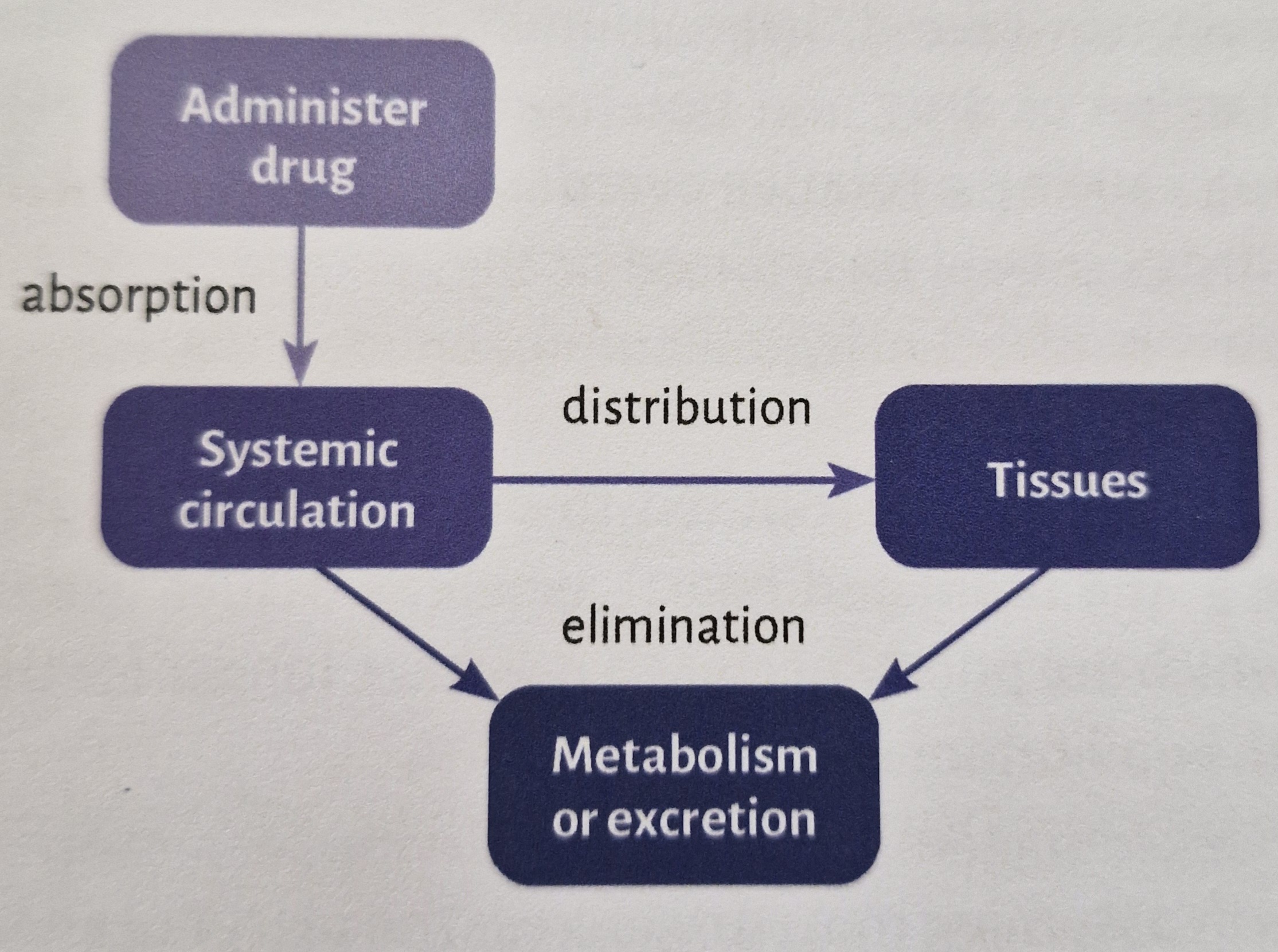
What is bioavailability
It refers to the fraction of a dose that reaches the systemic circulation after administration compared to the same dose given by the intravenous route
What is bioavailability influenced by
Proporties of the drug itself
Formulation
Route of administration
Interactions with other drugs
Individual patient variation
Patient's disease state
Factors that determine drug distribution
Protein binding
Tissue binding
Organ blood flow
Membrane permeability
Drug solubility
What is the main plasma protein that binds drugs
Albumin
True or false: the more bound drugs there are in the blood the greater is the drug effect
False: it is the free or unbound fraction of drug that is available to interact with the drug target
What can hypoalbuminaemia cause
A relative overdose because it increases the free fraction of drug (because it has nothing to bind with) (this can happen with drugs that are highly protein bound)
How do drugs get metabolised and eliminated from the body
Most drugs are lipophilic and highly plasma protein boundnso are not easily filtered by the kidney. Most lipid soluble drugs are metabolised in the liver before renal excrection. Gastrointestinal tract, lungs, kidney, skin and plasma have some metabolic activity.
What are the 2 phases of liver metabolism of drugs
Phase 1 reactions convert the drug to a more polar metabolite
Phase 2 reactions involve conjugation with substrates and consumption of energy (conjugation may involve glucuronidation (not cats) acetylation (not dogs) methylation or conjugation with sulphate or glycine groups)
Pharmacodynamics
Describes the effects the drug has in the animal/body.
Drug site of action > pharmacological effect > clinical response > therapeutic index OR toxicity
Affinity and potency
Describes how well or avidly a drug binds to its receptor
Relates to the dose of drug required to produces a response
Intrinsic activity or efficacy describes..
The magnitude of effect once the drug is bound
A full agonist can..
Generate a maximal response after binding to its receptor
A partial agonist does..
Not produce a maximal effect, even when the dose is increased
An antagonist has..
Affinity for the receptor but does not produce an effect once bound. However it can block the effect of an agonist (atipamezole which antagonises the effects of the α−2 adrenoreceptor agonist (dex)medetomidine)
What are targets for drugs to act on
Receptors
Enzymes
Transporters which carry molecules across a membrane
Ion channels
Nucleic acid (RNA)
Miscellaneous targets
Therapeutic index - LD50/ED50, explain
Crude measure of drug safety: maximum non toxic dose to minimum effective dose.
LD50 - The dose that causes death in 50% of the tested group (lethal dose)
ED50 - The dose that gives the desired healing effect in 50% of the tested population. (Effective dose)
Aims of pre medication
To calm the animal through anxiolysis
Allowed safer patient handling
Provide perioperative analgesia
Contributie to balanced anaesthesia and reduce the doses of subsequently administered drugs
Smooth the recovery period
Synergistic effect
Occurs when the interaction of 2 or more drugs cause the total effect of the drugs to be greater then the sum of the individual effects of each drug on their own
Why need a quiet area and calm manners when given pre med
Stress results in high levels of circulating catecholamines which interfere with the sedative effect of the drugs given
What are the rules for drug selection, a sequence of 4:
A veterinary licensed product with a marketing authorisation for thatbindication in the species concerned
A veterinary medicine authorised foe use in another species or by a different route in the same species (so called off label)
A medicine authorised in that country for human use
A medicine to be made up on a one off basis by a veterinary surgeon of a properly authorised person
How dose an overweight animal
Dose for their ideal lean weight
Acepromazine, keyboard features, dose range, onset of action etc
Phenothiazine class of drugs, acts on dopamine receptor antagonist
Mild to moderate long lasting sedation, typically around 6hrs (duration dose dependant)
Increasing dose administered does not necessarily increase degree of sedation due to plateau effect at doses above 0,05mg/kg (or total dose of +/- 1mg)
Autorisation dog/cat in dose range of 0,03-0,125mg/kg IV, IM or SC
Onset approx. 15min IV or 30min IM
Metabolised by liver, cannot be antagonised
Has antihistamine effects
Alpha1 adrenoreceptor antagonist so gives antiarrhytmic effect and vasodilation
Has antiemetic effects
MAC sparing effect when used as pre med
When not to use acepromazine
Shocked animals - due to vasodilation a decrease in blood pressure is often seen
Use with care with cardiovascular disease
Can also reduce packed cell volume (PCV)(=hematocrit) by up to 20% due to splenic sequestration of red blood cells
Why be carefull with acepromazine and brachycephalic breeds
Consider giving low doses: these dogs have high resting vagal tone which can result in syncope and acepromazine is long acting. Can prolong the recovery period. These dogs need a rapid recovery with minimal drug hangover
α2 adrenoreceptor agonist, key features etc
Xylazine, (dex)medetomidine
Have some affinity for the α1 adrenoreceptor
Autorisation dog/cat
Profound sedation and recumbency
High levels of adrenaline can compete for the adrenoreceptors
Onset of 5min IV, 15-20min IM
Can be given as continous rate infusion
Well absorbed across mucous membranes
Metabolised by liver and reduce hepatic blood flow
Atipamezole is the antagonist (reversal)
Significant cardiovascular effect: initial vasoconstriction (peripheral vasoconstriction reduces heat loss), reflex bradycardia (blood pressure remming normal or high) and reduces cardic output
First or second degree AV block may be seen on ECG trace
Good muscle relaxatio (often given with ketamine to counteract muscle rigidity)
Vomiting may occur when given IM or SC
Xylazine sometimes used to induce emesis in cats
Analgesic effects last shorter than the sedative effects but are MAC sparing (up to m 70%)
Some animals benefit from adminstration of a small dose (1-2 μg/kg IV) of (dex)medeto to smooth recovery period
What does α2 adrenoreceptor agonists reduce
Gastrointestinal motility
Antidiuretic hormone (ADH) and renin (which increases urine production)
Reduction in insulin secretion resulting in hyperglycaemia
Options for bradycardia after adminstering an α2 adrenoreceptor agonist
Admin of ketamine; low dose may increase heart rate although responses are unpredictable and there is a delay ofeffect up to 5min
Partial dose of Atipamezole; antagonises (dex)medeto and increases heart rate, although plane of anaesthesia can lighten
Antimuscarinic is not recommended; can increase heart rate but risk exacerbating hypertension and increasing myocardial workload
Ketamine
Phencyclidine derivative
NMDA antagonist
Can produce dissociative anaesthesia
Always administered with other drugs since muscle rigidity and excitement is seen when used alone
Schedule 2 controller drug
IM, IV, as continous rate infusion and well absorbed across mucous membranes
Metabolised by liver and excreted by kidney
Has active metabolite (norketamine)
May therefor accumulate in animals with renal dysfunction
Onset of action and duration depend on combination and dose used but typically onset is 3-10min, duration approx 30-45min
Maintains cardiovascular function
Ketamine itself produces myocardial depression but also results in catecholamine release which overall produces positive chronotropic effects
Stick animals may not have this catecholamine respons
Do not use with HCM cats > inadequate myocardial perfusion due to positive chronotropic effects
May increase intraocular pressure and intracranial pressure
Has antihyperalgesic effects
Better somatic analgesia than visceral analgesia
Many reflexes that are normally abolished during anaesthesia are maintained; eye may remain central with brisk palpebral reflex, pharyngeal and laryngeal reflexes, muscle tone remains or increases.
Plasma protein binding approx. 50%
Possible neuroprotective effects
Often used in horses IV
Somatic and visceral pain
Somatic pain results from an injury to the body such as skin, muscle bonen and tends to be localised.
Visceral pain refers to pain from the internal organisatie which is usually dull and diffuse
Benzodiazepines
Midazolam, diazepam
GABA agonist (y-aminobutyric acid)
May produce sedation in young or sick animal especially when given with an opioid, but can produce excitement in healthy animals
UK authorisation diazepam dog/cat, midazolam horses
Metabolised in liver
Midazolam water soluble, IM or IV
Does not produce active metabolites
Diazepam solubilised in propylene glycol, painfull on injection, poorly absorbed IM injections, can produce thrombophlebitis if given IV, has active metabolites (nordiazepam, temazepam, oxazepam)
In cats, diazepam can result in idiosyncratic hepatic necrose
Both often combined withban opioid
Dose range 0,2-0,3 mg/kg
Minimal effect on cardiorespiratory system
Good muscle relaxation and anticonvulsant activity
Can be antagonised with flumazenil (UK not licensed)
Tiletamine and zolazepam
Zoletil and Telazol
Tiletamine = phencyclidine derivative (like ketamine)
Zolazepam = benzodiazepine
Similar effect as an keta/benzo combi
In dogs, zolazepam is metabolised faster than tiletamine which can lead to rough recovery
Accumulation if repeated doses are given
Neuroleptanalgesia for rodents, guinea pigs and rabbits
Fentanyl/fluanisone
What is the kitten quad protocol
Medetomidine, ketamine, midazolam and buprenorphine
Neurotransmitters and receptors
Acetylcholine (ACh)
Found in the brain, spinal cord and peripheral nerves as well as some other cells
Acts on muscarinic and nicotine receptors
All motor nerve fibers exciting the CNS release ACh which acts on nicotinic receptors
All postganglionic parasympathetic fibres release ACh which acts on muscsrinic receptor
Neurotransmitters and receptors
Noradrenaline (norepinephrine)
Found in many tissues of the body including the brain and sympathetic ganglia
Acts on α and β adrenoceptors
Neurotranmitters and receptors
Glutamate
The principle excitatory neurotransmitter in the vertebrate ventral nervous system
Acts on AMPA, NMDA, metabotropic glutamate and kainite receptors
Ketamine is an N-methyl-D-aspartate (NMDA) antagonist and antagonises the excitatory neurotransmitter glutamate at NMDA receptorsin the CNS. It also has complex actions at opiod receptors
Tiletamine is propably also an NMDA antagonist
Neurotransmitters and receptors
γ-aminobutyric acid (GABA)
The principle inhibitory neurotransmitter in the adult CNS
Acts on the GABA receptor to decrease excitability of neurones
Barbiturates, propofol, alfaxalone and etomidate are agonists at the gamma aminozuren butyric acid (GABA) receptor in the CNS
When these drugs bind to the GABA receptor they increase the frequency or duration of the GABA dependent chloride channel opening > the increase in chloride conductance causes hyperpolarisation and neuronal inhibition
Zolazepam (benzo) is a GABA agonist
Neurotransmitters and receptors
Histamine
Widely distributed afferent (=goes to the CNS) neurotransmitter which is involved in the sense of itching and pain
Neurotransmitters and receptors
Dopamine
Precursor of noradrenaline
Involved in control of movement and behaviour
Neurotranmitters and receptors
Serotonine (5HT)
Acts on 5HT receptors to regulate sensory pathways and control mood
Neurotranmitters and receptors
Serotonine (5HT)
Acts on 5HT receptors to regulate sensory pathways and control mood
Neurotranmitters and receptors
Serotonine (5HT)
Acts on 5HT receptors to regulate sensory pathways and control mood
Propofol, key features
2 versions: 1 without bacteriostat, discard after 24hrs. 1 with benzyl alcohol preservative, can be used for up to 28days. This one should not be administered by infusion particularly in cats (hHeinz bodies)
Phenol
GABA agonist
May be mistaken for penicillin, label syringe!
Rapid onset of action
IV
Rapidly metabolised in liver and eliminated; cats lack glucuronidation pathway in live so metabolism in cats is slower than dogs
Possible extra hepatic metabolism; drug clearance is faster than hepatic blood flow
Noncumulative in dogs (not cats), used for TIVA in dogs
Postinduction apnoea common
Hypotension, myocardial depression and peripheral vasodilation
No analgesia
Fair muscle relaxation although occasionally muscle twitching and muscle rigidity seen
Consecutive day use should be avoided in cats: oxidative damage to red blood cells (Heinz body formation) seen after 3days, cats became generally unwell after 5-7days of consecutive dag administration
Non irritant if injected perivascularly
All formulations may produce an aversive response (attempted limb withdrawal)
Highly plasma protein bound 96-98%
Alfaxalone, key features
Not soluble in water, cyclodextrin used to make water soluble. Cyclodextrin donut shaped and alfaxalone molecule sits in middle which is hydrophobic, exterior is water soluble.
Steroïd anaesthetic
High therapeutic index
Non irritant
IV and rapid onset
Authorisation for IM use in Australië not Europe
Injection volume can be large for IM
Rapid hepatic metabolism and elimination
Non cumulative
Respiratory depression and post inductuon apnoea if given rapidly
Preserves baroreceptor tone; HR increases in response to reduces BP
No analgesic effects
Not very high plasma protein bound ~20%
Less commonly used injectable amaesthetic agent
Thiopental, key features
Acquiring can be difficult
Barbiturate anaesthetic, is reconstituted from powder to form a 2,5 or 5% solution
Is very alkaline, can result in perivascular tissue necrosis if accidently injected outside of vein
Admin IV only
Rapid onset with predictable effect, especiallly in horses
Slow recovery from anaesthesia due to redistribution of drug
Metabolism in liver
Prolonged recovery in Sighthounds due to lower capacity for metabolism of llthis drug in these species
Highly plasma protein bound +/ - 80%
Moderate Cardiopulmonary depression with ventricilar bigeminy seen in 40% of dogs
Repeated doping significantly prolonges anaesthetic recovery, not suitable for TIVA
Etomidate
Minimal effects on cardiovascular system
Produces adrenal supression which has been associated with an increased deathrate in people when used by infusion in ICU settings
Induction can be smooth in well sedated animals
Animals that received low doses of pre med induction is unpleasant with vomiting retching, myoclonus and significant pain on injection
Does not have a marketing authorisation for animals in Europe
Chloral hydrate
Now obsolete
Administered orally
Why is it important to give injectable anaesthetics slowly and to effect
They need to reach the brain. In animals with low cardiac output (either due to effects of drugs such as dexemedeto or pathological reasons) the onset of action of an anaesthetic agent is slower.
If an animal is hypoproteinaemic there is greater portion of free unbound drug and you can get a relative overdose
Co induction of anaesthesia
Where more than 1 drug is administered to induces anaesthesia. Most commonly a benzo, keta, or short acting opiod alongside either propofol or alfaxalone.
May be performed after standard pre med (acepromazine or (dex)medeto plus an opioid)
When you give a benzodiazepine to a conscious animal, what can it do
Induce excitement. To avoid this give a small dose of the IV induction agent first, then the benzo, then the rest of the IV agent titrated slowly to effect
What does TIVA stand for
Total intravenous anaesthesia
Name 3 drugs you can use for a CRI / TIVA
Propofol and ketamine have a context sensitive half time that does not increase significantly as the duration of infusion increases (whereas it does for thiopental).
Alfaxalone can also be used for TIVA
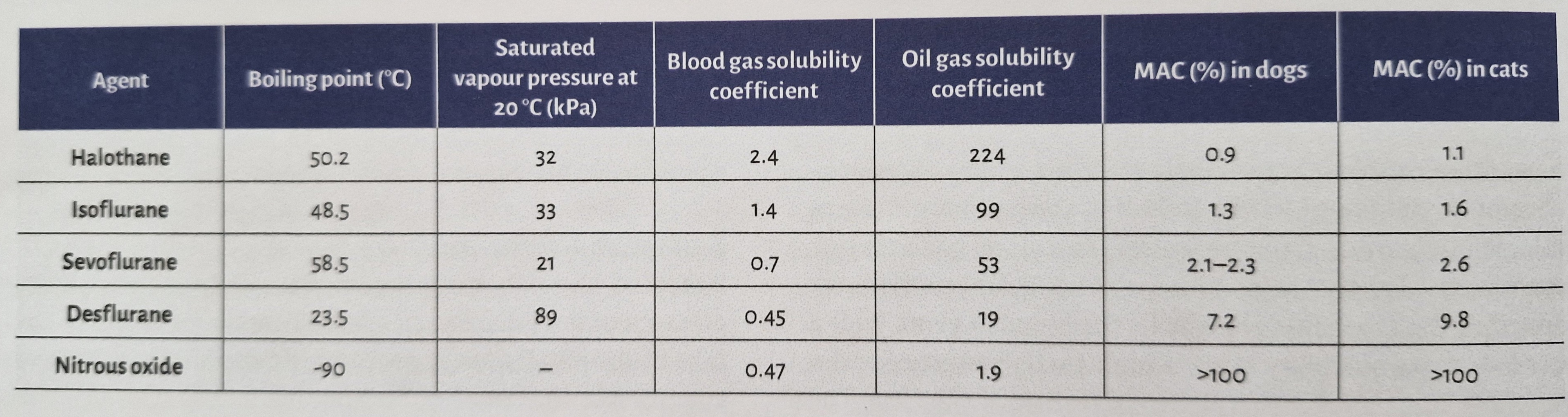
what is MAC
Minmum alveolar concentration - the alveolar (end tidal) concentration of inhalant anaesthetic required to prevent purposeful movement in response to a supramaximal noxious stimulus in 50% of subjects.
MAC is decreased by: (needing less of it)
Sedatives: acepromazine, medetomidine ( up to 70%)
Analgesics: opiods
Coadministered anaesthetic agents: midazolam
Hypothermia: decreased metabolic rate
Geriatric and neonatal animals less than 2weeks of age: decreased metabolic rate, organ function reduced
Conditions such as hypothyroidism: decreased metabolic rate
MAC is increased by:
Young animals: increased metabolic rate
Hyperthermia: increased metabolic rate
Concurrent administration of catecholamines and sympathomimetics: ephedrine
Conditions such as hyperthyroidism: increased metabolic rate
Partial pressure of a gas:
The pressure that the individual gas exerts in a mixture of gases. Thisnpressure of the agent in the brain determines its effects.
The higher the inspired setting on the vaporiser the higher the partial presure of the agent is in the lungs and thus faster onset of anaesthesia
Blood gas partition coefficient
Also known as the blood gas solubility coefficient
Describes the solubility of gas in the blood
Agents with a low blood gas solubility exert a high partial pressure and a rapid induction and recovery from anaesthesia will occur
The more soluble the inhalant is in blood; the more inhalant is required to increase its partial pressure in the alveoli
Distribution of the anaesthetic depends on perfusion and the solubility of the agent in different tissues
Meyer-Overton Hypothesis
Theory being the molecules of the inhalational anaesthetics discover in the lipid bilayer of cell membranes within the brain and when this happens in sufficient amounts it induces a state of unconsciousness and anaesthesia.
It is possible that the actual mechanism of action is a combi of this and the following; binding to proteins on ion channels and inhibiting synaptic transmission. And direct effects on specific receptors such as GABA, NMDA etc
Elimination of inhalants are primarly via the lungs but there is a small amount of hepatic metabolism;
Halothane 20%
Sevoflurane 2-5%
Isoflurane 0,2%
Nitrous oxide is negligible
Alveolar ventilation
Increased alveolar ventilation increases the alveolar partial pressure of the inhalant, increasing the rate of update of the inhalant and the speed of induction of anaesthesia. How quickly the pulmonary circulation removes the anaesthetic gas from the alveoli is determined by how soluble the gas is in blood and the alveolar blood flow
What does low cardiac output mean for the speed of onset with an inhalant anaesthetic
It increases the speed of onset > the uptake of anaesthetic agent from the alveoli to the pulmonary circulation is low, so the partial pressure of the agent in the alveoli rises rapidly. Since this reflects the partial pressure of the anaesthetic in the brIn, the onset of anaesthesia is rapid
Which inhalant has the lowest blood gas solubility? What is the MAC for dogs and cats with Isoflurane?
Licencing for inhalant anaesthetics
Isoflurane: dogs and cats, some variations
Sevoflurane: dogs and cats
Desflurane: no veterinary product licenses
Halothane: no longer commercially available
Nitrous oxide
Ether, methoxyflurane, cyclopropane: historical use
Properties of ideal inhalant anaesthetic
Non irritant to mucous membranes
Minimal effects on cardiovascular and respiratory function
Low blood gas solubility: rapid uptake and elimination
Minimal metabolism
Non-toxic
Non-flammable and chemically stable
Easily vaporised
Good analgesia and muscle relaxation
Minimal environmental effects
Side effects of Isoflurane (halogenated ethyl methyl ether without a preservative)
Dose dependant
Varying degrees of hypotension due to myocardial depression (contractility) and peripheral vasodilation
Hypoventilation due to respiratory depression may be seen in small animals and be profound in horses
Bronchodilation
Irritant to mucous membranes and is not recommended as induction inhalant
Side effects of sevoflurane (polyfluorinated isopropyl methyl ether)
Dose dependant
Varying degrees of hypotension due to myocardial depression (contractility) and peripheral vasodilation
May have less effects on cerebral blood flow than other inhalants and is sometimes referred to as being neuroprotective
It reacts with soda lime to produce the haloalkene Compound A. This is nephrotoxic in rats though clinically does not appear to be a concern in domestic species
A minimal flow of 500-1000ml/min is recommended if using a circle system to limit accumulation
Not irritant to mucous membranes
Desflurane