Space
 Studied by 0 people
 Call with Kai
 Learn
Learn Practice Test
 Spaced Repetition
 Match
Match Flashcards
 Knowt Play
1/50

There's no tags or description
Looks like no tags are added yet.
Name | Mastery | Learn | Test | Matching | Spaced | Call with Kai |
|---|
No study sessions yet.
51 Terms
What is astronomy?
The study of what is in space
what are constellations?
patterns of stars in the sky
what are moons?
objects that revolve around a planet
What are comets?
a frozen core of ice, gas and dust. They orbit around the sun in an elliptical way. When they get close, they heat up and release gas
what are meteors?
matter from space (shooting star), that burns when it enters the earth’s atmosphere.
what are asteroids?
a small rocky body that orbits the sun
What are the two types of planets?
Terrestrial (inner), Jovian (outter)outer
What’s the “perfect” planet?
Earth
3 characteristics of earth as to why it can support life
perfect distance from the sun - not too hot/ cold
magnetosphere protects us from solar wind
our atmosphere allows for a steady temp
What’s the geocentric model?
the first model of our solar system was earth centered (stars and planets revolve around the earth)
What’s the planetary motion?
Process of how planets orbit around the sun. The sun’s strong gravity pulls the planets towards it.
What’s the retrogarde motion?
planets (mars, jupiter and saturn) look like they’re moving backwards in the sky.
What do plaents revolve around?
The sun
What’s the structure of the universe?
Stars → Star Clusters (group of stars that travel together) → Galaxies (billions of stars)→ Universe (billions of galaxies)
What’s the doppler effect?
increase or decrease in the frequency of waves as a way to tell whether stars are moving away or towards you. star close = seems bluer. star far = redder
What’s the universe?
Everything that exists
Groups of stars that seem to form shapes or figures are called:
Constellations
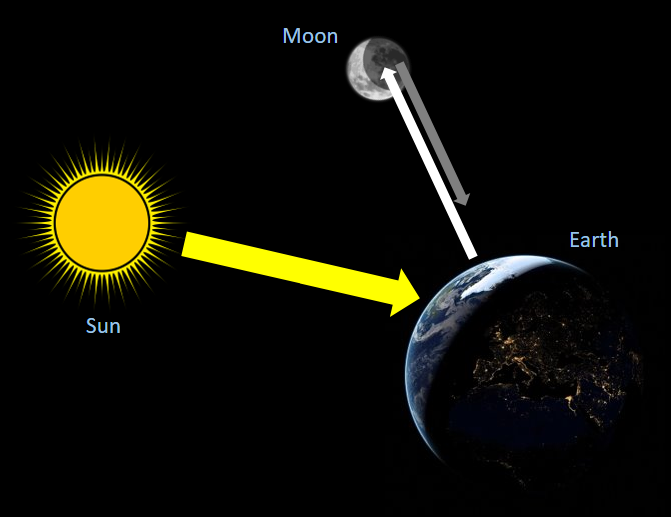
We see planets because they ____
reflect light from the sun
Huge collections pf gas, dust, billions of stars, planets and other celestial objects (things in space)
Galaxies
A celestial object that is rocky and makes contact with the earth’s surface is called a _____
Meteorite
How do we know our universe is expanding?
The stars are shifting towards the red part of the spectrum
When can we see a comet’s tail?
Only when the comet path is close to the sun (due to the sun’s heat, Ice and dust turn to gas. Solar wind pushes the gas and dust away, creating a visible tail).
What’s the hottest planet in our system?
Venus
What galaxy is the sun in?
The milky way
What type of galaxy is the milky way?
Spiral
Where does the energy from the sun come from
A nuclear fusion in the sun’s core. 1) four Hydrogen atoms fuse. 2) a single Helium is created. 3) Leftover mass is converted to energy
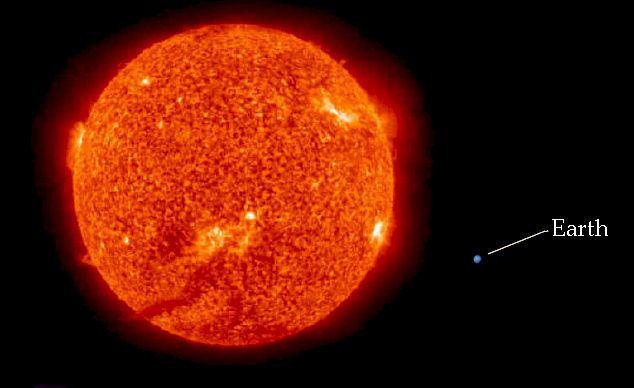
Is earth bigger than the sun?
No
Size, brightness and temperature of red stars
Small, dim and cold
Size, brightness and temperature of blue stars
Big, Bright and hot
(T/F) Most stars (95%) are low mass, like our sun
true
(T/F) our sun will eventually become a black hole
false
(T/F) the moon is a non-luminous object (explain)
True, it does not produce its own light, it reflects sunlight
What’s the solar nebula theory?
A nebula (spinning cloud of gas and dust) gets clumped together by gravity to form stars and planets
What are the terrestrial planets?
mercury, venus, earth and mars
What are the jovian planets?
jupiter, saturn, uranus and neptune
order of planets closest to furthest from the sun
Mercury, Venus, Earth, Mars, Jupiter, Saturn, Uranus, Neptune
What does the term “light year” mean?
The distance light travels in one year
What does the term “astronomical unit (AU)” mean?
Distance from the earth to the sun
What’s the Big Bang theory
Explanation of how our universe started about 14 billion years ago from a very hot, dense point and how our universe is still expanding
What evidence supports the Big bang theory
Galaxies are moving away (redshift)
3 key differences between the inner and outer planets
Composition. Inner= rocky, solid surfaces. Outer= gas giants, mostly gas and ice
Size. Inner= small. Outer= big
Distance from the sun
4 properties of stars we observe
brightness, color, size, temperature
What are satellites?
objects that revolve around planets. ex:moon
what are the 2 planets that don’t have moons?
Mercury and venus
why do we see different phases of the moon?
Because the moon orbits earth and reflects sunlight. As it orbits the earth, different amounts of sunlight is reflected.
When does the size of the moon change?
the size of the moon never changes, only the lit part we see changes
Difference between solar eclipse and lunar eclipse
Solar eclipse: during daytime. the moon is between earth and the sun.
Lunar eclipse: during nighttime. Earth is between themoon and the sun.
What’s solar eclipse?
When the moon is between the sun and earth, blocking the sunlight
What’s lunar eclipse?
When the earth is between the moon and sun, blocking the sunlight from hitting the moon (causes a red moon)
Difference between a meteor and a meteorite?
Meteor= streak of light in the sky (burns up before touching the ground
Meteorite= the rock that falls from space and reaches ground