Distillation
 Call Kai
 Learn
Learn Practice Test
 Spaced Repetition
 Match
Match Flashcards
 Knowt Play
1/52

There's no tags or description
Looks like no tags are added yet.
Name | Mastery | Learn | Test | Matching | Spaced | Call with Kai | Chat |
|---|
No analytics yet
Send a link to your students to track their progress
53 Terms
distillation
method of separation
one component in mixture must be?
liquid because it needs to be boiled in distillation
distillation method
take mixture, put in container, liquid vaporizes, collect vapor in separate container
simple distillation
most basic form, method to separate solid + liquids
vacuum distillation
lowers temperature of BP of liquid when it is really high, can also speed up experiment if there are a lot of solvent
fractional distillation
two liquids have boiling points that are within ~ 40 ºC
distallation system open or closed? why?
our distillation is open bc closed system heating is dangerous
why is our distillation open
because we do not have appropriate equipment and training
simple distillation for liquids
separate two liquids more than around 40 degrees C
distillation 50 mL flask
where solid remains
distillation head
- connect distillation flask to condenser
- connect thermometer
condenser
glass tube filled with water, water goes in at bottom and out at top
- cool vapor into liquid
thermometer
reads temperature
- will have rubber adaptor and glass adaptor
vacuum adapter
- connect condenser to receiving flask
- perform vacuum distillation, where hook up vacuum line
- keep system open
receiving flask
collect condensed liquid, also where you hook up vacuum adapter
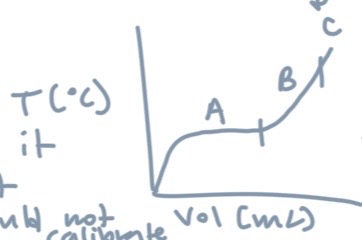
liquid/solid T vs V graph
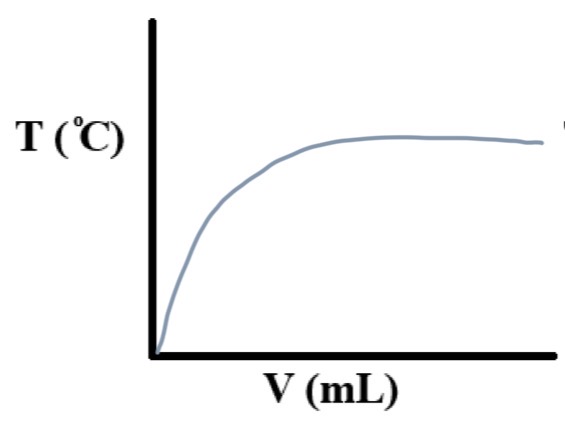
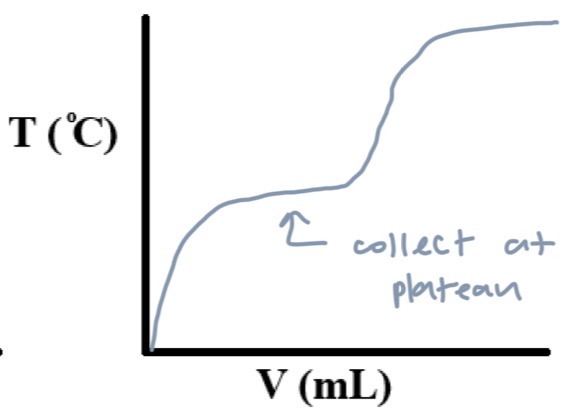
liquid/liquid (100 degrees C apart) T vs V graph
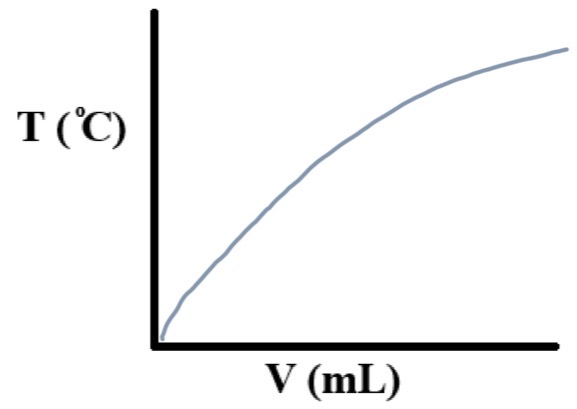
liquid/liquid (20 degrees C apart) T vs V graph
- will not be able to separate
- need fractional distillation
aluminum heating block
middle one fits 50 mL flask
lab jacks
lower/raise heating element w/o touching it
15 mL centrifuge tubes
collect different fractions
keck
holds glass joints so you can let go without it falling apart
aluminum foil
force heat into system
1 inch stir bar
want heat distributed evenly across solution
hose clamps
keep water hoses tight and closed
left side hood setup different because?
water hoses are cut to specific length, so want to make sure it reaches setup
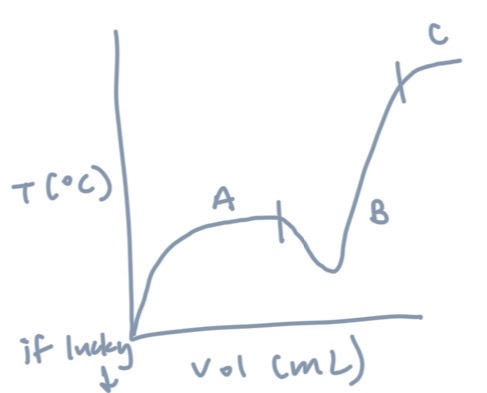
- not heating hot enough
- turn heat up
- heating it too hot
- thermometer could not calibrate
2 questions want to answer
1) do we have acetone/toluene?
2) what is the ratio?
plateau on graph
shows BP of solvent
why there would be two plateaus
boiling point is a unique characteristic of each chemical so you can use this to identify which one you have in the mixture
difference between the plateaus
the first plateau is the lower BP liquid that eluted first; second plateau has a higher BP and this liquid eluted second
gas chromatography
method of separation based on attraction/polarity and boiling point (polar to polar/nonpolar to nonpolar)
2 phases of gc
stationary phase and mobile phase
stationary phase
polar
mobile phase
nonpolar
gc boiling points
lower comes out first, higher comes out second
gc very hot bc?
want to vaporize liquid into gas
flame ionization detector0
tells you chemical is here
more compound, what does peak area show?
higher peak area
qualitative analysis
retention time determines what chemical components are in a mixture
quantitative analysis
peak area determines the exact amount of a compound in a mixture
difference between simple and fractional distillation
fractional employs an additional vertical column between the distillation flask and the condenser
steel wool
maximize surface area and promote multiple iterations of condensation and vaporization as the vapor rises through the column
vertical column in fractional distillation
more gradual temperature gradient and leads to better separation when coupled with the increased number of theoretical plates bc longer distance between the distillation flask and the condenser
retention time
time that it takes a compound to elute from the column
why grease glass joints
fills air pockets with grease so solvent can't enter and increase pressure
put water at bottom of condenser because
filling up bottom wont have to turn pressure very high to fill the condenser up
clamps
hold distillation flask and distillation head
hold glass adapter with distillation head
hold distillation head with condenser
hold condenser with vacuum adapter
boiling point
the temperature at which the total vapor pressure of the liquid is equal to the external pressure
head temperature
temperature of the boiling liquid
dynamic equilibrium
the number of molecules in the gas phase will
initially increase until the rate at which they reenter the liquid becomes equal to the rate at which they escape from it
equilibrium vapor pressure
magnitude of this vapor pressure at a given temperature