bio lec 6
 Call Kai
 Learn
Learn Practice Test
 Spaced Repetition
 Match
Match Flashcards
 Knowt Play
1/32

There's no tags or description
Looks like no tags are added yet.
Name | Mastery | Learn | Test | Matching | Spaced | Call with Kai | Chat |
|---|
No analytics yet
Send a link to your students to track their progress
33 Terms
+sexual
better for an UNSTABLE environment, generations will hopefully adapt and create stability within a population
more genetic variation
-sexual
slower
requires finding a mate
takes more time and energy
produces fewer offspring at once
+asexual
better for a STABLE environment, individuals within a species are near perfect, want to duplicate that perfection, NOT change it
better food quality
less stress
fast
produce many offspring quickly
-asexual
little to no genetic variation
individuals affected similarly to disasters
less ability to adapt to new conditions
fertilization and meiosis in sexual life cycles 1 meiosis
take diploid (2n) cell and produces haploid (n) cells (gametes)
fertilization and meiosis in sexual life cycles 2 fertilization
two haploid gametes combine, creating a diploid zygote
n+n=2n
fertilization and meiosis in sexual life cycles 3 growth
diploid zygote grows into multicellular organism
fertilization and meiosis in sexual life cycles 4 meiosis pt2
when its time to make gametes, meiosis reduces the chromosome number back to haploid
2n—meiosis—n—fertilization—2n
gonads
testes (produce sperm, testosterone)
ovaries (produce eggs, estrogen)
somatic cells
any cells in a multicellular organism that form the body EXCLUDING reproductive cells (gametes)
mitosis
somatic cells, EXACT COPIES. goes through TWO phases of PAMTC
meiosis
gonads, GENETIC DIVERSITY. goes through one phase of PAMTC
Explain how meiosis reduces the number of chromosome pairs from diploid (2n) to haploid (n)
diploid cell (2n) has two copies of each chromosome (ONE FROM EACH PARENT)
results in 46 chromosomes=23 pairs
meiosis i REDUCES it by separating the matching chromosome pairs so that each cells gets only one chromosome from each pair (2n—n)
meiosis ii seperates the sister chromatids and produces 4 haploid cells

homologous chromosomes

sister chromatids

nonsister chromatids

nonhomologus chromosomes

meiosis i
seperates homologus chromosomes
meiosis i: interphase
dna copies once before meiosis while chromatin stays uncondensed

meiosis i: prophase i
chromosomes condense as homologus pairs from tetrads and exchange segments

meiosis i: metaphase i
homologus chromosome pairs align together at center

meiosis i: anaphase i
homologus chromosomes seperate to opposite poles while sister chromatids stay together
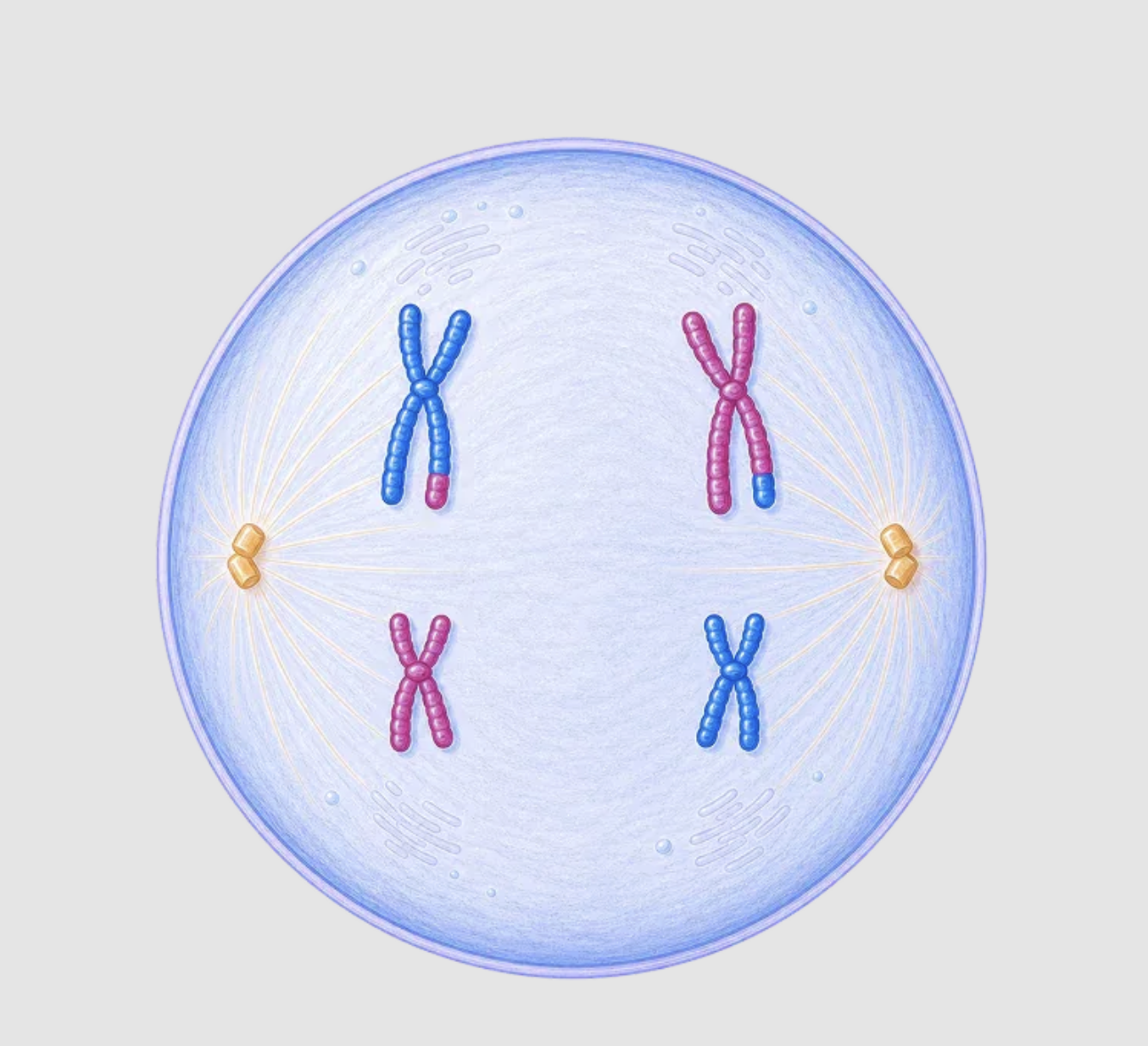
meiosis i: telophase i+cytokinesis
the cell divides into TWO HAPLOID cells that still contain duplicated chromosomes

meiosis ii
separates the sister chromatids, producing FOUR HAPLOID CELLS
meiosis ii: prophase ii
a new spindle forms in each haploid cell around the duplicated chromosomes

meiosis ii: metaphase ii
chromosomes line up individually at the center of each haploid cell

meiosis ii: anaphase ii
sister chromatids separate and move toward opposite poles in each cell
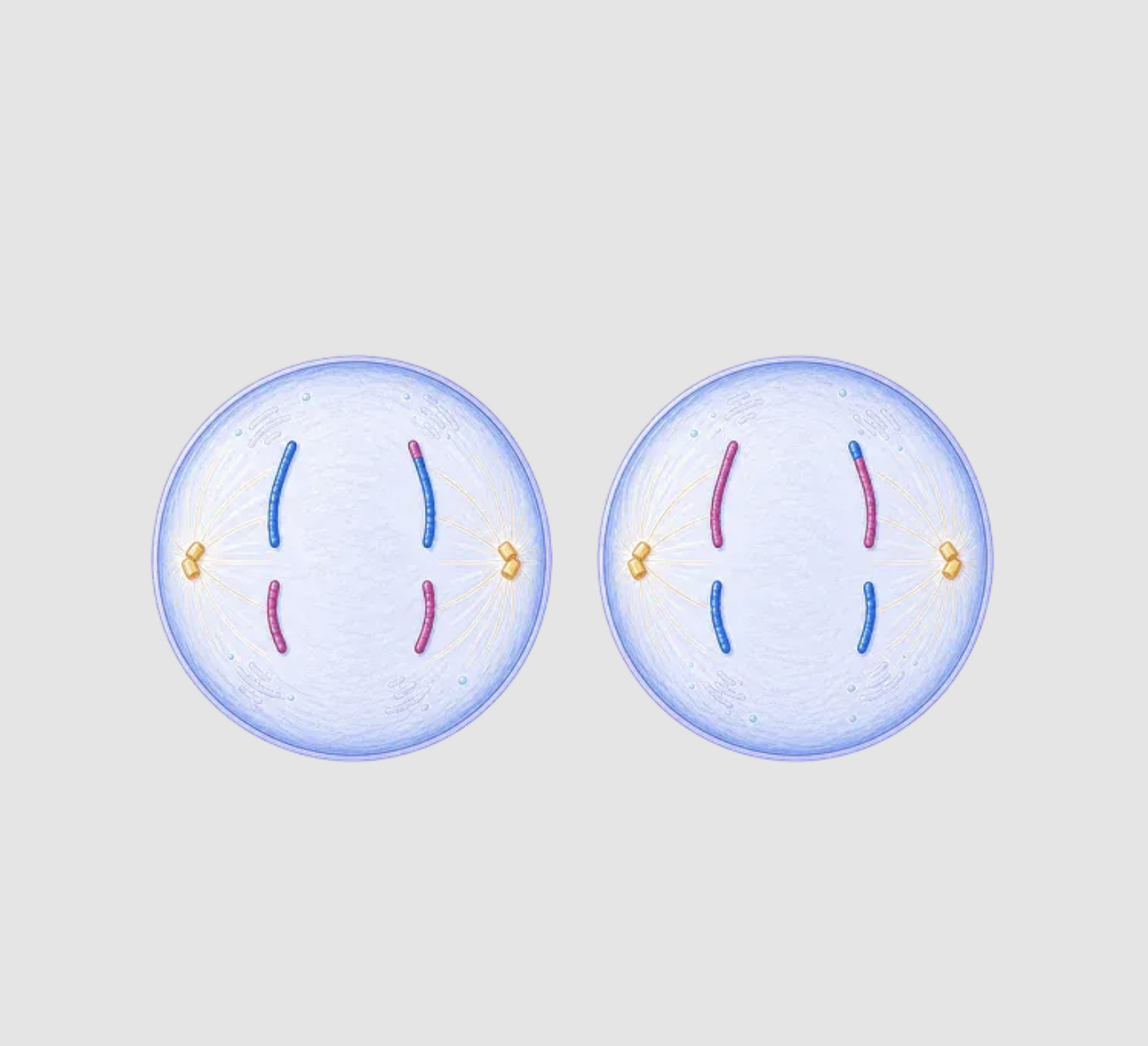
meiosis ii: telophase ii+cytokinesis
nuclei reform and cytokinesis produces four haploid daughter cells

genetic variation: independent assortment
random distribution of homologous chromosomes during meiosis
(with 23 chromosomes assorting independently there are 2²³—8mil possible assortments of chromosomes inherited for every cell
genetic variation: crossing over
homologous chromosome exchange reciprocal portions of themselves
genetic variation: random fertilization
in humans: the ovum has 8mil possible chromosome combinations, so does the sperm cell. 8milx8mil=64 trillion possible diploid combinations
compare meiosis and mitosis
start with once cell
start with copied dna/chromosomes
PMATC
use spindle fibers to move chromosomes
end with new daughter calles
helps cells divide and reproduce
contrast meiosis and mitosis
mitosis conserves # of chromosome sets, producing 2 cells that are genetically identical to the parent cell; meiosis reduces # of chromosome sets from 2 (diploid) to 1 (haploid) producing 4 genetically different cells
happen in meiosis but not mitosis=synapsis and crossing over during P1, alignment of homologus pairs at metaphase plate during M1, seperation of homologs during anaphase
mitosis=cohesins cleave at end of metaphase; meiosis=cohesins cleave along chromosome arms in A1 (homologs seperate) and at centromeres in A2 (seperation of sister chromatids)