20 equine pericardial, myocardial, and vascular diseases
 Call Kai
 Learn
Learn Practice Test
 Spaced Repetition
 Match
Match Flashcards
 Knowt Play
1/53

There's no tags or description
Looks like no tags are added yet.
Name | Mastery | Learn | Test | Matching | Spaced | Call with Kai | Chat |
|---|
No analytics yet
Send a link to your students to track their progress
54 Terms
Pericarditis
Overall this UNCOMMON condition is *idiopathic* in the horse (or can be caused by infection), which is inflammation of the pericardium
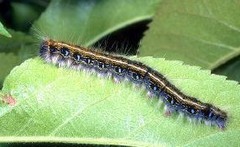
Transportation, fever, exposure to large number of horses, high prevalence of mare reproductive loss syndrome (due to ETC, eastern tent caterpillar)
Name the risk factors for pericarditis in horses?
Pericarditis (this is an eastern tent caterpillar)
This guy is seen in the fields of your horses. Your vet tells you that when ingested, mini needles can sting in the intestine and seed bacteria into the blood stream causing WHAT
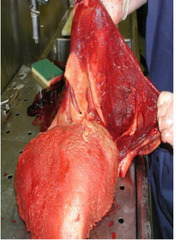
Pericarditis
What is this?
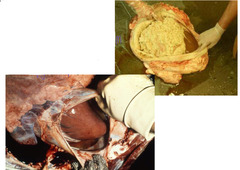
pericarditis
What is this?
Impaired cardiac filling (because the outside of the heart is inhibiting the inside's ability) --> cardiac tamponade (fluid filled into pericardial sac) and pericardial constriction
What can pericarditis lead to?
Effusive, fibrinous, constrictive
Name the 3 forms of pericarditis
Right sided heart failure is more likely because the ventricle is thinner. So there will be signs of distended jugular vein and pulsations
If something like pericarditis happens, which side of the heart is more susceptible to fluid accumulating?
1. Distensibility pericardial sac (capacity to stretch and expand)
2. rate of fluid accumulation
3. amount of fluid accumulation
What 3 things determine clinical signs and severity of pericarditis?
COLIC
Cardiac tamponade, ventral edema, jugular distension and weak pulse
Pericarditis often manifests as an EMERGENCY like what kinds of signs?
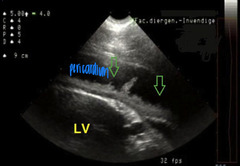
Echocardiography
(X ray is nonspecific with globoid heart and CBC just shows general signs of inflammation like hyperproteinemia)
How do you diagnose pericarditis?
Pericarditis = fluid accumulation outside the heart
What is this?
Stall rest, drainage and lavage, antimicrobials, NSAIDs
How do you treat pericarditis?
1. heart failure
2. myocarditis
3. myocardial fibrosis
What are the 3 types of myocardial disease horses can get?
a. Myocarditis
Which is local/diffuse myocardia inflammation with degenerative and necrotic cardiomyocytes, which is the consequence of local or systemic disease?
a. myocarditis
b. myocardial fibrosis
b. myocardial fibrosis
Which is the marked increase in collagen deposition as the result of an ischemic event?
a. myocarditis
b. myocardial fibrosis
a. right side
Edema, ascites, jugular distention and pulsation, and overall peripheral signs, this is which side of heart failure?
a. right side
b. left side
b. left side
Edema, effusion, crackles, tachypnea, tachycardia, and overall lung signs, this is which side of heart failure?
a. right side
b. left side
Myocarditis
What is this?
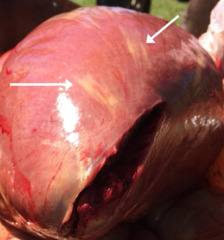
Myocarditis
Which issue can lead to this cascade of problems:
1. dec. myocardial contractility and dec. ventricular ejection fraction
2. diastolic dysfunction and impaired ventricular filling
3. mitral and tricuspid valve incompetency
4. development of arrhythmia
Inc. Troponin I (cardiac enzyme). Sinus tachycardia and arrhythmias on ECG.
How can you diagnose myocarditis?
Remove underlying cause (often a bacteria, virus, parasite, etc), corticosteroids, digoxin, lasix, quinidine sulfate
How can you treat myocarditis?
1. ionophore toxicity
2. feed contaminated with blister beetles
3. box elder toxicity
Name the top things that can cause toxic injury to the myocardium:
Typically their feed comes from the same feed mill that process cattle food. So it can be that they ate cattle food or that a farm has recently acquired food and this is likely the issue
How do horses get ionophore toxicity?
Chicken: coccidiostat
Cattle: growth promoting
Why do you use ionophores in cattle and chicken?
Ionophore toxicity
You get called to a horse farm. Many of them are colicy, with inc. RR and HR, have oliguria (low urine output), hypotensive and shocky, and exercise intolerant. CBC shows inc. PCV, BUN, P, and Troponin I. You get a history and they have recently gotten new feed in. What is the problem?
Echocardiography (anything under 20% fractional shortening has poor prognosis)
What is the test of choice for ionophore toxicity in horses?
Remove contaminated feed. Administer charcoal and magnesium sulfate, large doses of vitamin E. NO DIGOXIN
How do you treat ionophore toxicity in horses?
Epicauta and Tegrodera lactecinta
Which species of Blister beetles causes toxicosis in horses?
Alfalfa cut and crimped in the midwest, late summer
Name the most common times and ways horses get infected with blister beetle toxicosis
Cantharidin
What is the actual toxic agent in blister beetle toxicosis in horses?
Cantharidin = blister beetle toxicosis
What causes mucous membrane irritation, colic (GI SIGNS ARE MORE COMMON), hypocalcemia, frequent urination, cardiac damage thru direct injury to the myocardium thru beetles in hay?
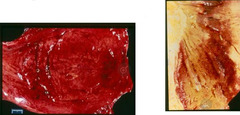
pain relieve, evacuate GI tract thru activated charcoal, and ulcer prophylactics
How do you treat blister beetle toxicosis in horses?
Peripheral vascular disease
What is this?
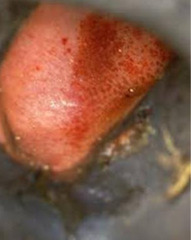
Vasculitis, aneurysm, embolism, thrombosis
Name examples of peripheral vascular disease
Vasculitis
This is inflammation of the blood vessels caused by viruses/parasites, or noninfectious immune complexes. Horses may be hyperemic, petechial, ecchymotic, and have well demarcated areas of cutaneous ventral edema or "elephant legs"
Aneurysms
This is vascular dilation/bulge with risk of rupture that develops from weakening of medial elastic coat (tunica media, the middle layer of a vessel). May be caused by trauma, sepsis, parasite migration, or degenerative vascular disease
Thrombosis
This is formation of a clot that obstructs blood flow that develops from intimal disease or a hypercoagulable state. May have come from trauma, needle penetration, irritating solutions, or secondary to perivascular inflammation
Embolism
This is foreign material (air, catheter fragments) carried in the blood stream which can be in the artery or veins which can occur with conditions like endocarditis and thrombophlebitis
d. vasculitis
Equine purpura hemorrhagica is big on which of these:
a. embolism
b. thrombosis
c. anuerysms
d. vasculitis
Streptococcus equi (2 weeks after any infection)
What is the causative agent of equine purpura hemorrhagica?
Equine purpura hemorrhagica
A horse has recently had strangles. Two weeks later, O calls and says horse feels hot and is splotchy red on the gums. When you show up, you see ventral edema with necrotizing arteritis in the small dermal/subdermal arteries on pathology. Whats happening?
Thrombophlebitis
What is this inflammation and thrombosis of the vein, where the horse is painful and swollen, showing signs of fever, hyperfibrinogenemia, and neutrophilic leukocytosis.
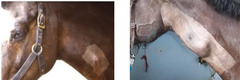
IV catheter/injection or any kind of vessel injury, hypercoagulability and low blood flow
What causes thrombophlebitis in horses?
Topical DMSO and NSAIDs
How do you treat thrombophlebitis in horses?
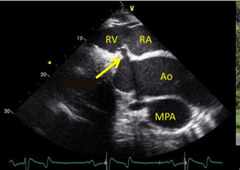
Aortic root rupture, aortopulmmonary fistulation (the arrow is pointing to a fistulae aka the root rupture of the aorta)
What is this?
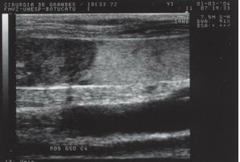
Thrombophlebitis (i think its the mixed opacity on the top left?)
What is this? (jugular vein)
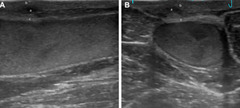
Thrombophlebitis (the left image is normal (?), and the right image has the thrombus)
What is this? (jugular vein)
Head swelling
What clinical sign is MOST COMMON with thrombophlebitis?
Aortoiliac thrombosis
In horses, this is caused by migrating strongylus vulagris larvae, so on pathphys is related to larval migration, damaged endothelium, turbulence, and compromised blood supply
a. cool limbs and dec. arterial pulse
c. colic and sweating
e. intermittent hindlimb lameness
Select the clinical signs which may occur with aortoiliac thrombosis in horses:
a. cool limbs and dec. arterial pulse
b. gastric mucosal ulcerations
c. colic and sweating
d. coughing and choke
e. intermittent hindlimb lameness
Male friesian horses over 10 years old
Name the common signalment for horses with aortic root rupture or aortopulmonary fistualtion
Aortic root rupture or aortopulmonary fistulation
Horses with this condition will often face sudden death with massive hemorrhage, but if you catch them before death, they have distress, tachycardia, bounding arterial pulses with loud continuous murmur, and jugular distension/pulsations
c. new grain from feedmill was fed
What element in the anamnesis will guide you towards a diagnosis of ionophore toxicity?
a. alfalfa hay from midwest is fed
b. there are beetles in hay
c. new grain from feedmill was fed
d. the horse was administered bute