bio/geology

0.0(0)
Studied by 0 people
call kaiCall Kai
Locked
learnLearn
examPractice Test
spaced repetitionSpaced Repetition
heart puzzleMatch
flashcardsFlashcards
GameKnowt Play
Card Sorting

1/21

encourage image

There's no tags or description

Looks like no tags are added yet.

Last updated 5:34 AM on 7/30/26
Name
Mastery
Learn
Test
Matching
Spaced
Call with Kai
Chat

No analytics yet

Send a link to your students to track their progress

22 Terms

1
New cards

what are the 3 main types of rocks?

  1. igneous

  2. sedimentary

  3. metamorphic

2
New cards

what is the igneous rock?

Sourced from volcanic eruptions (often times are dark in color, with some visible crystals) 
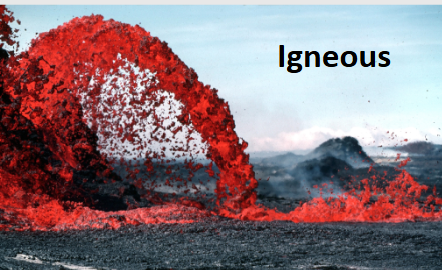

<p><span style="background-color: transparent;">Sourced from volcanic eruptions (often times are dark in color, with some visible crystals)&nbsp;</span></p><p><br></p>
3
New cards

what is metamorphic rock?

 rocks that have gone through altercation (changed through applied heat and pressure) 

  • Rock samples will other have alternating dark/light banding patterns or large crystals 
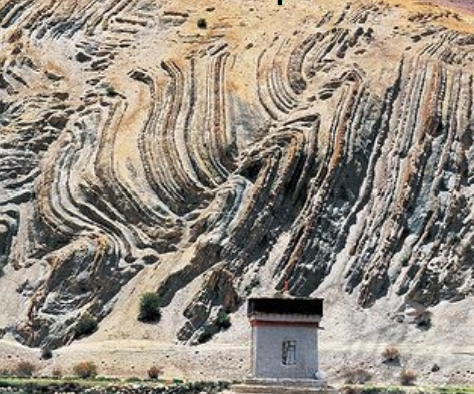

<p><span style="background-color: transparent;">&nbsp;rocks that have gone through altercation (changed through applied heat and pressure)&nbsp;</span></p><ul><li><p><span style="background-color: transparent;">Rock samples will other have alternating dark/light banding patterns or large crystals&nbsp;</span></p></li></ul><p><br></p>
4
New cards

what is sedimentary rock?

 rocks formed from pre-existing rocks or pieces of living organisms (often sourced from area with water) 

  • These rocks generally will contain fossils and will be the focus of this course/lab 
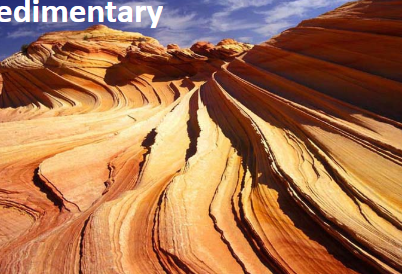

<p><span style="background-color: transparent;">&nbsp;rocks formed from pre-existing rocks or pieces of living organisms (often sourced from area with water)&nbsp;</span></p><ul><li><p><span style="background-color: transparent;">These rocks generally will contain fossils and will be the focus of this course/lab&nbsp;</span></p></li></ul><p><br></p>
5
New cards

sedimentary rocks consists of these two types:

  • siliciclastic

  • carbonates

think fossils**

6
New cards

what is siliciclastic rock composed of?

  • categorized under sedimentary rock

Composed of grains from eroded pre-existing rocks (broken pieces, transported, deposited & form a new rock)→ rocks that contain mineral silica


is based on particle size:

  • Conglomerate/Breccia: coarse clasts (>2mm) within a fine-grained matrix

  • Sandstone: Sand sized (2mm to 1/16mm) particles

    • Mostly quartz and feldspar

  • Siltstone: <1/16mm particles, still visible to the eye

  • Shale: Individual particles not visible to the eye, usually distinct parallel bedding
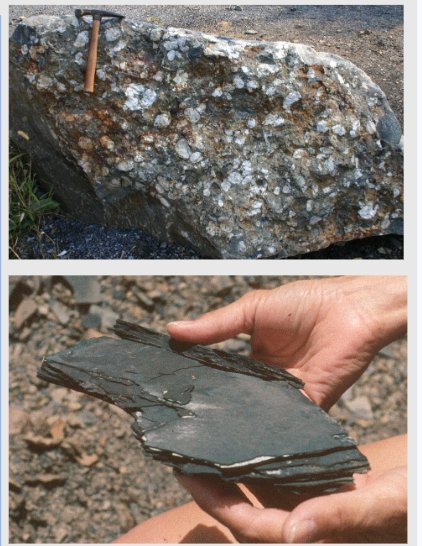
<ul><li><p>categorized under <strong>sedimentary rock</strong></p></li></ul><p><span style="background-color: transparent;">Composed of grains from eroded pre-existing rocks&nbsp;(broken pieces, transported, deposited &amp; form a new rock)→ rocks that contain mineral silica </span></p><p><br>is based on particle size: </p><ul><li><p><span style="background-color: transparent;"><strong>Conglomerate/Breccia</strong>: coarse<u> clasts</u> (&gt;2mm) within a fine-grained <u>matrix</u></span></p></li><li><p><span style="background-color: transparent;"><strong>Sandstone</strong>: Sand sized (2mm to 1/16mm) particles</span></p><ul><li><p><span style="background-color: transparent;">Mostly quartz and feldspar</span></p></li></ul></li><li><p><span style="background-color: transparent;"><strong>Siltstone</strong>: &lt;1/16mm particles, still visible to the eye</span></p></li><li><p><span style="background-color: transparent;"><strong>Shale</strong>: Individual particles not visible to the eye, usually distinct parallel bedding</span></p></li></ul><p></p>
7
New cards

siliciclastic rocks depends on what?

the energy of the depositional environment

8
New cards

the beach is what kind of depositional environment of energy?

high energy environment. Think waves moving sand back & forth 
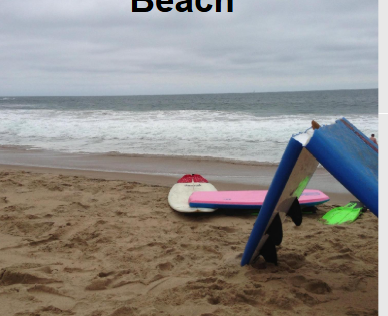
<p><span style="background-color: transparent;">high energy environment. Think waves moving sand back &amp; forth&nbsp;</span></p><p></p>
9
New cards

the beach is what kind of depositional environment of energy?

low energy environment (slow moving currents…can only move tiny particles in the direction of flow)
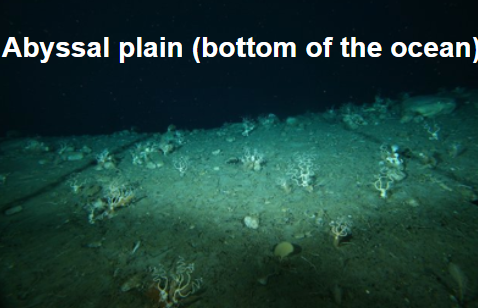
<p><span style="background-color: transparent;">low energy environment (slow moving currents…can only move tiny particles in the direction of flow)</span></p>
10
New cards

what are carbonates consist of?

  • categorized under sedimentary rock

Composed of precipitated dissolved ions in the water

Two main types: Limestone & Dolomite 

We will usually look at limestone in this class

  • Composed of primarily Calcium Carbonate (CaCO3)

    • Can be from fragments of once living organisms or other biological material 

  • We can fine these rocks in tropical environments
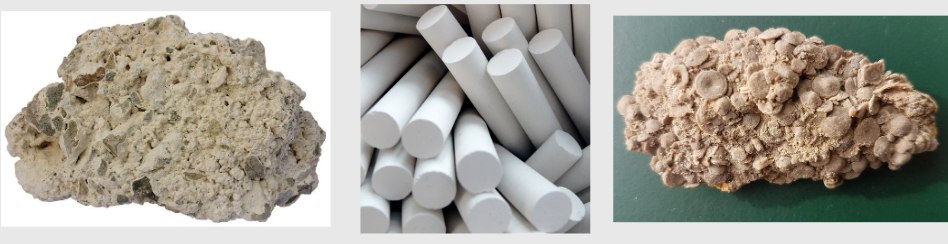
<ul><li><p><strong>categorized under sedimentary rock</strong></p></li></ul><p><span style="background-color: transparent;">Composed of precipitated dissolved ions in the water</span></p><p><span style="background-color: transparent;">Two main types: Limestone &amp; Dolomite&nbsp;</span></p><p><span style="background-color: transparent;">We will usually look at limestone in this class</span></p><ul><li><p><span style="background-color: transparent;">Composed of primarily Calcium Carbonate (CaCO<sub>3</sub>)</span></p><ul><li><p><span style="background-color: transparent;">Can be from fragments of once living organisms or other biological material&nbsp;</span></p></li></ul></li></ul><ul><li><p><span style="background-color: transparent;">We can fine these rocks in tropical environments</span><br></p></li></ul><p></p>
11
New cards

what role does weather play in terms of rock formation?

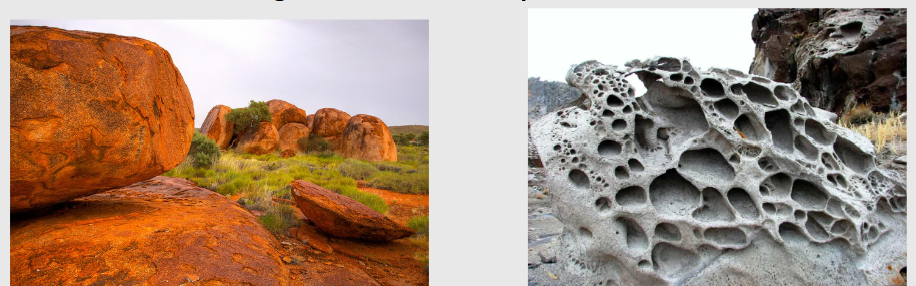
Rocks are broken down through the process 

two forms:

Chemical – Changes chemical composition

  • Air (rust) and water

Physical – mechanical breakdown of larger rocks into smaller particles (sediment)

  • Rivers, glaciers, wind, plants, etc. 

<p><span style="background-color: transparent;">Rocks are broken down through the process&nbsp;</span></p><p>two forms:</p><p></p><p><span style="background-color: transparent;"><strong>Chemical</strong> – Changes chemical composition</span></p><ul><li><p><span style="background-color: transparent;">Air (rust) and water</span></p></li></ul><p></p><p><span style="background-color: transparent;"><strong>Physical</strong> – mechanical breakdown of larger rocks into smaller particles (sediment)</span></p><ul><li><p><span style="background-color: transparent;">Rivers, glaciers, wind, plants, etc.&nbsp;</span></p></li></ul><p></p>
12
New cards

What are Steno’s Laws?

  1. original horizontally

  2. lateral continuity

  3. superposition

<ol><li><p>original horizontally</p></li><li><p>lateral continuity</p></li><li><p>superposition </p></li></ol><p></p>
13
New cards

what is the original horizontally principle of steno’s laws

The Grand canyon has multiple layers of sedimentary rocks which are horizontal. 
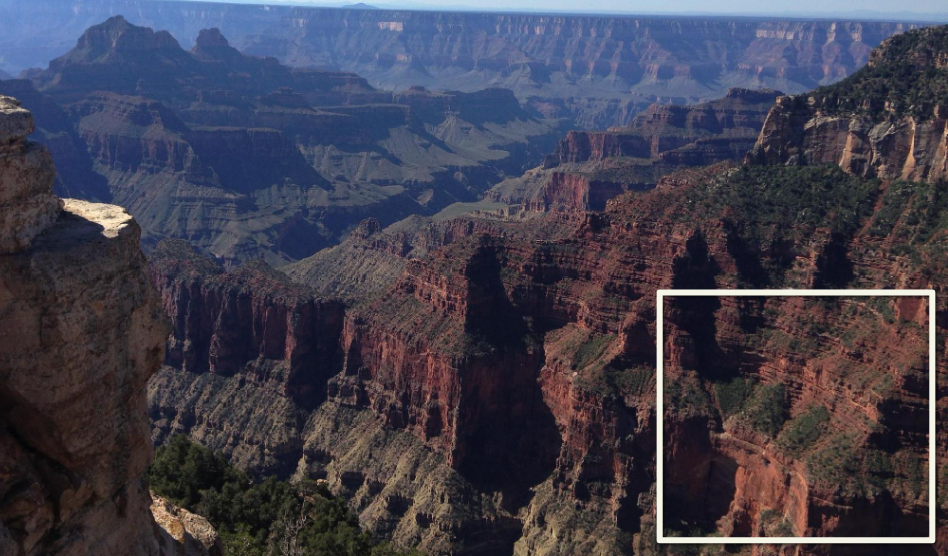
<p><span style="background-color: transparent;">The Grand canyon has multiple layers of sedimentary rocks which are horizontal.&nbsp;</span></p>
14
New cards

what is the laterally continuous principle of steno’s laws

Allows us to coordinate the age of rock layers across a canyon 

  • Strata are continuous laterally on either side of the canyon…so we can connect these layers as if the canyon was filled
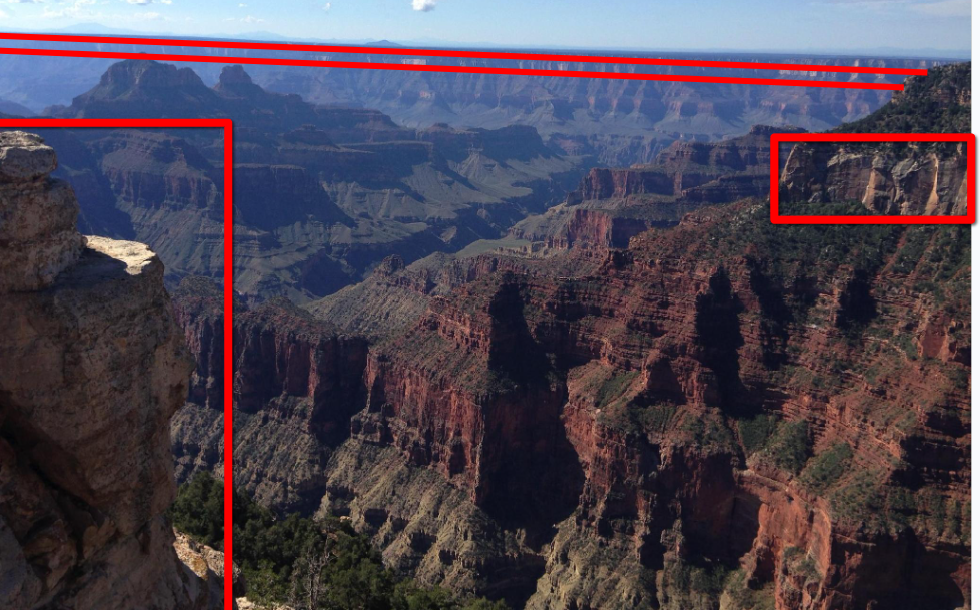
<p><span style="background-color: transparent;">Allows us to coordinate the age of rock layers across a canyon&nbsp;</span></p><ul><li><p><span style="background-color: transparent;">Strata are continuous laterally on either side of the canyon…so we can connect these layers as if the canyon was filled</span></p></li></ul><p></p>
15
New cards

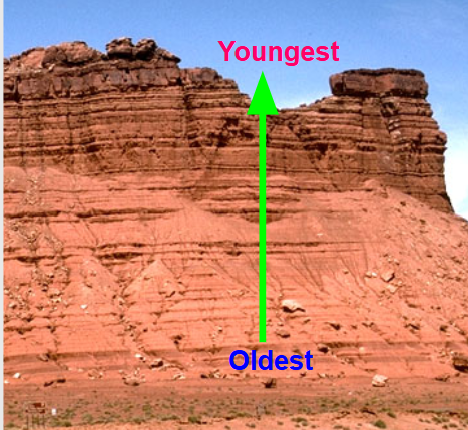
what is the law of superposition principle of steno’s laws

Oldest strata on the bottom (deposited first) and Youngest Strata on the top (deposited) last

  • All weathering, offset by faults occurs later and is the youngest activity to have happened

(Think of this link building a cake 1. cake, 2. frosting, 3. 2nd cake layer , 4. slicing the cake to serve) 
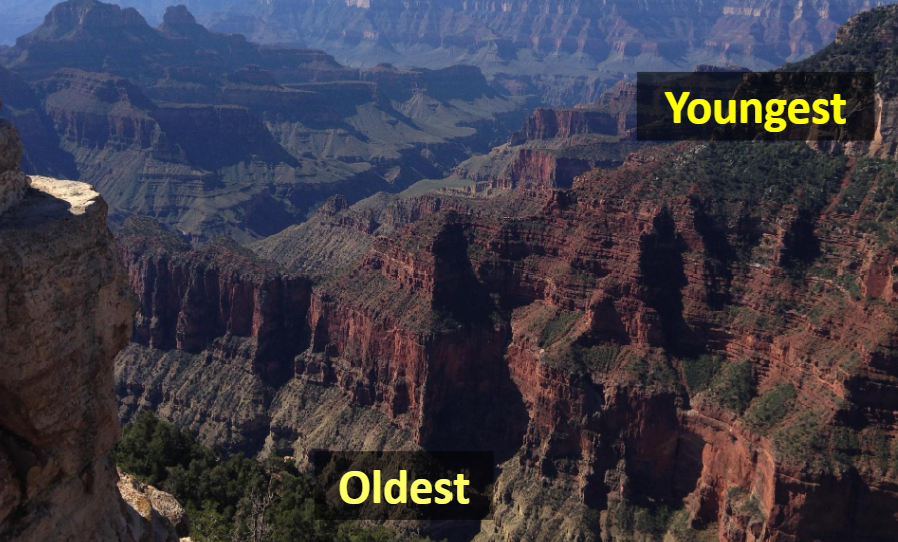

<p><span style="background-color: transparent;">Oldest strata on the bottom (deposited first) and Youngest Strata on the top (deposited) last</span></p><ul><li><p><span style="background-color: transparent;"><em>All weathering, offset by faults occurs later and is the youngest activity to have happened</em></span></p></li></ul><p><span style="background-color: transparent;">(Think of this link building a cake 1. cake, 2. frosting, 3. 2<sup>nd</sup> cake layer , 4. slicing the cake to serve)&nbsp;</span></p><p><br></p>
16
New cards

what is cross stratification

Layering of strata (rock) layers at an angle

most commonly from the movement of water and wind, with water we generally see two types:

  • SYMMETRICAL: formed from water moving evenly back and forth

  • ASYMMETRICAL: formed by water currents moving predominantly in one direction. 
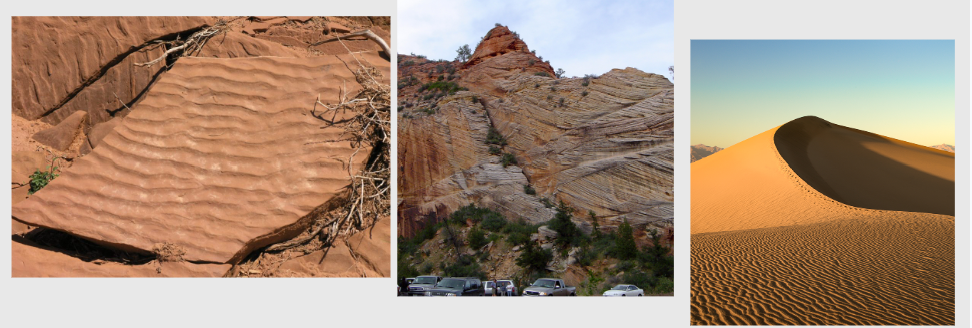

<p><span style="background-color: transparent;">Layering of strata (rock) layers at an angle</span></p><p></p><p>most commonly from the movement of water and wind, with water we generally see two types: </p><ul><li><p><span style="background-color: transparent;"><strong>SYMMETRICAL</strong>: formed from water moving evenly back and forth</span></p></li><li><p><span style="background-color: transparent;"><strong>ASYMMETRICAL</strong>: formed by water currents moving predominantly in one direction.&nbsp;</span></p></li></ul><p><br></p>
17
New cards

why energy relates to grain size

Energy is required to move grains (rock pieces), where larger grains require more energy

  • large grains require more energy to move

Rock will commonly be move in areas that contain moving water. 
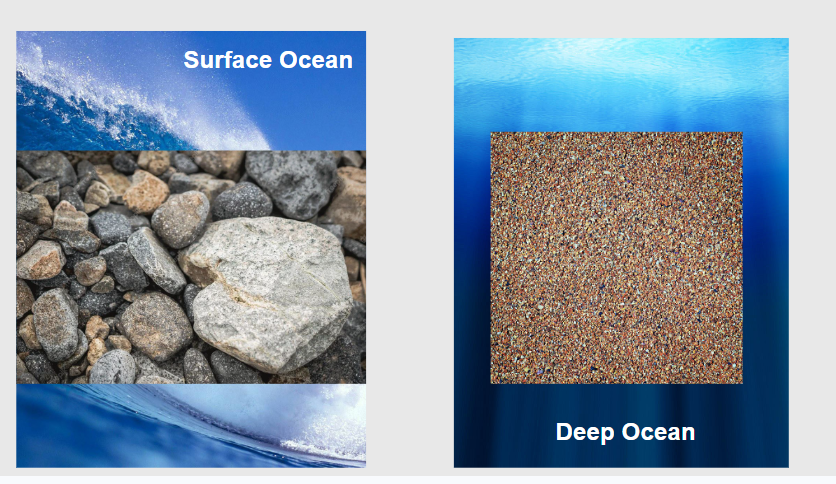

<p><span style="background-color: transparent;">Energy is required to move grains (rock pieces), where larger grains require more energy</span></p><ul><li><p>large grains require more energy to move </p></li></ul><p><span style="background-color: transparent;">Rock will commonly be move in areas that contain moving water.&nbsp;</span></p><p><br></p>
18
New cards

what is graded bedding

Changes in energy can distribute different grains and tell us the direction of movement

  • Looking from A to B we see energy had decreased
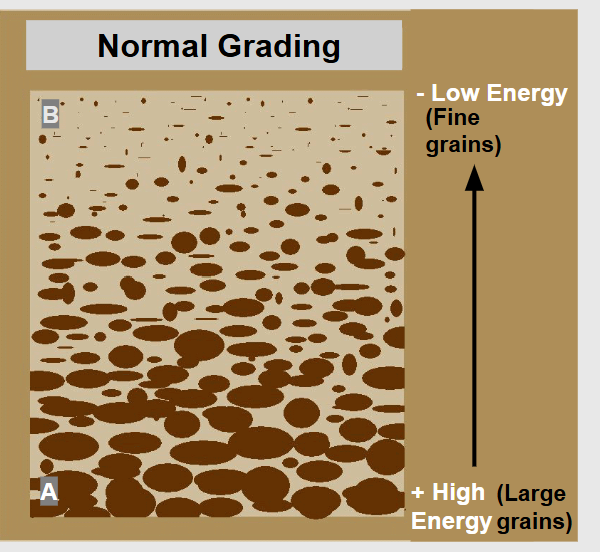
<p><span style="background-color: transparent;">Changes in energy can distribute different grains and tell us the direction of movement</span></p><ul><li><p><span style="background-color: transparent;"><strong>Looking from A to B we see energy had decreased</strong></span></p></li></ul><p></p>
19
New cards

what is energy and fossil preservation?

Energy can transport fine grains that allow for fossil preservation (including large & small organisms)!
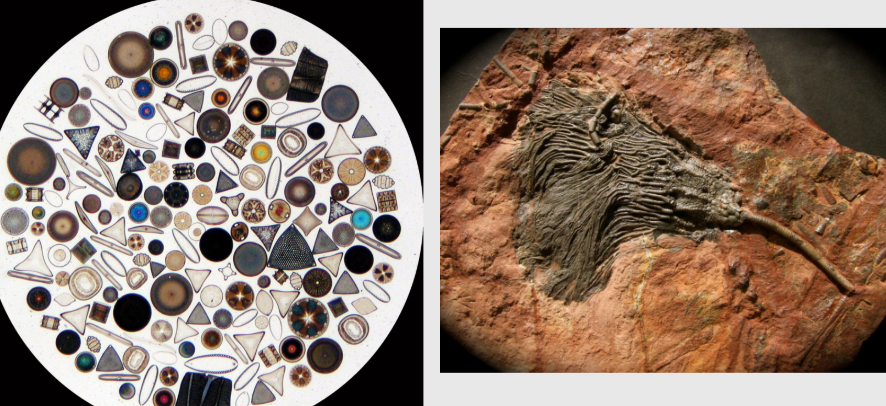
<p><span style="background-color: transparent;">Energy can transport fine grains that allow for fossil preservation (including large &amp; small organisms)!</span></p>
20
New cards

what are trace fossils

  • Fossils left behind by organisms that show us where it spent part of its life

  • Usually indicates movement, what it ate, and nesting habits
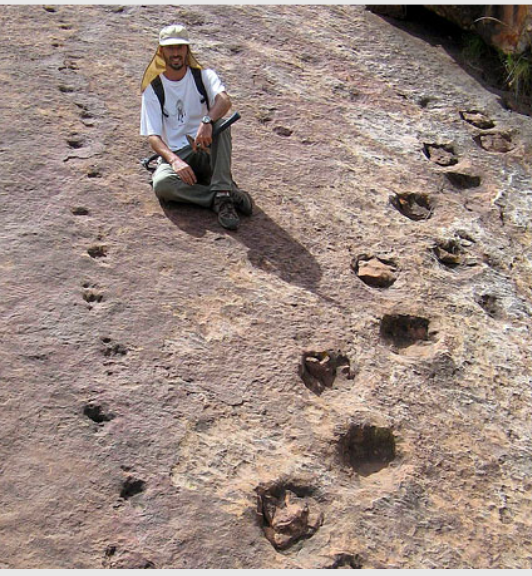
<ul><li><p><span style="background-color: transparent;">Fossils left behind by organisms that show us where it spent part of its life</span></p></li></ul><ul><li><p><span style="background-color: transparent;">Usually indicates movement, what it ate, and nesting habits</span></p></li></ul><p></p>
21
New cards

what are indicating scales

in geology we want to know how big/small something was. We often take a measurement and draw a scale bar!
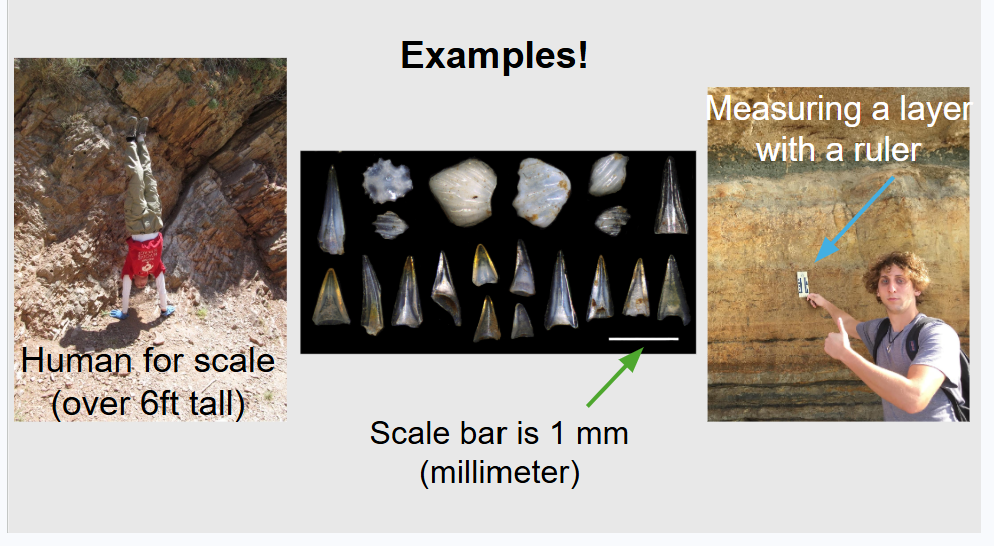
<p><span style="background-color: transparent;">in geology we want to know how big/small something was. We often take a measurement and draw a scale bar!</span></p>
22
New cards