A-Level Biology - 3.7.4 Populations in ecosystems
 Call Kai
 Learn
Learn Practice Test
 Spaced Repetition
 Match
Match Flashcards
 Knowt Play
1/18

There's no tags or description
Looks like no tags are added yet.
Name | Mastery | Learn | Test | Matching | Spaced | Call with Kai | Chat |
|---|
No analytics yet
Send a link to your students to track their progress
19 Terms
What is a community formed from?
populations of different species form a community
What is an ecosystem formed from?
a community and the non-living components of its environment
What does a species occupy within a habitat?
a niche governed by adaptation to both abiotic and biotic conditions
What is carrying capacity?
certain size of population of a species an ecosystem can support
Give two factors that can affect population size
- the effect of abiotic factors
- interactions between organisms: *interspecific* and *intraspecific* competition and predation
How can abiotic factors affect population size?
-light influences plant growth
-temperature affects enzyme activity
-adverse weather conditions require certain
adaptations
-availability of water and oxygen
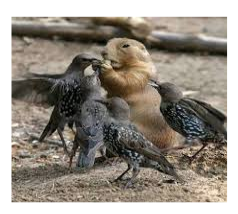
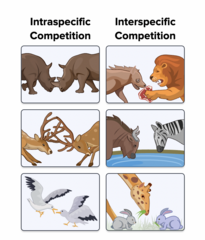
What is interspecific competition?
competition between individuals of different species
What is intraspecific competition?
competition between individuals of the same species
Give two methods used to estimate the size of a population
*for slow-moving or non-motile organisms:*
randomly placed quadrats or quadrats along a belt transect
*for motile organisms:*
the mark-release-recapture method

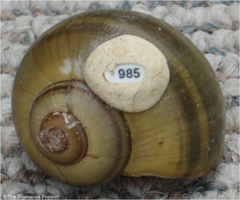
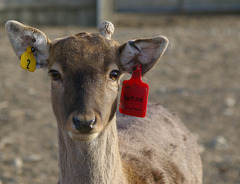
What is the mark-release recapture method?
1) Capture sample, mark and release
2) Ensure marking is not harmful and ensure marking does not affect survival
3) Allow time for organisms to randomly distribute before collecting a second sample
4) Population = number in first sample × number in second sample divided by number of marked organisms in second sample
Give the formula for the mark-release-recapture method
P = (N₁ x N₂)/M₂
P = size of population
N₁ = number of individuals caught in the first sample
N₂ = number of individuals caught in the second sample
M₂ = number of individuals caught in the second sample that were marked
What assumptions are made when using the mark-release-recapture method?
- no births, deaths or migration during time of the study
- marked sample successfully reintegrates with the main population
- survival of marked sample was not affected
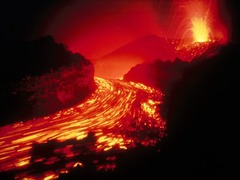
Where can primary succession occur?
occurs where newly formed/exposed land (eg rock from a lava flow) is first colonised by species
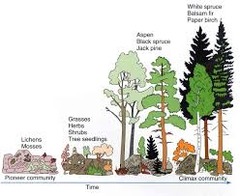
Describe the process of primary succession
1) Colonisation by *pioneer species*
2) Pioneer species change the environmental conditions
3) Environment becomes less hostile (more suitable) for other/new species with different adaptations
4) New species change the environment in such a way that it becomes less suitable for the previous species
5) Change/increase in biodiversity
6) To *climax community*
Give three features of a climax community
1) Same species present/stable community over long time
2) Abiotic factors more or less constant over time
3) Populations stable around carrying capacity
Where can secondary succession occur?
area of land previously colonised is cleared (eg deforestation)
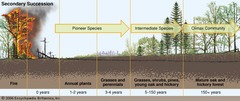
Describe the process of secondary succession
1) Colonisation by pioneer species
2) Pioneers species change the environment
3) Environment becomes less hostile (more suitable) for other/new species (less suitable for
previous species)
4) Change/increase in biodiversity
5) To climax community of rainforest
What does conservation of habitats frequently involve?
management of succession
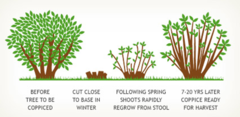
Name four conservation strategies
habitats and species given legal protection
captive breeding programs for endangered species
managing succession
fishing quotas