Biology and Society
 Call Kai
 Learn
Learn Practice Test
 Spaced Repetition
 Match
Match Flashcards
 Knowt Play
1/118

Earn XP
Description and Tags
unit one
Name | Mastery | Learn | Test | Matching | Spaced | Call with Kai | Chat |
|---|
No analytics yet
Send a link to your students to track their progress
119 Terms

Eukaryotic cell
Lipid bilayer membrane enclosed internal compartments (fat layer)
Membrane bound
Larger and more complex
Evolved from prokaryotic cells
Uni or multicellular

Prokaryotic cell
Simplest and most basic cell
Don't have a nucleus
Before nucleus
No membrane bound organelles
Nucleoid and nucleus are not the same thing because the nucleoid is not membrane bound
Oldest type of cell
Single celled
Single circular chromosome
Similarities between both eukaryotic cells and prokaryotic cells
Both have DNA
Have ribosomes
Have cytoplasm
Cell membrane
Both produce energy

Plant cell
Cell wall
Large central vacuole (stores water)
Chloroplast
Lack centrosomes
Lack lysosomes

animal cell
No cell wall
Numerous small vacuoles
No chloroplasts
Centrioles/ centrosomes
Lysosomes
Hydrophobic
Scared of water
Lipids do not interact well with water
Four main components of a cells:
Plasma membrane
DNA
Cytoplasm (semifluid matrix of cellular substructures and cytosol)
Ribosomes (synthesize proteins)

The Nucleus
The control center of the eukaryotic cell
Enclosed by the double membrane nuclear envelope
Has nuclear pores that allow chemical messages in and out

Endoplasmic Reticulum
Interconnected network of sacs made of a singular membrane continuous with the nuclear envelope
Makes and modifies different substances for the cell

Golgi Apparatus
Packages proteins and lipids into vesicles and directs them to their final destination inside or outside of the cell
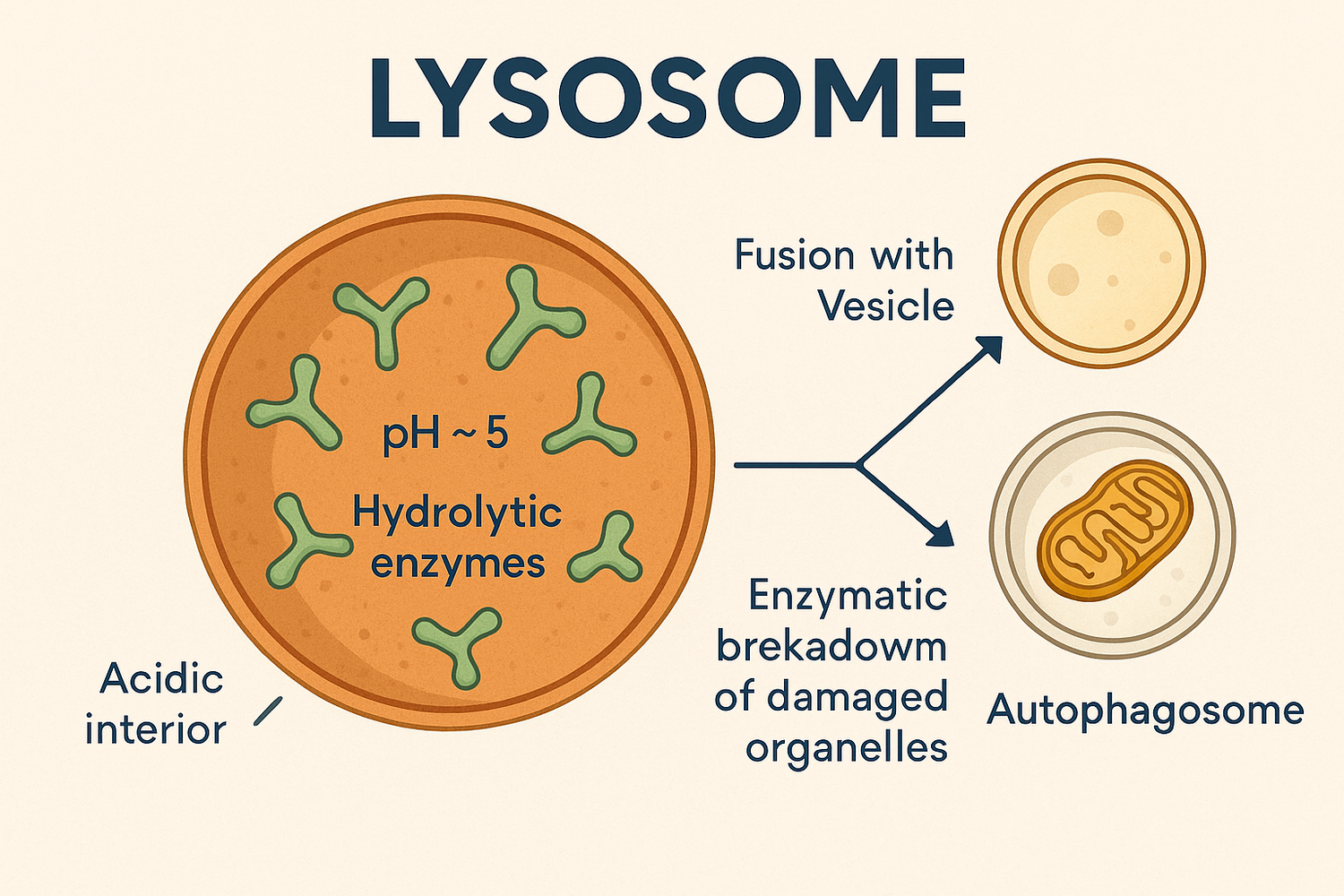
Lysosomes
The garbage and recycling centers of the cell
Contain enzymes that break down large biomolecules
Not found in plants or fungi

Vacuoles
Multiple functions include
Water balance and storage
Toxic waste storage

Mitochondria
Powerhouse of the cell
Transforms the energy of food molecules into ATP cellular fuel in a process called cellular respiration
Surrounded by a double membrane

Chloroplast
Double membrane bound
Capture energy from sunlight and use to make sugar molecules via photosynthesis
Found only in cells of plants and some protists

cytoskelton
A network of protein cylinders and filaments that forms the framework of a cell
Supports the movement of organelles
Can enable whole cell movement
Gives shape to cells without cell walls
Little highways inside cells
Cell theory
All organisms are composed of one or more cells
All cells. Arise from pre-existing cells
The cell is the structural and functional unit of all living things
what is life
Cells
Needs DNA/Hereditary information
Needs energy
Can reproduce
Evolves
Maintain a constant internal environment
Evolve as groups
Obtain energy from the environment to support metabolism
They sense the environment and respond to it
Cells
Smallest unit of life
Microscopic self-contained unites enclosed by a protective membrane
The human body is composed of 100 trillion (1014) cells
Prokaryotes
Pro=before
Karyo= nucleus
Bacteria and archaea
Cytoplasm
DNA the genetic material
Ribosomes: molecular machines that produce protein
No nucleus or membrane bound organelles
Eukaryotes
Eu= true
Karyo= nucleus
Protists, Fungi, Animals, Plants
May be single celled or multicellular
Their DNA is enclosed in a double membrane enclosed nucleus
Contain a variety of membrane enclosed compartments called organelles
Lipid bilayer membrane enclosed internal compartments
They concentrate and organize cellular chemical reactions
Their volume can be a thousand times larger than prokaryotic cells
Bacteria and Archaea cells
A protective cell wall surrounds the plasma membrane
Some have a capsule around the cell wall
Helps disease-causing bacteria evade the immune system
Some have short hairlike pili
To link together
To attach to surfaces
Some have long whiplike flagella
Archaea
The domain Archaea is well known for the extreme lifestyles of its members
Thermophiles love the heat
Halophiles love salt
Science
a body of knowledge (data) about the natural world
• An evidence-based process
• Must be detectable, observable, and measurable
• Based on evidence that can be demonstrated through
observations and/or experiments
Scientific Method
The scientific method, or the process of science, are the practices that produce scientific knowledge
Observation
a description, measurement, or record of any object or phenomenon.
Hypothesis
is an informed, logical, and plausible explanation for observations of the natural world.
▪ A hypothesis must be
• Testable
• Falsifiable
― It must make predictions that can be clearly determined to
be true or false.
• Is not an “if . . . then” statement
Observational study
Descriptive: reporting data found in nature
• Analytical: measurements that
can then be analyzed with statistics
Experiment
is a repeatable manipulation of one or more aspects of the natural world.
Independent variable
manipulated by scientists
Dependent Variable
responds to changes in the independent variable – what the scientist measures
Experimental study
a controlled scientific investigation used to test a hypothesis and discover cause-and-effect relationships in living systems
Control Group
Group that gets no treatment
Used for comparison
Treatment Group
The experimental group(s)
Same set of conditions as the control group, except the
independent variable is manipulated
Peer Review
are found in scientific journals
• has passed scrutiny of experts who have no direct involvement in the research under review
• main mechanism for policing personal or group bias and fraud in science
Primary Literature
first publication of scientific research that contains actual data with controls
• Peer-reviewed science journals and dissertations
Secondary Literature
gives a basic overview of a topic or summarizes an area of research
• Textbooks, review articles, popular science magazines, reputable news outlets, or respected institutions
Scientific Theory
Is a broad explanation for a wide range of phenomena
• Has such a high level of certainty that no new evidence is likely to refute it
• Examples: Cell Theory, Germ Theory
Scientific Fact
is a direct and repeatable observation of the natural world.
Abstract
A standard abstract covers five essential parts of the research:
Purpose: The main objective, research question, or problem the study addresses.
Context: Brief background information showing what is already known.
Methods: The research design, data collection tools, and analysis procedures.
Results: The primary findings or outcomes.
Conclusion: The main takeaway and broader implications of the work
Introduction
An introduction in a research paper is the opening section that sets up your topic, provides background context, and explains why your specific study is necessary. It typically forms about 10% to 15% of the total paper length
materials and methods
a comprehensive description of what physical and informational resources were used and how the study was conducted
Results
the recorded data, observations, and measurements gathered during an experiment or study
Discussion
the specific section of a lab report, research paper, or scientific manuscript where the author interprets and evaluates the meaningful biological significance of their experimental results
Scientific Literacy
an understanding of the basics of science and the scientific process.
• Enables us to use critical thinking to make informed decisions
• Enables us to communicate our knowledge to others
Scientific Claims
a statement about how the natural world works that can be tested using the scientific method
Pseudoscience
is characterized by scientific-sounding statements,beliefs, or practices that are not based on the scientific method.
Bias
a prejudice or opinion for or against something
Credentials
the qualifications to be recognized as an authority on the subject.
• Do they have an advanced degree, such as a PhD or MD?
• Is their degree in the field related to their claims?
Correlation
means that two or more aspects of the natural world behave in an interrelated manner.
• If one aspect shows a particular value, we can predict a value for the other aspect.
• But, the first aspect may or may NOT be the cause of the other aspect.
Causation
a change in one biological factor directly produces a change or specific outcome in another
meta-analysis
a research paper that combines results from different studies suggests that physicians should:
• strongly recommend the vaccine to parents.
• alleviate HPV vaccine safety concerns.
• promote trust in vaccines.
Anecdote
an isolated, uncontrolled observation or a personal report about a single biological event, patient case, or animal behavior.
Basic research
scientific experimentation aimed at expanding fundamental knowledge about living systems and cellular processes without an immediate practical goal
Applied Research
uses existing scientific knowledge to solve specific, practical problems affecting living organisms, human health, agriculture, or the environment
Clinical Trial
Effectiveness of intervention to treat a disease
• Safety of a new drug
• Defining dose administration
• Testing drug formulation
• Exploring combination therapies
• Evaluating effect of therapies on quality of life
Informed Consent
Learning the key facts about a trial before deciding whether to participate
• Research study purpose
• Risks/Benefits
• Alternative treatments
• Confidentiality of records
• Medical treatment available if injury occurs
• Whom to contact for answers to questions
• Statement that participation is voluntary
• This is mandatory for a clinical research trial
Institutional Review Board
All clinical trials must be approved and monitored by an IRB. IRB is an independent committee of physicians, nurses, statisticians, community advocates and others. The function of the IRB is to ensure that a clinical trial is ethical and the rights welfare of study participants are protected.
Belmont Report
a foundational document outlining ethical principles for human subjects’ research, published in 1979 by the U.S. National Commission for the Protection of Human Subjects.
Placebo Effect
a real physical or chemical change in the body caused by a person's expectation of healing rather than an active medicine
Adverse Events
an undesired, harmful, or damaging change that happens to an organism or biological system after exposure to a chemical, drug, or other intervention
Phase 1
15 to 30 participants, first in humans, find safety
Phase 2
less than 100 participants determine efficiency
Phase 3
100 to 1000 participants, compare new agent with standard treatment
Phase 4
several hundreds to several thousands of participants, post market, long term safety and efficacy
Randomized Control Trial
a scientific experiment where study subjects are assigned by chance to either an experimental group receiving a specific intervention or a control group receiving a placebo or standard care
Double blind study
an experimental design in biology and clinical research where neither the participants nor the researchers know who is receiving the active treatment and who is receiving a placebo or contro
Placebo controlled study
a scientific test where researchers compare a new medical treatment against an inactive dummy treatment, called a placebo, to see if the real treatment actually works
Efficiency
how well an organism, cell, or ecosystem uses energy and resources to grow, survive, and reproduce with the least amount of waste
Exclusion criteria
the specific characteristics, conditions, or factors that disqualify a prospective participant, animal model, or sample from being included in a study
Inclusion Criteria
the mandatory traits or standards that a subject, sample, or data point must possess to be part of a study
Pre clinical Trial
a phase of research that tests a new drug, medical device, or treatment in and/or animal models] before any testing is allowed in humans
Respect
"respect" does not have a formal definition, as it is a human social and philosophical concept rather than a biological process or structure
Cell
the smallest unit of life
• Microscopic, self-contained units enclosed by a protective membrane
The human body is composed
of ~100 trillion (1014) cells
Carbohydrates
Sugars and starches
•The Job: Your body’s preferred source of immediate energy.
•The Structure: Usually shaped like rings or long chains of rings.
Lipids
Fats, oils, and waxes
•The Job: Long-term energy storage and creating plasma and organelle membranes of every cell.
•The Structure: Long, hydrophobic (water-fearing) tails that don't mix with water.
Proteins
Complex chains made of amino acids
•The Job: They do almost everything! They build muscle, move oxygen in your blood, and act as enzymes
(the catalysts that speed up chemical reactions).
•The Structure: Highly complex 3D shapes. If a protein loses its shape, it stops working.
Nucleic Acids
DNA and RNA
•The Job: Storing and transmitting genetic information.
•The Structure: A double helix (for DNA) made of a sugar-phosphate backbone and nitrogen "bases."
Phospholipids
The Cell Builders
• Structure: Composed of one glycerol "head," a
phosphate group, and only two fatty acid tails.
Metabolism
the sum of all chemical reactions that happen inside a living organism to sustain life
Homeostasis
the self-regulating process by which a biological system maintains a stable, balanced internal environment despite changes in the outside world
Organelle
a tiny, specialized structure inside a cell that performs a specific job, much like an organ does in the whole body
DNA
the molecule that carries the genetic instructions used in the growth, development, functioning, and reproduction of all living organisms
ATP
the primary molecule that living cells use to store, transfer, and spend energy
Cellular Respiration
the metabolic process cells use to convert nutrients like glucose into usable energy in the form of ATP (adenosine triphosphate), releasing carbon dioxide and water as waste
Sugar
a generic term for short-chain, soluble carbohydrates made of carbon, hydrogen, and oxygen that serve as a primary source of cellular energy and structural components
Photosynthesis
the biological process by which green plants, algae, and certain bacteria convert light energy into chemical energy
Phospholipid Bylayer
a double layer of lipid molecules that forms the fundamental barrier of all cell membranes and organelle boundaries
Selective Permeability
a barrier that allows certain molecules or ions to pass through while blocking others
The 6 characteristics of life
They are composed of one or more cells.
2. They reproduce autonomously using DNA.
3. They obtain energy from the environment to support metabolism.
4. They sense the environment and respond to it.
5. They maintain a constant internal environment.
6. They can evolve as groups
4 main concepts of a cell
Plasma Membrane
2. DNA
3. Cytoplasm
• Semifluid matrix of cellular substructures and cytosol
4. Ribosomes
• Synthesize proteins
Tree of Life
a graphical representation of all known species arranged as a branching tree
• shows evolutionary relationships among the species (DNA similarity)
3 domains of life
Eubacteria (bacteria)
2. Archaea
3. Eukarya
4 kingdoms
Plantae
2. Protists
3. Animalia
4. Fungi
Binary Fission
a type of asexual reproduction where a single parent cell divides into two genetically identical daughter cells
Capsule
a thick, protective outer layer of gelatinous material—usually made of polysaccharides—that surrounds the cell wall of some bacteria and fungi
Pili
thin, hair-like protein tubes found on the surface of many bacteria
Flagella
microscopic, hair-like cellular appendages primarily responsible for cell locomotion
Extremophile
an organism that grows, survives, and thrives in physical or geochemical conditions
Quorum Sensing
a process of cell-to-cell communication that allows bacteria to track their population density and change their behavior together when a threshold number is reached.
Biofilm
a structured community of microorganisms—such as bacteria, fungi, or algae—stuck to a surface and enclosed in a self-produced sticky slime matrix