Junctional Rhythms (DM)
 Call Kai
 Learn
Learn Practice Test
 Spaced Repetition
 Match
Match Flashcards
 Knowt Play
1/19

There's no tags or description
Looks like no tags are added yet.
Name | Mastery | Learn | Test | Matching | Spaced | Call with Kai | Chat |
|---|
No analytics yet
Send a link to your students to track their progress
20 Terms
Junctional Rhythms
AV junction, will assume the role of pacing the heart
What is the main characterisitic of junctional rhythms
P waves are inverted or negative due to retrograde impulse from AV node
Premature Junctional Contraction (PJC)
A single site in the AV junction or bundle of His/Purkinje System contracts earlier than the next anticipated complex of the underlying rhythm
When does the pause in PJC occur
SA node is depolarized by ectopic beat, a noncompensatory pause occurs
Characteristics of PJCs (5-step)
Rate is underlying rhtyhm w/ the PJC
Usually regular, expect for PJC
Inverted or absent P wave that appear before or after QRS
PR interval is usually < 0.12 sec if preceding, absent if following QRS
QRS are uniform and < 0.12 sec
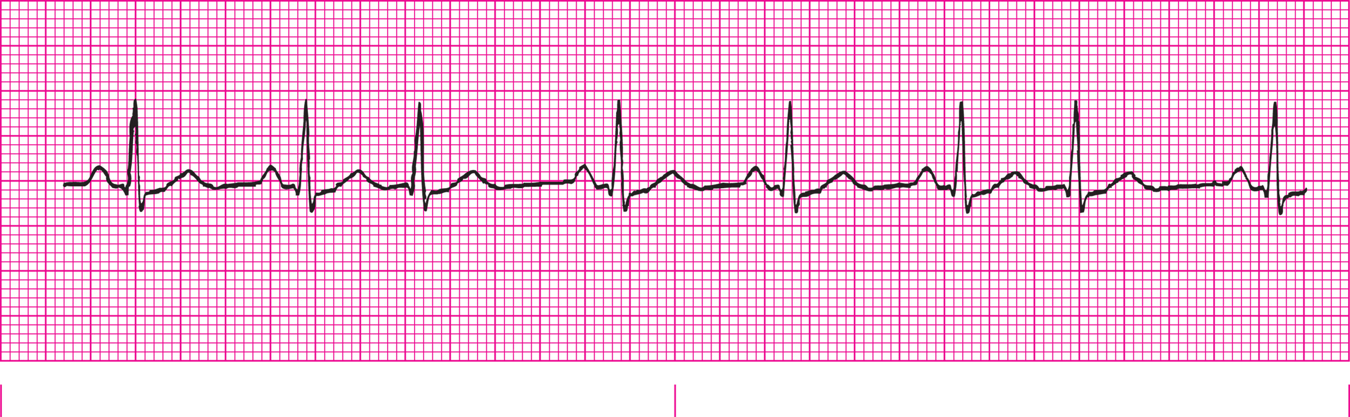
PJCs
Junctional Escape Rhythms
SA node may fail to generate an impulse, or if rate falls below that of the AV node, then AV node will assume the role of pacemaker
Series of junctional escape beats occur
Junctional escape beat
Isolated junctional beat occurs
Causes of Junctional Escape Rhythm
SA Node Disease
Hypoxia
Increased vagal tone
Cardiac Drugs
Complete Heart Block
Characteristics of Junctional Escape Rhythm (5-step)
Rate = 40-60 bpm
Rhythm is regular unless isolated junctional escape beat
Inverted or Absent P waves before or after QRS
PR is < 0.12 sec before QRS or absent if P is after QRS
QRS are uniform and < 0.12 sec
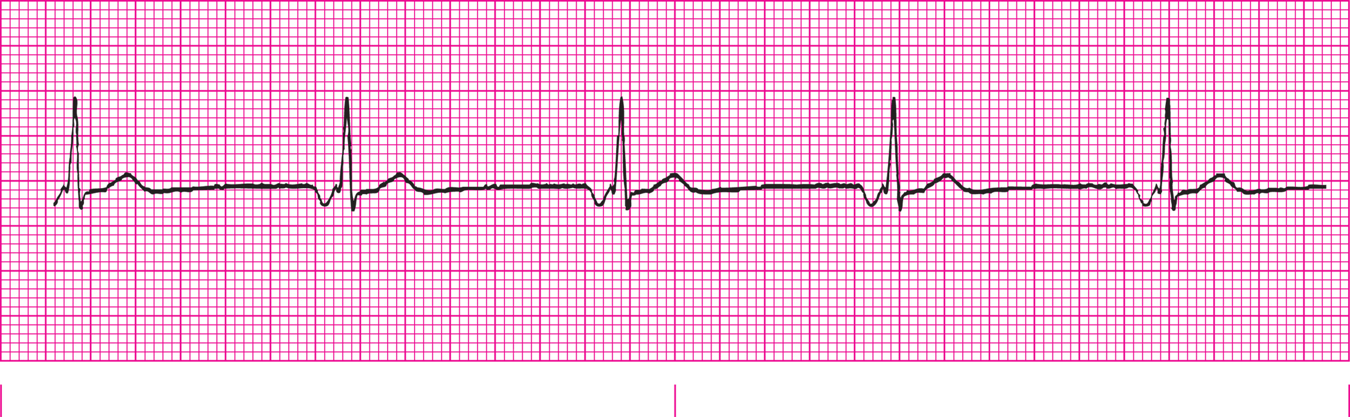
Junctional Escape Rhythm
What causes Accelerated Junctional Rhythm
Hypoxia
Digitalis
Inferior Wall MI
Rheuamtic Fever
Accelerated Junctional Rhythms
increased automaticity in AV junction, causes junction to discharge impulses at faster rate than its intrinsic rate
Characterisitcs of Acclerated Junction Rhythm
Rate = 60-100 bpm
Rhythm is regular unless isolated junctional escape beat
Inverted or Absent P waves before or after QRS
PR is < 0.12 sec before QRS or absent if P is after QRS
QRS are uniform and < 0.12 sec
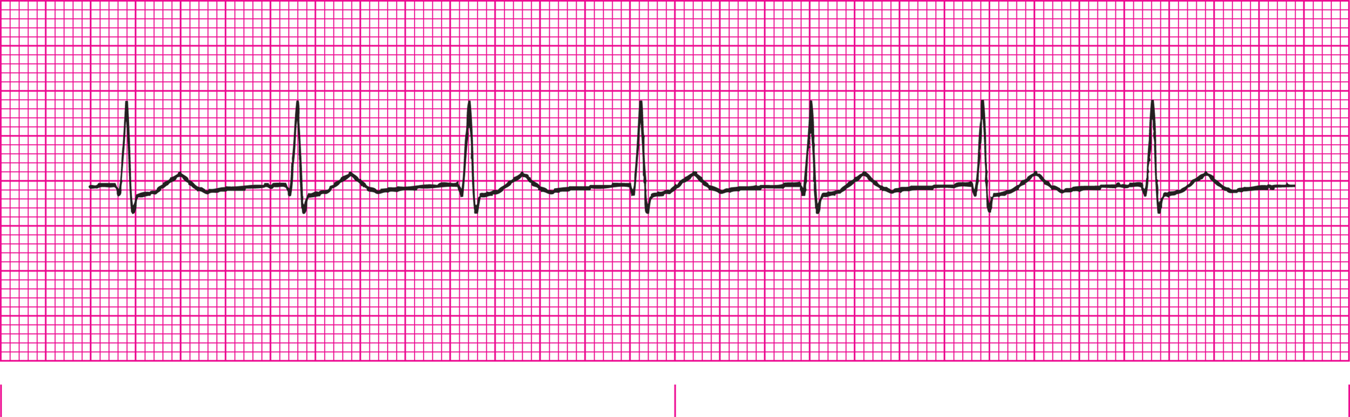
Acclerated Junction Rhythm
Junctional Tachycardia Rhythm
Rhythm that arises from AV junctional tissue at a rate of 100 to 180 BPM
paroxysmal junctional tachycardia rhythm
Junctional Tachycardia Rhythm that starts and ends abrupty
Causes of Junctional Tachycardia
Underyling ischemia heart disease
Frequent ingestion of stimulatnts
Anxeity
Hypoxia
Digitialis
Rheumatic Heart Disease
Charcteristics of Hunctional Tachycardia
Rate = 100-180 bpm
Rhythm is regular unless isolated junctional escape beat
Inverted or Absent P waves before or after QRS
PR is < 0.12 sec before QRS or absent if P is after QRS
QRS are uniform and < 0.12 sec
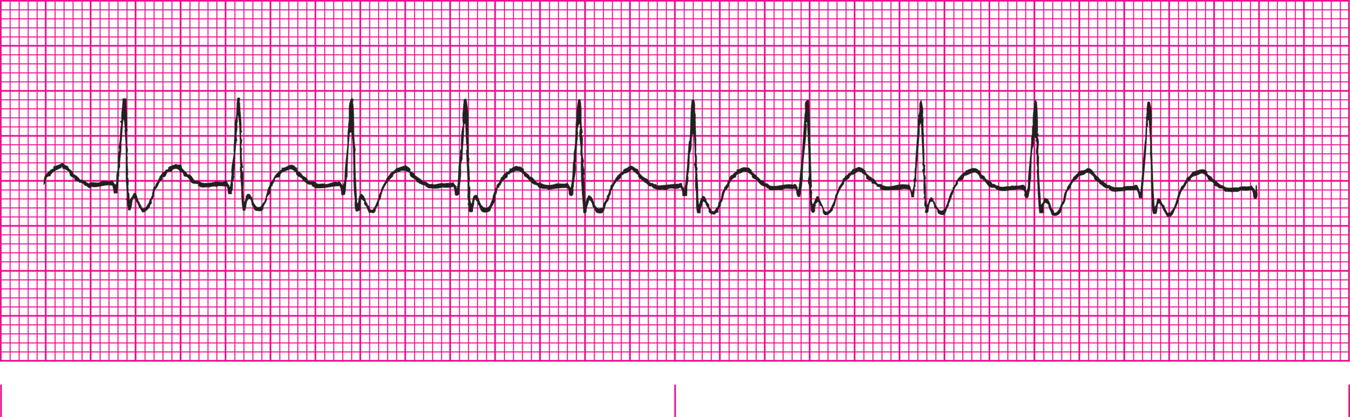
Junctional Tachycardia