Atomic Structure and Periodicity
 Call Kai
 Learn
Learn Practice Test
 Spaced Repetition
 Match
Match Flashcards
 Knowt Play
1/25

Earn XP
Description and Tags
Name | Mastery | Learn | Test | Matching | Spaced | Call with Kai | Chat |
|---|
No analytics yet
Send a link to your students to track their progress
26 Terms
Which block on the periodic table contains the most powerful reducing agents?
s-block
Are s-block elements hard or soft?
soft
Why do d-block elements have variable oxidation numbers?
(n-1)d and ns orbitals have similar energies
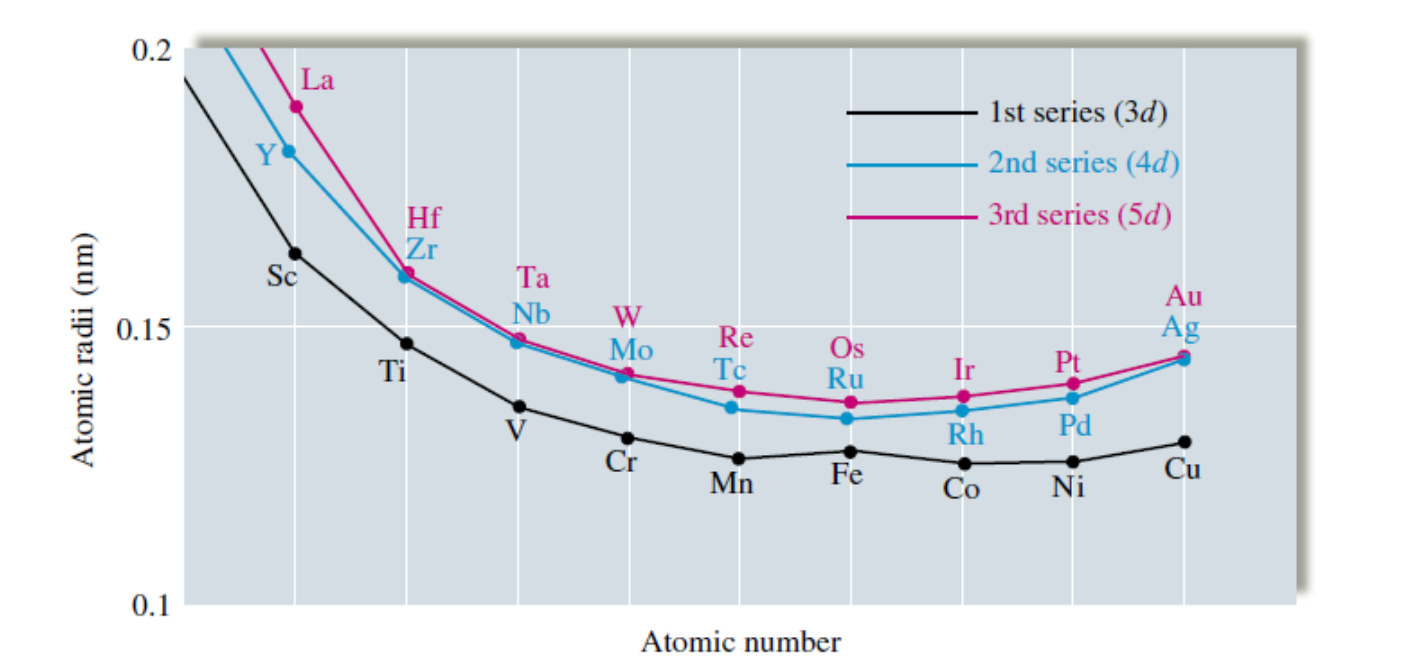
Describe the trend in atomic radius of the 4d and 5d transition series
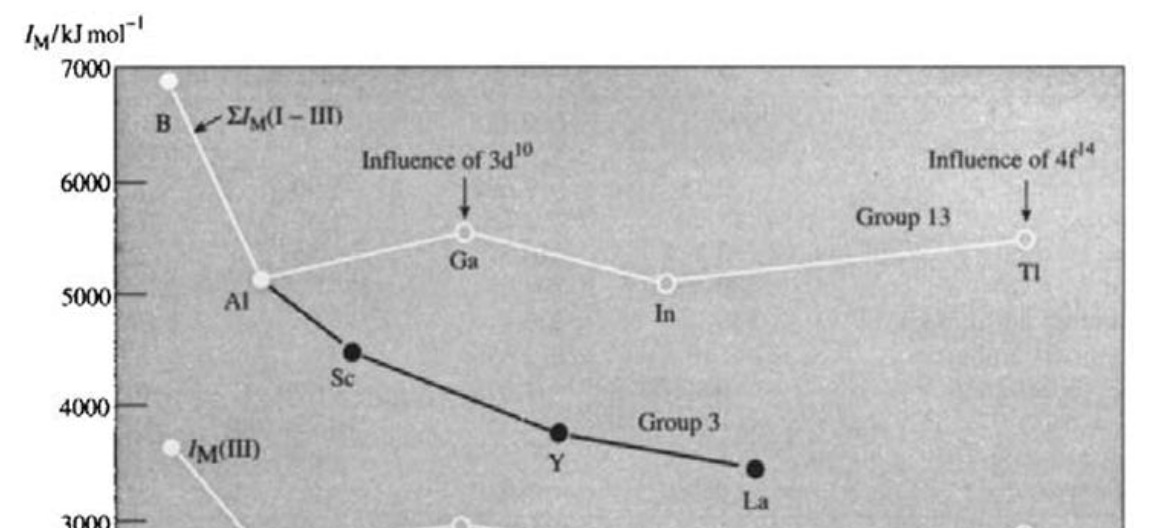
Describe the trend in IE of group 3A elements (B, Al, Ga, In, Tl)
Ga: poor shielding from 3d10 electrons. Tl: poor shielding from 4f14 electrons.
Describe the trend in 2nd IE of the 2nd period elements.
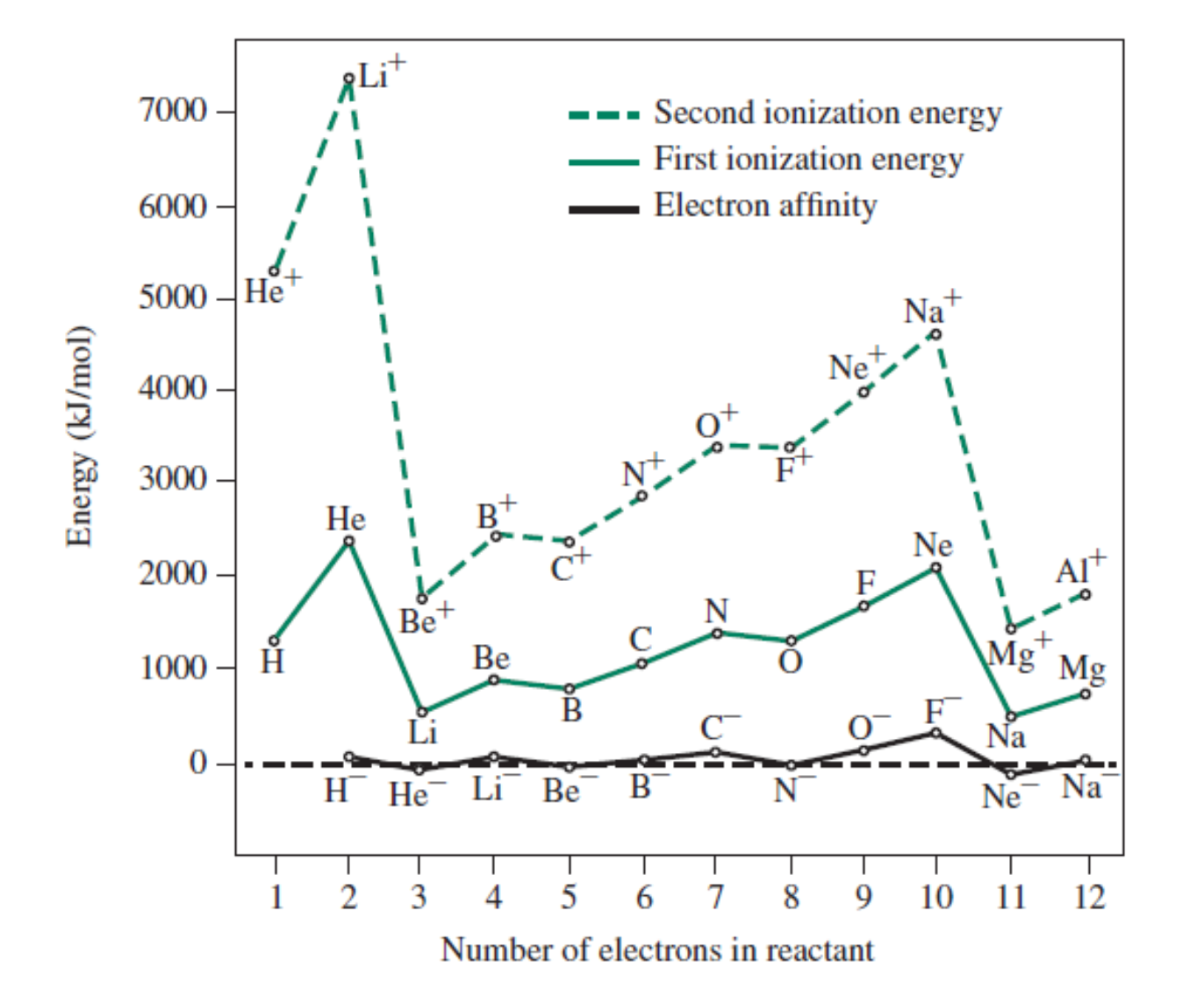
What is electron affinity
Energy released (-Eea) when electron added atom
Trend down a group for electron affinity?
-Eea more positive; Eea smaller
Element with most negative electron affinity?
Cl
What is the valence-state electronegativity?
Effective electronegativity (varies by the atom's hybridization, coordination number, and oxidation state)
What is the name for the electronegativity value that varies by the atom's hybridization, coordination number, and oxidation state?
Valence-state electronegativity (effective electronegativity)
Which 3 pairs of elements have the most prominent diagonal relationships?
Li-Mg, Be-Al, B-Si
What is the cause for diagonal relationships on the periodic table?
The elements have similar size (Ex: Li & Mg)
Beryllium and aluminum share similar chemical and properties due to a periodic trend known as a ___
diagonal relationship
Lithium and magnesium share similar chemical and properties due to a periodic trend known as a ___
diagonal relationship
Boron and silicon share similar chemical and properties due to a periodic trend known as a ___
diagonal relationship
What is the inert-pair effect?
The tendency for heavy p-block elements to form ions 2 units lower in charge than expected from their group number (e.g., In3+/In+, Sn4+/Sn2+). s orbital valence electrons are less willing to bond due to poor shielding by d and f orbitals.
The tendency for heavy p-block elements to form ions 2 units lower in charge than expected from their group number is described by what effect?
Inert-pair effect
What effect describes why tin, an element in group 4A, tends to form Sn2+ ions instead of Sn4+?
Inert-pair effect
Describe a pseudo-noble gas configuration.
Empty ns and np orbitals but full (n-1)d10 orbital.
What relativistic effects do electrons have due to their high speeds?
Increased mass
Why is s-orbital contraction caused by relativistic effects?
Increased mass causes orbitals to contract (especially 1s, 2s, etc.)
Why are p, d, and f orbital expansion/destabilization caused by relativistic effects?
Due to s-orbital contraction, s orbital electrons are closer to the nucleus and shield better.
Why is mercury (Hg) a liquid at room temperature?
Relativistic effects: 6s orbital contracts and increases shielding → metallic bonds weakened → liquid at room temp
What is spin-orbit coupling?
Relativistic effects: magnetic field created by electron movement interacts with its spin → causes splitting of energy levels (especially for heavy atoms) → influences spectra & NMR, x-ray
What phenomenon can be used to explain why gold (Au) is yellow instead of silver like most metals?
Spin-orbit coupling