Clinical Nutrition- Exam 1- Sports Nutrition
 Call Kai
 Learn
Learn Practice Test
 Spaced Repetition
 Match
Match Flashcards
 Knowt Play
1/60

There's no tags or description
Looks like no tags are added yet.
Name | Mastery | Learn | Test | Matching | Spaced | Call with Kai | Chat |
|---|
No analytics yet
Send a link to your students to track their progress
61 Terms
What nutritional assessment should be conducted on active patients/athletes
Nutrient focused physical exam, mainly on protein and iron
Daily carb needs for low intensity (
3-5 g/kg of body weight
Daily carb needs for moderate intensity (~1 hr/day)
General training needs
5-7 g/kg of body weight
Daily carb for moderate to high endurance (1-3 hr/day)
6-10 g/kg
Daily carb for moderate to high intensity (>4-5 hr/day)
Ultra endurance athletes
8-13 g/kg
With carbs, closer to an event you should
Limit fiber, choose liquid or easily digestible carbs
After a workout it is important to consume carbs with? Why?
Protein to enhance glycogen storage
Sedentary protein requirement
0.8
Active adults protein requirement
1.0
Endurance athletes, runners, cyclists protein requirement
1.2-1.4
Ultra endurance athletes protein requirement
1.2-2.0
Strength athletes (maintenance) protein requirement
1.2-1.4
Strength athletes (gain muscle mass) baseball, football protein requirement
1.6-1.7
Intermittent, high intensity training, basketball, hockey, soccer, tennis, swimming, track protein requirements
1.4-1.7
Vegetarian athlete protein requirements
1.1-2.2
What type of carbs should they eat
Carbs with a 50/50 fructose to glucose ratio
What type of carbs should they avoid
Carbs that have either a high fructose to glucose or high glucose to fructose ratio
Who needs to carb load
Endurance athletes
How should carb loading be accomplished
Rest for 48 hr prior to an event plus car intake of 10-12 g/kg/day
What are good quality proteins
Proteins high on the DIAAS scale (digestible indispensable amino acid score)
-its the one done in the pig ileum
-casein, why, cows milk, egg, fish, beef, soy protein isolate
What dose of protein is generally recommended at a time
About 20 grams
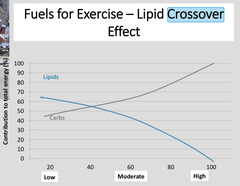
What is the crossover effect
As you go higher percentage in the exercise intensity than the more cabs provide energy and Vice versa for lipids
What are micronutrients of concern in athletes training in altitude
Increase need for iron and vitamin C
What are micronutrients of concern for female athletes
More iron, calcium, vitamin D and K
What are micronutrients of concern for vegetarians and vegan athletes
Higher requirements of iron and zinc, supplant with B12 as needed
What are micronutrients of concern with athletes with high and low carb diets
High carbs means more thiamin and zinc
Low carbs requires a variety of supplements to meet recommendations
What are some conditions that may increase fluid requirements
Training in heat
Cold
Altitude
Training in heat increases sweat rate by
10-20%
Important to monitor what when training in heat
Urine cooor
May need to do what for fluid replacement for training in heat
Increase sodium intake >3g/day
Increase fluid intake by what amount when training at altitude
1-1.5 L/day
Recovery drinks for endurance sports
4 g crabs 1 G protein
Low fat chocolate milk
1 cup low fat milk plus 1 small banana
Recorder drinks for strength sports
2-3 g carbs, 1 g of protein
1 cup of low fat milk plus Greek yogurt with granola
Smoothie with milk, fruit, ice and whey protein
Water soluble vitamin that has higher requirements with increasing carb intake
Thiamin
Water soluble vitamin that has higher requirements with increasing protein intake
B6
Fat soluble vitamin that is importance to not consume more than tolerable upper intake level
Vitamin A
Energy for acute phase of injury
2750-3250 Cal (mostly from carbs and protein)
Carb ratio (carb to proteins ratio) is dependent on_____ using acute phase of injury
Level of immobilization
-if immobilized then decrease percentage of carbs slightly
Protein amount for acute phase of injury
2.3 g/kg
30-40 g casein prior to bed
Important supplements for acute phase of injury
5 g fish oils (3 g EPA adn 2 g DHA)
Creatine loading 20g/day for 5 days
2000 IU vitamin D
Protein for functional phase of injury
Collagen or getlatin (not gummies) consumed wtih some vitamin C
20 g collagen plus Vit C 30-69 min prior to training
Avoid what during functional pas of injury? Why?
Bone broths-limited in some amino acids
Alcohol- inhibits muscle protein synthesis
Cabs during functional phase of injury
3-5 g/kd
Max 60%
Lipids during functional phase of lipids
0.8-2 g/kg
20-25% of energy
2 g/dah of fish oils
Protein during functional phase of injury
20-4 g/kg
Adequate leucine
What type of protein are recommended for bone
High animal protein plus low calcium intake (
Higher acid load is associated with
Lower bone mineral density
What calculations do you do to do dietary acid load
Net Endogenous Acid Production (NEAP)
Potential Renal Acid Load (PRAL)
What nutrients/dietary components have a negative influence on bone mineral density and WHY?
-
What nutrients/dietary components have a positive influence on bone mineral density and why?
-heavy alcohol
-high caffeine intake
-excessive fiber
What is the ratio for calcium to phosphorus is recommend
Calcium to phosphorus >1
What re the dietary recommendations for TBI (traumatic brain injury)
Intervention within 24-48 hrs
Energy greater then 25-30 kcal if
Protein 1-1.5 g/kg
Increase dietary vitamin E
How should food be staggered around post surgery
Soon after, 12 g EAAA plus 50 g glucose
How should food be staggered around post surgery
Soon after then 12 g of EAA plus 50 g glucose
How should food be acting as an appetite recovers
30 G protein shake
24 hrs post surgery
30 G protein
Days after surgery then open leg field area
Protein loading heavy again
How should food be staggered around leading up to a surgical procedure
7-10 days before normal food
12 hrs before 30 grams of protein
6 hrs before than is 12 g EAA plus 50 g glucose
Energy from protein/carbs
4 cal/g
Energy from fats
9 cal/g
Energy from alcohol
7 cal/g