geology exam 1
 Call Kai
 Learn
Learn Practice Test
 Spaced Repetition
 Match
Match Flashcards
 Knowt Play
1/109

Earn XP
Description and Tags
Name | Mastery | Learn | Test | Matching | Spaced | Call with Kai | Chat |
|---|
No analytics yet
Send a link to your students to track their progress
110 Terms
lithosphere/geosphere
rocky earth
biosphere
plants & animals
anthroposphere
humanmade
atmosphere
gases
hydrosphere
water, ice, snow
pedosphere
soil
reservoirs
places where energy & matter are stored (clouds, streams, trees, etc.)
fluxes
movement of energy b/w reservoirs
processes
driving force that causes energy & matter to move b/w reservoirs (photosynthesis, evaporation)
potentially renewable resources
can be consumed indefinitely w/o risk of being depleted (timber, oxygen, fresh water)
non-renewable resources
cannot be replaced in a lifetime (fossil fuels)
perpetual resources
inexhaustible on a human time scale (solar energy)
solar radiation has increased, but earth’s temperature has stayed stable. why?
vegetation has increased over time, removing excess carbon dioxide from the atmosphere and reducing greenhouse effects
predominant pollutants in urban areas
sulfur dioxide & nitrogen oxides
geologic or natural hazards
natural phenomenon w/ potential to cause harm
natural disaster
sudden environmental changes resulting from long-term geologic processes that significantly harm life or property
earth’s layers order
crust, mantle, outer core, inner core
earth’s composition
crust, mantle, outer core, inner core
earth’s physical properties
lithosphere, asthenosphere, mesosphere
lithosphere in earth’s layers
rigid outer shell, thickest in continental, thinner in oceanic
asthenosphere in earth’s layers
top is partially melted, right under lithosphere, liquid allows mantle to move
why is the inner core solid
pressure
subduction zones
places where plate tectonics (usually oceanic & continental crusts) collide, denser plates slip under less dense plates
continental drift theory
created by alfred wegner, explains moving plates
mafic
oceanic crust, rich in iron and magnesium
felsic
continental crust rich in silica, potassium, calcium, sodium, aluminum
contraction theory
created by edward suess, earth’s crust was connected, interior shrunk over time and created wrinkles and ripples; wrong b/c oceanic and continental material is build differently
divergent plate boundary
apart
mid-atlantic plate boundary type
divergent
transform plate boundary
parallel in opposite directions
san andreas plate boundary type
transform
convergent plate boundary
toward each other, crude oil & natural gas, large earthquakes, reverse fault
marianas trench plate boundary type
convergent
convergent plate boundary types
continental-continental, oceanic-oceanic, oceanic-continental
ductile plate boundary deformation
under very high pressure & temperature, rocks can flow like fluid while remaining solid
brittle plate boundary deformation
usually a reverse fault, rock is cool
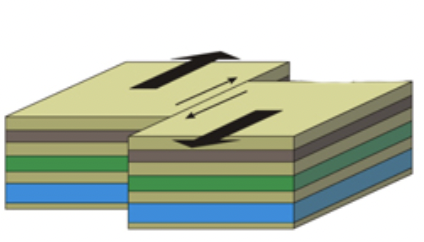
transverse/ strike-slip fault, transform plate boundary
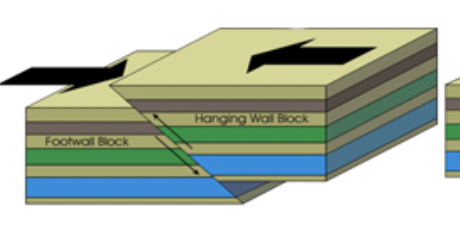
reverse fault
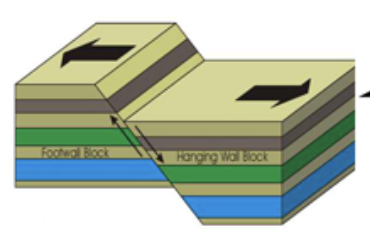
normal fault, divergent plate boundary
earth’s core elements
iron & nickel
hot-spot
a plume of heat rising from the mantle, stationary (fixed)
main drivers of plate tectonics
sources of energy, heat movement in the mantle, heat energy, differences in elevation
___ of earth’s magnetic field__ over time
polarity, flips
minerals
building blocks of lithosphere, naturally occurring, inorganic, crystalline solids w/ specific chemical compositions, often made of two or more elements
native element crystals
consist of only one element
main elements that make up earth’s crust
silicon, silicates, and oxygen
crystallization process
minerals grow when atoms are bonded together into an orderly, repeating, 3D structure, occurs during fluid cooling and precipitation of solutes and solvents
instant cooling forms
glass/obsidian
slower cooling rate creates
larger crystals
why are silicate minerals common in earth’s crust?
they’re easy to form w/ the oxygen & silicate in the crust
hardness
how atoms are packed in a crystal and the bond pulling them together (moh’s hardness scale)
cleavage
the way a mineral breaks
rock forming minerals
oxygen, silicon, aluminum, iron, calcium, sodium, magnesium, potassium
igneous rocks
made from crystallization of molten magma, earliest rocks on earth
intrusive igneous rocks
crystallize below the surface, big crystals
extrusive igneous rocks
crystallize above ground surface, micro-crystals
mafic magma
divergent plate boundaries, rich in magnesium & iron, poor in silicon oxide
andesitic (intermediate) magma
convergent plate boundaries, moderately enriched in silicon oxide
felsic magma
continental interior, abundant quartz & mica reflecting high silica content, rich in sodium & potassium, poor in iron & magnesium
high viscosity
flows steadily
sediments are produced by…
weathering of rocks
transport agents
flowing water, ice, wind, gravity
deposition
happens when transporting fluid loses energy
sedimentary rock types
clastic (rock breakdown), chemical (chemical weathering partially dissolves minerals), biological (organisms)
metamorphic rocks
when igneous, sedimentary, or other metamorphic rocks are exposed to temperature and pressure, resulting in changes in their mineralogy w/o melting, geothermometers of the past
rock cycle
elements that makeup rocks move back and forth b/w earth’s surface
critical mineral
mineral w/ unique properties, performs essential functions, few substitutes exist, supply risk is greater and critical to many manufactured products
ore minerals
when geological processes cause minerals to be concentrated in a small area, resulting in rich deposits, mostly associated w/ high crystal temps at convergent boundaries
hydrothermal ore deposit
forms by crystallization from extremely hot, metal-rich solution
types of ore deposits
classified according to origin
igneous ore deposit
associated w/ magma chambers along islands and volcanic areas at places of plate convergence
sedimentary ore deposit
associated w/ mild hydrothermal events at temperatures lower than 25C; when sedimentary rocks are heated adjacent to igneous intrusion, fluids rich in minerals migrate through sedimentary layers, leaving cement & metal bands behind
reserve
known deposits that can be mined profitably w/ existing technology
resource
entire amount of a material known to be available
insitu mining
extraction of metal from one deposit w/o excavating, leaching solvent injected into ore deposit through underground wells
why does iron no longer collect in band formations?
oxygen in modern atmosphere; oxygen reacts quickly with iron to form other products
biosphere
thin layer of life forms living in, on, and above earth’s other environmental systems; complex system composed of several interacting parts through which matter and energy flow in response to physical, chemical, an biological processes
ecosystem
assembly of organisms together w/ their physical and chemical environment
energy for life
photosynthesis and respiration
respiration
consuming organic matter in presence of oxygen, releasing stored energy for metabolic functions and producing CO2 and water as a byproduct
essential nutrients
water, carbon, nitrogen, iron, phosphorus, calcium, sulfur, and chlorine
limiting nutrients
if an organism requires only one nutrient for growth while everything else essential for growth is available (nitrogen and phosphorus); fundamental components of proteins, DNA, RNA, and ATP responsible for respiration
carbon cycle
co2 combines w/ water vapor and falls as rain, animals ingest, animals die, settle on sea floor & form sedimentary rocks, subducts into mantle, melts and co2 reenters atmosphere during eruptions
removes carbon from the atmosphere
photosynthesis
nitrogen cycle
nitrogen flows through atmosphere, ammonification makes nitrogen more accessible to plants, animals eat plants and poop or die, nitrate can return to atmosphere or be used by plants
ammonification
bacteria fixes nitrogen w/ hydrogen, forms ammonium which is more reactive and accessible to plants
nitrification
other bacteria oxidize ammonium into nitrates
denitrification
natural conversion of nitrate to nitrous oxide and the to gaseous nitrogen through actions of bacteria
phosphorus cycle
depends on slow ecological process of weathering or rocks, transport of sediments in streams, decay of plants, and circulation of ocean water; plants take dissolved phosphorus from water and soil & make available for animals: due to animals dying in bottom of water during summer b/c of density, eventually evaporate due to water overturn
autotroph or primary producers
plants and bacteria capable of manufacturing food in their tissue
heterotrophs or consumers
consume plants and other animals
trophic level
organism’s position in food chain
detritivores
animals that consume dead organic matter like fallen leaves
interspecific competition
competition among individuals of different species
intraspecific competition
competition among individuals of the same species
ecological succession
replacement of one community of organisms by another
mutualism
cooperation benefits both organisms
commensalism
association b/w organisms benefits one and doesn’t affect the other
amensalism/parasitism
one organism is affected by a relationship while another benefits
biomes
large, naturally occurring biological communities where organisms live