MCAT-SOC: Social Structure and Demographics
 Call Kai
 Learn
Learn Practice Test
 Spaced Repetition
 Match
Match Flashcards
 Knowt Play
1/39

There's no tags or description
Looks like no tags are added yet.
Name | Mastery | Learn | Test | Matching | Spaced | Call with Kai | Chat |
|---|
No analytics yet
Send a link to your students to track their progress
40 Terms
functionalism/functional analysis
the study of the structure and function of each part of society
functions
beneficial consequences of people’s actions
dysfunctions
harmful consequences of people’s actions as they undermine a social system’s equilibrium
manifest function
an action is intended to help some part of a system
latent function
an action has unintended positive consequences on other parts of society
conflict theory
how power differentials are created and contribute to the maintenance of social order
symbolic interactionism
the study of the way individuals interact through a shared understanding of symbols
symbols
things to which we attach meaning
social constructionism
the study of how individuals put together their social reality
rational choice theory
that individuals make decisions based on a careful consideration of benefits and harms to the individual
exchange theory
that an individual will carry out actions based on anticipated rewards or punishments
feminist theory
attempts to explain social inequalities on the basis of gender
teacher expectancy
the idea that teachers tend to get out what they expect from their students
life course approach to health
maintaining a comprehensive view of the patient’s history beyond the immediate presenting symptoms
sick role
the patient is not responsible for the illness and is exempt from normal social roles
medicalized
to be defined and treated as medical conditions
beneficence
tenet of medical ethics, the physician has a responsibility to act in the patient’s best interest
nonmaleficence
tenet of medical ethics, the physician has a responsibility to avoid treatments where potential harm outweighs potential benefits
respect for patient autonomy
tenet of medical ethics, the physician has a responsibility to respect patients’ decisions about their own health care
exceptions: significant psychiatric illness, children, public health threats
justice
tenet of medical ethics, the physician has a responsibility to treat similar patients with similar care and distribute healthcare resources fairly
culture lag
symbolic culture is slower to change than material culture
racialization
the establishment of a group as a particular race
racial formation theory
that racial identity is fluid and dependent on concurrent social factors
symbolic ethnicity
a specific connection to one’s ethnicity in which ethnic symbols and identity remain important
Kinsey scale
describes sexuality on a 0-6 scale, with few falling in the extremes and most falling in the middle

expansive population pyramid
high birth rates, young population
high youth dependency ratio
need for education infrastructure
strain on resources
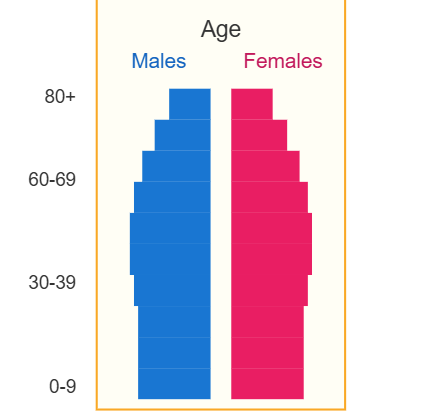
stationary population pyramid
balanced birth/death rates
moderate dependency ratio
stable workforce, balanced social services
sustainable growth potential

constrictive population pyramid
low birth rate
high elderly dependency ratio
healthcare burden, pension crisis, labor shortages
need for immigration
fertility rate
the average number of children born to a woman in her lifetime
pull factors
positive factors that draw immigrating populations into a new nation
push factors
negative factors that push emigrating populations from their previous nation
stage 1 of demographic transition
preindustrial society; birth and death rates are high
stage 2 of demographic transition
death rates drop due to improvements in healthcare, nutrition, sanitation, and wages
stage 3 of demographic transition
birth rates and fertility rates drop due to improvements in women’s health and shift to an industrial economy, as well as longer dependency of children on parents
stage 4 of demographic transition
birth and death rates low in an industrialized society
Malthusian theory
that the exponential growth of a population can outpace growth of the food supply and lead to social degradation
Malthusian catastrophe
the prediction that as third-world nations industrialize, world population growth will outpace food generation and mass starvation will occur
relative deprivation
decrease in resources or agency relative to the past or to the whole of society
proactive social movements
movements that promote social change
reactive social movements
movements that resist social change