psychomotor stimulants
 Call Kai
 Learn
Learn Practice Test
 Spaced Repetition
 Match
Match Flashcards
 Knowt Play
1/40

There's no tags or description
Looks like no tags are added yet.
Name | Mastery | Learn | Test | Matching | Spaced | Call with Kai | Chat |
|---|
No analytics yet
Send a link to your students to track their progress
41 Terms
definition of psychomotor stimulants
drugs associated with increased motor output and euphoria
Examples of psychomotor stimulants
amfetamine
cocaine
caffeine
Describe the mechanism of amphetamines [4 marks]
Amfetamine enters through dopamine transporter DAT, outcompetes dopamine for the transporter (DAT) so more DA left behind.
Inhibition of internal transporters (VMAT) leads to increased cytosolic concentration of dopamine
High amphetamine concentrations inhibit monoamine oxidase A, so dopamine is not broken down in the presynaptic terminal
Movement of DA is reversed by high [amfetamine] outcompeting DAT. DA is pushed out down the concentration gradient, increasing synaptic [DA].
Draw the mechanism of amphetamines [10 marks]
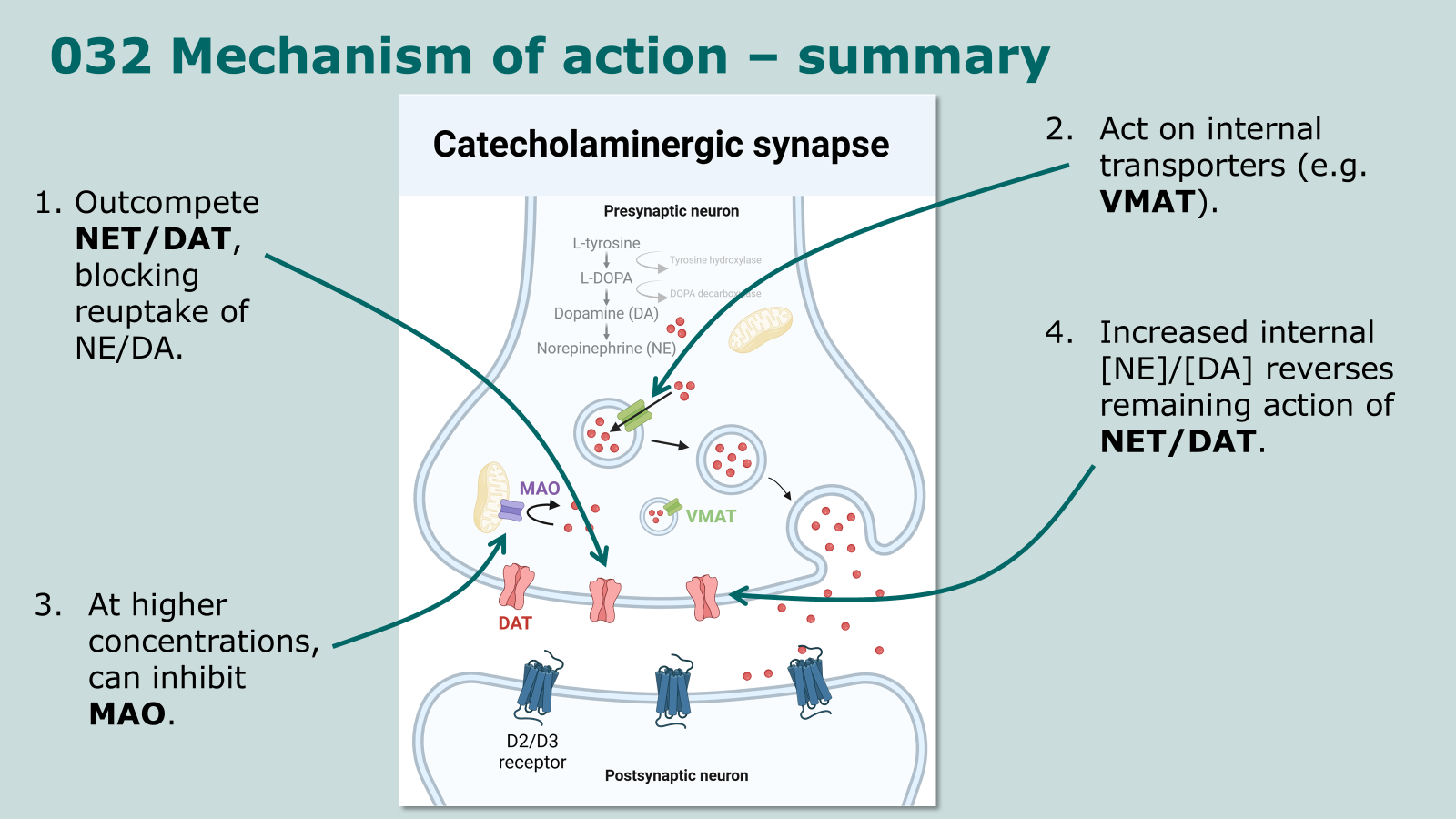
Name and describe the clinical uses of amphetamine derivates/ amphetamine-like compounds? [4 marks]
modafinil is used for ADHD and epilepsy - Inhibits amine reuptake, increases activity of orexin neurons
methylphenidate might treat hyperactivity of ADHD
atomexetine - SNRI for ADHD
Why are amphetamines not used to treat ADHD [2 marks] ? What are the alternatives? [2 marks]
amphetamines have strong dependence and addiction potential, often administering to young children
amphetamine-like drugs which are CNS stimulants are used instead that have stronger selectivity compared to amphetamines
atomexetine - SNRI
modafinil - selective amine reuptake inhibitor
Which symptoms of ADHD do amphetamine like drugs target?
inattentive symptoms
hyperactivity/impulsivity
What can atomexetine be used in combination with? What is the benefit of this?
can be used in combination with methyphenidate at lower doses
covers both impulsivity and inattentive phenotypes
reduces side effects, addiction, tolerance and dependence
What symptoms in chronic use of amphetamines are associated with overactivation of dopaminergic signals within the striatum?
repetitive, stereotypical behaviours eg punding - biting, scratching
acute schizophrenia, psychosis
Tolerance definition
decrease in behavioral response when the drug is used repeatedly
euphoric and anorexic actioins
general effects of psychomotor stimulants
act on the CNS primarily for cognitive effects
increase alterness, mood, sense of wellbeing, euphoria
decrease fatigue, appetite
potential harms of psychomotor stimulants
significant abuse potential
prolonged abuse can be neurotoxic
cardiovascular system impacted
repeated use leads to tolerance and dependence in some individuals
changes in response
amfetamine and related compounds structure
small ring structure with proximal amine group
Related structures are chemically similar to dopamine, serotonin noradrenaline found in the brain, and similar to cocaine
key regions of noradrenergic pathway
LC - locus coeruleus, projections to cerebellum (arousal, movement), limbic structures (amygdala and hypothalamus), up and around through the cerebral cortex - widespread
LTA - lateral tegmental area, descending projections through the NTS
mechanism of amfetamines
increased availability of noradrenaline and dopamine
binds and blocks NET and DAT
inhibits VMAT
at higher conc inhibit MAO
behavioural effects of amfetamines
locomotor stimulation through nigrostriatal
euphoria and excitement
intense, particularly if injected
insomnia
inc stamina
can affect appetite - short term anorexia
mental performance with amfetamines
better for simple tasks
impair performance on complex tasks
reduce speed quality on decision making, frontal cortex executive function
particularly seen in chronic users
peripheral effects of amfetamines
raised BP
inhibition of GI motility
adverse side effects of amfetamines
anxiety, restlessness - due to dopamine and attention
high doses - paranoia and panic
naroclepsy
disabling state
falling asleep at unpredictable times within the day
4 subtypes of narcolepsy
daytime sleepiness, cataplexy, sleep paralysis and hyponopompic hallucinations
modafinil can treat this
modafinil mechanism for narcolepsy
inhibits amine reuptake
structurally different to amfetamine
increases activity of orexin neurons in rat
nausea, headache, insomnia
amfetamine for ADHD
characterised by low attention span and hyperactivity
amphetamine like drugs induce impulsivity and improve attention
methylphenidate, atomexetine, modafinil
atomexetine
newer drug to treat adhd
selective noradrenaline reuptake inhibitor
reduced potential of addiction, fewer side effects and reduced tolerance
modafinil for ADHD treatment
selective amine reuptake inhibitor for adhd
activates a2 adrenoreceptors, inhibition of gaba, modulates serotonin, glutamate, histamine release
amfetamine psychosis
acute schizophrenia - hallucinations, paranoia, aggression
overactivation of dopamine signals into striatum
repetitive stereotypical behaviours with amphetamines
from stimulation of serotonin in striatum and serotonergic receptors interaction with striatum
punding
tolerance and amfetamines
develops rapidly
euphoric, anorexic actions
dependence with amfetamines
reduced basal levels of dopamine once withdrawn from the drug
need larger stimulation to maintain normal levels of dopamine
mice readminister until the cardiovascular side effects cause death
types of dependence with amfetamines
physiological - system adjusts to lower dopamine release, more amfetamine is needed to replace
psychological - persistent ‘memory’ of euphoria
cocaine origins
plant alkaloid from coca plant
historically used for fatigue
mechanism of action for cocaine
acts equally on uptake of noradrenaline, dopamine and serotonin
also a local anaesthetic - blocks sodium channels
absorption of cocaine
rapidly absorbed
nasal intake destroys local tissue, vasoconstriction
results in perforated septum
IV gives a more intense ‘ high ‘
metabolism of cocaine
rapidly metabolised in the liver
metabolites are measurable in human hair
toxic side effects of cocaine
acute or chronic cardiovascular effects
systolic and diastolic dysfunction, arrythmias, atherosclerosis
Describe the dependence seen with cocaine
substance dependence - not true addiction, mostly psychological
associated with rapid routes of administration
cocaine use in pregnancy to foetus impact
foetal malformation
microcephaly
abnormal neural differentiation and proliferation
caffeine found where
methylxanthine
nuts of coca plants
mechanism of caffeine
mild cns stimulant
diuretic
antagnosim to adenosine receptor 1 and 2
inhibits phosphodiesterases
antagonism of adenosine receptors impact with caffeine
adenosine and atp are modulatory
fine tunes actions of other neurotransmitters
dec in cns activity
caffeine disinhibits it, stimulating the cns
effects of caffeine on the CNS
mental functions improved at moderate dose 200mg
tolerance/habituation but not severe, rodents wont self administer
neuroprotective
neuroprotective effect of caffeine
protective management of parkinsons disease
mechanisms for caffeine neuroprotection in parkinsons
adenosine 2a receptor antagonists
modulates VMAT-2 expression