Role of host response and mechanisms of periodontal tissue destruction in periodontitis
 Call Kai
 Learn
Learn Practice Test
 Spaced Repetition
 Match
Match Flashcards
 Knowt Play
1/58

There's no tags or description
Looks like no tags are added yet.
Name | Mastery | Learn | Test | Matching | Spaced | Call with Kai | Chat |
|---|
No analytics yet
Send a link to your students to track their progress
59 Terms
Host Responses:
are essential to prevent serious progressive infection
may also result in local tissue damage
also stimulate attempts at tissue repair
While some of the damage to the local tissue is caused by local host responses -the host response is protective and without an adequate host response, periodntitis would result in severe progressive infection which could potentially be life threatening
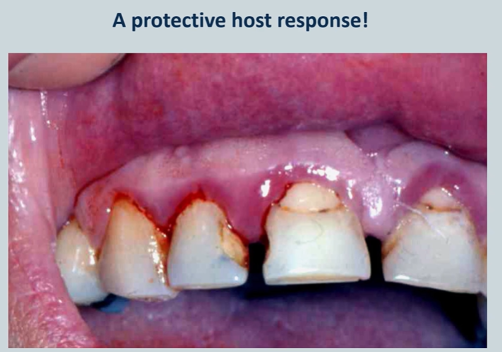
gingivitis can be a protective host response
bacterial accumulation along the gingival margins - host response limits the ingress of bacteria and confining it to the gingival tissues
stages of gingivitis development
increasing inflammatory infiltrate within the gingival tissues due to the accumulation of plaque/biofilm at the gingival crevice
yet no loss od pdl attachment - so no apical migration of the junctional epithlium
therefore, this can be regarded as a sucessful host response as the infection is limited to the tissues

initial lesion
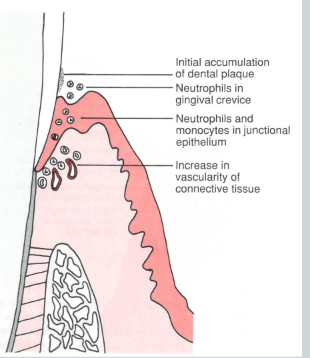
Early lesion

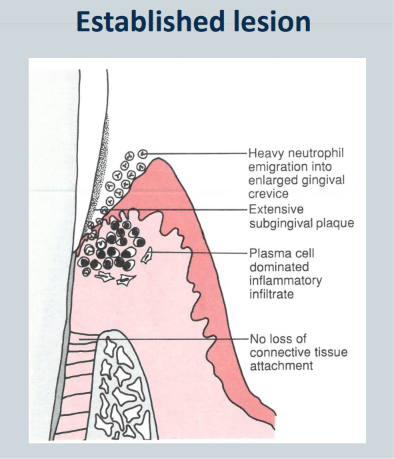
Established lesion

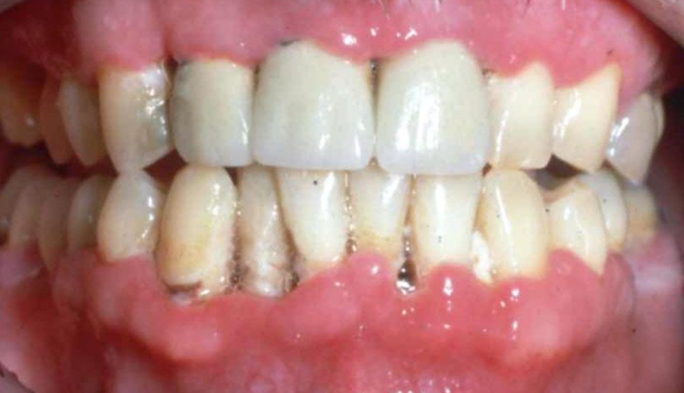
An inadequate host response
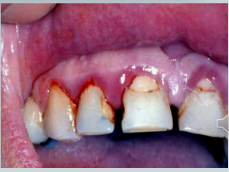
periodontal tissue loss - necrotising periodontitis - loss of interproximally and cratering of the periodontal tissue loss resulting in recession
painful
NPD can have some systemic effects as there is invasion of periodontal bacteria into deeper tissues
still mostly localised

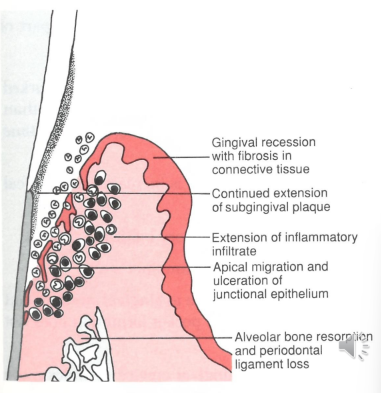
periodontitis - formation of the advanced lesion

Established lesion
Advanced lesion
deepening of the inflammation causes loss of the pdl attachemnt and andveolar bone resorption
apical migration of the junctional epithelium - causing deepening of the pocket
microbial changes
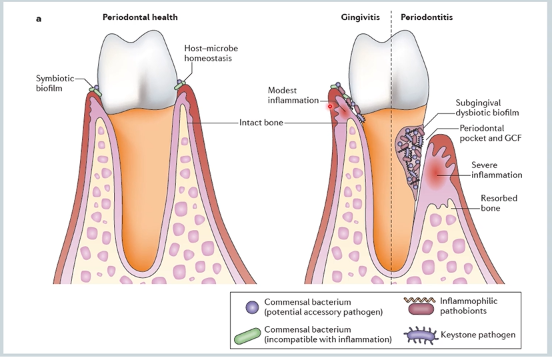
in periodontal health - symbiotic bacterial community and helps regulate host immune repsonse - homeostatsis
gingivitis - increase in number of immflamic pathobionts and commensal bacteria → accesory pathogens. there are also keystone pathogens becuase although they are low in abundance they can orchestrate a biofilm formation and can manipulate the host resposneto their favour in order to aquire nutrients - enabling their survival but also causes tissue damage
which may lead to periodontal tissue destruction
terminology - pathobionts and pathogens
not infectious as such - also present in low levels in health but the balance tips and their numbers increase as inflammation proceeds

interaction between bacteria and response in susceptible host
co-operative interactions between the symbiotic micriobiota (which includes inflammophillic pathobionts, keystone pathogens, commensals) - results in a situation where with time and accumulation you can get colonisation and immune subversion - which leads to impaired immunity inflammation
this favours a dysbiotic environment in a susceotible host
as dysbiosis proceeds you get more overt inflammation with inflammatory cells (neutrophils, T,B cells, macrophages)
this results in local tissue damage
tissue breakdown products provide further nutrients and positive signalling for the pathogenic biofilm such that dysbiosis is further enhanced and positive feedback loop is perpetuated
symbiotic bacteria and keystone pathogens are found in very low levels in health - which show that the host immune response plays a key role in the development of the development of perio
periodontitis is a classic chronic inflammation - what is that?
Chronic Inflammation - Persisting inflammation + attempts at repair

Attempts at repair
reparative responses include granulation tissue formation (vascular immature connective tissues) and fibrosis (scarring)
regulated by cytokines such as IL-1, TNF-α and many others
In gingivitis, tissue damage is typically in balance with tissue repair, in perio the balance is favoured at damage (but repair still happens)
attempts at repair as regulated by…cytokines
regulated by cytokines such as IL-1, TNF-α and many others
also important in repair
Histological features of the periodontitis inflammatory lesion 3
Epithelial proliferation from the junctional and sulcular aspects to increase the widths - to try to limit any ingress of bacteria / wall them off from gaining acees to deeper tissues
Extensive collagen loss - loss of the connective tissue
Bone loss

Cellular Inflammatory infiltrate: 4 in both gingival and periodontal connective tissue
Neutrophils - acute but also perpetuated in chronic
Macrophages - link innate with adaptive immune system
T lymphocytes
Plasma cells - antibodies
overview of pathogenesis
bacteria initiates the inflammatory response - which results in further bacterial colonisation
results in tissue daamge by bacteria (minor) and by the host immune response (major)
tissue damage exaccerbated tissue response
concurrent attempts at tissue repaie

Molecular mediators of disease activity 2
Bacterial virulence factors - direct damage, subvert host response so it can be perpetuated
Signalling molecules controlling host response - excessive - bystander damage to host tissue
Bacterial virulence factors
Secreted by the bacteria, • eg. enzymes - collagenases and leukotoxin
Metabolites that create favourable conditions - ROS
Structural components of the bacteria released during growth or death of the bacteria, • eg. endotoxins, fimbriae etc.
Bacterial virulence factors can:
Breakdown host tissues directly (enzymes)
Damage / kill host cells (toxins)
Stimulate host - mediated tissue breakdown (e.g. bone resorption)
Stimulate inflammatory / immune responses
Bacterial Virulence Factors - case study - LPS and PAMPs
PAMPs - “Pathogen Associated Molecular Patterns” eg lipopolysaccharide (LPS) on Gram negative bacteria such as P. gingivalis
Bind to cell surface receptors on macrophages, - eg TLRs ( Toll-like receptors)
Results in cytokine stimulation and immune activation
TLRs expressed by many cell types – junctional and sulcular epithelium
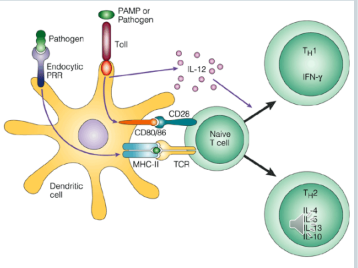
TLRs expressed by many cell types
macrophages junctional and sulcular epithelium
So, if host responses are protective, why do they cause local tissue damage?
Local tissue damage provides access for the inflammatory response (bystander damage?)
Why do some individuals with significant biofilm accumulation maintain attachment levels, while others with reasonable plaque control become edentulous?
This remains one of the most significant unanswered questions in periodontology.
What is evident, however, is the need for a paradigm shift.
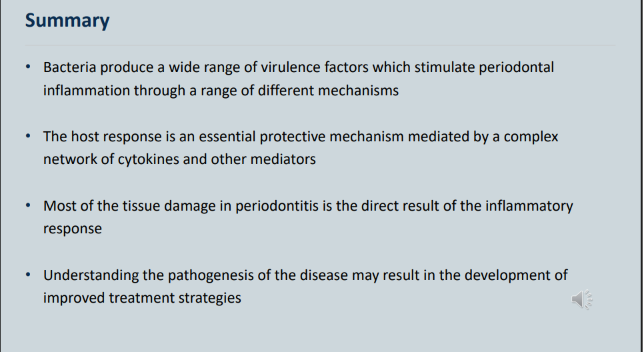
While bacteria initiate the inflammatory process in all individuals, it is the host response that ultimately determines the progression to periodontitis.

Molecular Mediators of Host Responses include:
Vasoactive inflammatory mediators (eg. histamine)
Cytokines (inter-cellular soluble protein messengers) , Interleukin-1, IL-6, IL-8, IL-10, IL-17, IL-23, TNF, Interferons
Prostaglandins, Leukotrienes.
Overall make a complex interacting network of pro- and anti-inflammatory signals to allow an appropriate inflammatory response
Connective Tissue Damage
Direct Bacterial Actions?:
Enzymes. eg Collagenase
Host Mediated Actions: - MAIN
Cells - Fibroblasts - mmps and cathepthins and Macrophages
Enzymes : MMPs and Cathepsins
Regulated by Inflammatory Cytokines - via macrophages

Connective Tissue Damage
Bacterial enzymes can damage tissues directly
Most damage is mediated by host enzymes such as MMPs and cathepsins
These enzymes are produced by host cells in response to stimulation by interleukins,TNFs and other inflammatory mediators, and to some extent by bacterial factors
net loss of connective tissues - increased utilisation of space by the inflammatory immune cells
Matrix Metalloproteinases
Series of metal ion (Zn2+) containing enzymes regulating connective tissue turnover and breakdown
Produced by fibroblasts and macrophages
Stimulated by inflammatory cytokines, LPS, prostaglandins
Important in chronic inflammatory diseases, cancer metastases, etc
Can be inhibited by chelating agents, including tetracyclines
Matrix Metalloproteinases - examples
Collagenases (MMP-1, -8, -13) - MMP8 - biomarker to characterise perio - prognostic factor - if their perio is active/progressive
Gelatinases ( MMP-2, -9)
Stromelysins (MMP-3, -10, -11)
Elastases
Cells and mediators involved in periodontal host response
both innate and adaptive immune system
proinflammatory - red arrows
attempt to control - blue arrows and blue pills
tooth is on the left side
pale pink at the top = neutrophils - attempting to stop bacterial ingress - secreting pro-inflammatory cytokines
m1 - type 1 pro-inflammatory macrophages - mmp production via fibroblasts
TIMMPs - attempts from fibroblasts to control this - they get exhausted ☹ and become quiescent - lack of new collagen - net loss of tissue
macrophages also tey to link innate and adaptive immune system Th cells
Th 1 and 2 - classic, Th1 - more direct pro-inflammatory - IL1B interferon gamma etc - eccentuates macrophages
Th2 - more involved in producing specific response - activating B cells to plasma cells - antibody production against bacterial ingress
TH17 - IL17 - highly pro-inflammatory - perpetuates host immune reponse and tissue damage
Treg - immune tolerance and try to limit - IL10 and TGFB which stimulates repair
SPMs - specialised pro-resolving mediators - fatty acid derived- enhance repair and tone down inflammation - eg resolvins, hypoxins, protectins

Cells and mediators involved in periodontal bone resorption
cytokines may oromote bone resorption
small influence of bacterial products having a direct effect on bone resorption - though host response is pretty good at walling off the bacterial products from binding to osteoblasts
major influence - host immune response
Th17 , neutrophils and macrophages - directly signalling to osteoblasts - reduction
increase in osteoclast activity
cytokines such as IL17 can bind onto pre-osteoclasts which can cause them to mature

The RANK/RANKL/OPG system
RANKL expression is essential for osteoclasts to form, and therefore is essential for bone resorption
RANKL is either membrane bound or secreted by cell types including lymphocytes and osteoblasts
It binds to its receptor, RANK, present on pre-monocytes to induce osteoclasts
RANKL is blocked by its inhibitor, OPG, therefore the ratio of RANKL to OPG determines whether bone resorption occurs.
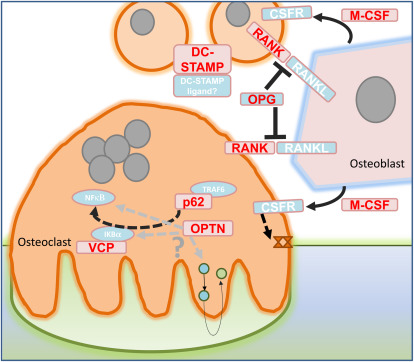
RANKL is either
membrane bound or secreted by cell types including lymphocytes and osteoblasts
RANKL in periodontitis
High levels of OPG expressed in health
RANKL expression is induced in periodontitis by inflammatory cytokines, prostaglandins, bacterial virulence factors
OPG expression reduced in periodontitis
High RANKL/OPG ratio associated with bone resorption in progressive periodontitis
RANKL expression is induced in periodontitis by
inflammatory cytokines, prostaglandins, bacterial virulence factors

cellular infiltrate is slightly differnt in gingivitis than perio
can’t be oral hygiene alone -
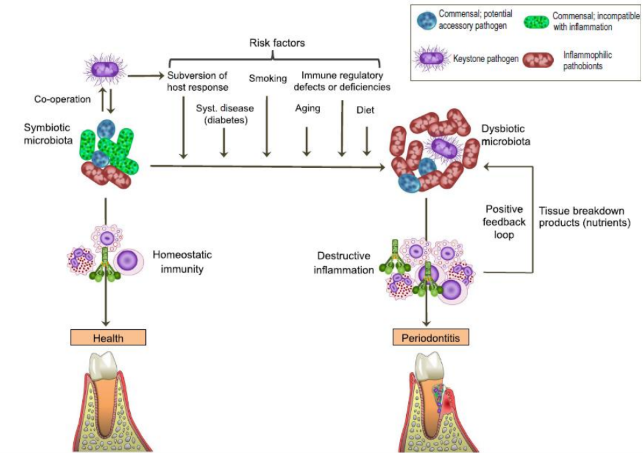

risk factors having an influence

Major risk factors for progressive periodontitis
• Smoking • Diabetes • Genetics • Specific bacteria - non modifiable
Pathological factors associated with progressive periodontitis 3
Microbial variation
Neutrophil function
Hyper-inflammatory responses
Microbial variation
Species associated with destructive periodontitis - direct tissue damage, though for some patients, the amount of bacterial loas is not significant, though for patients with an average to low susceptibility - biofilm managemnet is very important
P. gingivalis, T. forsythia, F. alocis, P. stomatis
A.a (incl JP-2 clone)
Specific virulence factors
P.g. proteolytic enzymes - gingipains
Aa Leukotoxin
Amount of bacteria / bacterial load?

Neutrophil function
Where the real action takes place -
Defective neutrophil function is consistently associated with severe periodontal breakdown
Neutrophil migration may be impaired in smoking, diabetes, and other systemic conditions

Neutrophil function 3
mediate beenficial effects in 3 ways
pahgoctytosis, degranulation to destroy pathogens, NETosis (neutrophil extracellular trap) - contents are ejected to encase bacteria so they can be phagocytosed

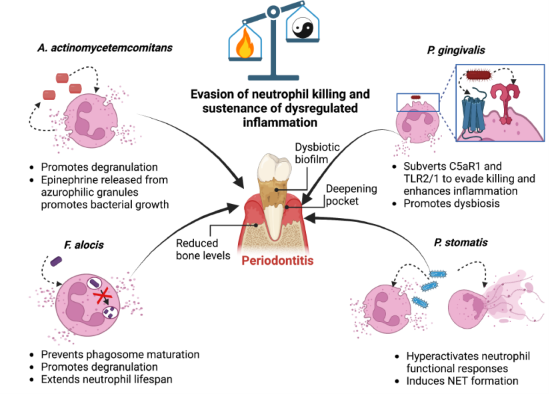
Examples of pathobionts subverting neutrophil function
neutrophil mechanisms may be manipulated/subverted by pathobionts so the tissue can be further invaded and for inflammation to be perpetuated - so we get an increase in pathobionts and breakdown of tissues - leading to nutrients and more space for colonisation
read slide
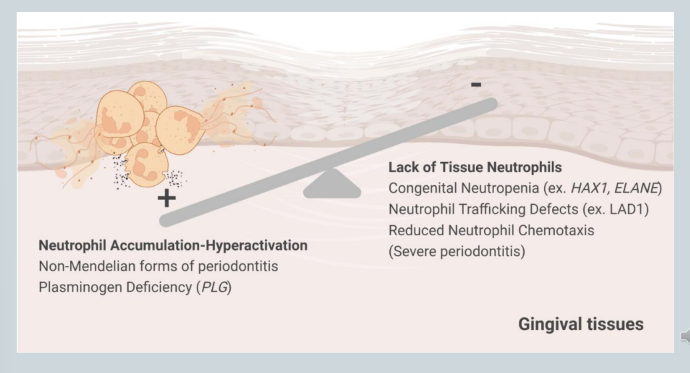
Too many or too few neutrophils lead to periodontal tissue loss
too little - profound perio and loss of teeth at a very yound age
Trained immunity resulting from bacterial stimulation
in chronic inflammation eg perio, then this leads to increased capacity for tissue destruction
delicate balance to treat

Neutrophils play a central role in perpetuating periodontal tissue loss
by complement activation or complement activation, direct effects on local tissue environment by causing tissue damage - they also signal to Th17 cells and adaptive immune cells that include B cells - plasma cells - antibodies - increase in RANKL - osteoclast progenitors - osteoclast form - bone resorption

IL-17 – key mediator involved in periodontal tissue loss
pro-inflammatory stimulus - tissue breakdown, bone resorption, and further production of pro-inflammatory mediators and pro-inflammatory macrophages, promote sneutrophil production from bone marrow, migration and recruitment

Potential therapeutic implications
Adjunctive therapies for specific susceptible patients ?
Antimicrobial
Specific inflammatory inhibitors (anti-cytokine therapies, NSAIDS)
Anti-tissue damage - MMP inhibitors
Anti-bone resorption - OPG, etc

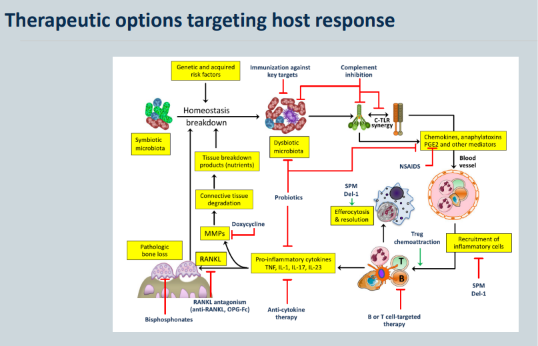
Therapeutic options targeting host response
note therapies
Some Protective Factors in Host Response
• Saliva • Gingival Crevicular Fluid • Neutrophils • Antibodies • Complement • Attempts at repair
Antibacterial actions of saliva include:
A vehicle for swallowing bacteria • Inhibition of bacterial attachment • Aggregation of bacteria (agglutinins) • Killing of bacteria by the peroxidase system • Killing of bacteria by antimicrobial peptides (defensins) • Killing of bacteria by lysozyme, lactoferrin etc
Protective effects of gingival crevicular fluid/ inflammatory exudate
Mechanical washing in crevice • Complement • Antibodies • Other soluble proteins such as • Inflammatory mediators • Protease Inhibitors
Inflammatory Cells
• Neutrophils (PMNs): –Present in tissues and in large numbers within the pocket; –Kill bacteria by phagocytosis and extra-cellular mechanisms; • Macrophages: –Phagocytosis and removal of damaged tissue; –Modulation of inflammation by cytokine production; –Antigen presentation and control of immune mechanisms;
Immune Mechanisms
• Humoral immunity • B-cell (plasma cell) production of antibodies. • Cell Mediated Immunity • T-lymphocyte mediated immune mechanisms (T helper cells - Th1, Th2, Th17, Tregs - produce characteristic specific cytokine profiles)
Humoral immunity
Antibodies have three possible basic actions:
• Neutralisation:
–Neutralising toxins and enzymes by direct blocking action
–Blocking bacterial binding sites to prevent colonisation
• Opsonisation:
–Specific binding to bacteria to promote phagocytosis
• Complement activation:
–Activates complement by the Classical Pathway
Humoral immunity in periodontitis
