Secondary Growth
 Studied by 1 person
 Call Kai
 Learn
Learn Practice Test
 Spaced Repetition
 Match
Match Flashcards
 Knowt Play
1/13

There's no tags or description
Looks like no tags are added yet.
Name | Mastery | Learn | Test | Matching | Spaced |
|---|
No study sessions yet.
14 Terms
How does second growth initiate in stems
In eustele structures, the vascular cambium that is responsible for producing wood and secondary phloem.
Secondary growth in pines
axial regions full of tracheids w- bordered pits, rays are comprised of parenchyma.
Secondary growth in flowering plants
Flowering plants have vessels in secondary growth, but gymnosperms usually have tracheids instead. They also have fibers, which conifers and other softwoods lack.
What does bifacial vascular tissue refer to
Cells are created on both sides of the layer, like cork cambium
Purpose of bordered pits in pines, do flowering plants have them
In pines, tracheids have bordered pits, which limit embolisms that can stop water flow. Flowering plants have sieve tube cells along with companion cells, which achieve this function .
Ring porous wood
only occurs in plants with vessels, such as flowering plants. The vessels vary in size, with larger ones associated with early wood-periods of heavy rainfall
Diffuse porous wood
the vessels are similar in diameter.Can live in very wet environments, but fiber cell walls change in thickness depending on the season
How do axial regions differ from rays
Axial regions are xylem and phloem that run vertical, rays are made up of parenchyma cells, moving food between secondary xylem and secondary phloem
How do cells in conifer phloem differ from angiosperms
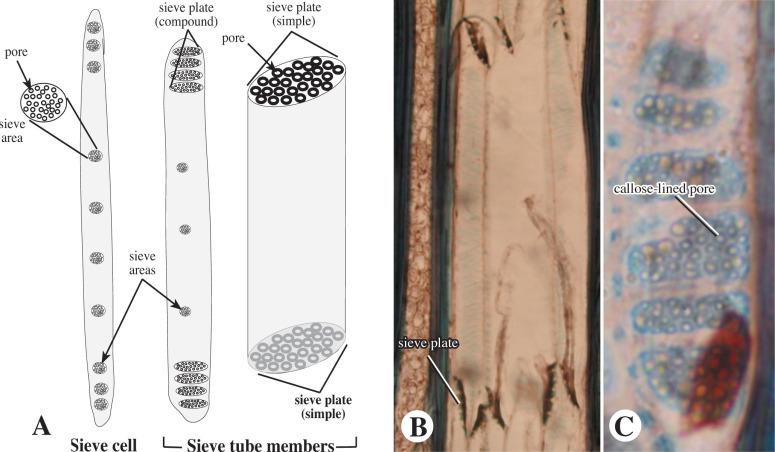
Only has sieve cells in axial regions and work with albuminous cells. In flowering plants, its sieve tube elements that work with companion cells.
What happens to old phloem
It gets crushed and pushed outward with bands of periderm, forming the rhytidome
Where does cork cambium originate from and how does it form
Cork cambium originates just under epidermis, sandwiched between cork cells above and cork parenchyma below. They produce the periderm, responsible for widening trunks-stems in woody plants and replacing outer epidermis
Location and function of cork cells
Cork cells are dead and filled with suberin, a fatty acid. Provide structure and form outermost layer of bark. Dead at maturity
Location and function of cork parenchyma
These are alive and can photosynthesize, they usually develop from and underneath the cork cambium layer closer to the phloem
How does the periderm form
It forms when cork cambium divides inside the epidermis, within the cortex. Above this layer are the cork cells, which are dead and contain suberin. Below this layer is your phelloderm, or cork parenchyma, which can still photosynthesize