FIN 3
 Call Kai
 Learn
Learn Practice Test
 Spaced Repetition
 Match
Match Flashcards
 Knowt Play
1/12

There's no tags or description
Looks like no tags are added yet.
Name | Mastery | Learn | Test | Matching | Spaced | Call with Kai | Chat |
|---|
No analytics yet
Send a link to your students to track their progress
13 Terms
What is the difference between a nominal and a real cash flow?
nominal cash flow = includes inflation
real cash flow = measured in today’s purchasing power (constant price)
what is the difference between the nominal and the real interest rate?
nominal rate = includes inflation
real rate = measures the increase in purchasing power
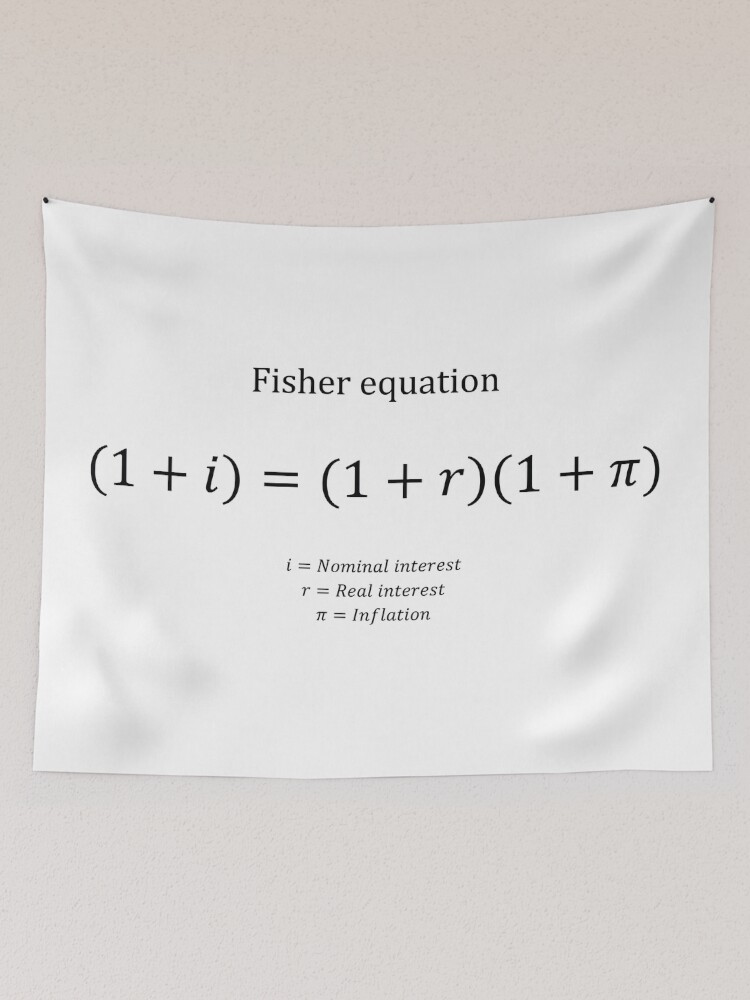
What is the Fisher Equation?
What is the Present Value of a perpetuity (paid at the end of each month)?
The Present Value (PV) of a perpetuity is calculated using the formula: PV=rC where:
C is the cash flow per period,
r is the discount rate (interest rate).
What is the Present Value of a perpetuity (paid at the beginning of each period)?
The Present Value (PV) of a perpetuity paid at the beginning of each period is calculated using the formula: PV=r(1+r)⋅C=C+rC where:
C is the cash flow per period,
r is the discount rate (interest rate).
What is the Present Value of a perpetuity (paid at the end of each month)?
The Present Value (PV) of a perpetuity is calculated using the formula: PV=rC where:
C is the cash flow per period,
r is the discount rate (interest rate).
What is the Present Value of a perpetuity (paid at the beginning of each period)?
The Present Value (PV) of a perpetuity paid at the beginning of each period is calculated using the formula: PV=r(1+r)⋅C=C+rC where:
C is the cash flow per period,
r is the discount rate (interest rate).
What is the Present Value of a growing perpetuity (paid at the end of each period)?
The Present Value (PV) of a growing perpetuity is calculated using the formula: PV=r−gC where:
C is the cash flow for the first period,
r is the discount rate (interest rate),
g is the growth rate of cash flows (with r > g).
What is the Present Value of a growing perpetuity (paid at the beginning of each period)?
PV=(1+r)⋅r−gC
C is the cash flow for the first period,
r is the discount rate (interest rate),
g is the growth rate of cash flows (with r > g).
What is the Present Value of an annuity (paid at the end of each month)?
C⋅(r1−r⋅(1+r)t1)=C⋅AF
C is the cash flow for the first period,
r is the discount rate (interest rate)
t is the number of years
What is the Present Value of an annuity (paid at the beginning of each month)?
(1+r)⋅C⋅AF
C is the cash flow for the first period,
r is the discount rate (interest rate)
t is the number of years
What is the Present Value of a growing annuity (paid at the end of each period)?
C⋅(r−g1−(r−g)⋅(1+r)t(1+g)t)=C⋅GAF
What is the Present Value of a growing annuity (paid at the beginning of each period)?
(1+r)⋅C⋅GAF