Marine Invert

0.0(0)
Studied by 7 people
call kaiCall Kai
Locked
learnLearn
examPractice Test
spaced repetitionSpaced Repetition
heart puzzleMatch
flashcardsFlashcards
GameKnowt Play
Card Sorting

1/138

encourage image

There's no tags or description

Looks like no tags are added yet.

Last updated 12:13 AM on 6/30/26
Name
Mastery
Learn
Test
Matching
Spaced
Call with Kai
Chat

No analytics yet

Send a link to your students to track their progress

139 Terms
1
New cards
Asymmetry
A body plan with no axis or plane of symmetry.
2
New cards
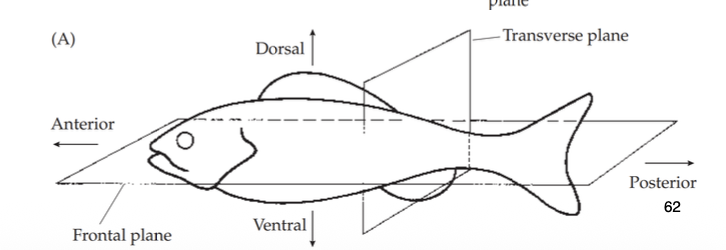
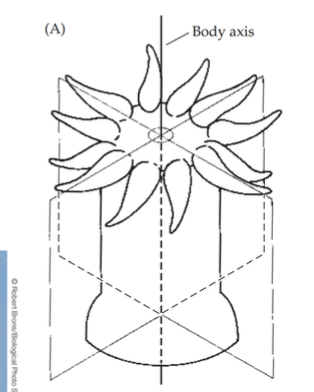
Radial symmetry
Radial symmetry
A body plan where structures are arranged around a central axis.
3
New cards
Bilateral symmetry
Bilateral symmetry
A body plan with distinct left and right sides separated by one plane.
4
New cards
Cephalization
The evolution of a specialized head containing sensory organs and nervous tissue.
5
New cards
Metazoa
Multicellular animals.
6
New cards
Non-bilaterians
Animals outside Bilateria including Porifera, Placozoa, Cnidaria, and Ctenophora.
7
New cards
Bilateria
Animals with bilateral symmetry and three germ layers.
8
New cards
Germ layers
Embryonic layers that develop into tissues and organs.
9
New cards
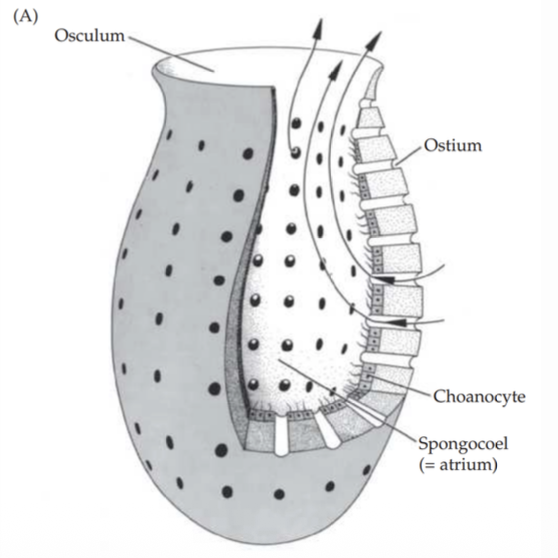
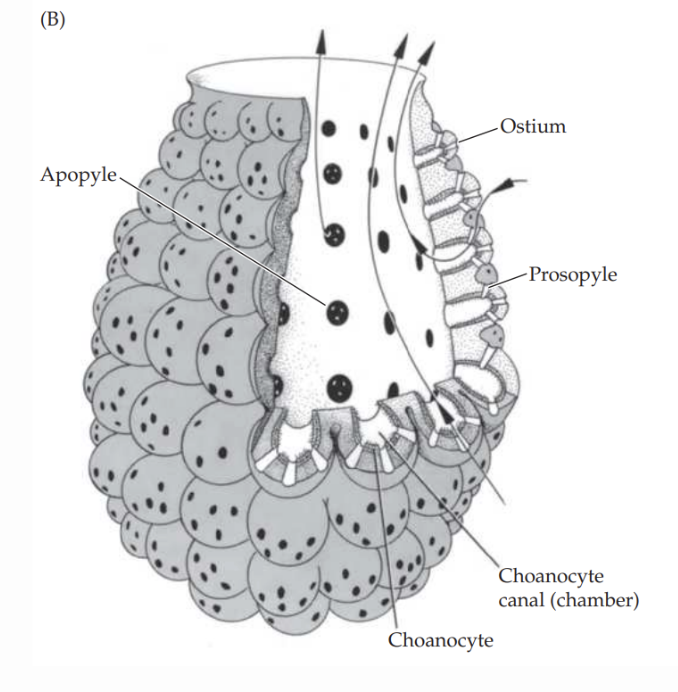
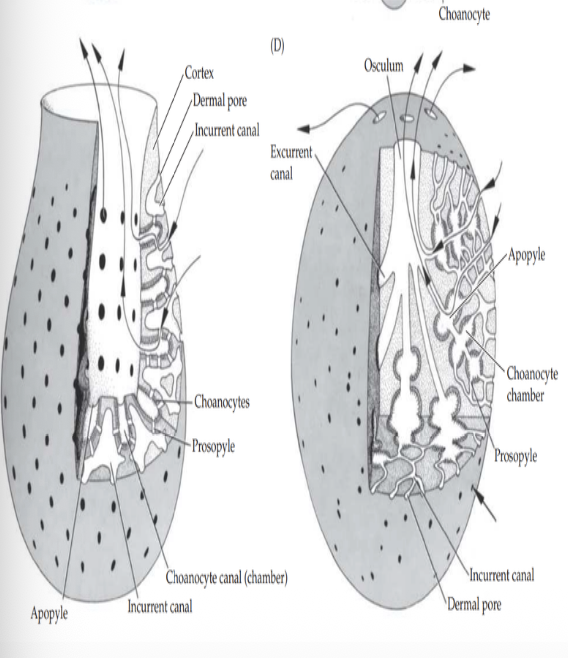
Diploblast
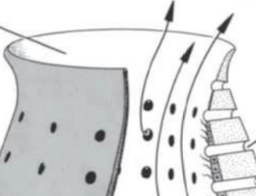
An organism with two germ layers: ectoderm and endoderm.
10
New cards
Triploblast
An organism with three germ layers: ectoderm, mesoderm, and endoderm.
11
New cards
Ectoderm
The outer embryonic layer.
12
New cards
Endoderm
The inner embryonic layer.
13
New cards
Mesoderm
The middle embryonic layer found in triploblastic animals.
14
New cards
Cleavage
The first cell divisions of a fertilized egg.
15
New cards
Blastula
The early embryo stage formed after cleavage.
16
New cards
Gastrulation
The process where embryonic germ layers form.
17
New cards
Morphogenesis
The process where cells specialize and form tissues and organs.
18
New cards
Archenteron
The embryonic gut.
19
New cards
Blastopore
The opening formed during gastrulation.
20
New cards
Surface area to volume ratio
The relationship between an organism’s surface area and volume that affects exchange of materials.
21
New cards
Why do large organisms need specialized structures?
As organisms increase in size, surface area to volume ratio decreases, making exchange less efficient.
22
New cards
How do sponges overcome surface area limitations?
Sponges increase internal folding to increase surface area while maintaining efficient exchange.
23
New cards
SA:V ratio
Surface area to volume ratio; organisms need a high ratio to efficiently exchange materials with the environment.
24
New cards
Why does SA:V decrease as animals get larger?
Volume increases faster than surface area, making diffusion and exchange less efficient.
25
New cards
Why do animals evolve specialized systems?
To overcome limitations caused by decreasing surface area to volume ratios.
26
New cards
Sessile
An organism that remains attached to a surface and does not move freely.
27
New cards
Motile
An organism capable of movement.
28
New cards
Planktonic
An organism that drifts with tides and currents.
29
New cards
Benthos
Organisms that live on or near the bottom of aquatic environments.
30
New cards
Porifera
Phylum containing sponges; simple aquatic animals that are primarily suspension feeders.
31
New cards
Cnidaria
Phylum containing jellyfish, corals, and anemones; characterized by cnidocytes.
32
New cards
Ctenophora
Phylum containing comb jellies; gelatinous marine animals with comb rows used for movement.
33
New cards
Placozoa
A simple marine non-bilaterian group with few cells, no organs, and no symmetry.
34
New cards
Body cavity
A space inside an animal body that can allow development of organs and support larger body size.
35
New cards
Coelom
A fluid-filled body cavity completely lined by mesoderm.
36
New cards
Acoelomate
An animal lacking a body cavity.
37
New cards
Pseudocoelomate
An animal with a body cavity not completely lined by mesoderm.
38
New cards
Parazoan grade
A level of body organization historically associated with sponges because they lack true tissues and organs.
39
New cards
Eumetazoa
Animals with true tissues.
40
New cards
Tissue
A group of similar cells working together for a specific function.
41
New cards
Gastrulation
The embryonic process where cells rearrange and form germ layers.
42
New cards
Embryogenesis
The process of development from fertilized egg to mature organism.
43
New cards
Cleavage
The rapid cell division of a zygote into smaller cells.
44
New cards
Zygote
The fertilized egg cell formed after reproduction.
45
New cards
Ectoderm
Embryonic layer that develops into outer body structures and nervous tissue.
46
New cards
Mesoderm
Embryonic layer that develops into muscles, connective tissues, and internal structures.
47
New cards
Endoderm
Embryonic layer that develops into internal digestive-related tissues.
48
New cards
Diploblastic
An organism with ectoderm and endoderm only.
49
New cards
Triploblastic
An organism with ectoderm, mesoderm, and endoderm.
50
New cards
Why are all Bilateria triploblastic?
They contain three germ layers including mesoderm.
51
New cards
Radial symmetry example
Jellyfish; body parts arranged around a central axis.
52
New cards
Bilateral symmetry example
Crabs; body has distinct left and right sides.
53
New cards
Asymmetry example
Sponges; no consistent body axis.
54
New cards
Phylogenetic tree purpose
To show evolutionary relationships and common ancestry.
55
New cards
Clade
A group containing an ancestor and all descendants.
56
New cards
Derived trait
A trait that evolved more recently compared to an ancestral condition.
57
New cards
Ancestral trait
A trait present in an earlier ancestor.
58
New cards
Homology vs analogy
Homology is similarity from common ancestry; analogy is similarity from similar function or convergence.
59
New cards
Homologous structures
Structures with shared evolutionary origin even if functions differ.
60
New cards
Analogous structures
Structures with similar functions but different evolutionary origins.
61
New cards
Divergent evolution
When related organisms become increasingly different over time.
62
New cards
Convergent evolution
When unrelated organisms evolve similar traits.
63
New cards
Porifera
A phylum of simple aquatic animals known as sponges; they lack true tissues and organs and are mostly suspension feeders.
64
New cards
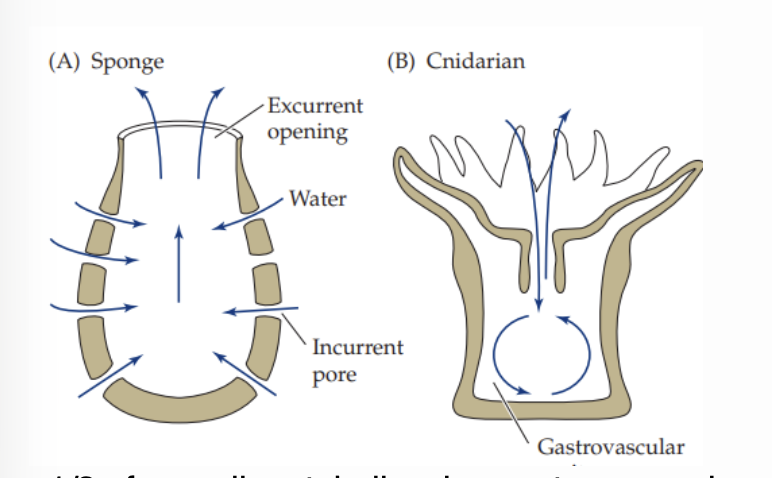
Aquiferous system
Aquiferous system
The water-circulation system of sponges that moves water through the body for feeding, gas exchange, and waste removal.
65
New cards
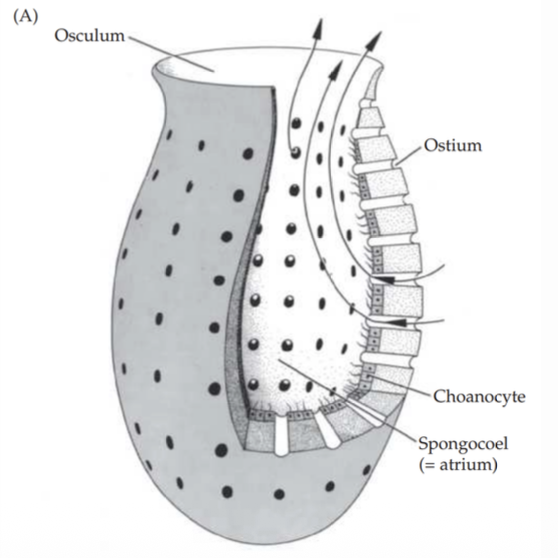
Water flow in sponges
Water enters through ostia, moves through canals/chambers with choanocytes, and exits through the osculum.
66
New cards
Ostia
Ostia
Small pores on a sponge where water enters the body.
67
New cards
Osculum
Osculum
The large opening where filtered water exits the sponge.
68
New cards
Choanocyte
A flagellated sponge cell that creates water currents and captures food particles using a collar.
69
New cards
Pinacoderm
The outer layer of a sponge made of flattened cells called pinacocytes.
70
New cards
Pinacocyte
A flattened outer sponge cell that forms the protective covering of the sponge.
71
New cards
Choanoderm
The inner layer of a sponge lined with choanocytes.
72
New cards
Mesohyl
The jelly-like internal layer between the pinacoderm and choanoderm containing cells and skeletal elements.
73
New cards
Spicule
A small skeletal structure made of silica or calcium carbonate that supports and protects a sponge.
74
New cards
Sclerocyte
A sponge cell responsible for producing spicules.
75
New cards
Spongocyte
A sponge cell that produces spongin fibers.
76
New cards
Myocyte
A contractile sponge cell that helps regulate water flow.
77
New cards
Sponge suspension feeding
The process where sponges filter small food particles from water using choanocytes.
78
New cards
Asconoid sponge
Asconoid sponge
The simplest sponge body form where water flows directly into a central cavity lined with choanocytes.
79
New cards
Syconoid sponge
Syconoid sponge
A sponge body form with folded walls that increase surface area and contain choanocyte chambers.
80
New cards
Leuconoid sponge
Leuconoid sponge
The most complex sponge body form with many chambers and the greatest filtering efficiency.
81
New cards
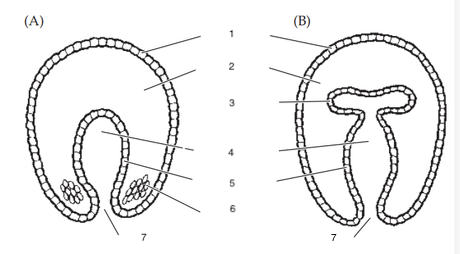
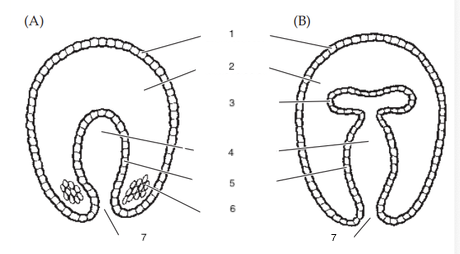
<p>what is number 1 on this diagram</p>

what is number 1 on this diagram

ectoderm
82
New cards
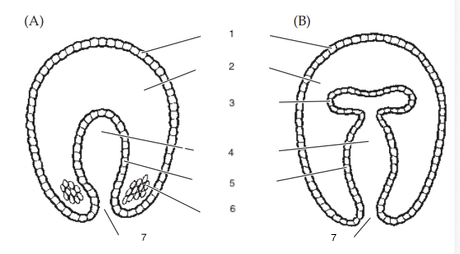
<p>What is number 2 on this diagram</p>

What is number 2 on this diagram

Blastocoel
83
New cards
<p>What is number 3 on this diagram?</p>

What is number 3 on this diagram?

Presumptive mesoderm
84
New cards
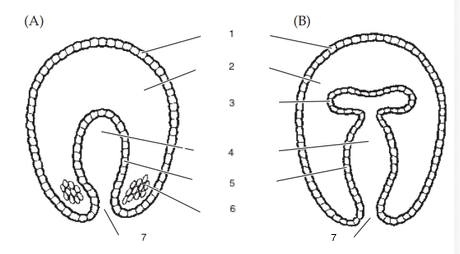
<p>What is number 4 on this diagram?</p>

What is number 4 on this diagram?

Archenteron
85
New cards
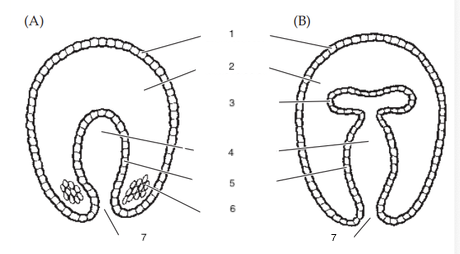
<p>What is number 5 on this diagram?</p>

What is number 5 on this diagram?

Endoderm
86
New cards
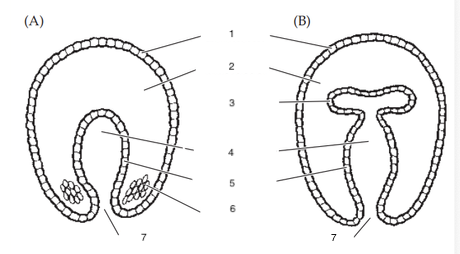
<p>What is number 6 on this diagram?</p>

What is number 6 on this diagram?

Mesoderm
87
New cards
<p>What is number 7 on the diagram?</p>

What is number 7 on the diagram?

Blastopore
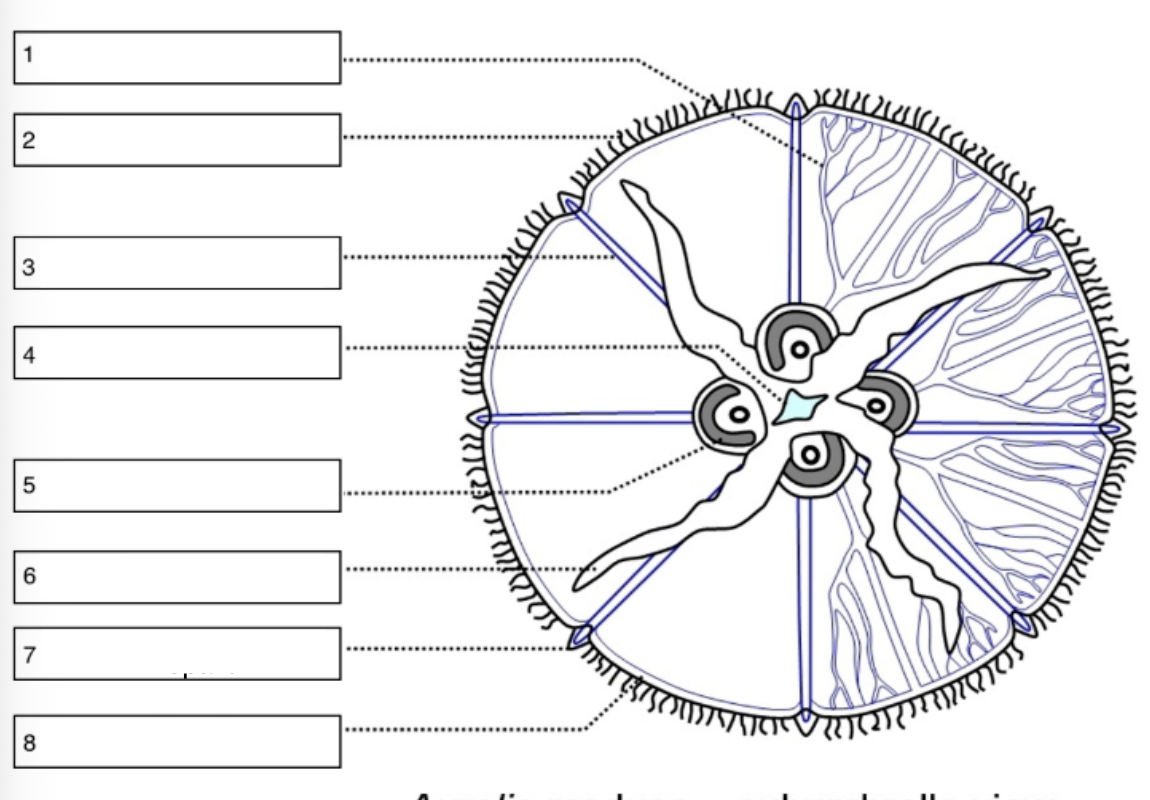
88
New cards
<p>What is number 1 on the diagram?</p>

What is number 1 on the diagram?

Gastrovascular canal: series of radially extending canals acts as the stomach
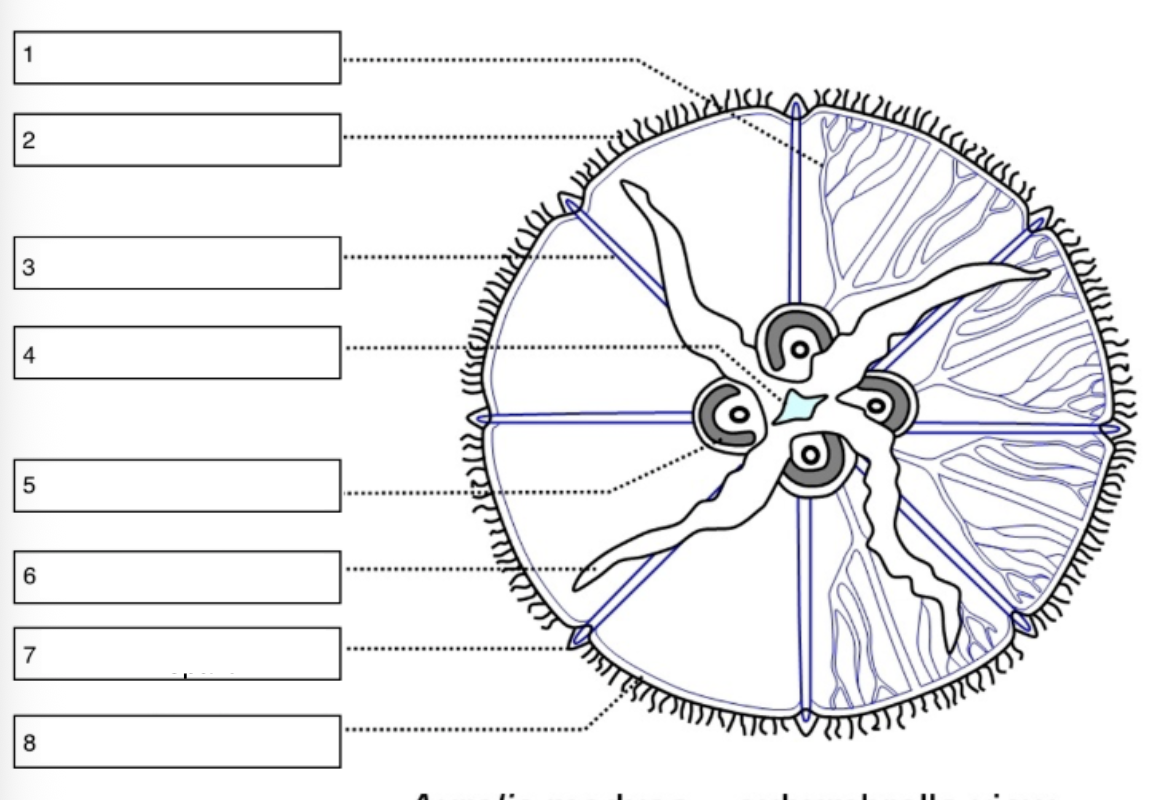
89
New cards
<p>What is number 2 on the diagram?</p>

What is number 2 on the diagram?

tentacle: threads of ectodermal tissue arising from the bell margin/subumbrella surface laden with nematocysts and used for prey capture
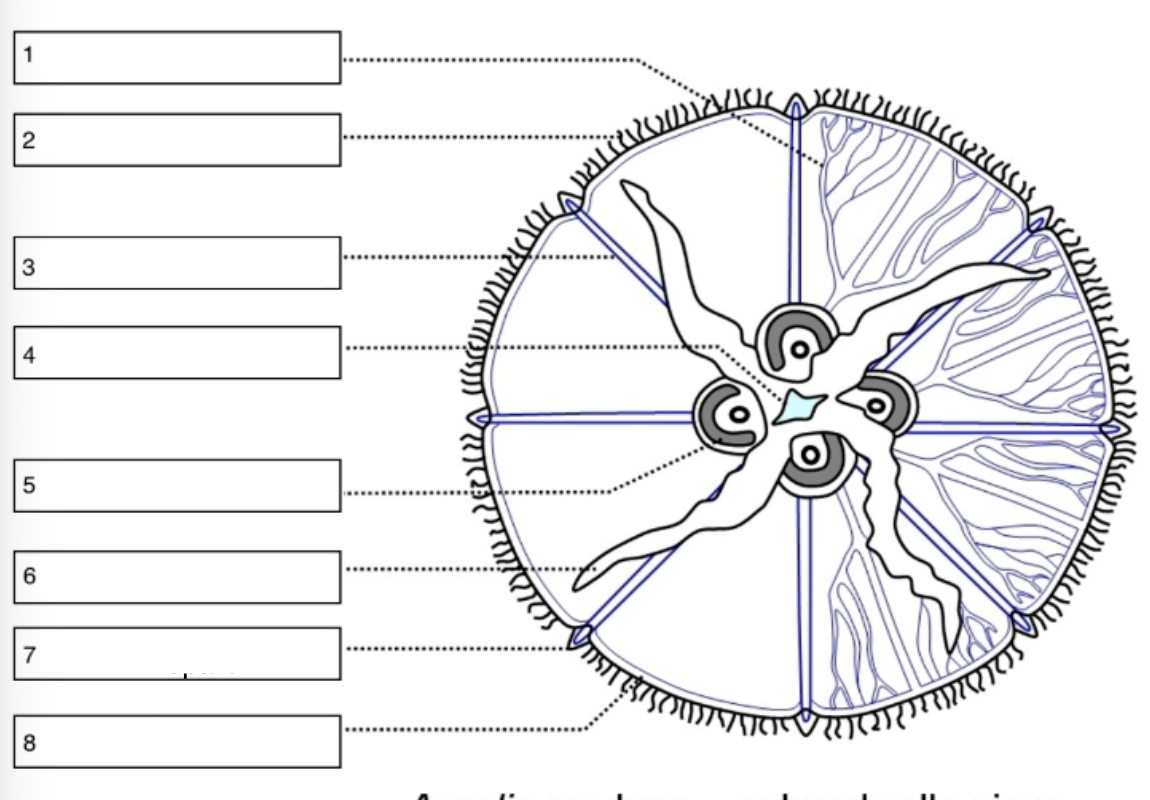
90
New cards
<p>What is number 3 on the diagram?</p>

What is number 3 on the diagram?

Radial Canal: circulation systems that from central gastro cavity to outer edge of the bell
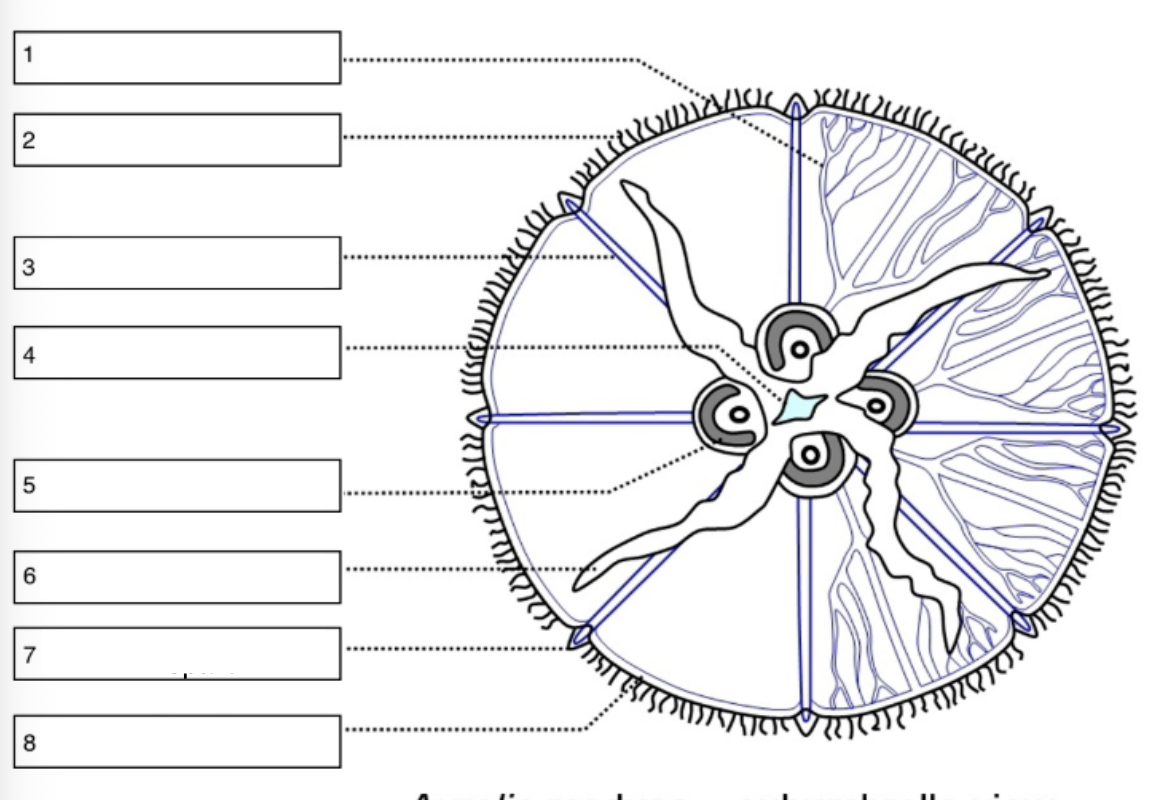
91
New cards
<p>What is number 4 on the diagram?</p>

What is number 4 on the diagram?

Mouth: Opening in the center of the body for eating & expelling waste
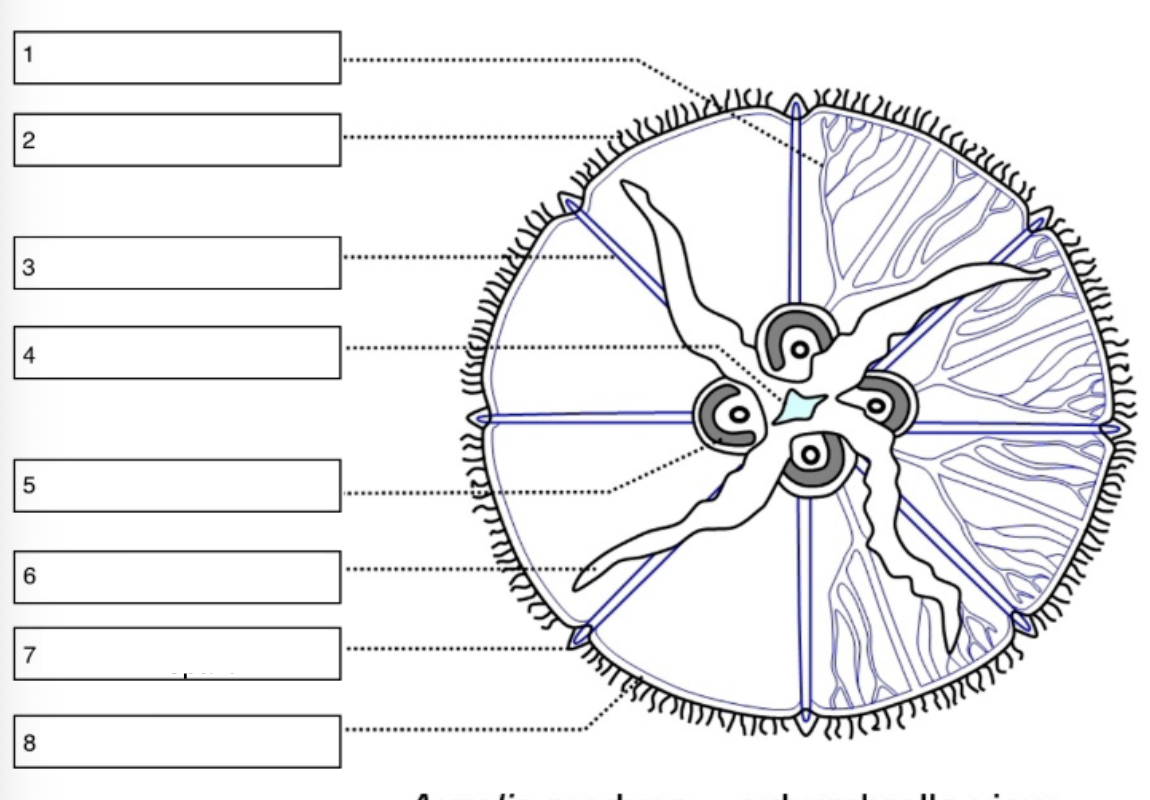
92
New cards
<p>What is number 5 on the diagram?</p>

What is number 5 on the diagram?

Gonad: reproductive organs
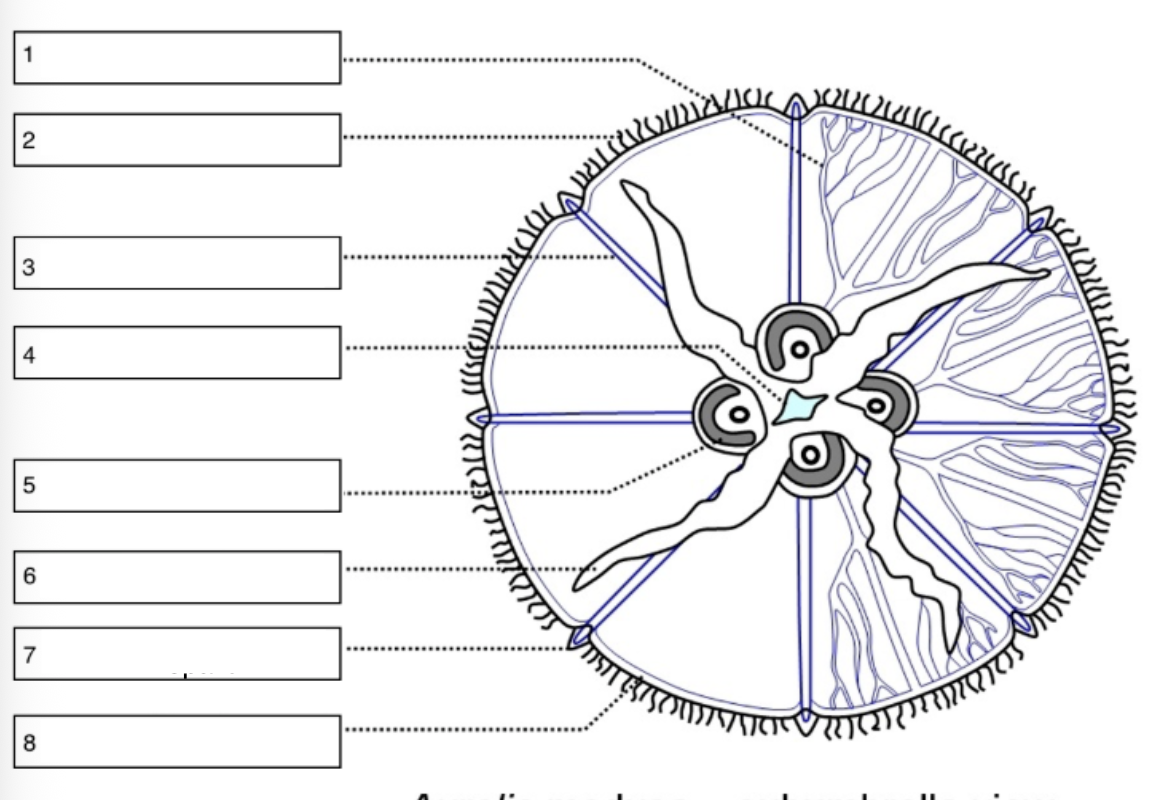
93
New cards
<p>What is number 6 on the diagram?</p>

What is number 6 on the diagram?

oral arm: extension of the mouth tube or manubrium; effectively long, thin and often coiled-lips bearing cnidae
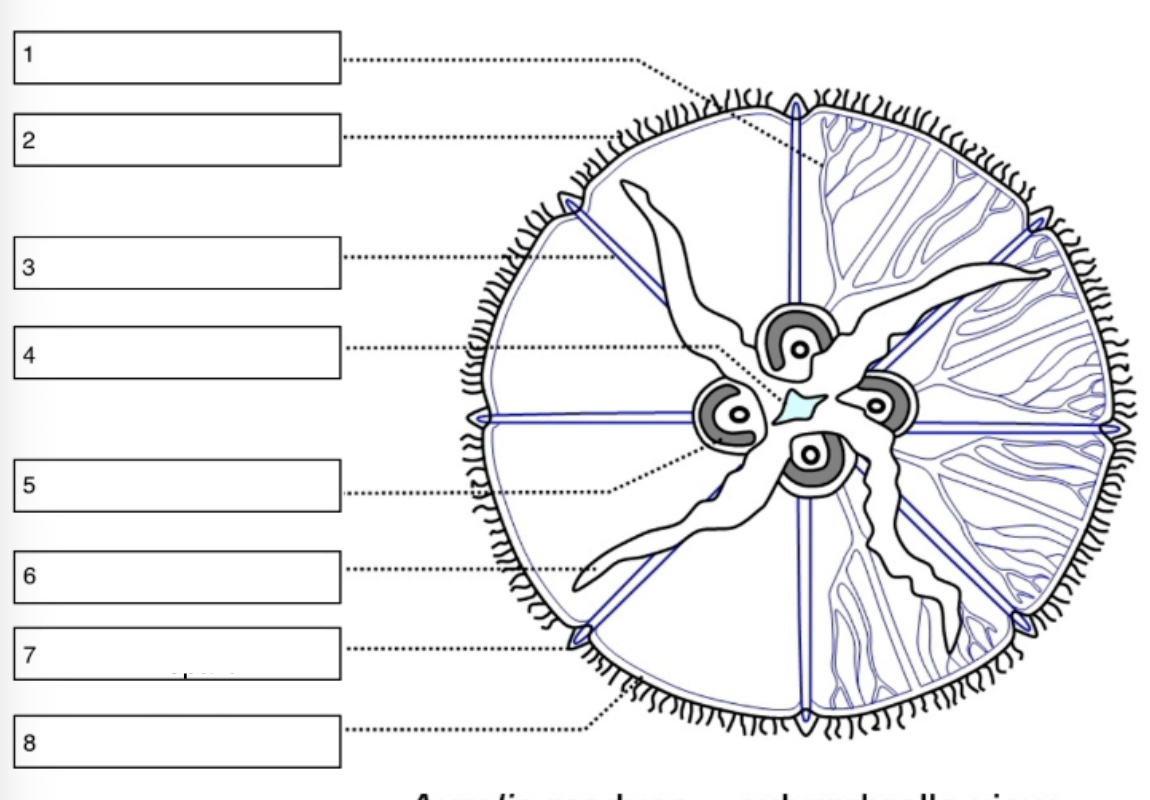
94
New cards
<p>What is number 7 on the diagram?</p>

What is number 7 on the diagram?

Rhopalium: collection of sense organs into a single body, generally at or close to the bell margin
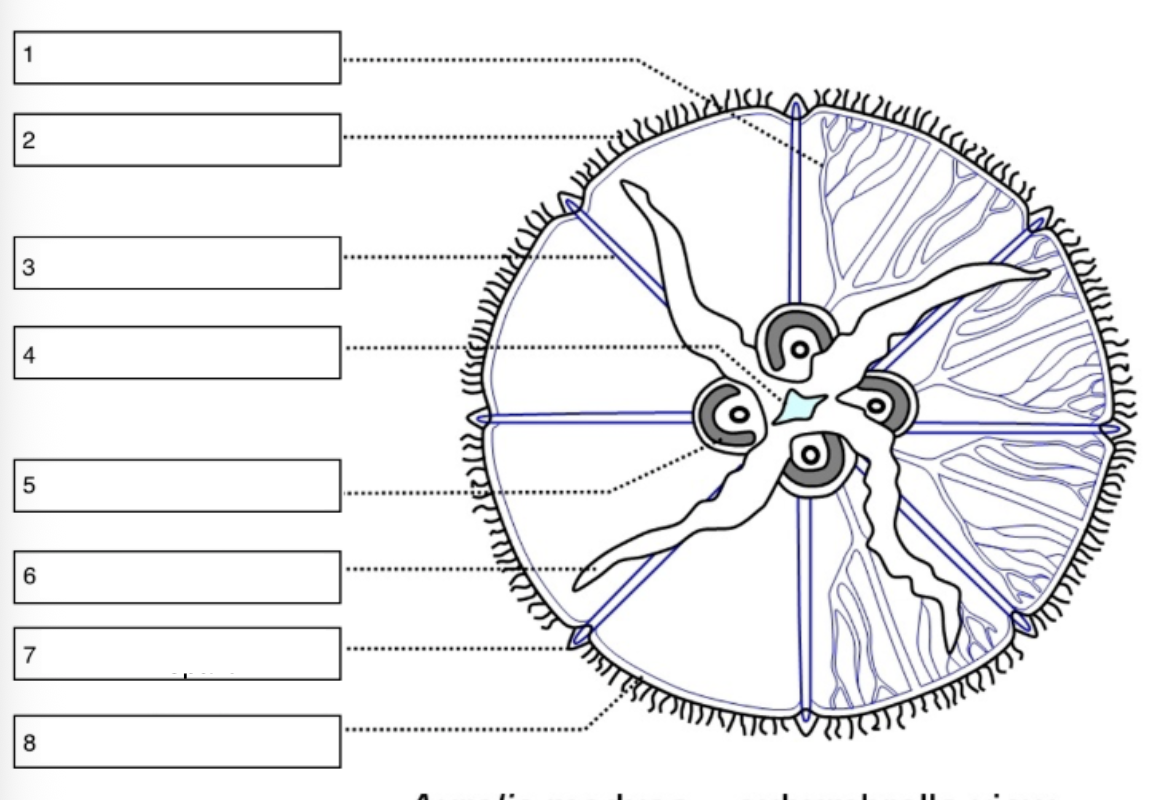
95
New cards
<p>What is number 8 on the diagram?</p>

What is number 8 on the diagram?

Circular Canals: distribute partially digested food, oxygen, and nutrients, throughout their gelatinous bodies
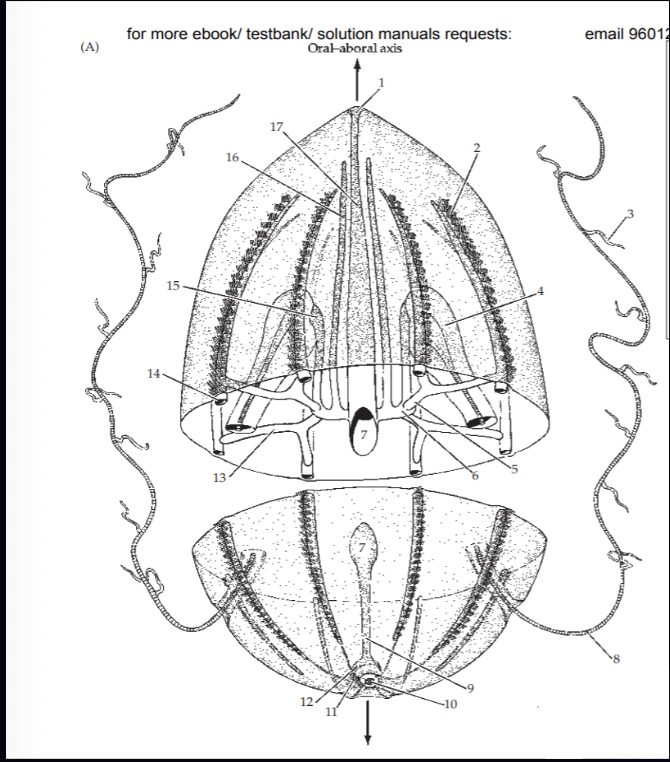
96
New cards
<p>Number 1 on this diagram is what?</p>

Number 1 on this diagram is what?

the mouth
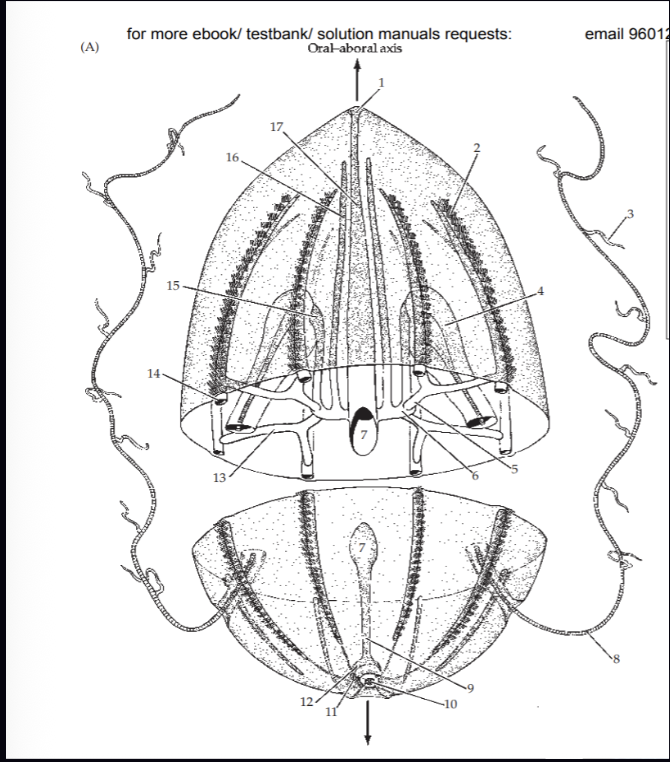
97
New cards
<p>Number 2 on this diagram is what?</p>

Number 2 on this diagram is what?

Ctenes of comb rows
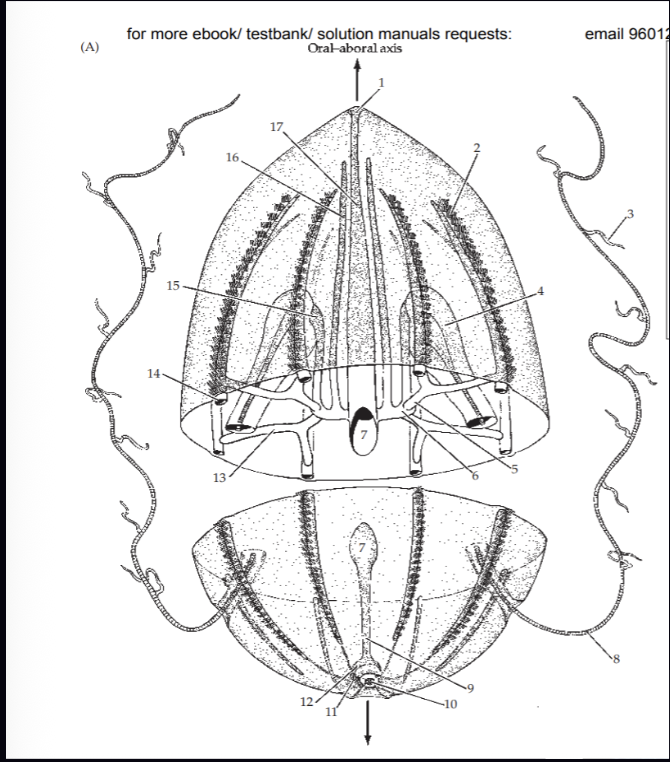
98
New cards
<p>Number 3 on this diagram is what?</p>

Number 3 on this diagram is what?

Tentilla
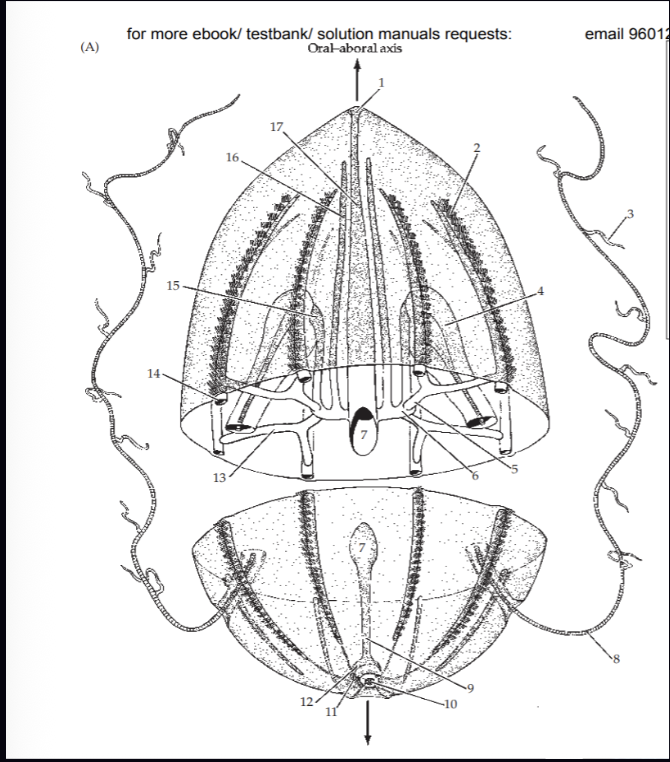
99
New cards
<p>Number 4 on this diagram is what?</p>

Number 4 on this diagram is what?

Tentacle sheath
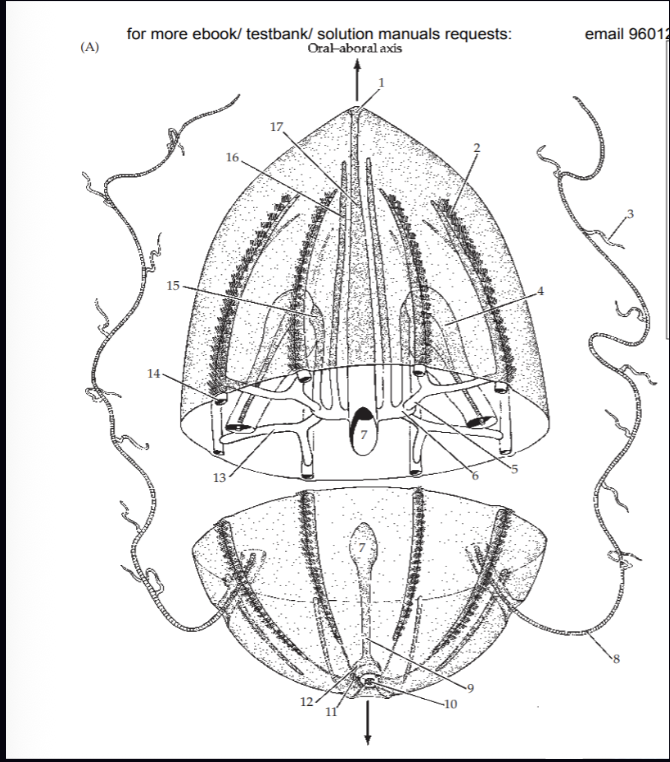
100
New cards
<p>Number 5 on this diagram is what?</p>

Number 5 on this diagram is what?

Interradial canal