Ways of the World Chapter 2
 Call Kai
 Learn
Learn Practice Test
 Spaced Repetition
 Match
Match Flashcards
 Knowt Play
1/47

There's no tags or description
Looks like no tags are added yet.
Name | Mastery | Learn | Test | Matching | Spaced | Call with Kai | Chat |
|---|
No analytics yet
Send a link to your students to track their progress
48 Terms
Code of Hammurabi
A series of laws publicized at the order of King Hammurabi of Babylon (d. 1750 BCE); not actually a code, but a number of laws that proclaim the king's commitment to social order

cradle of civilization
Commonly used term for southern Mesopotamia (in present day Iraq)

cuneiform
Wedge-shaped writing in the form of symbols incised into clay tablets; used in Mesopotamia from around 3100 BCE to the beginning of the Common Era

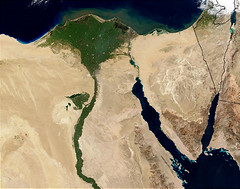
Egypt: "the gift of the Nile"
Egypt is often known as "the gift of the Nile" because the region would not have been able to support a significant human population without the Nile's annual inundation, which provided rich silt deposits and made agriculture possible
Epic of Gilgamesh
The most famous extant literary work from ancient Mesopotamia it tells the story of one man's quest for immortality

Harappa
A major city of the Indus Valley civilization; flourished around 2000 BCE

Hebrews
A smaller early civilization whose development of a monotheistic faith that provided the foundation of modern Judaism, Christianity, and Islam assured them a significant place in world history

hieroglyphs
Ancient Egyptian writing system; literally "sacred carvings" so named because the Greeks saw them prominently displayed in Egyptian temples

Hittites
An Indo-European civilization established in Anatolia in the 18th century BCE

Hyksos
A pastoral group of unknown ethnicity that invaded Egypt and ruled in the north from 1650 to 1535 BCE. Their dominance was based on their use of horses, chariots, and bronze technology

Indus Valley
home of a major civilization that emerged in what is now Pakistan during the third millennium BCE in the valleys of the Indus and Saraswati rivers, noted for the uniformity of its elaborately planned cities over a large territory

Mandate of Heaven
The ideological underpinning of Chinese emperors this was the belief that a ruler held authority by command of divine force as long as he ruled morally and benevolently

Minoan civilization
An advanced civilization that developed on the island of Crete around 2500 BCE

Mohenjo Daro
A major city of the Indus valley civilization; flourished around 2000 BCE

Norte Chico/Caral
Nort Chico is a region along the central coast of Peru, home of a civilization that developed in the period 3000-1800 BCE; Caral was the largest of some 25 urban centers that emerged in the area at that time

Nubia
A civilization to the south of Egypt in the Nile Valley, noted for development of an alphabetic writing system and a major iron working industry by 500 BCE

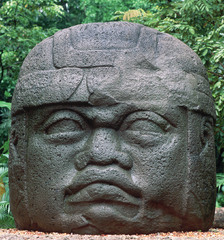
Olmec civilization
An early civilization that developed along the coast of the Gulf of Mexico around 1200 BCE
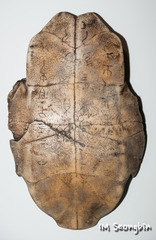
oracle bones
In Chinese civilization, animal bones that were heated and the cracks then interpreted as prophecies; the prophecies were written on the bone and provide our earliest written sources for ancient China
patriarchy
Literally, "rule of the father"; a social system of male dominance

pharoah
A king of Egypt. The term literally means "the palace" and only came into use in the New Kingdom but it is generally employed in reference to all ancient Egyptian rulers

Phoenicians
A civilization in the are of present day Lebanon, creators of the first alphabetic writing system

pyramid
Monumental tomb for an Egyptian pharoah; mostly built during the Old Kingdom; pyramids are also found in Meroe to the south of Egypt

quipu
A series of knotted cords, used for accounting and perhaps as a form of writing in the Norte Chico civilization

rise of the state
A process of centralization that took place in the First Civilizations, growing out of the greater complexity or urban life in recognition of the need for coordination, regulation, adjudication, and military leadership

salinization
The buildup of minerals in soil, decreasing its fertility; can be caused by long-term irrigation

Shang dynasty
Period of Chinese history from 1766 to 1122 BCE

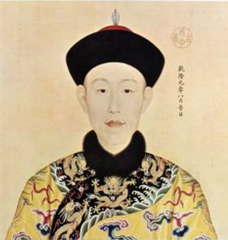
Son of Heaven
Title of the ruler of China, first known as the Zhou dynasty; it acknowledges the ruler's position as intermediary between heaven and earth
Teotihuacan (teh-o-tee-WAH-kahn)
The largest city of ancient Mesoamerica; flourished around 500 BCE
Uruk (OOH-rook)
The largest city of ancient Mesopotamia

Xia dynasty (shah)
A legendary series of monarchs of early China, traditionally dated to 2200-1766 BCE

Zhou dynasty (joe)
Period of Chinese history from 1122 to 256 BCE
ziggurat
A Mesopotamian stepped pyramid; unlike an Egyptian pyramid, a ziggurat was a solid structure of baked brick, an artificial hill at the summit if which stood a temple

Agricultural Revolution
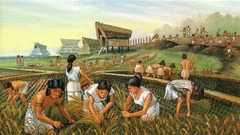
Also known as the Neolithic Revolution, this is the transformation of human (and world) existence caused by the deliberate cultivation of particular plants and the deliberate taming and breeding of particular animals
Bantu
An African-language family whose speakers gradually became the dominant culture of eastern and southern Africa thanks to their agricultural techniques and, later, their iron working skills

Bantu migration
The spread of Bantu-speaking peoples from their homeland in what is now southern Nigeria or Cameroon to most of Africa in a process that started ca. 3000 BCE and continued for several millennia

Catalhuyuk
An important Neolithic site in what is now Turkey

chiefdom
A societal grouping governed by a chief who typically relies on generosity, ritual status, or charisma rather than force to win obedience from the people
diffusion
The gradual spread of agricultural techniques without extensive population movement

domestication
The taming and changing of nature for the benefit of humankind

end of the last Ice Age
A process of global warming that began around 16,000 years ago and ended about 5,000 years later, with the earth enjoying a climate similar to that of our own time; the end of the Ice Age changed conditions for human beings, leading to increased population and helping to pave the way for agriculture
Fertile Crescent
Region sometimes known as Southwest Asia that includes the modern states of Iraq, Syria, Israel/Palestine, and southern Turkey; the earliest home of agriculture

intensification
The process of getting more in return for less; for example growing more food on a smaller plot of land

Mesopotamia
The valley of the Tigris and Euphrates rivers in present day Iraq

native Australians
Often called "Aboriginals" the natives of Australia continued to live (and to some extent still do) by gathering and hunting despite transition to agriculture in nearby lands
pastoral society
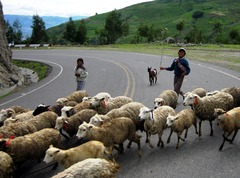
A human society that relies on domesticated animals rather than plants as the main source of food; pastoral nomads lead their animals to seasonal grazing grounds rather than settling permanently in a single location
"secondary products revolution"
A term used to describe the series of technological changes that began ca. 4000 BCE, as people began to develop new uses for their domesticated animals, exploiting a revolutionary new source of power
stateless societies
Village-based agricultural societies usually organized by kinship groups that functioned without a formal government apparatus
teosinte
The wild ancestor of maize
