A and P Lab 2
 Call Kai
 Learn
Learn Practice Test
 Spaced Repetition
 Match
Match Flashcards
 Knowt Play
1/32

There's no tags or description
Looks like no tags are added yet.
Name | Mastery | Learn | Test | Matching | Spaced | Call with Kai | Chat |
|---|
No analytics yet
Send a link to your students to track their progress
33 Terms
Cells vary by
Type, structure, and function
Plasma membrane
Outside barrier of the cell
Cytoplasm
Includes cytosol and all the organelles and structures in it
Cytosol
Fluid component of the cytoplasm
Nucleus
Contains the cell’s DNA and controls cell activities
Phospholipid bilayer (plasma membrane)
Made up of phospholipid molecules. The heads are hydrophilic and face outwards, while the tails are hydrophobic and face inwards
Proteins in and around the lipid bilayer form ion channels, carry substances through the membrane, act as markers or receptors, and facilitate other cellular functions
Semi-permeable
Passive Transport
Osmosis or diffusion, these don’t require the cell to use any energy
Active Transport
Move molecules from low to high concentration. It uses specialized channels or carriers in the cell membrane. This process expends energy
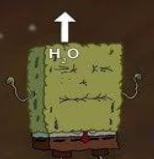
Hypertonic Solution
Greater concentration of water inside the cell than outside the cell. Water flows out and the cell shrinks
Isotonic Solution
Balance of water inside and outside of cell is equal
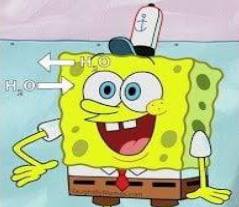
Hypotonic Solution
Greater concentration of water outside the cell than inside. The cell swells and may burst

Cytoskeleton
Consists of proteins called microfilaments and microtubules that support the cell
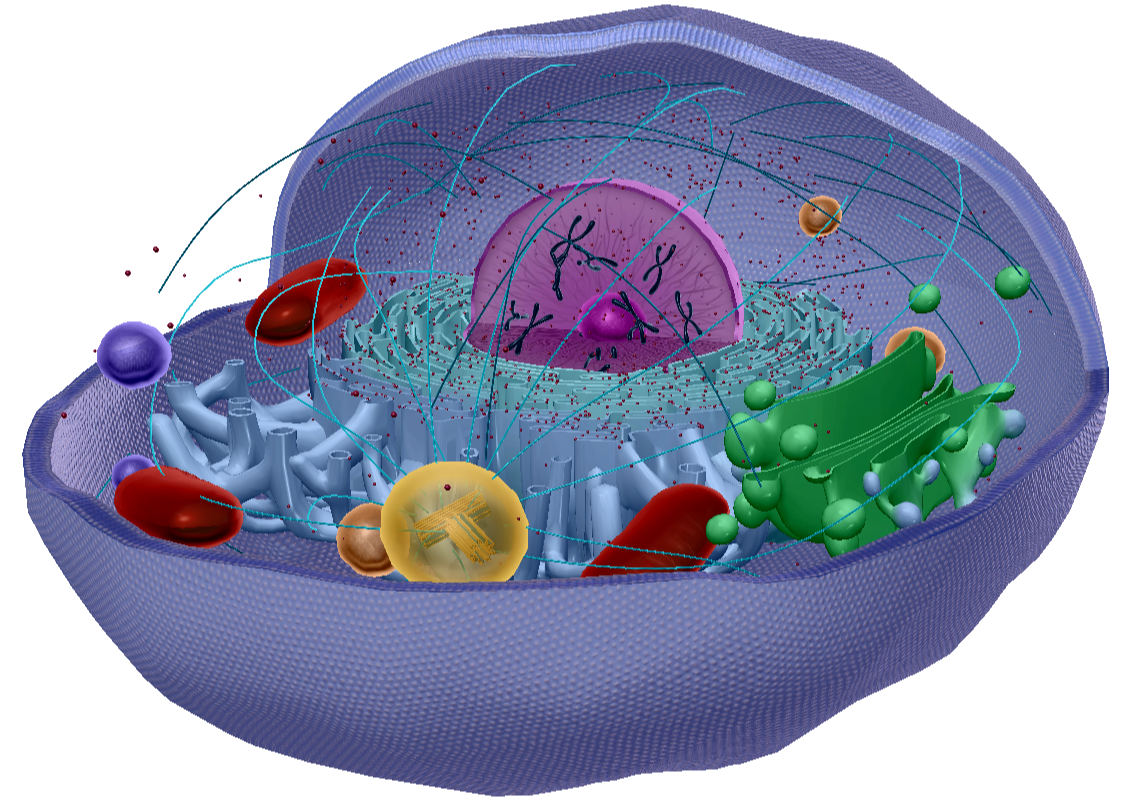
Centrosome
Contains centrioles and pericentriolar material that are essential for cell division
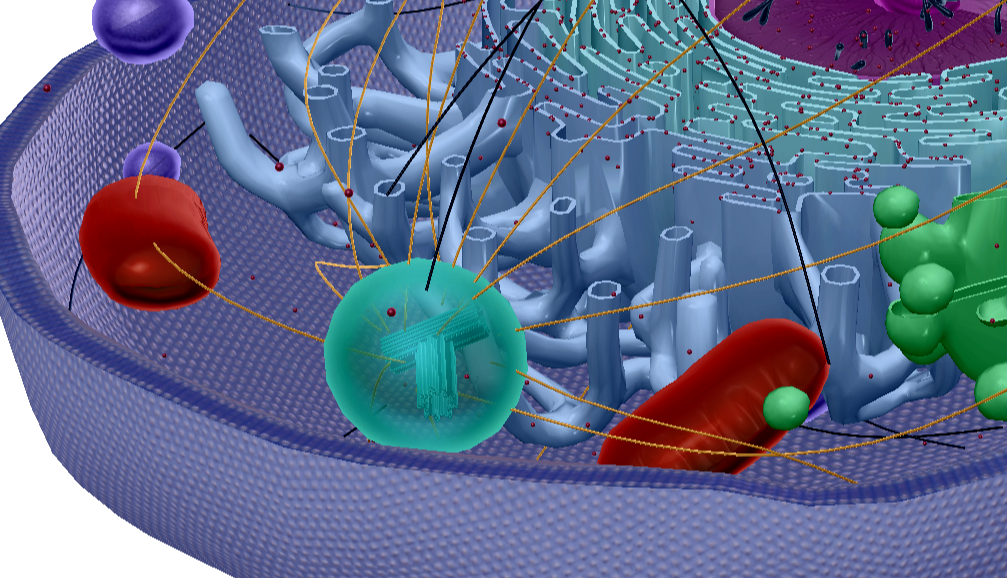
Endoplasmic Reticulum
A folded membrane network that synthesizes proteins and other substances. Rough ER contains ribosomes, but smooth ER doesn’t

Golgi Complex
Proteins produced in the ER are processed in a set of membrane sacs known as the Golgi complex before being released. It packages
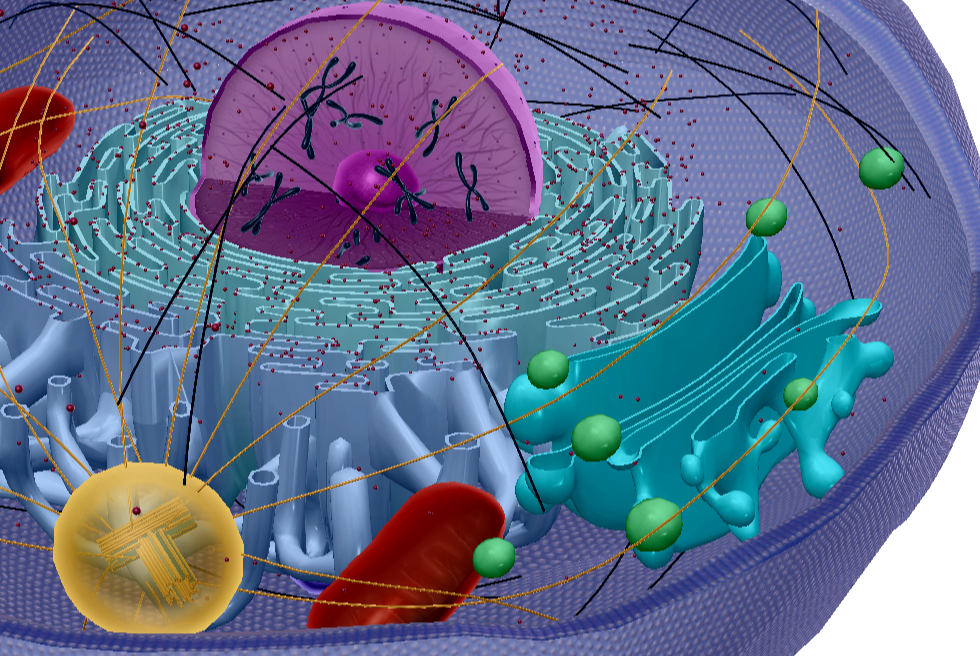
Lysosomes
Capsules inside the cell that contain digestive enzymes. Their function is to break down substances consumed by the cell or to recycle waste
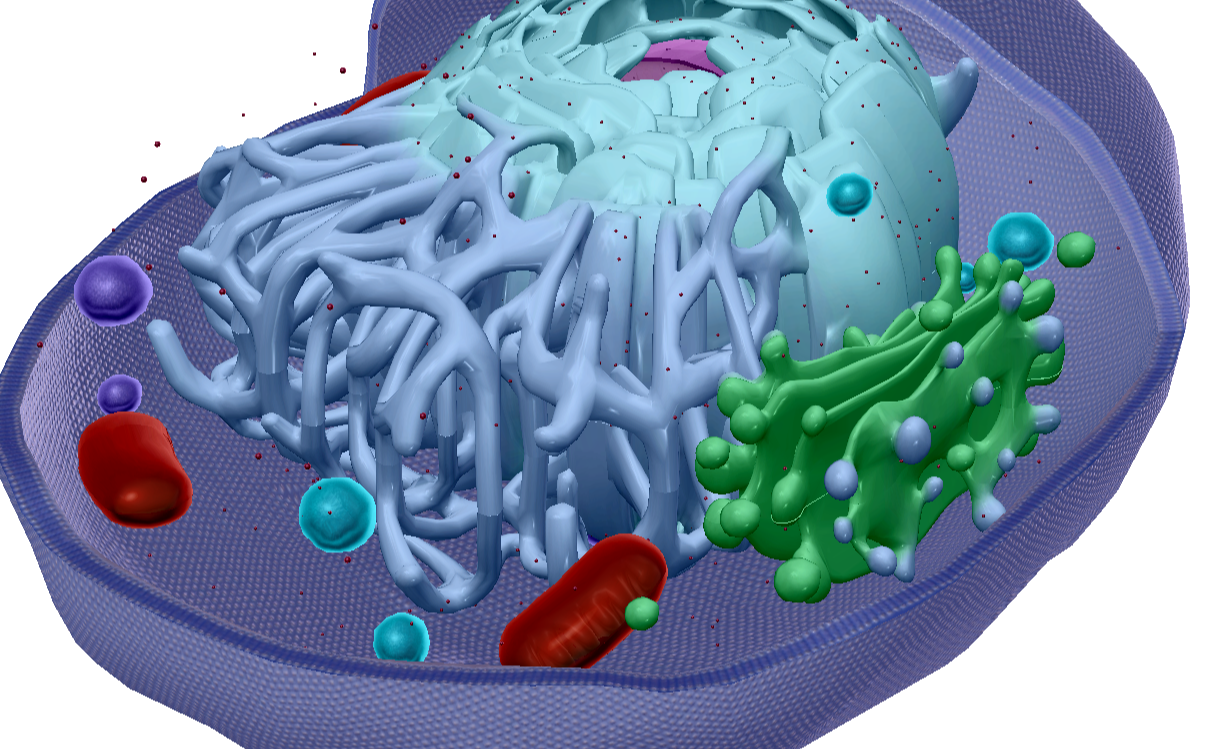
Peroxisomes
Process and neutralize toxins, metabolize long chain fatty acids, and contribute to energy production
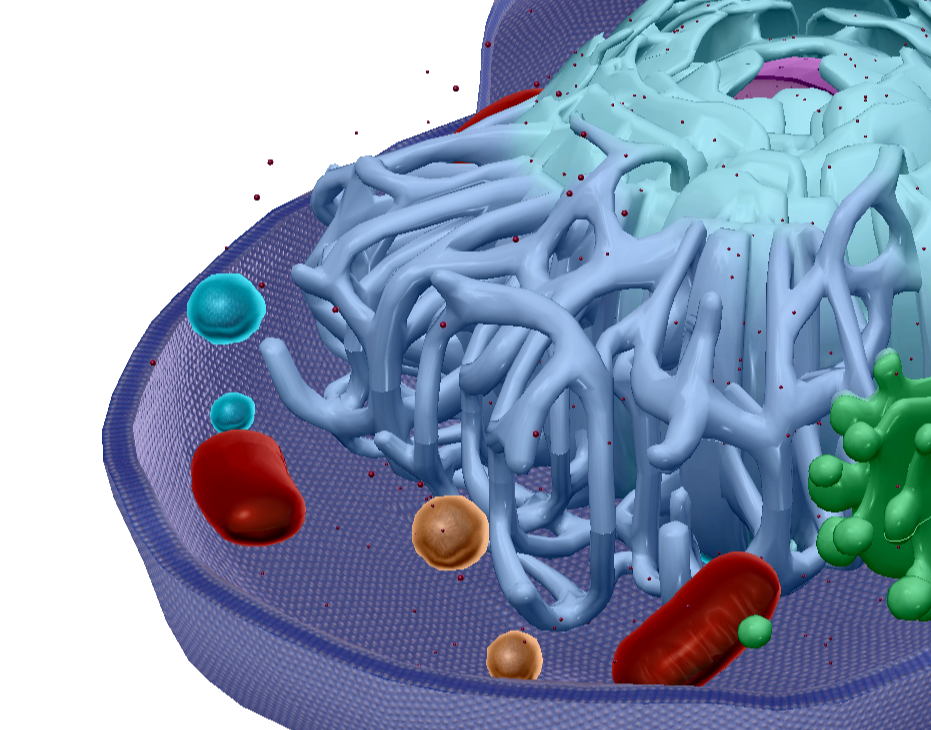
Nucleus
Largest organelle and it contains the cells genetic information encoded in the molecules of DNA

Mitochondria
Use oxygen taken in by the cell to produce ATP, the molecule that cells use as fuel for energy
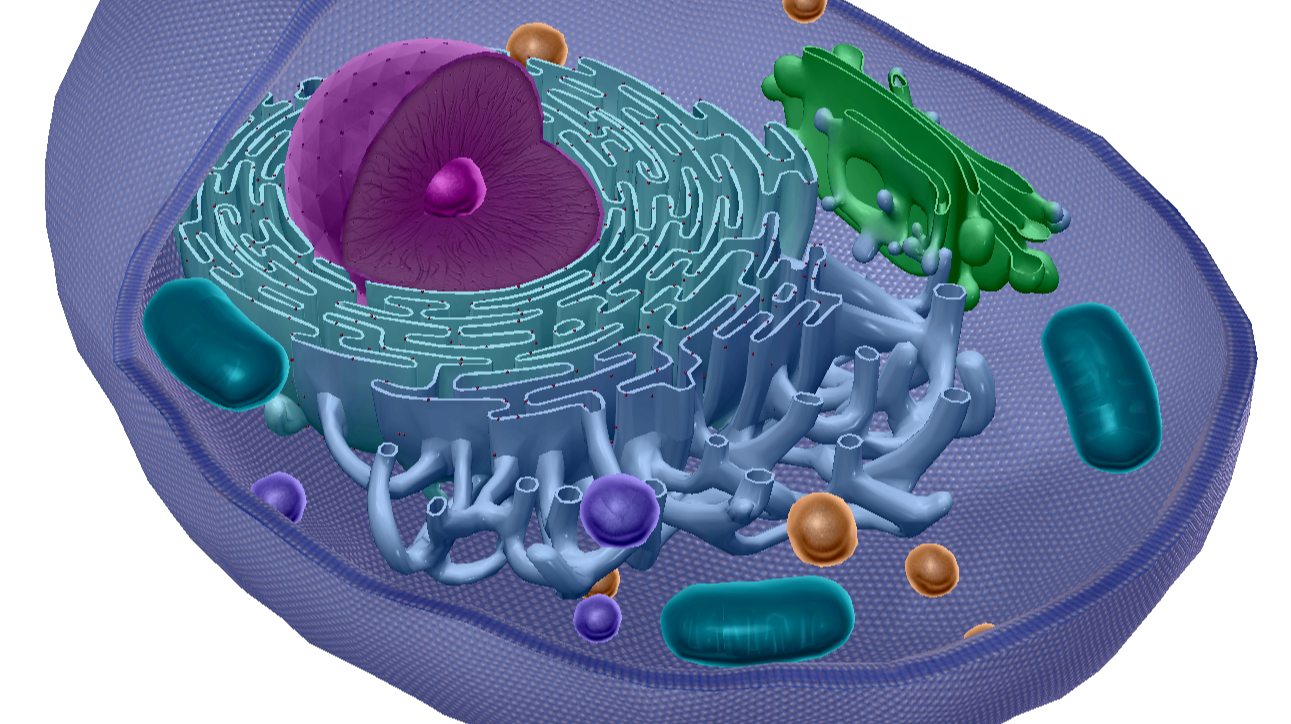
Ribosomes
Produced by the nucleolus, these organelles synthesize proteins
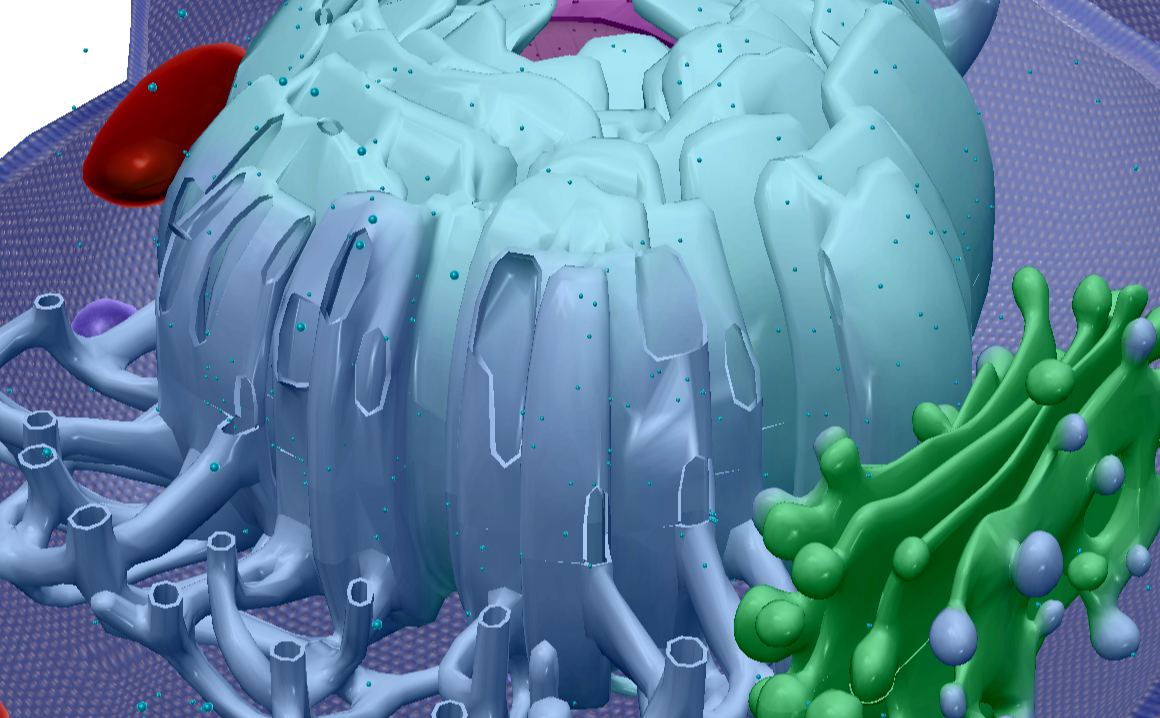
Transcription
The double-helix DNA molecule is unzipped, and a messenger RNA (mRNA) molecule is created from the DNA template
Translation
Formation of a linear chain of amino acids (a protein), using the transcribed information provided by an mRNA strand. The mRNA template is “translated” to synthesize a protein within the ribosome
Interphase
Cells perform their normal functions and prepare for division. During this period, cells grow and create copies of their organelles, replicate their DNA, and synthesize proteins
G1
The growth stage of interphase
S
The stage of interphase where DNA replicates
G2
The stage of interphase when the cell prepares for division
Mitosis
After interphase
The cell phase in which the nucleus divides
Two identical offspring
Diploid, 46 chromosomes
Prophase
The first stage of mitosis; the nuclear membrane disappears
Metaphase
The second stage of mitosis; chromosomes align in the middle of the cell

Anaphase
The third phase of mitosis; sister chromatids move to opposite ends of the cell

Telophase
The fourth phase of mitosis; the nuclear membrane and nucleolus reappear

Cytokinesis
The division of the cell cytoplasm. Begins near end of mitosis and finishes after mitosis

Meiosis
After interphase
Cell division that produces sex cells
4 genetically different offspring
Haploid, 23 chromosomes