classification of periodontal diseases
 Call Kai
 Learn
Learn Practice Test
 Spaced Repetition
 Match
Match Flashcards
 Knowt Play
1/16

There's no tags or description
Looks like no tags are added yet.
Name | Mastery | Learn | Test | Matching | Spaced | Call with Kai | Chat |
|---|
No analytics yet
Send a link to your students to track their progress
17 Terms
2018 classification
periodontitis can be classified into periodontitis, gingivitis or periodontal heath
you can have periodontal health in an intact periodontium or in a reduced but healthy periodntium
someone with gingivitis can have simply gingivitis but it could also be gingival inflammation in a periodontitis patient
you can have necrotizing periodontal diseases, periodontitis as a manifestation of systemic diseases, or periodontitis
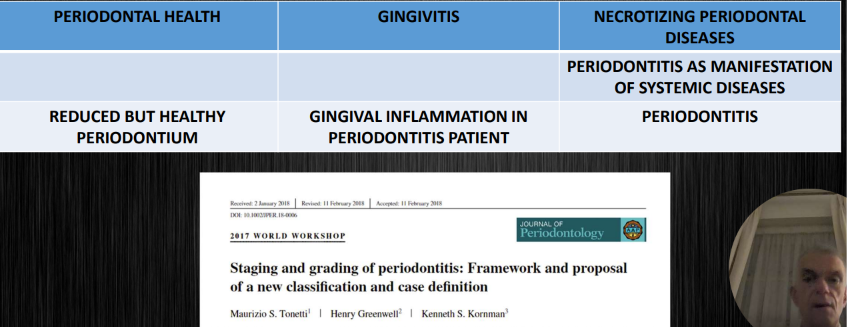
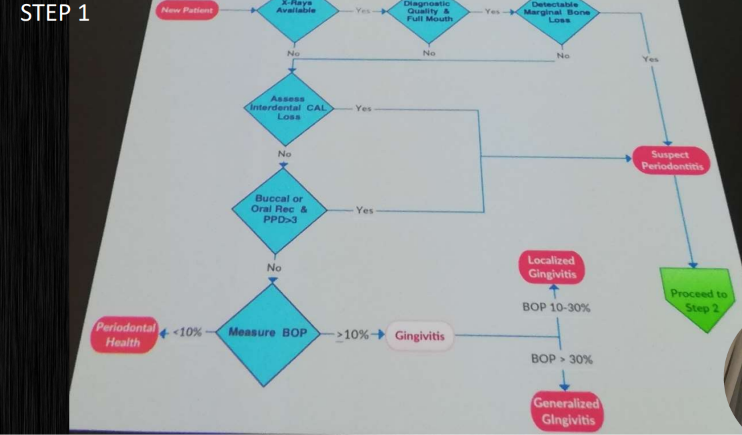
main differnce btw perio an gingivitis there needs to be attachment/bone loss in perio
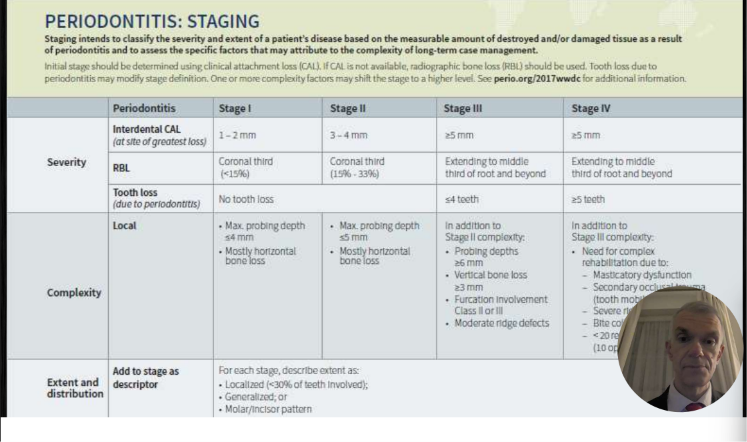
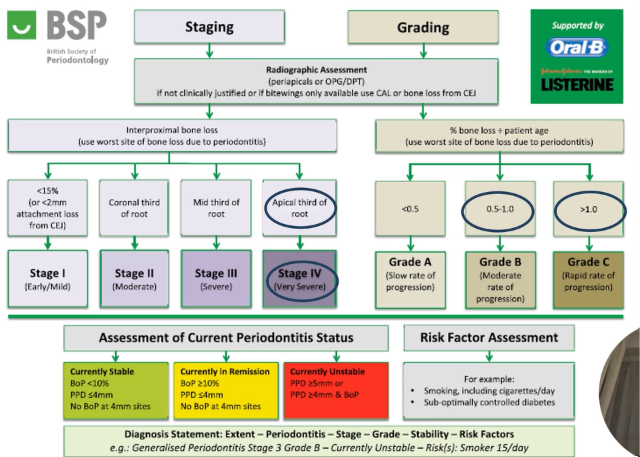
STAGING
‘How bad is it?’
• 1 Mild (GDP)
• 2 Moderate (GDP)
• 3 Severe (periodontist)
• 4 Very severe (multidisciplinary approach)
GRADING
‘How fast is it likely to progress?’
A slow progression (not urgent)
B moderate progression (important but not urgent)
C rapid progression (urgent attention and strict SPT)
outdated - but keep in mind as it may be referred to in research papers
difference between stage 3 and stage 4 is given by complexity factors - eg loss of at least 5 teeth due to perio , mascatory needs

extent and distribution
add to the stage as a descriptor
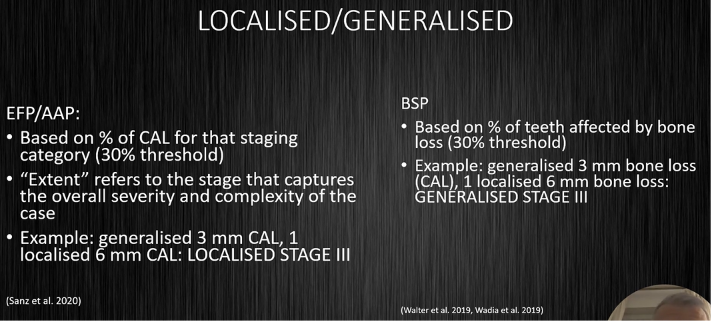
localised - 30% of teeth involved
generalized - more than 30%
molar incisor pattern - very specific, younger
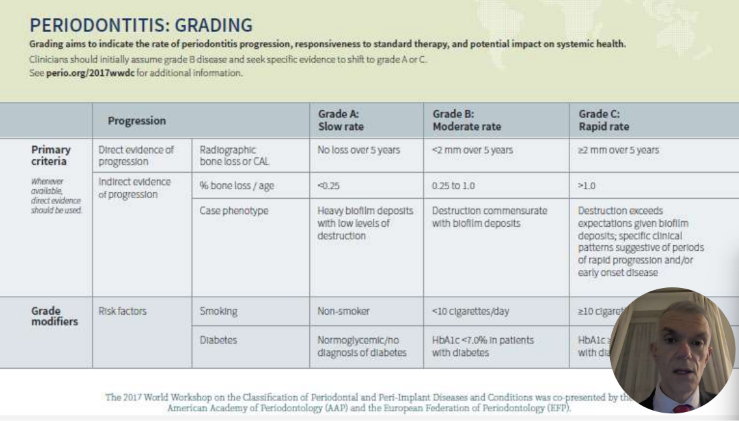
outdated
can move b/w gardes based on risk factors - move up grades
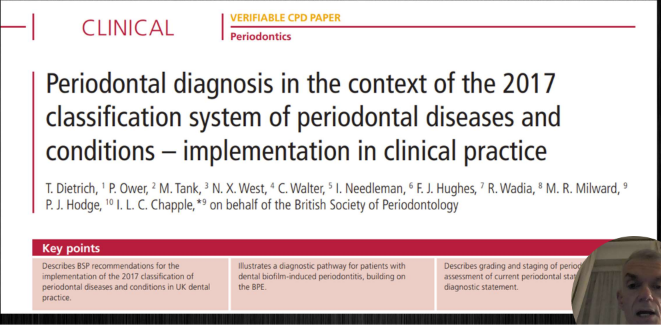
new classification
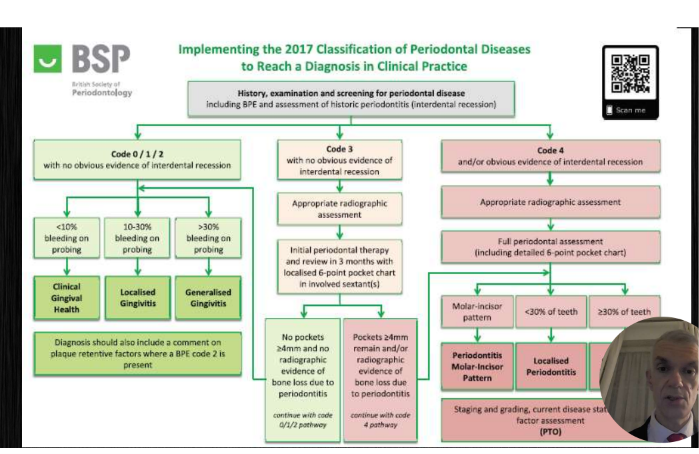
pockets greater than or equal to 4mm - perio
note changes to stages and grading
risk factors do not modify grade
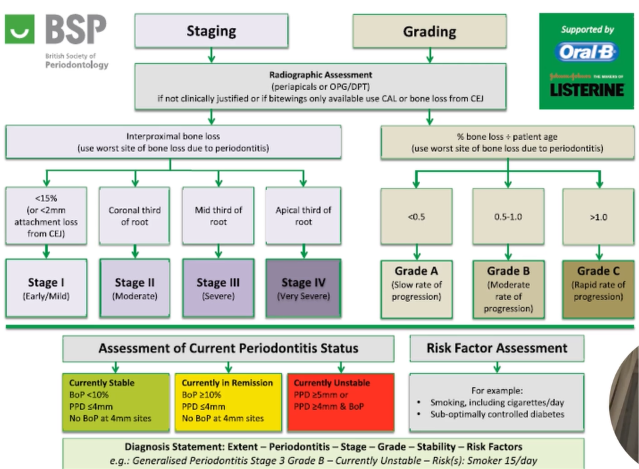
periodontitis stability
currently stable -
currently in remission
currently unstable
currently stable
bleeding on probing is less than 10 %
PPD less than or equal to 4mm with NO bleedung at 4mm sites
currentlyy in remission
bleeding on probing greater than 10%
PPD less than or equal to 4mm
no BoP at the 4mm sites
currently unstable
PPD greater than or equal to 5mm
or PPD greater than or equal to 4mm that bleed
recipe for a periodontitis diagnosis
extent, stage, grade, stability, risk factors
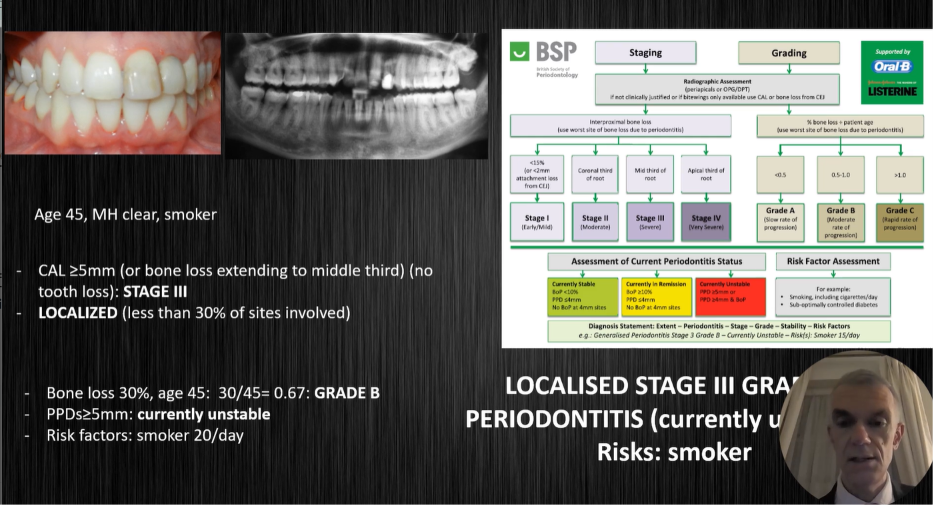
sites = teeth
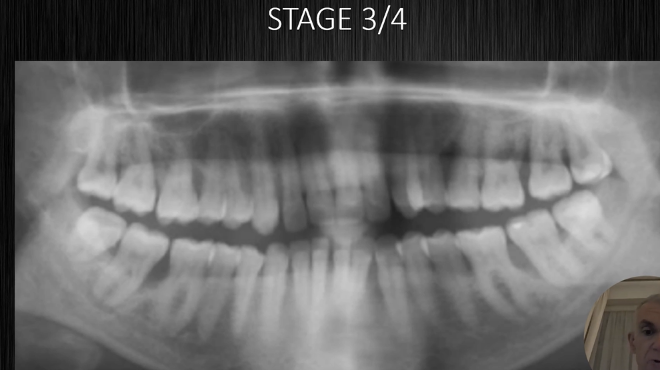
UR6, UL5, LL7, LR7 worst teeth involved