A3.2 Classification and Cladistics
 Call Kai
 Learn
Learn Practice Test
 Spaced Repetition
 Match
Match Flashcards
 Knowt Play
1/15

There's no tags or description
Looks like no tags are added yet.
Name | Mastery | Learn | Test | Matching | Spaced | Call with Kai | Chat |
|---|
No analytics yet
Send a link to your students to track their progress
16 Terms
basis of modern classification
binomial nomenclature and hierarchical system of classification
taxonomy
classification using hierarchical taxa (domain, kingdom, phylum, etc.)
Dear Kyle Please Come Over For Gay Sex
Domain Kingdom Phylum Class Order Family Genus Species
domains
eukarya, archaea, bacteria
morphology
classification based on structural features
disadvantages of morphology
traits may be arbitrary and subjective
does not reflect common ancestry or genetic connections
complicated by hybridization in plants and development of subspecies
method of development of phylogenetic tree
comparing genetic profiles of different species, categorization by molecular differences in amino acid sequences and DNA
phylogeny
study of evolutionary past of a species
advantages of phylogeny
features not arbitrary or subjective
every organism evolved from common ancestor is included in same taxonomic group, reflecting natural gene flow
features or biomechanical responses of organisms within the same taxonomic group can be predicted because they are shared with members of that clade
cladistics
system of classification for grouping taxa based on characteristics that have evolved most recently, illustrated with phylogenetic tree or cladogram, determined by similarities in DNA or amino acid sequences
clade
group of organisms with common ancestry, includes ancestor and all its descendants
cladogram/phylogenetic tree
represents hypothesized relationships among organisms, may include extinct species
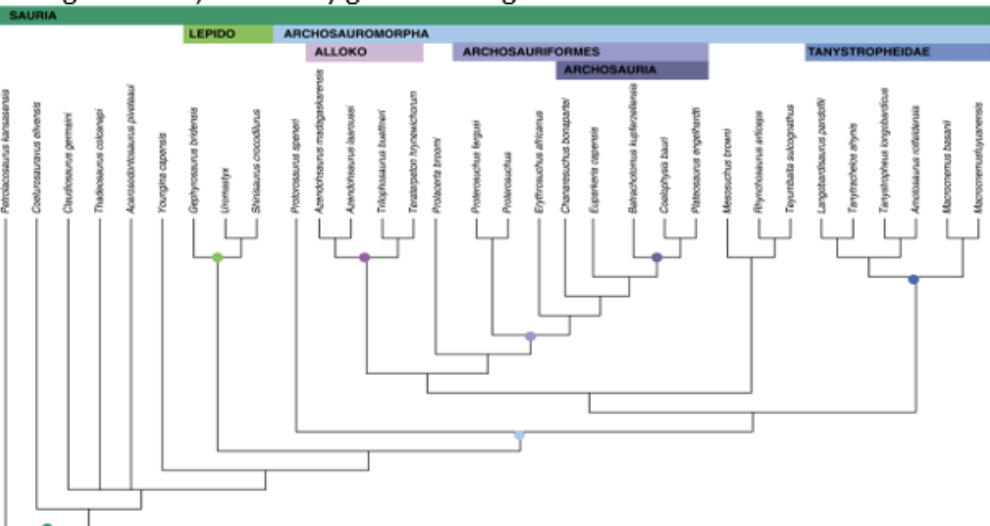
cladogram node
speciation event where a single ancestral lineage split into two or more descendant lineages
cladogram root
phylogenetic tree starting point, oldest common ancestor
cladogram branch length
sometimes scaled to time
gradual accumulation of sequence differences
occur at roughly constant and regular rate, basis for estimates of when clades diverged from a common ancestor