L9.2 - Blockchain Technology
 Call Kai
 Learn
Learn Practice Test
 Spaced Repetition
 Match
Match Flashcards
 Knowt Play
1/12

There's no tags or description
Looks like no tags are added yet.
Name | Mastery | Learn | Test | Matching | Spaced | Call with Kai | Chat |
|---|
No analytics yet
Send a link to your students to track their progress
13 Terms
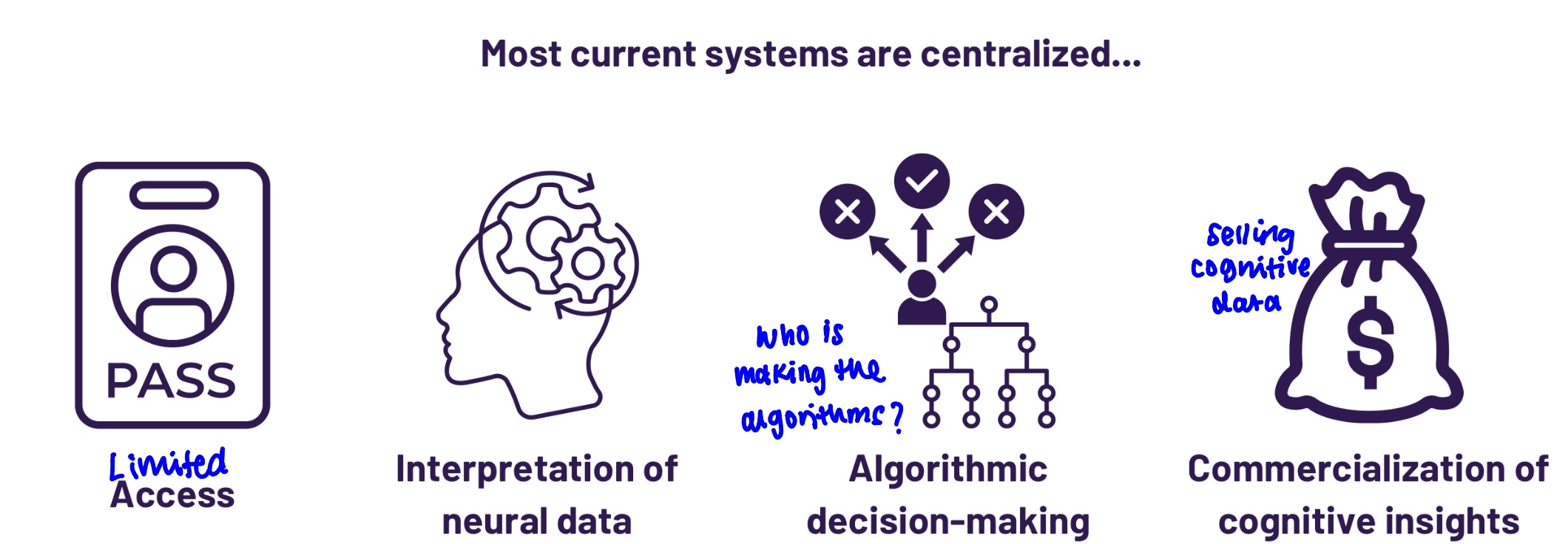
What is centralized trust systems? + What does it entail? + Why is it a problem?
Centralized trust systems = structure where one main authority or governing entity manages records, determines what is valid, controls access, requires users
single data holder, user trust assumption => users must trust that authority
Issues:
power imbalance
privacy risks => since neural data is sensitive and revealing
lack of transparency => how is the data being used
potential for exploitation (manipulation with the accessed data)
single point failure
How does blockchain addresses the trust problem? (3)
Blockchains distribute verification and control across a network & reduce relying on any single authority to:
validate information
safeguard records
govern system operations
Explain what blockchain is AND is not
Blockchain IS
auditable database secured via cryptography
consensus protocol
continuously growing, time stamped record where previous entries cannot be altered
Blockchain IS NOT
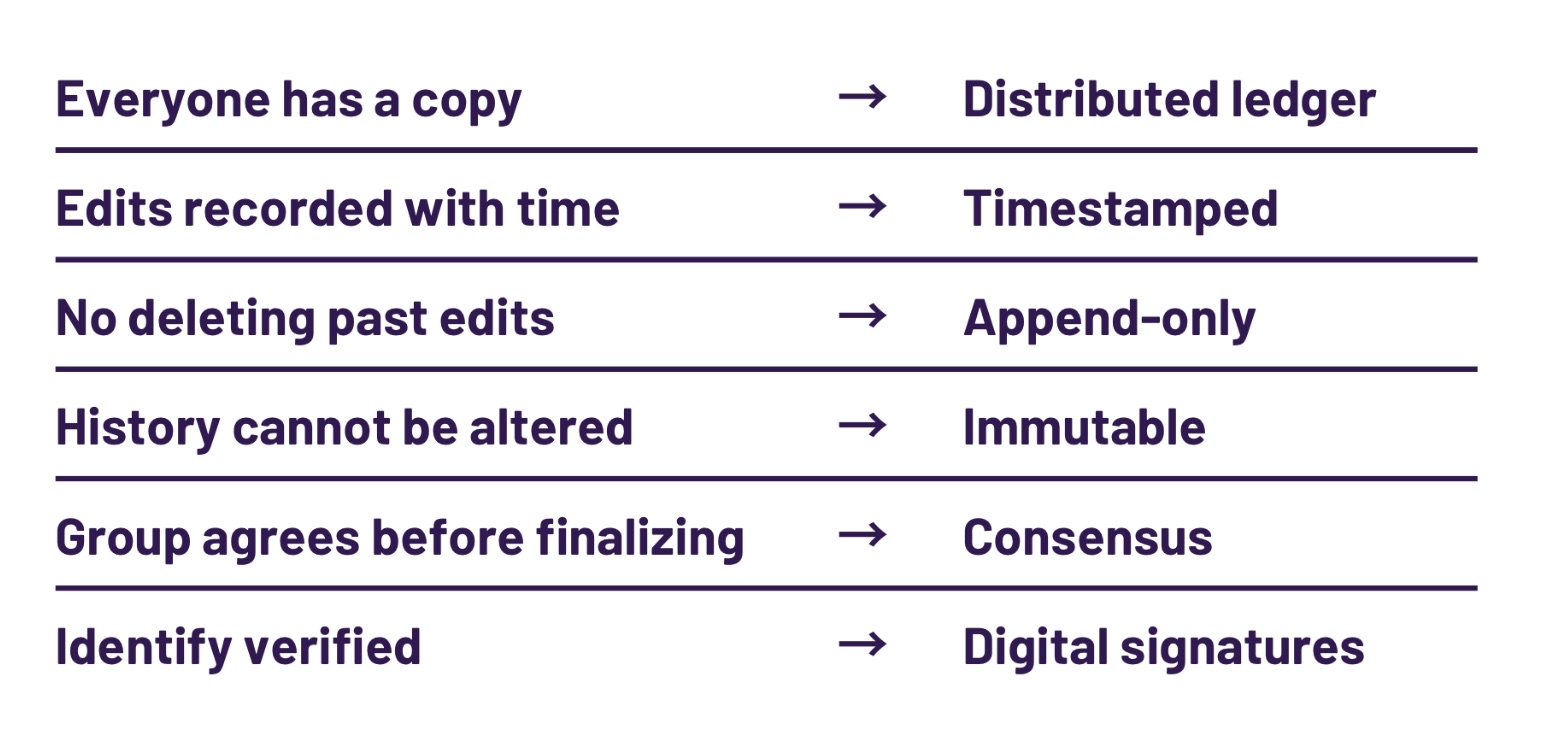
How can you explain blockchain by referring to using google doc for group project
Google doc = centralized trust system
Fair amount of work for each team member SO it’s not 1 person doing (in charge of) everything
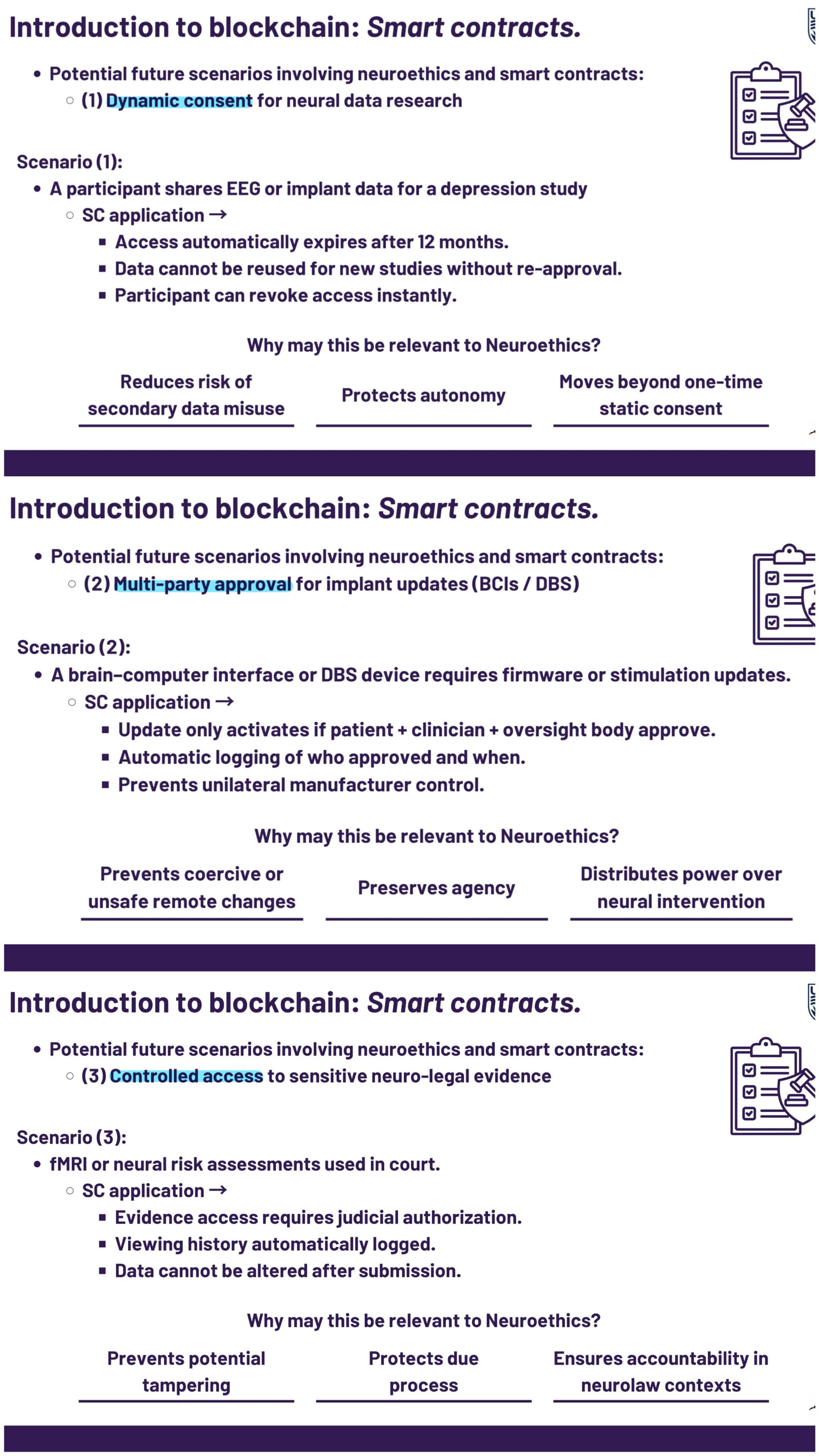
What are smart contracts? + how can they be applied to neuroethics? (3)
Smart contracts = piece of computer code that carries out agreed-upon rules
if blockchain is a shared notebook, smart contracts are the built-in rules that automatically enforce agreements
Application to neuroethics
dynamic consent for neural data research
multi-party approval for implants updates
controlled access to sensitive neuro legal evidence
How can smart contracts be applied in these 3 scenarios :
participant sharing EEG or implant data for a depression study
brain computer interface or DBS (deep brain stimulation) device requires firmware or stimulation updates
fMRI or neural risk assessments used in court
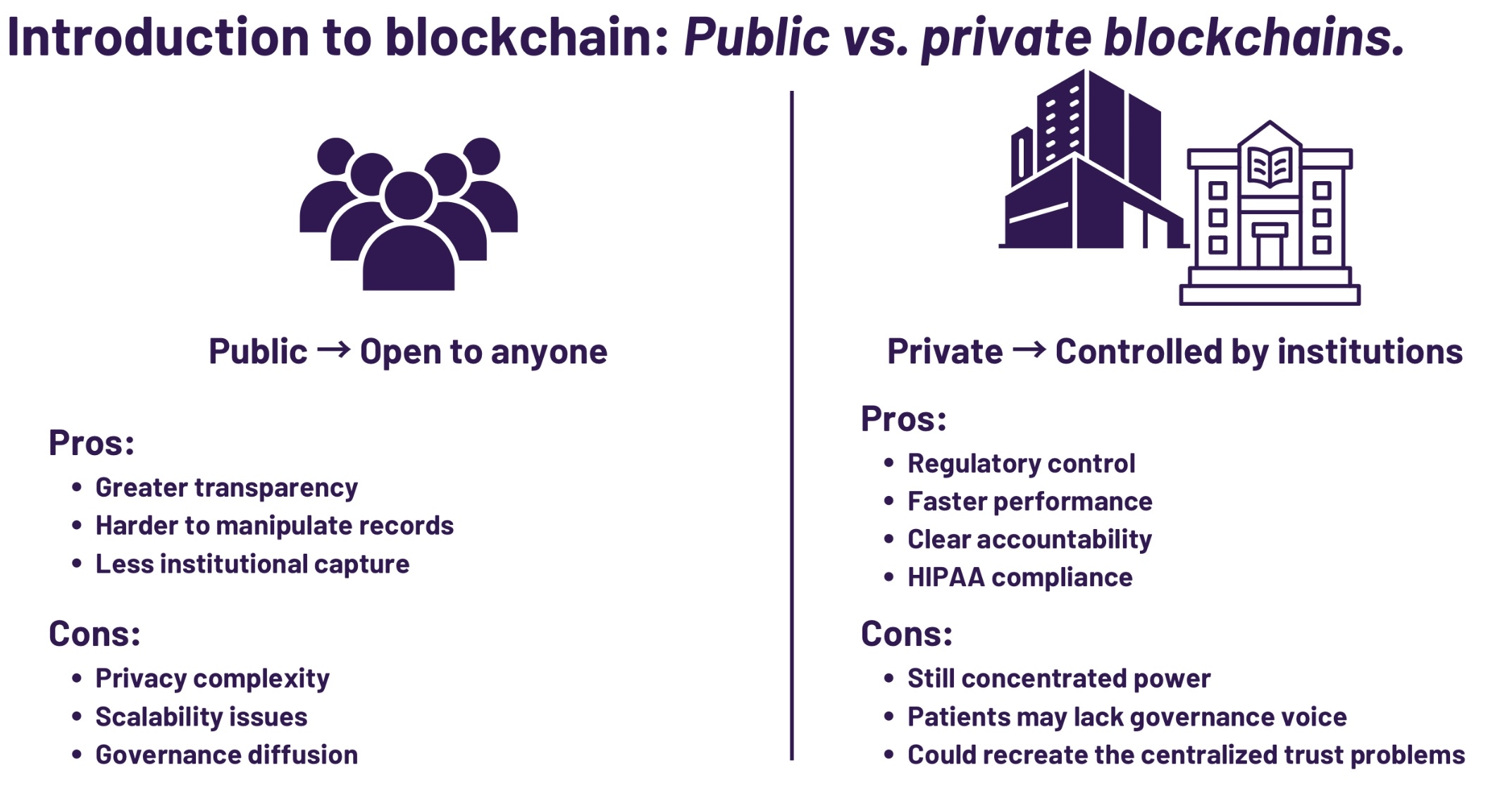
Discuss the differences between public VS private blockchains + what they each mean
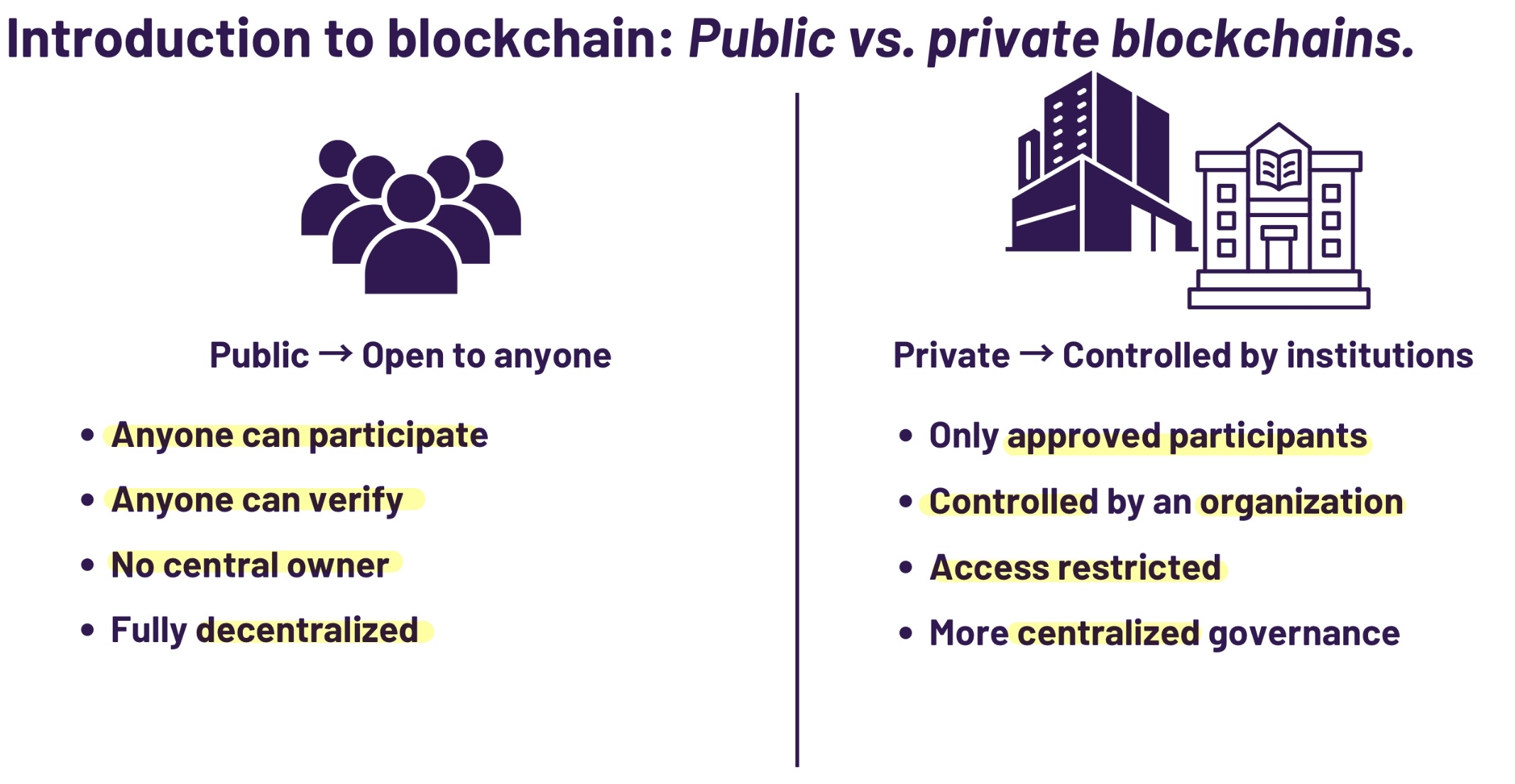
Describe the pros & cons of public VS private blockchains
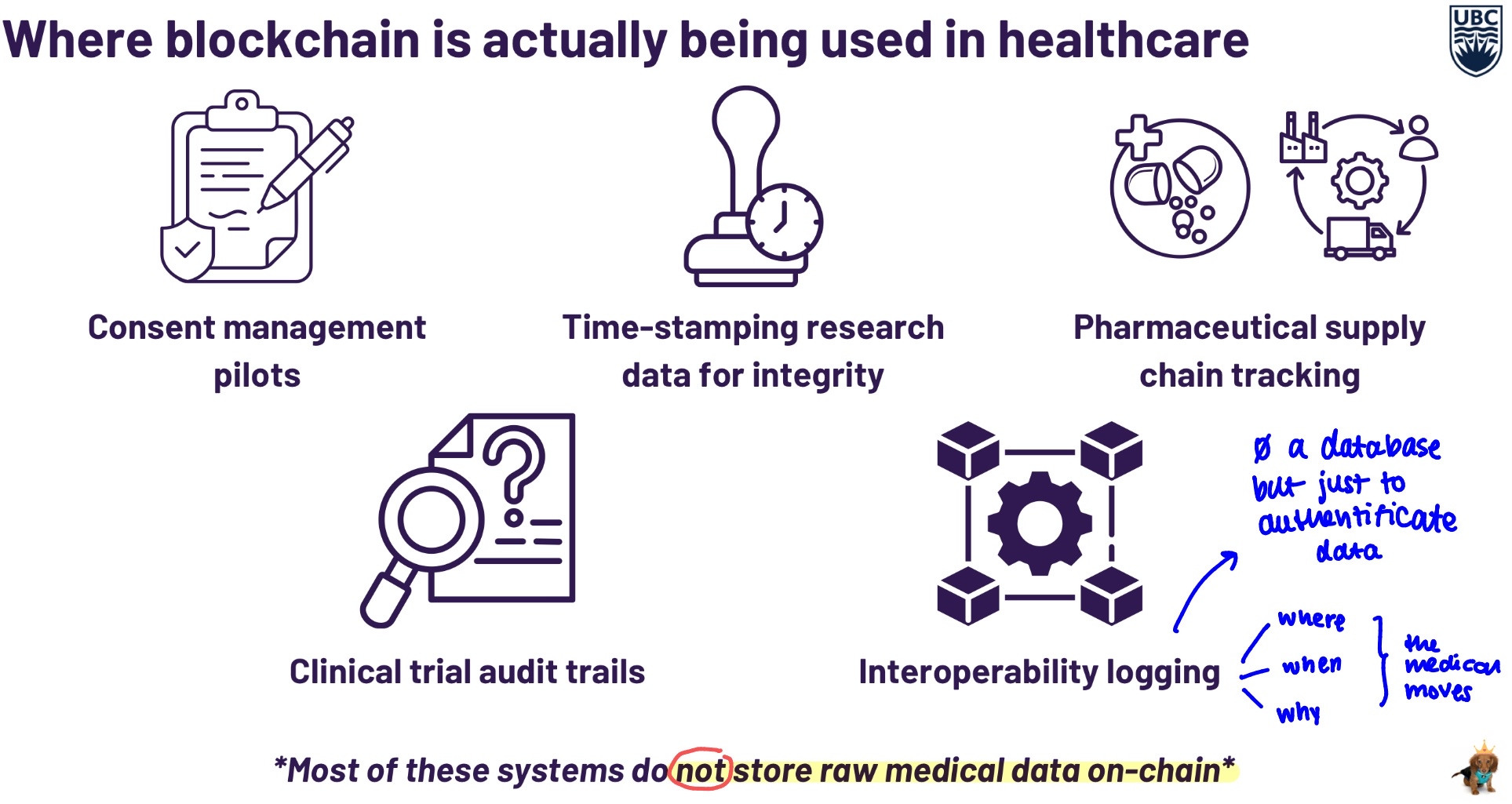
How is blockchain relevant in healthcare? + Why is it important?
More commonly used to verify data integrity rather than store data itself
Important for :
privacy protection
scalability & feasibility
regulatory compliance
separation of integrity VS storage
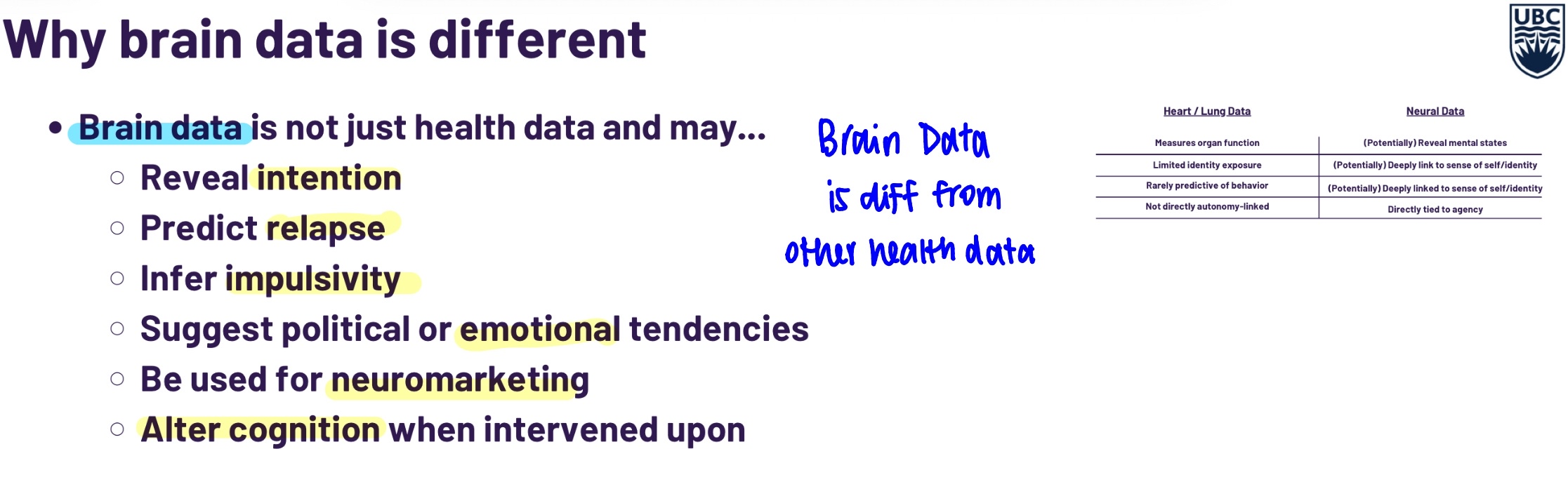
Explain why brain data is different from other health data (6)
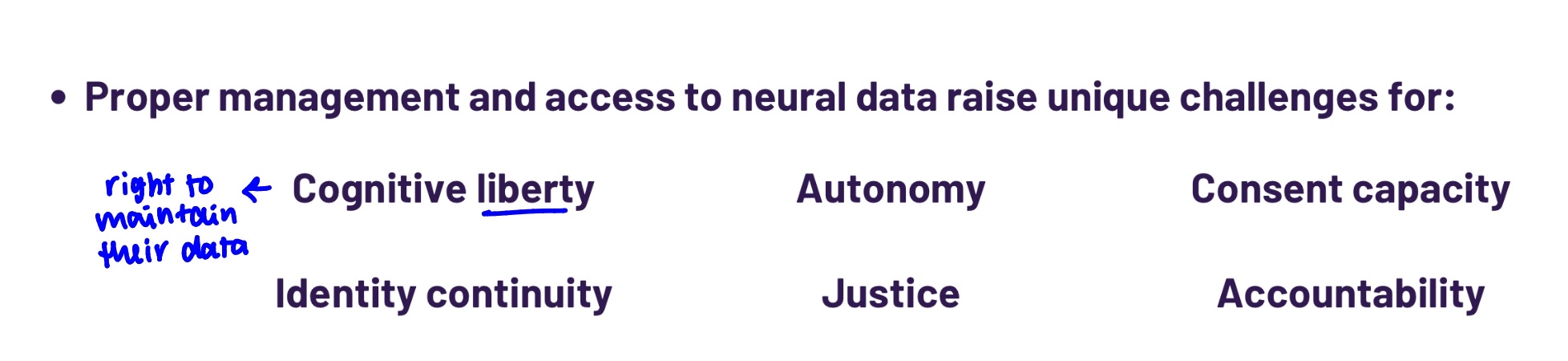
Discuss the challenges that come with management / access to neural data? (6)
What does it mean that most current systems are centralized (4) + what are the risks associated with this? (4)
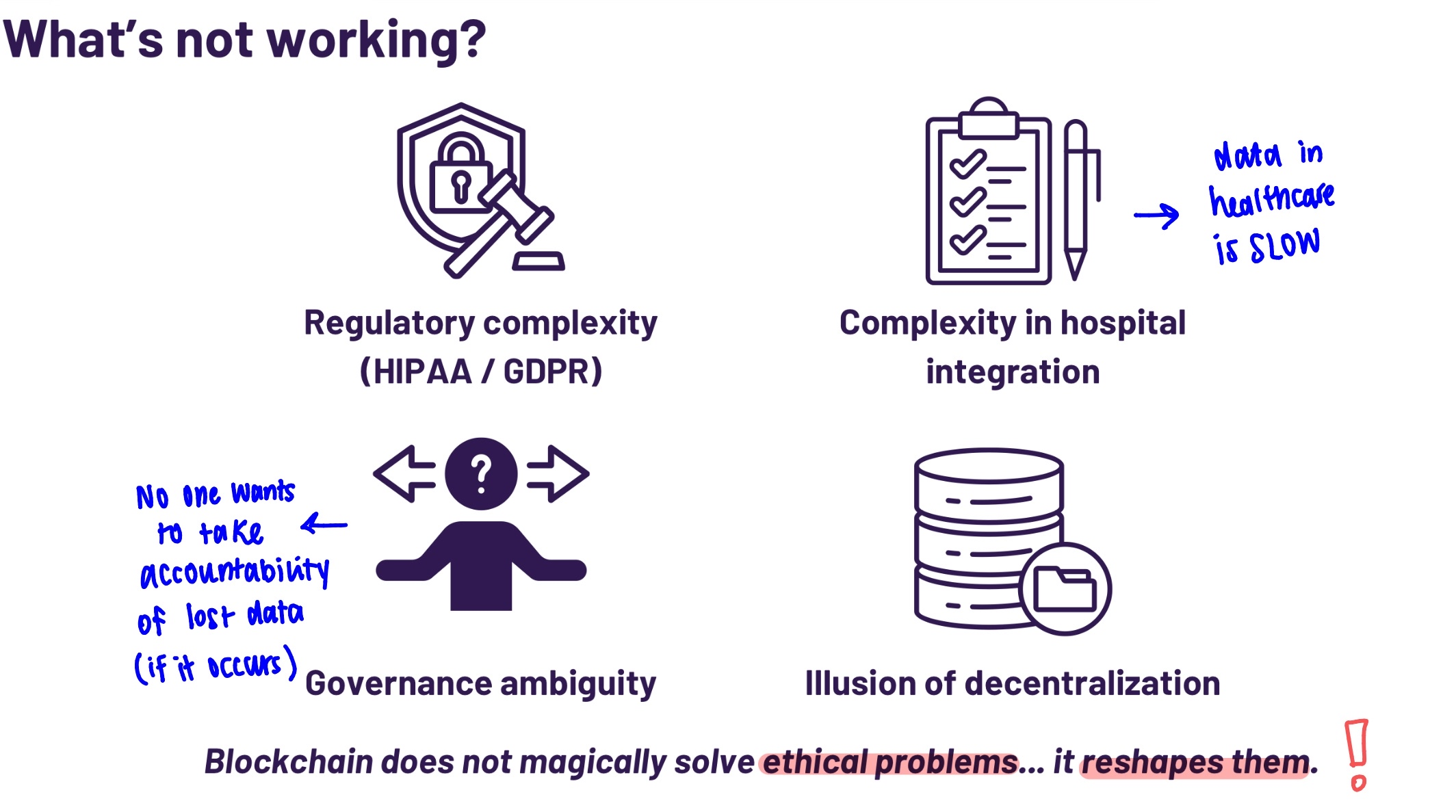
What are some problems that still remain when blockchain is being applied to healthcare? (4)