chapter 3: Early Netherlandish Art and Northern Renaissance
 Studied by 0 people
 Call Kai
 Learn
Learn Practice Test
 Spaced Repetition
 Match
Match Flashcards
 Knowt Play
1/42

Earn XP
Description and Tags
Terms, names and paintings
Name | Mastery | Learn | Test | Matching | Spaced | Call with Kai |
|---|
No study sessions yet.
43 Terms
Illuminated manuscripts
A handwritten text from the medieval period that is decorated with brightly colored, ornate designs and illustrations, often featuring gold or silver (Term ‘illumination’ comes from the Latin for “to enlighten”)
Oil paint
Pigments mixed with oil (mostly linseed oil), brighter colors, easy creation of smooth transitions, light and shade, … (technique perfected by Jan Van Eyck)
Tempera paint
Paint based on pigments mixed with egg white, fast drying, opaque, difficult to obtain shading with, flat, …
Devotional paintings
Paintings with a religious function: private devotion, small scale paintings used in domestic setting, usually portable with an emphasis on directness of experience, emotions and empathy
Diptych
Two paintings which form a pair, often attached by a hinge (often used for private devotion)
Triptych
A picture on three panels, typically hinged together vertically (generally used as an altarpiece)
Polyptych
A work of art which is divided into multiple sections or panels (generally used as an altarpiece)
Grisaille painting
Painting in grey-scales, often used to imitate sculptures
Trompe-l’oeil
“deceive the eye”: a highly realistic visual illusion used to trick the eye into perceiving a painted detail as a 3D object
Memento morti
“remember (that you have) to die”, religious symbol, usually depicted with Christ on the cross
Chiaroscuro
Use of contrast of light and dark to achieve a sense of volume in modelling three-dimensional objects and figures
World landscape
Influential for the development of landscape as an independent genre
Claus Sluter
Netherlandish (Haarlem) artist and sculptor from the middle 14th century - early 15th century, pioneer of Northern Renaissance Realism, strong emotional art with heavy, naturalistic elements, Key figure in the transition from medieval to Northern Renaissance sculpture
Limbourg Brothers
Northern French / Netherlandish artists, their works are considered the peak of late medieval book illumination, active in early 15th century France and Burgundy
Antonello Da Messina
Italian artist from early 15th century - late 15th century, introduced Northern oil techniques to Italy, combined Italian perspective with Northern Netherlandish detail
Hugo Van der Goes
Belgian artist from the middle 15th century - late 15th century, influenced Italian Renaissance painters, had a lot of international patrons
Albrecht Dürer
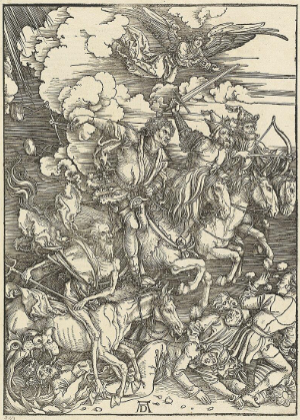
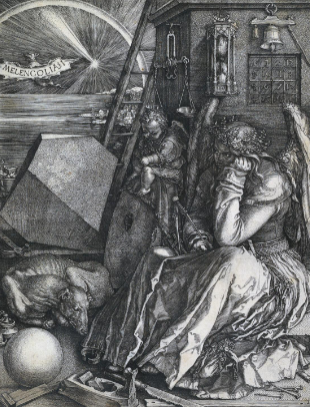
German artist, printmaker and theorist from the late 15th century - middle 16th century, traveled to Italy to study art, interest in Italian renaissance, combined Italian renaissance with Early Netherlandish art
Hans Holbein the Younger
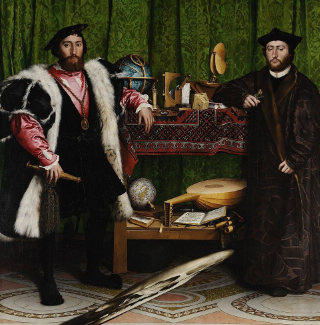
German artist from the late 15th century - middle 16th century, active in England, greatest portraitist of the Northern Renaissance
Caterina van Hemessen
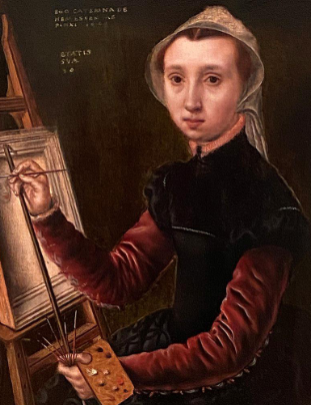
Belgian (Antwerp) artist from the middle 16th century - late 16th century, early professional woman artist, asserted female artistic identity, painted first know self-portrait of woman at easel
Pieter Bruegel the Elder
Belgian artist from the middle 16th century - late 16 century, prolific designer of prints and ran successful workshop, influential for the development of landscape and genre painting
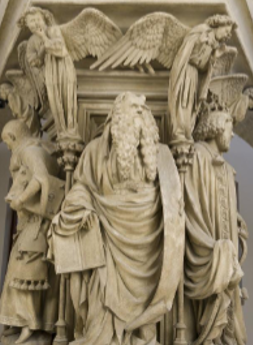
“Well of Moses” (Claus Sluter, late 14th - early 15th century)
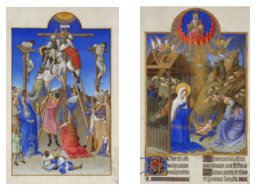
“Très Riches Heures du Duc de Berry” (Limbourg Brothers, early 15th century)
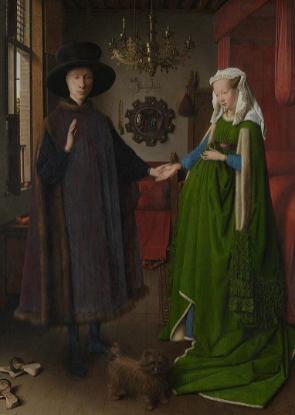
“The Arnolfini Portrait” (Van Eyck, middle 15th century)
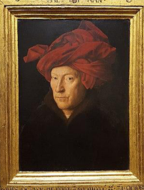
“Self-Portrait” (Van Eyck, early 15th century)
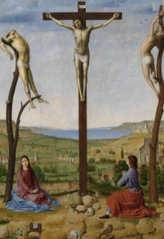
“Crucifixion” (Antonello Da Messina, late 15th century)
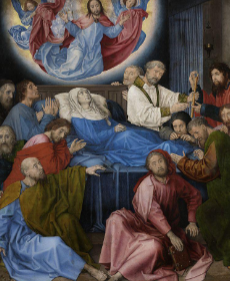
“Death of the Virgin” (Hugo Van der Goes, late 15th century)
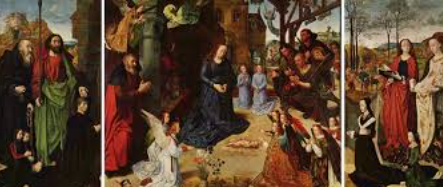
“Portinari Triptych” (Hugo Van der Goes, late 15th century)
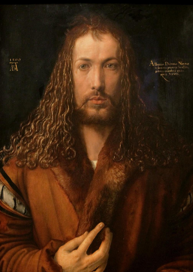
“Self-Portrait” (Dürer, early 16th century)
“Young Hare” (Dürer, early 16th century)
“Four Horsemen of the Apocalypse” (Dürer, late 15th century)
“Melencolia I” (Dürer, early 16th century)
“The Ambassadors” (Hans Holbein the Younger, early 16th century)
“Self-Portrait” (Caterina van Hemessen, middle 16th century)
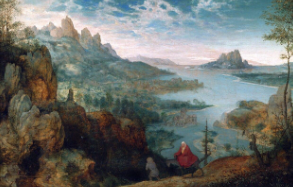
“Landscape with the Flight into Egypt” (Pieter Brueghel the Elder, middle 16th century)
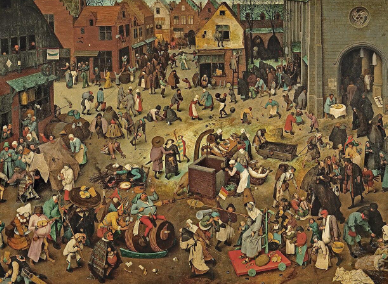
“The Fight Between Carnival and Lent” (Pieter Brueghel the Elder, middle 16th century)
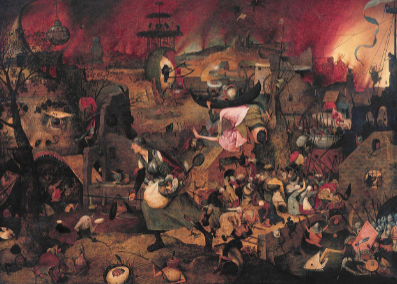
“Mad Meg” (Dulle Griet) (Pieter Brueghel the Elder, middle 16th century)
International Gothic Style
Popular throughout Europe in 14th and early 15th century, gracious and pretty figures, attention to detail (f.i. drapery, animals, plants, ... ), local use of gold (vs. large-scale gold ground), indication of realistic space (vs. central perspective)
Early Netherlandish painting
Abandoning traditional gold-ground, realistic, mirror-like representation of details and textures, indication of realistic space (NO scientific application of central perspective), religious symbolism
Bruges in the 14th century
Rise as wealthy merchant city: Flemish cloth industry drove growth, good access to the sea and proximity to key trade routes
Devotio Moderna (modern devotion)
Religious movement emphasising personal devotion and solitary meditation on Christ’s Passion and redemption, flourished in the 15th-century Low Countries and Germany
(Protestant) Reformation
Theological movement that strongly shaping Europe since the early 16th century, religious and political challenge to the papacy and the authority of the Catholic Church
Lavina Teerlinc
Belgian (Bruges) artist from the early 16th century - late 16th century, trained in her father’s workshop, moved to England and became court painter to Henry VIII, Mary I, and Elizabeth I, specialized in miniatures
Mayken Verhulst
Painter and print publisher, after the death of her husband Pieter Coecke in 1550, she continued the successful publishing business, publishing numerous of Bruegel’s most successful prints, she became the first teacher of her grandsons Pieter Brueghel the Younger and Jan Brueghel the Elder