AHS Planning: Combat Organizations and Capabilities
 Call Kai
 Learn
Learn Practice Test
 Spaced Repetition
 Match
Match Flashcards
 Knowt Play
1/69

There's no tags or description
Looks like no tags are added yet.
Name | Mastery | Learn | Test | Matching | Spaced | Call with Kai | Chat |
|---|
No analytics yet
Send a link to your students to track their progress
70 Terms
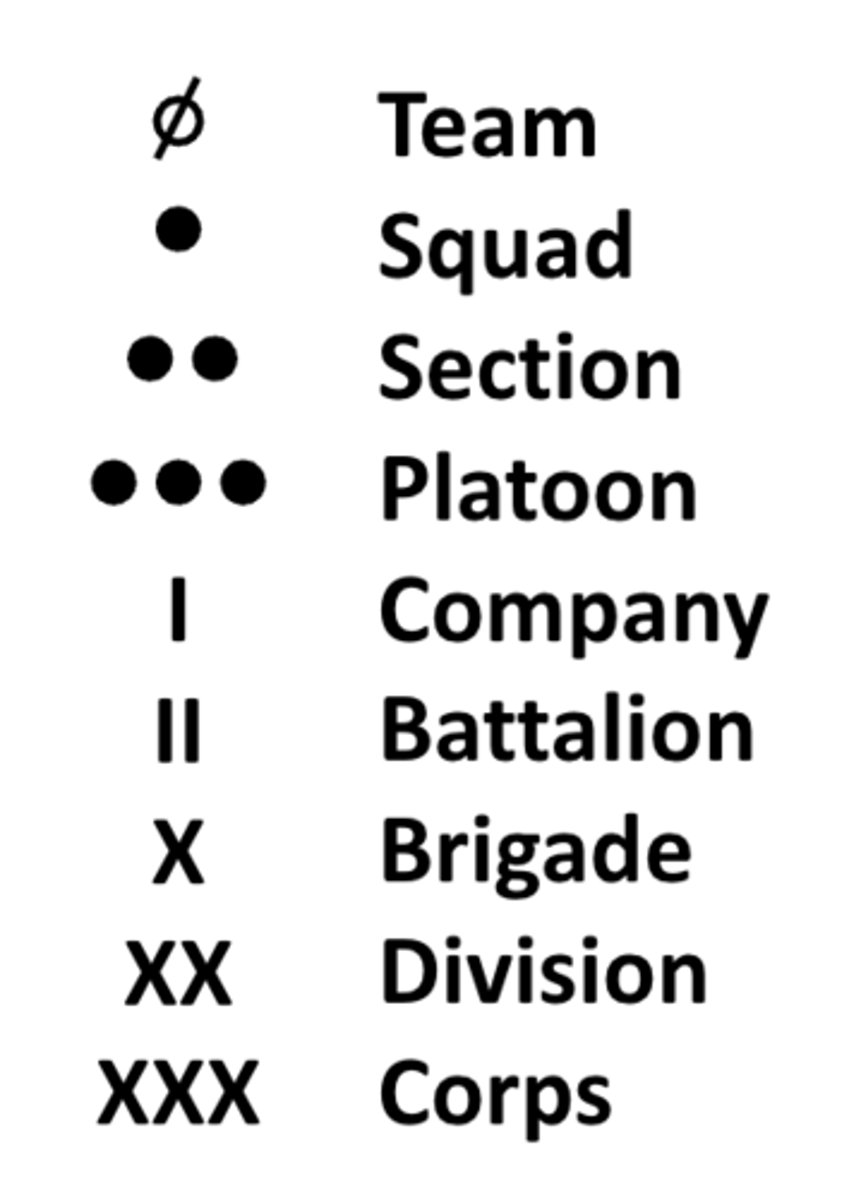
Basic Army Element Symbols (image)
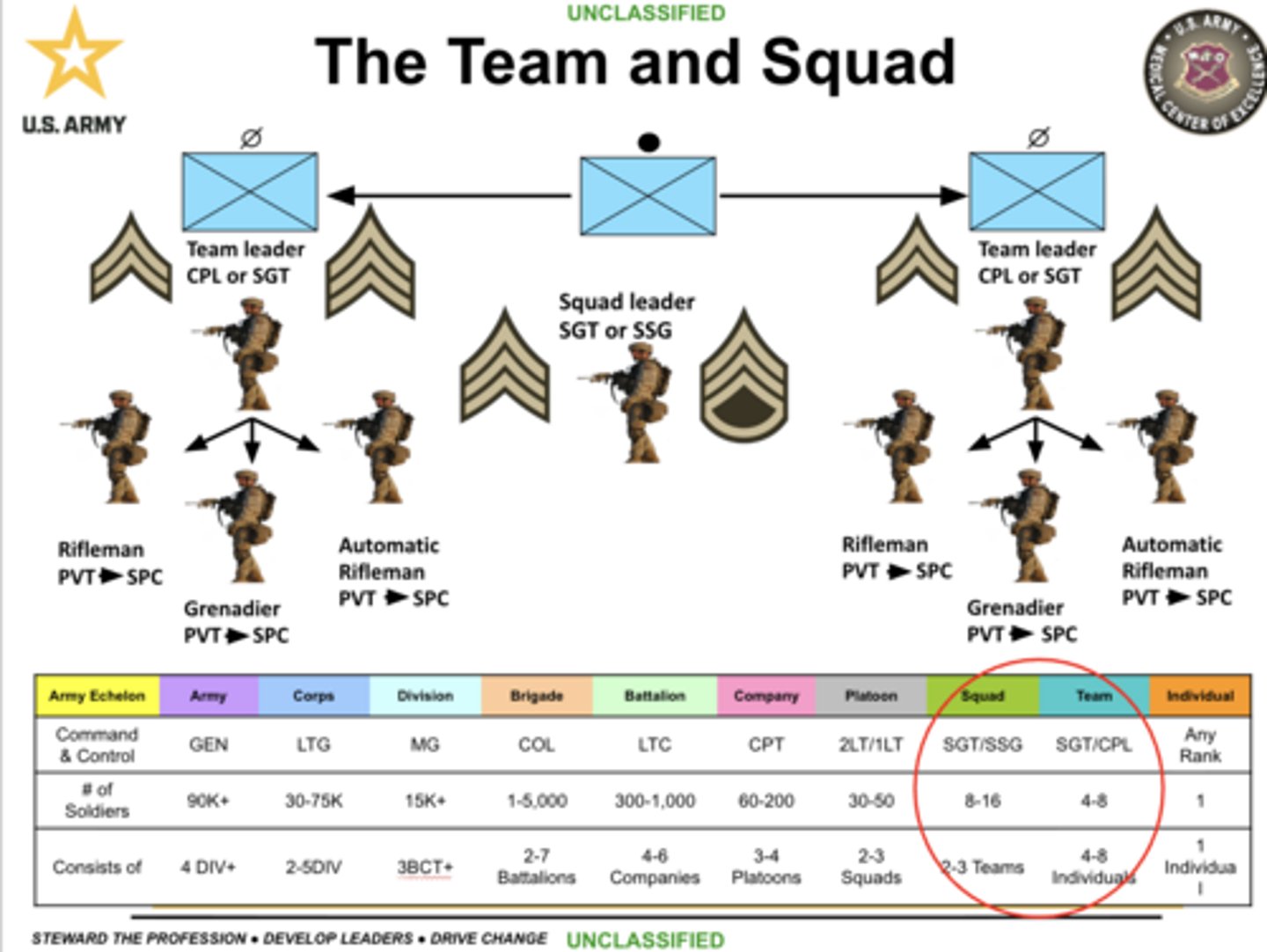
The Team and Squad (image)
A SGT/CPL is in charge of a team which includes 4-8 individuals. A SSG/SGT is in charge of a squad which includes 2-3 teams (8-16 individuals).
Command and control is the exercise of authority and direction by the commander using mission orders to enable disciplined initiative within the Commander's intent to empower agile and adaptive leaders in the conduct of full spectrum operations. It is commander-led and blends the art of command and the science of control to integrate the warfighting functions to accomplish the mission.
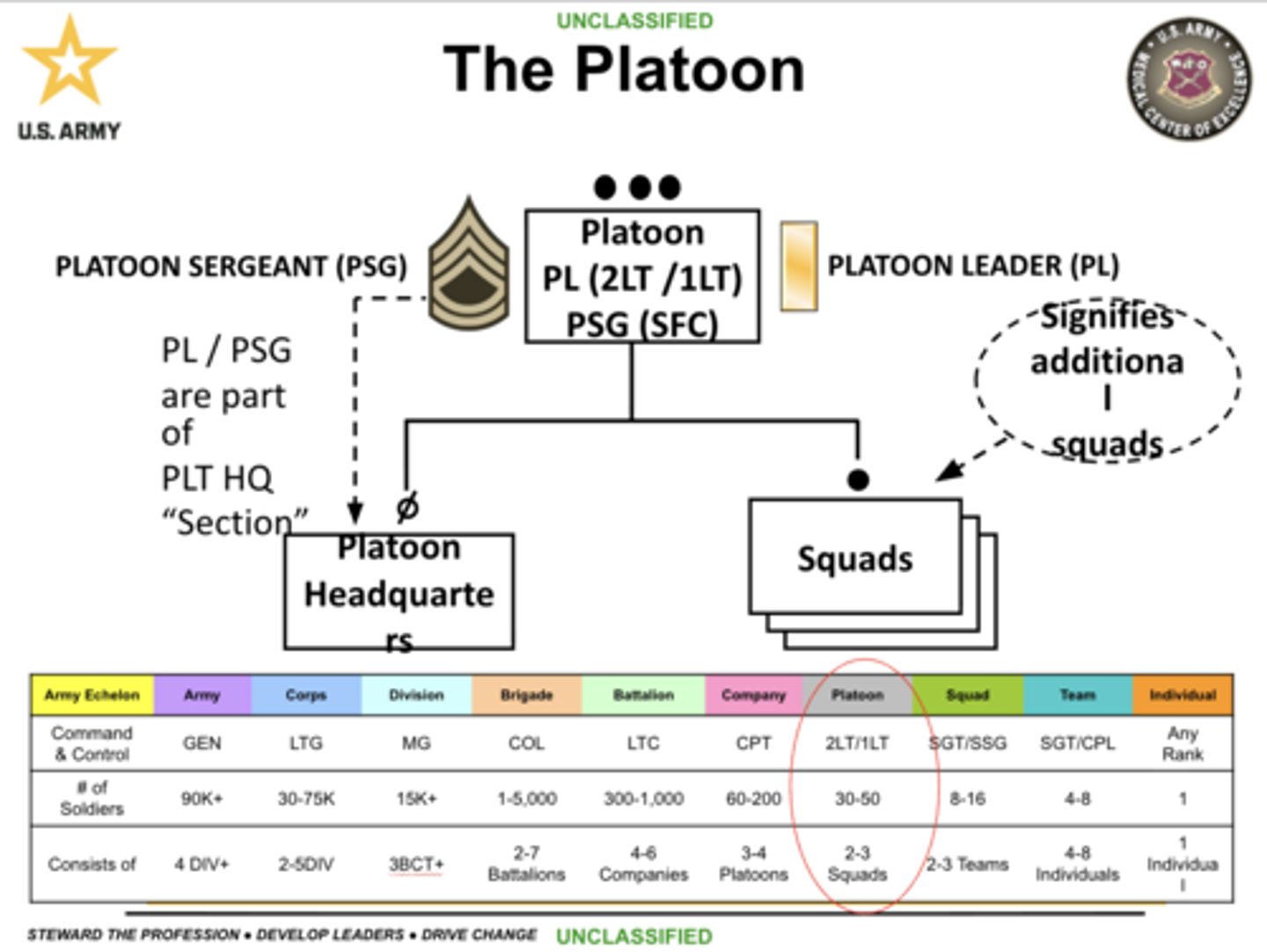
The Platoon (image)
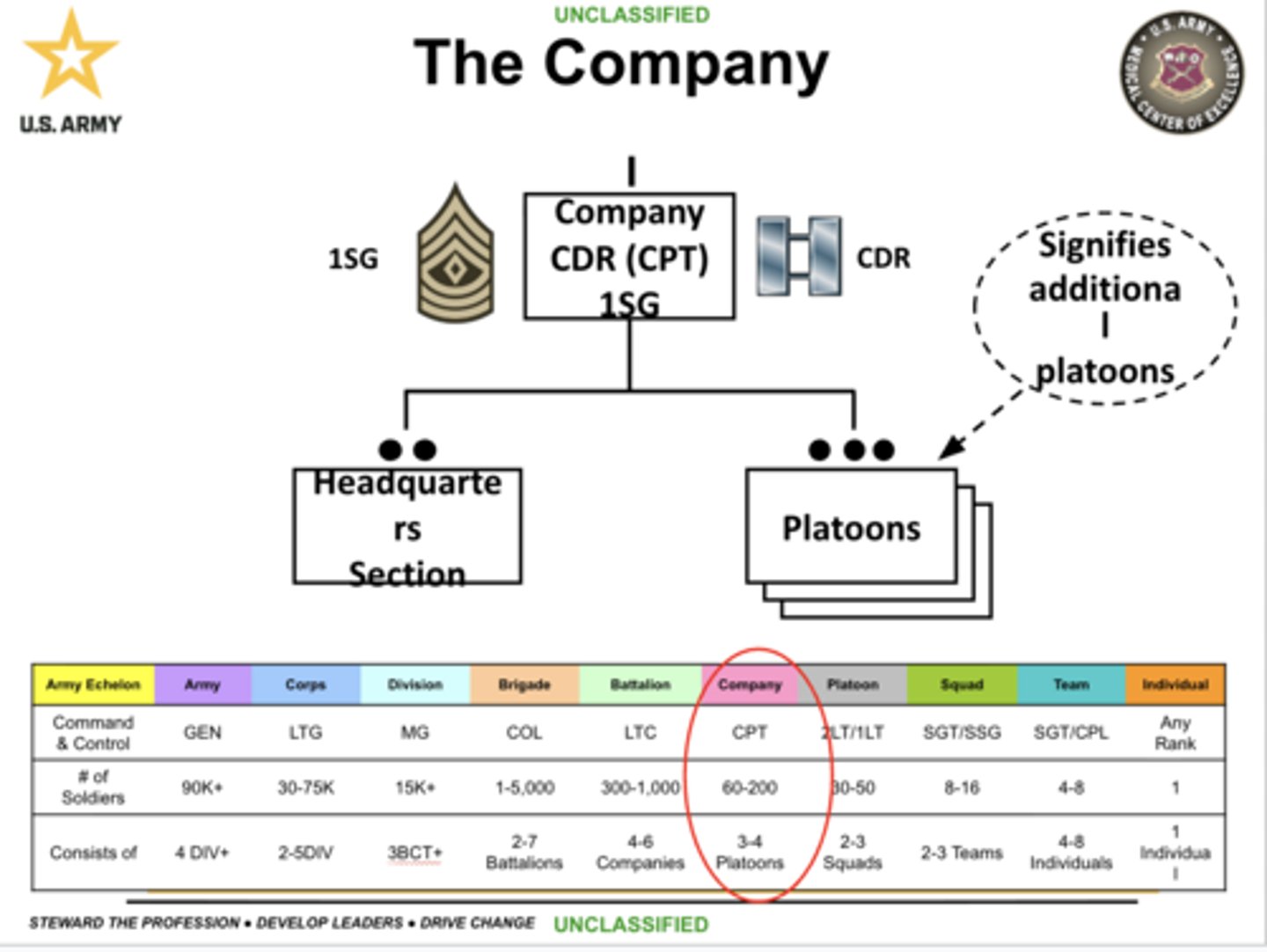
The Company (image)
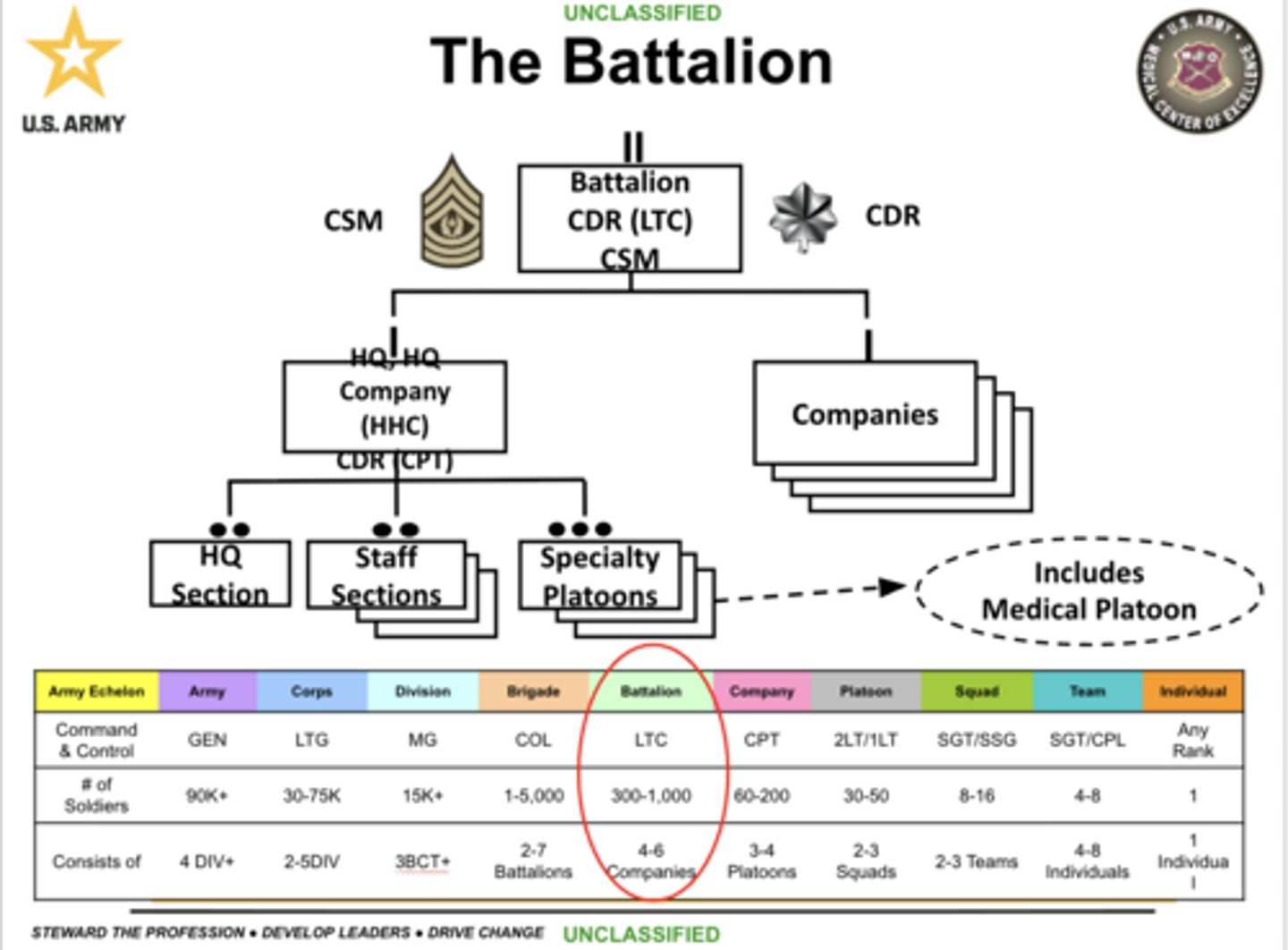
The Battalion (image)
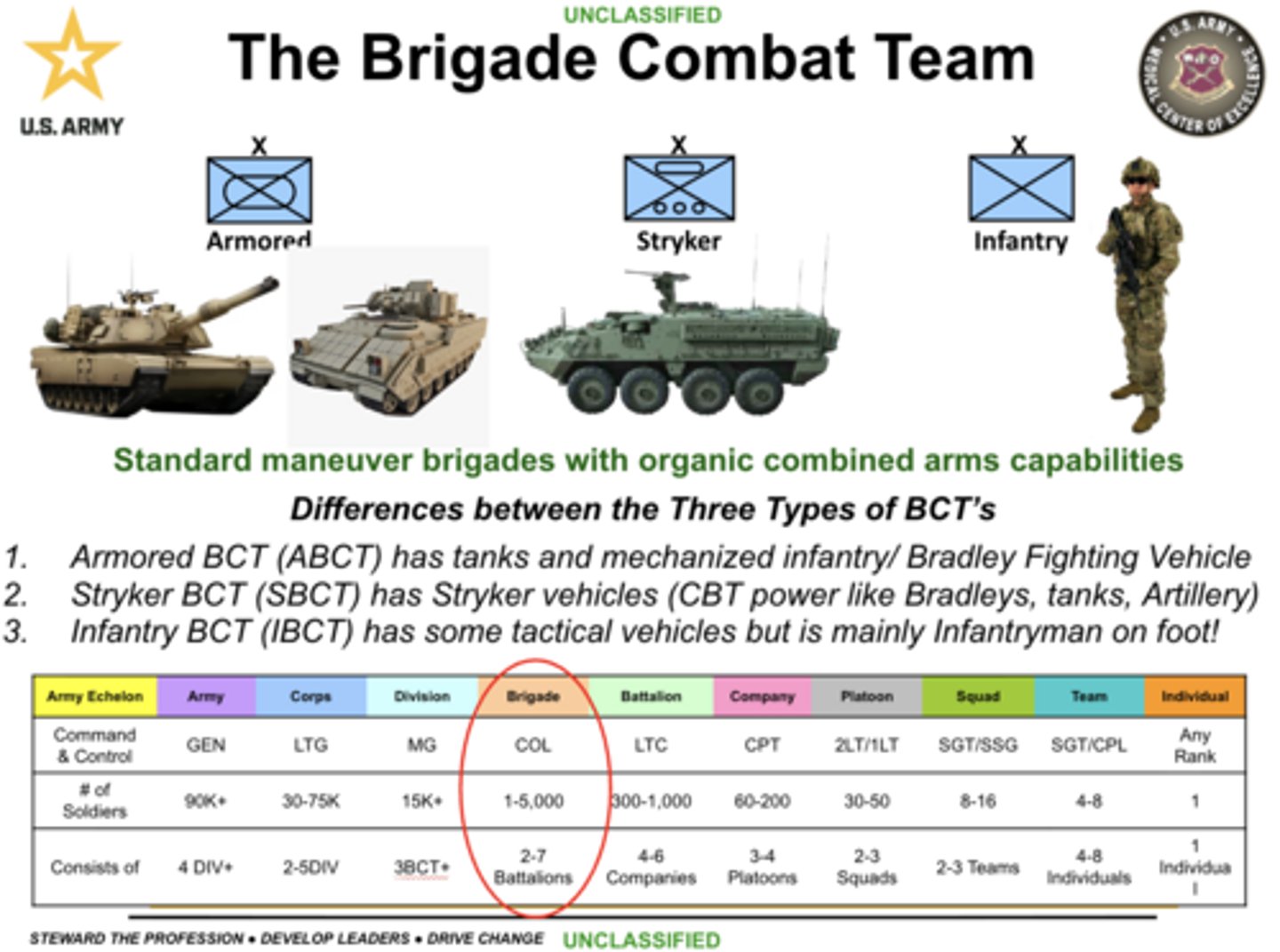
The Brigade Combat Team (image)
brigade combat teams will be either Infantry, Armored or Stryker. Additionally, we are creating support brigades in such areas as maneuver enhancement, aviation, fires, and sustainment.
This concept allows the Joint Force Commander greater flexibility to mix and match brigades depending on the type of operation.
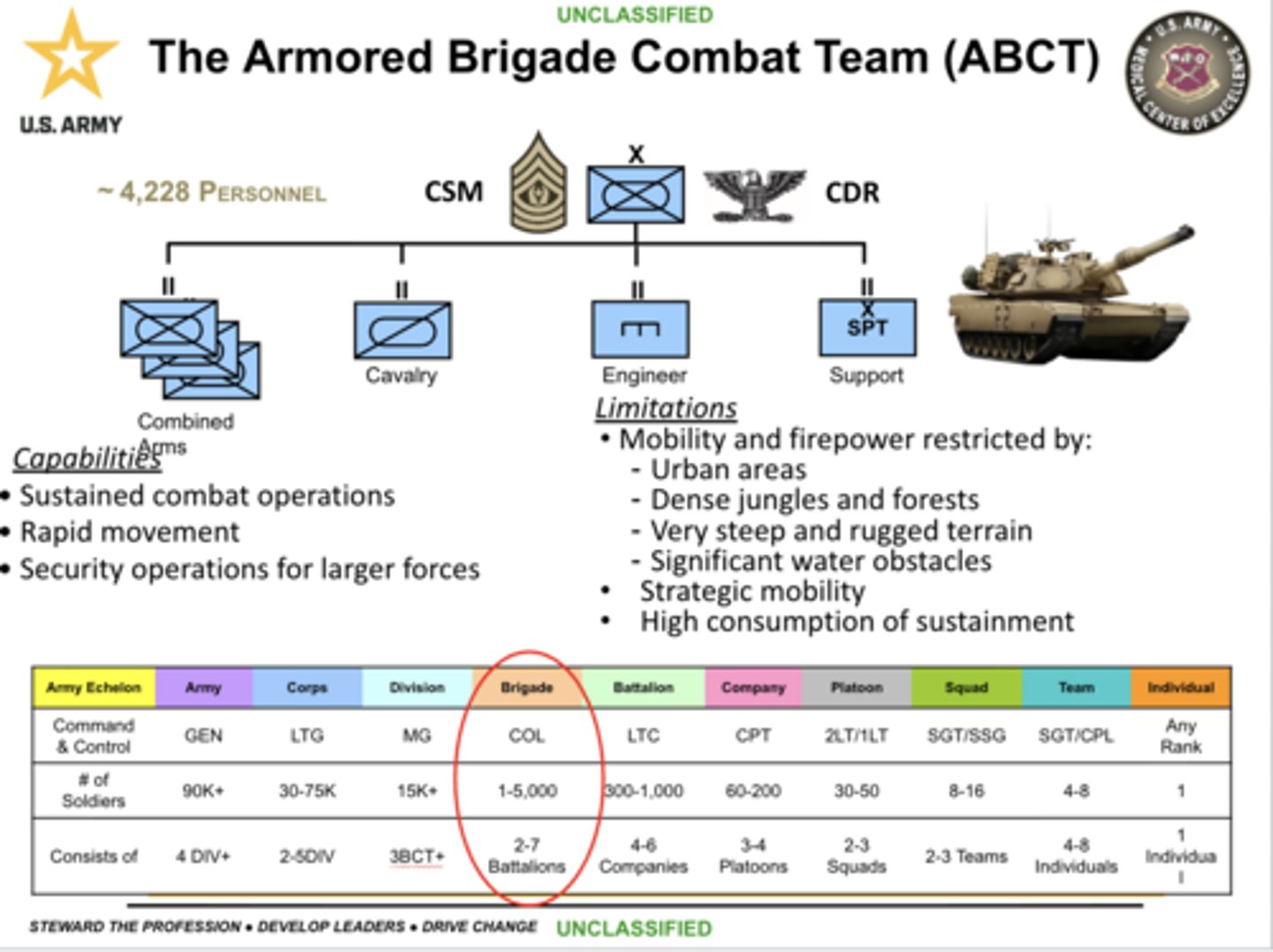
The Armored Brigade Combat Team (ABCT) (image)
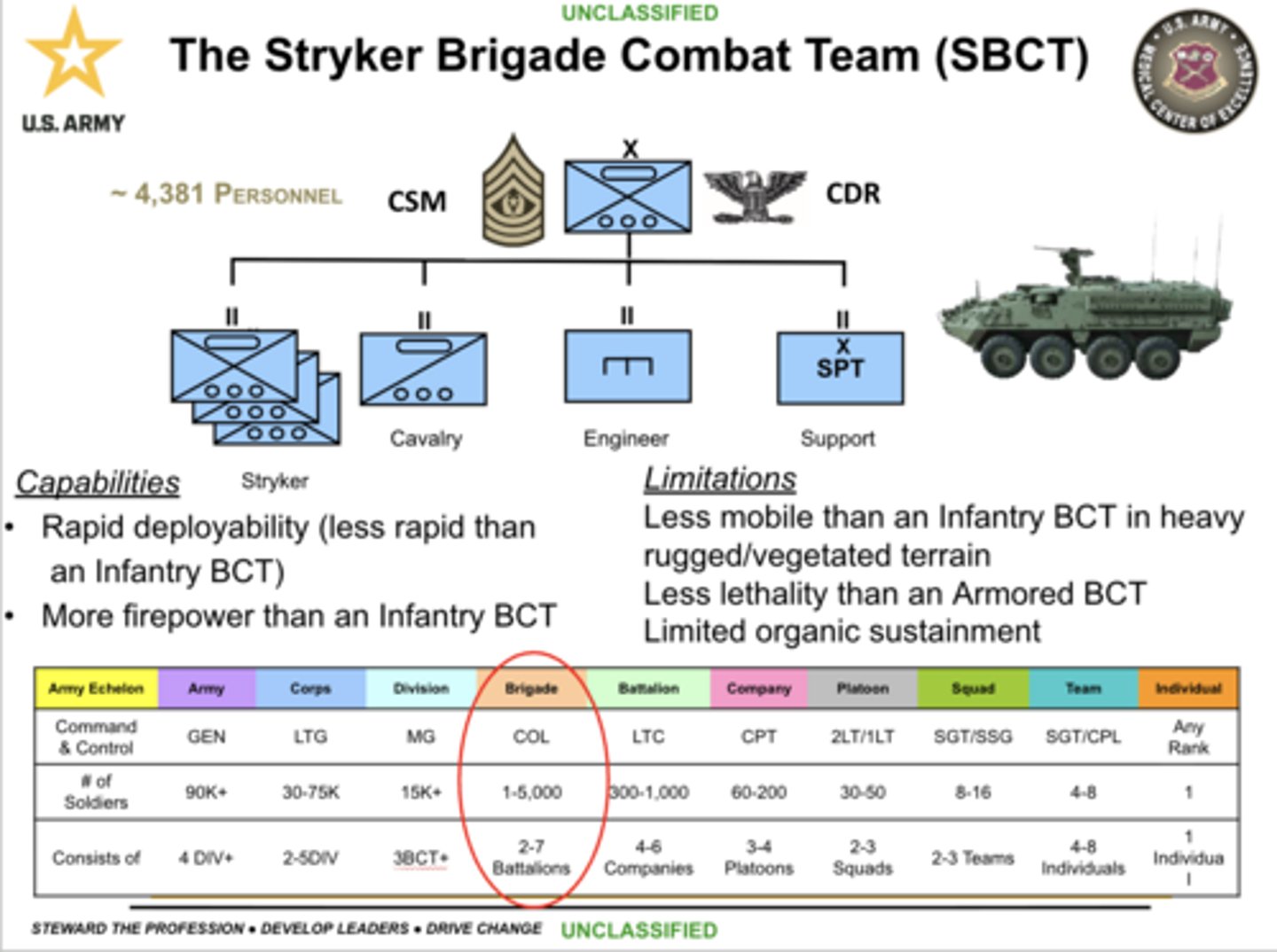
The Stryker Brigade Combat Team (SBCT) (image)
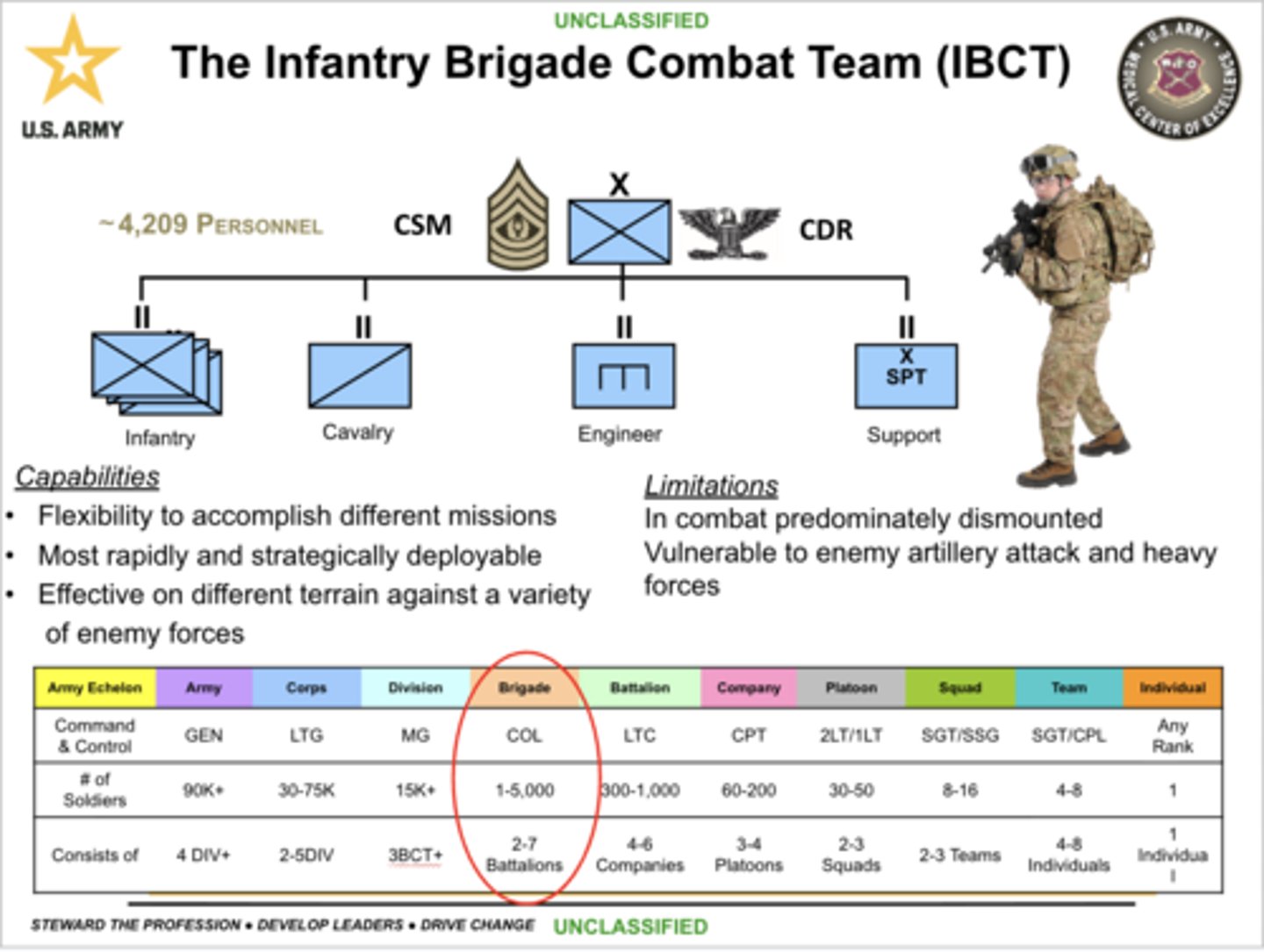
The Infantry Brigade Combat Team (IBCT) (image)
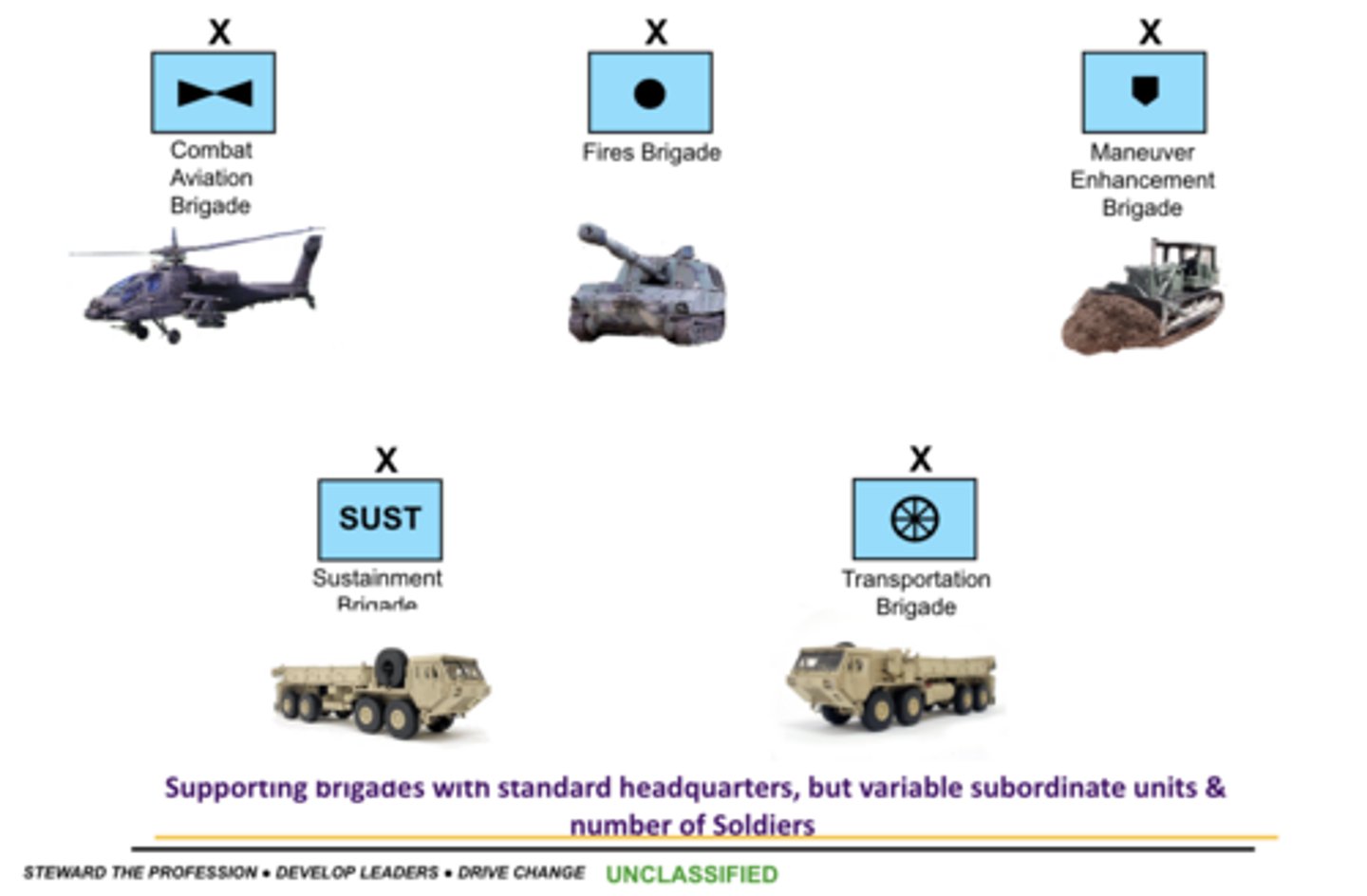
Multi-Functional Supporting Brigades (image)
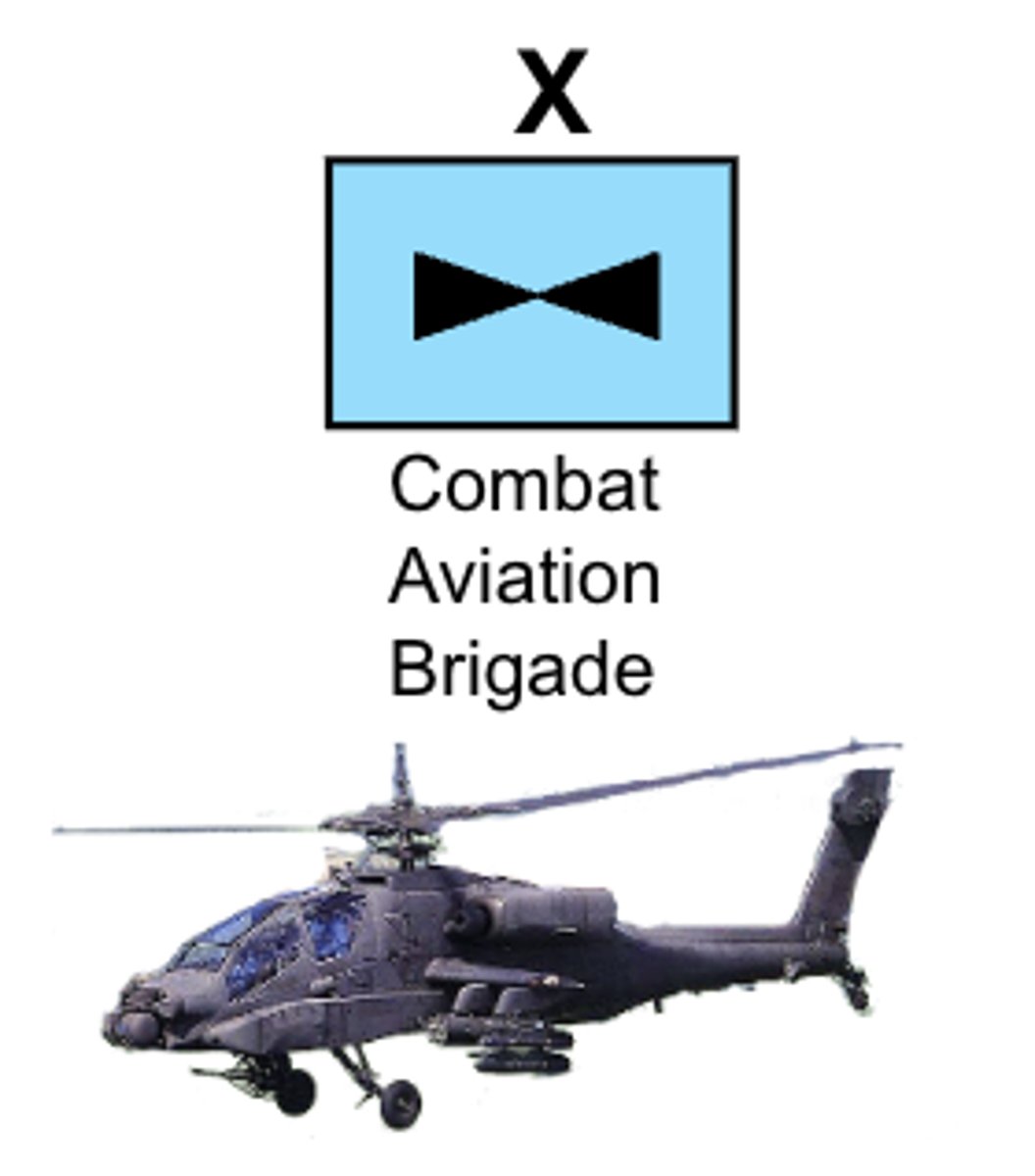
Combat Aviation Brigade (image)
Multi-Functional Brigade
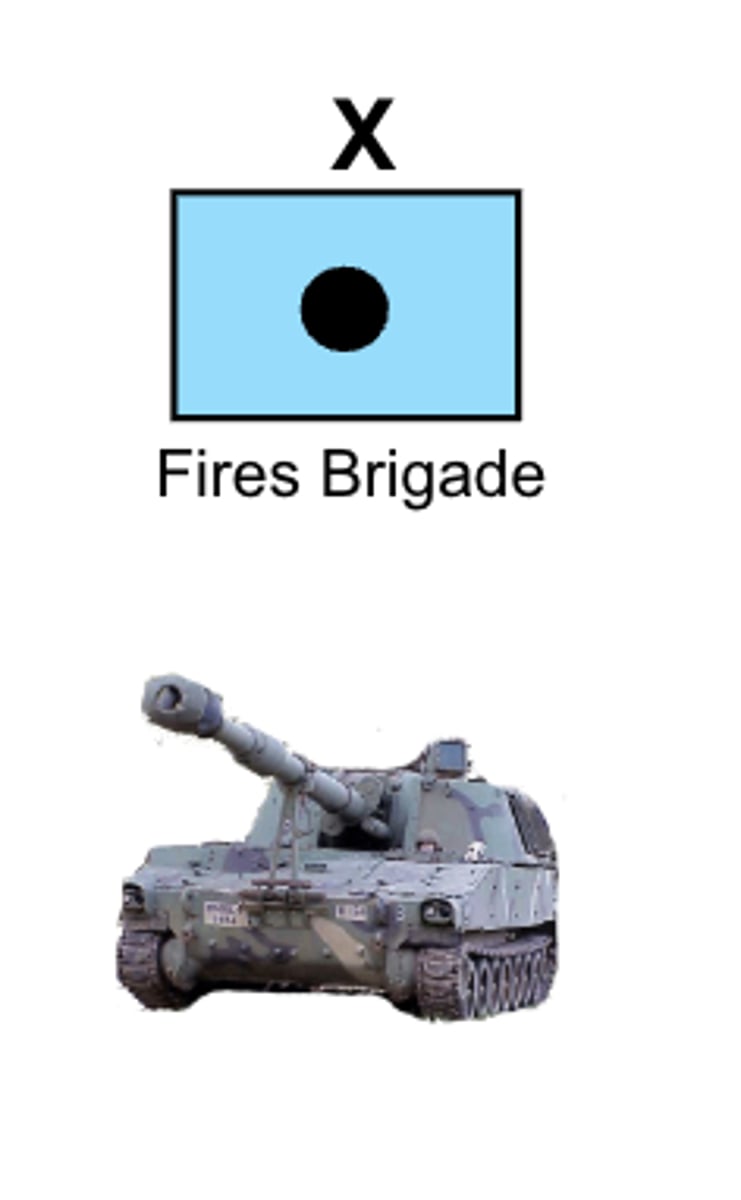
Fires Brigade (image)
Multi-Functional Brigade
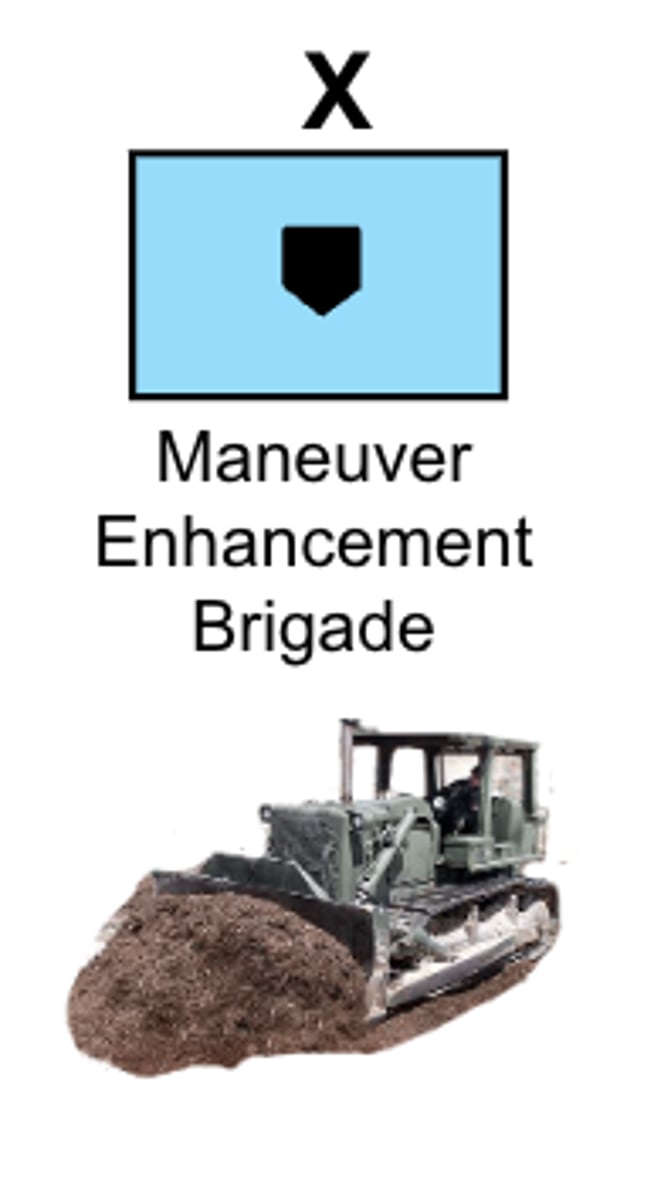
Maneuver Enhancement Brigade (image)
Multi-Functional Brigade
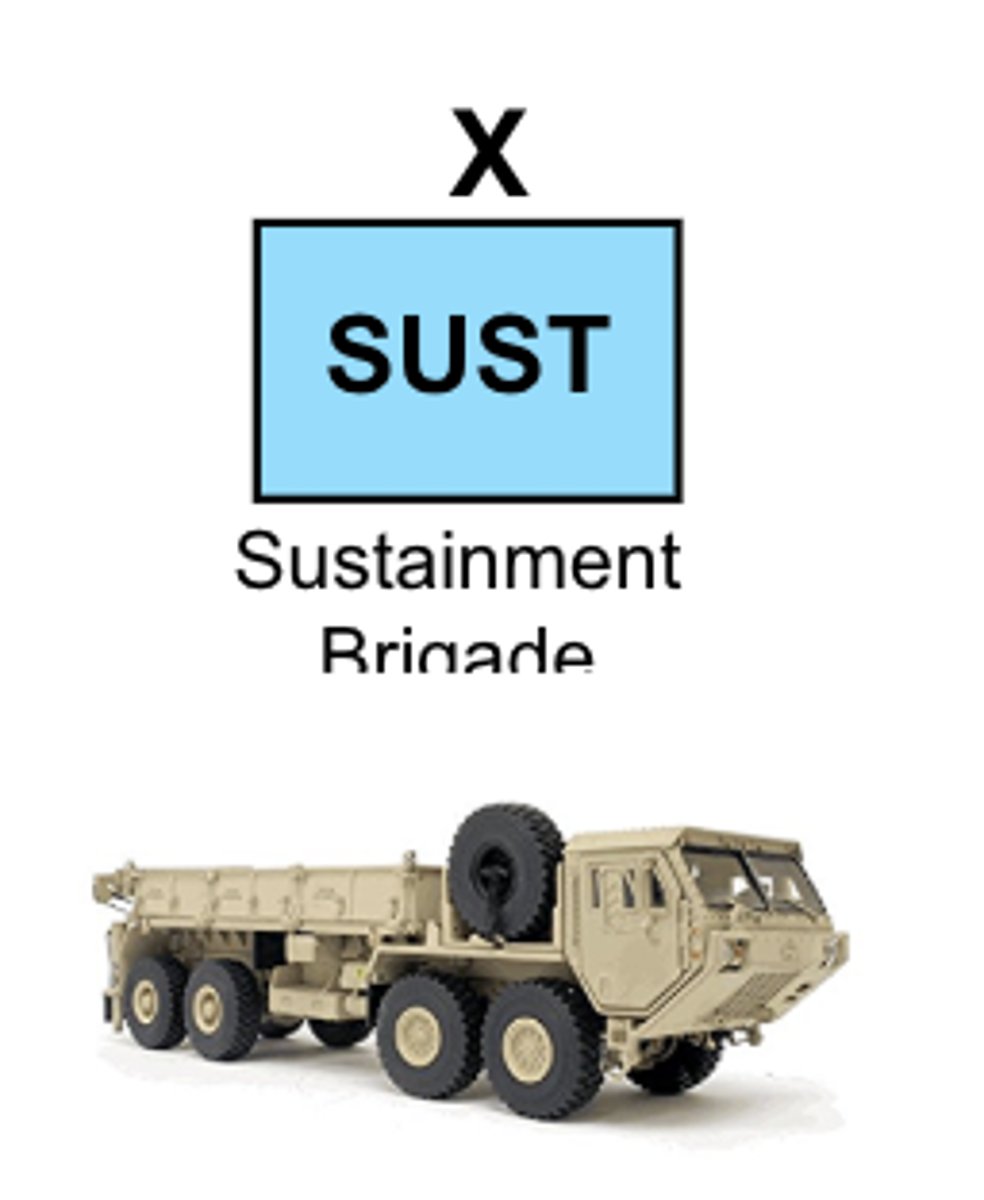
Sustainment Brigade (image)
Multi-Functional Brigade
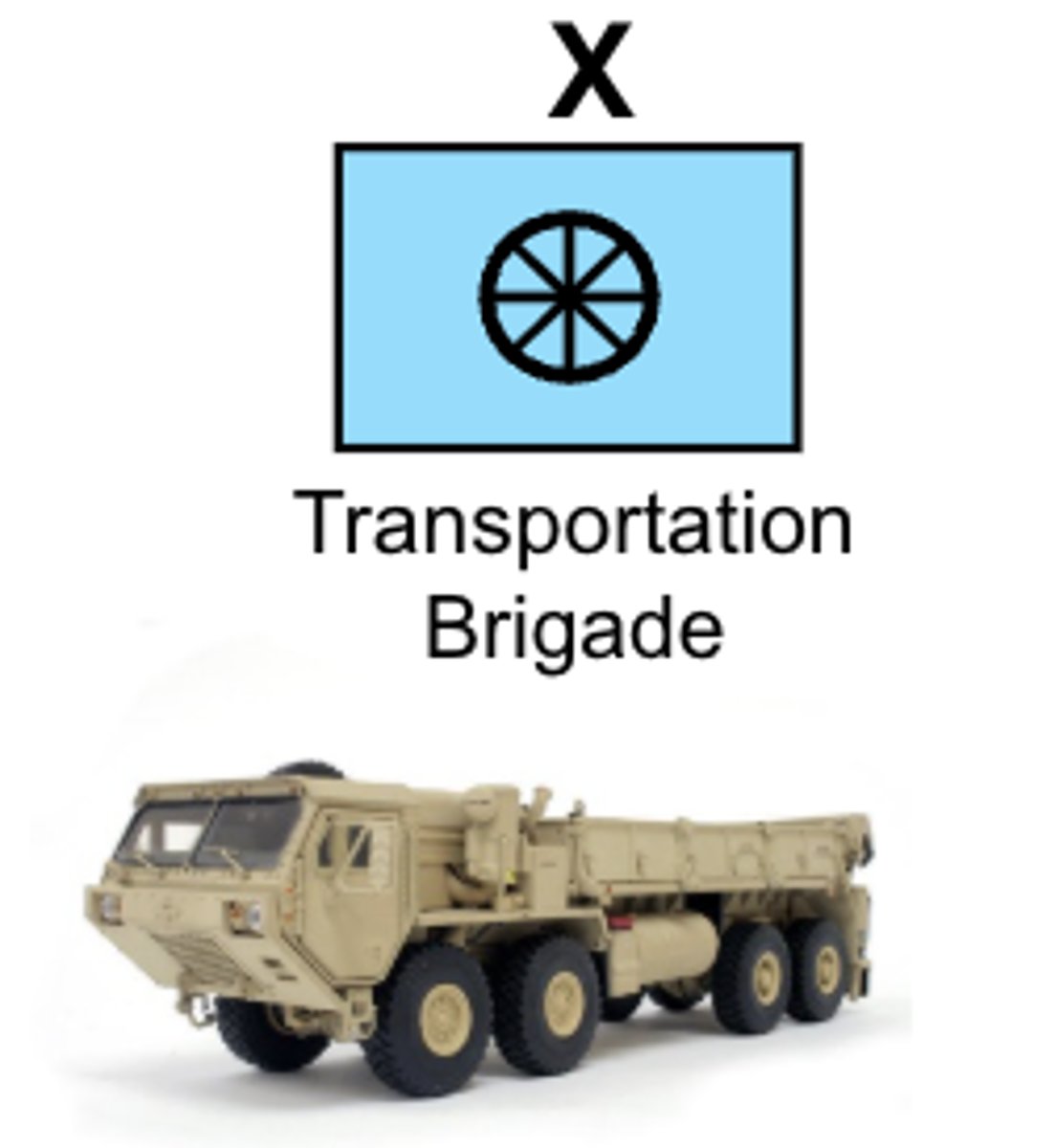
Transportation Brigade (image)
Multi-Functional Brigade
Functional Support Brigades (image)
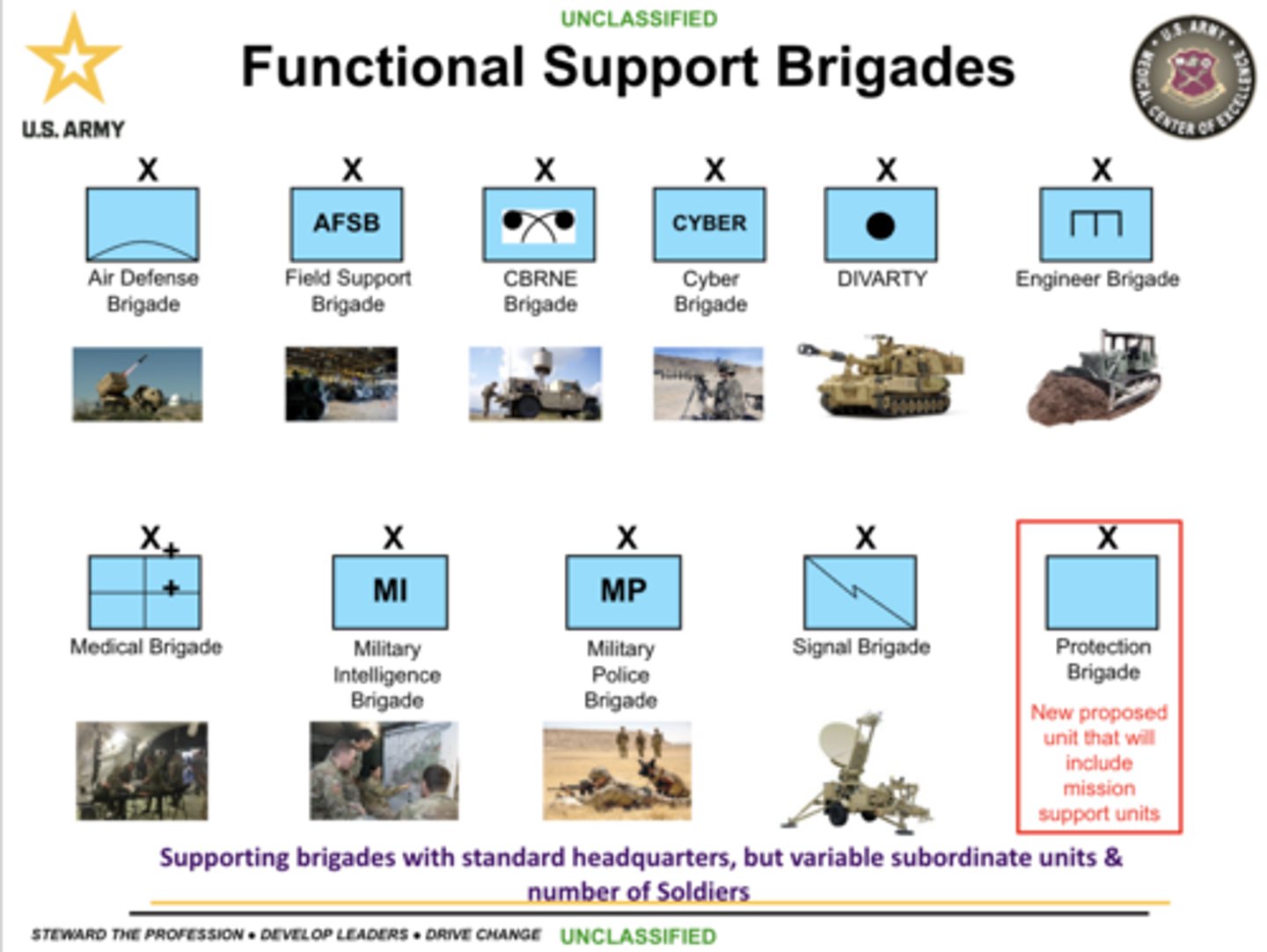
Air Defense Brigade (image)
Functional Support Brigades
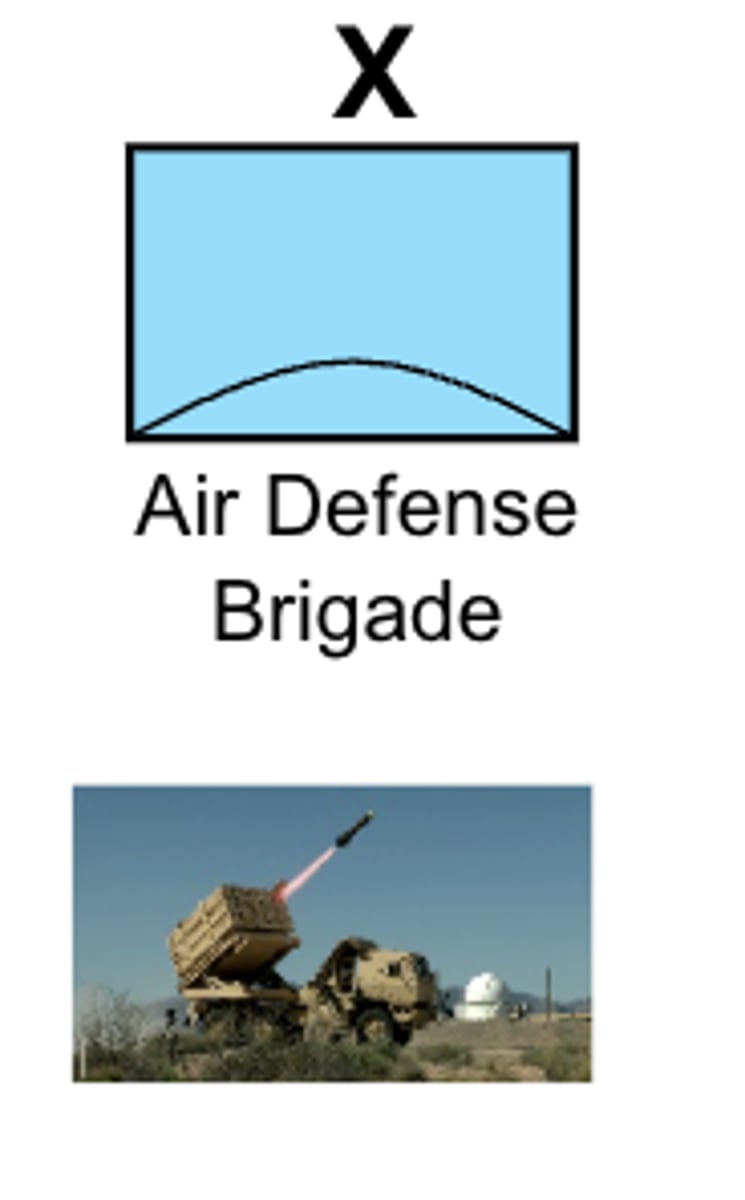
Field Support Brigade (image)
Functional Support Brigades
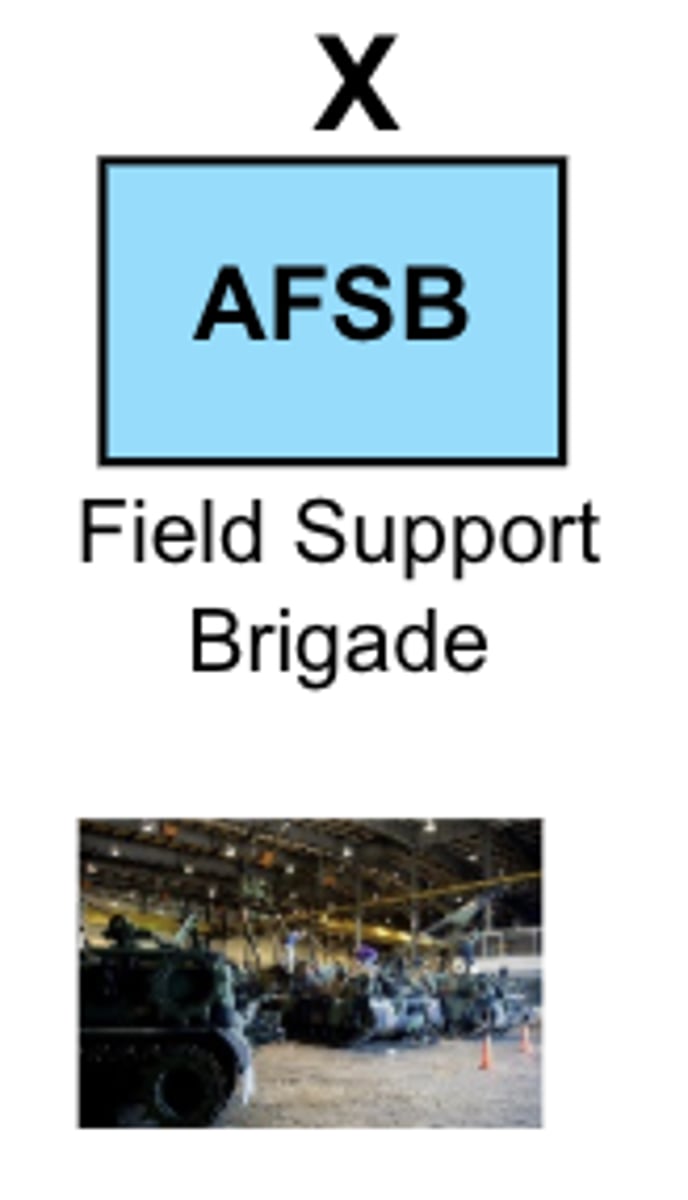
CBRNE Brigade (image)
Functional Support Brigades
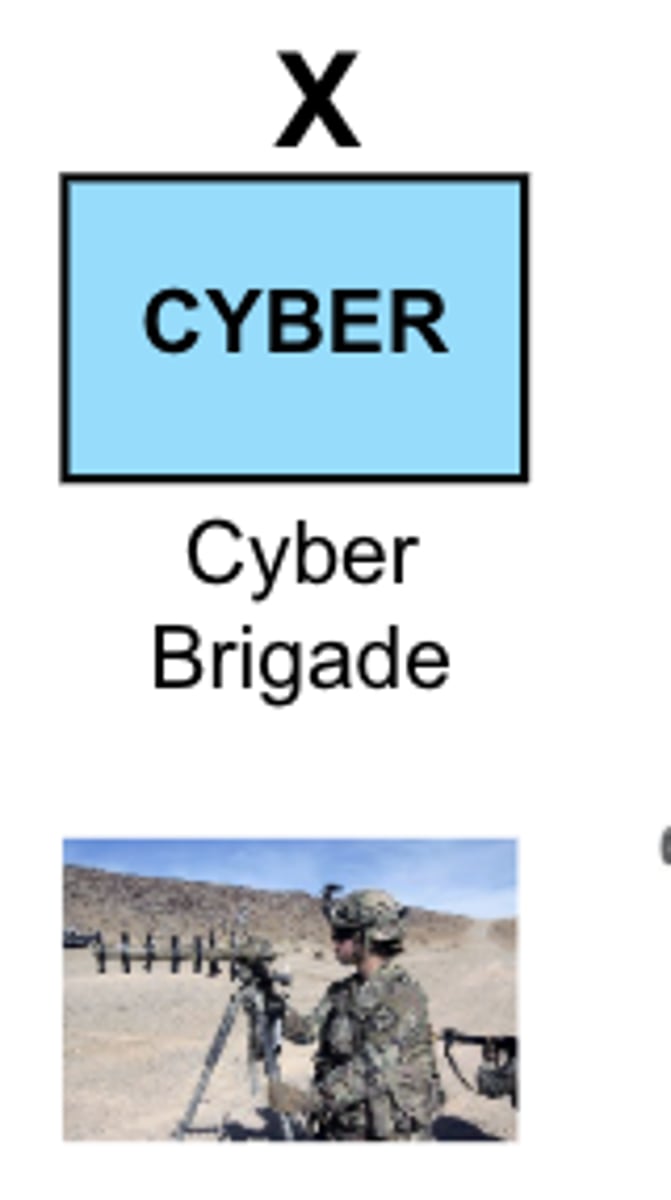
Cyber Brigade (image)
Functional Support Brigades
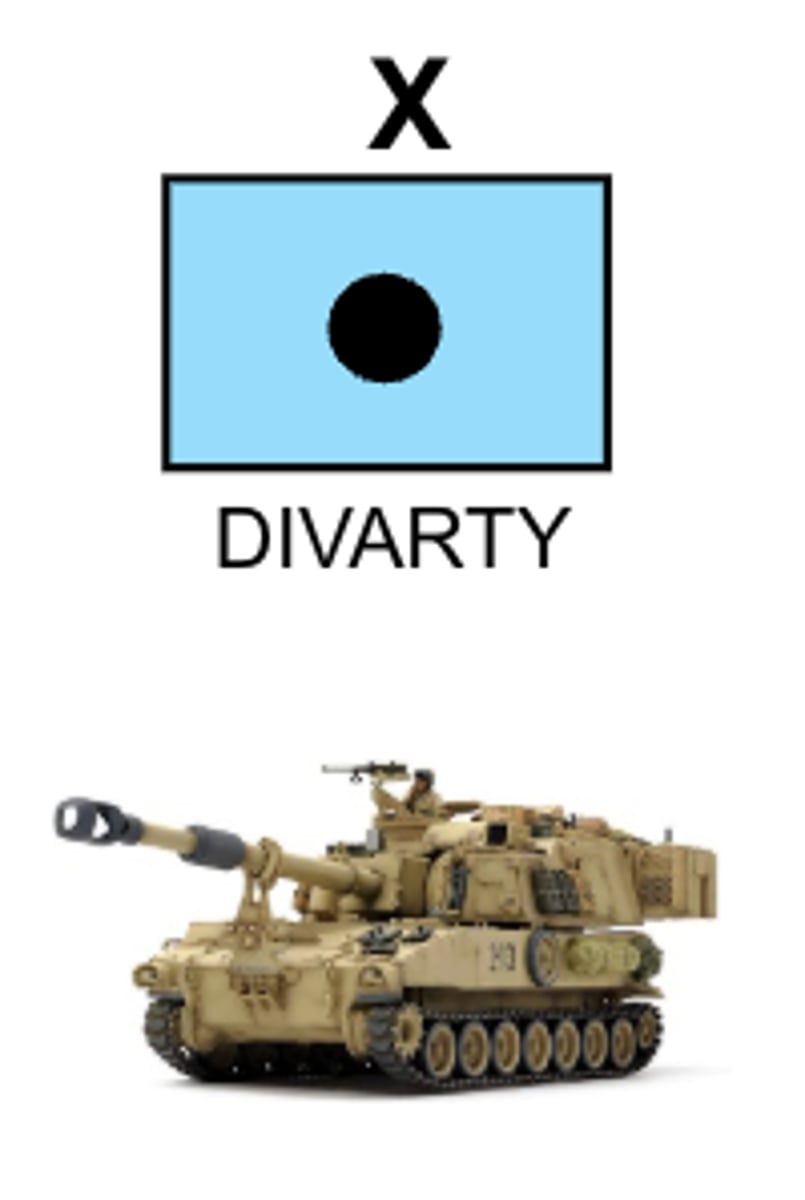
DIVARTY (image)
Functional Support Brigades
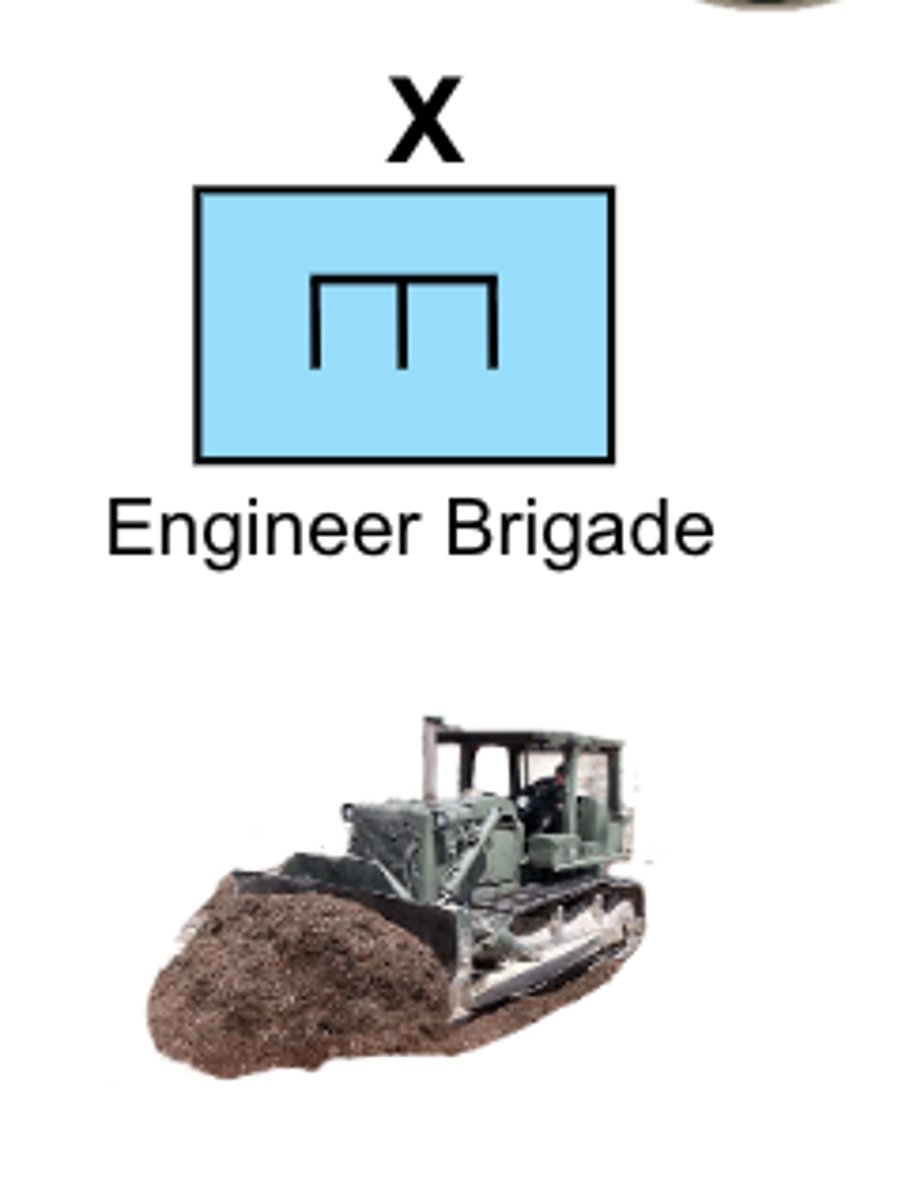
Engineer Brigade (image)
Functional Support Brigades
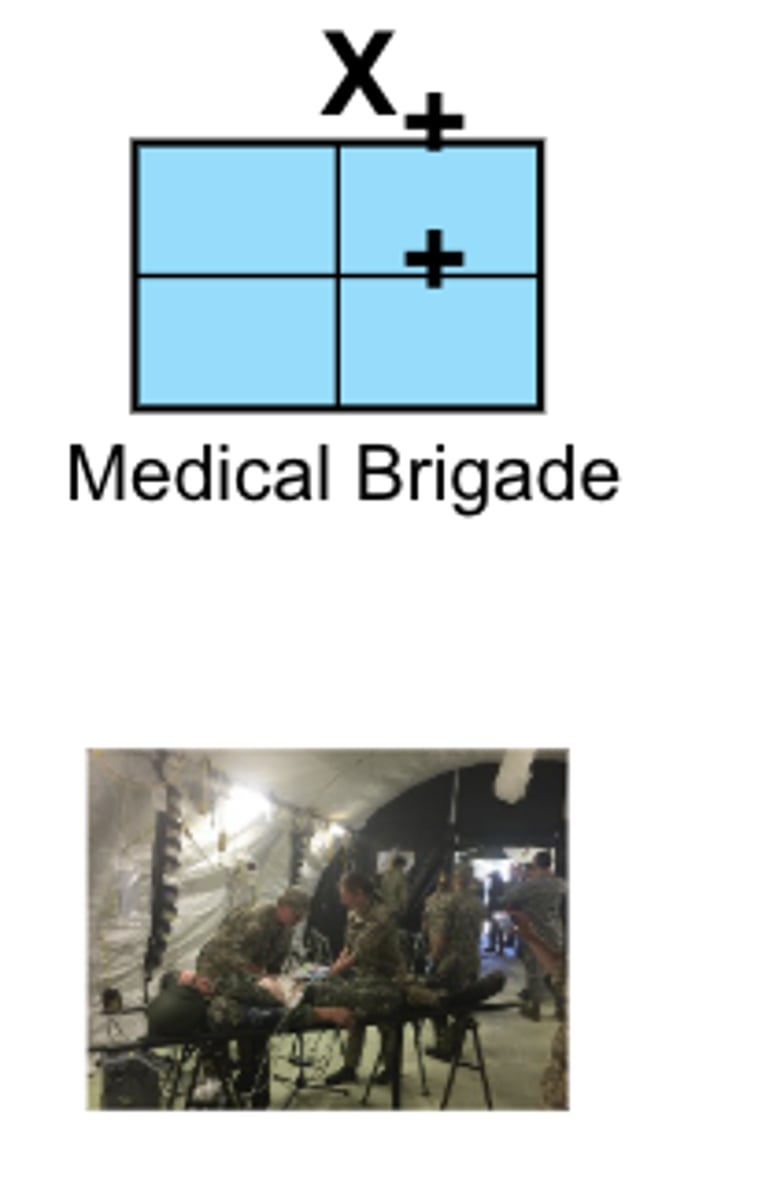
Medical Brigade (image)
Functional Support Brigades
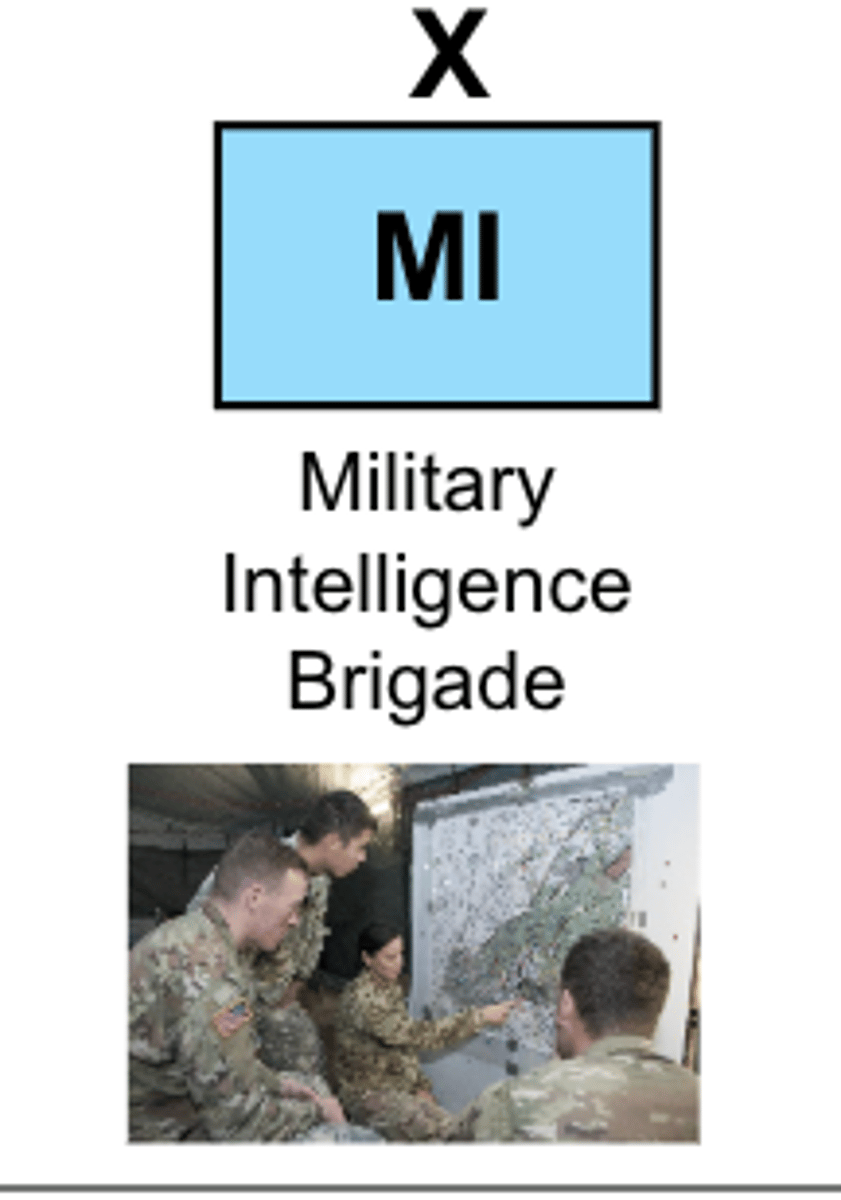
Military Intelligence Brigade (IMAGE
Functional Support Brigades
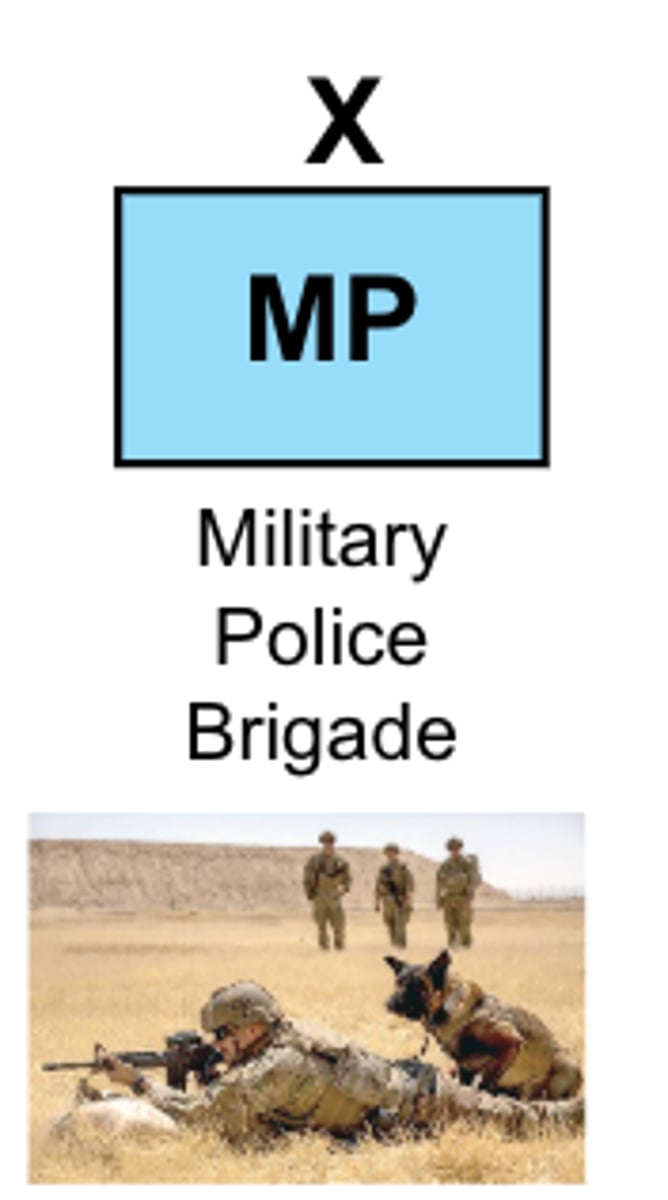
Military Police Brigade (image)
Functional Support Brigades
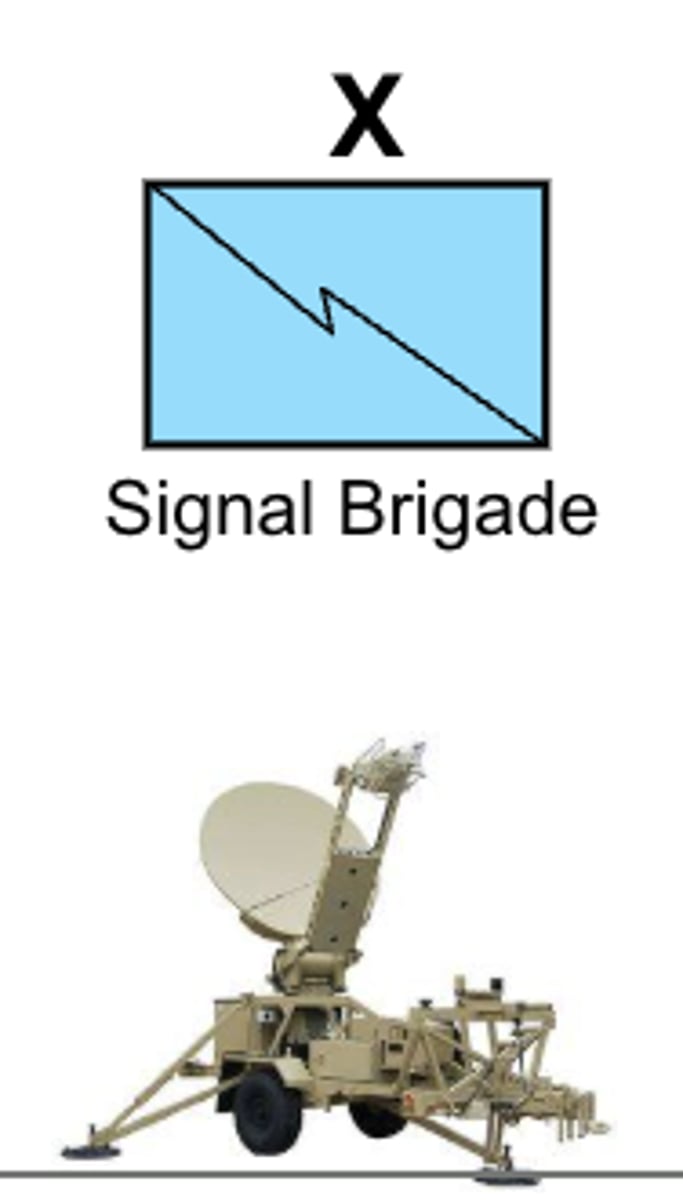
Signal Brigade (image)
Functional Support Brigades
Protection Brigade (image)
Functional Support Brigades
Operating Force Brigades (image)
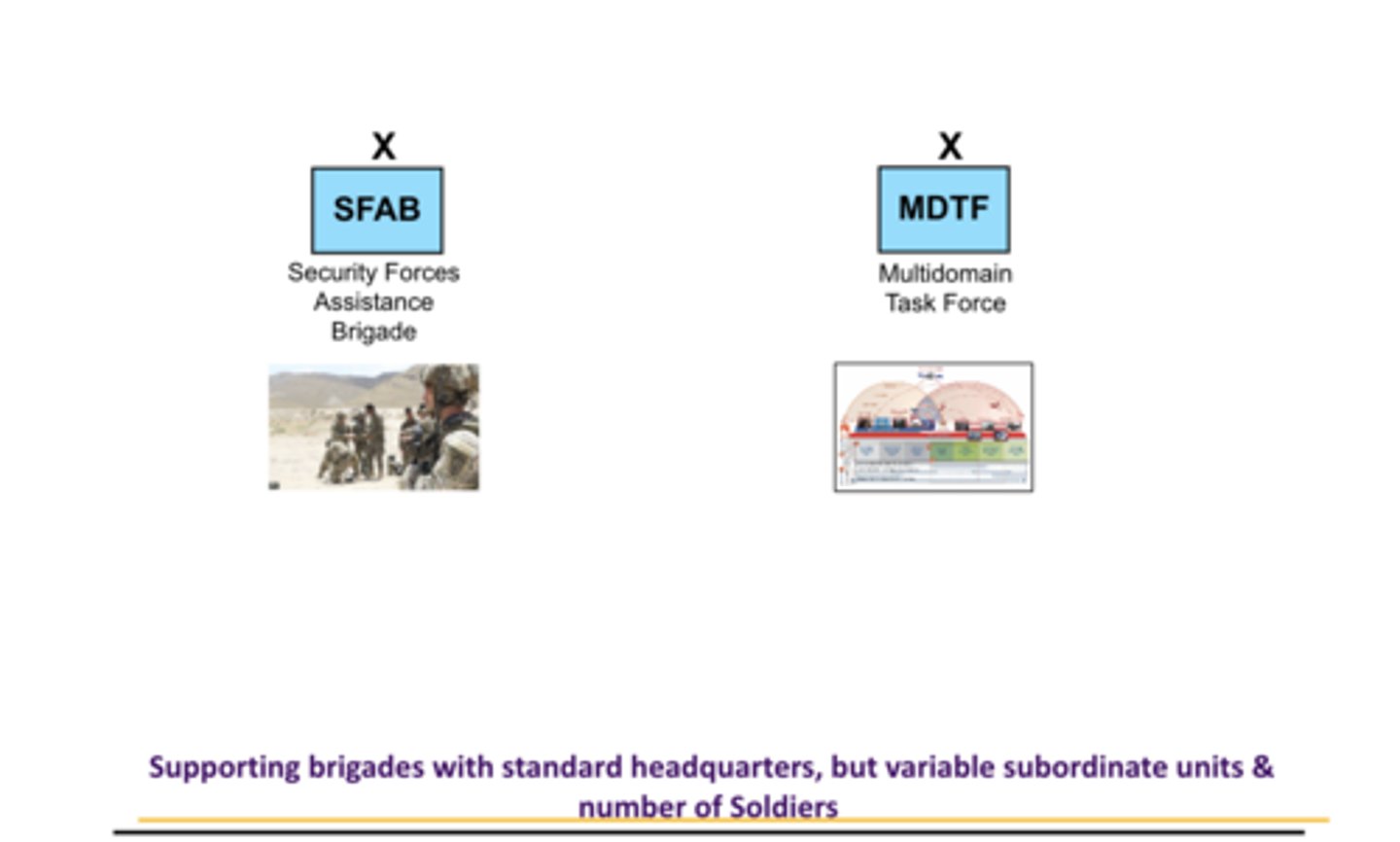
Security Forces Assistance Brigade
Operating Force Brigades
Multidomain Task Force
Operating Force Brigades
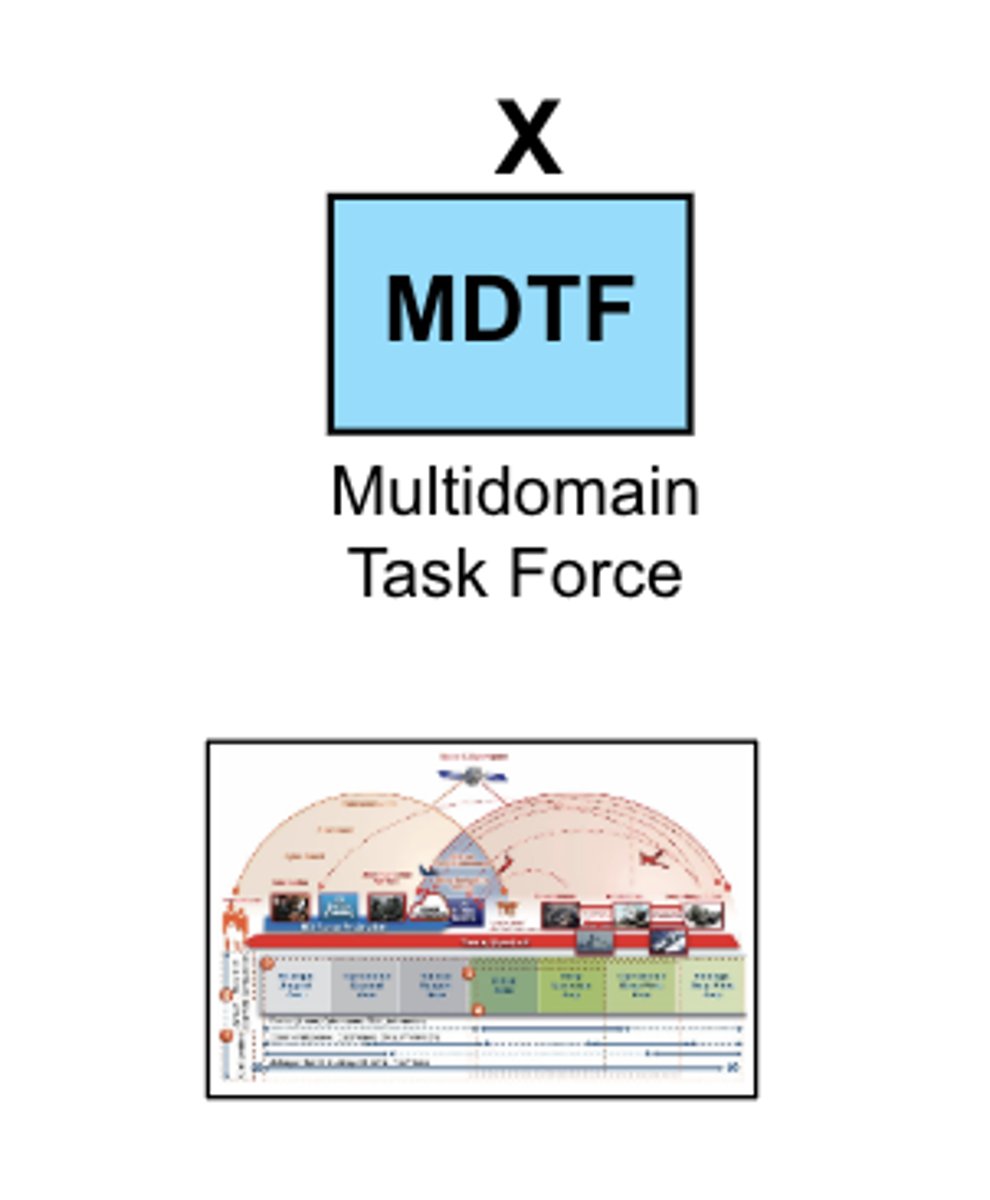
The Division (image)
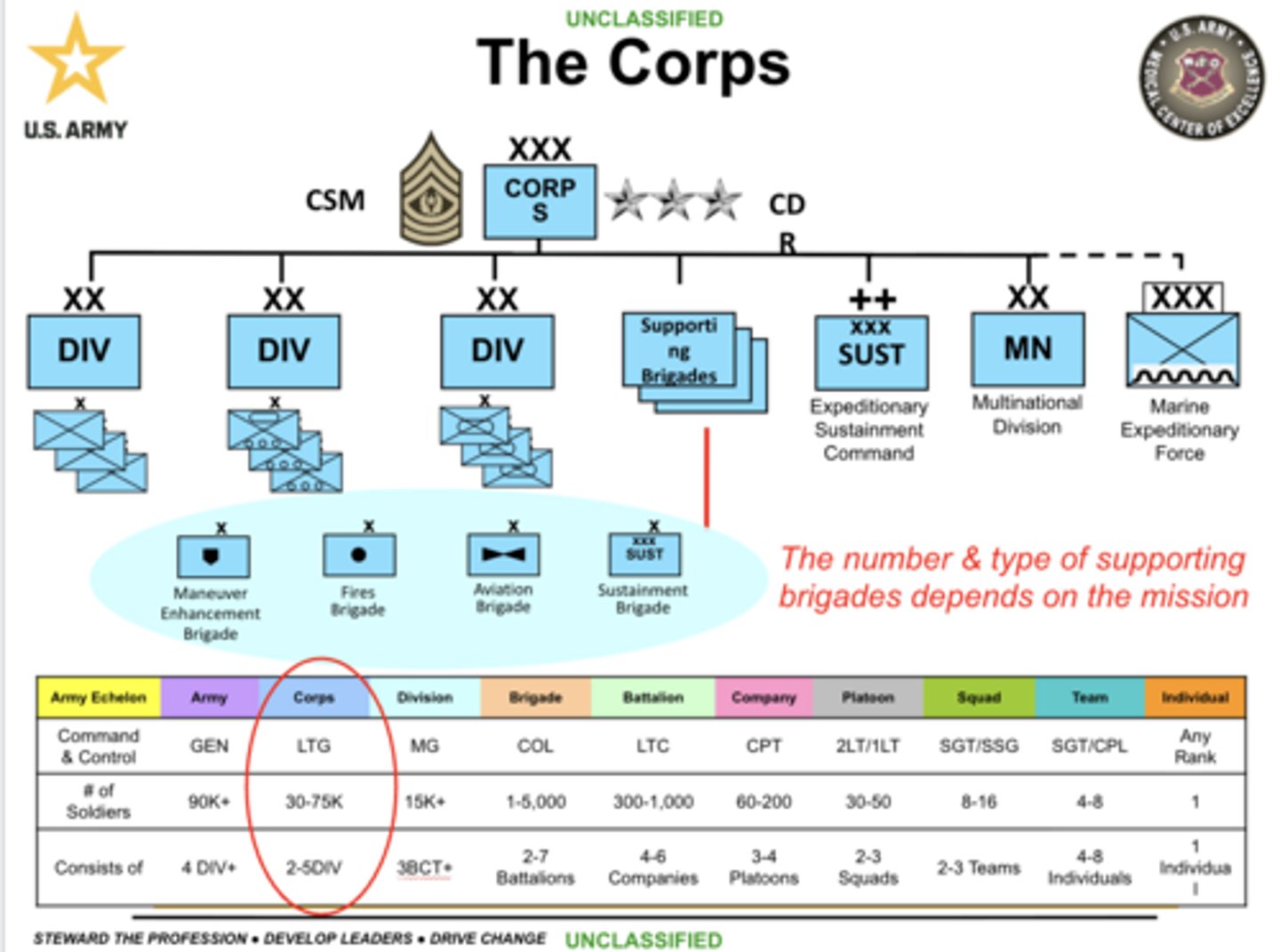
The Corps (image)
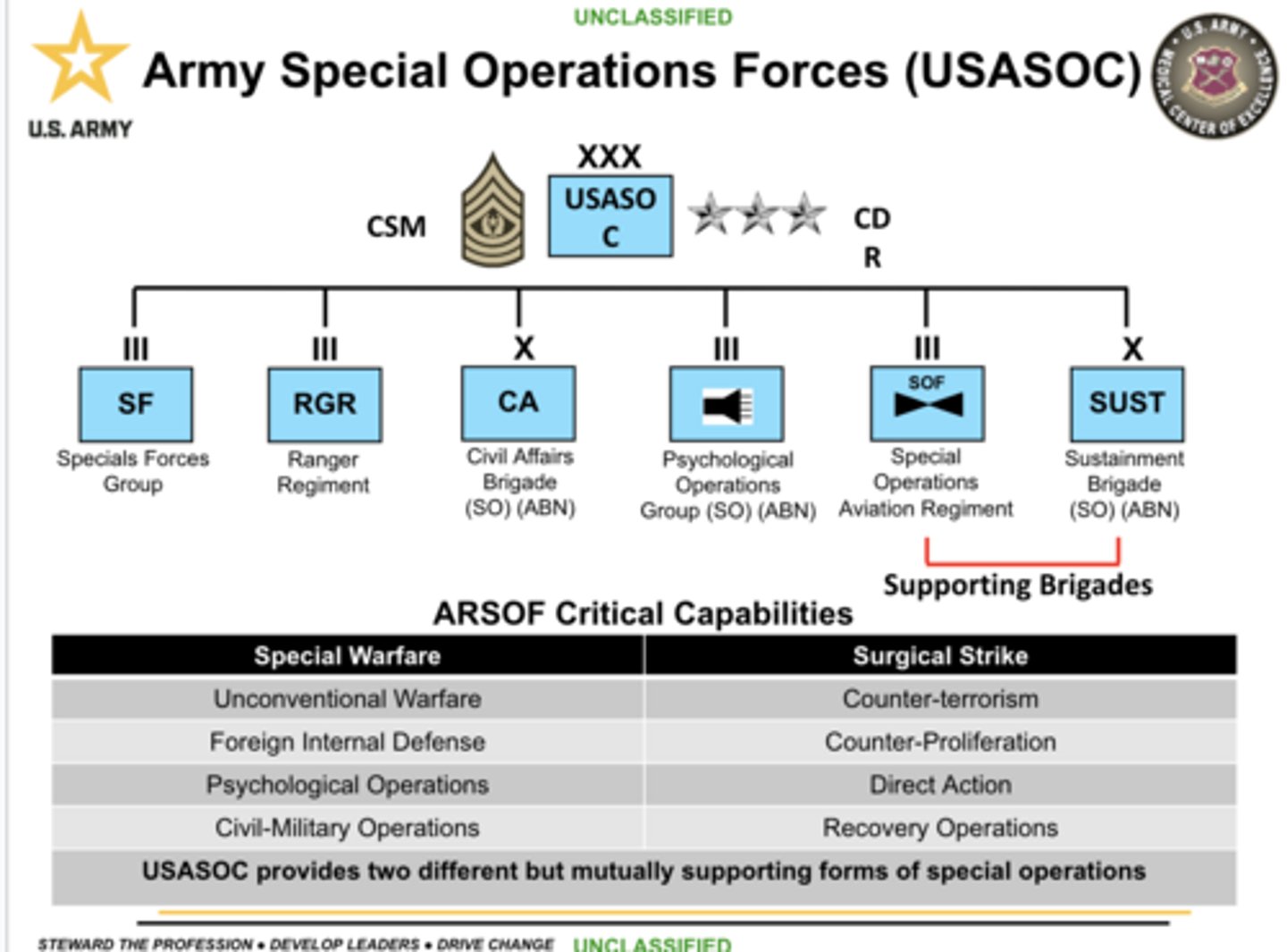
Army Special Operations Forces (USASOC) (image)
In addition to conventional forces, Army Special Operations Forces support U.S. national security goals in a variety of operations. These operations vary in size, purpose, and combat-intensity within a range of military operations and extend from military engagement, security cooperation, and deterrence, to crisis response and limited contingency operations and, if necessary, major operations.
a. Range of Military Operations.
(1) Military Engagement, Security Cooperation, and Deterrence.
(2) Crisis Response and Limited Contingency Operations.
(3) Major Operations.
b. Types of Military Operations (ARSOF Critical Capabilities).
(1) Special Warfare.
(2) Surgical Strike.
Special warfare is the execution of activities that involve a combination of lethal and nonlethal actions taken by a specially trained and educated force that have a deep understanding of cultures and foreign language, proficiency in small-unit tactics, and the ability to build and fight alongside indigenous combat formations in a permissive, uncertain, or hostile environment.
Surgical strike is the execution of activities in a precise manner that employ Special Operations Forces in hostile, denied, or politically sensitive environments to seize, destroy, capture, exploit, recover or damage designated targets, or influence threats.
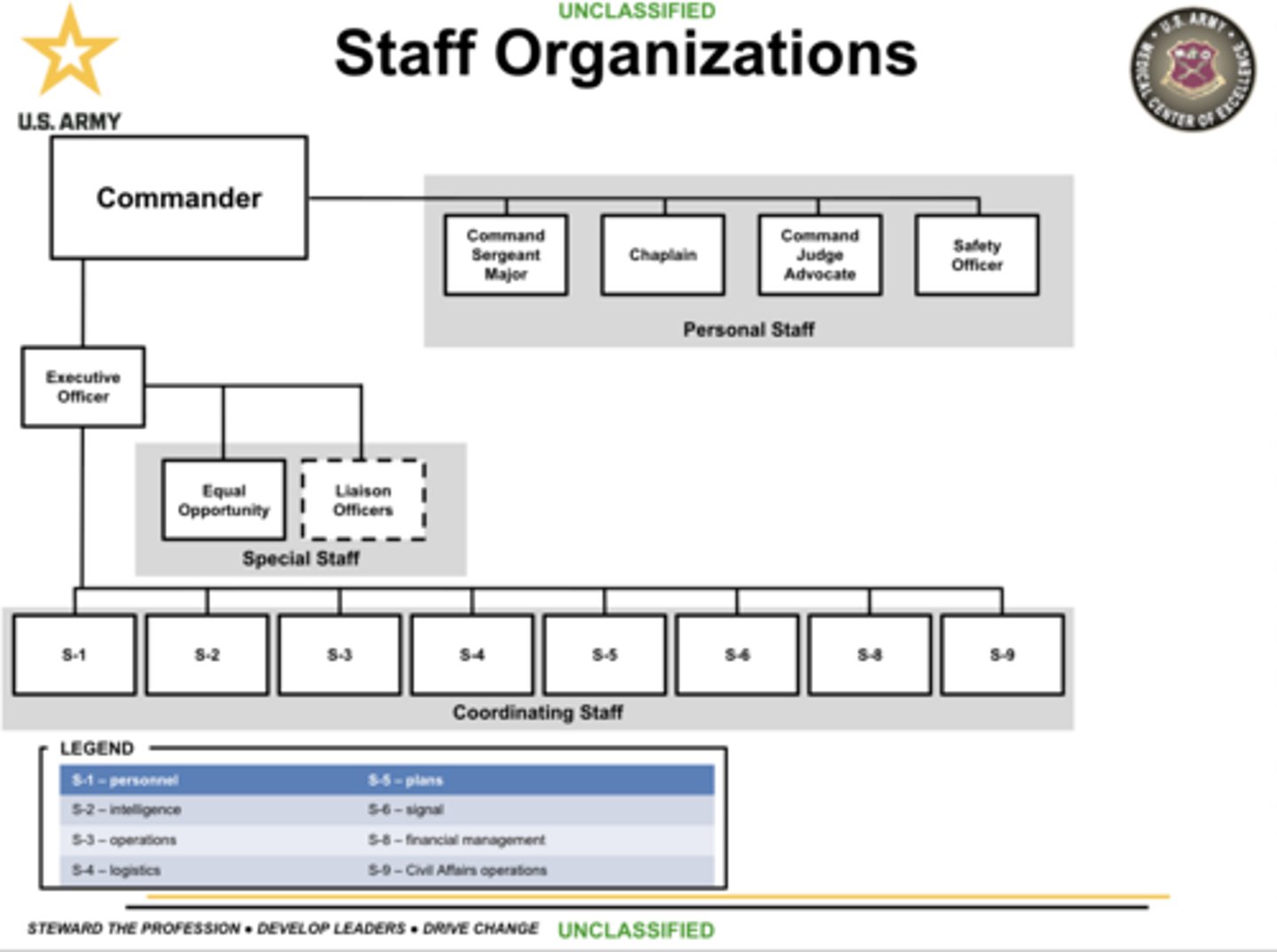
Staff Organizations (image)
Staffs at every echelon are structured differently, however, all staffs are similar. The basic staff structure includes a chief of staff (COS) or executive officer (XO), and three staff groups: coordinating, special, and personal. The number of coordinating, special, and personal staff officers within each staff group varies at different levels of command. Commanders may integrate TDA staffs with MTOE staffs to promote unity of effort and save resources.
Military staffs are organized based on three considerations:
• Mission.
• Broad fields of interest (functional responsibilities).
• Regulations and laws.
The mission determines which activities to accomplish. These activities determine how commanders organize, tailor, or adapt their individual staffs to accomplish the mission. The mission also determines the size and composition of the staff. Regardless of mission, every Army staff has common broad fields of interest that determine how the commander divides duties and responsibilities. The duties and responsibilities inherent in a field of interest are called functional responsibilities. Grouping related activities allows an effective span of control and unified effort. Fields of interest may vary slightly, depending on the echelon of command, mission, and environment. For example, at battalion level there is no resource manager, while certain logistic units combine the intelligence and operations functions.
Army regulations and laws establish special relationships between certain staff officers and the commander. For example, AR 20-1, AR 27-1, and AR 165-1 require the inspector general (IG), staff judge advocate (SJA), and chaplain to be members of the commander’s personal staff.
The Staff
helps commander understand, visualize, describe, and direct the battle
establishes and maintains coordination and cooperation both internally and with staff of higher, lower, and adjacent units
always focuses on helping the commander and subordinate units
commander may delegate authority to his staff, but not responsibility
exists at batallion level and higher
Staff Designators
For staff groups under the command of a COL or lTC, the 'S' designator is used (i.e. BDE and BN)
- i.e. S-1
For staff groups under the command of a General Officer, the 'G' designator is used (i.e. DIV, Corps, & Army)
- i.e. G-2
For staff groups working for the Joint Staff, the 'J' designator is used (i.e. CENTCOM)
- i.e. J-3
Chief of Staff (CofS)/Executive Officer (XO)
- commander's principal assistant for directing, coordinating, supervising, and training the staff
- integrates and synchronizes the war fighting plans
- manages the Commander's Critical Information Requirements (CCIR)
- Establishes, manages, and enforces staff planning time IAW commander's guidance
- Supervises all tasks assigned to the staff
- Ensures that the staff renders assistance to subordinate commanders and staffs, as necessary
The CofS (XO) is the commander's principal staff officer. He directs staff tasks, oversees staff coordination, and ensures efficient and prompt staff actions. The CofS oversees coordinating and special staff officers. He does not necessarily oversee the personal staff officers, although he normally interacts with them. The commander normally delegates authority to the CofS for executive management of coordinating and special staff officers. The BDE Surgeon and the BDE MEDO are considered special staff officers at BDE level.
S-1 (Personnel)
- manning (Unit Personnel Strength)
- Peronnel Service Support
- manage organization and admin of the headquarters
- coordinates staff responsibilities for Special Staff Officers
- Adjutant General, Surgeon, Chaplain, Staff Judge Advocate
S-1/G-1/J-1 Personnel Responsibilities:
S-1/G-1/J-1 Personnel Responsibilities.
Manning. Personnel readiness management, monitoring unit strength, processing personnel, etc.
Personnel Service Support. Community and family support, awards program, morale assessments, etc.
Headquarters Management. Recommending manpower allocations, coordinating space allocation and administrative support, etc.
Coordination of Special Staff. These include: AG, Surgeon, Chaplain, IG, PAO etc.
S-2 (Intelligence)
Military Intelligence
Counter Intelligence
Security Intelligence
Intelligence Training
Military Intelligence:
- collecting, processing, producing, and disseminating intelligence
- conducts intelligence Preparation of the Battlespace (IPB)
- Helps the G/S-3 and Commander figure out the enemy's decision cycle
Counter Intelligence
- Identifying and evaluating enemy's intelligence capabilities
Security Operations
- supervises the command and personnel security programs
Intelligence Training
- prepares the command intelligence training plan and integrates intelligence, counterintelligence, operational security, enemy, and IPB
G-2 Intelligence responsibilities
Production for Intelligence. Conducting intelligence preparation of the battlespace builds an analytical methodology employed to reduce uncertainties concerning the enemy, environment, and terrain for all types of operations. The data base is then analyzed in detail to determine the impact of the enemy, environment, and terrain on operations and presents it in graphic form. Intelligence preparation of the battlespace is a continuing process.
Counter Intelligence. Identifying and evaluating enemy intelligence collection capabilities, conducting counterintelligence force protection source operations, etc.
Intelligence Training. Prepares the command intelligence training plan and integrates intelligence, counterintelligence, operational security, enemy and IPB
S-3 (Operations)
Training
- prepares and supervises the execution of training within the command
Operations and Plans
- Prepares, coordinates, authenticates, and distributes the command SOP, OPLAN, OPORD, FRAGOs, and WARNOs to which other staff sections contribute
Force Modernization
G-3 Operations Responsibilities
Training. Supervises the command training program, compiles training records and reports, identifies training requirements, etc.
Operations and Plans. Prepares and publishes SOPs, OPLANs, and OPORDs; monitors the battle; coordinates terrain management, etc.
Force Development and Modernization. Fields new weapons and equipment, conducts manpower and equipment surveys, etc.
Coordination of Special Staff. These include: Air liaison officer, chemical officer, engineer coordinator, etc.
S-4 (Logistics)
- logistical operations and plans
- supply
- maintenance
- transportation
- coordinates mortuary affairs activity
G-3 Operations Responsibilities
Training. Supervises the command training program, compiles training records and reports, identifies training requirements, etc.
Operations and Plans. Prepares and publishes SOPs, OPLANs, and OPORDs; monitors the battle; coordinates terrain management, etc.
Force Development and Modernization. Fields new weapons and equipment, conducts manpower and equipment surveys, etc.
Coordination of Special Staff. These include: Air liaison officer, chemical officer, engineer coordinator, etc.
G-5 (Plans)
Principal staff officer for planning operations for the mid- to long-range planning horizons at division echelon and higher
In conjunction with the G-3, the G-5 prepares Annex A (Task Organization), Annex C (Operations), and Annex M (Assessment) to the operation order or operation plan
The G-5 has staff planning and supervisory responsibility for—
Overseeing operations beyond the scope of the current order (such as the next operation or the next phase of the current operation)
Developing plans, orders, branches, and sequels
Conducting military deception planning
Developing policies and other coordinating or directive products, such as memorandums of agreement
S-6 (Signal)
- Principle staff officer for all matters concerning signal operations, automation management, network management, and information security
- Signal Operations
Managing radio frequency allocations
Recommending command post locations within the battlespace (based on terrain)
- Automation - manages employment of hardware / software and coordinates LAN configuration
- Information Security - Manages Commo Security (COMSEC), automation security, and information security
G-8 (Financial Management)
- Principal staff officer singularly responsible for all financial management (resource management and finance operations)
- Establishes and implements command finance operations policy
- Responsible for those operational financial management tasks supporting the theater
S-9 (Civil Affairs Operations)
- Principal staff officer responsible for all matters concerning civil affairs
- Evaluates civil considerations during mission analysis
- Prepares the groundwork for transitioning the area of operations from military to civilian control
- Advises the commander on the military's effect on civilians in the area of operations
- Responsible for enhancing the relationship between Army forces and the civil authorities and people in the area of operations
Warfighting Functions Definition:
Warfighting functions are the physical means that tactical commanders use to execute operations and accomplish missions assigned by superior tactical- and operational-level commanders. The purpose of warfighting functions is to provide an intellectual organization for common critical capabilities available to commanders and staffs at all echelons and levels of warfare. Commanders integrate and synchronize these capabilities with other warfighting functions to accomplish objectives and missions.
All warfighting functions possess scalable capabilities to facilitate lethal and nonlethal effects. All the functions implement various systems such as personnel and networks to integrate forces and synchronize activities. Commanders should remember that cyber-related platforms that support integration and synchronization must be protected and defended. Combined arms operations use the capabilities of each function, along with leadership and information, in complementary and reinforcing capabilities.
The Six Warfighting Functions Definitions
Command and Control
Movement and Maneuver
Intelligence
Fires
Sustainment
Protection
Command and Control
The command and control warfighting function is the related tasks and a system that enable commanders to synchronize and converge all elements of combat power.
Movement and Maneuver
The movement and maneuver warfighting function is the related tasks and systems that move and employ forces to achieve a position of relative advantage over the enemy and other threats.
Intelligence
The intelligence warfighting function is the related tasks and systems that facilitate understanding the enemy, terrain, weather, civil considerations, and other significant aspects of the operational environment.
Fires
The fires warfighting function is the related tasks and systems that create and converge effects in all domains against the adversary or enemy to enable operations across the range of military operations.
Sustainment
The sustainment warfighting function is the related tasks and systems that provide support and services to ensure freedom of action, extended operational reach, and prolong endurance.
Protection
The protection warfighting function is the related tasks and systems that preserve the force so the commander can apply maximum combat power to accomplish the mission.
Company Trains
- As with field and combat trains, company trains consolidate support personnel in a single location to facilitate unit resupply and medical support at the Casualty Collection Point (CCP).
- Located in the company's rear area
- The commander determines the composition of the company trains that may include the first sergeant, supply sergeant, unit medic, and assorted vehicles.
- The FSC commanders may also include FSC field maintenance teams (FMTs) and field feeding teams in the company trains.
- Companies, batteries, and troops have limited transportation assets, usually a single 5 -ton truck, they rely upon the FSC for bulk distribution of class III and class V.
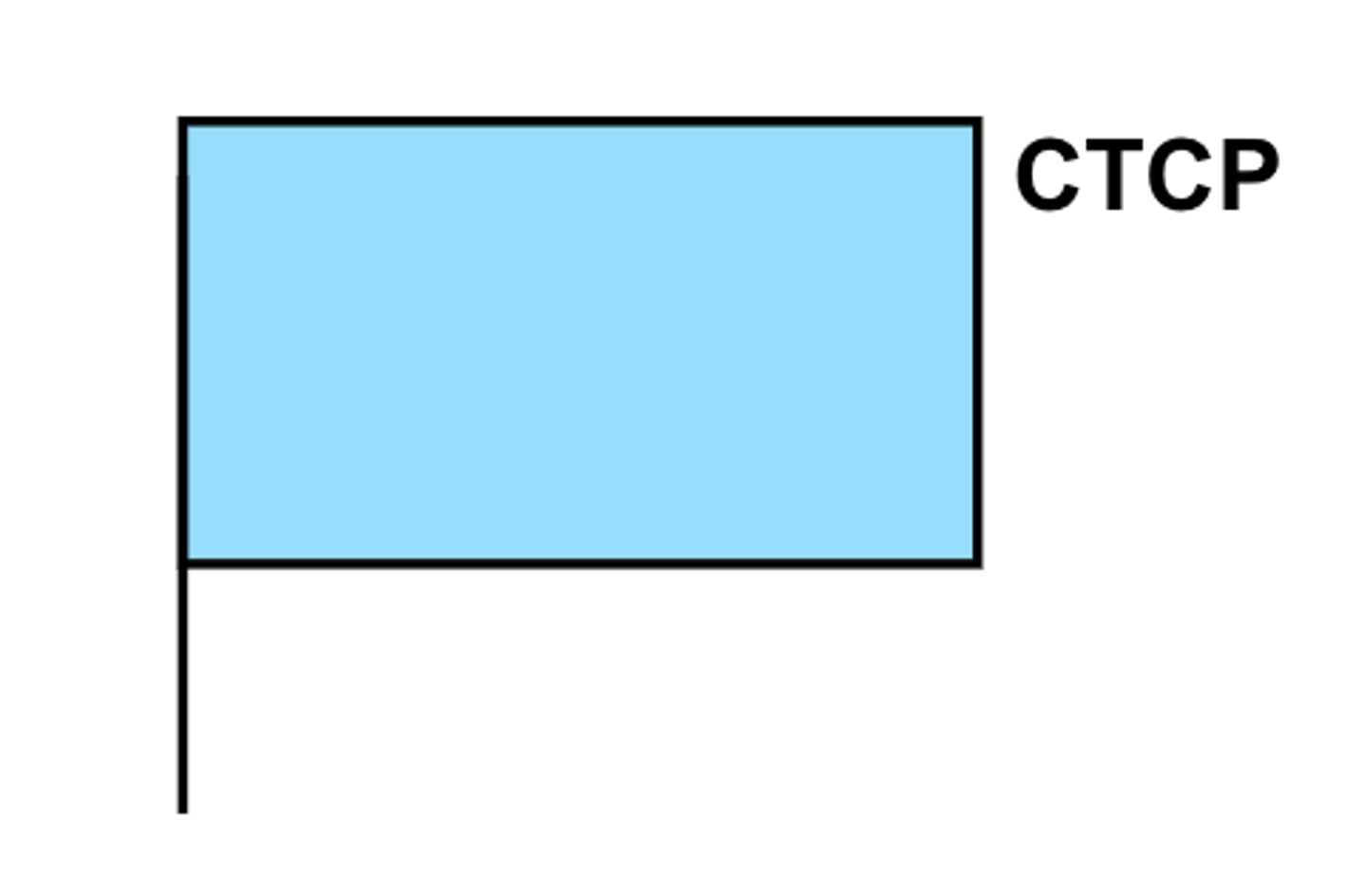
Combat Trains Command Post (CTCP)
- The CTCP controls and coordinates administrative and logistic support (supplies, services, maintenance, & medical aid forward to the companies) . (See ATP 6-0.5 for more information on combat trains.)
- BN S-4 Officer provides command and control.
- BN S-1/MEDO is located in CTCP.
- The Battalion Aid Station may locate at the CTCP.
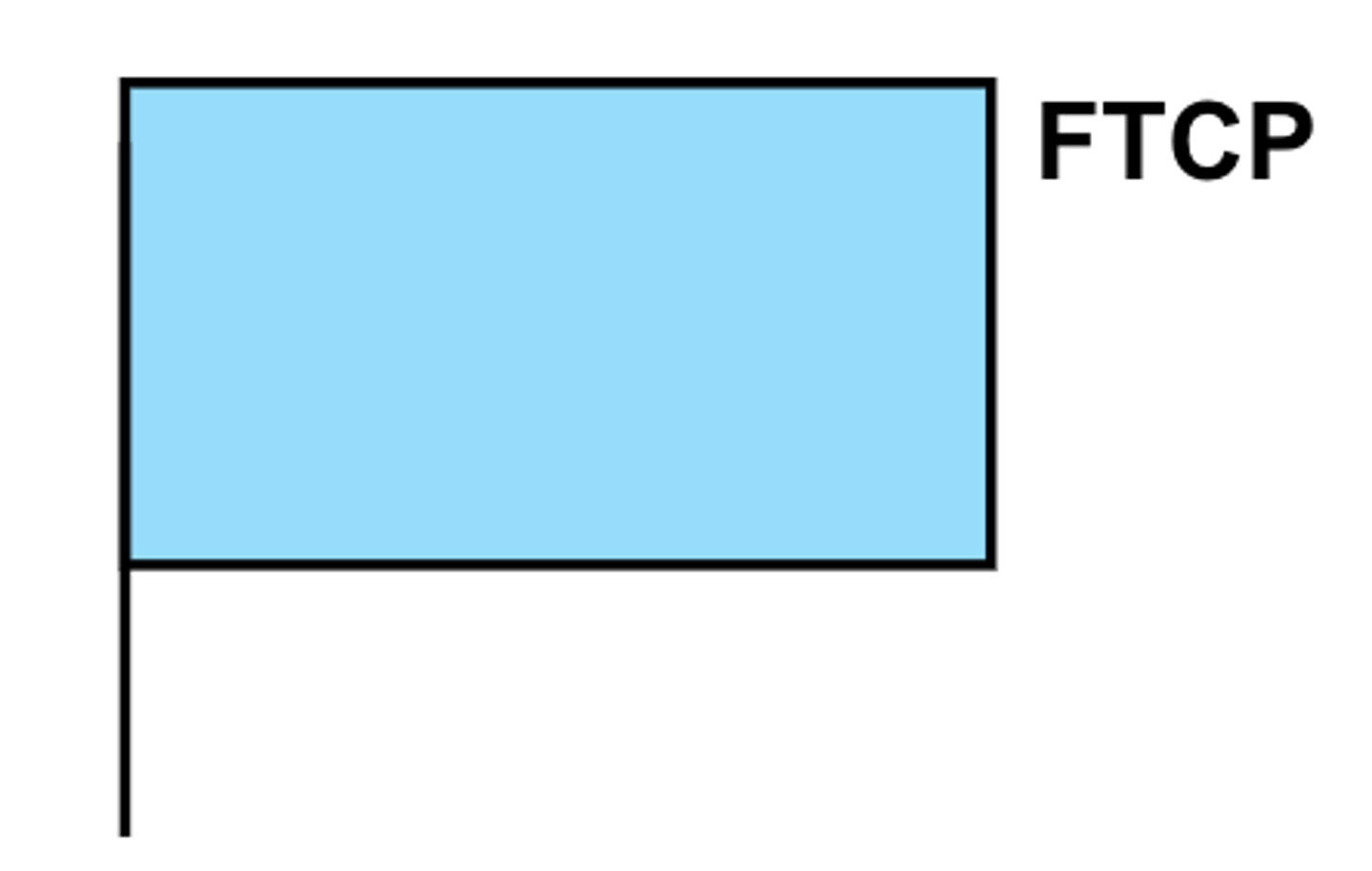
Field Trains Command Post (FTCP)
- The FTCP is a facility containing a personnel administration center, elements of the S-4 (battalion or brigade logistics staff officer) sustainment staff section, elements of company supply sections, and elements of the forward support company. (See ATP 6-0.5 for more information on field trains.)
- Provides supply, distribution and maintenance to their maneuver battalions
- Commander provides command and control.
- FTCP is located in the BSA.
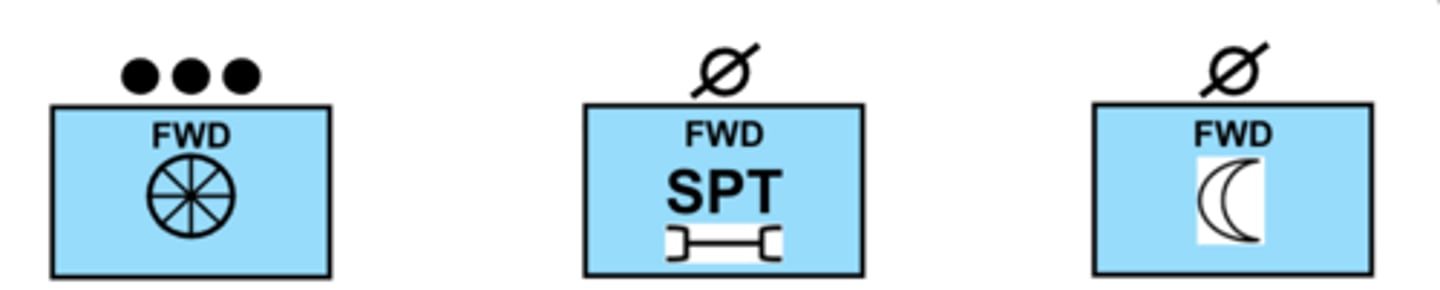
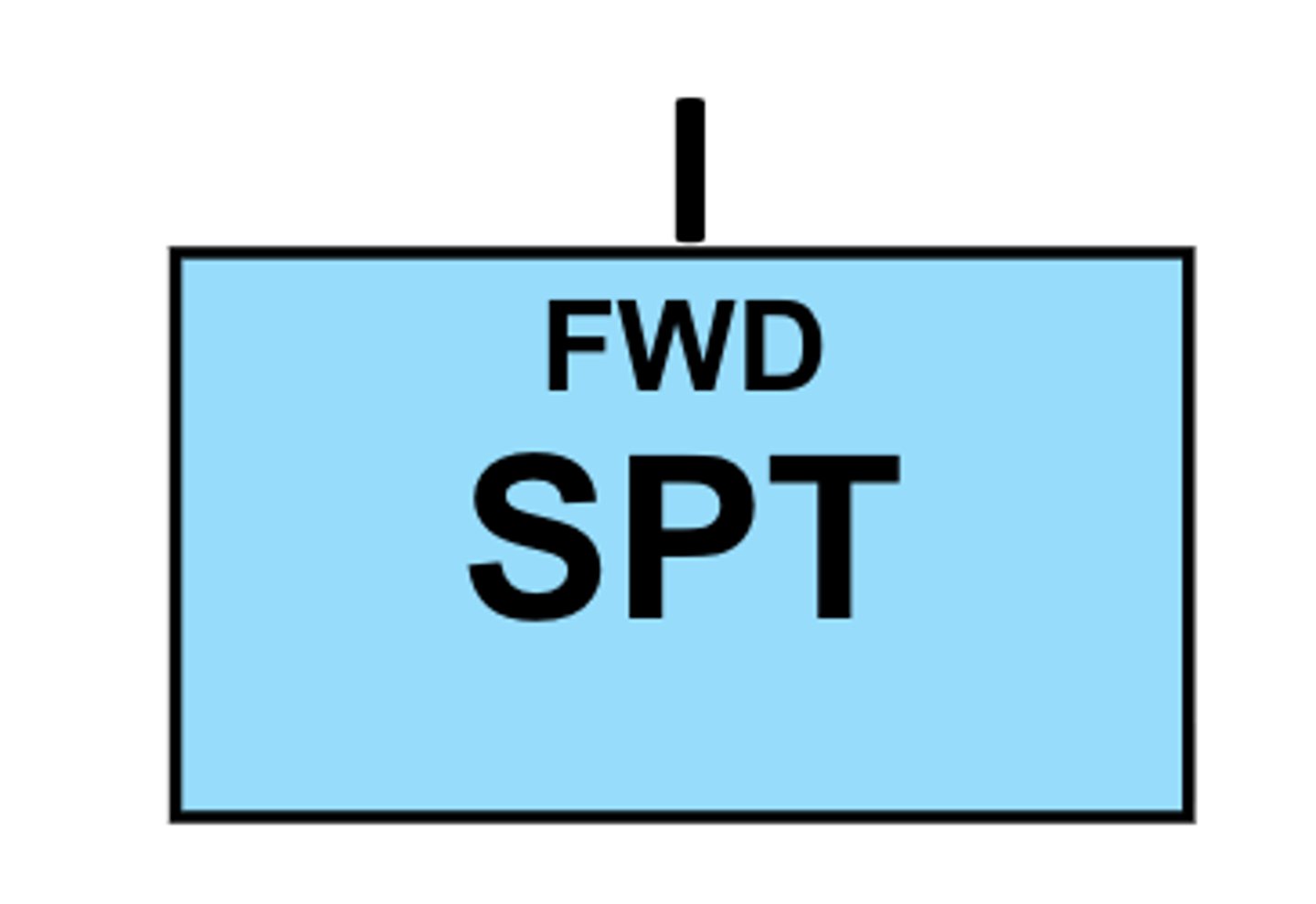
Forward Support Company (FSC)
- FSC Commander provides command and control over field feeding, water, bulk fuel, general supply, ammunition, and field maintenance.
- The FSC is tasked organized to support a maneuver battalion, however it falls under the Brigade Support Battalion
- The FSC is located in the vicinity of the Combat Trains Command Post (CTCP)
What exactly is the Forward Support Company (FSC)?
The FSC is as mobile as the unit it supports. This mobility provides greater flexibility for the supported commander. The FSC locates within 4 to 14 kilometers from their combat arms battalion support
area. The location of the FSC is the supported battalion commander's decision, unless directed otherwise by the BCT commander.
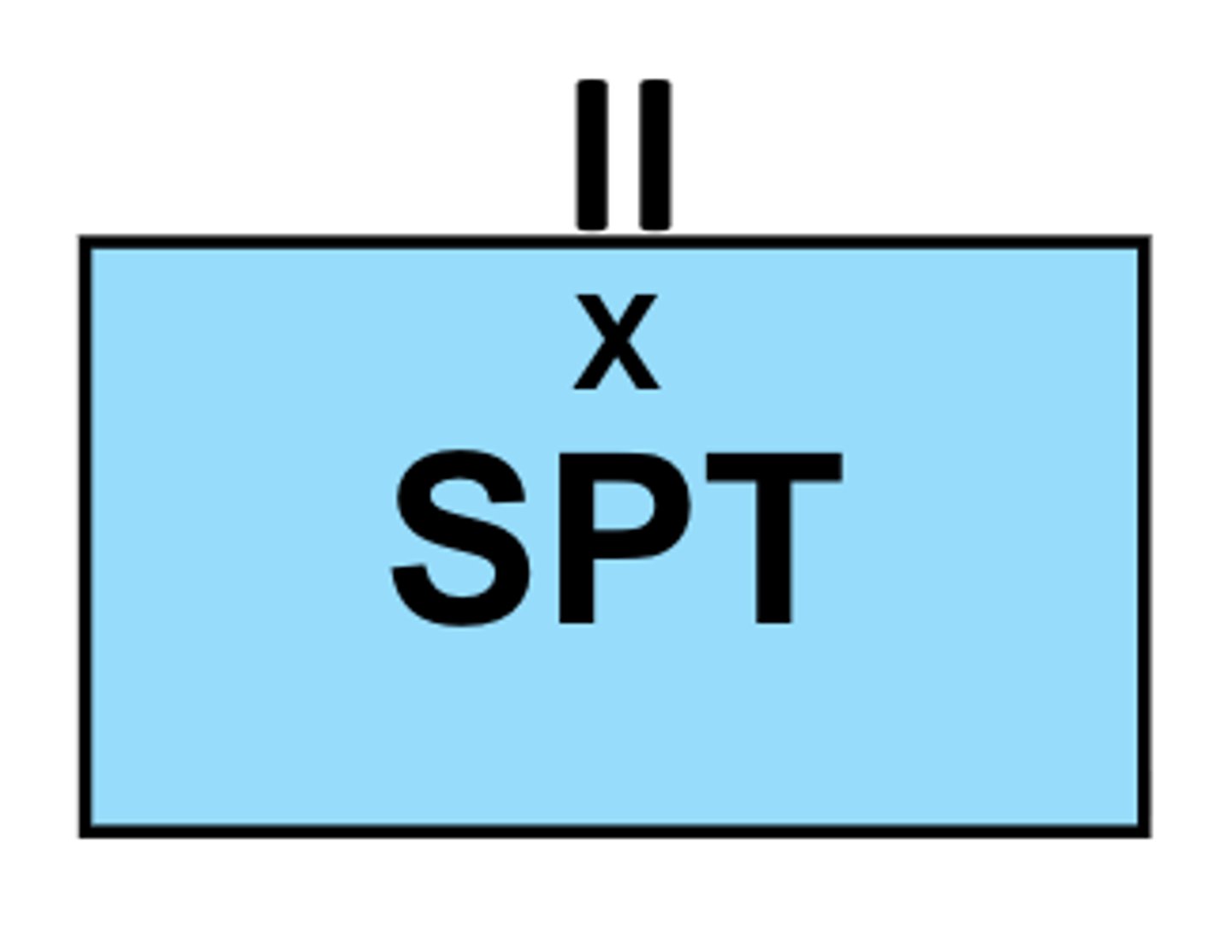
Brigade Support Battalion (BSB)
Provides Tactical Sustainment for a BCT
- Supply and Distribution Company
- Maintenance Company (vehicles, weapons, electronics, etc.)
- Medical Company, Brigade Support (Role 2)
- One Forward Support Company per maneuver battalion
What exactly is the Brigade Support Battalion (BSB)?
BSBs are organic components of BCT, Fires, and Maneuver Enhancement Brigades. The BSB is tailored to support the particular brigade to which it is organic. For example, the BSB of an armored brigade
combat team (ABCT) has more fuel distribution capabilities and maintenance than does a fires brigade BSB. The battalion provides supply, maintenance, motor transport, and medical support to the supported brigade. The BSB plans, prepares, and executes, logistics operations in support of brigade operations.
Sustainment Brigade
Provides logistical support command and control for Division and above:
- Supply (Food, Water, Fuel, Ammo, construction material, vehicles/weapons, etc.)
- Maintenance (vehicles, weapons, communication equipment, etc.)
- Transportation (provides trucks to move supplies & Soldiers)
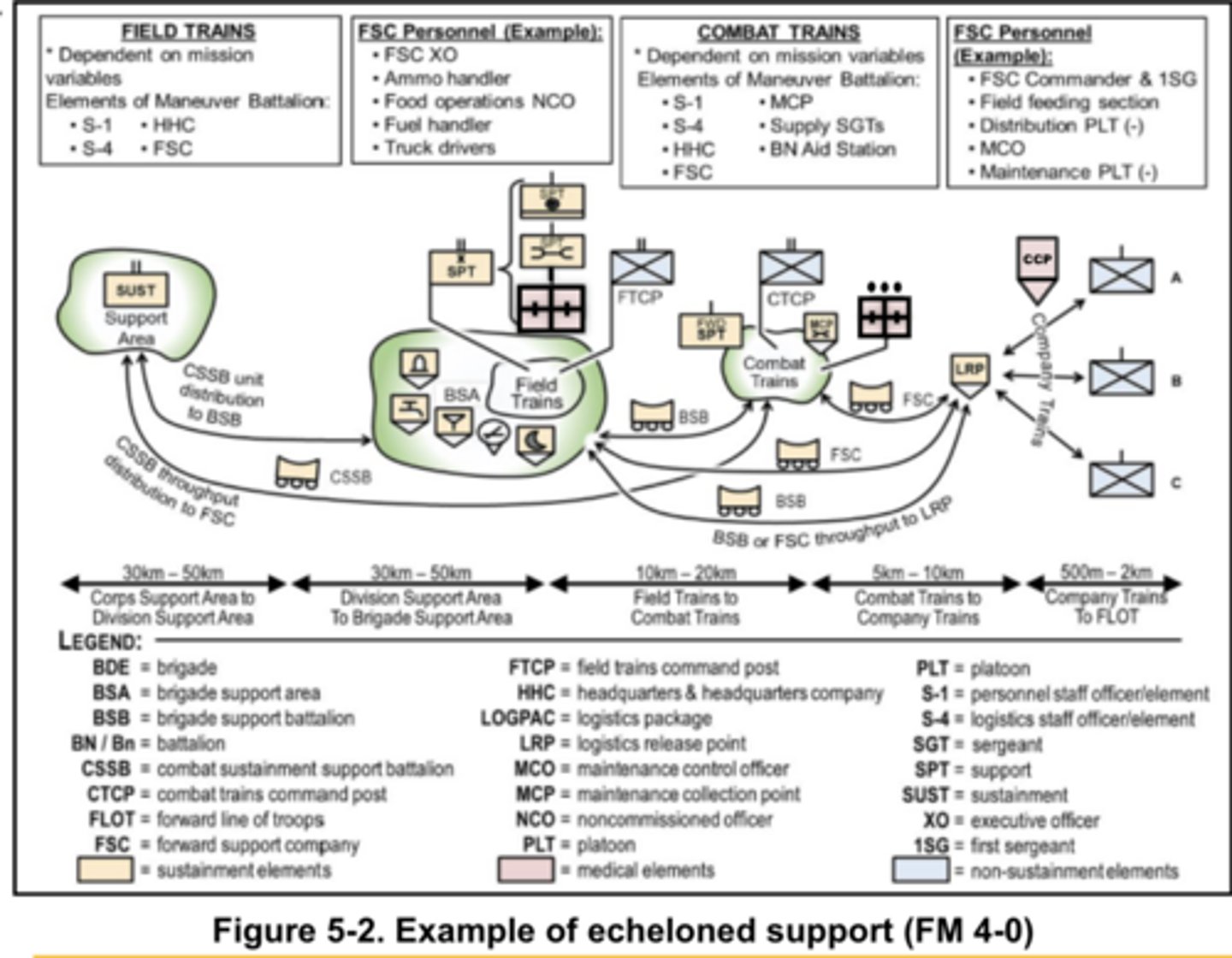
Tactical Sustainment (image)
From FM 4-0, Sustainment Operations
Figure 5-2 depicts an example of echeloned sustainment using field, combat, and company trains including templated distances between locations. The distances in the diagram are not prescribed distances but are depicted to display a typical range of distances commanders may expect and are for planning purposes only. Distances will vary from operation to operation and units must be located for maximum effectiveness. Sustainment and BCT planners and leaders consider operational and mission variables when locating units and the impact the distances have on sustainment support. Distribution platform capability and convoy security are considerations when determining distances.