liver disease | NURS240
 Call Kai
 Learn
Learn Practice Test
 Spaced Repetition
 Match
Match Flashcards
 Knowt Play
1/70

There's no tags or description
Looks like no tags are added yet.
Name | Mastery | Learn | Test | Matching | Spaced | Call with Kai | Chat |
|---|
No analytics yet
Send a link to your students to track their progress
71 Terms
true or false: the liver is very vascular
true
review the functions of the functions of the liver…
play a role in CHO, lipid, and protein metabolism
stores glycogen, vitamins and mineral
produce and excrete bile
synthesize albumin, prothrombin, and fibrinogen
detoxifies and purifies blood
what is the main difference in ALT and AST for liver function test
an elevated AST tell you that their is damage happening to the liver but not by how much but ALT will show you how much damage is happening to the liver
what does alkaline phosphate tell us about liver function?
indicate liver functions and possible metastasis disease to the bone
what is the expected range of bilirubin (total) in both female and male?
0.3-1.0 mg/dL
what is the expcted range of albumin in both female and male?
3.5-5.0 g/dL
where does bilirubin come from?
bilirubin is produced form the breakdown of old red blood cells
old RBCs are broken down in the spleen, liver, and macrophages
hemoglobin → heme → bilirubin
how is unconjugated bilirbun transported to the liver?
unconjugated bilirubin travels through the blood bound to albumin
it is transported to the liver, where it will be processed
what happens to bilirubin in the liver?
bilirubin is conjugated with glucuronic acid
it becomes conjugated (direct) bilirubin
this form is water-soluble
conjugated bilirubin is then secreted into bile
what happens to bilirubin after it enters the intestine?
bile carrying conjugated bilirubin enters the Intestine.
intestinal bacteria convert bilHow does bilirubin metabolism affect urine color?
irubin into urobilinogen.
urobilinogen has two main pathways:
some returns to the liver
some continues through the intestine.
how does bilirubin metabolism affect urine color?
some urobilinogen enters the bloodstream and travels to the Kidney.
it is converted into urobilin, which gives urine its yellow color.
how does bilirubin metabolism affect stool color?
most urobilinogen remains in the intestine and is converted by bacteria into stercobilin.
stercobilin gives stool its brown color.
what is the difference between MASH and non-MASH cirrhosis?
MASH = nonalcoholic
non-MASH = alcoholic
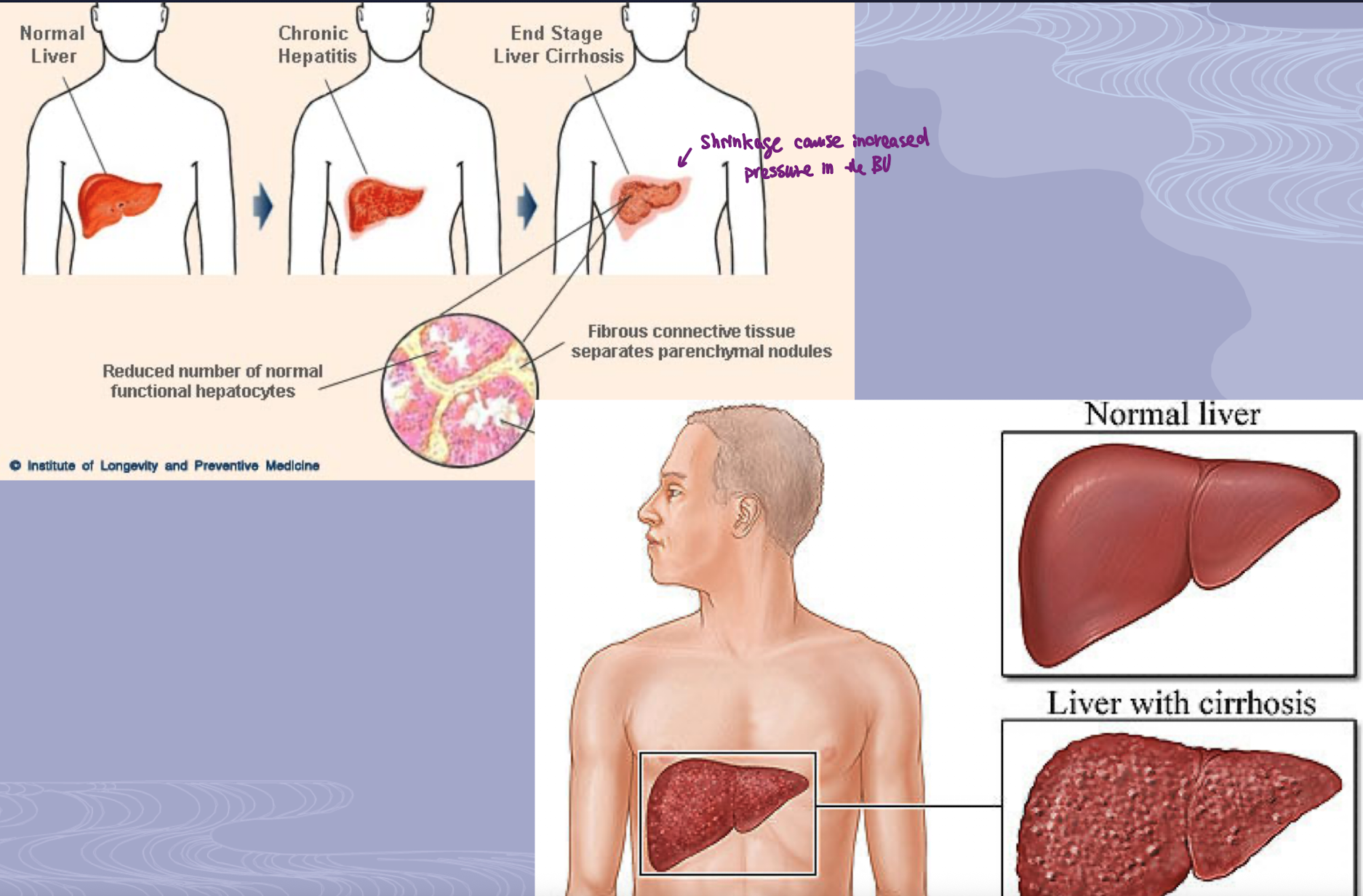
what is cirrhosis?
a condition where normal liver structure is replaced by fibrotic scar tissues → which can occur due to:
chronic inflammation
hepatocyte (liver cell) damage
necrosis of liver tissue
the scar tissue forms fibrotic bands that distort the liver’s normal structure and impair its function
how does cirrhosis develop?
cirrhosis develops slowly over time due to repeated liver injury
chronic liver inflammation
liver cell death (necrosis)
replacement with scar tissue (fibrosis)
distortion of normal liver architecture
this gradually reduces the liver’s ability to perform its metabolic and detoxification functions
what are the most common causes of cirrhosis?
chronic alcohol abuse
hepatitis C
both causes long-term liver inflammation, which eventually leads to fibrosis and cirrhosis
what is cirrhosis considered a progressive disease?
cirrhosis progresses gradually because repeated liver injury continues to produce scar tissues → as fibrosis increases:
liver blood flow becomes disrupted
liver function declines
complications such as portal hypertension and liver failure may develop
what is nonalcoholic fatty liver disease (NAFLD)
a condition where fat accumulates in the liver in people who drink little or no alcohol → the condition is strongly associated with:
obesity
insulin resistance
type 2 diabetes
metabolic syndrome
MASH is now one of the most common liver disease
what are the two types of nonalcoholic fatty liver disease (NAFLD)
Nonalcoholic Fatty Liver (NAFL)
fat in the liver
little or no inflammation
usually does not cause liver damage
Nonalcoholic Steatohepatitis (NASH/MASH)
fat + inflammation + liver cell damage
can progress to cirrhosis or liver failure
what are common symptoms of nonalcholic fatty liver disease?
NAFLD is often asymptomatic.
if symptoms occur, they may include:
fatigue
mild right upper quadrant discomfort
enlarged liver
many cases are discovered incidentally during routine blood tests or imaging.
how is nonalcoholic fatty liver disease diagnosed?
diagnosis may involve:
elevated liver enzymes on blood tests
ultrasound, CT, or MRI showing fatty liver
liver biopsy (sometimes used to confirm NASH)
diagnosis often occurs when abnormal liver tests are found during routine exams.
how is nonalcoholic fatty liver disease treated?
there is no specific medication, so treatment focuses on lifestyle changes:
weight loss
healthy diet
regular exercise
control of diabetes and cholesterol
these interventions can reduce fat in the liver and prevent progression to cirrhosis.
what are the main types of cirrhosis?
laennec’s (alcoholic) cirrhosis → fatty accumulation causes scarring which stopping drinking can help reverse damage
post-necrotic cirrhosis → seen in patient with chronic Hepatitis B or C and patient who overdosed on tylenol
biliary cirrhosis → biliary obstruction from inflammation lead to necrosis which lead to scarring
cardiac cirrhosis → left first then right → blood back into the liver which causes congestion which lead to the liver being enlarged → causes inflammation → necrosis → scarring
These types are classified based on the underlying cause of liver damage.
what history questions are important when assessing for cirrhosis?
Important history topics include:
alcohol (ETOH) use
medication use (including OTC drugs)
illicit drug use
dietary habits
exposure to chemicals or toxins
past medical history such as:
Viral Hepatitis
heart failure
biliary tract disorders
obesity
These help identify risk factors for chronic liver damage.
what are the common early physical exam signs of cirrhosis?
weight loss
loss of appetite (anorexia)
fatigue
gastrointestinal symptoms
abdominal pain or liver tenderness
these occur because the liver is losing its metabolic and digestive functions
why do patients with cirrhosis develop Gi symptoms and abdominal pain?
as the liver damage progresses
digestion and metabolism become impaired
liver enlargement or inflammation may occur
these can cause abdominal discomfort, liver tenderness, and GI symptoms
why might patients with cirrhosis develop personality changes or altered sleep patterns?
liver dysfunction allows toxins (especially ammonia) to accumulate in the bloodstream which can affect brain functions and lead to personality changes, confusion, and sleep disturbances (these are characteristics of Hepatic Encephalopathy)
what are the common late physical exam signs of cirrhosis?
jaundice
skin changes (dry skin, rashes)
petechiae or ecchymosis - due to decreased clotting factor production
caput medusae (visible vein in the abdomen)
palmar erythema
ascites
dependent edema
fetor hepaticus - musty or sweet odor on the breath
asterixis (AKA liver flap) - flapping tremor of the hands when the patient extend their wrists
sign of vitamin C deficiency
messed up protein metabolism
these occur due to severe liver dysfunction and portal hypertension
why do patients with cirrhosis develop ascites and edema?
ascites occurs because of portal hypertension and low albumin production of which the increased pressure and not enough albumin causes fluid to leak from the blood vessels into the third space of the peritoneum and causes fluid build up
what physical exam assessments are important for cirrhosis?
skin inspection (look for jaundice, spider angiomas, bruising)
palpation of the liver and spleen (hepatomegaly/spleenomegaly)
measurement of the abdominal (ABD) girth to monitor fluid accumulation
assessment for ascites - fluid wave test (a wave of fluid is felt across the abdomen when one side is tapped) and shifting dullness (dullness shift when the patient changes position due to free fluid in the abdomen)
what serum enzyme levels are commonly elevated in cirrhosis?
↑ AST (aspartate aminotransferase)
↑ ALT (alanine aminotransferase)
↑ LDH (lactate dehydrogenase)
↑ alkaline phosphatase
these elevation indicate liver cell injury and impaired bile flow
why are ammonia levels elevated in cirrhosis
The liver normally converts ammonia to urea for excretion.
In cirrhosis:
damaged liver cells cannot detoxify ammonia
ammonia accumulates in the bloodstream
High ammonia can lead to Hepatic Encephalopathy.
why are PT and INR elevated in cirrhosis?
The liver produces many clotting factors.
When liver function declines:
clotting factor production decreases
prothrombin time (PT) increases
INR increases
This results in increased bleeding risk.
what lab values may be decreased in cirrhosis?
↓ albumin and total protein
↓ RBC, hemoglobin, and hematocrit
↓ WBC
↓ sodium (Na⁺)
These changes reflect poor liver synthesis, portal hypertension, and fluid imbalances.
what diagnostic tests are commonly used to evaluate cirrhosis?
liver Ultrasound - to help detect liver enlargement, nodular liver surfacer, ascites, and changes in blood flow
computed Tomography or Magnetic Resonance Imaging - to evaluate liver structure, identity tumors or complications, and assess portal hypertension and ascites
esophagogastroduodenoscopy - used to check for esophageal or gastric varices
liver Biopsy - to confirm diagnosis of cirrhosis and assess degree of fibrosis
these tests help evaluate liver structure, complications, and extent of damage.
what is portal hypertension and how does it relates to cirrhosis?
portal hypertension occurs when scarring in the liver (cirrhosis) blocks normal blood flow through the liver of which causes an increased in pressure in the portal vein with blood backing up into surrounding organs especially the spleen and GI tract
what complications result from portal hypertension caused by cirrhosis?
causes veins in the GI system to become dilated and fragile (they are now known as varices) → which can lead to esophageal varices, ascites (due to third spacing), caput medusae, and hemorrhoids
why do esophageal varices develop in cirrhosis?
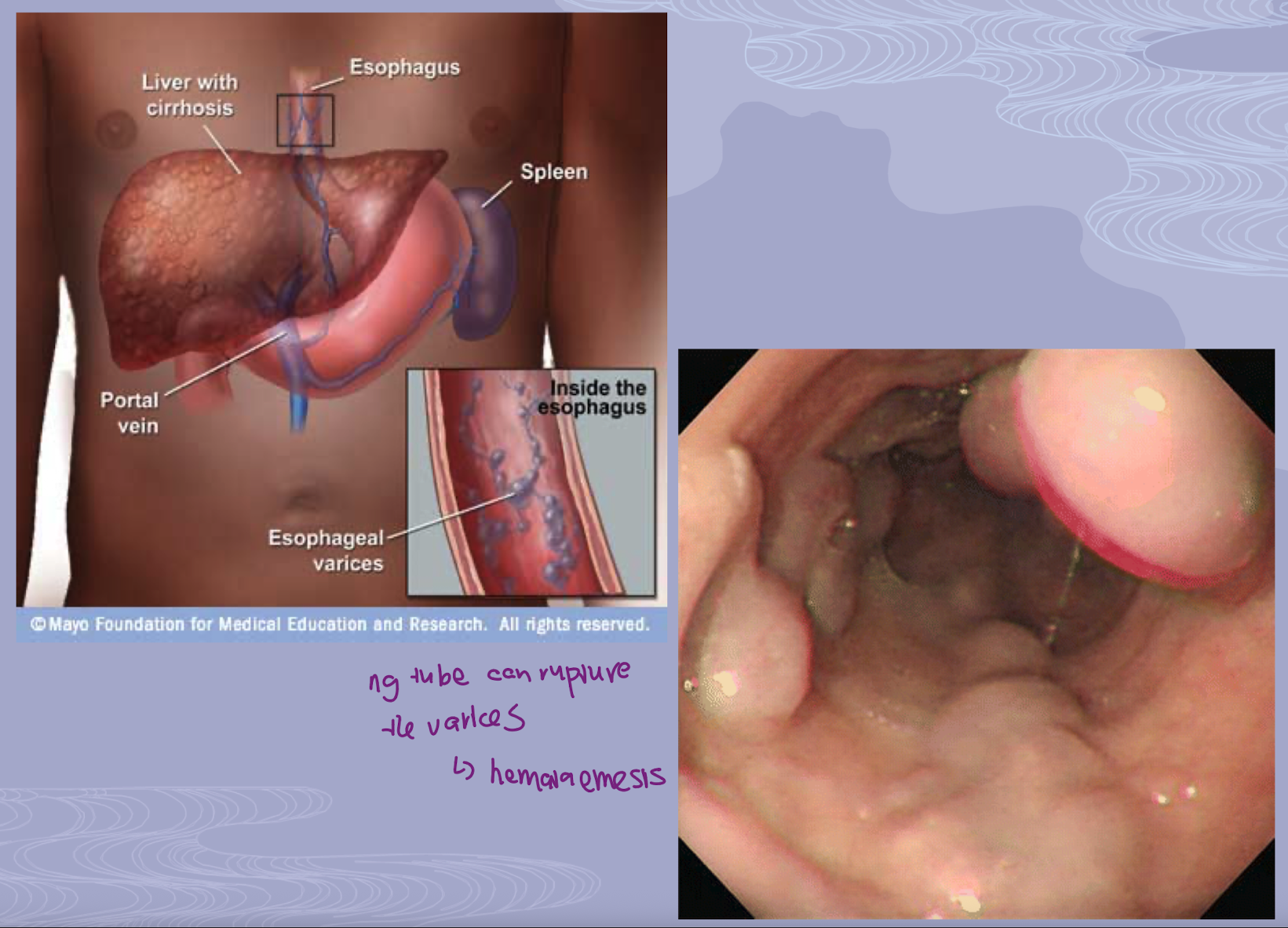
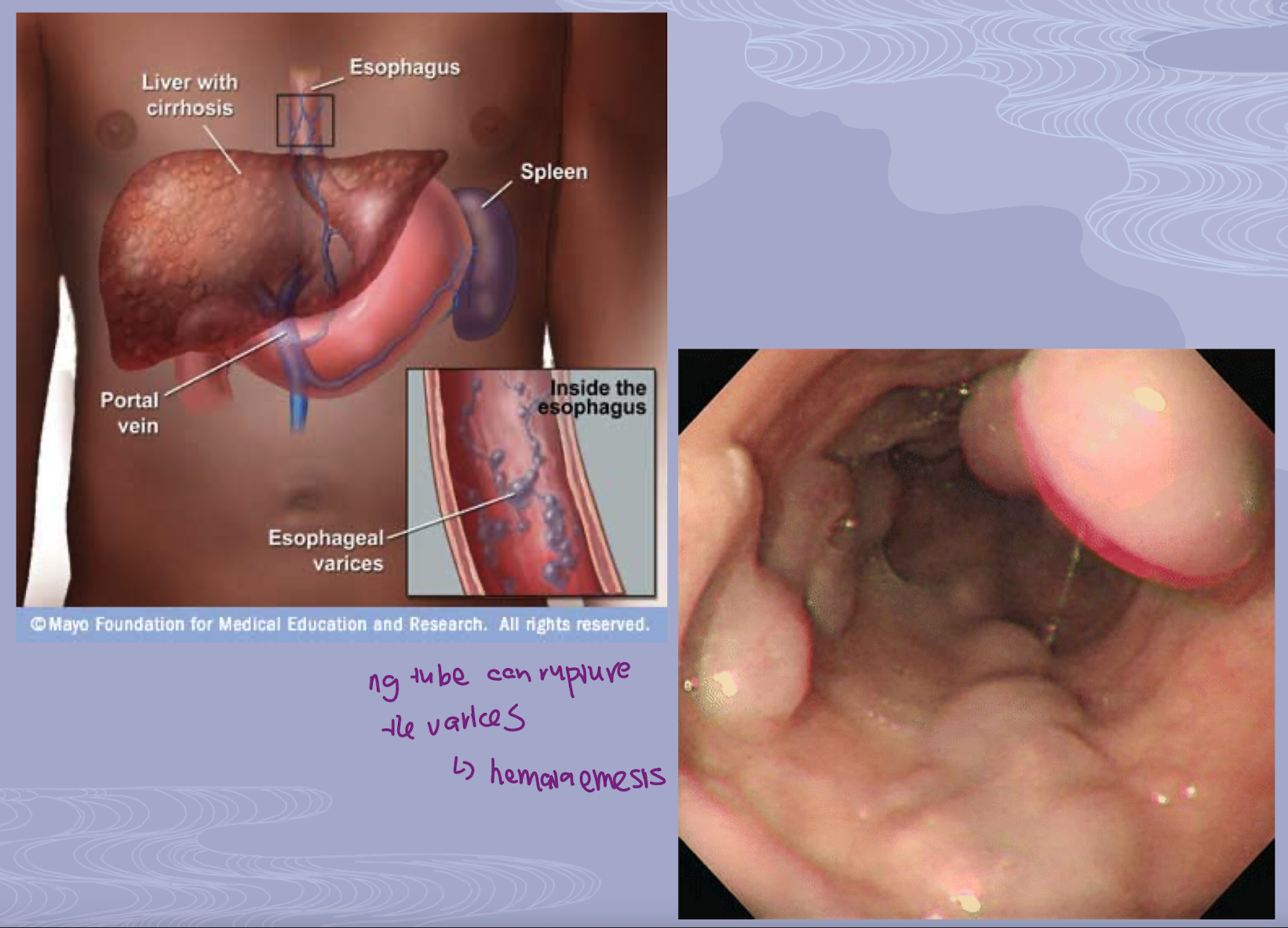
when portal hypertension occurs, blood is directed into collateral veins around the esophagus of which these veins become distended, fragile, and prone to rupture → making varices a life-threatening complications of cirrhosis
these ruptes can be cause by irritation from food or alcohol, mechanical trauma like vomiting or endoscopy, or increased esophageal pressure from coughing or straning
what is hematemesis and why is ti dangerous in cirrhosis?
hematemesis occurs when esophageal varices rupture and bleed → this can cause massive blood loss, hypovolemia, and shock
why do patients with cirrhosis develop coagulation defects?
cirrhosis can interferes with the liver’s ability to produce bile, of which, without bile, the body cannot break down and absorb fat and fat-soluble vitamin (A,D,E,K) → K is an important vitamins for the formation of clotting factors
how does splenomegaly contribute to bleeding problems in cirrhosis?
portal hypertension causes blood to back up into the spleen, leading to splenomegaly → the enlarged spleen traps and destroys platelets, causing thrombocytopenia
what clinical signs indicate coagulation defects in cirrhosis?
patients may develop:
easy bruising
petechiae
prolong bleeding
ecchymosis
these symptoms occur due to low clotting factors and low platelet levels from low level of bile, portal hypertension, and splenomegaly
what emergency devices can be used to control bleeding from esophageal varices in cirrhosis?
ballon tamponade tubes can temporarily control bleeding by compressing the varices (e.g., sengtaken-blakemore tube, minnesota tube)
what endoscopic treatment are used to stop bleeding esophageal varices?
during Esophagogastroduodenoscopy, physicians can perform:
injection sclerotherapy → medication injected into varices to shrink them → dry up the bleeding areas like cautherization
variceal banding → rubber bands placed around veins to stop bleeding
these are common first-line treatments.
why are blood transfusion given during variceal hemorrhage?
bleeding esophageal varices can cause massive blood loss → transfusion helps with:
restore blood volume
improve oxygen delivery
prevent hypovolemic shocks
what is transjugular intrahepatic portosystemic shunt (TIPS) and why is it used in cirrhosis?
a radiology procedures that creates a channel between the portal vein and hepatic vein → reduce portal hypertension, decrease pressure in esophageal varices, and prevent recurrent bleeding
when is surgery used to treat bleeding esophageal varices?
surgery may be required if other treatment fails
a surgical shunt can be place to redirect blood flow, reduce portal vein pressure, and decrease risk of variceal bleeding
why does ascites develop in cirrhosis?
ascites occurs due to to multiple mechanisms:
portal hypertension → causes blood to back up and occasionally leak into the peritoneal cavity
increased hepatic lymph formation
increased hydrostatic pressure in blood vessels
fluid leaking from vessels into the peritoneal cavity
these changes causes plasma fluid to accumulate in the abdomen (this process is called third spacing)
what physical findings suggest ascites inc cirrhosis?
abdominal distention
increased abdominal girth
shifting dullness
fluid wave
what dietary changes help manage ascites caused by cirrhosis?
dietary management includes:
low-sodium diet to reduce fluid retention
fluid restriction if sodium levels are low or fluid overload occurs
vitamin supplementation to support nutrition
these interventions help reduce fluid buildup in the abdomen.
what medications are commonly used to treat ascites in cirrhosis?
the primary medications are diuretics, which help remove excess fluid from the body.
commonly used diuretics include:
Spironolactone
Furosemide
these medications help decrease fluid accumulation and abdominal swelling.
what nursing monitoring is important for patients with ascites?
key monitoring includes:
daily weight
calorie count
intake and output (I/O)
abdominal girth measurement
lab monitoring, especially:
electrolytes
albumin levels
these assessments help track fluid status and treatment effectiveness.
what is paracentesis and when is it used?
paracentesis is a procedure where ascitic fluid is removed using a needle inserted into the abdomen.
it is used to:
relieve severe abdominal pressure
improve breathing and comfort
remove large amounts of fluid.
what surgical procedure may be used for severe ascites in cirrhosis?
one option is Transjugular Intrahepatic Portosystemic Shunt.
TIPS works by:
creating a pathway between the portal vein and hepatic vein
reducing portal hypertension
decreasing formation of ascites.
what is portal systemic encephalopathy (PSE)?
portal systemic encephalopathy occurs when the damaged liver cannot properly detoxify ammonia and other toxins → these toxins enter the bloodstream and reach the brain, causing neurological symptoms → serious complications of cirrhosis
why does ammonia accumulate in patients with cirrhosis?
normally, the liver converts ammonia into urea for excretion.
in cirrhosis:
liver function is impaired
ammonia is not detoxified
ammonia builds up in the blood
high ammonia levels are toxic to the central nervous system (CNS).
what are the common signs and symptoms of portal systemic encephalopathy?
Normally, the liver converts ammonia into urea for excretion.
In cirrhosis:
liver function is impaired
ammonia is not detoxified
ammonia builds up in the blood
High ammonia levels are toxic to the central nervous system (CNS).
what factors can precipitate portal systemic encephalopathy?
high protein diet
infection
hypovolemia
hypokalemia
constipation
GI bleeding
certain medications
These conditions increase ammonia production or reduce its elimination.
what is hepatitis?
inflammation of liver cells (hepatocytes)
acute (short-term inflammation)
chronic (long-term liver damage)
inflammation interferes with the liver’s ability to perform metabolic, detoxification, and bile production functions
what are the most common causes of hepatitis?
hepatitis A, B, C, D, E
what other causes can lead to hepatitis besides viral infection?
less common causes include:
drug-induced liver injury
toxic exposure (chemicals or toxins)
alcohol
certain medications
these substances can damage liver cells and trigger inflammation
what are the common early symptoms of hepatitis?
early symptoms often resemble flu-like illness:
fatigue
irritability
loss of appetite (anorexia)
nausea and vomiting
joint and muscle pain
fever
These symptoms occur as the body responds to liver inflammation.
what Gi symptoms are commonly seen in hepatitis?
Common GI symptoms include:
abdominal pain
right upper quadrant (RUQ) tenderness
nausea and vomiting
diarrhea or constipation
These symptoms result from inflammation of the liver and digestive disruption.
what laboratory findings are commonly seen in Viral Hepatitis?
liver inflammation causes elevated liver enzymes, including:
↑ ALT (alanine aminotransferase)
↑ AST (aspartate aminotransferase)
these enzymes increase because damaged liver cells release them into the bloodstream.
What serological markers indicate Hepatitis A infection?
IgM anti-HAV → indicates current or recent infection
IgG anti-HAV → indicates past infection or immunity
What serological markers are used to diagnose Hepatitis B?
HBsAg → indicates active infection
IgM anti-HBc → indicates acute infection
anti-HBc → indicates past or current infection
anti-HBs → indicates immunity or recovery
hat test is used to screen for Hepatitis C?
Diagnosis typically begins with:
anti-HCV antibody screening test
A positive result indicates exposure to the hepatitis C virus, and further testing confirms active infection.
what are the key features of hepatitis A (HAV)?
Transmission
fecal-oral route
contaminated food or water
person-to-person contact
Risk factors
poor sanitation or hygiene
contaminated water supply
anal intercourse
Symptoms
flu-like symptoms
jaundice
abdominal pain
clay-colored stools and dark urine
Course
usually not life-threatening
symptoms last < 2 months
does NOT become chronic
Prevention
HAV vaccine (2 doses 6 months apart)
infection provides lifelong immunity
Treatment
supportive care
what are the key features of hepatitis B (HBV)
Transmission
blood and body fluids
sexual contact
contaminated needles (IV drugs, tattoos, piercings)
blood transfusions
perinatal transmission
Symptoms
similar to hepatitis A
Course
mild to moderate illness
5–10% of infected adults develop chronic hepatitis
Prevention
HBV vaccine (3-dose series over 6 months)
immunity confirmed by antibody titer
Treatment
supportive care for acute infection
antiviral medications for chronic infection
what are the key features of hepatitis C (HCV)?
Transmission
exposure to infected blood
IV drug use (shared needles)
blood transfusions or organ transplants before 1992
occupational exposure
tattoos or body piercing
Symptoms
~80% have no symptoms
Course
75–85% develop chronic infection
leading cause of liver transplant in the U.S.
Prevention
no vaccine available
Treatment
direct-acting antivirals (DAAs)
may include interferon therapy
What are important nursing interventions and patient teaching for viral hepatitis?
Prevention
encourage vaccination (HAV & HBV)
promote safe sexual practices
maintain proper hygiene
follow universal precautions
safe handling of needles and sharps
Patient education
avoid alcohol
avoid OTC medications that stress the liver
get frequent rest
maintain a balanced diet
follow precautions if disease is sexually transmitted