MBB 331 Lecture 13 and 14
 Call Kai
 Learn
Learn Practice Test
 Spaced Repetition
 Match
Match Flashcards
 Knowt Play
1/169

There's no tags or description
Looks like no tags are added yet.
Name | Mastery | Learn | Test | Matching | Spaced | Call with Kai | Chat |
|---|
No analytics yet
Send a link to your students to track their progress
170 Terms
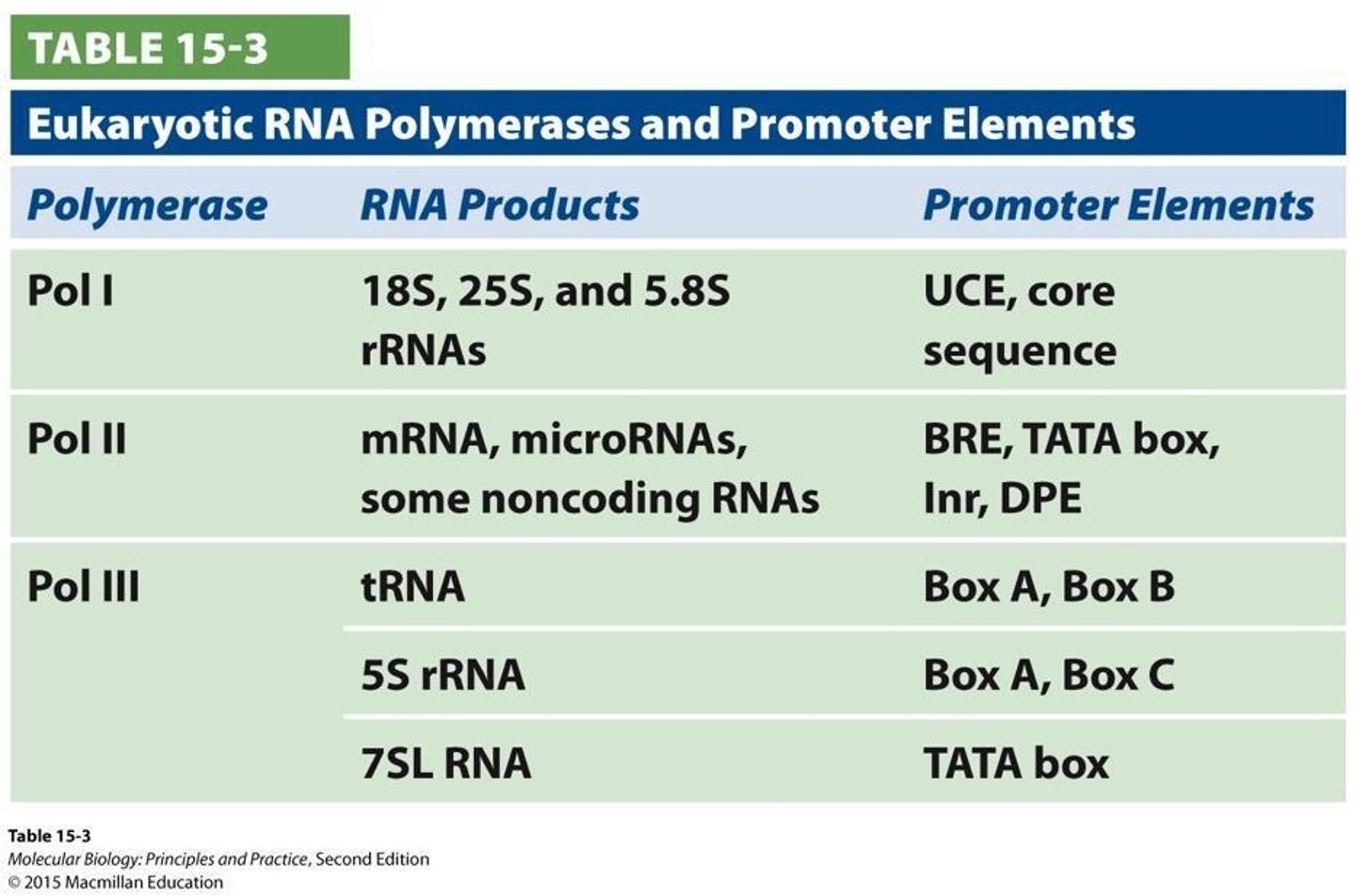
What are the three main types of RNA polymerases in eukaryotes?
RNA polymerase I, RNA polymerase II, and RNA polymerase III.
What is the role of transcription factors in eukaryotic gene expression?
Transcription factors help regulate the transcription of genes by binding to specific DNA sequences.
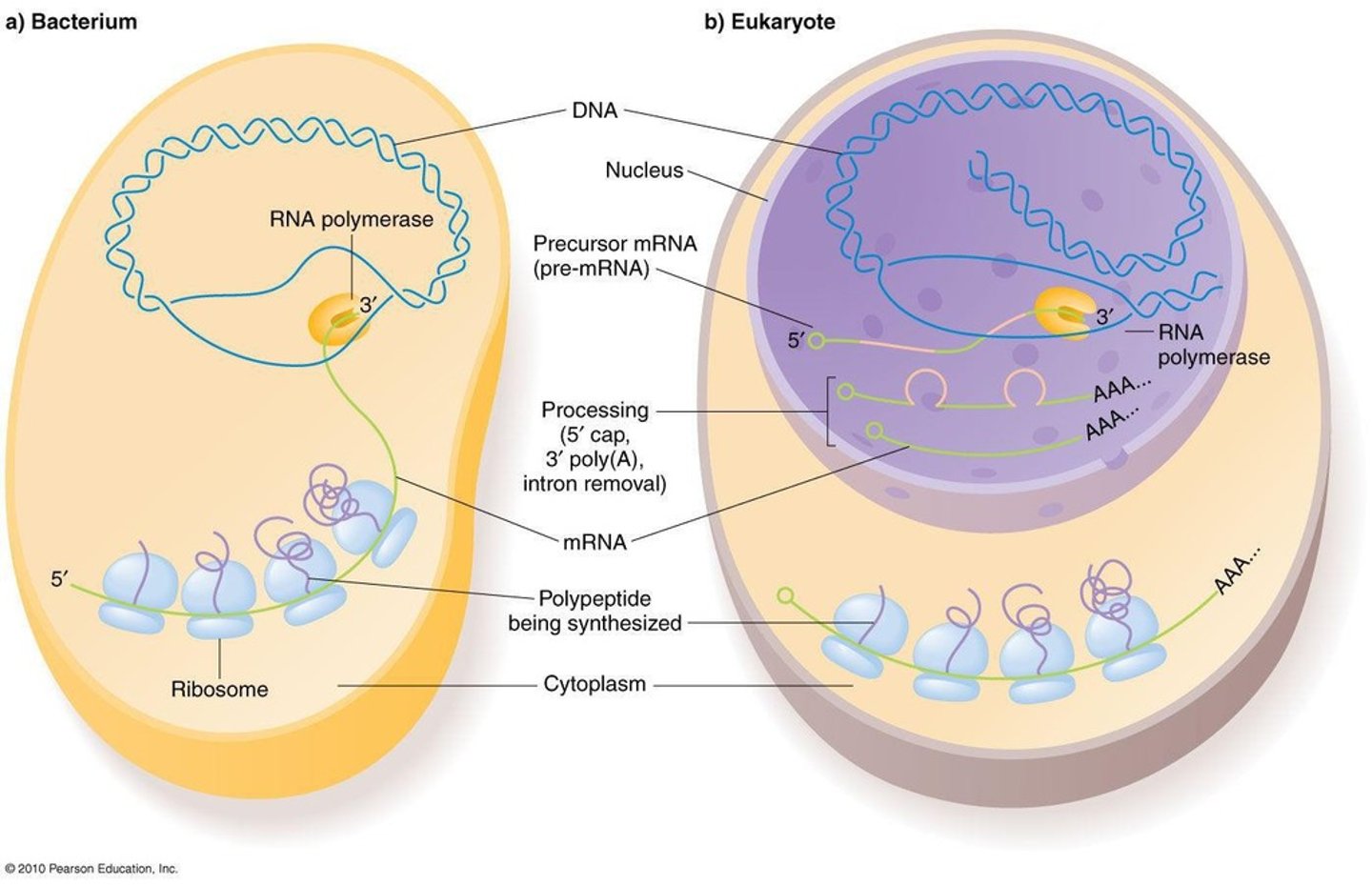
How do bacterial and eukaryotic gene regulation differ?
Bacterial genes are controlled by repressors and RNA polymerase, while eukaryotic genes involve additional proteins, including transcription factors.
What is an induced pluripotent stem (iPS) cell?
An iPS cell is a differentiated cell that has been reprogrammed to an embryonic stem cell-like state by manipulating transcription factor expression.
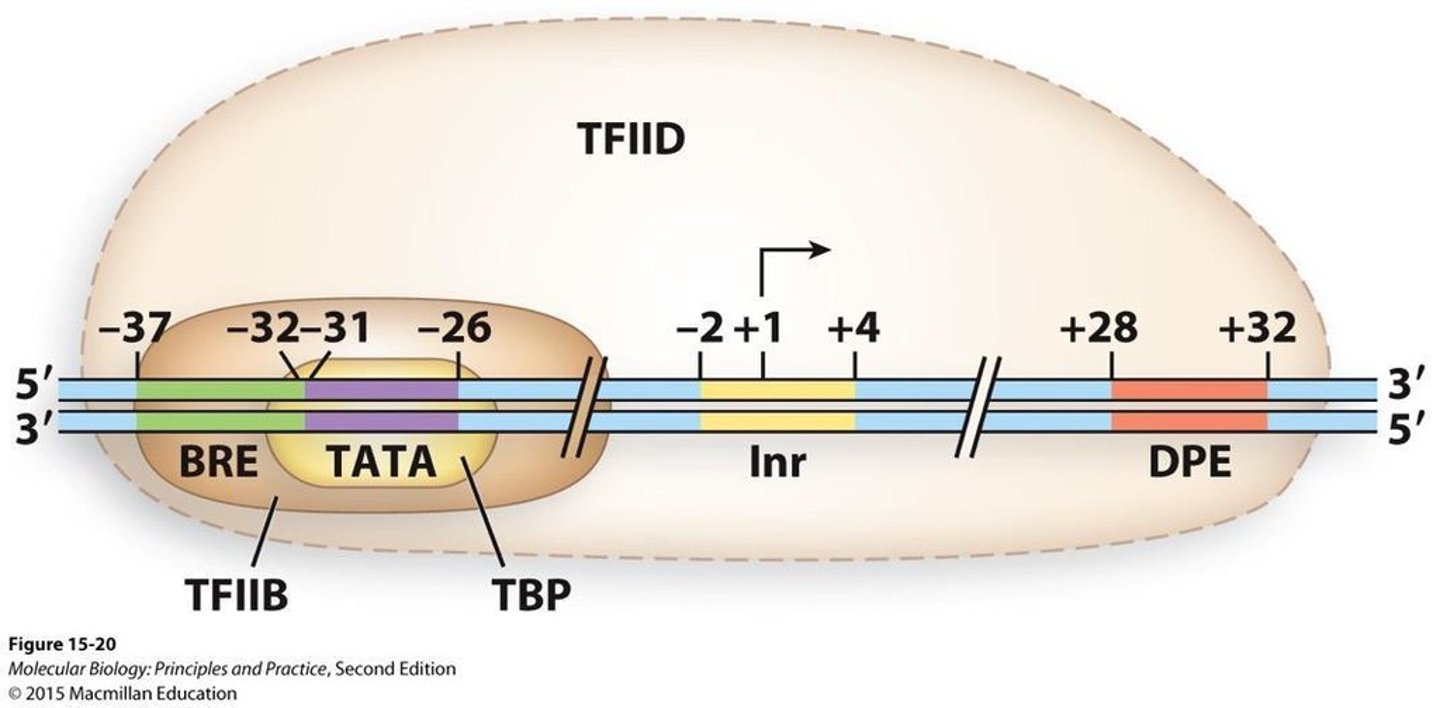
What is the significance of the TATA box in eukaryotic transcription?
The TATA box is a core promoter element located ~26-31 bp upstream from the transcription start site, crucial for the initiation of transcription.
What is co-immunoprecipitation (co-IP)?
Co-IP is a technique used to isolate proteins that are bound to a specific protein, allowing the study of protein-protein interactions.
What is the function of the TATA-binding protein (TBP)?
TBP is a protein that binds to the TATA box and is essential for the initiation of transcription by RNA polymerase II.
What are enhancers in the context of gene regulation?
Enhancers are regulatory sequences that can be located thousands of base pairs away from the core promoter and enhance transcription levels.
What is the role of general transcription factors (TFs) in eukaryotic transcription?
General TFs are required at the promoter for the basal transcription process by RNA polymerase II.
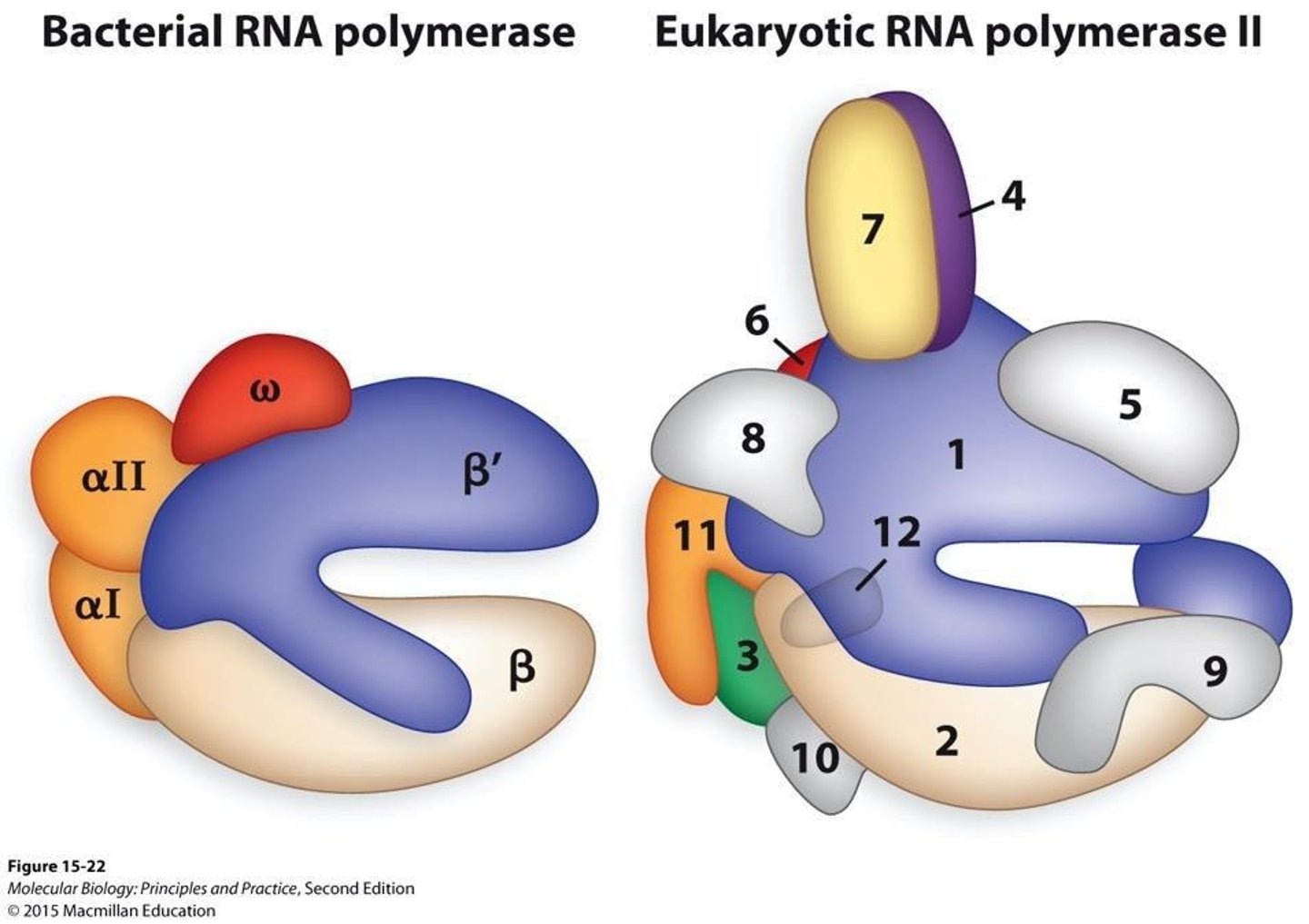
How does the structure of eukaryotic RNA polymerase II compare to bacterial RNA polymerase?
Eukaryotic RNA polymerase II has a more complex structure with 12-16 subunits and shows remarkable similarities to bacterial RNA polymerase.
What is the core promoter in eukaryotic transcription?
The core promoter is the minimal set of sequence elements necessary for accurate transcription initiation by RNA polymerase II.
What is the significance of the carboxy-terminal domain (CTD) of RNA polymerase II?
The CTD consists of multiple heptad repeats and is crucial for the regulation of transcription and processing of RNA.
What is the purpose of linker scanning mutagenesis?
Linker scanning mutagenesis is used to identify essential regulatory elements within a promoter by systematically mutating DNA sequences.
What are TAFs and their role in transcription?
TAFs (TBP-associated factors) are proteins that assist TBP in recognizing promoter sequences and are involved in the regulation of transcription.
What is the function of RNA polymerase I?
RNA polymerase I is responsible for synthesizing ribosomal RNA (rRNA).
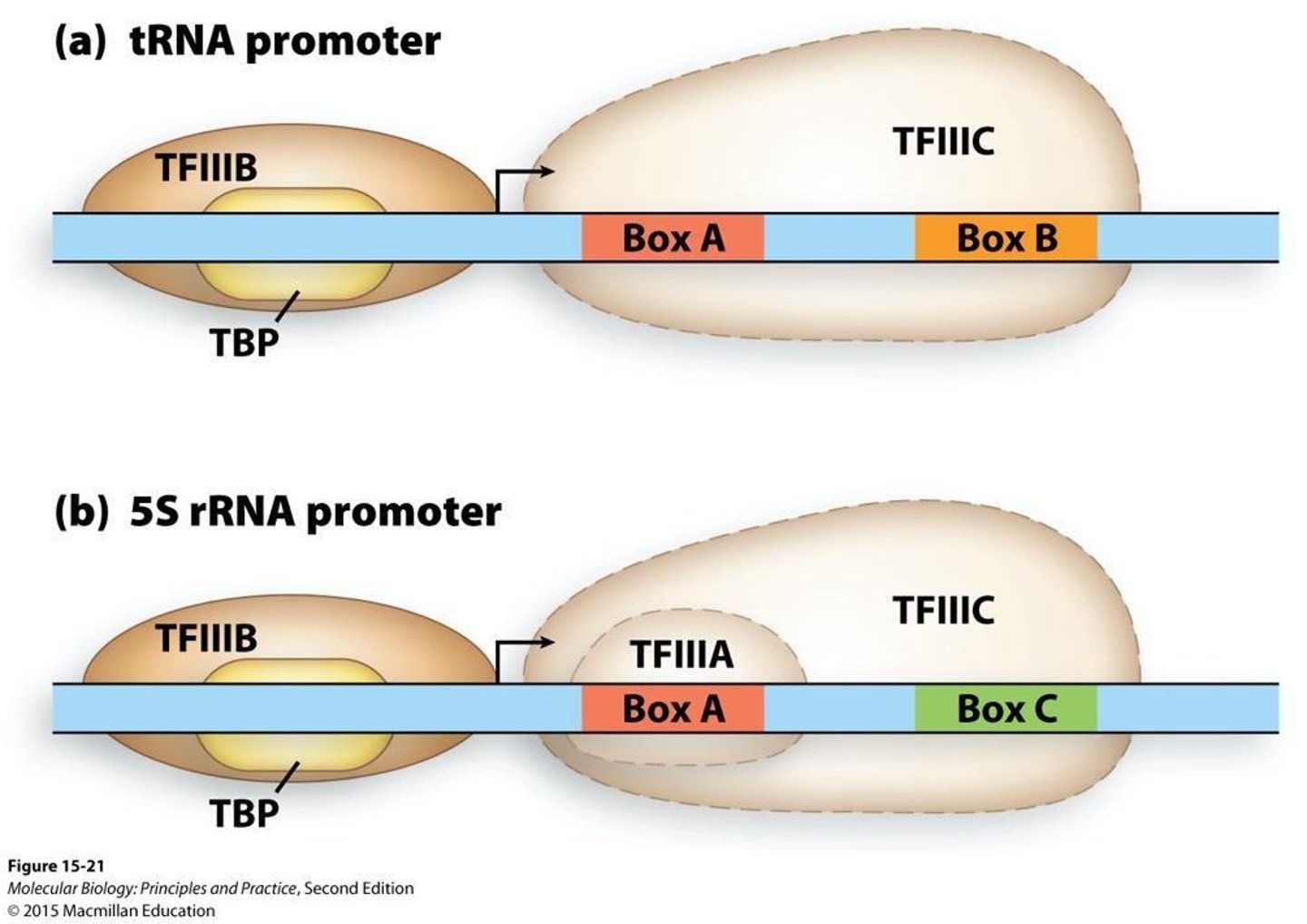
What is the role of TFIIIC in RNA polymerase III transcription?
TFIIIC binds to tRNA promoters and recruits TFIIIB, which contains TBP, to initiate transcription.
What is the relationship between RNA polymerase II and the transcription factors?
RNA polymerase II requires general transcription factors to initiate transcription, which can be influenced by upstream DNA-binding transcription activators.
What does the term 'preinitiation complex' refer to?
The preinitiation complex is formed by the assembly of general transcription factors, RNA polymerase II, and the promoter.
What is the role of Mg2+ ions in RNA polymerase activity?
Mg2+ ions are essential for the catalytic activity of RNA polymerases during the transcription process.
How can differentiated cells be reprogrammed?
Differentiated cells can be reprogrammed to another cell type by manipulating the expression of specific transcription factors.
What is the significance of the initiator sequence (Inr)?
The initiator sequence is a regulatory element that helps define the transcription start site for RNA polymerase II.
What are the three eukaryotic RNA polymerases and their primary functions?
RNA polymerase I synthesizes rRNA, RNA polymerase II synthesizes mRNA, and RNA polymerase III synthesizes tRNA and other small RNAs.
What is the difference between TATA-box dependent and TATA-less promoters?
TATA-box dependent promoters have a TATA box, while TATA-less promoters do not but still utilize TBP and TAFs for transcription initiation.
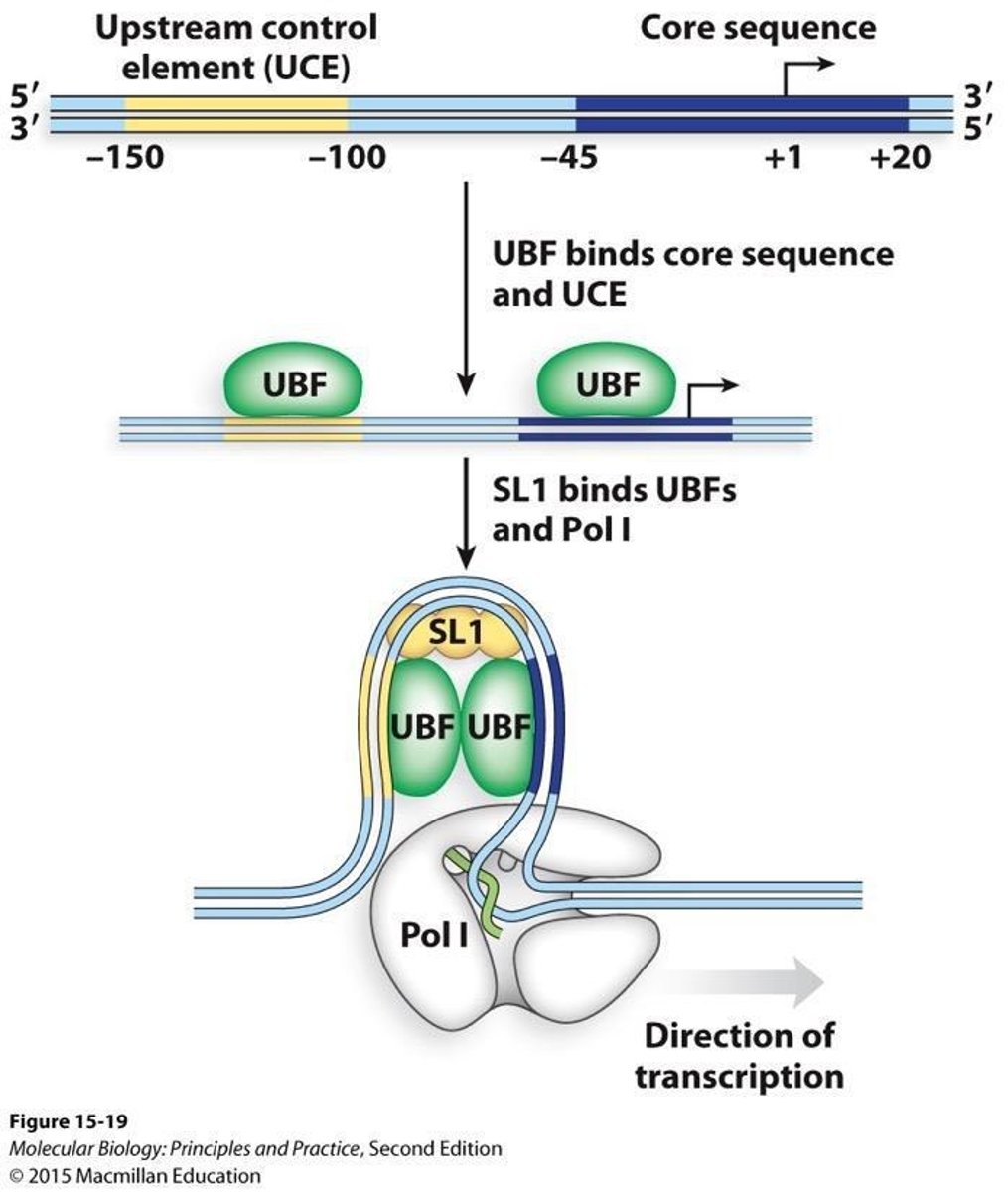
What is the role of upstream binding factors (UBFs) in RNA polymerase I transcription?
UBFs enhance the binding of RNA polymerase I to rRNA promoters, facilitating high levels of transcription.
What are coactivators in transcription?
Proteins that bind for communication between RNA polymerase, general transcription factors, and activators.
What is included in a eukaryotic transcription unit?
Regulatory sequences, coding regions (exons), and noncoding regions (introns).
What is the role of general transcription factors (TFs)?
They help form the preinitiation complex necessary for accurate transcription initiation.
Which transcription factors are necessary for accurate transcription initiation in vitro?
TFIID (TBP & TAFs), TFIIB, TFIIF, RNA polymerase II, TFIIE, TFIIH.
What additional factor is needed for transcription initiation in vivo?
TFIIA, which unmasks TBP and increases binding efficiency.
What is the preinitiation complex?
A complex consisting of the promoter, RNA polymerase II, and six general transcription factors.
What is the significance of TFIID?
It is critical for promoter recognition and pre-initiation complex formation.
What does TBP do in relation to the TATA box?
TBP binds to the TATA box and distorts the DNA, facilitating the recruitment of other transcription factors.
Why is the TATA box favored for binding by TBP?
A:T bases are more readily distorted, allowing for easier opening of the double helix.
What is the order of assembly for the RNA polymerase II initiation complex?
TFIID → TFIIA → TFIIB → TFIIF → RNA polymerase II → TFIIE → TFIIH.
What role does TFIIF play in the transcription initiation complex?
TFIIF recruits RNA polymerase II and is involved in melting duplex DNA at initiation.
What are the two major roles of TFIIH in transcription initiation?
It phosphorylates the CTD of RNA polymerase II and unwinds DNA at the transcription start site.
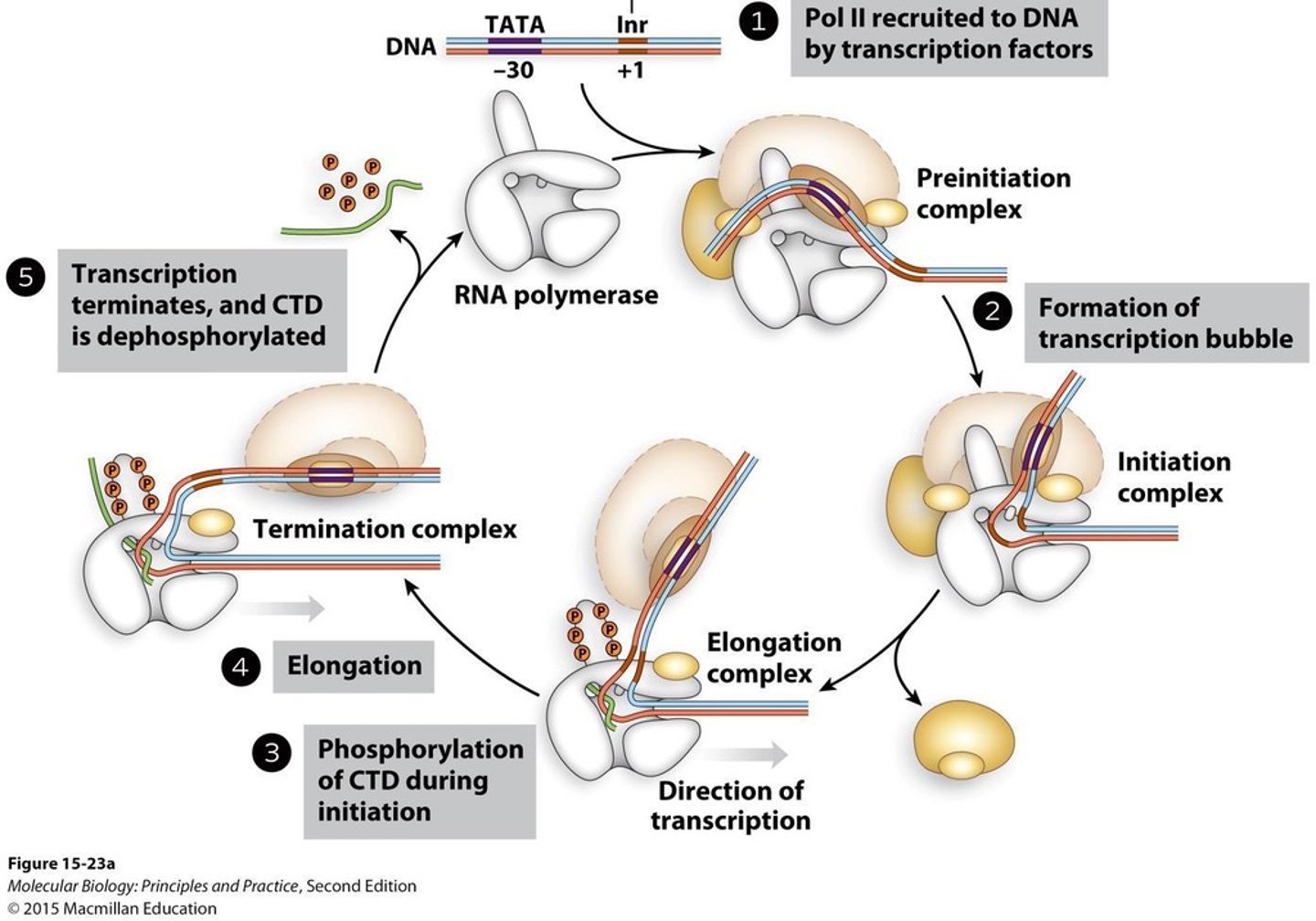
What happens during promoter clearance in transcription?
Phosphorylation of the CTD allows RNA polymerase II to shed most general transcription factors.
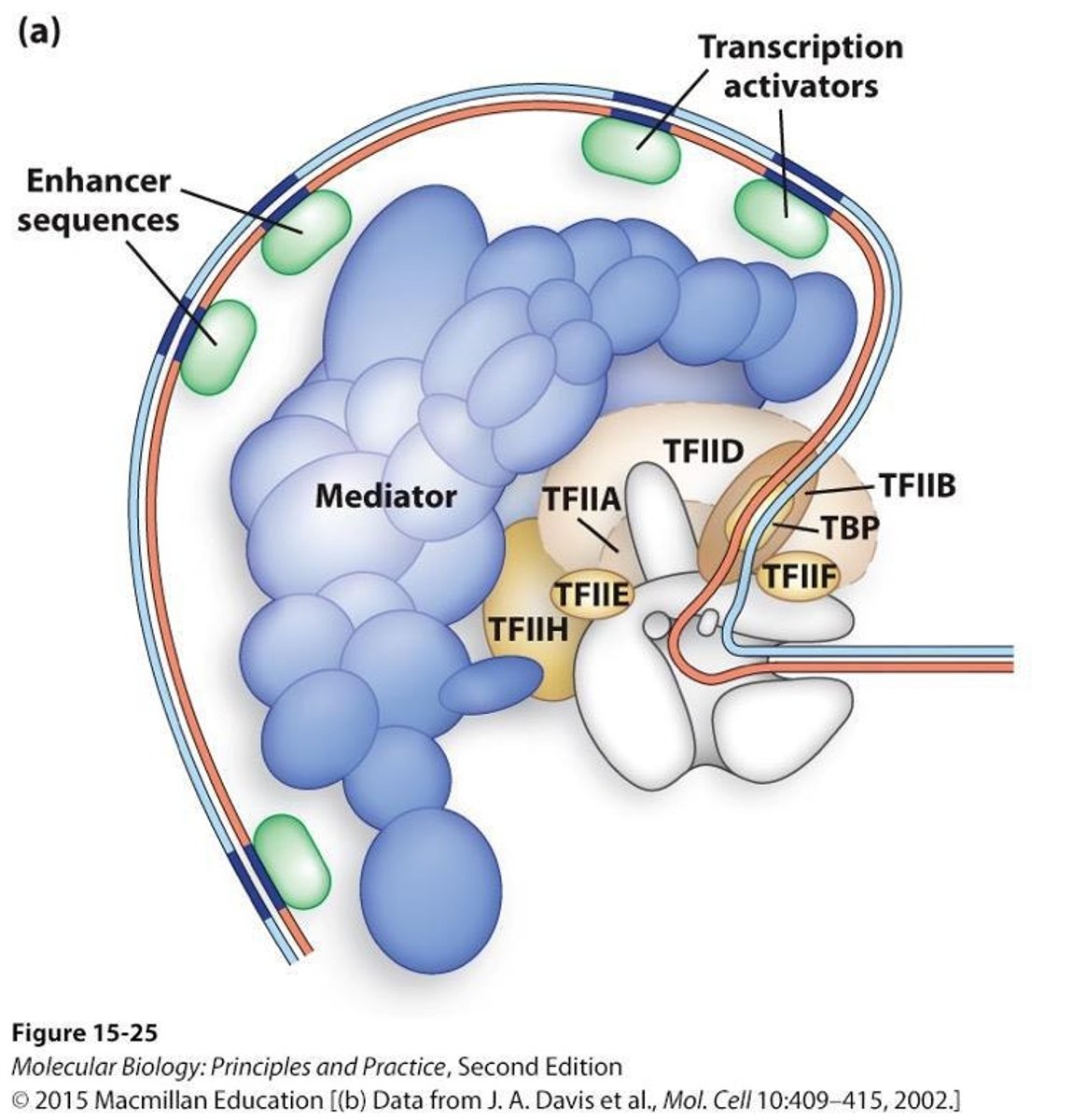
What is the function of the Mediator complex in transcription?
It bridges distant proteins bound to enhancer sequences and RNA polymerase II.
What is the role of P-TEFb kinase in transcription elongation?
It phosphorylates serine at position 2, promoting elongation by RNA polymerase II.
What is the significance of transcriptional activators?
They bind to enhancers to stimulate gene expression beyond basal levels provided by general TFs.
What is the function of the CTD tail of RNA polymerase II?
It interacts with TFIID to initiate the formation of phosphodiester bonds during transcription.
What is the role of TFIIB in the transcription initiation complex?
TFIIB binds to the BRE adjacent to TBP and positions the active site of RNA polymerase II.
What does DNase footprinting reveal about the transcription complex?
It shows increased DNA protection as each transcription factor subunit is added to the complex.
What is the structure of TFIIH?
It contains 9 subunits and separates into protein kinase and core TFIIH complexes.
What happens during the 'transcription bubble' formation?
TFIIH unwinds DNA at the transcription start site, creating a region of single-stranded DNA.
How does TBP distort the DNA?
TBP inserts a β sheet into the minor groove, causing a bend that facilitates factor recruitment.
What is the effect of TBP on the TATA sequence?
TBP extensively distorts the TATA sequence, providing a platform for other transcription factors.
What is the role of the smaller subunit of TFIIF?
RAP38 binds tightly to RNA polymerase II and has homology to bacterial σ factor regions.
What is the significance of the 'commitment factor'?
TBP is considered the commitment factor as it is the first to bind the TATA box.
What is the role of activation in transcription?
Activation increases the efficiency of assembly of the preinitiation complex by interacting with activators, general transcription factors (TFs), and RNA polymerase II.
What is down-regulation in transcription?
Down-regulation involves a kinase module that represses a subset of genes.
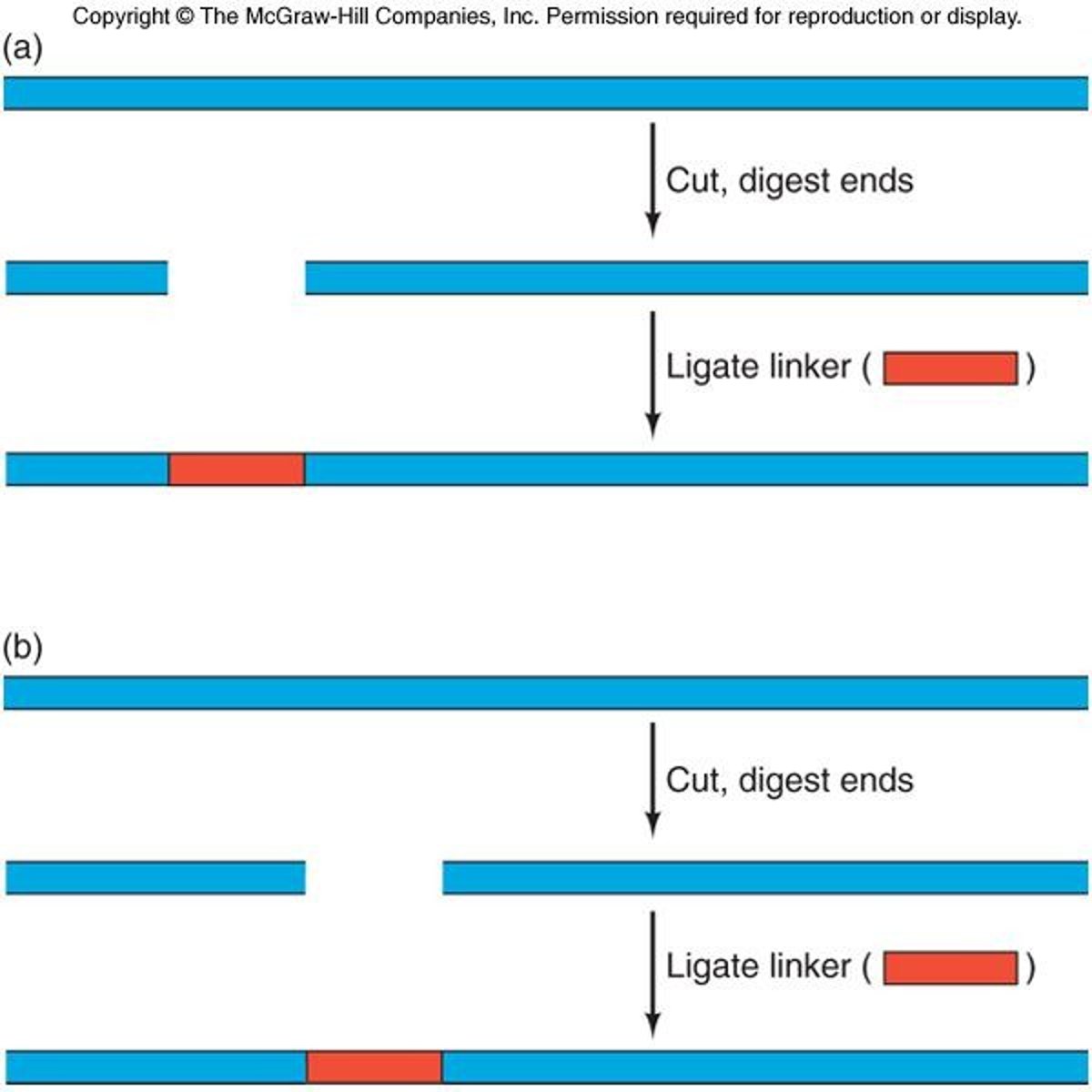
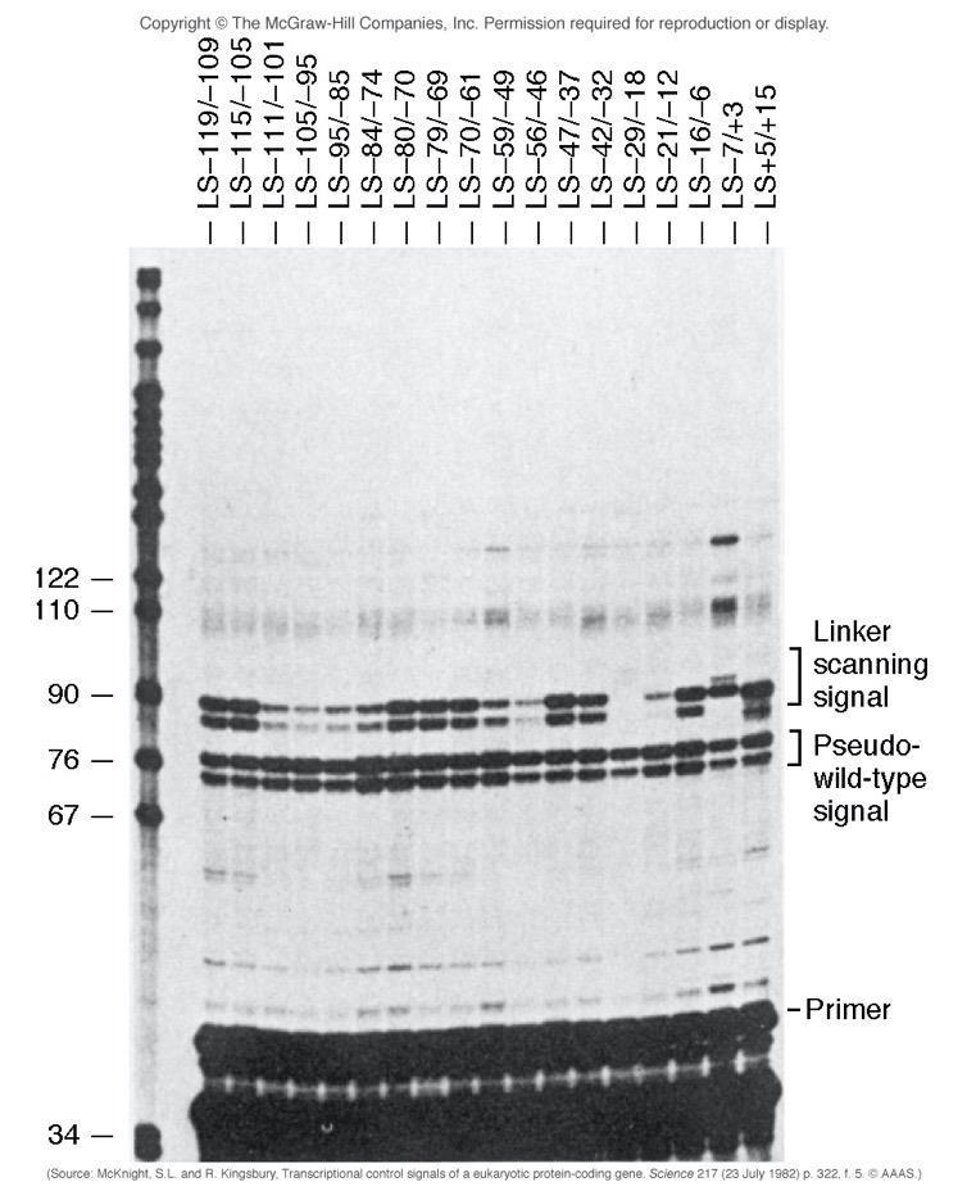
What is linker scanning mutagenesis?
Linker scanning mutagenesis is a technique used to identify important upstream elements in the β-globin promoter.
What are enhancers?
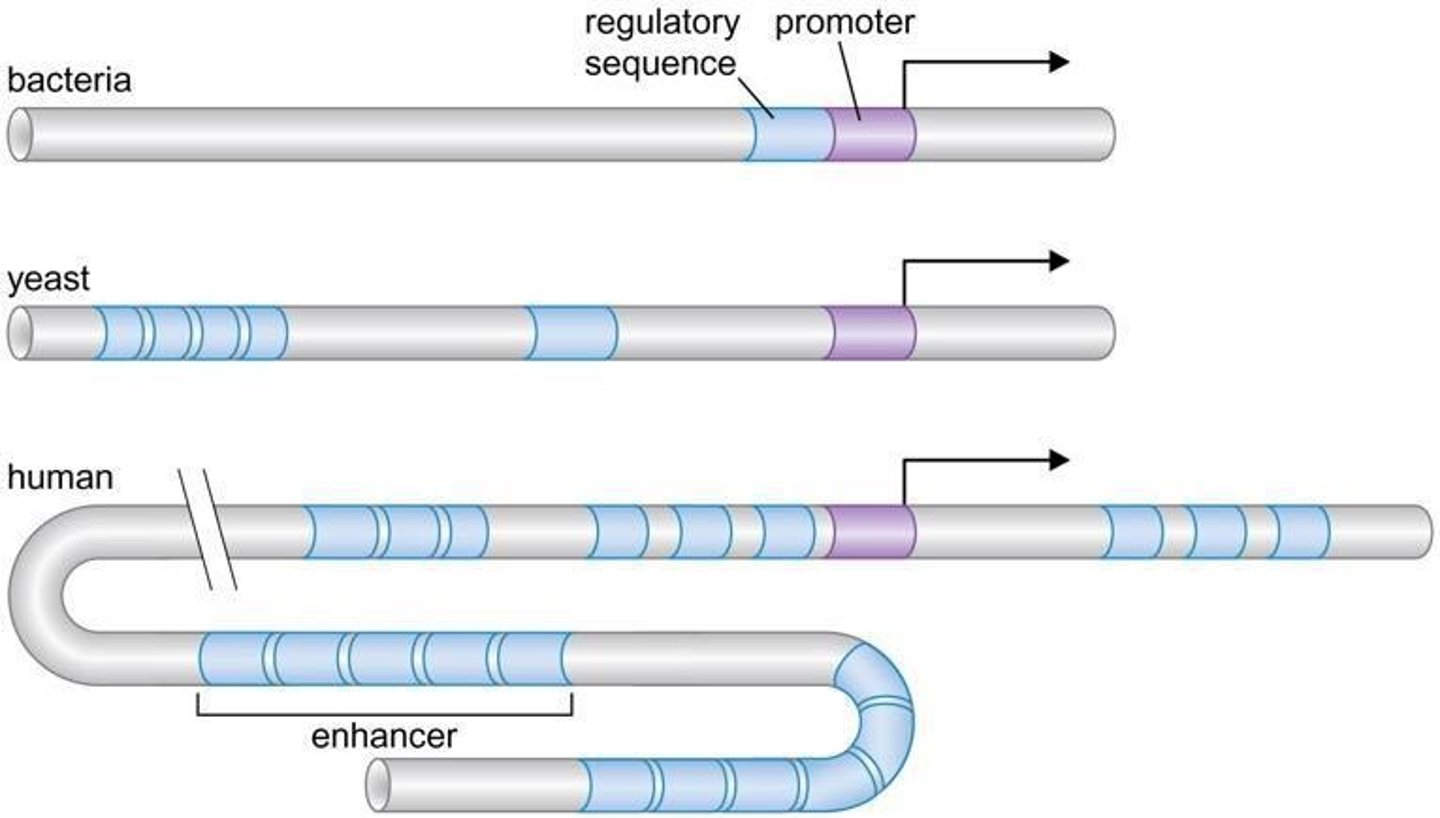
Enhancers are elements that stimulate transcription and can increase promoter activity, often independent of their position and orientation.
What is the significance of the SV40 enhancer?
The SV40 enhancer is located approximately 200 bp upstream and contains sequences that are required for high levels of transcription.
How do enhancers confer tissue-specific transcription?
Enhancers can be found within introns of genes and are only active in specific tissues, such as B lymphocytes for Ig genes.
What happens when enhancers are deleted?
Deletion of enhancers reduces the expression of the associated gene.
What is the role of coactivators in transcription?
Coactivators participate in transcription enhancement and can control various substeps of transcription, including elongation and RNA splicing.
What is the difference between TATA-containing and TATA-less promoters?
In TATA-containing promoters, TBP binds to the TATA box, while in TATA-less promoters, TBP is tethered to TAFs bound at the initiator (Inr) sequence.
What is the function of upstream transcription factors?
Upstream transcription factors affect the frequency of initiation and gene expression by acting on general transcription factors.
What are enhancer traps?
Enhancer traps are constructs used to identify regulatory sequences that confer tissue-specific or temporal gene expression patterns.
How do enhancer traps work in Drosophila embryos?
Enhancer traps integrate a reporter gene near active enhancers, allowing visualization of tissue-specific expression patterns.
What is the goal of using enhancer traps?
The goal is to identify genes that participate in the development of specific tissues by tracking enhancer activity.
What are the two models proposed for transcription termination?
The allosteric model and the torpedo model describe different mechanisms for how termination occurs during transcription.
What is the allosteric model of transcription termination?
The allosteric model suggests that a conformational change in the elongation complex leads to dissociation of elongation factors.
What is the torpedo model of transcription termination?
The torpedo model involves a 5' to 3' exonuclease that digests residual RNA and triggers the dissociation of RNA polymerase II.
What is the role of TAFs in transcription?
TAFs are part of TFIID and participate in transcription stimulation provided by activators.
What is the significance of the AAUAAA sequence in transcription?
The AAUAAA sequence is bound by cleavage factors, leading to cleavage downstream and the addition of a poly(A) tail.
What is the function of histone acetyltransferase (HAT)?
HAT attaches acetyl groups to lysine residues on histones, influencing chromatin structure and gene expression.
What is the basic unit of DNA compaction?
Nucleosome
What proteins are involved in forming chromatin?
Histones
How does chromatin structure affect transcription?
Tightly compacted DNA makes it hard for RNA polymerase to bind and transcribe.
What is the conformation of chromatin most of the time?
Beads on a string (10 nm fiber)
What is the diameter of the 30 nm fiber of chromatin?
30 nm
What is the total length of a human chromosome?
Up to ~2 meters long
What is the compaction factor of chromatin packaging?
Approximately 10,000-fold
What is the nucleosome repeat length in humans?
Approximately 200 base pairs (bp)
Which histones form the core of the nucleosome?
H2A, H2B, H3, and H4
What role does histone H1 play in chromatin structure?
H1 promotes DNA condensation and makes DNA more inaccessible.
What is the effect of histone tails on chromatin structure?
Histone tails mediate inter-nucleosome connections, affecting chromatin compaction.
What is the significance of the histone-fold motif?
It is where DNA wraps around the histones.
What happens to histone tails during protease treatment?
Amino-terminal tails are accessible and can be cleaved, leaving the histone core intact.
What is the difference between bacterial and eukaryotic chromosome packaging?
Bacterial chromosomes are bound by proteins but do not form nucleosomes like eukaryotes.
What is the role of the linker DNA in nucleosomes?
Linker DNA connects adjacent nucleosomes and is bound by histone H1.
How many base pairs of DNA are protected by core histones?
147 base pairs
What is the additional length of DNA protected when H1 is present?
H1 increases protection to 168 base pairs.
What is the structure of the core histones?
Core histones have a common structural fold with three alpha helices and two loops.
What type of supercoiling occurs when DNA wraps around histones?
Left-handed solenoidal supercoiling
What is the significance of the amino acids lysine and arginine in histones?
They are positively charged and interact with the negatively charged DNA.
What is the role of micrococcal nuclease in studying nucleosomes?
It digests DNA bound by histones, allowing for analysis of nucleosome structure.
What is the effect of altering histone tail characteristics?
It can tighten or loosen chromatin structure.
What is the function of the H3(2)-H4(2) tetramer in nucleosome assembly?
It initiates the formation of the nucleosome by binding to double-stranded DNA.
What happens to DNA when chromatin is in a more compacted state?
DNA becomes less accessible for transcription and replication.
What is the relationship between chromatin structure and epigenetics?
Chromatin structure affects DNA replication, repair, and transcription, playing important roles in epigenetics.
What is the role of Histone H1 in transcription?
Histone H1 facilitates repression of transcription.
What happens to transcription levels as DNA compaction increases?
The higher the level of compaction, the lower the level of transcription.
What technique was used to analyze transcription in the study?
Northern blot.
What was reconstructed to study transcription in vitro?
Chromatin with DNA containing an enhancer-promoter construct.
What effect does increasing amounts of Histone H1 have on template activity?
It causes a progressive loss of template activity until transcription is barely detectable.
What are the two widely accepted models for nucleosome arrangement?
Solenoid model (one-start helix) and Zigzag model (two-start helix).
What happens to the 30nm filament when treated with a low-salt buffer?
It expands, revealing organized loops estimated to be 40-100 kb long.