Electrostatics, Electric Charges, and Circuit Fundamentals in Physics
 Call Kai
 Learn
Learn Practice Test
 Spaced Repetition
 Match
Match Flashcards
 Knowt Play
1/184

There's no tags or description
Looks like no tags are added yet.
Name | Mastery | Learn | Test | Matching | Spaced | Call with Kai | Chat |
|---|
No analytics yet
Send a link to your students to track their progress
185 Terms
______________ is the branch of physics that deals with stationary or resting electric charges.
electrostatics
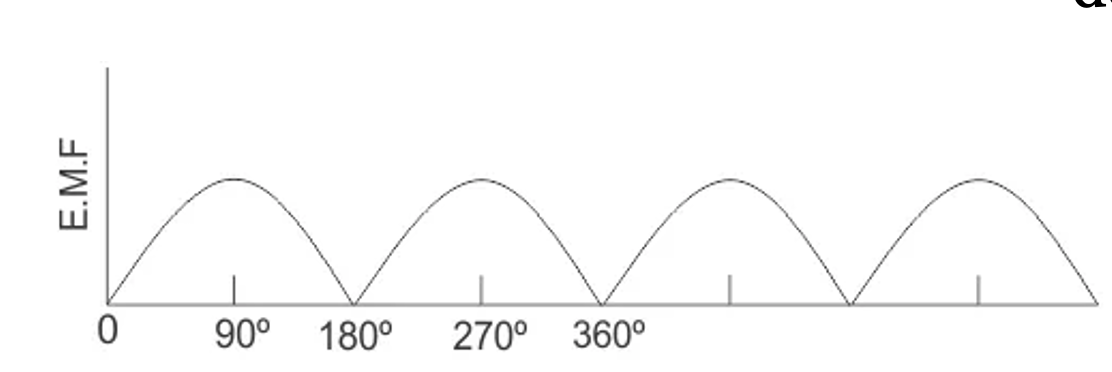
What type of current is this
direct
Another name for resting charges is
potential energy
What are the two types of electric charges
positive (protons) and negative (electrons)
The addition or subtraction of electrons from an object is termed
ionization
Name the three means of electrification
Friction, contact, and induction
Electrification by means of friction
the removal of electrons from one object to another by the process of rubbing
Example of friction electrification
rubbing a balloon on hair, causing hair to stand up
Electrification by means of contact
When an object has too many electrons, it will give them up to another object, causing the second object to become electrified (with touch)
Example of contact electrification
shocking someone through touch
Electrification by means of induction
The presence of a charged object near a neutral conductor will force (or induce) electrons within the conductor to move
Example of induction electrification
electrons jumping from one conductor to another (transformers)
Name three means of inquiring contact electrification within the radiology department
Sliding a patient over on a slider board, shuffling your feet while walking during low humidity times (winter time), and step-up / step-down transformers
Nonconductors (insulators) examples
paper, glass, wood, or plastics
Conductor examples
metals (silver, gold, Al, and copper)
Semiconductor examples
silicon or germanium (used in computer chips)
Surrounding every charged body there is a region of force around it termed
electric field
Which type of particles within an atom can only cause electrification?
Electrons
Define grounded
a safety mechanism that connects a circuit or device directly to the earth using a physical conductor. It acts as an escape route, providing a safe path for stray or excess electricity to dissipate into the ground. Grounding out excess amount of amperage
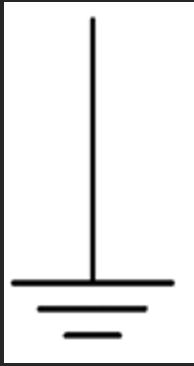
What does this symbol stand for?
Grounded
Name the five laws of electrostatics
(1) Repulsion // attraction: like charges repel and opposites attract, (2) The measurement of two points for electrical charges (Inverse square law & Coulomb's law), (3) Distribution: electric charges reside only on the external surfaces of conductors, (4) Concentration: the concentration of charges on a curved surface of a conductor is greatest where the curvature is greatest (focal track on anode), (5) electrons only move on a conductor (from - to +)
Which law demonstrates the inverse square law?
Law 2, stating that "electrostatic forces b/t 2 charges are directly proportional to the product of their quantities and inversely proportional to the square of the distance"
What is the formula for coulomb's law?
F = (q1q2)/r2
Coulomb's Law demonstrates that the
closer two charges are, the stronger the force b/t them
What is an electroscope?
An early scientific instrument used to detect the presence and magnitude of an electric charge on a body. Operating on the principle that "like charges repel"
What natural phenomenon is considered the largest factor on earth for static discharge?
Lightning
The science of electric charges in motion is known as
electrodynamics
Name the four conditions in which an electric current can run a consistent flow of charged particles
In a vacuum, in a gas, in an ionic solution, and on a metal conductor
Give an example of an electric current running a consistent flow of charged particles in a vacuum
XR tube
Give an example of an electric current running a consistent flow of charged particles in a gas
neon lights
Give an example of an electric current running a consistent flow of charged particles in an ionic solution
contrast media // human body
Give an example of an electric current running a consistent flow of charged particles on a conductor
wiring to our XR equipment
Which direction do the electrons flow?
Negative to Positive
________ __________ is defined as the path over which the current flows
Electric current
Name five different sources of electric current
batteries, generators, solar energy, nuclear power plants, wind/hydroelectrical/geothermal
Batteries convert ________ energy to ________ energy
chemical; electrical
Generators convert ________ energy to ________ energy
mechanical; electrical
What does DC current mean?
Direct current (only + wave; lots of heat).
What does AC current mean?
Alternating current (wave form that continuously goes from + to - and - to +; cools throughout cycles)
Name the three factors of an electric circuit
Voltage (v), Amperage/Current (i), and Ohms/resistance (r)
Define potential difference.
the stored energy or the ability to do work
What is the unit for potential difference?
Volt
What does EMF stand for?
Electromotive force
Define current.
The amount of electric charge flowing per second (quantity)
What is the unit for current?
Amperage
What is resistance?
The property that opposes or hinders the flow of electric current without slowing it down (at the speed of light)
What is the unit of resistance?
Ohms
What are the four factors that influence resistance?
A. Material, B. Length of conductor, C. Cross-sectional diameter, D. Temperature
For resistance, the higher the temperature, the ______ resistance (think of running in heat)
more
The larger the diameter, the ______ resistance
less (more electrons can travel if it is a thicker wire)
The longer the length of the conductor the ______ resistance
more
What is the formula for ohms law?
R (resistance/ohms) = v (voltage) / i (current)
What is the resistance of a circuit, using the ohms law, when the current is 24A and the potential difference is 360V?
360 v / 24 a = 15 ohms
What is the voltage of a circuit carrying a current of 35A and having a resistance of 6 ohms?
35 a x 6 ohms = 210 v
What are the two types of chemical devices that can give off electric current?
Cells or batteries
What type of current does a battery have (AC/DC)?
DC
Current only flows when a switch is
closed
What instrument measures the amount of voltage on a line?
Voltmeter
What instrument measures the amount of amperage on a line?
Amp meter
Which instrument will give you the same readout no matter where it is placed on a series circuit?
Amp meter
A ____________ circuit is an electric circuit whose component parts are arranged end to end
simple series
A ________ circuit is an electric circuit whose component parts are connected by branches off of the main circuit
parallel
What is the formula for resistance on a series circuit?
RT = R1 + R2 + R3
What is the formula for voltage on a series circuit?
VT = V1 + V2 + V3
What is the formula for current on a series circuit?
IT = I1 = I2 = I3
A series circuit contains 3 resistors, a blow dryer 12 ohms, a curling iron 8 ohms, and the radio of 16 ohms. If the voltage is 110 V, what is the total resistance?
12 ohms + 8 + 16 = 36 ohms
A series circuit has 20 as the total amount of resistance and 250V. What is the current for that line?
250v/20ohms = 12.5A
If the current is 12 A and the total resistance is 20 ohms, what is the voltage for the circuit?
12A x 20ohms = 240V
What is the formula for voltage in a parallel circuit?
VT=V1=V2=V3=V4
What is the formula of power?
P = IV (power = current x voltage)
What is the unit for power?
Watt
What is the power rating, in kilowatts of an x-ray generator capable of 800 milliamperes at 100 kilovolts?
800mA/1000 = 0.8A x 100kV = 80kw
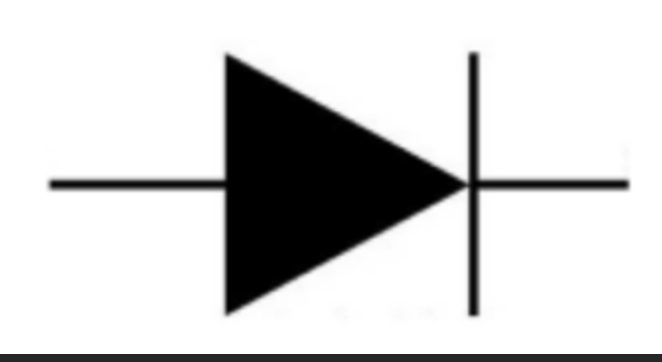
The current produced by this symbol goes to the
anode side
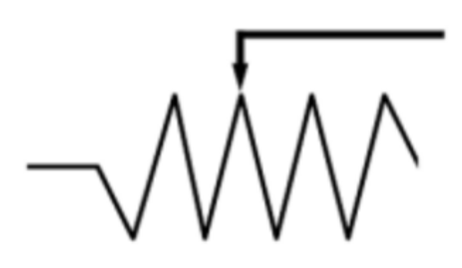
What does this symbol regulate
mA selector, cathode heat production, and large/small filament
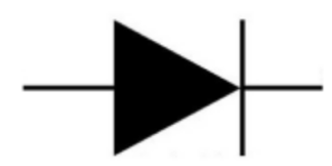
What does the following symbol convert
AC to DC
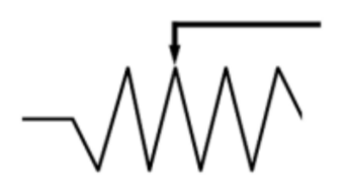
This symbol is known as a
variable resistor
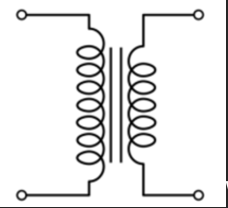
What type of current does this symbol produce
AC
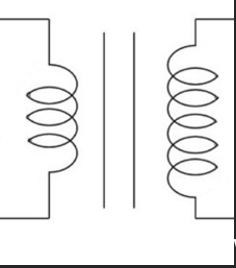
What does the following symbol do
steps up the voltage
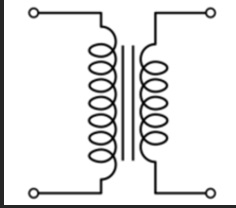
This symbol is known as a
step down transformer
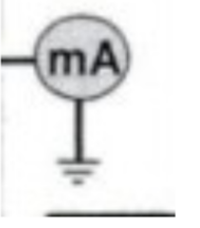
What does the following symbol do to the amperage
sends it to the ground
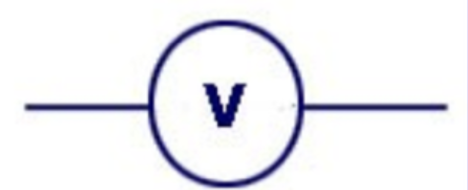
Where does the following device need to be located in the electric circuit
parallel to the power source
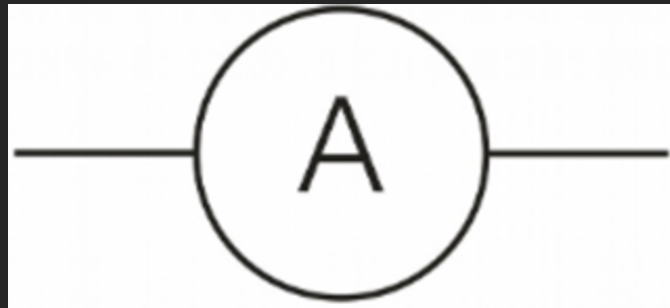
Where can this symbol be placed in the electric circuit
right after the power source off to the side // anywhere on the line
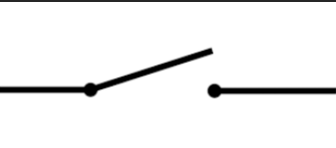
Does this image allow for electrons to flow
no

What type of charge does this device store
mAs
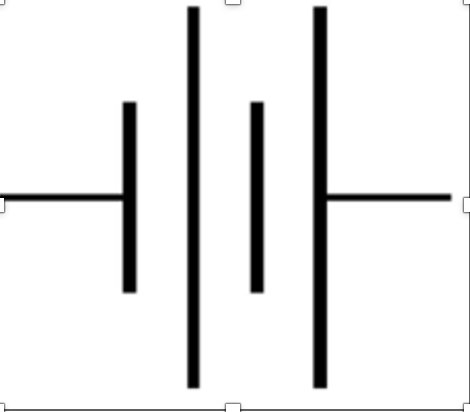
What type of current does this symbol create
direct current
Which of the following are superconductors
titanium and niobium
A motor is a device that converts
electrical to mechanical energy
Current (the wave) flows from
positive to negative
Which of the following is NOT a means of conducting electrical current: in a vacuum, in a gas, on the detent button, or on a metal conductor
on the detent button
The x-ray tube converts electrical energy into what type of energy
Heat (99%) and electromagnetic
What type of rock will produce electric charges when rubbed with a wool cloth
Amber (by friction)
Who was the scientist who studied electrostatic charges, created the distinction between insulators and conductors, and invented the battery
Ben Franklin
What method of electrification deals with electric charges jumping from one conductor to another without contact?
Induction (transformers use this)
The electric field goes inward or outward for a proton?
outward
The electric field goes inward or outward for an electron?
inward
Which type of material does not allow electrons to flow?
Insulators