Total Final
 Call Kai
 Learn
Learn Practice Test
 Spaced Repetition
 Match
Match Flashcards
 Knowt Play
1/167

There's no tags or description
Looks like no tags are added yet.
Name | Mastery | Learn | Test | Matching | Spaced | Call with Kai |
|---|
No analytics yet
Send a link to your students to track their progress
168 Terms
Electricity
The flow of electrons.
Conductor
A material that allows electricity to flow easily (usually 1–3 valence electrons, e.g.,
Insulator
A material that resists electrical flow (5–8 valence electrons, e.g., glass, wood, air).
Semi Conductor
A material that are not good as a conductor or insulator, made up of atoms with the valance ring with 4 electrons
–Carbon (C)
–Silicon (Si)
Positive Ion
When an atom looses an electron
Negative Ion
When an atom gains an electron
Voltage
Electrical pressure (pushes current)
Volt
Unit of measure in Voltage
Ways to create voltage
Magnets
Chemical
Pressure
Heat
Light
Friction
Current
The directed movement of electrons or the flow. (pushed by voltage)
Amp
Unit of measure for current
One coulomb
6.25 X 10 to the 18th power of electrons past a given point per second
Conventional theory
Says that current flows from + to -
Electron theory
Says that current flows from – to +
Resistance
Opposition to current flow (anything that slows down current)
Ohm
Unit of measure of resistance
Factors that affect the resistance of a circuit
Type of material used
•Conductor / Insulator / Semi-conductor
Length of the circuit
Diameter of the circuit
Temperature
Connections
AWG
American wire gauge
Ohm’s Law
When the voltage and resistance are equal in a circuit, ONE amp will flow
To get more current
–Increase voltage
–Decrease resistance
–Or both
To get less current to flow
–Decrease voltage
–Increase resistance
–Or both
Ohm’s law formulas
E=I*R
Series Circuit Rules
Only one path
Amperage stays the same
Each resistance adds up to the total
–R1+R2=Rt
Voltage divided between the loads (all used up or dropped)
Voltmeters
Hooked across or in parallel
-Red to most positive and black to most negative
-Used in a live circuit
Ammeters
Hooked in series (in line and part of the circuit)
•Red to most positive and black to most negative
•Used in a live circuit
Ohm Meters
Used in a dead circuit
Must be hooked across or in parallel
Analog meter must be calibrated to compensate for battery
Part you want to measure must be isolated from the rest of the circuit
Good connections
Parallel Circuits
The total resistance of a parallel circuit is going to be smaller then the individual resistances 1/ ((1/R1)+(1/R2)+(1/R3))
Open Circuit
No flow
Infinite resistance
Won’t use circuit protection
Meters to find open
•Volt (will read source voltage across open)
•Ohm (will read infinite across open)
High resistance
Less flow than normal
Won’t use circuit protection
Meters to find
•Voltmeter (will drop more voltage at problem)
•Ohmmeter (will read more resistance at problem)
Short circuit
More flow than normal
May use circuit protection
Meters to use
•Ohmmeter (less resistance at problem)
•Voltmeter (only if circuit is still live, voltmeter will read less voltage drop at problem)
Grounded circuit
Huge flow (no resistance)
Will use circuit protection or burn up circuit
Ohmmeter is the only meter to use (circuit will be dead)
•Ohmmeter will show no resistance to ground at the problem
Short to voltage
Hardest to find and fix
When one circuit shorts voltage into another
Low voltage
Won’t use circuit protection
Less amps will flow
Caused by
•Bad battery
Charging system fault
DIRECT CURRENT
–flows in a single direction. The direction of flows depend on the polarity of the applied voltage. Most automotive vehicles’ electrical circuits us DC current.
ALTERNATING CURRENT
–changes its direction of flow in a regular and predictable way, current moves back and forth in the circuit, reversing direction whenever the polarity of the applied voltage changes.
Class A
a type of fire classification indicating flammable materials like wood, paper, and cloth.

Class B
a type of fire classification for flammable liquids and gases such as gasoline, oil, and paints.
Class C
a type of fire classification for electrical fires involving current-carrying equipment, such as wiring, appliances, and motors.

Class D
a type of fire classification for combustible metals like magnesium, titanium, and sodium.
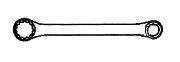
box wrench

bristol

cap nut

carriage bolt

castellated nut

clevis pin

clutch
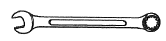
combo wrench
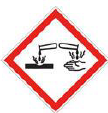
Corrosion
skin burn
eye damage
corrosive to metals
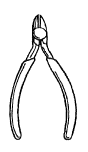
diagonal cutting pliers

dowel pin

e ring
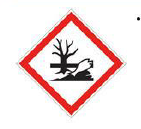
Environment
aquatic toxicity

external tooth washer

fillister head screw
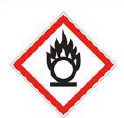
Flame over Circle
oxidizers
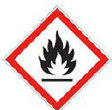
Flammable
flammable
pyrophoric
self-heating
emits flame

flathead screw

g2

g5

g8
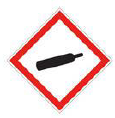
Gas cylinder
compressed gas
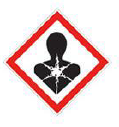
Health Hazard
carcinogen
mutagenicity
reproductive, organ, aspiration toxicity

hex head

internal tooth washer

jam nut

keeper nut

lag screw
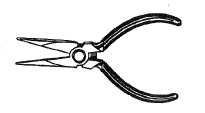
long chain nose pliers
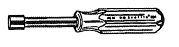
nut driver
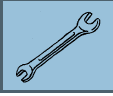
open end wrench

oval head screw

pan head screw
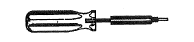
pin extractor
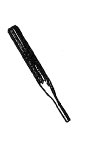
pin punch

prong tee nut
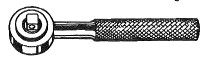
ratchet drive wrench

roll pin

round head screw
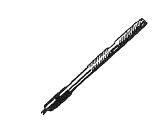
screw starter

self tapping machine screw

sheet metal screw
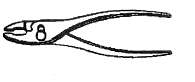
slip joint pliers

slotted

split lock washer
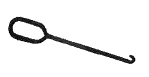
spring hook tool

square key

stainless steel

standard nut

stop nut

tapered pin

thumb screw

tinnerman nut
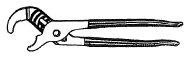
tongue and groove pliers

tru arc inside

tru arc outside
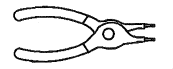
tru arch pliers

truss head screw

woodruff key
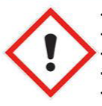
Exclamation mark
Irritant
Skin Sensitizer
Acute Toxicity
Narcotic Effect
Respiratory Tract Irritant
Hazard to Ozone
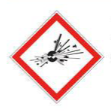
Exploding Bomb
Explosives
Self Reactive
Organic Peroxides

