Neoplasia: Benign vs Malignant
 Call Kai
 Learn
Learn Practice Test
 Spaced Repetition
 Match
Match Flashcards
 Knowt Play
1/15

There's no tags or description
Looks like no tags are added yet.
Name | Mastery | Learn | Test | Matching | Spaced | Call with Kai | Chat |
|---|
No analytics yet
Send a link to your students to track their progress
16 Terms
Cancer Stats
Second leading cause of death in USA
Lung cancer = most common cause of death
List and describe which cancers arrise from each Risk Factors (6)
Risk Factors
Infections
HPV
Cervical, head, neck carcinoma
EBV
Lymphoma
Hep B/C
hepatocellular carcinoma
Smoking
head/neck, pancreas, bladder, lung (90%) cancer
Alcohol
head/neck hepatocellular carcinoma
Obesity:
Higher rates of death b/c comorbidity
Env. Carcinogens
Lung: Many risks
Asbestos: mesothelioma
Vinyl chloride: Hepatic angiosarcoma
Benzene: AML
Age:
Most carcinoma = age > 55
b/c decline in immune surveillance + somatic mutation accumulation
List and describe the predisposing conditions that can lead to cancer
Predisposing conditions
Chronic Inflammation:
Immune production -> O2 radicals -> damage DNA
Cytokines -> cell survival
Precursor lesions
Hyperplasia exposure to trophic stimulation
(endometrial hyperplasia)
Immunodeficiency
Especially T cell defects
@ risk for oncogenic viruses
Inheritance
5-10% of cancers
Describe the characteristics of Benign tumors
Characteristics:
close to normal histology
Usually a mass w/ smooth, defined borders (capsule)
Usually a low mitotic rate
List and describe the origins of the 4 major malignant tumor types
Major malignant tumor types
Carcinoma
of epithelial origin
Sarcoma
mesenchymal origin
(muscle, fibrous tissue, bone)
Lymphoma/Leukemia
hematopoietic cells
(bone marrow)
Melanoma
derived from melanocytes
How do you determine if its Benign or Malignant
Determination of Benign vs. Malignant
Morphology
Degree of differentiation
Rate of growth
Mitosis
Invasion
Local
Metastatic
Describe how malignant tumors change their morphology:
Define Differentiation
List and describe the 5 changes that can occur in morphology
Differentiation
extent to which neoplastic cells resemble normal cells
Type of Change:
Cytologic changes
Dif cell morphology
Changes in tissue Architecture
Loss of Order
Loss of Polarity
# of Dif Cells
Change in nuclear morphology
Increased nuclear:cytoplasmic
Irregular nuclear shape
clumped chromatin or darkly stained chromatin (hyperchromatic)
Pleomorphism
variation in cell size and shape
Describe how we know if a tumor is malignant based on their rate of growth
Morphology: Mitosis
Often increased rate of growth in malignant tumors
(but not always!)
Determined by # of mitotic figures
Presence of atypical or bizarre mitotic figures
(but not always!)
List the proof in tissue architecture that there is a malignant tumor
Morphology: Changes in tissue architecture
Proof:
Presence of inflammatory response to tumor
Presence of stromal response to tumor
Localized fibrotic tissue
Necrosis
Tumor outgrows blood supply -> dies
Describe these terms
Hyperplasia
Metaplasia
Dysplasia
Carcinoma in situ
Hyperplasia
reactive ordered growth.
↑ # of cell layers
Metaplasia
One cell type -> another
Due to chronic injury
Dysplasia
premalignant lesion
disordered growth + cytologic changes
Carcinoma in situ
severe dysplasia involving full thickness of epithelium
Not invasive
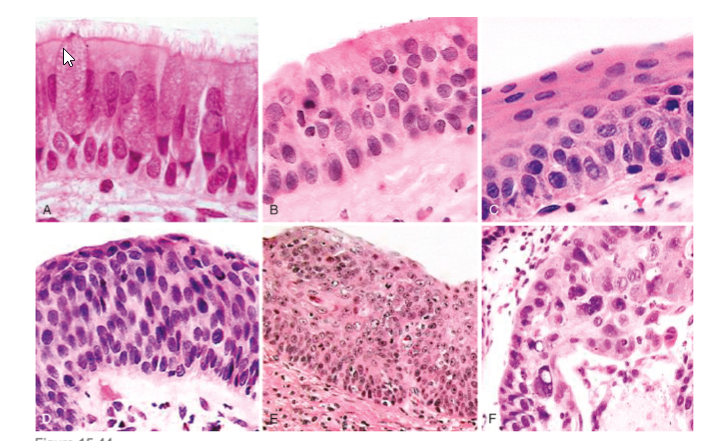
Goblet cell hyperplasia (A)
Basal cell hyperplasia (B)
Squamous metaplasia (C)
Squamous dysplasia (D)
Carcinoma in situ (E)
Carcinoma invasive (F)
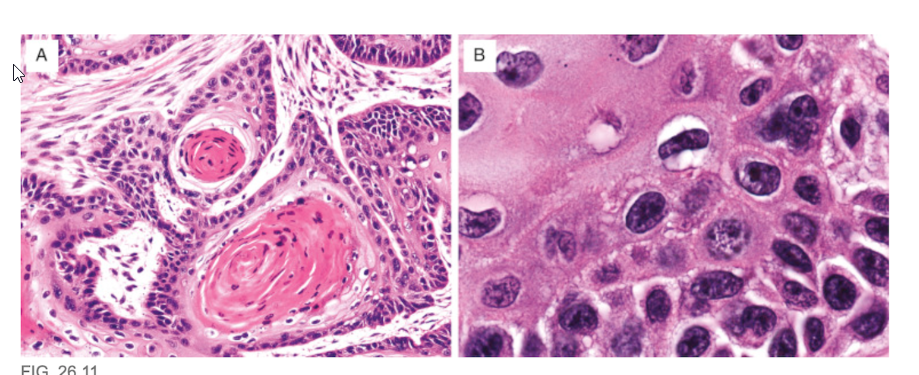
What two things are characteristics of Squamous Cell Carcinoma
Keratin pearls
Intercellular bridges
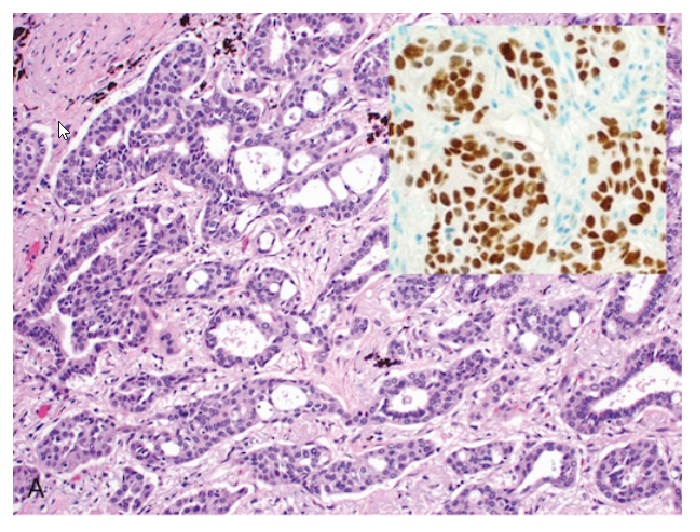
What two things are characteristics of Adenocarcinoma
Glandular differentiation
Mucin production
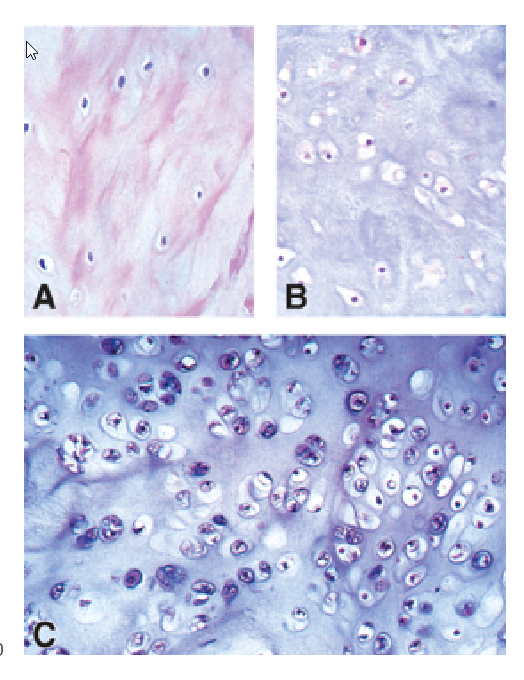
Normal cartilage (A)
Benign chondroma (B)
Chondrosarcoma (C)
bizarre shaped nuclei, hyperchromatic nuclei
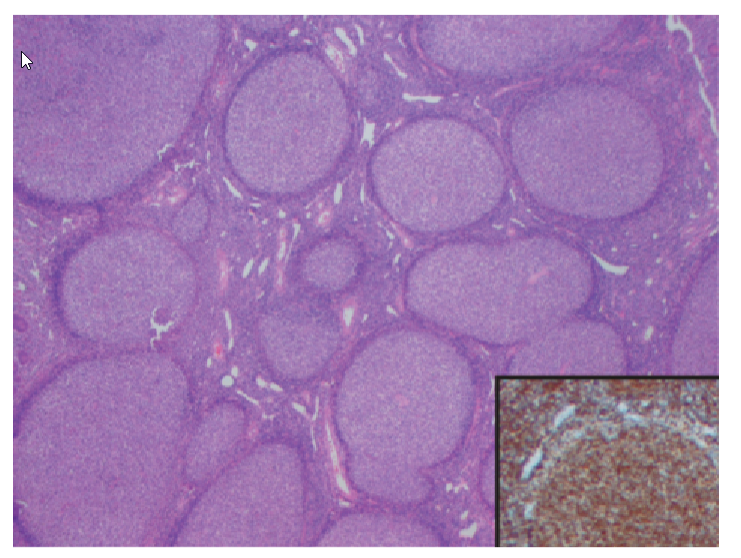
Follicular lymphoma
Characteristics:
BCL-2 stain germinal centers
Abnormal architecture: Too many lymphoid follicles
Loss of polarization
List and describe the 4 type of Tumor Markers
Tumor Markers
Immunohistochemistry (IHC)
identify specific proteins in tissue sample
Antibodies bind target antigens on tissue
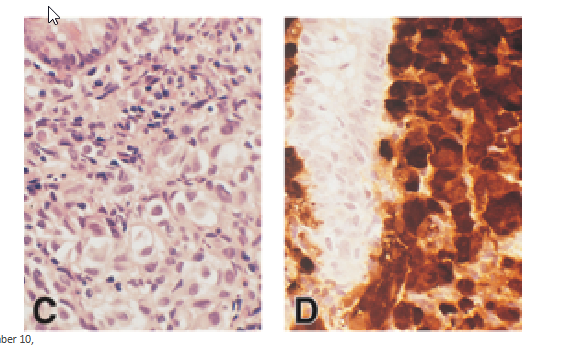
Cytokeratin stain (B): carcinoma
S-100 stain (D): melanoma