EXAM 4 - Renal Phys Part 1
 Call Kai
 Learn
Learn Practice Test
 Spaced Repetition
 Match
Match Flashcards
 Knowt Play
1/88

There's no tags or description
Looks like no tags are added yet.
Name | Mastery | Learn | Test | Matching | Spaced | Call with Kai | Chat |
|---|
No analytics yet
Send a link to your students to track their progress
89 Terms
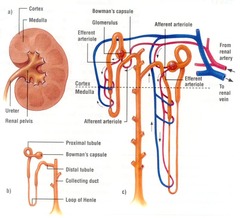
Major Components of the renal system
◻ Kidneys (2) ◻ Ureters (2) ◻ Bladder ◻ Urethra
Functions of the renal system:
In the process of making & excreting urine....
In the process of making & excreting urine....
⬜ 1. remove metabolic waste
⬜ 2. maintain homeostasis - ion and electrolyte balance
⬜ 3. Regulate total body water
⬜ 4. Control pH of body fluids
⬜ 5. Gluconeogenesis
⬜ 6. Control of arterial pressure
⬜ 7. Excretion of foreign chemicals
⬜ 8. Secretion, metabolism, and excretion of
hormones - EPO, vitD, renin
Excretion of Metabolic Waste Products
urea
uric acid
creatinine
bilirubin
urea
byproduct of protein metabolism
uric acid
byproduct of nucleic acid metabolism
creatinine
byproduct of muscle metabolism
bilirubin
byproduct of RBC metabolism
Excretion of Foreign Chemicals
drugs (prescription and drugs from abuse), toxins (spider bite), pesticides, food additives
Hormones produced by the kidney
erythropoietin (EPO) and 1,25 dihydroxycholecalciferol (vitamin D)
Hormones metabolized & excreted by kidney
most peptide hormones (insulin, angiotensin II, prolactin, GH)
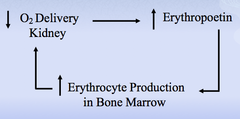
Regulation of Erythrocyte Production
-Kidneys filter the blood and indirectly measuring the oxygen level in the blood being delivered to kidneys
-WHEN O2 delivery to kidneys are low: Secrete the hormone erythropoietin which acts on the bone marrow to make more RBC (erythrocyte production)
Gluconeogenesis
kidneys synthesize glucose from amino acids during times of stress
during prolonged fasting leads to this
this is very minor
Regulation of Water and Electrolyte Balances
• Sodium and Water
• Potassium- important to maintain heart rhythms
• Hydrogen Ions
• Calcium, Phosphate, Magnesium
Regulation of Arterial Pressure
Endocrine Organs
1. RAA system
2. Kalikrein - enzyme that converts prorenin into renin...facilitates RAA
3. prostaglandins
Control of Extracellular Fluid Volume (ADH)
Volume of Filtrate Produced is based on
1. volume of fluid ingested
2. water of metabolism (water made during metabolism)
MINUS:
3. evaporation loss at the lungs
4. sweating (skin)
5. fecal loss
filtrate
fluid that passes from the blood through the capillary walls of the glomeruli of the kidney = urine
main function of the kidney
removal of wast from the blood
nephron
functional unit of the kidney (portion that does physiology)
each kidney contains 1 million
types of nephrons
cortical nephrons and juxtamedullary nephrons
cortical nephrons
located in cortex
function in waste removal
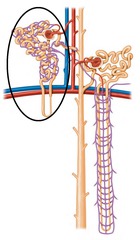
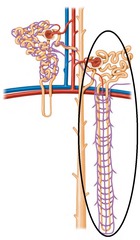
juxtamedullary nephrons
-located in cortex and dig deep into medulla (long nephron loop digging deep)
Function: waste removal, control of volume and concentration of urine
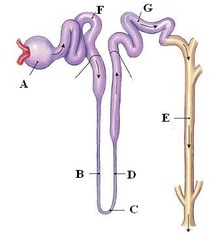
Nephron composed of 5 parts
renal corpuscle
proximal convoluted tubule
loop of henle
distal convoluted tubule
collecting duct
Renal corpuscle
glomerulus and bowman's capsule
glomerulus
A ball of capillaries surrounded by Bowman's capsule in the nephron
Function: filtration - "sieve"
-collect RBC, WBC, etc and save it while the fluid goes through
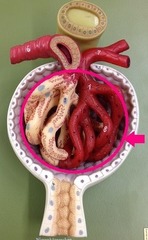
Bowmans capsule
encases the glomerulus and collects the filtrate
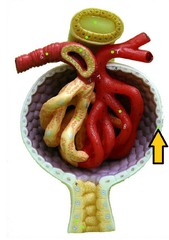
proximal convoluted tubule (PCT)
segment of the nephron between the glomerular capsule and the nephron loop
reabsorbs (save) majority (99.999%) of substances
SAVE:
protein, glucose, etc
in a diseased state this can be impaired and will not save the good stuff
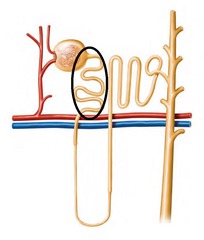
Loop of Henle (LOH)
the nephron loop
Function: works to concentrate the filtrate- using countercurrent multiplier
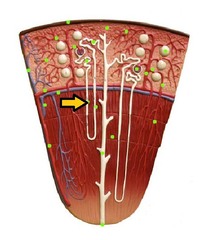
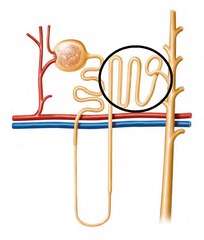
distal convoluted tubule (DCT)
functions to adjust the final concentration of Na+ by Aldosterone
collecting duct (CD)
functions to adjust the final H2O volume via ADH
Renal Blood Flow
renal artery
--> interlobar artery
--> arcuate artery
--> interlobular artery
--> afferent arteriole*
--> glomerulus*
--> efferent arteriole*
--> peritubular capillaries*
--> interlobular vein
--> arcuate vein
--> interlobar vein
renal vein
urine formation is based on 3 nephron processes
filtration, reabsorption and secretion
where does the majority of the filtration occur
renal corpuscle (glomerulus)
where does the majority of the reabsorption occur
reabsorption= save back into the body
majority at PCT
where does the majority of the secretion occur
secretion= get rid of from body
majority occurs at DCT
Basic Mechanisms of Urine Formation
1= filtration
2= reabsorption
3= secrete
4= excrete
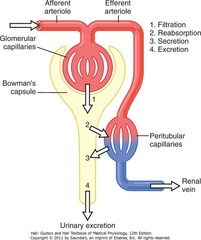
excretion = what
filtration - reabsorption + secretion
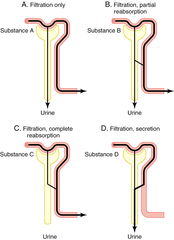
Renal Handling of Different Substances
1. filtration only
2. filtration and partial reabsorption
3. filtration, and complete reabsorption
4. filtration and secretion
Renal Handling of Water
save almost all water
EX: filter 180L, reabsorption of 179L - so 1L excreted
Renal Handling of sodium
save almost all Na+ (important to regulate osmolarity)
EX: filter 25,560 mmol/day, reabsorption of 25410 mmol/day - so 150 excreted (mmol/day)
Renal Handling of glucose
reabsorb al of it- shouldnt have glucose in urine
EX: filter 180, reabsorption of 180 - so 0 excreted (gm/day)
Renal Handling of creatinine
excrete all- creatine is a byproduct of muscle metabolism that is constantly made as well as being a waste product...want to get rid of it
EX: filter 1.8, reabsorption of 0 - so 1.8 excreted (gm/day)
Filtration facts about filtration of the blood volume
1. 20% of blood flows through the kidneys each minute
- about 1200 ml/min
100% of blood volume goes through kidneys in 5 min
Volume of filtrate formed each minute
glomerular filtration rate (GFR)
- 125ml/min
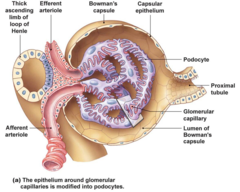
Anatomical features for filtration of glomerulus
glomerular capillaries fenestrated
special basement membrane
specialized cells
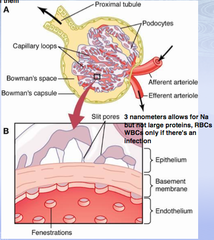
Glomerular capillaries
Fenestrated (holes) vessels that allow passage of all plasma elements but not blood cells.
Special basement membrane of glomerulus
allows glomerulus to filter out (save) large proteins - antibodies as an example are proteins and are important to save
Specialized cells of the glomerulus
podocytes - save smaller proteins
GFR
125 ml/min = 180 liters/day
Plasma volume is filtered ___ times per day
60
Glomerular filtrate composition is about the same as _____, except for _____
plasma, large proteins
filtrate doesn't contain large proteins- podocytes and the basement membrane prevent proteins
Filtration fraction
(GFR/Renal Plasma Flow)= 0.2 (i.e., 20% of plasma is filtered each minute)
about 120/600
Filtration Dynamics
◻ Based on 3 Pressures:
1. Glomerular Hydrostatic Pressure
2. capsular Hydrostatic Pressure
3. Glomerular Plasma Colloid Osmotic Pressure
Glomerular Hydrostatic Pressure
P in the glomerulus
Favors filration
equals = 60 mmHg
capsular Hydrostatic Pressure
P in Bowmans capsule
opposes filtration
equals 18mmHg
cannot be more than 60 mmHg if you want any filtration
Glomerular Plasma Colloid Osmotic Pressure
opposes filtration
equals 32 mmHg
net filtration pressure
1. Glomerular Hydrostatic Pressure (60) - capsular Hydrostatic Pressure (18) - Glomerular Plasma Colloid Osmotic Pressure (32)
equals 10 mmHg
Calculation of Net Filtration Pressure (NFP)
NFP= P(favor)-P(oppose)
- differences between the favoring and opposing pressures
forces that favor = 60 mmHg
forces that oppose filtration = 18 + 32 mmHg = 50
60-50 = 10 mmHg
***it is a low pressure, but it is positive therefore will be favoring filtration!!
Control of Glomerular Filtration
driving pressure is glomerular hydrostatic pressure
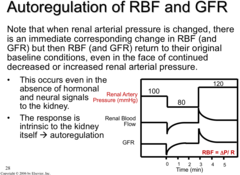
GFR is autoregulated
what does it mean for the GFR to be autoregulated
it means we will maintain a normal GFR (125ml/min) despite changes in BP - autoregulation isnt instant (beat to beat) but it will within 2-3 minutes
what does it mean if we do not autoregulate? (high and low BP example)
if we do not do this:
1. high BP - increase Net filtration pressure, increase GFR, increase in urine volume - DEHYDRATES
2. low BP - low NFP therefore low GFR and low urine output = toxic; not removing metabolic wastes
example: diabetes mellitus
Normal Values:
GFR = ___
Net Filt. Press = ___
Kf = ___
Normal Values:
GFR = 125 ml/min
Net Filt. Press = 10 mmHg
Kf
Glomerular Capillary Filtration Coefficient (Kf)
Kf = hydraulic conductivity x SA
• Normally not highly variable (stable)
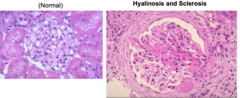
Disease that can reduce Kf and GFR
- chronic hypertension
- obesity/diabetes mellitus
- glomerulonephritis
Bowman's Capsule Hydrostatic Pressure (PB)
Normally changes as a function of GFR, not a physiologic regulator of GFR (reacts to changes in GFR but does not causes change to GFR)
changes/reacts to these that change GFR:
• Tubular Obstruction
• Urinary tract obstruction
Tubular Obstruction
kidney stones and tubular necrosis
Urinary tract obstruction
Prostate hypertrophy/cancer
Glomerular Capillary Oncotic Pressure (ΠG)
glomerular colloid osmotic pressure (opposing pressure in glomerulus)
Factors Influencing Glomerular
Capillary Oncotic Pressure (ΠG)
• Arterial Plasma Oncotic Pressure (ΠA)
increase in ΠA will increase ΠG
• Filtration Fraction (FF)
increase in FF will increase ΠG
(Recall: FF = GFR/Renal plasma flow = 125/650 ~ 0.2 (or 20%)
Net Filtration Pressure Decreases Along the Glomerulus Because of
Increasing Glomerular Colloid Osmotic Pressure
net filtration pressure is not equal throughout the glomerulus...it is an average of what is happening in glomerulus
(14+6=20, 20/2= 10mmHg)
Glomerular Hydrostatic Pressure (PG)
**Is the determinant of GFR most subject
to physiologic control*** we can alter/manipulate to change GFR
this is the driving force (the pressure the favors filtration...60mmHg)
Factors that influence PG
- arterial pressure (effect is buffered
by autoregulation...within 2-3 minutes autocorrects)
- afferent arteriolar resistance
- efferent arteriolar resistance
vasoconstriction or dilation to adjust to BP changes
Effect of Afferent and Efferent Arteriolar Constriction on Glomerular Pressure
increasing resistance in the afferent arteriole will decrease blood flow and decrease PG and decrease GFR
increasing resistance in the efferent arteriole (=close off the exit) will increase blood flow and will increase Pg and increase GFR
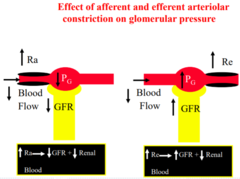
increase diameter of afferent arteriole
increase GFR
decrease diameter of efferent arteriole
increase GFR
Increase renal a. P
alters overall blood flow (increased)= increase GFR
this subsides in 2-3 minutes
increase PB and ΠG
decrease GFR
increase PG
increase GFR
Determinants of Renal Blood Flow (RBF) equation
RBF = ΔP/R
ΔP = difference between renal artery pressure and renal vein pressure
R = total renal vascular resistance
= Ra + Re + Rv = sum of all resistances in kidney vasculature
Renal Blood Flow - high blood flow
• High blood flow (~22% of cardiac output)
• High blood flow needed for high GFR
Renal Blood Flow - O2 and the nutrients delivered
• Oxygen and nutrients delivered to kidneys normally greatly exceeds the kidneys metabolic needs
• A large fraction of renal oxygen consumption is related to renal tubular sodium reabsorption
Control of GFR & RBF: extrinsic control
Via ANS:
SNS & PSNS
Control of GFR & RBF: intrinsic control
within the kidney
example: increased BP = stretch afferent arteriole leading to vasoconstriction, decreased blood flow, and decreased GFR
vasoconstriction of afferent and efferent arterioles
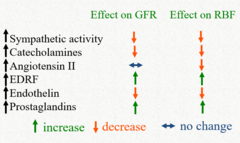
SNS (Catecholamines) - Control of GFR & Renal Blood Flow
increase the resistance in afferent arteriole which decreases GFR and decreases renal blood flow
-increased vasoconstriction in afferent arteriole
during a severe hemorrhage
AT II on - Control of GFR & Renal Blood Flow
vasoconstrictor
increase resistance of the efferent arteriole
no change in GFR and decrease renal blood flow
**prevents a decrease in GFR - keeping it level (no change)
THERE ARE NO RECEPTORS ON THE AFFERENT ARTERIOLE FOR ATII and afferent arteriole will compensate
examples: low sodium diet and volume depletion
Prostaglandins - Control of GFR & Renal Blood Flow
decrease Resistance on afferent and efferent arteriole
increase GFR and lots of increased renal blood flow
NSAIDS
Heart failure
liver cirrhosis
Summary of Neurohumoral Control of GFR and Renal Blood Flow
Local (Intrinsic) Control of GFR & Renal Blood Flow
◻ "Myogenic" (self regulated) Mechanism
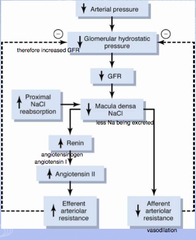
◻ Based on Macula Densa Feedback
◻ ATII-powerful vasoconstrictor
-renal autoregulation for 125ml/min: if BP drops, then GFR falls instantly but over 2-3 minutes, the GFR goes back to 125mlmin (mechanism is not instantaneous)
Macula densa feedback mechanism for regulating GFR
notice that AT II only causes vasoconstriction of efferent arteriole, not afferent arteriole. the afferent arteriole can compensate via other mechanisms so that the decreased arterial pressure doesnt impact on GFR
Other Factors That Influence GFR
• Fever, pyrogens - increase GFR - initially but auto regulate back to normal
• Glucorticoids - increase GFR - initially but auto regulate back to normal
• Aging - decrease GFR (starting at age 40)
• Hyperglycemia - increase GFR
• Dietary protein - high = increase GFR; low = decrease GFR