Osteology and Articulations of the Spine
 Call Kai
 Learn
Learn Practice Test
 Spaced Repetition
 Match
Match Flashcards
 Knowt Play
1/182

There's no tags or description
Looks like no tags are added yet.
Name | Mastery | Learn | Test | Matching | Spaced | Call with Kai | Chat |
|---|
No analytics yet
Send a link to your students to track their progress
183 Terms
Define the axial skeleton
Skull, vertebrae, ribs and sternum
Define the appendicular skeleton
Upper and lower limbs, pelvis, scapulae and clavicles
How many cervical vertebrae are there
7
How many thoracic vertebrae are there
12
How many lumbar vertebrae are there
5
How many sacral vertebrae are there
5
How many coccyx vertebrae are there
4
How many vertebrae are there total in the human body
33
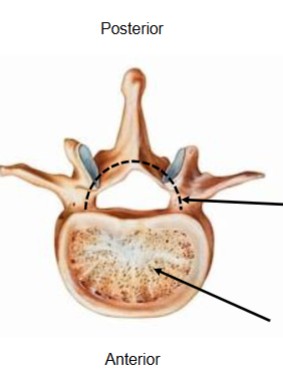
What 2 areas are the arrows pointing to and what is their purpose
Vertebral arch
Surrounds spinal cord
Vertebral body
Weight bearing portion
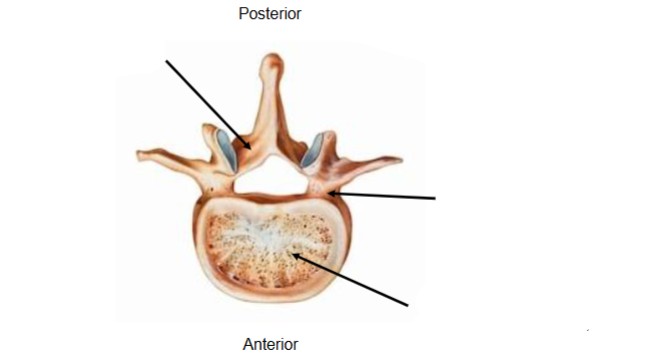
Where are the arrows pointing to and what is their purpose
Lamina
Flat part of arch
Pedicle
Attaches arch to body
Vertebral body
Weight bearing portion
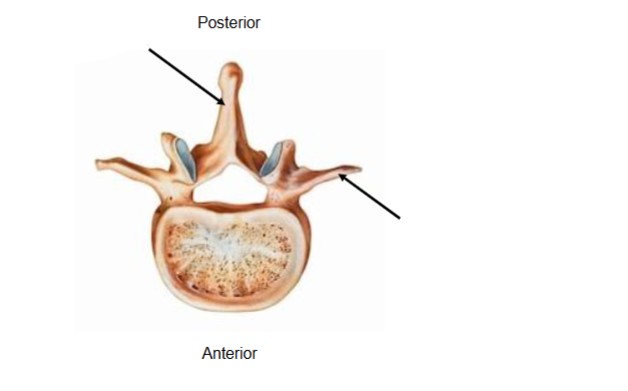
What are the arrows pointing to
Spinous process and transverse process
What part of the spine is generally palpable through the skin
Spinous process
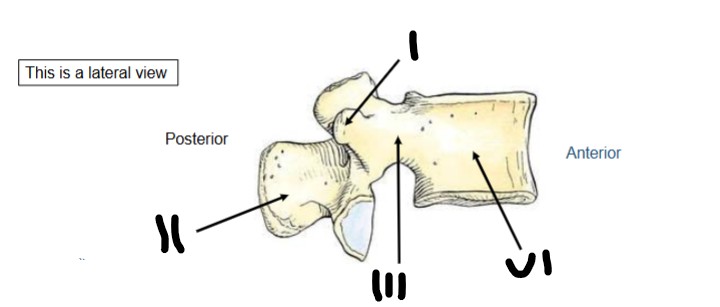
What is 1 pointing to
transverse process
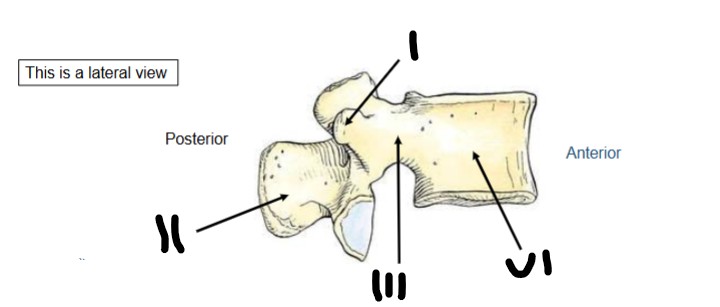
What is II pointing to
Spinous process
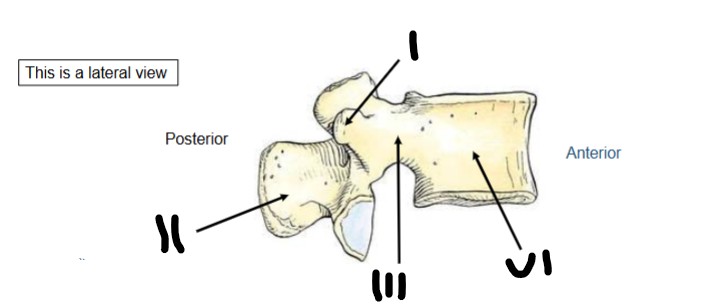
What is III pointing to
Pedicle
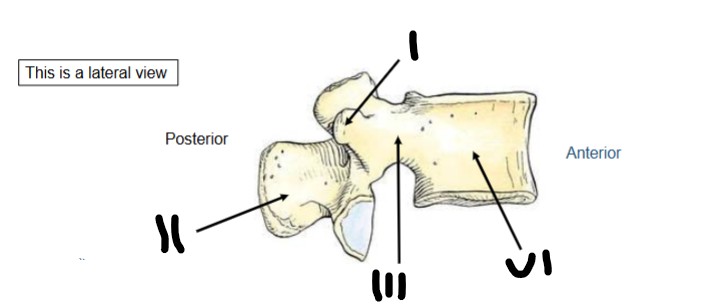
What is VI pointing to
Vertebral body
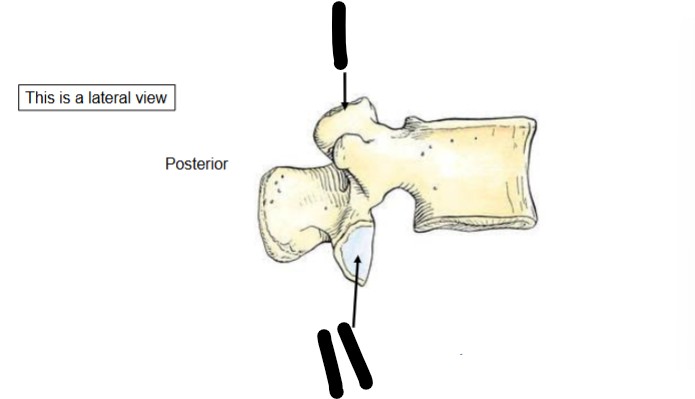
What is I pointing at
Superior articular process (articulates with vertebrae above)
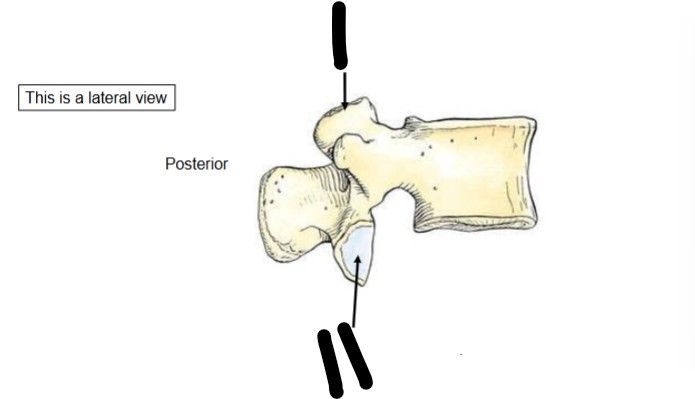
What is II pointing at
Inferior articular process (articulates with vertebrae below)
What is a costal process
Every vertebrae has a costal process during development, some become the ribs, some remain as a portion of the vertebrae
What are the atypical vertebrae in the cervical region
C1, C2, C7
What are the atypical vertebrae in the thoracic region
T1, T10, T11, T12
Unique features of the cervical vertebrae
Small
Foramen transversarium (for the vertebral artery)
Bifid spinous process
Concave vertebral bodies
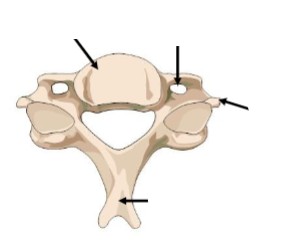
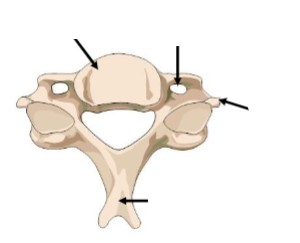
What type of vertebrae is this
Cervical
Which direction is the articular facets oriented in the cervical vertebrae
Horizontal
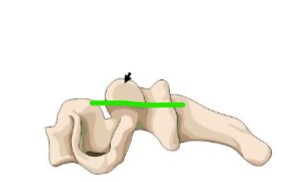
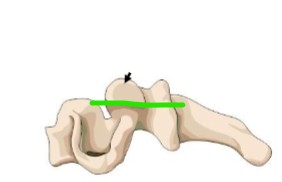
Which vertebrae is this
cervical
Why is the spinous process bifid in the cervical region
attachment point for the nuchal ligament (which is important for stabilization)
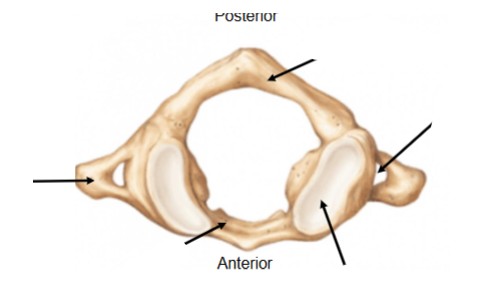
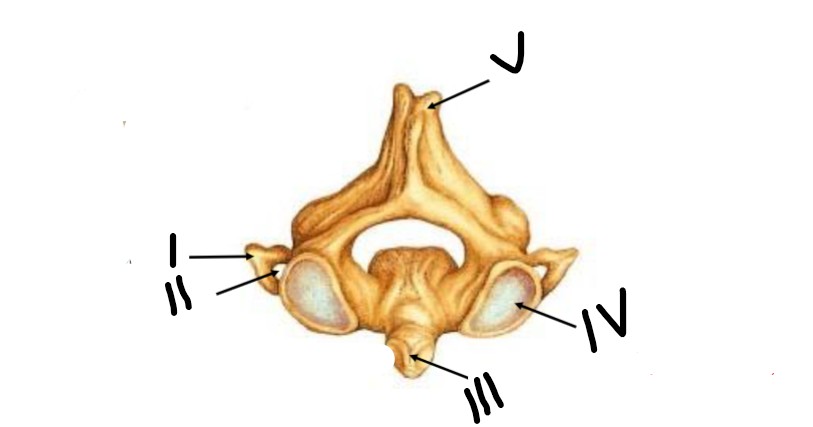
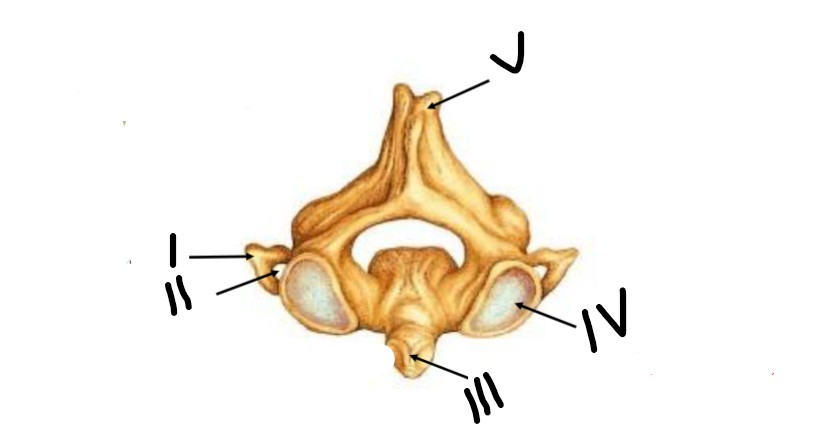
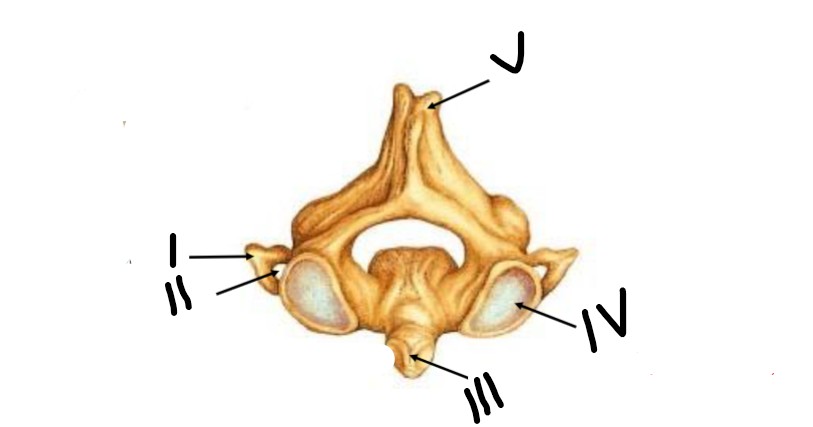
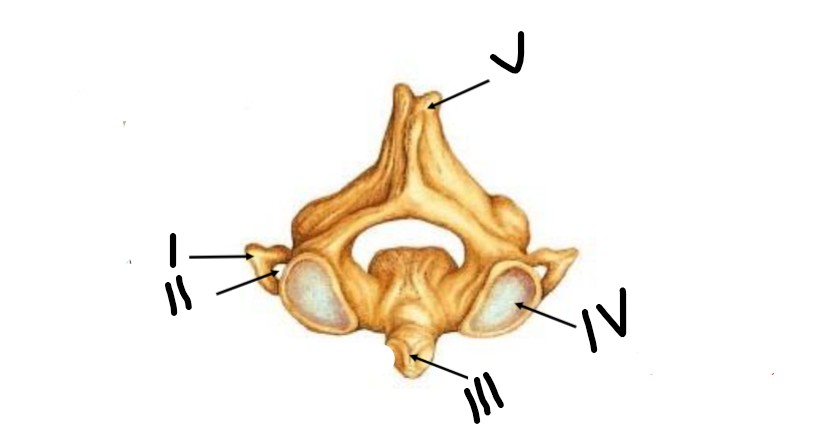
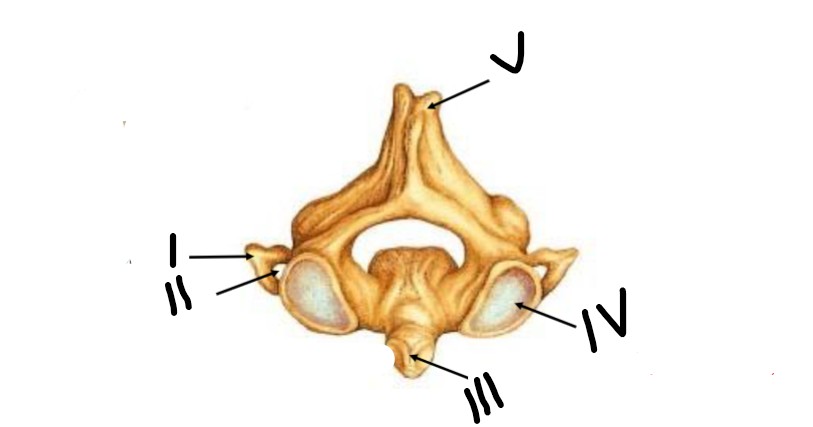
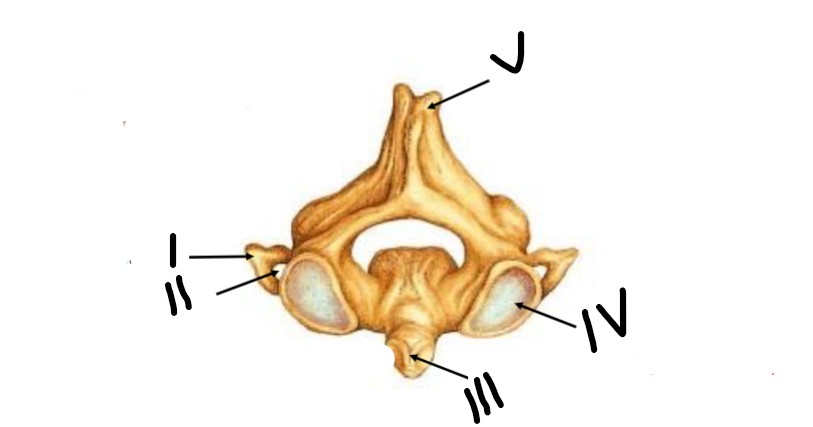
What vertebrae is this
Atlas C1
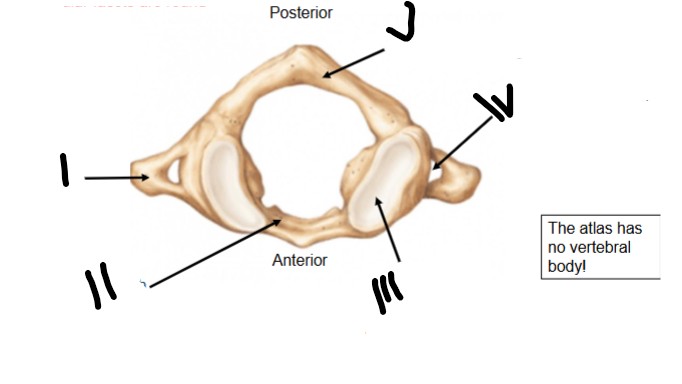
What is I pointing at
Transverse process of the atlas
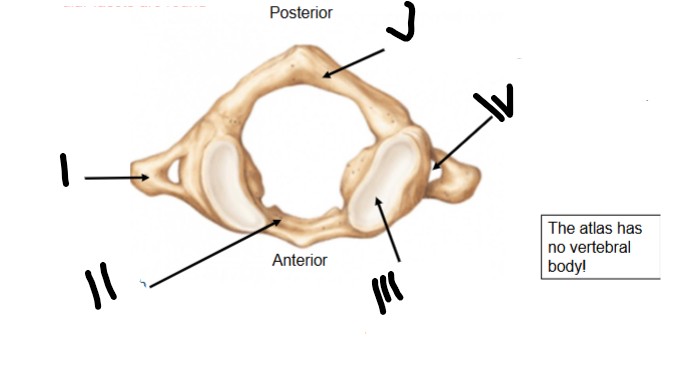
What is II pointing at
Anterior arch (smaller articulates w/ the dens of axis) of C1
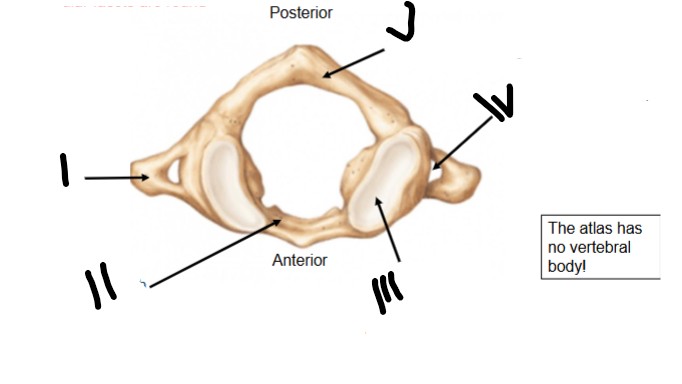
What is III pointing at
Superior articular facet (articulates with the skull to form the atlanto-occipital joint) of C1
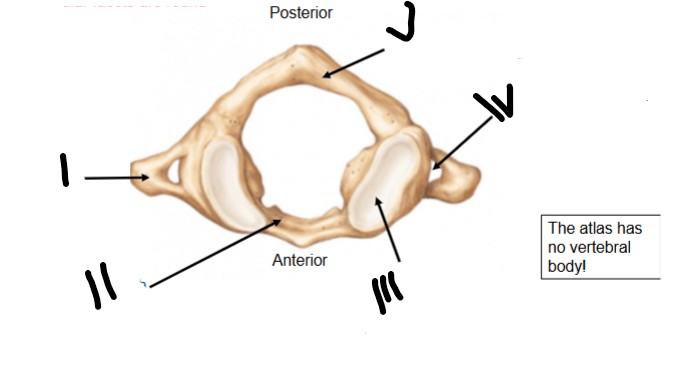
What does IV point at
Foramen transversarium (area where vertebral artery passes) of C1
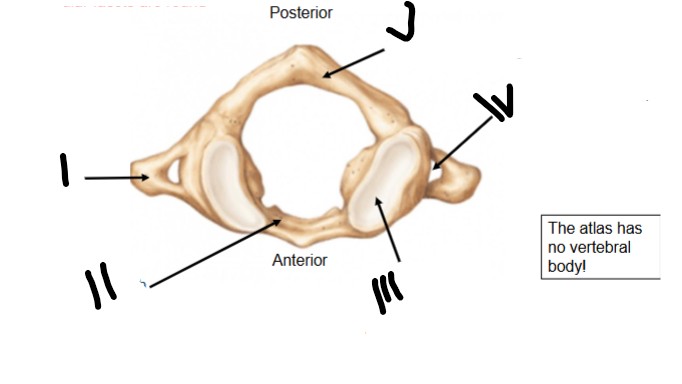
What is V pointing at
Posterior arch of atlas
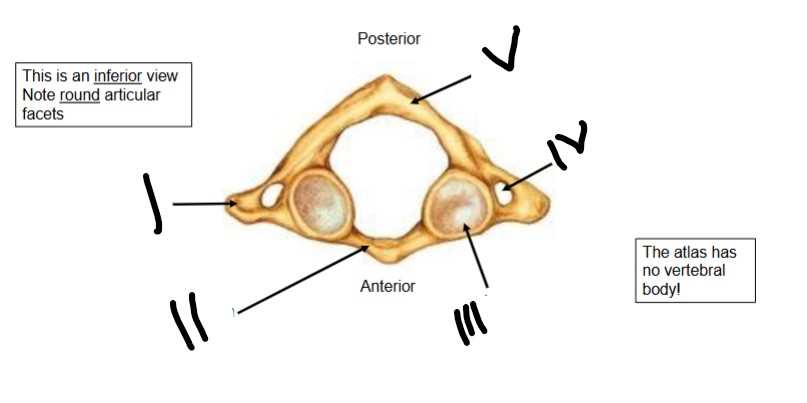
What is I pointing at
Transverse process of atlas
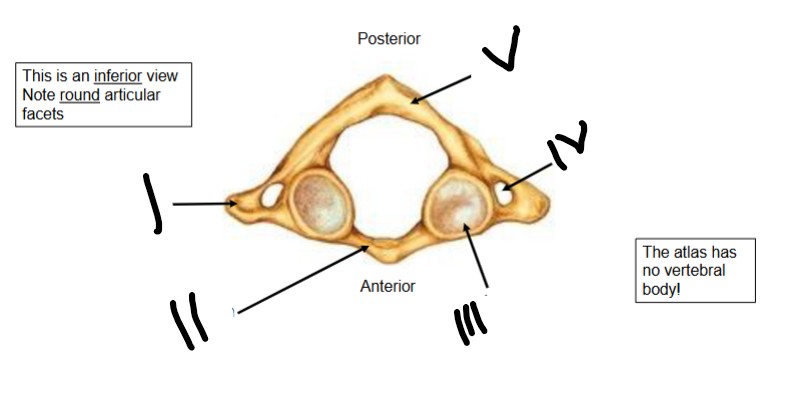
What is II pointing at
Anterior arch of atlas
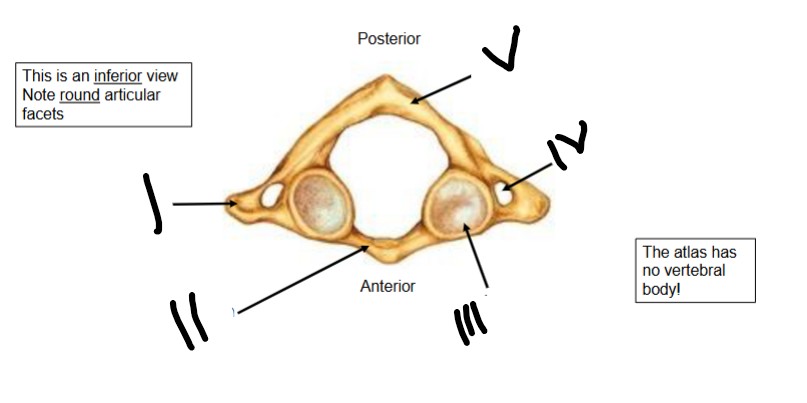
What is III pointing at
Inferior articular facet of atlas (articulates with axis)
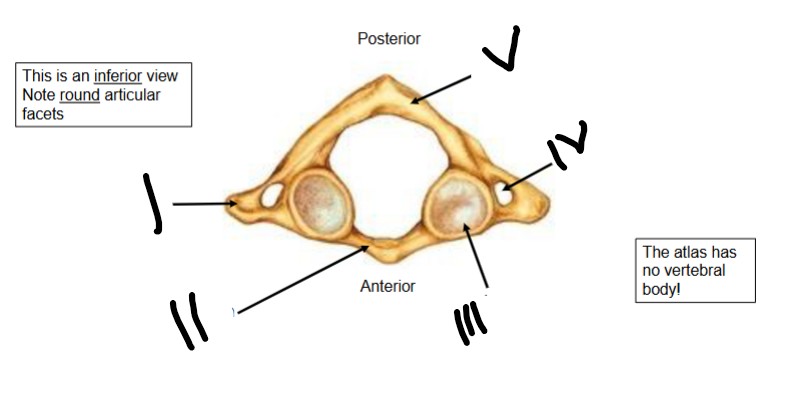
What is IV pointing at
Foramen transversarium of atlas
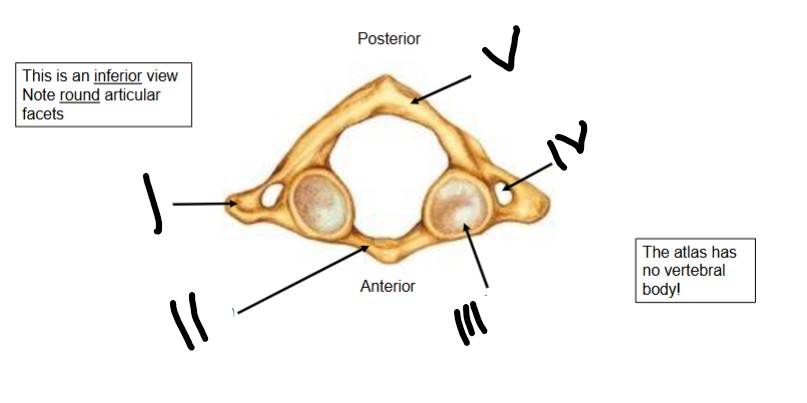
What is V pointing at
Posterior arch of atlas
What vertebrae is this
Axis
What is I pointing to
Transverse process of axis
What is II pointing to
Foramen transversarium of axis
What is III pointing to
Dens; pivot point for the axis and atlas
What does IV point to
Superior articular facet of axis (articulates with atlas to form the atlanto-axial joint)
What does V point to
Spinous process of axis
Why is C7 considered an atypical vertebrae
Very long spinous process
Called vertebrae prominins
Most superior visible spinous process
Spinous process generally NOT bifid
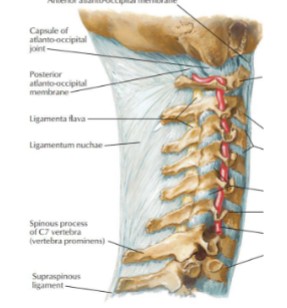
Vertebrae prominens
C7
Unique features of thoracic vertebrae
NO Foramen transversarium
Long and inferiorly sloping spinous processes
Short transverse processes
Costal facets present
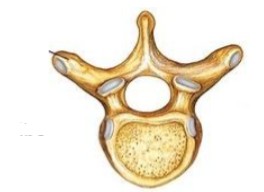
What type of vertebrae is this
Thoracic
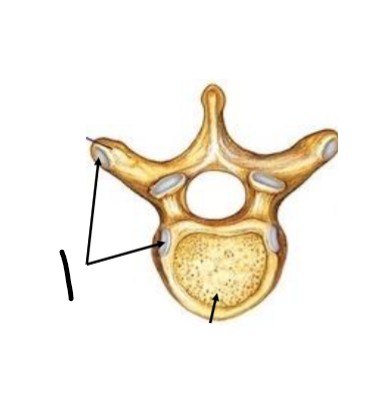
What is I pointing to
Costal facets (articular areas for ribs on the transverse process and vertebral body)
If a vertebra looks like a giraffe it is a
Thoracic vertebrae
How are the articular facets oriented in thoracic vertebrae
coronal plane
The thoracic vertebrae articulate with the ribs, what type of joint is this
synovial
Where are most of the demi facets on thoracic vertebrae located
Vertebral bodies
Transverse processes
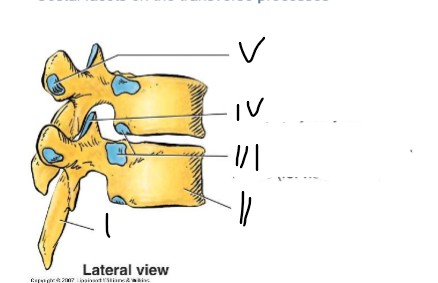
What is I pointing at
Spinous process
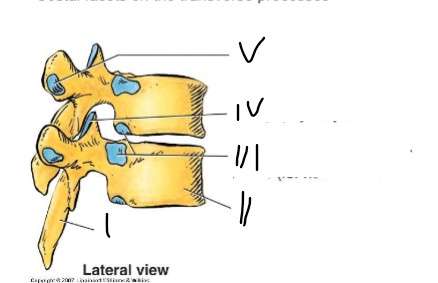
What is II pointing at
Vertebral body
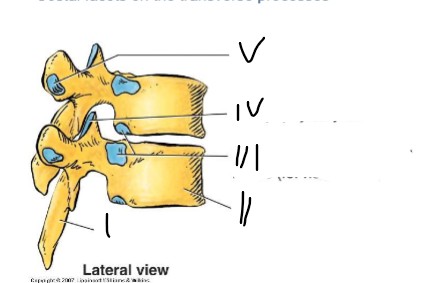
what is III pointing at
Superior and inferior costal facets for the head of the rib
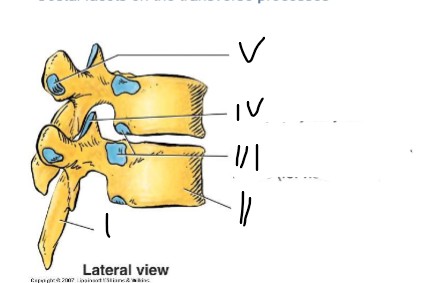
What is IV pointing at
Zygapophysial joint
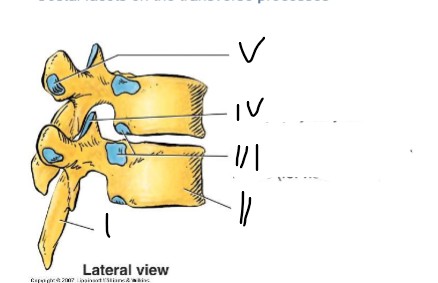
What is V pointing at
Transverse costal facet for the tubercle of rib
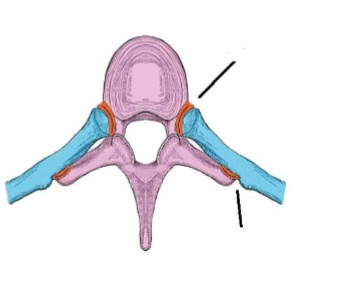
What are the arrows pointing at
Costotransverse joints
Which thoracic vertebrae are atypical
T1, T10, T11 and T12
Why is T1 atypical
Has its own full costal facet for rib 1
Why is T10 atypical
Has no inferior demi facet
Why is T11 and T12 atypical
Each has a full costal facet (NO COSTAL FACET ON TRANSVERSE PROCESS)
What is unique about lumbar vertebrae
Larger vertebral bodies than thoracic or cervical
Short stumpy spinous processes
Mammilary processes
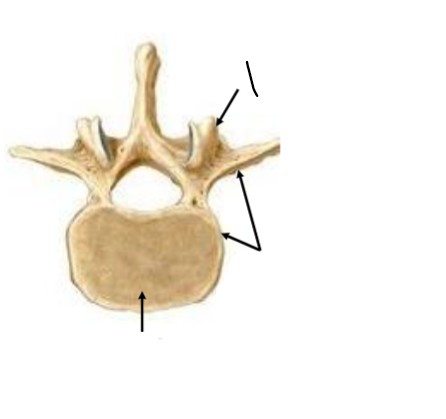
What vertebrae is this
Lumbar
What is I pointing at
Mamillary process
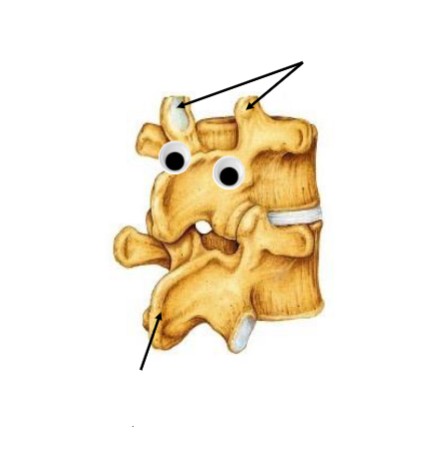
What vertebrae is this
Lumbar
Which direction are the articular facets oriented in the lumbar vertebrae
Sagittal plane
What is I pointing to
Ventral sacral foramina
What comes out of the ventral sacral formaina
ventral rami of sacral spinal nerves
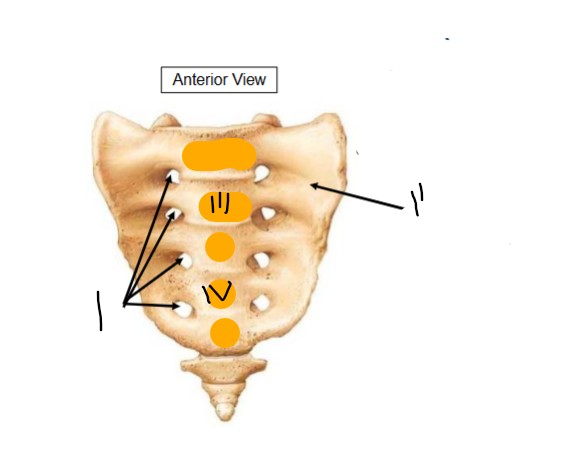
What is II pointing to
The ala of the sacrum
What is the ala made of
expanded and fused transverse processes
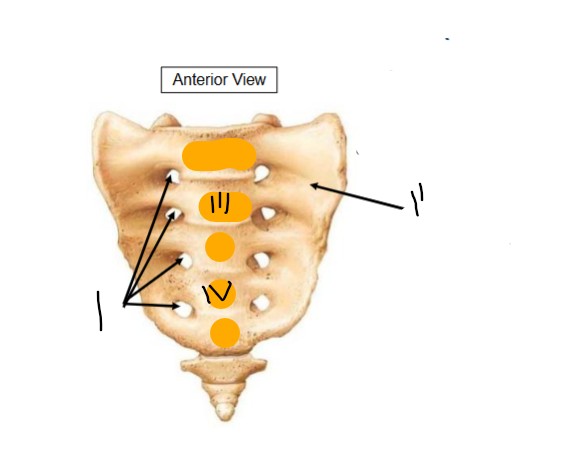
What is III pointing to
S2
What is IV pointing to
S4
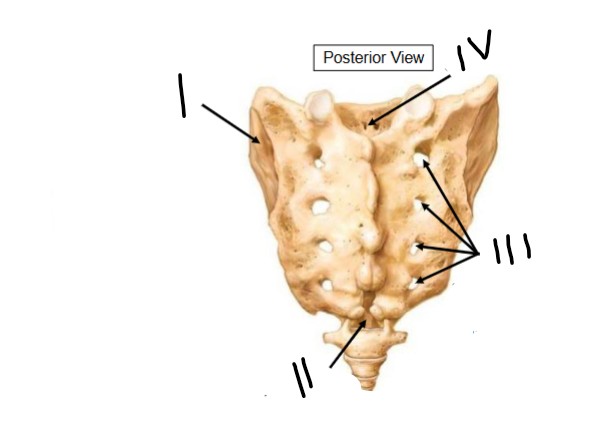
What is I pointing to
Articular surface of sacrum where it articulares with the pelvis
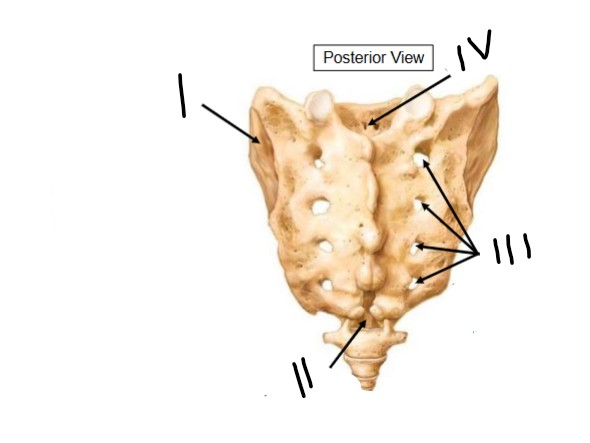
What is II pointing to and what comes out of it
Sacral hiatus, where coccygeal spinal nerves exit
What does III point to and what comes out of it
Dorsal sacral foramina, where dorsal rami of spinal nerves exit
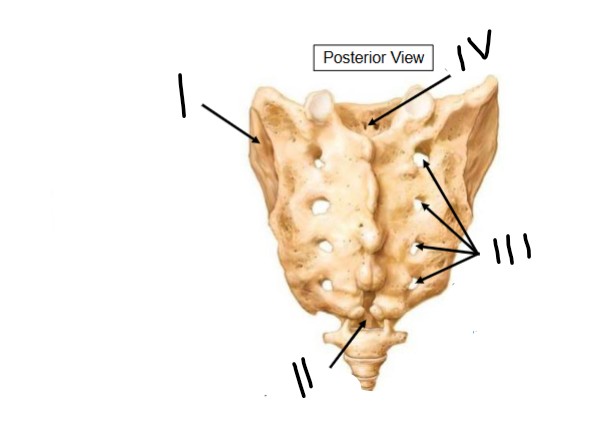
What is IV pointing at
sacral canal
What does the blue line represent and what is it made of
median sacral crest; midline projection of spinous processes
What does the green line represent and what is it made of
Intermediate sacral crest; made of articular processes
What does the pink line represent and whart is it made of
lateral sacral crest; made of transverse processes
What is in the sacral canal
The dural sac and cauda equina
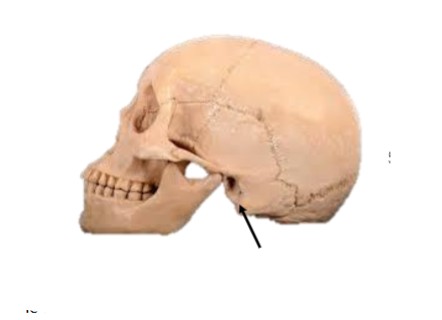
Mastoid process
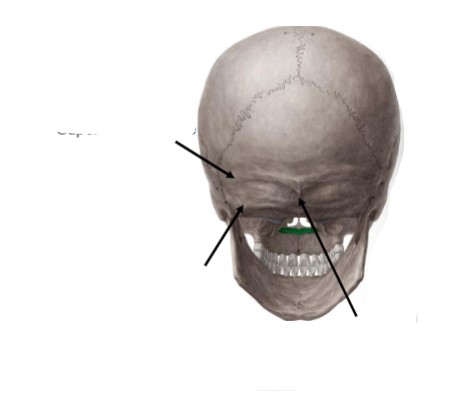
What do the 3 arrows point to
Superior nuchal line, inferior nuchal line and external occipital protuberance
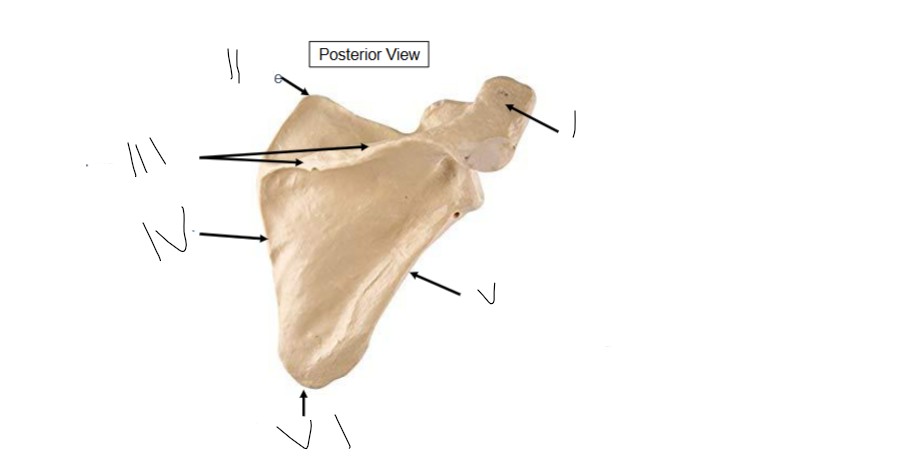
What does I point to
acromion process
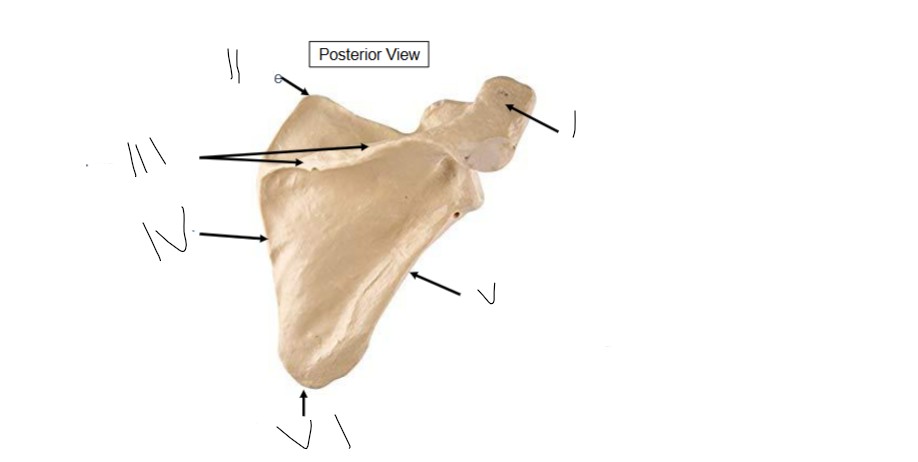
What does II point to
superior angle
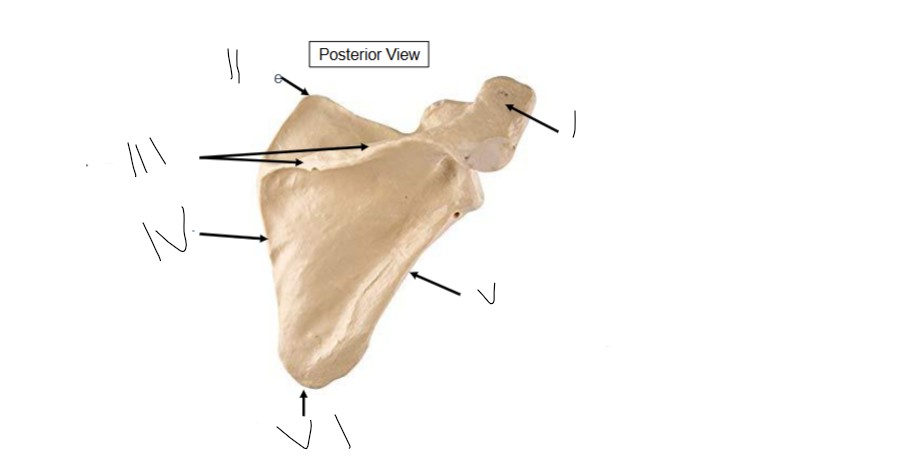
What does III point to
Spine of the scapula
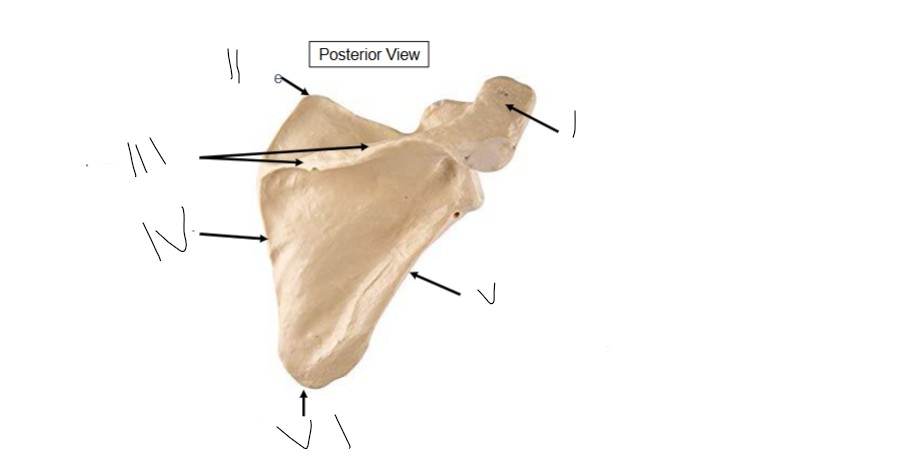
What does IV point to
Medial border
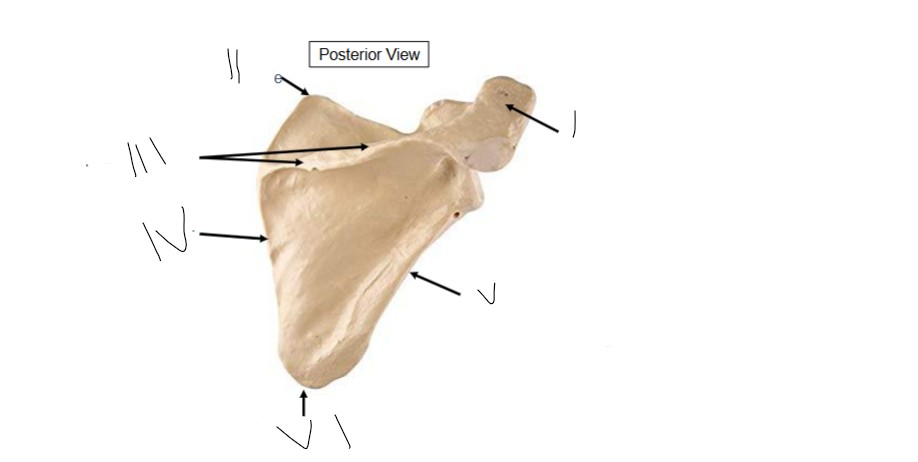
What does V point to
Lateral border
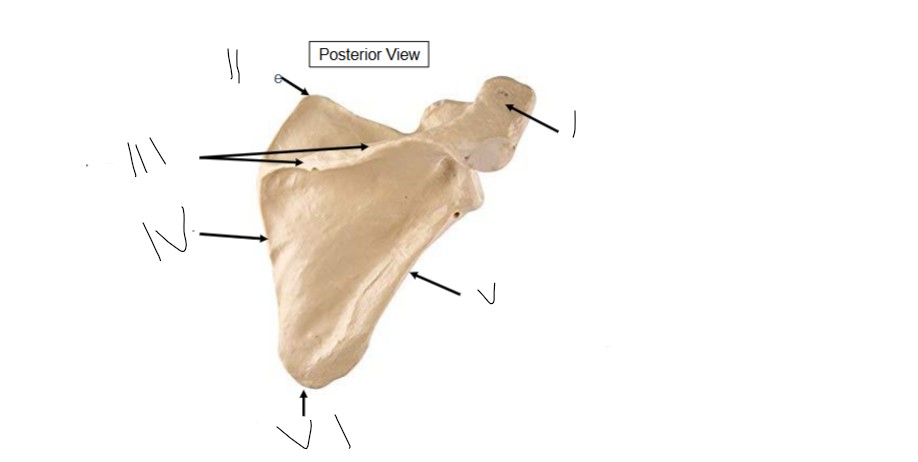
What does VI point to
Inferior angle of scapula
What are the 3 articulations between each pair of vertebrae
the interverbal disc and 2 zygapophysial joints
Lordosis
Anteriorly convex
Kyphosis
posteriorly convex
Which sections of the spine have lordosis
Cervical, lumbar
Which areas of the spine has kyphosis
Thoracic, sacral, coccygeal
Why does the spine curve
keeps the weight of the head, thorax, and abdomen aligned over the center of gravity
Describe fetal spine curvature
kyphosis over all sections of the spine
When does the cervical lordosis develop
when baby starts to hold its head up
when does lumbar lordosis develop
when baby starts standing upright
Primary curvatures
kyphotic curvatures
Secondary curvatures
Lordotic curvatures