Memory Exam 2
 Studied by 0 people
 Call Kai
 Learn
Learn Practice Test
 Spaced Repetition
 Match
Match Flashcards
 Knowt Play
1/79

There's no tags or description
Looks like no tags are added yet.
Name | Mastery | Learn | Test | Matching | Spaced | Call with Kai |
|---|
No analytics yet
Send a link to your students to track their progress
80 Terms
What is the major system?
0- s, z
1- t, th, d
2- n
3- m
4- r
5- l
6- ch, sh
7- k
8- f
9- p, b
0 = ?
s, z
1 = ?
t, d, th
2 = ?
n
3 = ?
m
4 = ?
r
5 = ?
l
6 = ?
sh, ch
7 = ?
k, g
8 = ?
f
9 = ?
p,b
Which of the seven sins is omission?
blocking, transience, absent mindedness
Which of the seven sins that we have covered is comission?
misattribution
Which seven sins of memory is this an example of?
example: tip of the tongue phenomenon
blocking
Which seven sins of memory is this an example of?
example: leaving my credit card at a restaurant
absentmindedness
Which seven sins of memory is this an example of?
example: forgetting a memory from my childhood
transience
Which seven sins of memory is this an example of?
example: remembering something my friend said but someone else actually said it
misattribution
What is prospective memory?
Remembering to remember something
What is the difference between time-based prospective and event-based prospective memories?
- Time based: trusting yourself to do something at the correct time with no cue
- Event based: making a perceptual marker
example of time-based prospective
- Need to remember something at a certain time (I need to call my doctor after class)
example of event-based prospective
setting an alarm to remember to take your medicine
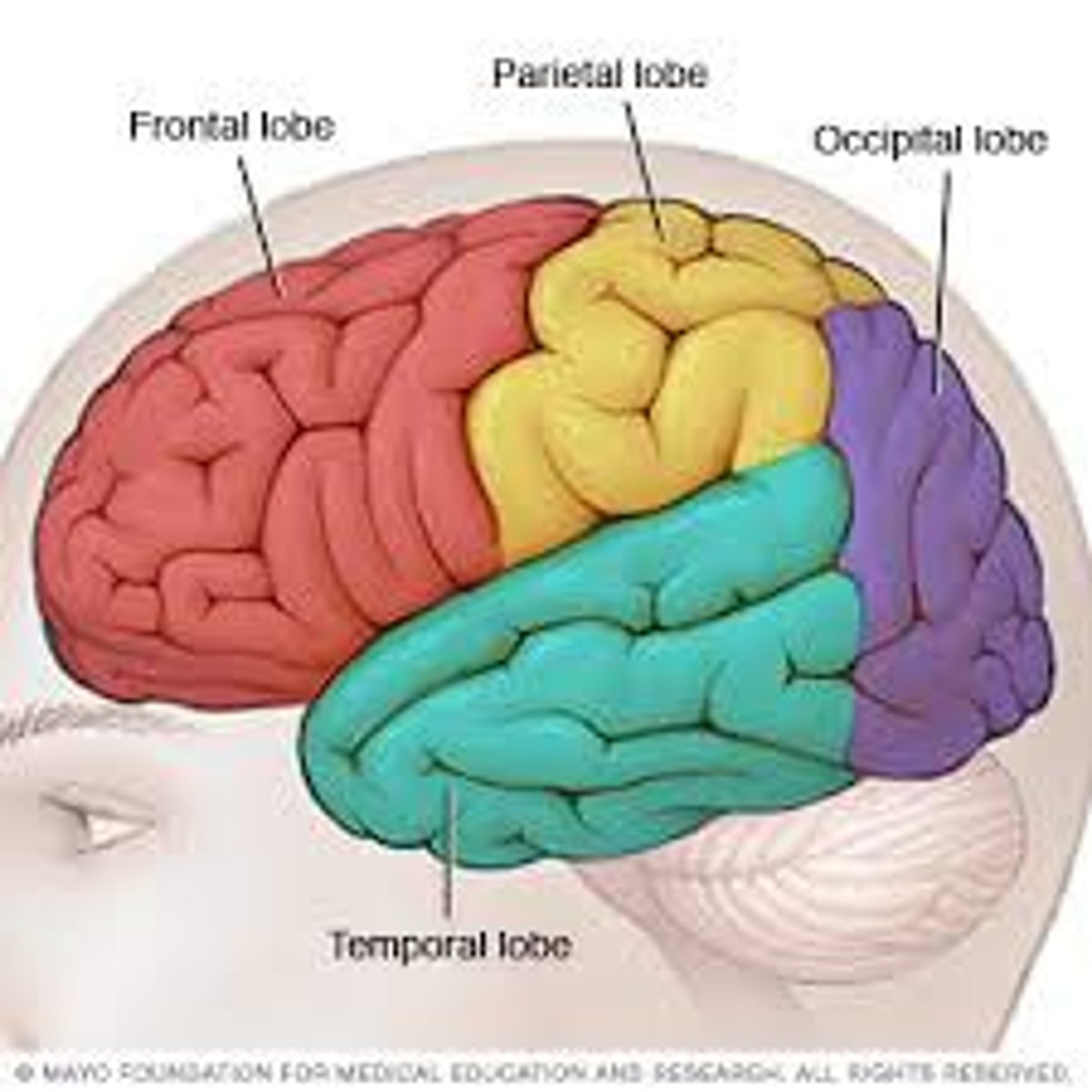
Where are the lobes located? (frontal lobe, occipital lobe, temporal lobe, parietal lobe)
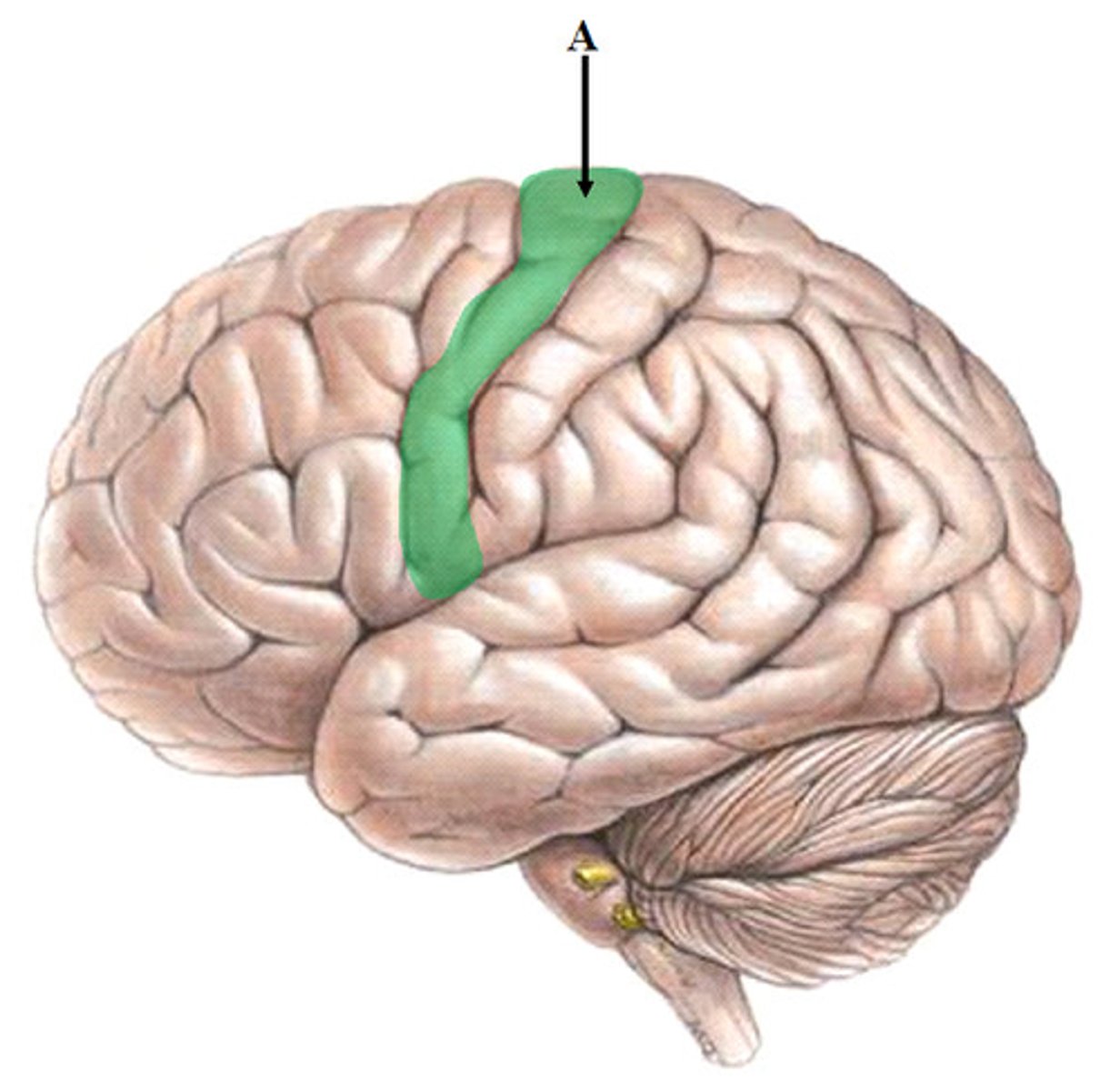
Where is the motor cortex located?
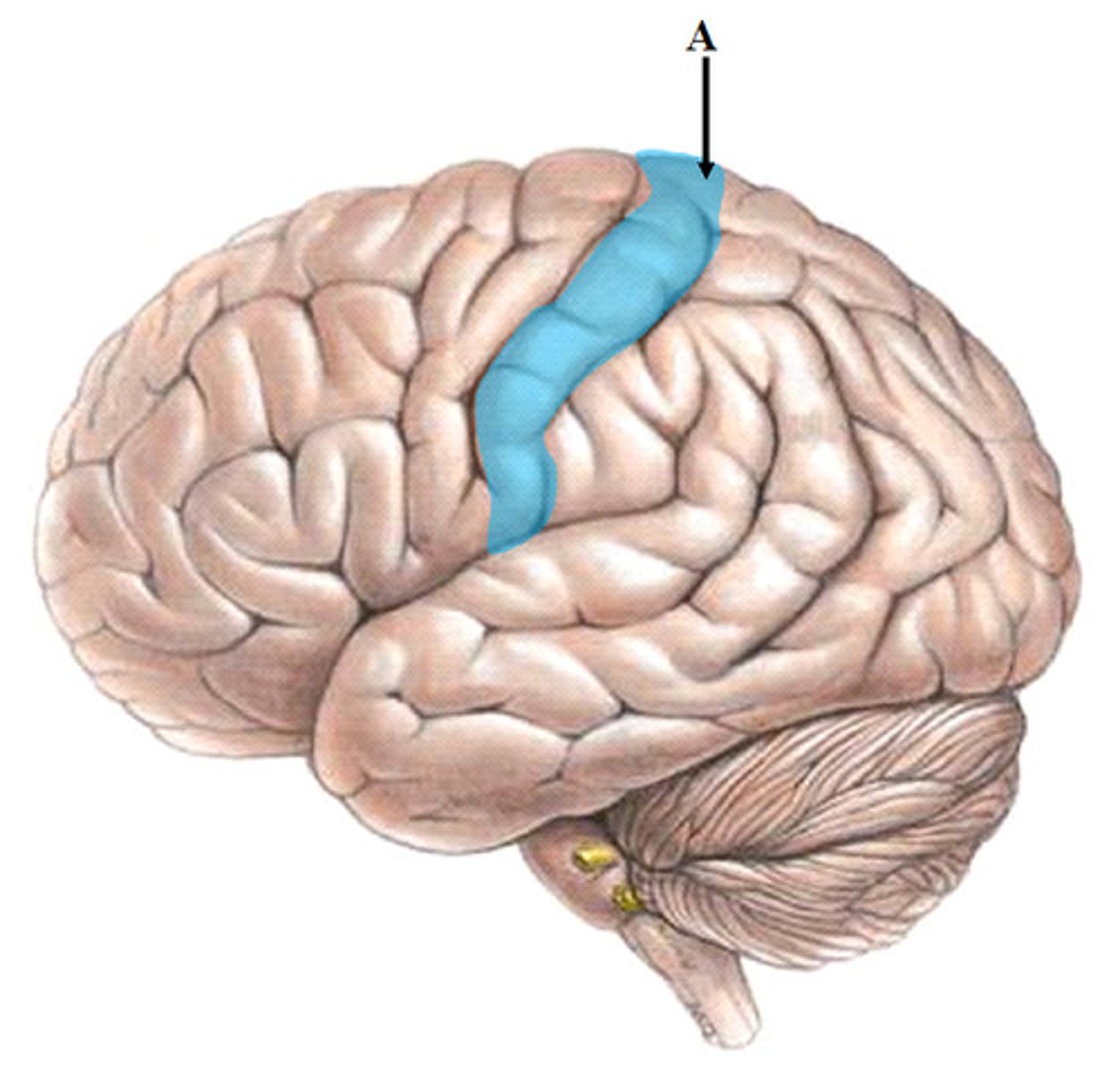
Where is the sensory cortex located?
Which area of the brain is associated with transience?
hippocampus
Baddley's model
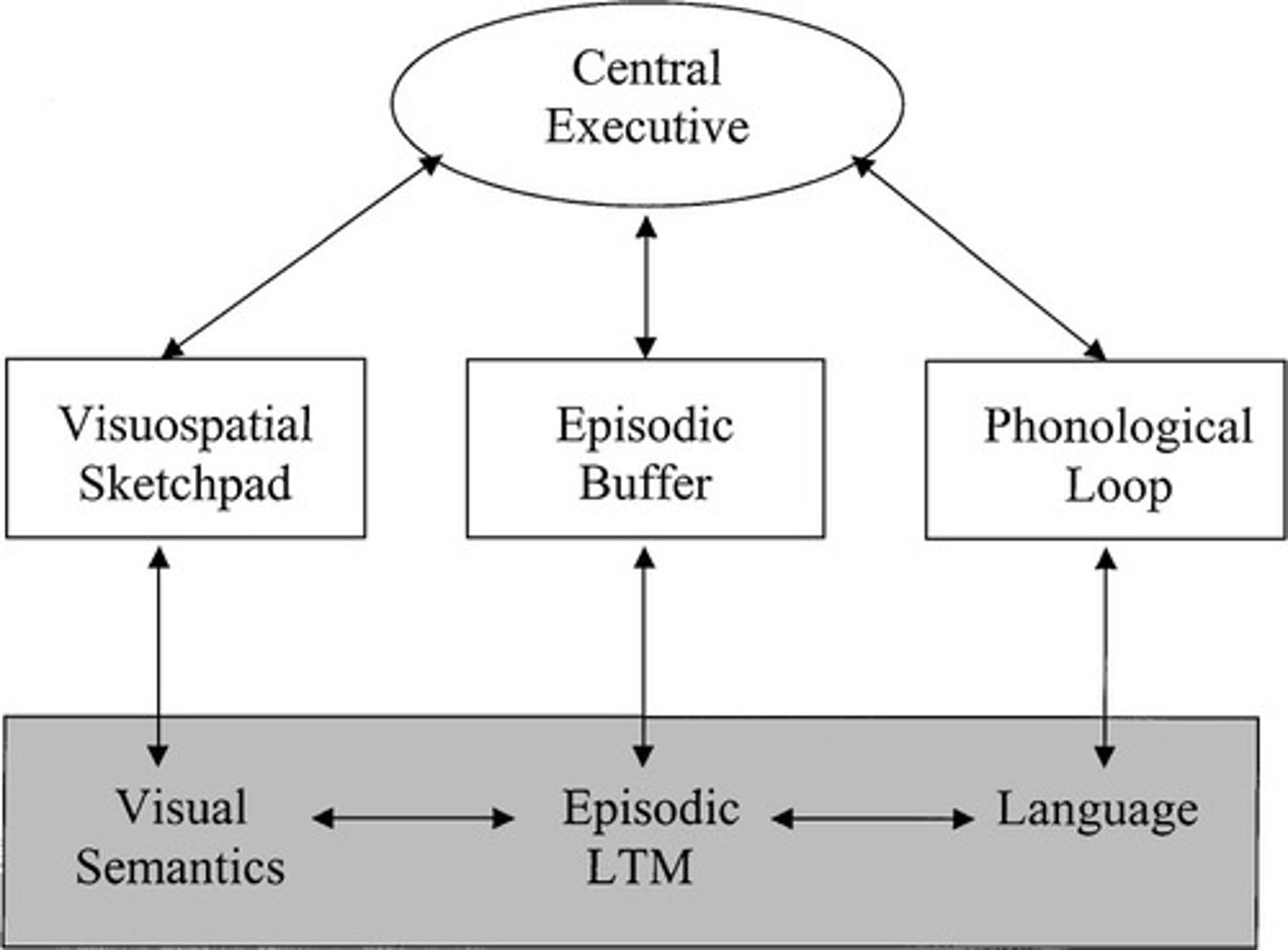
What is the phonological loop?
- buffer for storage
- language information
- articulatory rehearsal
what does the visual-spatial do?
- stores spatial and visual info
- has limited capacity
what is the storage component of the phonological loop?
parietal lobe
What is invloved in active repeating during STM storage in phonological loop?
prefrontal cortex
what is double dissociation?
- when two mental processes, like short-term and long-term memory, work independently because damage to one brain area affects one process but not the other, and damage to a different area does the opposite`
- looking for complementary patterns
Ebbinghaus: theory of forgetting
also known as the Forgetting Curve, suggests that we forget information rapidly after learning it, with the most significant loss happening soon after learning — and then the rate of forgetting slows down over time
reproduction definition
recalling information exactly as it was learned, like repeating facts word-for-word
reconstruction definition
is piecing together memories based on general knowledge, experiences, and cues — which can sometimes lead to errors or distortions.
reproduction vs reconstruction example
if you try to remember a conversation, reproduction would be recalling the exact words said, while reconstructionmight involve remembering the general idea but filling in gaps with what probably happened
Brown-Peterson task
The Brown-Peterson task is a classic experiment used to study short-term memory and forgetting without rehearsal. In this task, participants are shown a simple set of items—like three letters (e.g., "XQF")—and then immediately asked to count backward by threes from a random number (like 529) for a few seconds. This counting task prevents them from rehearsing the letters.
After a delay, participants are asked to recall the letters. The experiment found that memory for the letters drops sharply after just 15-20 seconds, showing how quickly we forget information from short-term memory when we can't rehearse it.
interference definition
when one memory disrupts the recall of another, making it harder to remember information
Proactive interference
Old information interferes with remembering new information (like calling your new partner by your ex's name).
Retroactive interference
New information interferes with recalling old information (like forgetting your old phone number after learning a new one).
decay definition
memories fade over time if they aren't actively used or rehearsed
What is explicit memory?
- conscious
- episodic (personal events) & semantic (facts, knowledge)
- EX: studying for an exam)
What is implicit memory?
- not conscious memory
- priming, classical conditioning, procedural memory
- EX: riding a bike, pulling out ID when hear scanner)
episodic memory
- Memory of personal experiences and specific events, including the time and place they happened.
- Example: Remembering your graduation day and how you felt during the ceremony.
semantic memory
- Memory of general knowledge, facts, and concepts that aren't tied to personal experiences.
- Example: Knowing that Paris is the capital of France.
priming
- An unconscious form of memory where exposure to one stimulus influences your response to a later stimulus.
- Example: If you see the word "yellow," you're more likely to quickly recognize the word "banana" afterward.
procedural memory
- things we do automatically without needing to think about every step
- It's often unconscious and involves motor skills and habits.
- EX. riding a bike; tying shoes
conditioning
- A form of associative memory where you learn to connect one stimulus with another through experience.
- Example: Feeling anxious when you hear a particular ringtone because it reminds you of stressful calls.
anterograde amnesia
inability to retain new memories
retrograde amnesia
inability to remember memories before damage
organic amnesia
study of implicit memory is rooted in the study of amnesia (brain injury that causes memory loss)
three ways to test memory
1. free recall
2. recognition
3. qued recall
automaticity
- when a task or skill becomes so well-learned that you can do it quickly and effortlessly, without conscious thought. It usually develops through lots of practice and repetition
- Reading words in your native language — you don't have to sound out each letter; you recognize the whole word instantly
frontal lobe's role in automaticity
- attention & focus
- planning & organization
- cognitive control
the door study
The Door Study is a classic experiment in psychology that demonstrates change blindness — our tendency to miss changes in our environment when our attention is focused elsewhere.
In the study, a researcher would approach a pedestrian to ask for directions. Partway through the conversation, two people carrying a door would pass between them, briefly blocking the pedestrian's view. During this moment, the original researcher was swapped out with a different person — often wearing different clothes and looking quite different. Surprisingly, many participants didn't notice the switch!
This study highlights how our brains focus on broader meaning and context rather than specific details, especially when we're not expecting a change. It shows how attention and perception can affect memory and awareness.
change blindness
a phenomenon where we fail to notice significant changes in our environment when our attention is focused elsewhere. It happens because our brains don't store every detail of what we see — instead, we prioritize broader meaning and context.
the gorilla study
In the study, participants were asked to watch a video of people passing basketballs and count the number of passes. Partway through the video, a person in a gorilla costume walks through the scene, stops, beats their chest, and then walks off. Surprisingly, about 50% of participants didn't notice the gorilla at all because they were so focused on counting the passes.
This study shows how attention shapes what we perceive — when we focus hard on one task, we often miss other obvious details in our environment.
tip of the tongue
temporarily unable to recall a word or piece of information, even though you feel like it's right on the verge of coming to you
the ugly step sister theory
- a fun metaphor for what happens during the tip-of-the-tongue (TOT) phenomenon.
- It suggests that when you're struggling to recall the right word, similar but incorrect words ("ugly stepsisters") keep coming to mind and block the true word ("Cinderella") from surfacing.
- EXAMPLE: Trying to remember the word "onomatopoeia", but your brain keeps suggesting words like "onomastic" or "optometry".
baker-baker paradox
we're more likely to remember someone's occupation than their name — even when the word is the same
tips for remembering names
1. find the dominant feature
2. transform the name
3. connect the two
4. pay attention & immediately say their name
5. write it down
Prospective memory - 5 ways to remember
1. create an external cue
2. create an imaginary cue
3. implementation intention
- "When situation X arrives, I will perform Y."
4. external aids
- schedule emails & pill boxes
5. put things in the same place
How to resolve TOT (3 ways)
1. partial word info
2. phonological info
3. shift your attention
retrieval inhibition
- causes blocking, but completely forgetting a trauma only minutes later
- rarely happens w/o head injury, alcohol, drugs, or loss of consciousness
Reduction of activity in which part of the brain is associated with automaticity and absent minded errors?
Prefrontal Cortex
Memory is __________ dependent, so create _______ for yourself to remember in the future.
1. cue
2. cues
illusion of memory
sensations can "prompt" vivid memories which can be false
what kinds of memories can be false (3)?
1. flashbulb
2. childhood
3. eyewitnesses
what causes false memories? (5 ways)
1. we fill in the gaps of stories
2. ignore details we do not need to remember
3. retrieval strengthens memory
4. problems with source memory
5. problems with interference
what are personal memories?
- specific to you
- example: birthdays & vacations
examples of collective memories (3)
1. violent events: wars & attacks
2. political events: inaugaration & laws
3. natural events: fires, hurricanes, tornadoes
false memories
Your memories are not verbatim copies. They are prone to distortion.
Conjunction error
You might remember two things correctly, but accidentally combine them into one. WHICH IS STILL WRONG
Schema-based
You reconstruct memories using mental frameworks based on your existing knowledge and experience.
temporal pole (as it relates to naming)
- particularly important for the semantic network that helps us connect names to concepts
- helps integrate familiarity with meaning, which is key when naming objects, people, or places.
omission vs comission
- Omission refers to forgetting or leaving out details
- Commission refers to remembering or adding incorrect details to a memory
DRM list
a list of words used in an experiment to study false memory. The list typically consists of words that are semantically related to a central "lure" word, which isn't actually included in the list. The idea is that participants will often falsely recall the lure word because of the strong associations with the other words.
For example, a DRM list might include words like "bed," "rest," "dream," "sleep," and "pillow". The central lure word, in this case, is "sleep," even though it's not actually on the list. Despite its absence, many participants will confidently recall the word "sleep" as if it was part of the original list, demonstrating how our memory can be influenced by associations and lead to false memories.
cryptomnesia
- a form of memory distortion where a person mistakenly believes they have come up with an idea or piece of information themselves, when in fact they are unintentionally recalling something they've encountered before
- leads to unintentional plagiarism
deja vu
the feeling that you've experienced a situation before, even though you know it's happening for the first time. It's a strange, fleeting sensation of familiarity, as if you're reliving a moment or place, even though logically you know it's new
Whittlesea 1993
In his study, participants were shown a list of words. Later, they were presented with some of the original words along with new, related words that were not on the list. Participants were asked to rate how familiar each word felt.
Whittlesea found that participants rated the related new words as more familiar than the actual words they had seen before, even though they had never encountered the related words. This demonstrated that feelings of familiarity can occur based on semantic associations (how similar something feels to what we already know), not just on explicit memory of a past event or experience.
The study suggested that familiarity can lead to a sense of recognition or déjà vu even in the absence of clear memories of the source. It highlighted that our memory system sometimes mistakenly attributes familiarity to something we've never encountered directly, which is similar to what happens in déjà vu experiences.
misinformation effect
- When a person's memory of an event is distorted due to exposure to incorrect or misleading information after the event.
- This can lead people to recall details inaccurately or form entirely false memories about an experience.
 Note
Note  Flashcards (229)