MicroBio Mod. 3
 Call Kai
 Learn
Learn Practice Test
 Spaced Repetition
 Match
Match Flashcards
 Knowt Play
1/39

Earn XP
Description and Tags
Microbial Growth and Metabolism
Name | Mastery | Learn | Test | Matching | Spaced | Call with Kai | Chat |
|---|
No analytics yet
Send a link to your students to track their progress
40 Terms
Bacterial Growth
an increase in the number of cells in a population rather than the growth of individual cells
primarily occurs through a process called binary fission,
Requirements for bacterial growth: physical
Optimal temperature temperature
minimum, optimal, and maximum growth temperatures
pH
most bacteria like pH 6.5-7.5
molds and yeasts like 5-6
acidophiles grow in acidic environments
Osmotic Pressure:
hypertonic environments (increased salt or sugar) cause plasmolysis
so, salt and sugar increase osmotic pressure of the environment
extreme/obligate halophiles require high osmotic pressure while facultative halophiles tolerate it since they’re able to adapt to environmental changes
Requirements for bacterial growth: chemical
Carbon:
energy source
chemoheterotrophs use organic carbon sources (cannot use carbon directly to make their own organic compounds)
autotrophs use CO2 (synthesize their own organic molecules)
like humans, bacteria are made primarily of carbon based organic molecules
Nitrogen:
in amino acids, proteins; nucleic acids
most bacteria decompose proteins
some bacteria use NH4+ or NO3- for energy
a few use N2 in nitrogen fixation
Sulfur:
In amino acids (cys and met), thiamine, biotin
Most bacteria decompose proteins
Some bacteria use SO42 or H2S for energy
Phosphorus:
In DNA, RNA, ATP, and membranes
PO43 is a source of phosphorus
Oxygen
Optimum growth temperatures
Psychrophiles:
about 15 degrees C
Psychrotrophs:
about 25 (20-30) degrees C
Mesophiles: (where most human pathogens belong to)
about 37 (30-40) degrees C
Thermophiles:
about 65 degrees C
Hyperthermophiles:
above 80 degrees C
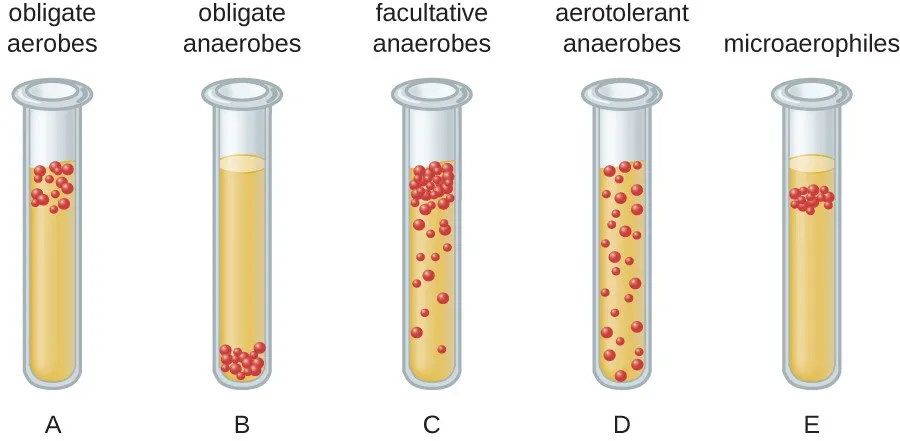
Obligate aerobes
require oxygen
sit at the top of a culture broth tube
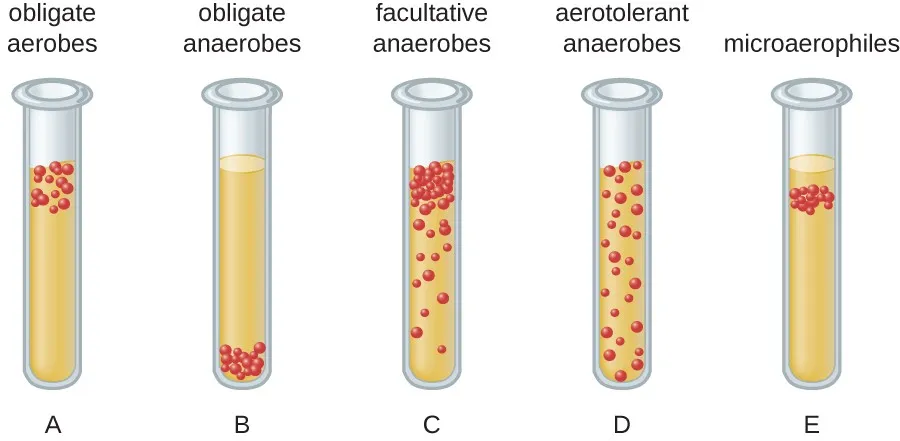
Facultative anaerobe
prefer oxygen but can grow without it
mostly at the top of the culture broth tube but also suspended throughout
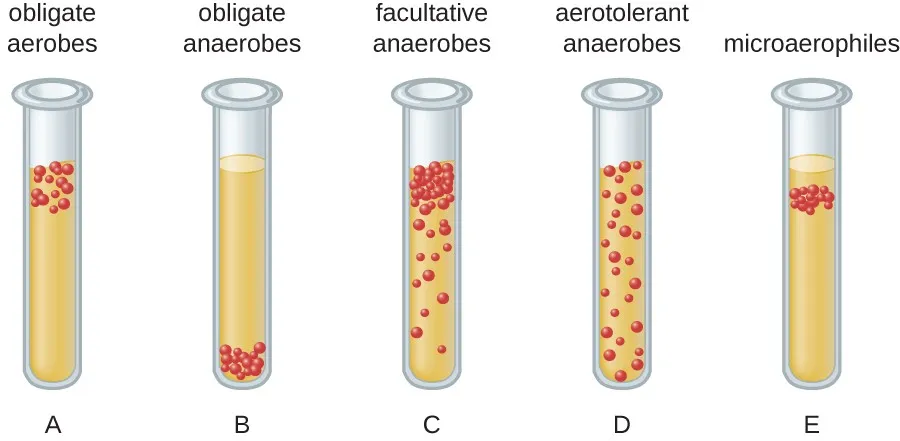
Obligate anaerobes
find oxygen toxic
it can cause cell death
found at the bottom of the culture broth tube
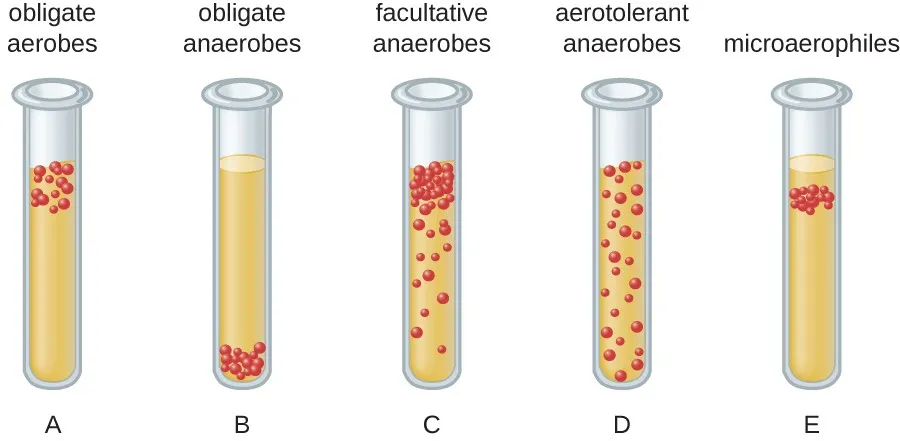
aerotolerant anaerobes
don’t need oxygen to grow but it won’t harm them
found suspended throughout the entire culture broth tube
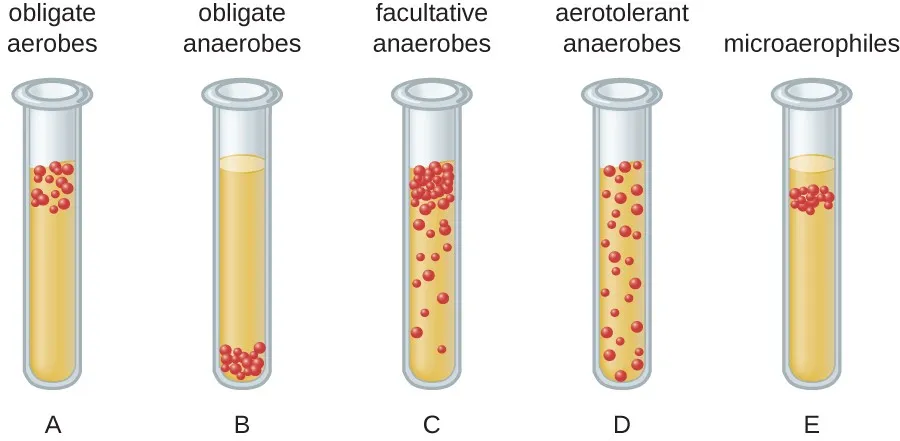
microaerophiles
grow only when oxygen is present at a very specific quantity or in a very small amount
Osmotic pressure and plasmolysis relationship
When the solute concentration (salt and/or sugar) in the environment around the cell is higher than the solute concentration inside the cell (called a hypertonic solution, which has a high osmotic pressure), water will rush out of the cell to dilute the concentration. This causes the cytoplasm to shrink back, causing the cell itself to shrivel.
Toxic forms of oxygen
singlet oxygen
superoxide free radicals
peroxide anion
hydroxyl radical
Superoxide dismutase (SOD)
converts superoxide free radicals (which are very unstable and highly reactive) to molecular oxygen and peroxide (which is toxic by itself)
O2 - + 2H+ —→ H2O2 + O2
Catalase
enzyme organisms use to detoxify peroxide which generates oxygen and water from peroxide
2H2O2 —→ 2H2O + O2
Peroxidase follows:
H2O2 + 2O+ —→ 2H2O
Bacterial Growth Curve
Lag Phase:
bacteria hasn’t begun to reproduce yet (could last anywhere from 1-24 hours
Log phase:
bacteria growing and increasing in number rapidly
exponential growth period
Stationary phase:
number of cells dying = number of cells alive and still dividing
Death phase:
number of cells dying is greater than number of cells dividing and growing
decreasing at a logarithmic rate
It is best to observe bacteria in log or stationary phases because they are most active/most representative of the culture.
Methods for counting living bacteria
Plate counts:
series of serial dilutions from an original inoculum
1:10 dilution factor each time
transfer dilutions to petri plates using either the pour plate method or spread plate method and incubate them
count colonies on plates containing 25-250 colonies and multiply that number by the dilution factor to get the number of colonies in the original inoculum
Biofilms
Microbial communities forming along solid surfaces and sticking to each other
Form slime or hydrogels if excessively hydrated with water
form slimy extracellular matrix secreted outside of the cells (made of macromolecules like polysaccharides, proteins, lipids)
Bacteria communicate by chemicals via quorum sensing, altering their behavior based on the factors/communication (they behave in unison)
natural, industrial, and hospital settings (e.g. teeth plaque)
share nutrients
sheltered from harmful factors (environmental waste products, antibiotics, host body immune system)
Enzymes
Encoded for by genes
Biological catalyst (protein)
specific for a chemical reaction; not used up in that reaction or permanently altered
acts on a specific substance or reactant, called a substrate (becomes the product)
speeds up a chemical reaction by reducing activation energy
enzyme + substrate = product
each catalyzes only one reaction
The turnover number is generally 1-10,000 molecules per second
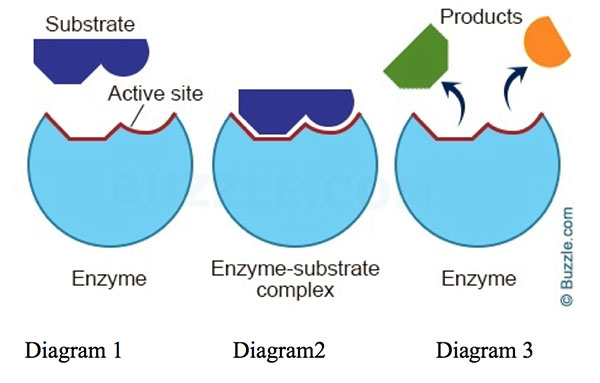
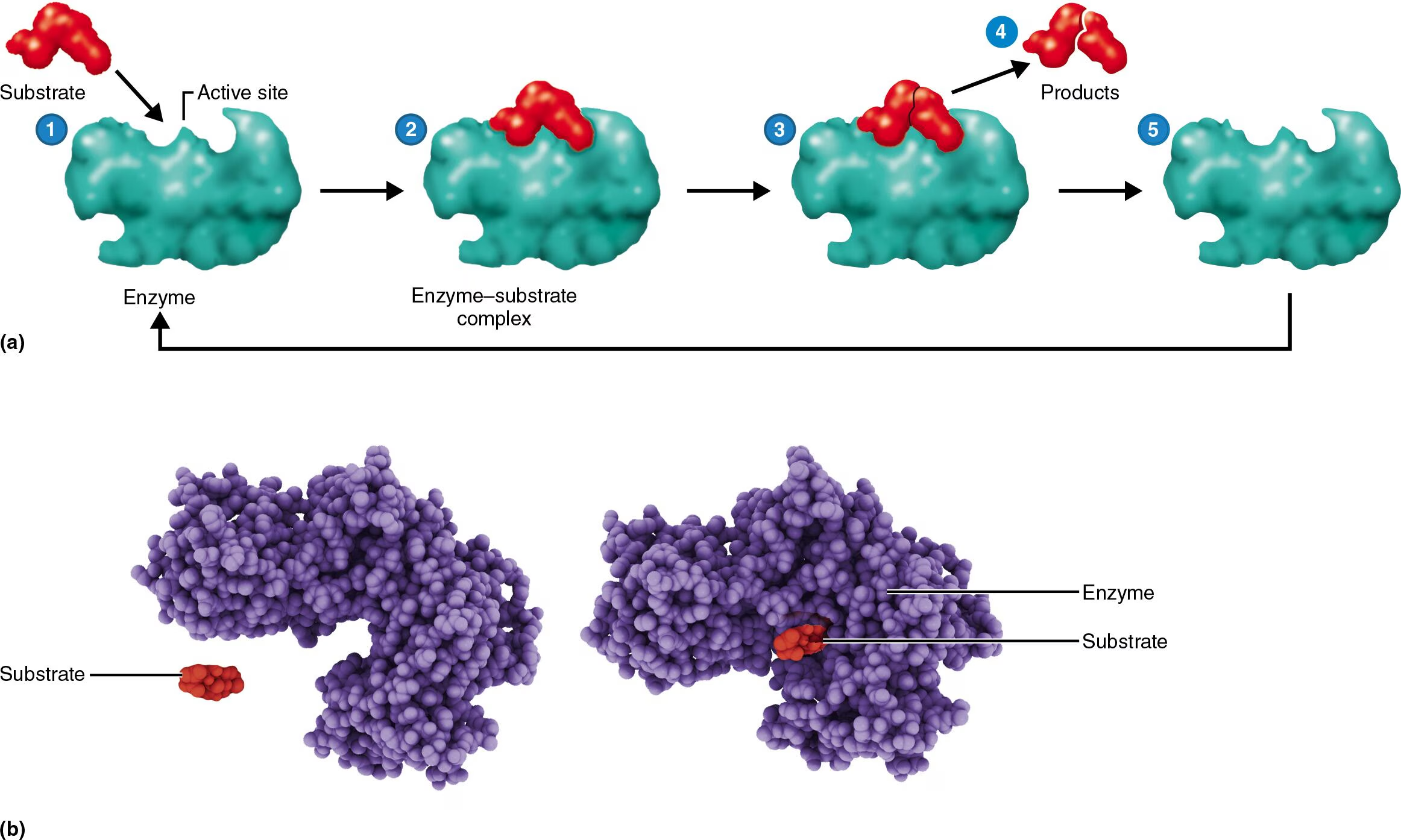
How enzymes work
The substrate contacts the active site on the enzyme to form an enzyme–substrate complex.
The enzyme orients the substrate into a position that increases the probability of reaction, which enables the collisions to be more effective.
The substrate is then transformed/broken down into products, the products are released because they no longer fit the active site, and the enzyme is recovered unchanged, free to interact with other substrate molecules.
Collision theory
States that chemical reactions can occur when atoms, ions, and molecules collide in just the right way
collide with enough force to transfer to the bonds which break and create new bonds
activation energy is needed to disrupt electron configurations
increases collisions in a cell
Reaction rate
the frequency of collisions with enough energy to bring about a reaction
can be increased by enzymes or by increasing temperature or pressure
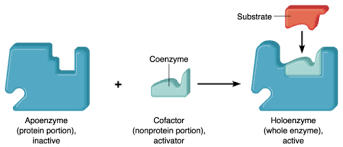
Apoenzyme
the protein portion of an enzyme
inactive and cannot perform catalytic function until attached to the cofactor
cofactor
nonprotein portion of an enzyme
activates the apoenzyme when attached to it
examples: Ions of iron, zinc, magnesium, or calcium
coenzyme - cofactor made of organic molecules (NAD+,NADP+, FAD, Coenzyme A)
Holoenzyme
when the apoenzyme and cofactor come together to form a whole, active enzyme
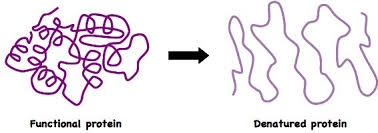
Protein denaturation
The shape of the protein changes
the protein unfolds
prevents enzyme from working properly (thereby stopping the part of metabolism related to that enzyme)
can lead to cell death
Causes of protein denaturation:
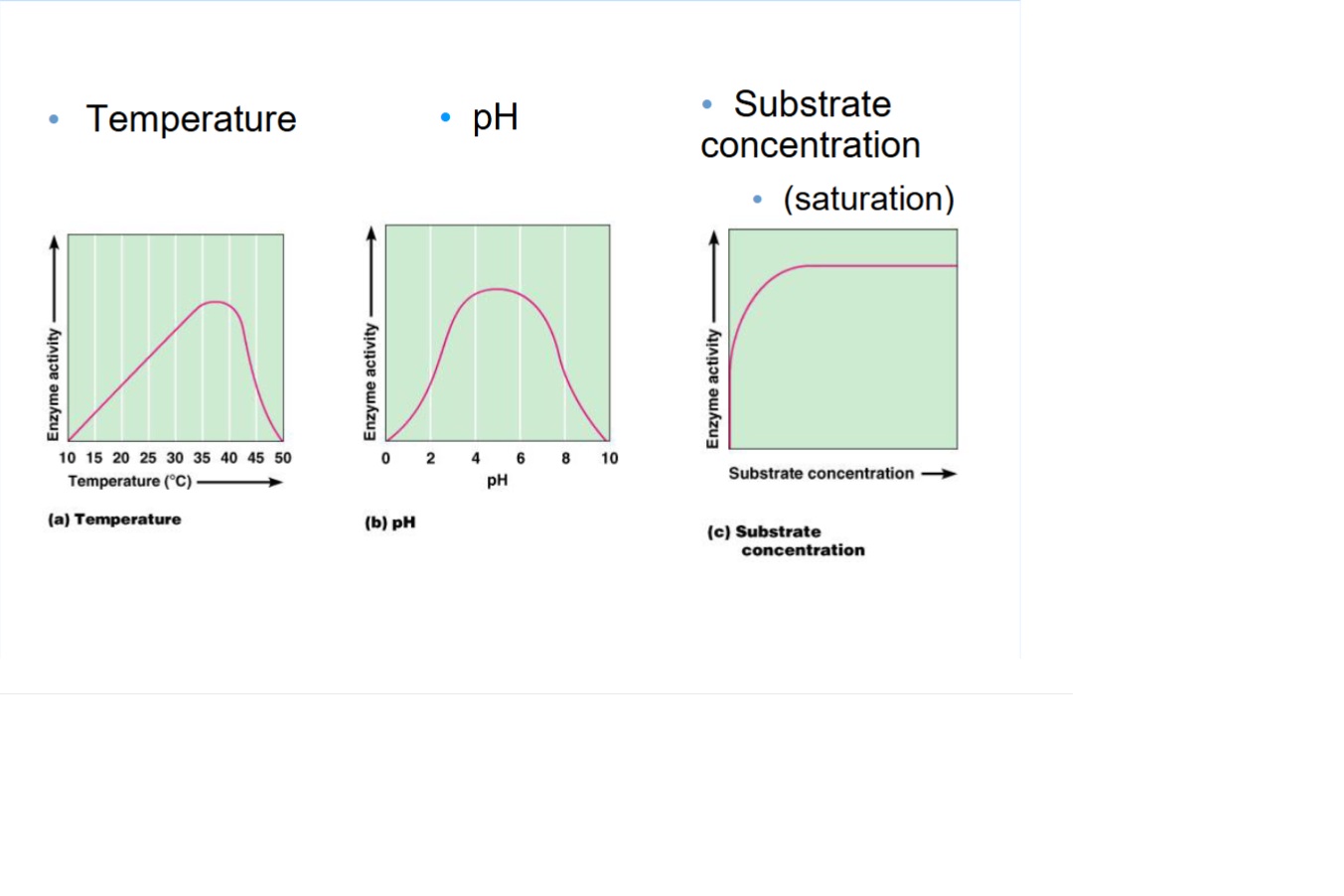
temperature (35-40 degrees C)
pH (4-6)
substrate concentration (enzyme activity plateaus as substrate concentration increases because an enzyme cannot work any faster than it can function in the molecular environment)
Competitive inhibition
inhibitor fits into the active site and blocks the substrate
competition between inhibitor and substrate
Noncompetitive binding
inhibitor fits somewhere else on the protein except the active site
changes the shape of the active site so the substrate cannot bind at the proper location
Feedback inhibition
the final product of a metabolic pathway can itself inhibit the pathway by binding to an enzyme early on in the pathway
a normal mechanism of cellular control because the cell can regulate its own metabolism
when enough product is made, the metabolic pathway will stop to preserve energy and resources
turns back on once product is depleted by freeing the enzymes and allowing them to work again
Metabolism
sum of all the chemical reactions that occur within a cell or organism
Catabolism
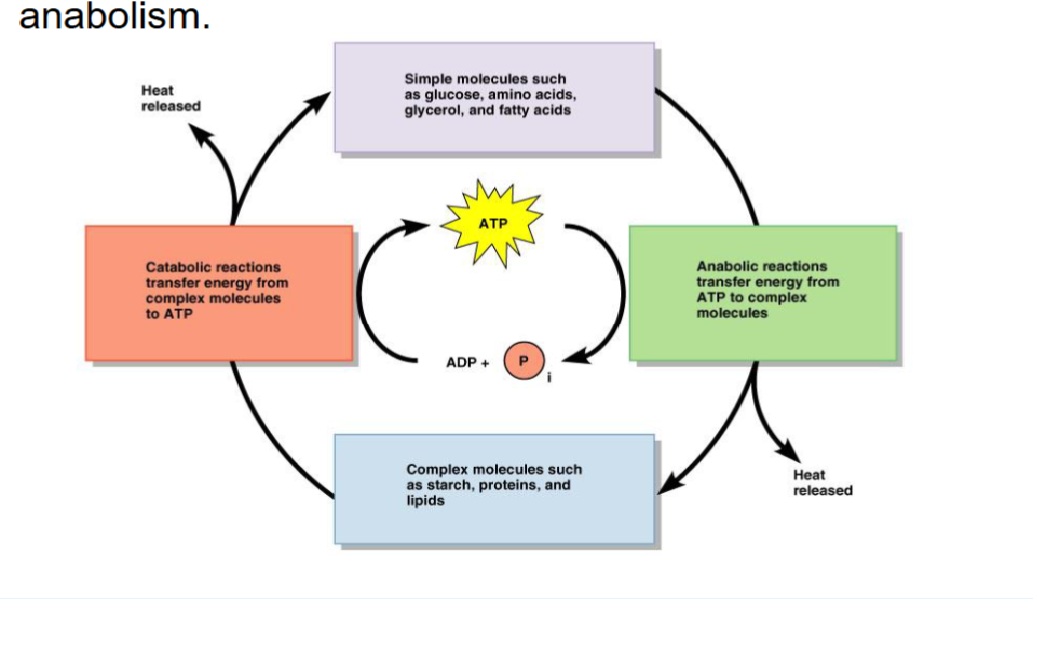
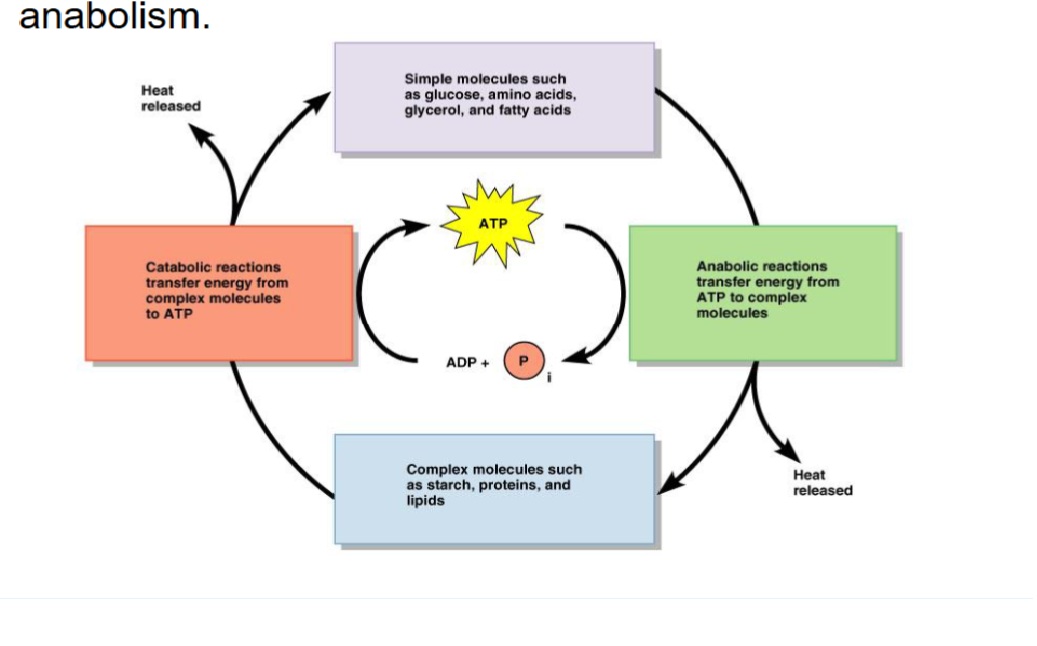
The breakdown of complex organic molecules into simpler molecules such as glucose, amino acids, glycerol, and fatty acids
provides the building blocks and energy for anabolism
the energy released from chemical bonds is transferred to molecules of ATP for storage or lost as heat
Anabolism
The building up of complex molecules from simpler ones
requires energy
generates material required for cellular growth
Metabolic pathway
All the build up and breakdown of molecules that occurs through an intricate series of steps
sequences of enzymatically catalyzed chemical reactions in a cell that in total become the cell’s metabolism
determined by enzymes because all chemical reactions need to occur rapidly
Glycolysis
The oxidation/breakdown of glucose into pyruvic acid
first stage of carbohydrate catabolism (cell respiration)
starting block for Krebs cycle (a process in cell respiration) and fermentation
Splits glucose, a six-carbon sugar, into two three-carbon sugars. These sugars are then oxidized, releasing energy, and their atoms are rearranged to form two molecules of pyruvic acid.
Electron transport chain
(Part of cell respiration, not fermentation)
requires O2
produces most of an aerobic cell’s energy/ATP
Aerobic respiration
The final electron acceptor in the electron transport chain is molecular oxygen (O2)
occurs when oxygen is present
produces 32-36 ATP/Glucose
Anaerobic respiration
The final electron acceptor in the electron transport chain is NOT molecular oxygen (O2)
occurs when oxygen is NOT present
yields less energy than aerobic respiration because only part of the Krebs cycle operates under anaerobic conditions.
cells will use other inorganic molecules like nitrate, sulfate, and carbonate (as well as some organic molecules like acid and alcohol) instead of O2.
Fermentation
releases energy from oxidation of organic molecules
does not require oxygen
does not use Krebs cycle or an electron transport chain
use of organic molecules as the final electron acceptor
yields the least amount of energy
Anaerobic respiration vs Fermentation
Organisms use anaerobic respiration when:
They possess an electron transport chain.
Alternative electron acceptors are available in the environment.
They benefit from obtaining more ATP per glucose.
Organisms use fermentation when:
They lack an electron transport chain.
Suitable external electron acceptors are unavailable.
Simplicity is advantageous.
Energy demands are relatively low.
Common products produced by fermentation:
Performed by:
yeasts
bacteria
molds
animal muscle cells
Products:
sugar into lactic acid: sauerkraut, kimchi, yogurt, pickles, kefir
Yeasts convert sugar into ethanol and carbon dioxide: beer, wine, cider, leavened bread
Uses molds and bacteria to break down proteins: soy sauce, miso.
Cell respiration: How it works
Glycolysis is the oxidation of glucose to pyruvic acid with the production of some ATP and energy-containing NADH.
The Krebs cycle is the oxidation of acetyl CoA (a derivative of pyruvic acid) to carbon dioxide, with the production of some ATP, energy-containing NADH, and another reduced electron carrier, FADH2 (the reduced form of flavin adenine dinucleotide).
In the electron transport chain (system), NADH and FADH2 are oxidized, contributing the electrons they have carried from the substrates to a “cascade” of oxidation-reduction reactions involving a series of additional electron carriers. Energy from these reactions is used to generate a considerable amount of ATP. In respiration, most of the ATP is generated in the third step.
Final electron acceptors:
O2 if aerobic
inorganic molecules if anaerobic