Unit 1: Gases and Kinetics
 Call Kai
 Learn
Learn Practice Test
 Spaced Repetition
 Match
Match Flashcards
 Knowt Play
1/127

There's no tags or description
Looks like no tags are added yet.
128 Terms
Which of the following samples has the largest total number of atoms?
a. 1.00 mol of 𝑁2𝐻4
b. 5.00 mol of 𝐴𝑟
c. 2.00 mol of 𝐶𝑂2
d. 1.00 mol of SF6
D
Charles’s Law
𝑉 ∝ 𝑇 (𝑤ℎ𝑒𝑛 𝑝 𝑎𝑛𝑑 𝑛 𝑎𝑟𝑒 𝑐𝑜𝑛𝑠𝑡𝑎𝑛𝑡)
𝑝 ∝ 𝑇 (𝑤ℎ𝑒𝑛 𝑉 𝑎𝑛𝑑 𝑛 𝑎𝑟𝑒 𝑐𝑜𝑛𝑠𝑡𝑎𝑛𝑡)

Avagadro’s Principle
The volume is proportional to the number of moles at a constant pressure and temperature 𝑉 ∝ 𝑛 (𝑤ℎ𝑒𝑛 𝑝 𝑎𝑛𝑑 𝑇 𝑎𝑟𝑒 𝑐𝑜𝑛𝑠𝑡𝑎𝑛𝑡)
What happens if you combine Boyle’s, Charles’s, and Avagadro’s laws/principles?
𝒑𝑽 = 𝒏𝑹𝑻
The equation of state for the ideal gas or the ideal gas law
Dalton’s Law
The total pressure of a mixture of non-reacting gases is the sum of the individual partial pressures of each gas
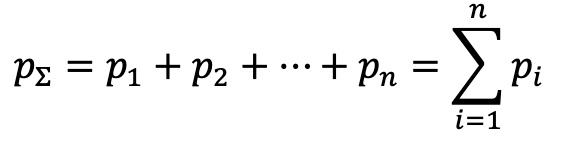
Mole fraction
The number of moles of a component divided by the total number of moles of all components.

Thus, the partial pressure of a gas in a mixture may be calculated by?
Multiplying the mole fraction of the gas by the total pressure.
Kinetic Molecular Theory of gases
1. Gas is made of particles – atoms or molecules.
2. The distance between the particles is greater than the size of the particles. The particles are so small that their volume is negligible. In an ideal gas they are just points with no volume.
3. The particles are in constant and random motion. The collisions with the walls of a container create the pressure in the system.
4. Any interactions between the particles are assumed to be negligible, i.e. the particles do not exert any force on each other, they do not attract each other, they do not repel each other.
5. Any collisions between the particles are elastic, i.e. they can lose and gain energy upon collisions but no energy is lost as heat. Average kinetic energy of particles (related to speed) is directly proportional to their temperature.
For 𝑛𝑅𝑇 = 𝑐𝑜𝑛𝑠𝑡:
𝑝 = 𝑛𝑅𝑇 1/ 𝑉
The ideal gas law predicts that? MKT predicts?
A decrease in volume results in an increase in pressure.
From the MKT point of view: volume decreases → more collisions at walls → pressure increases
For nR/ v = 𝑐𝑜𝑛𝑠𝑡:
𝑝 = 𝑛𝑅T / V
The ideal gas law predicts? MKT?
Direct proportionality - an increase in temperature results in an increase in pressure.
From the MKT point of view: temperature increases → velocity of molecules increases → more collisions at walls plus larger force exerted at walls → pressure increases.
For nR / p = 𝑐𝑜𝑛𝑠𝑡:
𝑉 = 𝑛𝑅T / p
The ideal gas law predicts? MKT?
Direct proportionality - an increase in temperature results in an increase in volume.
From the MKT point of view: temperature increases → velocity of molecules increases → more collisions at walls plus larger force exerted at walls → volume needs to increase to keep pressure constant.
For RT/p = 𝑐𝑜𝑛𝑠𝑡
𝑉 = 𝑅𝑇n / p
The ideal gas law predicts? MKT?
Direct proportionality - an increase in the number of molecules (moles) results in an increase in volume.
From the MKT point of view: number of moles increases → number of collisions increases, including collisions at the walls → volume needs to increase to keep pressure constant.
Chemistry
Study of matter and its changes
Matter
Has mass and occupies space
Kinetics
How fast are rxns?
Equilibrium
How complete rxn is?
Thermodynamics
How much energy is involved?
Concentration
Amount of substance in a given vol of fluid
Molarity
M = moles/ L
Dilution
Used to change concentration of solution
Stoichiometry
How much reacts and in what proportion
Excess vs limiting reagant
Remains vs all reacts
Claus process
Used to strip toxic H2S from natural gas so safe to use
What is the pyproduct S (s) used for from the claus process?
Used to support Global Farming, used to make fertilizer and used to extract phosphate.
Boyle’s law
V=k/p k=(proportionality constant)
Charle’s law
V = bt
Avagadro’s law
V= an n= # moles
V = kba Tn/p becomes what?
PV = nRT R= universal gas constant
Is the IGL ideal?
Idela but most real gases come close in most situations
Using IGL
For most problems when given all but one variable and so you solve for that variable or when there is a change from inital (i) to a final (f) condition.
IGL with constant T,n
PiVi=PfVf
IGL with constant n
PiVi/Ti = PfVf/Tf
Molar volume at STP
0 degrees C, 1 atm
1 mol of any gas has how many L?
22.4
IGL for denisty
P = dRT/M
Dalton’s Law of Partial Pressure
Total pressure of a gas mixture is equal to the sum of the pressures of each individual gas
Ptotal = P1 + P2 + p3 +…Pn
If ideal than P1 = n1RT/V , P2 = n2RT/V…etc can equal to?
Ptotal = ntotal RT/V
Mole fraction
Xi = ni/ntotal = Pi/Ptotal
What equation do you use even gas is collected in an oven H20 in an experiment?
Makes a convenient seal to trap gas and there is H20 vapor oven liquid (value of H20g has been measured multiple times expiramentally so find value in book)
Ptotal = Pgas + Ph20

Gas velocity formula
Qualitative only

How does gas velocity change with T and molar mass?
propotional to T so u increases with T
proportional to 1/M so u decreases with increase in M

Describe O2 at 1000 degrees C
More temp, more energy, faster molecules and more molecules at this speed than at 25 degrees C
How does mass impact speed?

We understand reactions through?
Stoichiometry - balanced reactions (how much reacts)
Energetics - or “spontaneity” - tendency to occur (thermodynamics)
Rate
How fast reaction proceeds to completion
Spontaneity does not describe?
Reaction speed!

Rates can widely differ, provide at least three examples?

Chemical kinetics
Study of speeds or rates of chemical reaction.
Reaction rate
Measures changes in reactant or product concentration with time.
Common unit of reaction rate
M/sec some version of amount/time
Factors impacting reaction rate
Nature of reactants
Reactna concentration
Reactant temperature
Catalysts
Nature of reactants
ions react quickly (electrostatic attraction) micros scale
Covalent molecules react slower hrs→days (breaking reforming bonds)
Strong bonds react slower than weak bonds (energy needed to break bond)
Reactant concentration
Molecules MUST collides in order to react. Free to move in solution. If increase concentration of reactant, increase probability of collision and hence reaction rate.
Reactant temperature
All reaction rates increase with increased temp. Greater kinetic energy, motion, and collision rate
Catalysts
A substcane that increases reaction rate without being consumed
Average rate of change
Change over specified interval
Instantaneous rate
Slope of a tangent to a reaction curve at a point in time.
Initial rate
Instantaneous rate a time t = 0
Rate of formation and disappearence are governed by?
Stoich
How can rates change over time?
Because concentrations are changing
I2 + H2 → 2HI
What are the signs and values for reactant and product rates?
[I2] + [H2] changes are negative → disappearing and they do so at ½ rate (due to stoich_ that [HI] forms positive values
Since rates of formation + disappearance can differe we often express formal reaction rate as?
delta x / delta t for all species in rxn
Formal reaction rate
Rate of product formation / stoich coefficient =
rate of reactant disappearance / stoich coefficient
(normalizes all rates)
Rate laws
Concentration and temp affect reaction rates
Differential rate law
describes how reaction rate varies with concentration at a given temp
rate = k[a]^a[b]^b
k
rate constant and is a function of temperature
a and b , a+b?
are respective reactant orders
overall reaction order

Orders and overall order
1, 1, 2
Orders are not determined by?
Overall reaction stoichiometry, but by expirament
k units depend on what?
on arte law since rate always amount/time (M/s)
“Inital rate” method
Srveral reaction experiments; change conc of only 1 reactnat at a time
Rate measured at same time t for each; often in first few seconds of reaction
Data are compared to see how rate varies
Orders are determined, then k is calculated from data.
Generally if double conc —> double rate is what order?
double conc → quadruple rate is what order?
1st
2nd
A plot of ln Conc. vs. time produces a straight line. Therefore, it must be a? How do you find k?
1st order reaction
Obtain from the slope.
Integrated rate law
Describes how conc changes with time
Integrated rate law principles
expressions differ for diff reaction orders
more detailed approach used for complex reactions
here focus is on understanding principle
For integrated rate law reactions with a single reactant (decomposition) are what order?
1st order reactions

First order integrated rate law
ln[A] = -kt + ln [A]o or ln[A]/[A]o = -kt
if k and [A]o are known then [A] for any time t can be? Also what does the formula look like?
Calculated
y = mx + b
How do you know if you have first order rxn?
Use [A] vs t data, force it into a ln [A] v t plot and if you get a straight line then data IS 1st order and the k is the slope of the line (m=-k), if curved, then it is not.
Half life t ½
Convential measure of progress for event or chem process
Formally it is time needed for ½ of the intial reactant to disappear.
Industrially t1/2 is used for?
Tells us how rxn proceeding
Pharmeceticals application for t1/2
Drug ½ life in body → how long it remains
Environment ½ life
persistance in nature
½ equation for 1st order rxn
t1/2 = 0.693/k
What does 1st order t1/2 describe?
Says this quantity is constant for a given k, and not conc dependant
For 1st order rxn, t1/2 will always be same regardless of starting concn
Integrated 2nd order rate law
1/[A] = kt + 1/[A]o
Integfrated 2nd order rate law graphical view
y = mx + b so it is a straight line with [A] vs t data, 1/[A] vs t plot having a slope = k
½ life for 2nd order rxn
t1/2 = 1/ k[A]o
Zero order rxn
rate = k (rate is constant and NOT conc dependant)
Integrated rate law for 0 order rxn
[A] = -kt + [A]o
Surface reactions
When 100% of surface is covered, the conc in solution above it does not matter to the rate and it is a 0 order rxn.
Zero order graphical view
plot [A] vs t and straight line ONLY if 0 order and slope = -k
½ life for 0 order exn
t1/2 = [A]0 / 2k
Rate Law vs. Molecularity of Elementary Step


What can we do about this?
Actually 1st C-N bonds break and then 2nd C-C bonds form which is a series of stepes call “Reaction mechanism”
Reaction mechanism
Seeries of elementary steps where the sum of the steps gives overall rxn and the mechanism agress with experimentally determined rate laws.
Helps understand how a reaction proceeds to products because overall rxn tells us nothing about the mechanism

Explain what NO3 is and k1+k2
NO3 is intermediate so not a reactant or products but it is formed and consumed in process
k1+k2 are rate constants for individual reactions call elemantary steps
Rate law CAN be written from?
Elementary step of mechanism ‘molecularity’
Often one elementary step is MUCH slower than the others so overall rxn can only be as fast as this:
‘Rate determining Step” ← RDS
rate = k[A]^a , how does the value of k affect rate?
large k → fast rate
small k → slower rate