Lect.10 Transposition + Transposon mutagenesis
 Studied by 0 people
 Call Kai
 Learn
Learn Practice Test
 Spaced Repetition
 Match
Match Flashcards
 Knowt Play
1/24

Earn XP
Description and Tags
Name | Mastery | Learn | Test | Matching | Spaced | Call with Kai |
|---|
No analytics yet
Send a link to your students to track their progress
25 Terms
Transposons
“jumping genes”
DNA elements that can hop or transpose from one place in the DNA to another
Transposition
Movement of transposons (hopping) (requires transposases)
Transposases
Enzymes that promote transposition and are encoded within the transposon
Cuts the donor DNA at ends of transposon and inserts the transposon into target DNA
Transposition offers a way of introducing __
Genes from one bacterium into the chromosome of another to which it has little DNA sequence homology
Homologous recombination
account for the majority of recombination in a cell
Results from the breaking and rejoining of 2 DNA molecules that have similar or identical sequence
Benefit of using “homology arms” in cloning
Non-homologous recombination
Does NOT require 2 DNAs to have the same/similar sequence and depends on the enzymes that recognize specific regions in the DNA that may/may not have similar sequences
Result of transposition
Transposon appears in a different site in the genome from where it was originally
DNA is cut out of one DNA strand —> may/may not be copied —> inserted into another location in the genome
Donor DNA
The DNA strand that the transposon originated from
Recipient DNA
The DNA strand that the transposon hops into
Why does transposition need to be tightly regulated and occur rarely?
don’t want it to jump into important genes and disable them
Worry about frameshift mutations
Smaller transposons (~1000bp) encode only the genes for the ___
Transposase that will promote movement
Larger transposons often encode additional genes for ___
regulation of movement
Factors beneficial for the host (like antibiotic resistance)
2 common features of transposons:
Inverted repeats
Direct repeats
Inverted repeats
found at the ends of bacterial transposons
Recognized by transposases that bind to form synapse for excision
Direct repeats
formed in the target DNA that bracket the transposon (AFTER integration of the transposon into the new area of DNA)
Not a part of the transposon; it sits right outside it
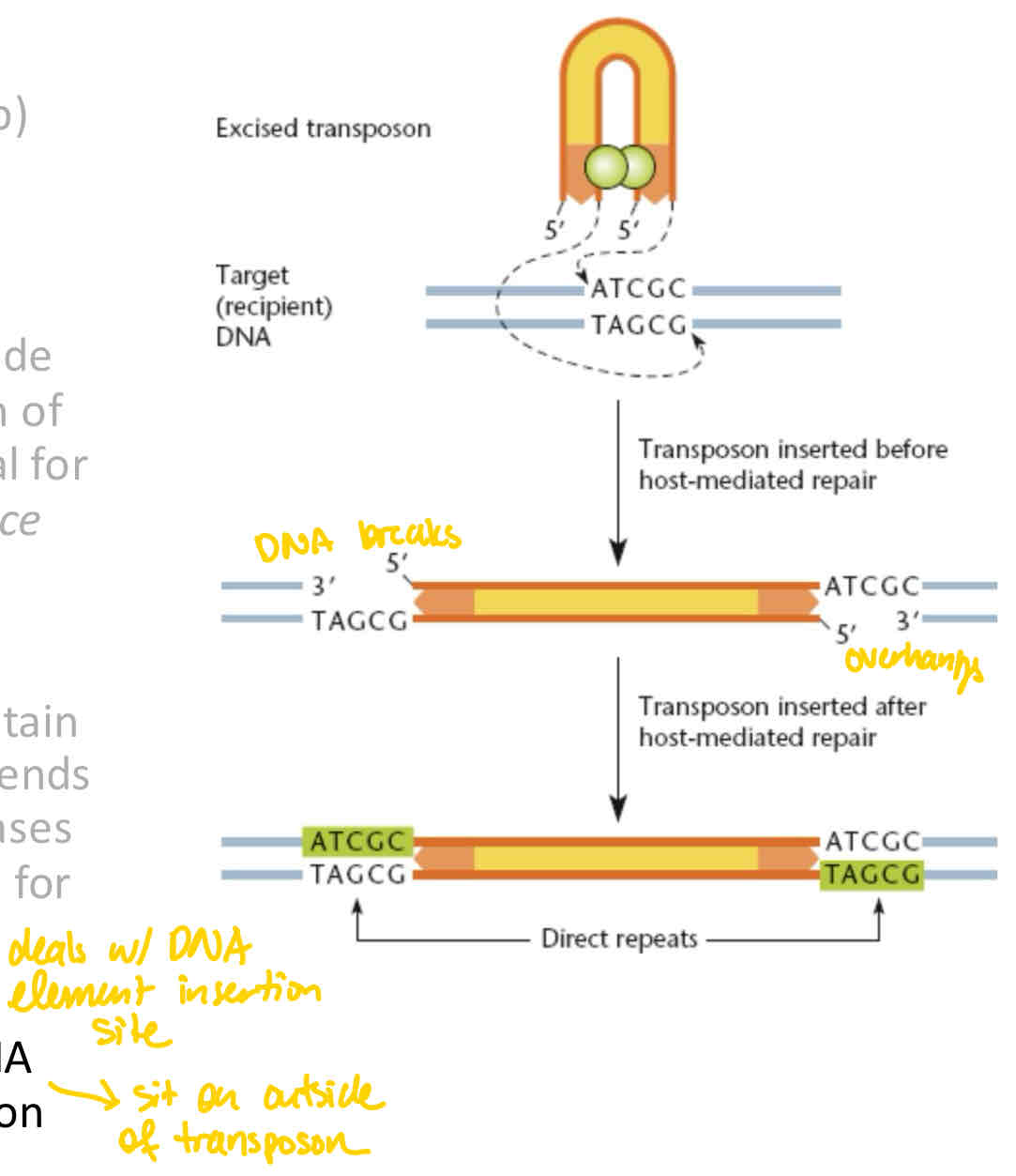
Insertion sequence elements (IS elements)
smallest bacterial transposons
Carry no selectable genes
Encode transposase
IS elements generally inactivate genes they hop into, resembling __ BUT they can _
deletion mutations
Revert
When an IS element inactivates a gene, why is it possible for it to be reverted
The IS element can simply “hop out” of that gene and into a new area of DNA
IS elements can cause __ effects
Polar
Composite transposons
2 copies of the same IS elements can combine to form a large transposon that will transfer everything in between
often contain selectable genes
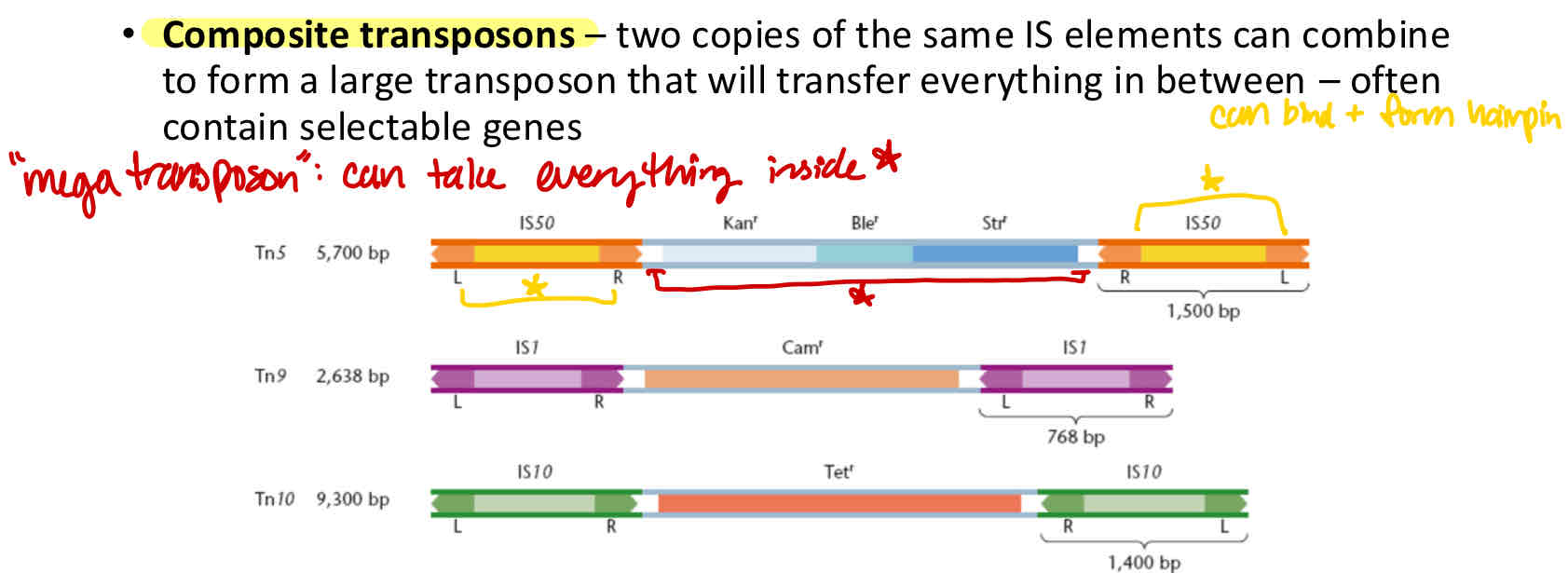
IS element vs Composite transposon
IS element (only has the transposase gene and inverted repeats)
Composite transposon: made up of 2 IS elements and will carry that genes that are in between the IS elements
Reverse genetics
Creating a targeted mutation and then studying the resulting phenotype (gene locus isolated —> introduce mutation —> test for phenotype/function)
Forward genetics
Discover the gene responsible for phenotypes (phenotype/function —> locus) (take phenotype, see what genotype caused it)
4 qualities of effective mutagenic transposons
Transpose at high frequency
Does not have a very selective target sequence
Carry an easily selectable marker (ex: AbxR)
Has a broad host range for transposition
(Transposon mutagenesis): Once selected, these transposons can be cloned into a vector that ___ inside the recipient. Then the transposon can move from the plasmid into the genome and __ a gene(s).
can NOT replicate (aka suicide system)
Interrupt
 Note
Note  Flashcards (32)