SCIENCE SECTION TEAS EXAM
 Call Kai
 Learn
Learn Practice Test
 Spaced Repetition
 Match
Match Flashcards
 Knowt Play
1/180

There's no tags or description
Looks like no tags are added yet.
Name | Mastery | Learn | Test | Matching | Spaced | Call with Kai | Chat |
|---|
No analytics yet
Send a link to your students to track their progress
181 Terms
1. What are the three types of salivary glands and where are they located in the mouth?
- Parotid, sublingual, and submandibular glands located in the roof of the mouth, cheeks, and under the jawbone, respectively.
1. Which of the following substances is excreted by the kidneys to regulate blood pressure?
- Renin
1. What is the chemical formula for water?
- H20
1. Which of the following units is used to indicate length?
M
researcher collects data on the number of cars passing through a busy intersection at different times of the day for a month. This data would be most useful to analyze which of the following:
- traffic patterns during rush hour
1. What is the largest organ in the human body by surface area?
- Skin
1. Which of the following describes the function of ligaments?
- Ligaments attach two bones
1. What is the difference between innate and adaptive immunity?
- Innate immunity is present at birth while adaptive immunity is acquired after exposure to pathogens.
1. Which of the following is responsible for carrying amino acids to ribosomes during protein synthesis?
- tRNA
1. What are the steps involved in the scientific method?
- Observation, hypothesis, prediction, experimentation, analysis, conclusion.
1. What is the difference between a solid and a liquid?
- Solids have a definite shape and volume while liquids have a definite volume but no fixed shape.
1. Which part of the respiratory system is responsible for regulating breathing rate and depth?
- Diaphragm
1. What is the difference between a monosaccharide and a disaccharide?
- Monosaccharides are simple sugars that cannot be further broken down into simpler sugars while disaccharides are composed of two simple sugars.
1. Which of the following is the process by which DNA is copied into RNA?
- Transcription
1. What is the role of calcium in muscle contraction?
- Calcium is released from the sarcoplasmic reticulum to initiate the sliding of actin and myosin filaments.
1. What is the name of the dome-shaped muscle that plays a key role in breathing?
- Diaphragm
1. What is the role of the epididymis in sperm maturation?
- The epididymis stores and protects sperm cells until ejaculation.
1. Which of the following is a function of the respiratory system?
- Exchange of gases between the body and the environment
1. What is the difference between isotonic and isometric muscle contractions?
- Isotonic contractions produce movement while isometric contractions produce no movement.
Which of the following is a characteristic of innate immunity
- It provides immediate, non-specific protection.
1. Which of the following is NOT one of the four primary tissue types found in the human body?
- Exocrine glandular
1. Which of the following is a type of genetic mutation that involves the insertion or deletion of one or more nucleotides in a DNA sequence?
- Frameshift mutation
1. Which of the following is a chemical property of a substance?
- Reactivity with acid
1. Which statement best defines the difference between a physical change and a chemical change?
- A physical change involves the rearrangement of atoms and molecules while a chemical change involves the formation of new substances with different chemical properties.
1. During embryonic development, which of the following germ layers forms the nervous system?
- Ectoderm
1. What is the primary pigment responsible for photosynthesis in plants?
- Chlorophyll a
1. Which of the following is an example of an exothermic reaction?
- Burning wood
1. Which of the following statements is true regarding vaccines?
- Vaccines work by exposing the individual to a weakened or inactivated form of the pathogen
1. What is the function of ribosomes in a cell?
- To synthesize proteins in the cell
1. Which of the following is an example of a double-blind study?
- Both participants and researchers do not know which group participants are assigned to
1. What is the name of the hormone that regulates blood sugar levels in the human body?
- Insulin
1. What is the primary physiological function of erythrocytes in the human circulatory system?
- Transportation of oxygen to body tissues
1. What is the name of the joint that allows for rotation of the arm at the shoulder?
- Shoulder joint
1. What is the name of the valve that separates the left atrium and left ventricle in the heart?
- Mitral valve
1. What is the molecular geometry of a molecule of sulphur dioxide (SO2)?
- Bent
1. What is the name of the genetic disorder caused by the presence of an extra chromosome 21?
- Down syndrome
1. Which of the following types of RNA carries amino acids to the ribosome during protein synthesis?
- Transfer RNA
1. What are the five regions of the vertebral column, starting from the top and moving downwards?
- Cervical, thoracic, lumbar, sacral, coccygeal
1. Which of the following ions binds to the troponin complex, initiating contraction of a muscle?
- Calcium
1. Which of the following is used to determine a person's DNA sequence?
- Genes
1. Stimulus: 1of 1. A group of students performed an experiment to test terminal velocity, which is the greatest speed obtained by a falling object. The students dropped different numbers of coffee filters and measured the resulting terminal velocity. Which of the following conclusions is supported by the data in the following data table?
- Heavier objects fall faster than lighter objects.
1. In the following data table of an experiment carried out at 4°C (39.2 F) over 4 hours. Which of the following options represents the dependent variable?
- Bag mass change
1. Which of the following represents the complementary strand of a DNA sequence 3' TCGATCGCA 5'?
5' AGCTAGCGT 3'
1. Parasitic worm infestation is hypothesized to be damaging to the host. However, scientists have recently discovered that worm infestation can relieve the effects of certain autoimmune disorders. In which of the following ways should the hypothesis be modified, given the new findings?
- Worm infestation reduces the severity of certain autoimmune disorders
1. Which of the following is correct regarding the pH scale?
- A substance with a pH of 3 is 10 times more acidic than a substance with a pH of 4
1. The pleura is a connective tissue sheath that covers which of the following organs?
Lung
1. Hikers who found a human body at high altitude in the Italian Alps thought the man had died recently, but tests indicated he was shot with an arrow more than 5,300 years ago. Which of the following would be the best reason for prolonged preservation of the body?
- The body was frozen in the cold temperature of the Alps shortly after he died and remained frozen until it was found
1. Experiments cannot validate hypotheses, only falsify them. The statement above can be restated in which of the following ways?
- A hypothesis that has not been falsified remains provisional
1. In which of the following regions of the body are the tibia and fibula?
- Crural
1. Which of the following functions does the myelin sheath perform for a nerve cell?
- Insulation
1. Which of the following occurs in an oxidation reaction?
- Removal of electrons
1. Punnet Square
An organism with an unknown genotype is crossed with another organism that shows the recessive trait (aa). The Punnet square below shows the results. Which of the following is the unknown genotype?
Aa
1. To accurately measure the density of a series of small irregular solids made of plastic, wood, fibreglass, and glass, a student will need which of the following laboratory tools?
- Graduated cylinder, water, weighing balance
1. Emphysema caused by damage to alveoli from toxins and pollutants is likely to result in the body having difficulty performing which of the following actions?
- Exchanging oxygen and carbon dioxide
1. For which of the following reasons does a chloride ion have a negative charge?
- It gained an electron
1. A patient goes to the doctor with a cold and sore throat and asks for antibiotics. The doctor refuses to prescribe antibiotics to the patient because the illness is caused by which of the following pathogens?
- Virus
1. Which of the following is an efferent neuron that is responsible for releasing a neurotransmiter that stimulates a muscle cell to contract?
- Motor neuron
1. Which of the following actions allows for repolarization of a neuron?
- The opening of potassium channels allowing potassium to leave the neuron
1. Which of the following structures is an exocrine gland?
- Parotid gland
1. Which of the following classes of biological molecules includes enzymes?
- Proteins
1. Parasitic worm infestation is hypothesized to be damaging to the host. However, scientists have recently discovered that worm infestation can relieve the effects of certain autoimmune disorders. In which of the following ways should the hypothesis be modified, given the new findings?
- Worm infestation reduces the severity of certain autoimmune disorders.
1. If a portion of a strand of DNA bases reads 3’TCGATCGCA 5’, what would the sequence of bases on the complementary strand read?
5'AGCTAGCGT 3'
1. An individual suffers severe blunt trauma to the thoracic cavity. Which of the following organs are at greatest risk from this injury?
- Heart and lungs
1. Which of the following is correct regarding the pH scale?
- A substance with a pH of 3 is 10 times more acidic than a substance with a pH of 4.
1. Which of the following is a component of the integumentary system that secretes pheromones?
- Apocrine gland
1. Which of the following processes causes most of the carbon dioxide from the blood to move into the alveoli?
- Diffusion down a concentration gradient
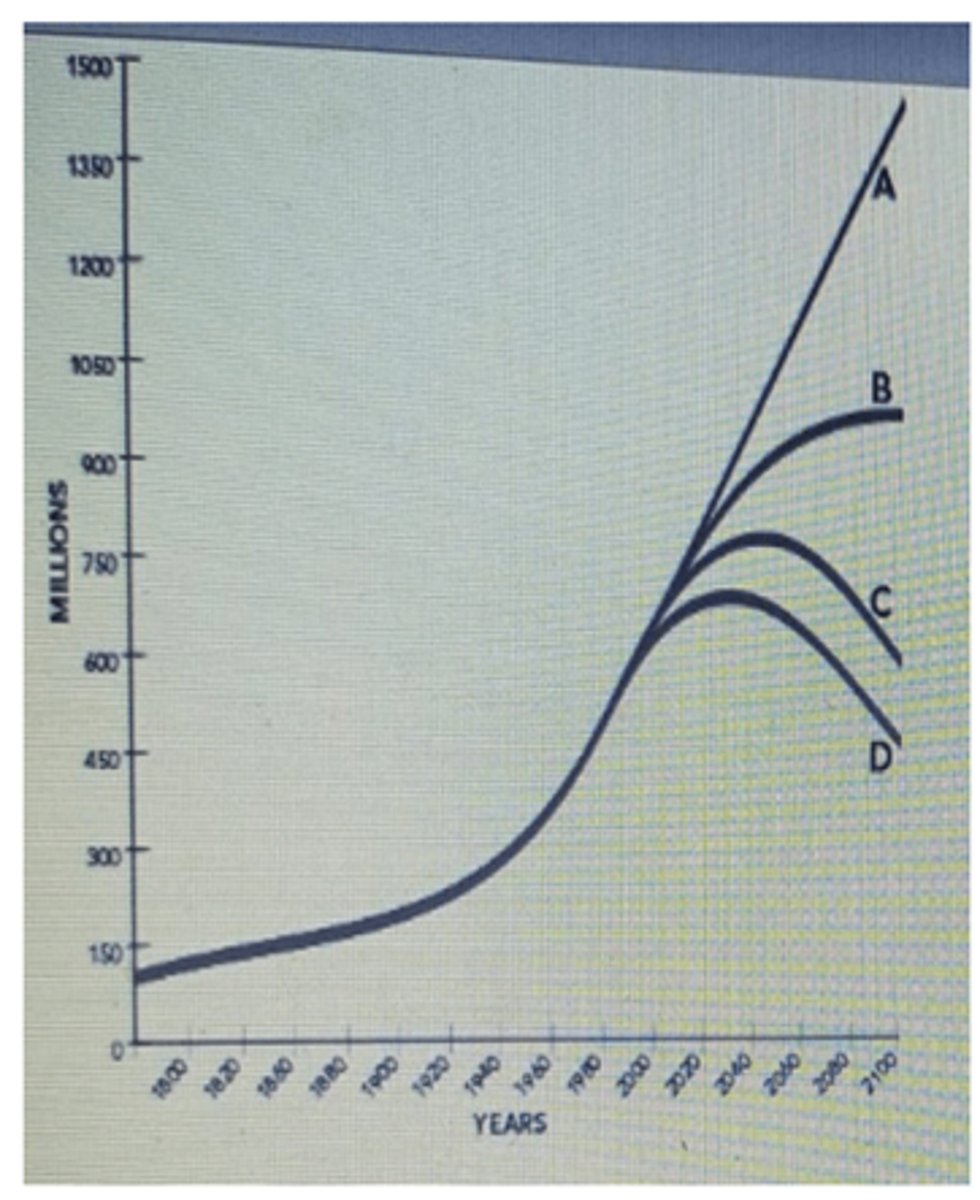
1. Which of the following growth curves shows a population that is at its carrying capacity?
B
1. Lipids absorbed in the small intestine will first enter which of the following structures?
- Lacteal vessels
1. Which of the following layers of skin lack blood vessels?
- Epidermis
1. Which of the following immune system molecules creates holes in the cell membranes of their target cells in order to destroy the cell?
- Perforins
1. Use the table below to answer the question. Which of the following conclusions is supported by the data?
- . Air resistance could be greater for A than for B.
1. Which of the following properties does soap, an emulsifier, have that make it useful for washing dirt off one’s hands with water?
- Soap's dual polar and nonpolar nature helps bond oil and water
1. Which of the following correctly orders structures from simple to complex?
- Atoms, cells, tissues, organs
1. The covalent bonds between the monomers of an enzyme macromolecule are:
- Peptide bonds
1. Which of the following is a protein present in blood plasma?
- Fibrinogen
1. Which of the following describes a genetic mutation that results in uncontrolled division of a single cell within the body?
- Cancer
1. Which of the following tools can be used to measure the turbidity of a liquid by measuring the transmission of light through the sample?
- Spectrophotometer
1. A researcher wants to gather data on the average wing strength of all birds found in the American Northwest. The researcher only has one small net, so all large birds were excluded from the study. The researcher's results were different than expected, but he believes his data include enough birds to estimate the strength of all birds. For which of the following reasons should this data be rejected?
- Data are biased by the methodology
1. If a mother's____________ cell contains mutated DNA, this mutation can be passed to her offspring. Which of the following options correctly completes the sentence above?
- Germ
1. The mitochondrial inner membrane carries out the same function in cellular respiration as the ________ membrane of chloroplasts in photosynthesis. Which of the following correctly completes the sentence above?
- Thylakoid
1. Both digestion and absorption happen in which of the following parts of the digestive system?
- Small intestine
1. A study found two processes, Process A and Process B, to be correlated. Which of the following is true for these processes?
- The study does not indicate a causal relationship between the processes.
1. How many times stronger is the hydrogen-ion concentration of a pH 4 solution as compared with a pH 9 solution?
100,000
1. Which of the following terms describes the relaxation of the chambers of the heart during the cardiac cycle?
- Diastole
1. Genetic information describing the characteristics of an organism is found in which of the following?
- Nuclei
1. Which of the following organs filters excess solutes from the blood?
- Kidney
1. Which of the following is a function of bone?
- Storage of minerals
1. Which of the following ions binds to the troponin complex, initiating the contraction of a muscle?
- Calcium
1. A group of students perform an experiment to test terminal velocity, which is the greatest speed obtained by a falling object. The students dropped different numbers of coffee filters and measured the resulting terminal velocity. Which of the following conclusions is supported by the data in the following data table?
- Heavier objects fall faster than lighter objects.
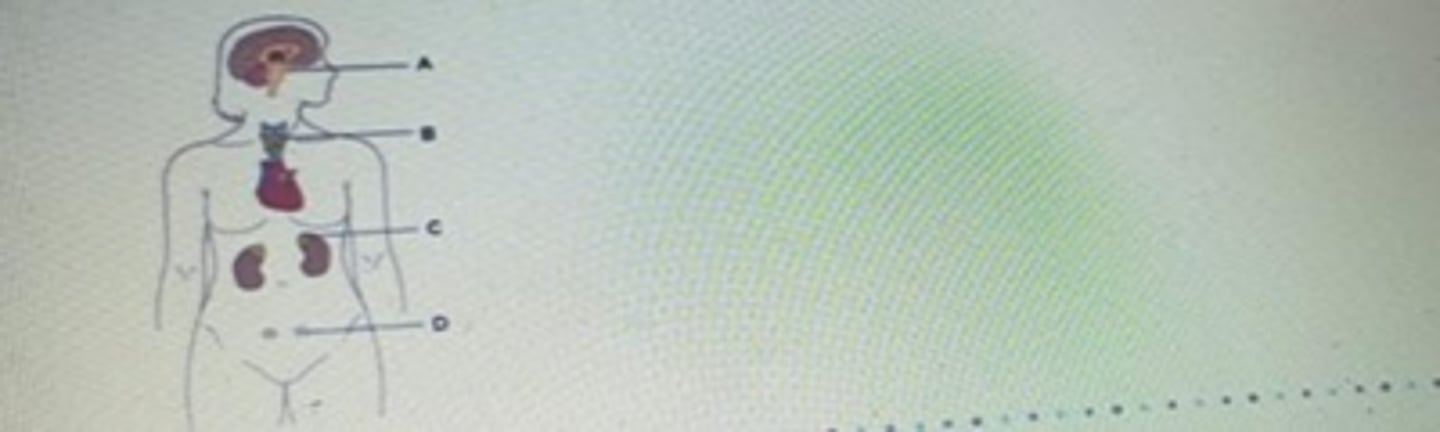
1. Which of the following endocrine organs in the diagram below is involved in regulating milk production following childbirth?
- Pituitary gland
1. Which of the following statements best describes the function of erythropoietin in the human body?
- It aids in raising hemoglobin levels in the blood
1. The pleura is a connective tissue sheath that covers which of the following organs?
- Lung
1. Which of the following ions binds to the troponin complex, initiating contraction of a muscle?
- Calcium
1. Which of the following allows the AIDS virus, which contains RNA, to insert viral DNA into the DNA of a host T-cell after the AIDS virus enters the cell?
- Reverse transcriptase, an enzyme encoded by the virus.
1. In the following data table of an experiment carried out at 4° C (39.2° F) over 4 hours, which of the following options represents the dependent variable?
- Bag mass change
1. Hikers who found a human body at high altitude in the Italian Alps thought the man had died recently, but tests indicated he was shot with an arrow more than 5,300 years ago. Which of the following would be the best reason for prolonged preservation of the body?
The body was frozen in the cold temperature of the Alps shortly after he died and remained frozen until it was found
1. In a certain plant, red flowers are dominant over white flowers. A plant heterozygous for red flowers and a plant with white flowers are crossed. Which of the following is the expected proportion of phenotypes in the next generation?
- 2 red, 2 white
1. Which of the following respiratory structures is affected by a disease that disrupts gas exchange, such as emphysema?
- Alveoli
1. The vermiform appendix extends from the region of the large intestine known as which of the following?
- Cecum
1. Which of the following structures drains oxygen-depleted blood from the kidneys?
- Renal Vein