ECO 202 Module 8: Consumer Choice and Behavioral Economics
 Studied by 0 people
 Call with Kai
 Learn
Learn Practice Test
 Spaced Repetition
 Match
Match Flashcards
 Knowt Play
1/22

There's no tags or description
Looks like no tags are added yet.
Name | Mastery | Learn | Test | Matching | Spaced | Call with Kai |
|---|
No study sessions yet.
23 Terms
utility
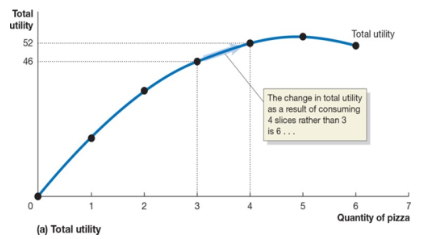
the enjoyment or satisfaction that people receive from consuming goods and services
marginal utility
the change in total utility a person receives when consuming one additional good or sevice
law of dimishing utility
the principle that consumers experience diminishing additional satisfaction as they consumer more of a good or service during a given period of time
budget constraint
limited amount of income available to consumers to spend on goods and services
marginal utility per dollar spent
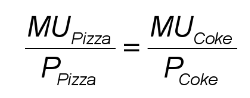
rate at which that item allows the consumer to transform money into utility, MU/price of item
rule of marginal utility per dollar spent
customers should seek to equalize the “bang for their buck,” you should buy products up to the point where the last unit X and the last unit Y purchased give you equal increases in utility per dollar
satisfy the rule of marginal utility per dollar spent and exhaust your budget
income effect
the price of X drops, you have more purchasing power, will result in an increase in demand. you can afford more X than before, so it functinos like an income increase
if X is a normal good, the price decrease will cause you to consume more X
if X is an inferior good, the price decrease will cause you to consume less X
substitution effect
when price of X falls, X becomes cheaper relative to Y and marginal utility per dollar of X increase
lower price X reduces opportunity cost of X because now you have to give up less Y to consume X
Giffen good
a good with an upward-sloping demadn curve, has a larger income effect than substitution effect
social influences on demand
celebrity endorsements: firms use celebrity endorsements regularly because consumers might believe the celebrity knows more about the product or using the product will make them more like a celebrity
network externalities: situations in which the usefulness of a product increases with the number of consumers who use it
may result in market failure if enough people become locked into inferior products
ultimatum game
Person A decides how to split $20 between them and person B. If B accepts, both players receive the split, if B reject, neither receives anything
dictator game
ultimatum game where person B cannot reject, person A most often offered a $10/$10 split over an $18/$2
as the dollar amount incerases, people tend to be less generous with their offers and reject unfari offers less
people are less likely to give away money they feel entitled to
behavioral economics
the study of situations in which people make choices that do not appear economically rational
1) taking into account monetary costs but ignoring nonmonetary opportunity costs
2) failing to ignore sunk costs
3) being unrealistic about their own future behavior
ignoring nonmonetary costs
if you own something you could sell, you incur opportunity costs if you use it youself. if you have a super bowl ticket and use the ticket, you incur the opportunity cost of the profit you would make from selling the ticket
endowment effect: the tendency of people to be unwilling to sell a good they already own, even if they are offered a price that is greater than the price they would be willing to pay to buy the good if they didn’t already own it
failing to ignore sunk costs
sunk cost: a cost that has already been paid and can’t be recovered
once you have paid money and can’t get it back, you should ignore that money in future decisions you make
ex) if you lost a $20 movie ticket, another ticket is $20 but you think $40 is too much - you are mistakenly allowing sunk costs to influence your decision
being unrealistic about future behavior
people make decisions that are inconsistent with their long-run intentions
ex) you smoke today but say you’ll quit some time in the future
rule of thumb
making general rules that often, but not always, product optimal results. can save decision-making time
ex) shopping at a store because it is cheaper but not continually checking to see if this is still true
anchoring
“irrelevant” information can often influence behavior. if uncertain about a value/price, people will anchor it to another known value, even if that value is irrelevant
indifference curve
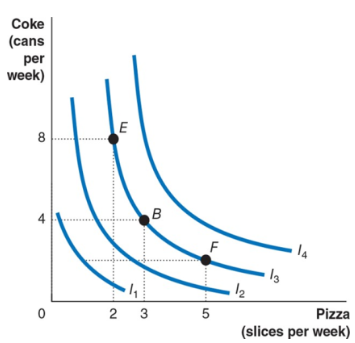
a curve showing the combinations of consumption bundles that give the consumer the same utility
points along a line have equal preference
lower indifference curves represent lower utility levels, and vice versa
marginal rate of substitution
the rate at which the consumer is willing to trade off one product for another while keeping the consumer’s utility constant
the slope of the indifference curve
tends to decrease as we move to the right, giving ICs a convex shape
finding optimal consumption
to maximize utility, a consumer needs to be on the highest IC, given their budget constraints
IC is tangent to the budget line and slopes are equal
when price falls, the budget constraint line moves outward
substitution effect is represented by a new point on the original IC and income effect is represented by a point on the new IC
at the optimal point of consumption, the IC is just tangent to the budget line and their slopes are equal
at optimum, MRS = Pricex/Pricey
relating MRS and marginal utility
