E02 SG (copy)
 Call Kai
 Learn
Learn Practice Test
 Spaced Repetition
 Match
Match Flashcards
 Knowt Play
1/78

Earn XP
Description and Tags
Name | Mastery | Learn | Test | Matching | Spaced | Call with Kai | Chat |
|---|
No analytics yet
Send a link to your students to track their progress
79 Terms
Coercive power
The power to punish
Expert power
The power of having specific skill or knowledge not found in others
Referent power
The power from admiration or respect
Reward power
The power from being able to provide a reward to others
Dashboard
A visual representation of key performance indicators or metrics
SKA’s
Skills, Knowledge, and Abilities
Protected classes
Groups of people protected from discrimination by law:
All persons of color
National Origin
Gender, including pregnancy but not sexual orientation
Religion
Types of harassment
Different forms of unwelcome behavior or conduct
Sexual, Racial, Ethnic Harrassment
Exempt and nonexempt employees (Course pack #14)
Categories of employees based on eligibility for overtime pay
Independent contractors (Course Pack #15)
Individuals hired to perform specific tasks or projects
Usefulness of information characteristics
Timeliness - the information is available in-time to make the optimal decision: real-time is the term used for “current” data.
Relevance - the information needed by the manager is provided and extraneous information that will confuse the decision making process is eliminated.
Completeness - Other side of relevance: information that is needed is provided and if not then uncertainty, ambiguity, and risk increase.
Quality - accuracy and reliability describe the quality of the information: accuracy is the reality and reliability is related to the variation of the results in repeated tests.
Definition of decision making
The Manager’s Task,
The process
by which managers
respond to opportunities and threats
by analyzing options
and making determinations
about specific organizational goals
and courses of actions
Structured/programmed decisions
Decisions that are routine and follow established procedures
Unstructured/unprogrammed decisions
Decisions that are novel and lack predefined processes
Characteristics of the decision environment
Factors that influence the decision-making process:
Bounded Rationality
Risk
Uncertainty
Information Symmetry
Ambiguous information
Time Constraints
Information Costs
Stakeholders
Individuals or groups affected by or with an interest in the outcome of a decision.
Those who have a claim on the success and failure of an organization.
The four types of ethics
Individual - personal standards and values on how one should interact with others
Societal - how members of a society should interact
Occupational - standards of behavior for a profession or trade
Organizational - guiding practices for a company’s managers to view their responsibility to stakeholders and not just stockholders/owners.
Trust
Willingness of a person or a group to have confidence in the goodwill and competency of another person or organization even though this willingness puts them at risk.
Reputation
How others see managers and organization as a result of their ethical behavior - This leads to trust.
Principle and agency theory
Concepts related to the relationship between principals and agents in decision-making
Management tools
Resources or techniques used to facilitate decision-making and organizational processes
ex; Decision Rights
Decision rights
An organizational rather than individual concept of formally assigning the authority to select one of alternatives for a decision. Based on the type of decision and exists on a continuing basis and on a situational basis.
Usually for more unstructured decisions
Used in part to assign responsibility for making the “right” decision - the ethical decision
Utilitarian rule
Greatest good for the greatest number of people.
Moral rights rule
Protects the fundamental rights and privileges
Justice rule
Ethical principle concerned with fairness and equality in decision-making and the equable distribution of benefits and harms.
Practical rule
Ethical principle emphasizing practicality and real-world consequences. Only make the decisions that you are willing to disclose to the public.
Component business model
How business functions are specialized and modularized
Core competencies - functions or capabilities that are most efficient, optimized, or that provide the most competitive advantage
Outsourcing - having external service providers perform some activity formerly carried out by a functional organization
Tiers in the supply chain
Tier 1 - Partners that you directly conduct business with
Tier 2 - Where your Tier 1 suppliers get their materials
Tier 3 - One step further removed from a final product and typically work in raw materials
Ex; Heinz Ketchup, Taco Bell Lettuce issue from Tier 1-3, Used illegal labor
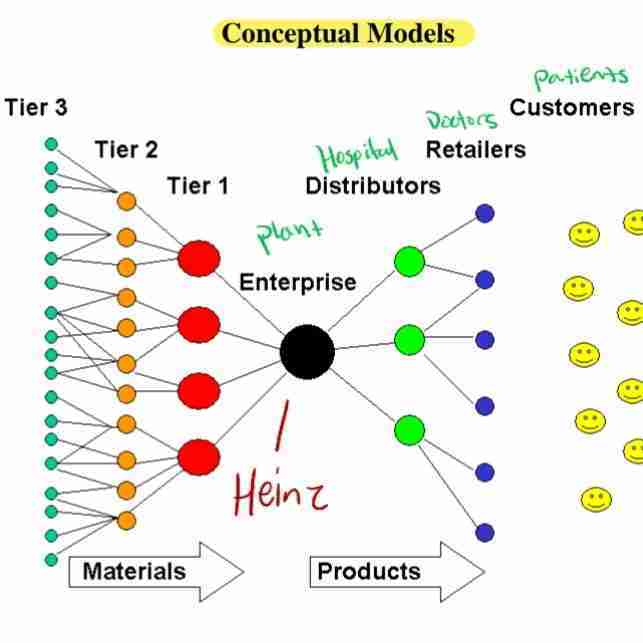
Physical and conceptual supply chain
Physical - characterized by ownership - warehouses and transportation and production facilities - or contracted services
Conceptual - a network of companies and people that are involved in the production and delivery of a product or service.
Manufacturing Cycle Time
The total time taken to convert raw materials into finished goods. This includes loading time, machining and assembly time, inspection time, material movement, idle waiting time, and the time taken for all other actions during the manufacture of finished goods.
- Making the Product
Inventory turnover
The rate at which a company sells and replaces its inventory, Supply & Selling
Demand chain
Three areas of a business – sales, marketing and customer service – that focus on driving customer demand for a company's products and services
Ex: Target Marketing
Classical conditioning
A type of learning that pairs a stimulus with a response
Discovered by Ivan Pavlov
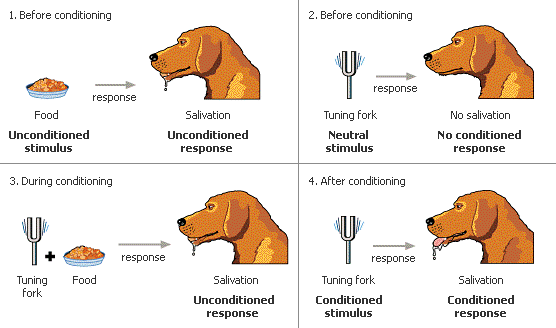
Operant Conditioning/Learning
Learning based on the consequences of actions, How we respond to what is presented to us in our environment.
Business case
Justification for a proposed project or investment, the reasoning for initiating a project or task.
Strategic thinking
The process of developing insights and plans for achieving long-term goals
Strategic Intent - A disciplined approach to only do what matters
A systems perspective - What are my resources?
Thinking in time - This is vision
Intelligent Opportunism - How do you connect your resources to your vision?
Hypothesis-Driven - Contingency thinking: what happens when we get there?
Crossover approach
A method that combines different strategies or perspectives - street two sides/blocks
Phase method
A structured approach to project management with distinct stages
For big changes that take time.
Unfreezing - prepare for change
Changes
Refreezing - change is stabilized
Creativity
Research and Development
Ability to generate new and original ideas - (R)
that are actionable - (D)
Innovation
Applying new ideas to the organization
Invent - application of the new idea from the “creative process” for the organization
Develop - makes the new idea practical
Diffuse - puts the idea into the hands of the end user
Integrate - makes the new permanent in the organization
Monitor - tracking of the innovation to validate its continued use
Staff functions
Supportive roles within an organization that are not directly involved in production
Line functions
Roles directly involved in the core operations or production of goods and services
The five C’s
“How does a manager lead?”
Commitment
Competency
Courage
Candor
Compassion
ISO
International Organization for Standardization, sets international standards for quality and safety, “the general standards”
Juran’s cost of quality
A concept that focuses on the costs associated with achieving quality standard
Prevention Costs
Appraisal Costs
Internal failure costs
External failure costs
Quality
Ability of a product or service to meet customer expectations and needs
Quality of Design - fitness for use as seen in the house of quality
Quality of Conformance - How well the manufacturing process meets the quality of design
Business risk
Risk found in the assets of the organization
Brand, Economic, Customer, Asset
Financial risk
The possibility of losing money or facing financial uncertainty. Risk found in the amount of debt the organization has.
Decision tree
A decision support tool that uses a tree-like model of decisions and their possible consequences. Allows for contingency thinking - “What happens if…”
Monte Carlo method
A statistical simulation used to predict the probability of different outcomes when the intervention of random variables is present.
Ex: Casino
Trustee in a nonprofit organization
An individual responsible for overseeing the management and operations of a nonprofit. They have increased personal financial liability as they are “board members” responsible for governance of a nonprofit organization.
Personal liability of trustees
The legal responsibility of trustees for the actions and decisions of a nonprofit organization. Trustees have increased personal financial liability.
Protected by insurance
Oversight by both state and federal, (Registry of Charitable Trust vs IRS)
Cross Docking
A logistics procedure where products from a supplier or manufacturing plant are distributed directly to the customer or retail chain with marginal to no handling or storage time.
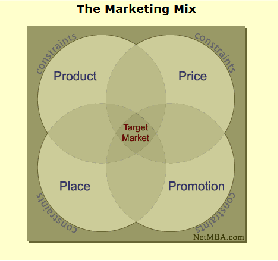
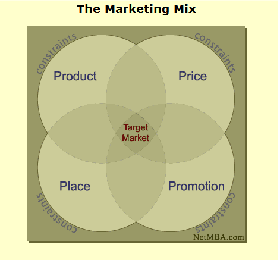
The components of the Four P’s
Marketing Mix, “Strategy without tactics is the slowest route to victory, tactics without strategy is the noise before defeat.”
Product
Price
Promotion
Placements
—> Target Markets
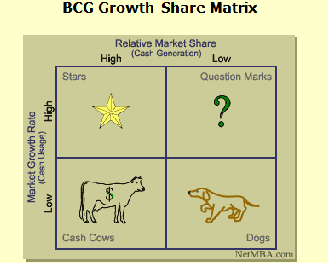
BCG Growth/Share Matrix
Boston Consulting Group Growth - Share Matrix
Made for cash generation
Cash cows
Stars
Question Marks
Dogs
Market share and cash generated
Market growth and cash usage
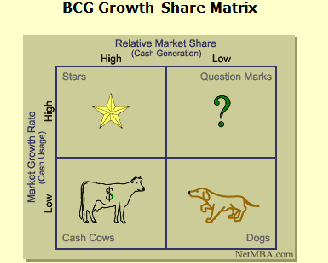
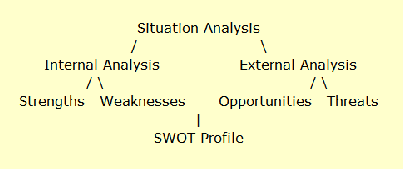
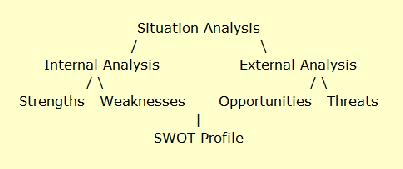
SWOT
Framework for analysis
Strength
Weakness
Opportunities
Threats
Needs lots of detail.
Internal Analysis - organizational competencies such as targets for transformation change
External Analysis - driving forces for transformational change
Legitimate Power
Power granted by some authority
Headcount
The process of counting the number of employees in a company or organization to determine the total workforce size.
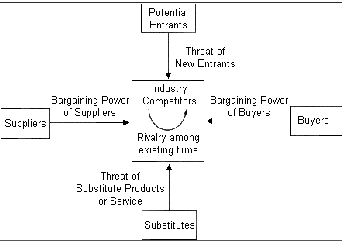
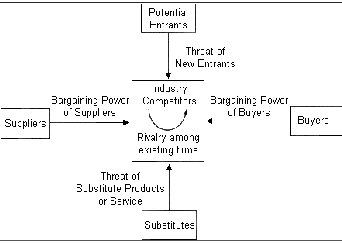
Porter’s Five Forces
Suppliers
Customers or buyers
Substitutes
Potential Entrants
Industry Members
Theories of Discrimination
The policies and practices in employment that negatively affect any legally protected civil group. The adverse is the measurement of that negative consequence.
a. Disparate or Adverse Treatment
Intentional
b. Disparate or Adverse Impact
Unintentional
Marketing Channel
People, organizaions, and activities necessary to transfer the ownership of goods from the point of production to the point of consumption. The way products get to the end-user, the consumer; aka a distribution channel
Patterns in Enterprise
Buy Side Patterns
Deal with suppliers
Procurement is the simplest business pattern; one buyer from one seller
Direct vs Indirect Procurement
Sell Side Patterns
Order management and fulfillment
Channel Management - working with distributors, retailers
Customer Relationship Management - marketing, sales, customer service
Patterns in the Middle
Design & Engineering
Manufacturing
Human Resources, Finance
Information Systems
Threats to change process
Degree of Change
Time Frame
Impact of Culture
Loss of Existing Benefits
Threat to position power
Threat to security
Redistribution of power
Disturb existing social networks
Uncertainty Regarding Change
Disruption of routine
Why Change Occurs
Dissastifaction with the present situation
External pressures toward change
Momentum toward change
Change rarely occurs without a reason for change
Duke & Deloitte cases
Forced-Coercion
Use of fomral authority to create change
Legitimate, Reward Coercive powers
Direct
Fast, but may yield temporary results
Rational Persuasion
Creating change through rational and empirical arguments
Expertise power
Informational Efforts
Results may vary depending on acceptance of change
Shared Power
Developing support through personal values, beliefs, and commitments
Referent power
Participative efforts
Slower results, but able to internalize the changes
Authority
The ability co command, direct, or influence thoughts, opinions, or behavior.
To have authority, you need to have power.
Duke Hospital Case Study
# Duke Children's Hospital Turnaround
## Background (pages 1-2)
- DCH was losing $11 million annually in 1996 due to long lengths of stay, high costs per patient, and staff cuts compromising care quality
- Jon Meliones witnessed a situation where a baby couldn't be removed from a ventilator overnight due to lack of respiratory staff
- This inspired him to find a way to improve both quality and finances
## Balanced Scorecard Approach (pages 3-8)
- Meliones realized departments were focused on individual goals rather than the organization's overall mission
- He decided DCH needed to think more like a profitable corporation, not just a nonprofit
- Meliones introduced the balanced scorecard framework from business to align goals across financial, customer, internal processes, and employee satisfaction
- This was implemented through a pilot ICU project and then organization-wide
- Key elements included:
- Multidisciplinary clinical business units focused on specific conditions
- Data analysis to find cost-saving opportunities
- Standardized clinical pathways and protocols
- Improved communication and feedback systems
- Results were dramatic with costs cut by $29M from 1996-2000 without staff cuts, through improved processes and protocols
- Length of stay decreased from 7.9 to 6.1 days, costs per patient fell by $5,000, margins improved from -$11M to +$4M
## Challenges (page 7)
- Changing mindsets and roles was difficult and required persistence and reassurance
- Data needed to be transformed into useful performance information
- Targets had to be set conservatively at first to maintain morale
- Constant communication, feedback, and celebration of successes was essential
## Lessons Learned (page 8)
- Listen to employees and involve different expertise to build consensus
- Start with a pilot project before wide implementation
- Maintain a sense of humor during challenges
- Data and information systems need to evolve along with practices
- Continuous improvement is ongoing through staff ideas and fine-tuning
Business Case
Captures the reasoning for initiating a project or task.
Deloitte Case
Here is a detailed notes outline of the key points from the document in Markdown format:
# Winning the Talent War for Women at Deloitte
## Background (page 1)
- In 1991, only 4 of 50 candidates for partner at Deloitte were women, despite heavy recruiting of women
- Women were leaving Deloitte at a significantly higher rate than men
## Initial Response (page 2)
- In 1992, Deloitte formed a task force chaired by CEO Mike Cook to address the issue
- Many partners initially didn't see the exodus of women as a problem for the firm
## Investigating the Problem (page 3)
- The task force took a methodical approach to investigate why women were leaving and make a business case for change
- Interviews found most women weren't leaving to raise families but were dissatisfied with opportunities and culture at Deloitte
## Preparing for Change (page 4)
- The task force held intensive 2-day workshops for all management professionals to surface gender assumptions
- Workshops were a turning point that began changing attitudes
## Implementing Operational Changes (page 5)
- Local offices began annually reviewing opportunities for top-rated women
- Networking events and formal career planning were introduced for women
## Expanding the Initiative's Scope (page 6)
- Changes promoted better work-life balance for both women and men through flexible schedules and arrangements
- This opened the culture and benefited employee well-being and creativity
## Ongoing Progress and Challenges (page 7)
- Percentage of women partners rose but more progress is needed
- Initiative must now address advancement of existing women partners into leadership
- Values must extend to Deloitte's increasingly global operations
## Cultural Transformation and Benefits (page 8)
- Environment and assumptions have been transformed down to smallest details
- Initiative narrowed gaps in culture and between vision and reality
- Diversity has improved creativity, growth, performance for clients
Mintzberg’s Competitive Advantage
Efficiency
Quality
Innovation
Respnsiveness to Customers
Ways to manage risk
Risk shifters - shift onto someone else (insurance)
Risk Avoiders - one does not take the risk at all (avoidance)
Risk Managers - One that can handle risk and knows how to deal with it.
Natures of Risk
One-time event
can be analyzed with a decision tree and probabilities/game theory
Managed in part with project managment
Recurring Events - can be analyzed with Monte Carlo
Order Fulfillment
Sales & management
Product offering - Catalogs
Taking Orders
Filling them as promised
Order Tracking
Follow up on exceptions
Channel Management
Marketing
Resolving conflicts
Manging contracts - shipping, insurance, regulations
Warehouse management
Framework for Competitive Advantage
Efficiency
Quality
Innovation
Responsiveness to customers
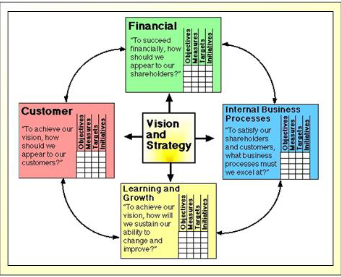
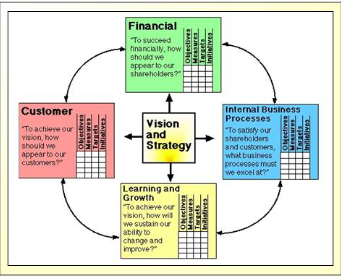
Balanced Scorecard
Financial
Customers
Internal Business Process
Learning and Growth
Metrics
Initiatives
“Duke Hospital”
value chain
value chain