Chem 1 Pearson ch. 2
 Call Kai
 Learn
Learn Practice Test
 Spaced Repetition
 Match
Match Flashcards
 Knowt Play
1/44

There's no tags or description
Looks like no tags are added yet.
Name | Mastery | Learn | Test | Matching | Spaced | Call with Kai | Chat |
|---|
No analytics yet
Send a link to your students to track their progress
45 Terms
Dalton’s Atomic Theory
all matter is composed of atoms, atoms of the same element are identical, atoms combine to form compounds, chemical reactions rearrange atoms, atoms of different elements are unique
law of conservation of mass
in a chemical reaction matter is neither created nor destroyed
law of definite proportions
all samples of a given compound have the same proportions of their constituent elements
(16.0g O / 2.0g H = 8:1)
law of multiple proportions
when 2 elements form two different compounds, the ratios of the masses can be expressed as a ratio of whole numbers
(O:C in CO2 = 2.67:1, O:C in CO = 1.33:1 → 2.67/1.33 = 2)
particles in the nucleus
proton, neutron
particles around nucleus
electrons (electron cloud)
electrostatic forces
electrical charge & attractive & repulsive forces in atoms
electric field
the area around a charged particle where electrostatic forces exist
plum pudding model
later disproved by Rutherford Gold Foil Experiment
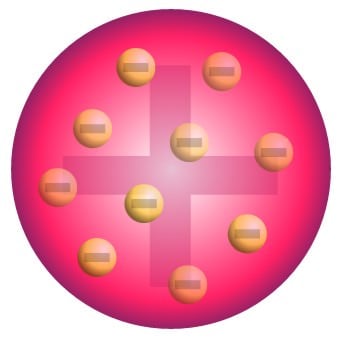
radioactivity
the emission of small energetic particles from the core of certain unstable atoms
nuclear theory of the atom
most of at atom’s mass and positive charge are in the nucleus, most of an atom’s volume is empty space where electrons are dispersed, #electrons = #atoms
proton
+1, defines the element
neutron
0
electron
-1
atomic number (Z)
the number of protons in a nucleus
isotope
same number of protons, different number of neutrons
Dalton corrections
isotopes (all atoms do not have the same mass and not all elements are identical), atoms are divisible (proton, neutron, electron)
mass number (A)
#protons + #neutrons
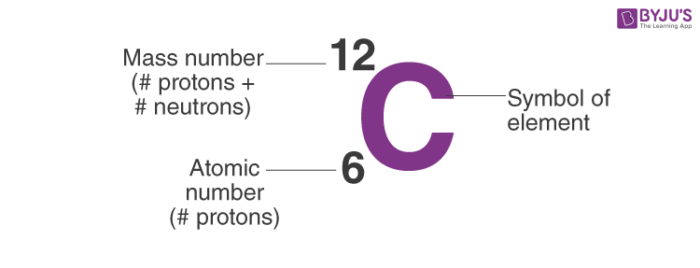
A notation example
C-12 has 6 protons, 6 neutrons, and a mass number 12
can also be written as carbon-12

neutral atom
equal #electrons and #protons
ions
charged particles that gain or lose electrons
cation
ions that lost electrons
(ex. Li → Li+ + Li-)
anion
ion that gained an electron
(ex. F + 1e- → F-)
periodic law
when the elements are arranged in order of increasing mass, certain sets of properties recur periodically
metals
good conductors, malleable, ductile, shiny, lose electrons in chemical reactions
nonmetals
poor conductors, not malleable, not ductile, gain electrons during chemical rxns
metalloids/semi-metals
semiconductors, mixed properties
main group elements
properties tend to be predictable based on position in periodic table
transition elements/transition metals
properties tend to be less predictable based on location in periodic table
main group elements in chemical rxns
tend to form ions that have the same # electrons as the nearest noble gas
1 amu
mass of 1/12th of 1 C-12
1 mol
6.02214(10²³) (Avogadros number), the # of atoms in 12g of pure C-12
molar mass
1 mol of atoms of an element, molar mass in g/mol = atomic mass in amu
g to mol
mass/molar mass
moles to particles
(moles)(Avogadros number)
particles to moles
particles/Avogadros number
moles to grams
(moles)(molar mass)
calculate atomic mass
(fraction of isotope n)(mass of isotope) + (fraction of isotope n)(mass of isotope) + …

1A
+1, alkali metals (reactive)
Note: H is sometimes not considered an alkali metal, but it still has a predictable +1 charge
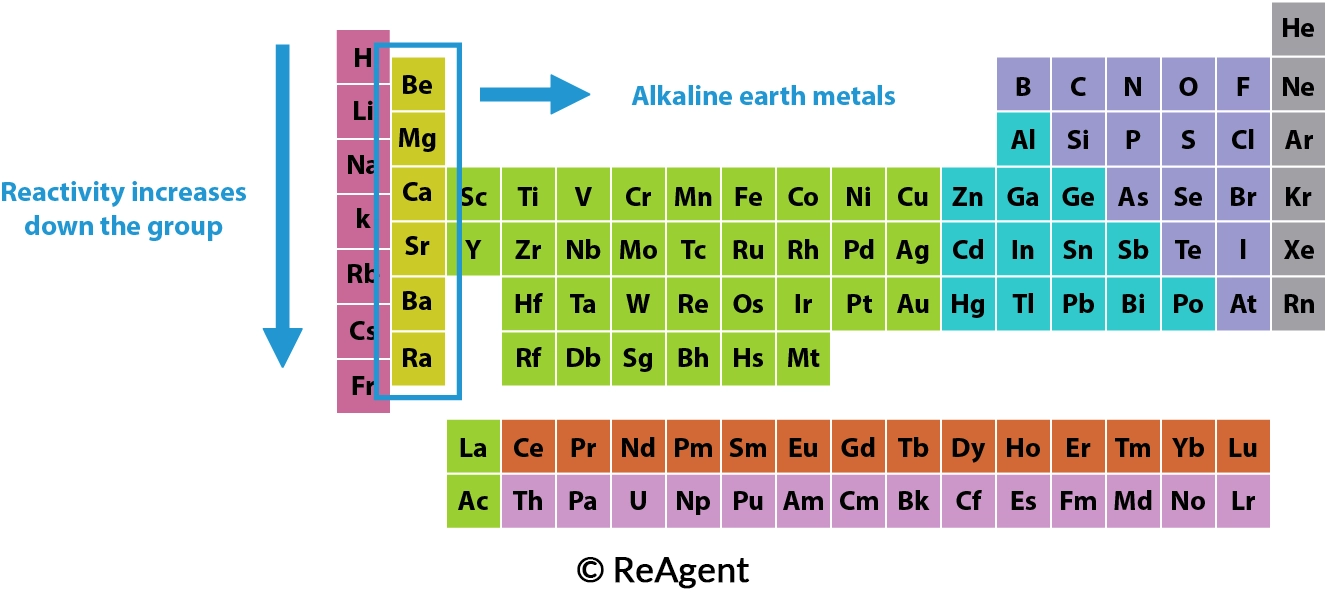
2A
2+, alkaline earth metals, fairly reactive
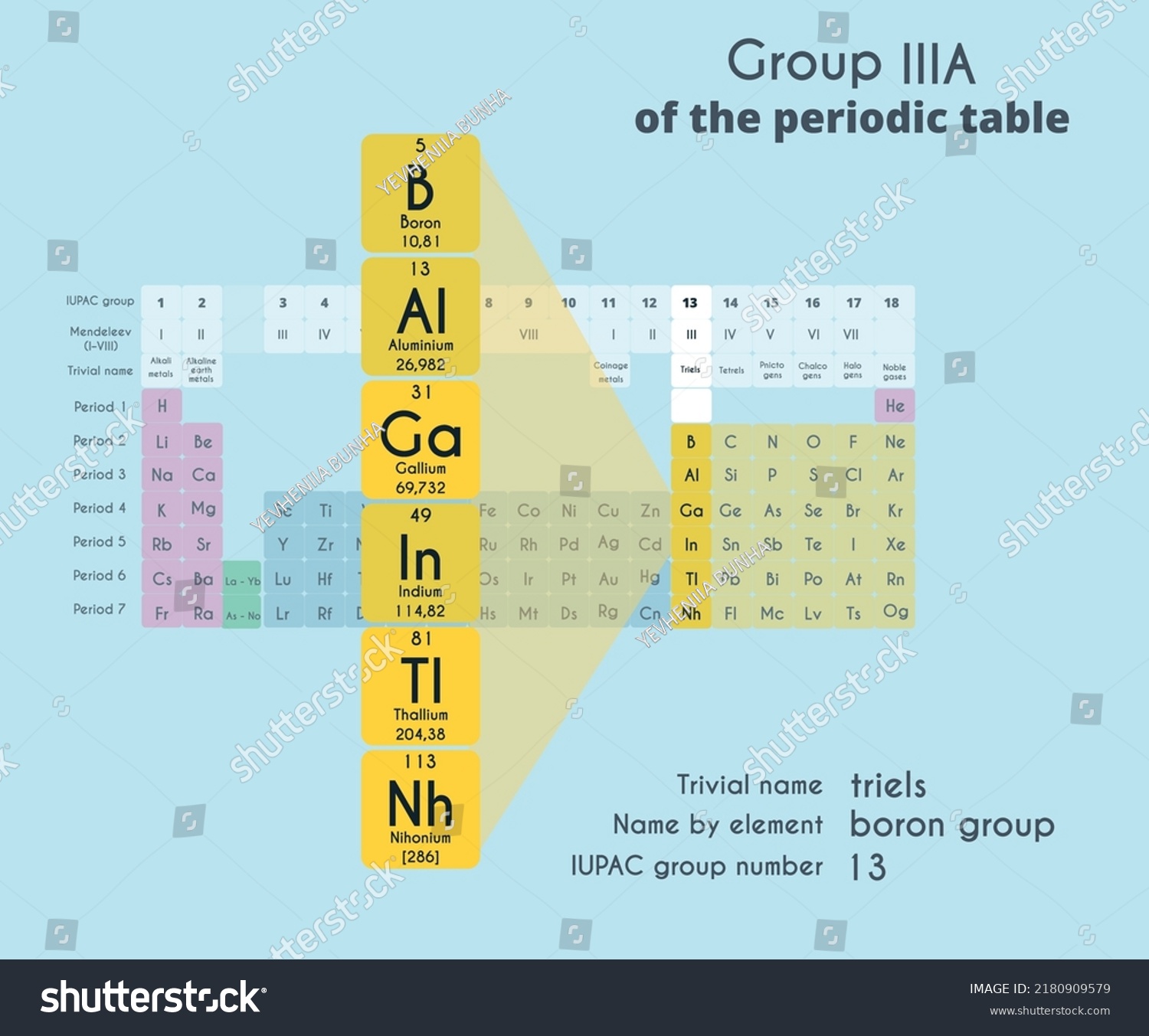
3A
3+, boron family, remember Al3+ as primary example, lower elements can have different properties
5A
3-, remember N3- as primary example

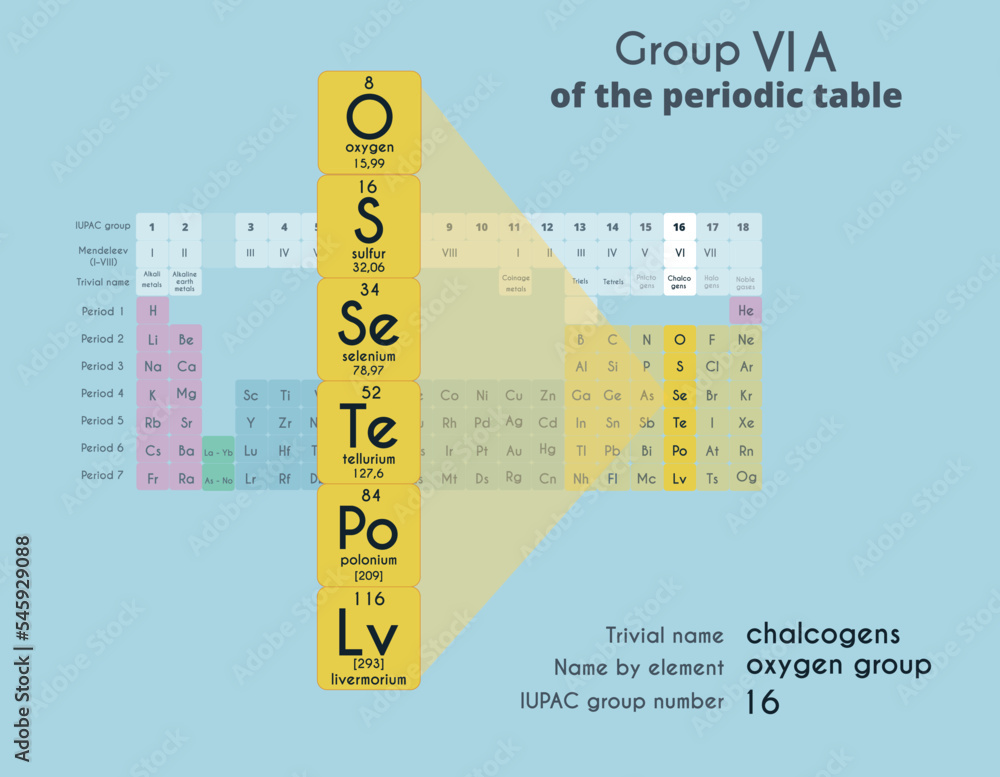
6A
2-
7A
-1, H can be here, halogens, very reactive non-metals

8A
noble gases
