Chapter 2 THEORY AND RESEARCH (DEVELOPMENTAL PSYCHOLOGY)

0.0(0)
Studied by 0 people
call kaiCall Kai
Locked
learnLearn
examPractice Test
spaced repetitionSpaced Repetition
heart puzzleMatch
flashcardsFlashcards
GameKnowt Play
Card Sorting

1/65

encourage image

There's no tags or description

Looks like no tags are added yet.

Last updated 3:41 PM on 7/14/26
Name
Mastery
Learn
Test
Matching
Spaced
Call with Kai
Chat

No analytics yet

Send a link to your students to track their progress

66 Terms

1
New cards

THEORY

- a set of logically related concepts or statements that seek to describe and explain development and to predict the kinds of behavior that might occur under certain conditions.

- an organized set of ideas that explains why people grow, think, feel, and behave the way they do

2
New cards

Hypothesis

simplified defintions:

- A proposed explanation made based on limited evidence as a starting point for further investigation; it is a testable prediction.

- educated guess or a prediction.

Example: A scientist might guess: "If kids play video games right before bed, it will take them longer to fall asleep." This is a hypothesis because it is a single guess that can be tested with a quick experiment.

3
New cards

Mechanistic Model

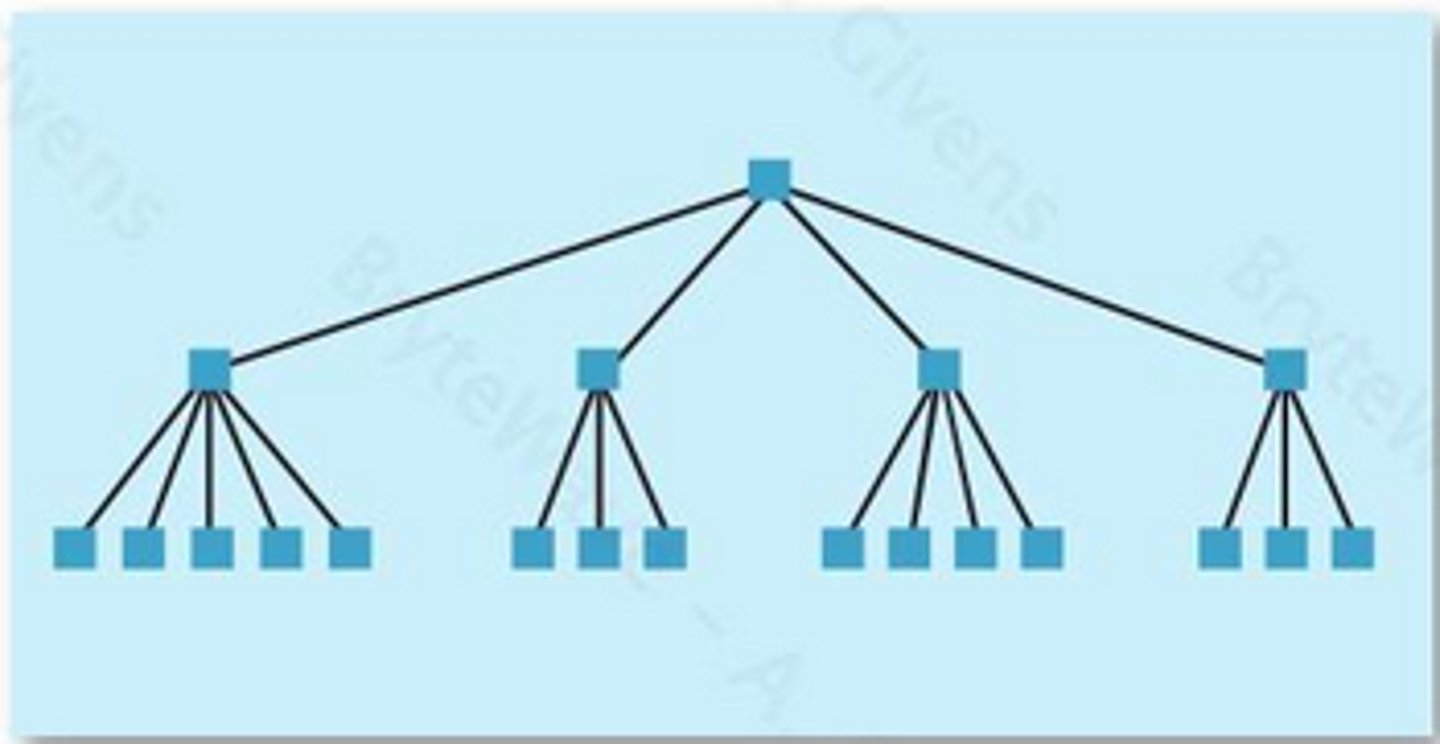
- people are like machines that react to environmental input

- a series of predictable responses to stimuli

- Learning Through Rewards

Example:

- A child cleans their room because their parents give them P100.00 every time they do it.
<p>- people are like <strong>machines</strong> that <u><mark data-color="blue" style="background-color: blue; color: inherit;">react to environmental input</mark></u></p><p>- a series of predictable responses to stimuli</p><p>- Learning Through Rewards</p><p><strong>Example:</strong></p><p>- A child cleans their room because their parents give them P100.00 every time they do it.</p>
4
New cards

Organismic Model

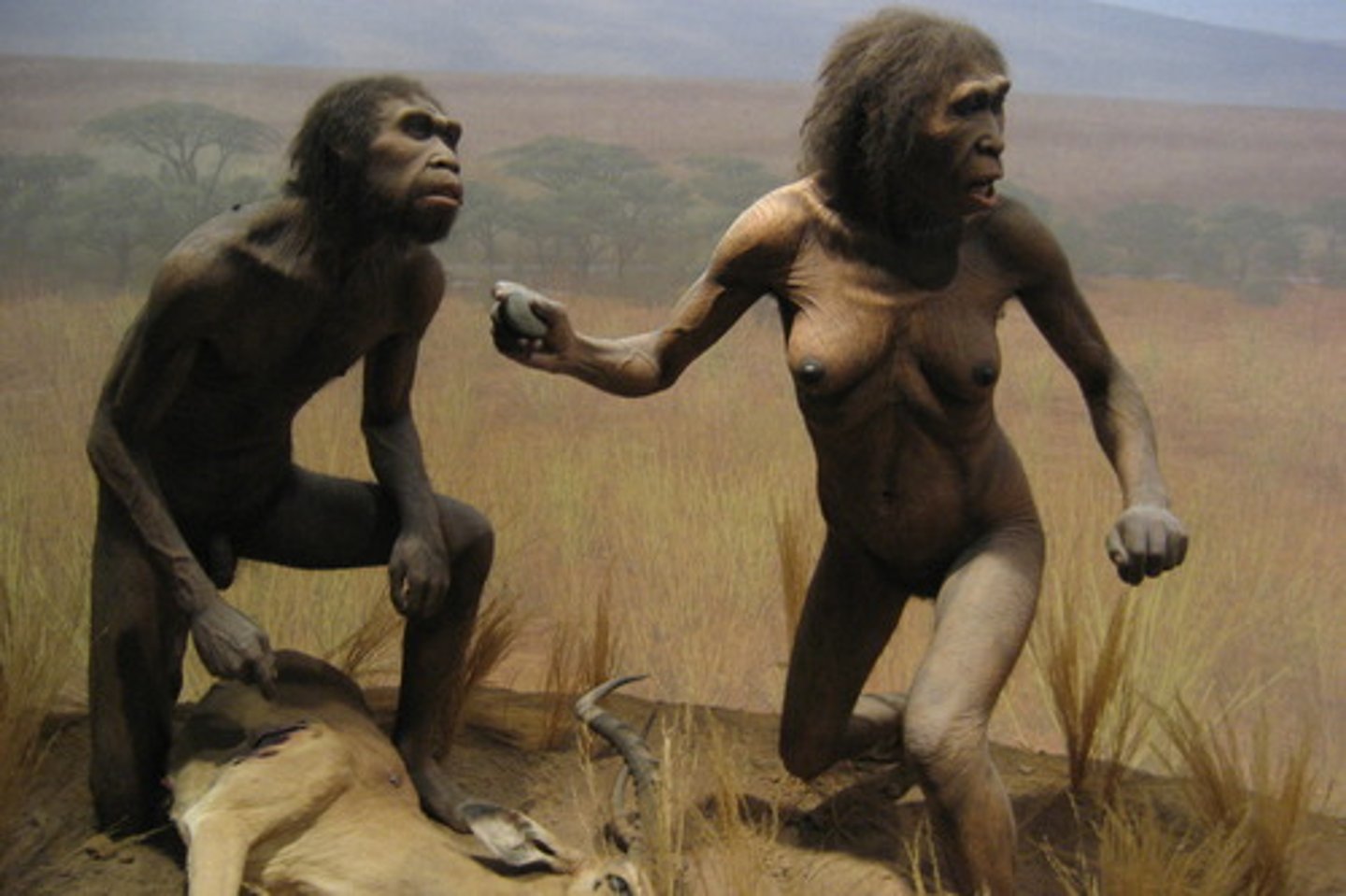
- sees people as active, growing organisms who set their own development in motion

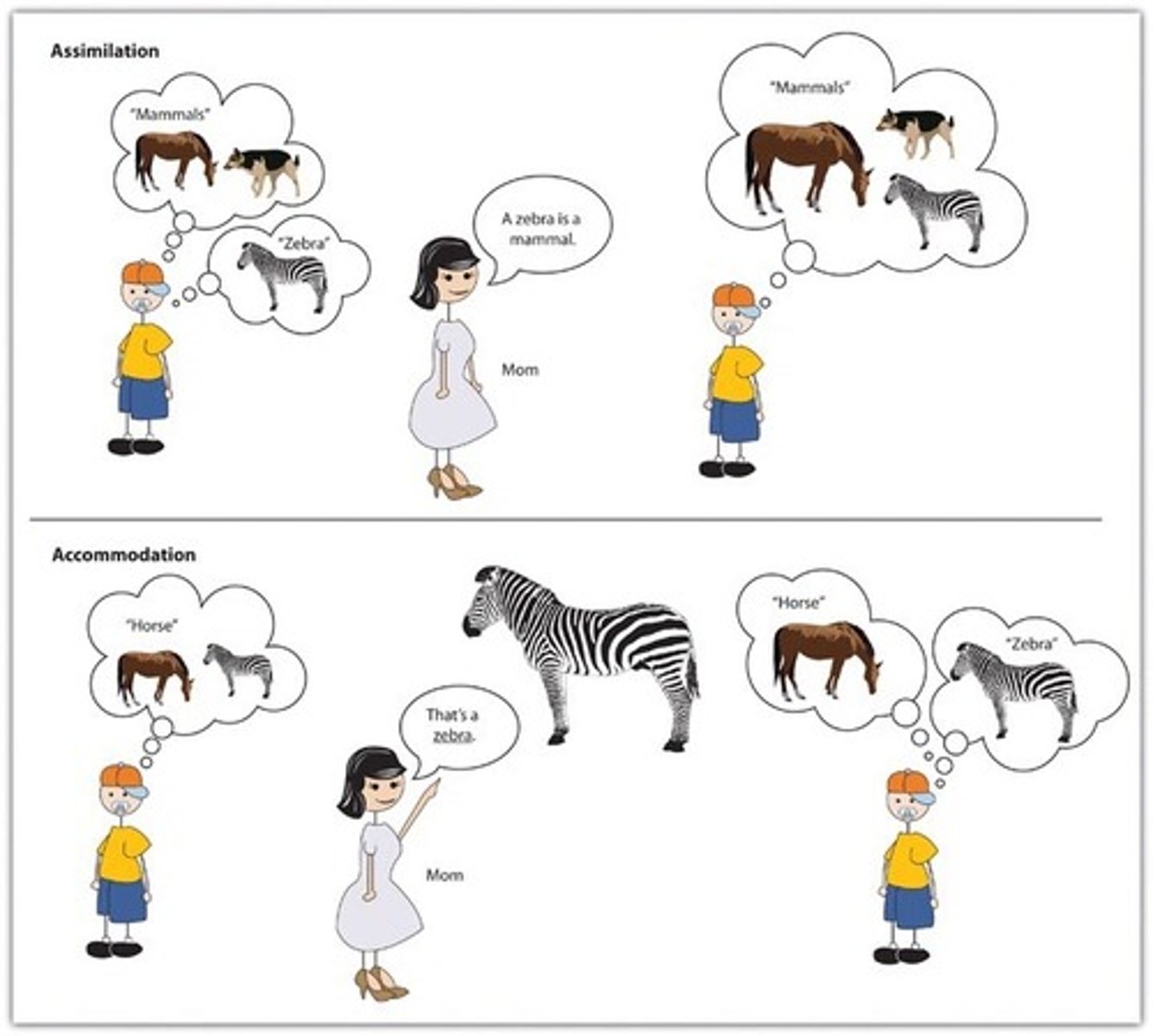
- internally initiated by an active organism and as occurring in a sequence of qualitatively different stages.

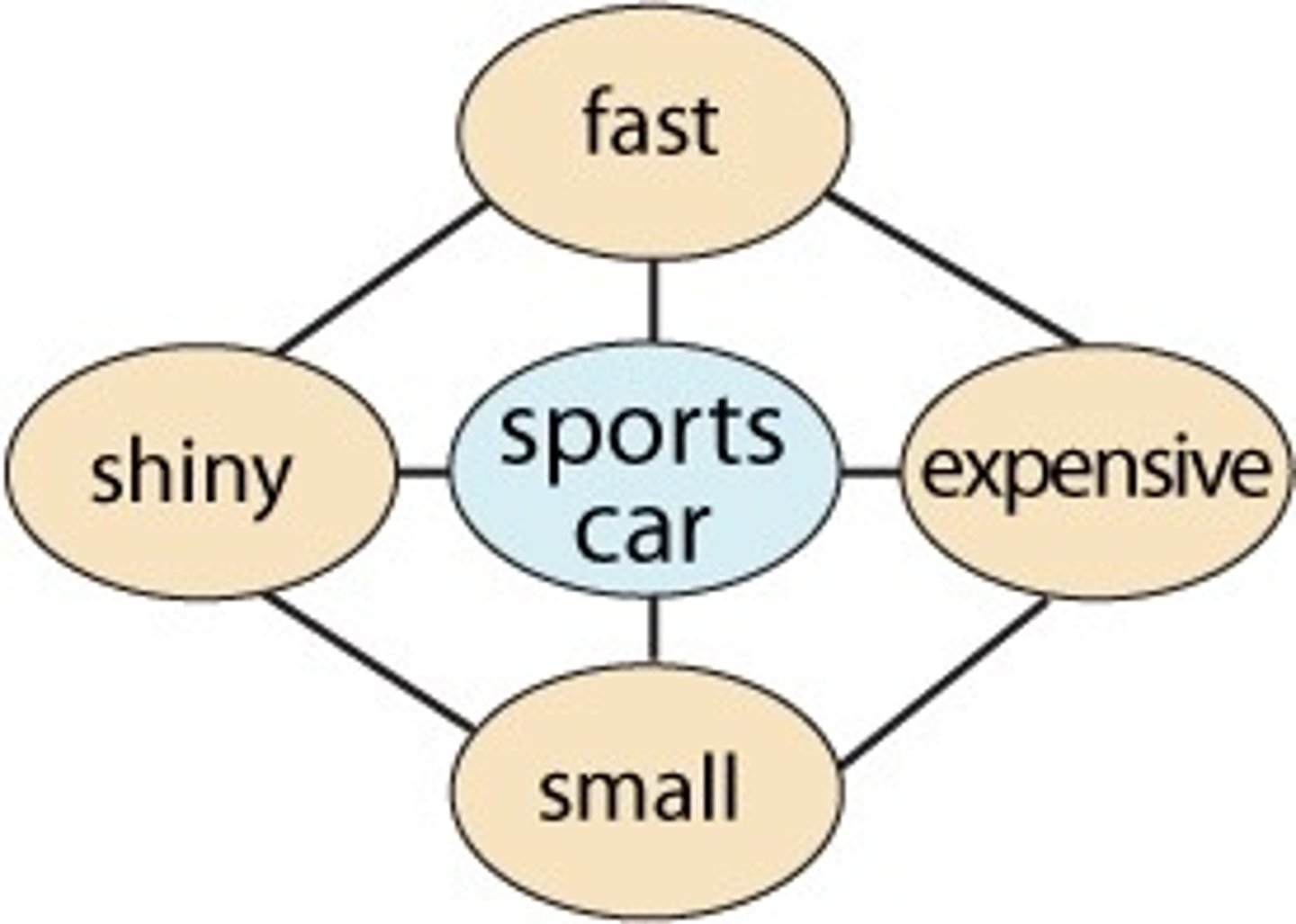
- Identity Formation

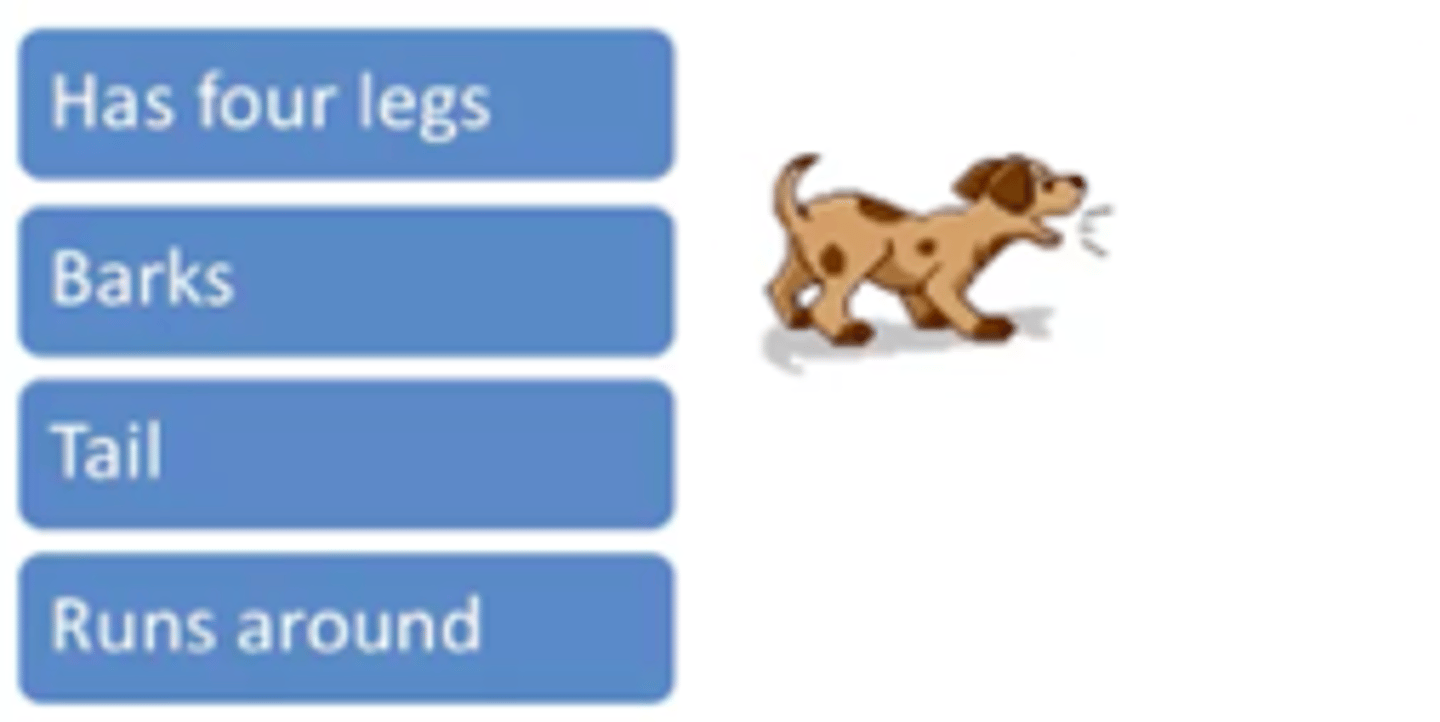
Example:

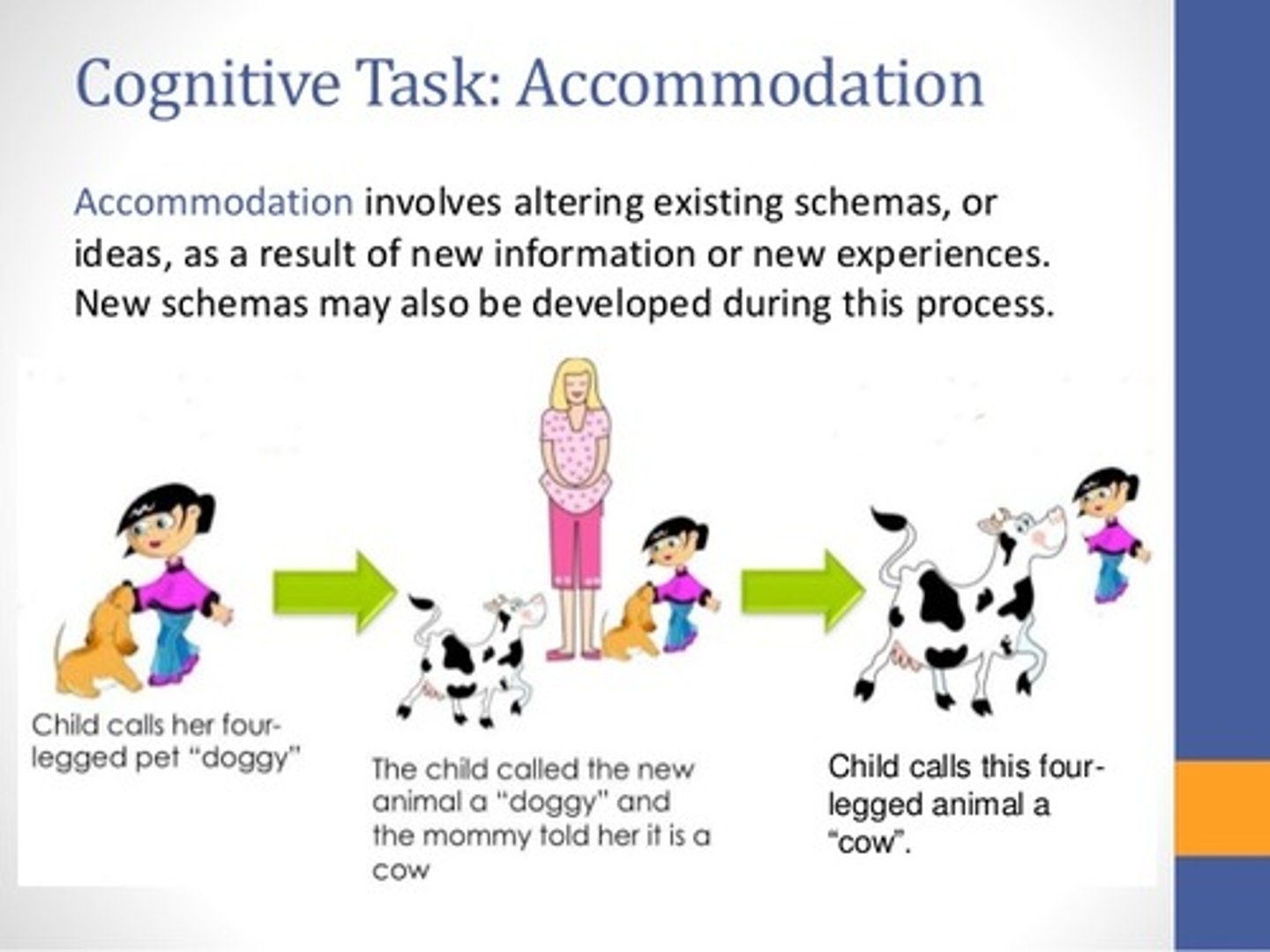
- A college student explores different interests and eventually decides to become a psychologist because it matches their values and goals.
<p>- sees people as <strong>active</strong>, growing organisms <u><mark data-color="red" style="background-color: red; color: inherit;">who set their own development in motion</mark></u></p><p>- <strong><u><mark data-color="#f7e4f5" style="background-color: rgb(247, 228, 245); color: inherit;">internally </mark></u></strong><u><mark data-color="#f7e4f5" style="background-color: rgb(247, 228, 245); color: inherit;">initiated by an active organism</mark></u> and as occurring in a sequence of qualitatively different stages.</p><p>- Identity Formation</p><p></p><p><strong>Example:</strong></p><p>- A college student explores different interests and eventually decides to become a psychologist because it matches their values and goals.</p>
5
New cards

Continuous

- Also known as "quantative change"

- a change in number or amount, such as height, weight, or vocabulary size.
<p>- Also known as <strong>"quantative change"</strong> </p><p>- a <u><mark data-color="purple" style="background-color: purple; color: inherit;">change in </mark></u><strong><u><mark data-color="purple" style="background-color: purple; color: inherit;">number </mark></u></strong><u><mark data-color="purple" style="background-color: purple; color: inherit;">or </mark></u><strong><u><mark data-color="purple" style="background-color: purple; color: inherit;">amount</mark></u></strong>, such as height, weight, or vocabulary size.</p>
6
New cards

Discontinuous

- Also known as "qualitative change"

- a change in kind, structure, or organization, not just in number.
<p>- Also known as<strong> "qualitative change" </strong></p><p>- a change in kind, structure, or organization,<strong> not just in number</strong>.</p>
7
New cards

PSYCHOANALYTIC

LEARNING

COGNITIVE

CONTEXTUAL EVOLUTIONARY

SOCIOBIOLOGICAL

(5) FIVE MAJOR PERSPECTIVES:

8
New cards

SIGMUND FREUD

- He proposed three hypothetical parts of the personality (Superego, Ego, Id)

- These conflicts occur in a sequence of five stages of psychosexual development.

- He proposed that personality forms through unconscious childhood conflicts between the inborn urges of the id and the requirements of civilized life.

- These conflicts occur in a sequence of five stages of psychosexual development, in which sensual pleasure shifts from one body zone to another—from the mouth to the anus and then to the genitals.

- At each stage, the behavior that is the chief source of gratification (or frustration) changes—from feeding to elimination and eventually to sexual activity.

- He considered the first three stages to be crucial for personality development.

- If children receive too little or too much gratification in any of these stages, they are at risk of fixation.
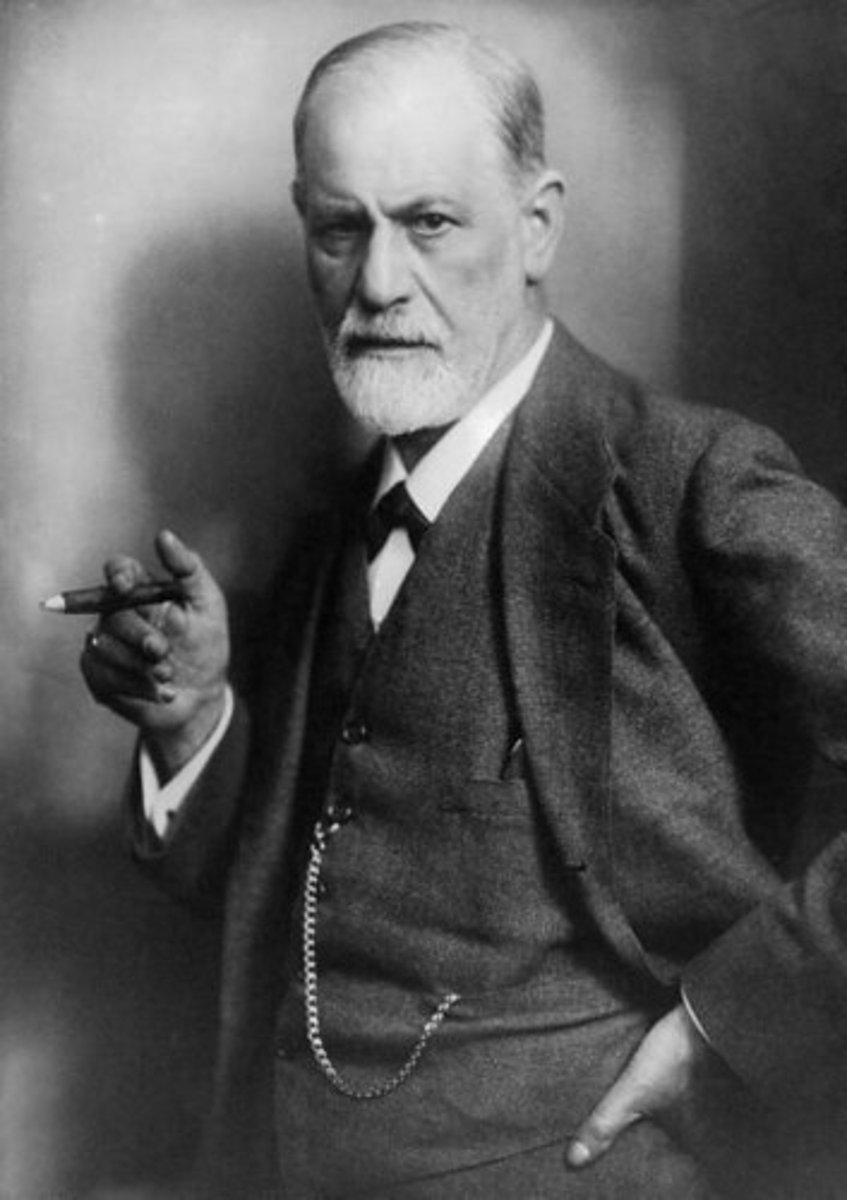
<p>- He proposed <strong>three hypothetical parts of the personality (Superego, Ego, Id)</strong></p><p>- These conflicts occur in a sequence of<strong> five stages of psychosexual development</strong>.</p><p>- He proposed that personality forms through<strong> unconscious childhood</strong> conflicts between the inborn urges of the id and the requirements of civilized life. </p><p>- These conflicts occur in a sequence of five stages of psychosexual development, in which<span style="color: rgb(0, 0, 0);"><u><mark data-color="#e2d9f2" style="background-color: rgb(226, 217, 242); color: inherit;"> sensual pleasure shifts from one body zone to another—from the mouth to the anus and then to the genitals.</mark></u></span></p><p>- At each stage, the behavior that is the <strong>chief source of gratification (or frustration)</strong> changes—from <strong>feeding </strong>to elimination and eventually to <strong>sexual activity</strong>. </p><p>- He considered the<strong> first three stages </strong>to be <strong>crucial </strong>for personality development. </p><p>- If children receive too little or too much gratification in any of these stages, they are at risk of <strong>fixation</strong>.</p>
9
New cards

The ego

- Realistic Thinker

- Tries to balance the desires of the id and the rules of the superego with what is realistic

- which represents reason

- the realistic mediator

- is the realistic, logical part of the mind that develops to mediate between the unrealistic desires of the id (the instinctual pleasure seeker) and the moral constraints of the superego (the strict rule follower).

example:

looks at real life and says, "Wait a minute, what can we actually get away with right now without causing a disaster?"

<p>- <strong>Realistic Thinker</strong></p><p>- <u><mark data-color="red" style="background-color: red; color: inherit;">Tries to </mark></u><strong><u><mark data-color="red" style="background-color: red; color: inherit;">balance </mark></u></strong><u><mark data-color="red" style="background-color: red; color: inherit;">the desires</mark></u> of the id and the rules of the superego with what is realistic</p><p>- which represents reason</p><p>- the <strong>realistic mediator</strong></p><p>- is the <strong><u><mark data-color="#f2e2ef" style="background-color: rgb(242, 226, 239); color: inherit;">realistic</mark></u></strong><u><mark data-color="#f2e2ef" style="background-color: rgb(242, 226, 239); color: inherit;">, logical part of the mind that develops to mediate between the unrealistic desires </mark></u>of the <strong>id (the instinctual pleasure seeker)</strong> and the moral constraints of the <strong>superego (the strict rule follower)</strong>.</p><p><strong>example:</strong></p><p>looks at real life and says, "Wait a minute, what can we actually get away with right now without causing a disaster?"</p>
10
New cards

The superego

- Moral Guide

- Represents internalized values, morals, and rules.

- includes the conscience and incorporates socially approved "shoulds" and "should nots"

example:

This part only cares about perfect behavior and rules. It whispers, "Eating cake is bad for you, and taking it without asking is wrong! You should eat broccoli instead."

<p>- <strong>Moral Guide</strong></p><p>- Represents internalized <strong>values</strong>, <strong>morals</strong>, and <strong>rules</strong>.</p><p>- includes the <strong>conscience </strong>and incorporates <u><mark data-color="#e9edff" style="background-color: rgb(233, 237, 255); color: inherit;">socially approved "shoulds" and "should nots"</mark></u></p><p><strong>example:</strong></p><p>This part only cares about perfect behavior and rules. It whispers, "Eating cake is bad for you, and taking it without asking is wrong! You should eat broccoli instead."</p>
11
New cards

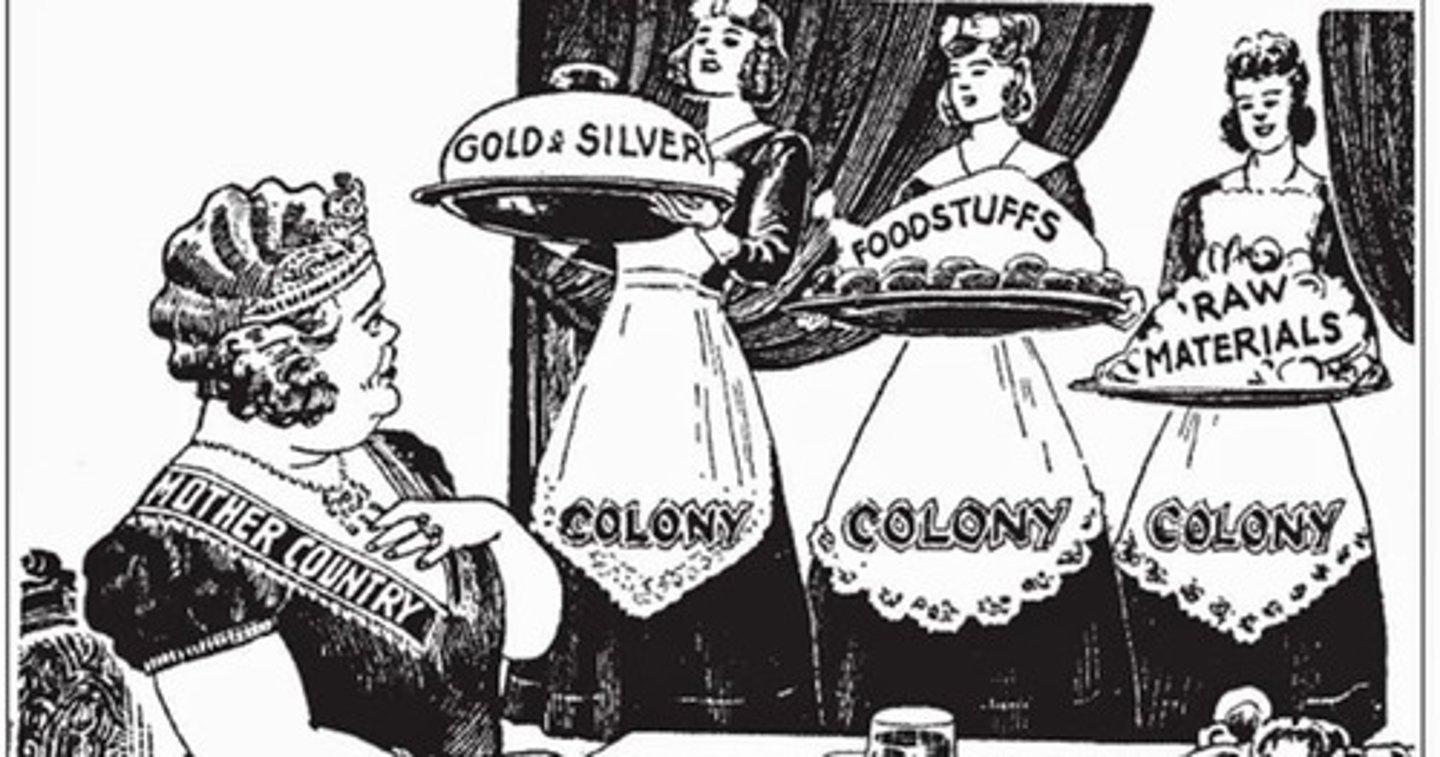
The id

- The instinctual Part

- The driver, by the basic needs and wants, seeks pleasure and avoids pain.

- which operates under the pleasure principle.

example:

This part only cares about fun and getting what it wants right now. It screams, "I want to eat that entire chocolate cake immediately!"
<p>- The <strong>instinctual </strong>Part</p><p>- The driver, by the<strong> </strong><u><mark data-color="#dcf2e2" style="background-color: rgb(220, 242, 226); color: inherit;">basic needs and wants</mark></u>, <strong>seeks pleasure </strong>and avoids pain.</p><p>- which operates under the <strong>pleasure principle</strong>. </p><p><strong>example:</strong></p><p>This part only cares about fun and getting what it wants right now. It screams, "I want to eat that entire chocolate cake immediately!"</p>
12
New cards

The ego

The superego

The ID

3 hypothetical parts of the personality

13
New cards

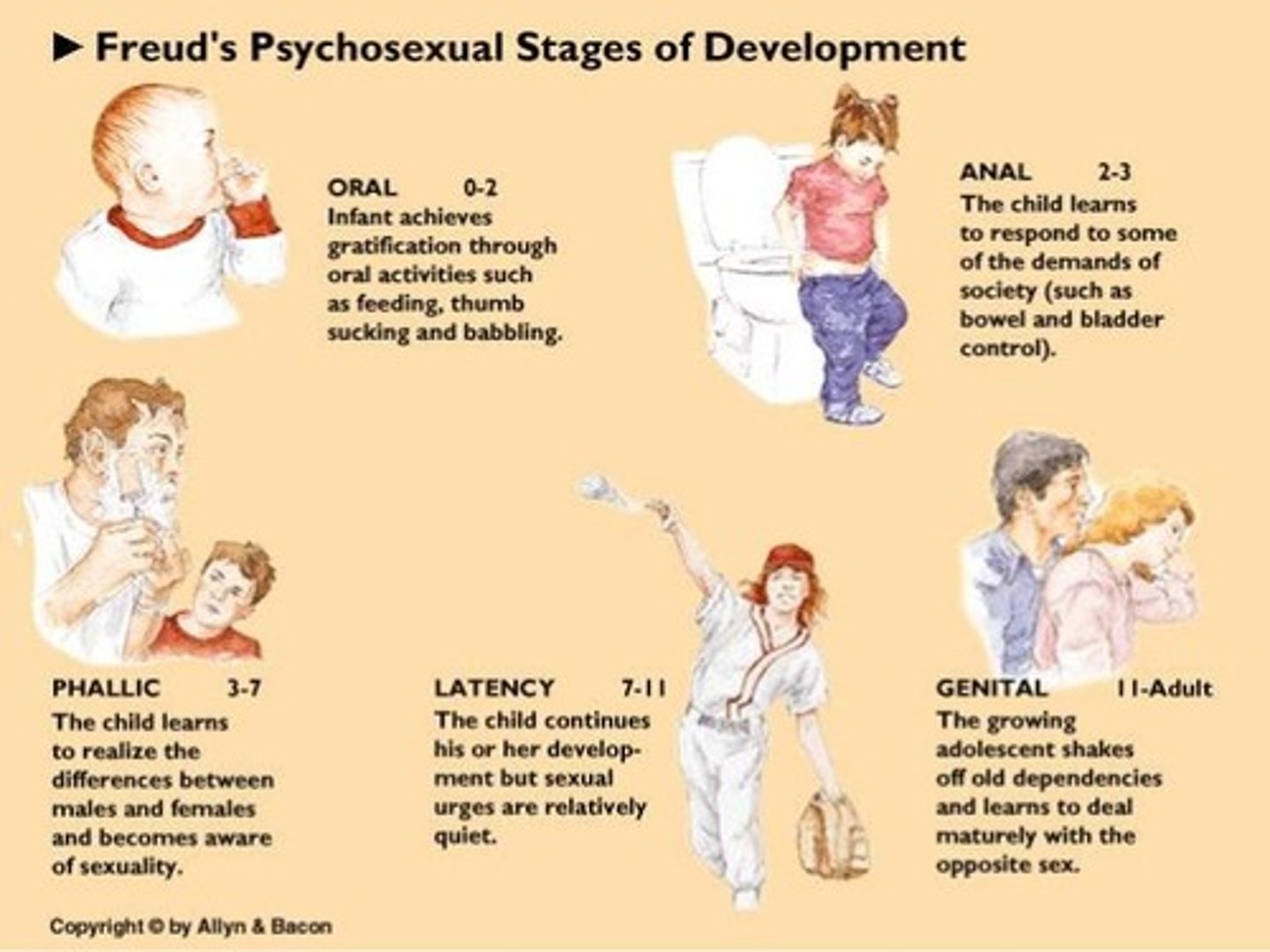
Oral Stage

Anal Stage

Phallic Stage

first three stages to be crucial for personality development

14
New cards

fixation

If children receive too little or too much gratification in any of these stages, they are at risk of?

15
New cards

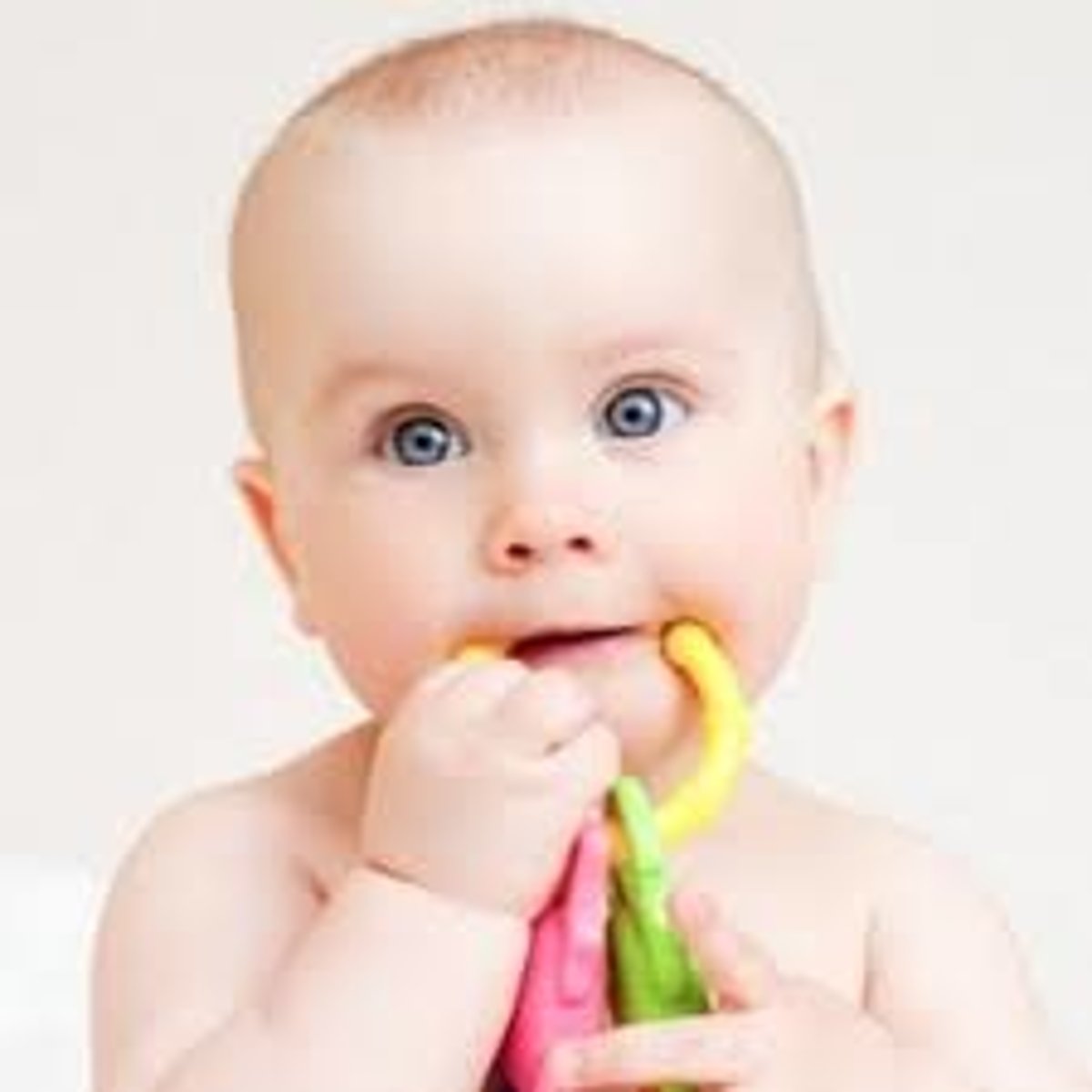
ORAL STAGE

- (Basic Trust vs. Mistrust)

AGE RANGE: 0-18 months

EROGENOUS ZONE: Mouth

KEY CONFLICT: Weaning - The child learns to trust caregivers for food and comfort.

POSITIVE OUTCOME: Basic trust, optimism, and healthy dependence

POSSIBLE FIXATION (If unresolved): Oral fixation - Nail biting, thumb sucking, overeating, smoking, excessive talking
<p>- (Basic Trust vs. Mistrust)</p><p><strong>AGE RANGE:</strong> 0-18 months</p><p><strong>EROGENOUS ZONE:</strong> Mouth</p><p><strong>KEY CONFLICT: </strong><span style="color: red;"><strong>Weaning </strong></span>- The child learns to trust caregivers for food and comfort.</p><p><strong>POSITIVE OUTCOME</strong>: Basic trust, optimism, and healthy dependence</p><p><strong>POSSIBLE FIXATION (If unresolved):</strong> <span style="color: red;"><strong>Oral fixation</strong></span> - Nail biting, thumb sucking, overeating, smoking, excessive talking</p>
16
New cards

ANAL STAGE

- (Autonomy vs. Shame/Doubt)

AGE RANGE: 18 months - 3 years

EROGENOUS ZONE: Anus

KEY CONFLICT: Toilet Training - The child learns control over elimination.

POSITIVE OUTCOME: Willpower, self-control, and independence

POSSIBLE FIXATION: (If unresolved): Anal fixation - messiness or obsessiveness, stubbornness, being overly orderly

<p>- (Autonomy vs. Shame/Doubt)</p><p><strong>AGE RANGE:</strong> 18 months - 3 years</p><p><strong>EROGENOUS ZONE: </strong>Anus</p><p><strong>KEY CONFLICT: </strong><span style="color: red;"><strong>Toilet Training </strong></span>- The child learns control over elimination.</p><p><strong>POSITIVE OUTCOME:</strong> Willpower, self-control, and independence</p><p><strong>POSSIBLE FIXATION: (If unresolved):</strong> <span style="color: red;"><strong>Anal </strong></span><span style="color: red;"><strong>fixation</strong></span><span style="color: rgb(0, 0, 0);"> - messiness</span> or obsessiveness, stubbornness, being overly orderly</p>
17
New cards

PHALLIC STAGE

- (Initiative vs. Guilt)

AGE RANGE: 3-6 years

EROGENOUS ZONE: genital

KEY CONFLICT: Oedipus/Electra Complex - The child develops feelings of attraction for the opposite-sex parent.

POSITIVE OUTCOME: Purpose, initiative, and confidence

POSSIBLE FIXATION (If unresolved): Phallic fixation - Vanity, pride, recklessness, or sexual difficultie

<p>- (Initiative vs. Guilt)</p><p><strong>AGE RANGE:</strong> 3-6 years</p><p><strong>EROGENOUS ZONE:</strong> genital</p><p><strong>KEY CONFLICT: </strong><span style="color: red;"><strong>Oedipus/Electra Complex</strong></span> - The child develops feelings of attraction for the opposite-sex parent.</p><p><strong>POSITIVE OUTCOME: </strong>Purpose, initiative, and confidence</p><p><strong>POSSIBLE FIXATION (If unresolved): </strong><span style="color: red;"><strong>Phallic fixation </strong></span>- Vanity, pride, recklessness, or sexual difficultie</p>
18
New cards

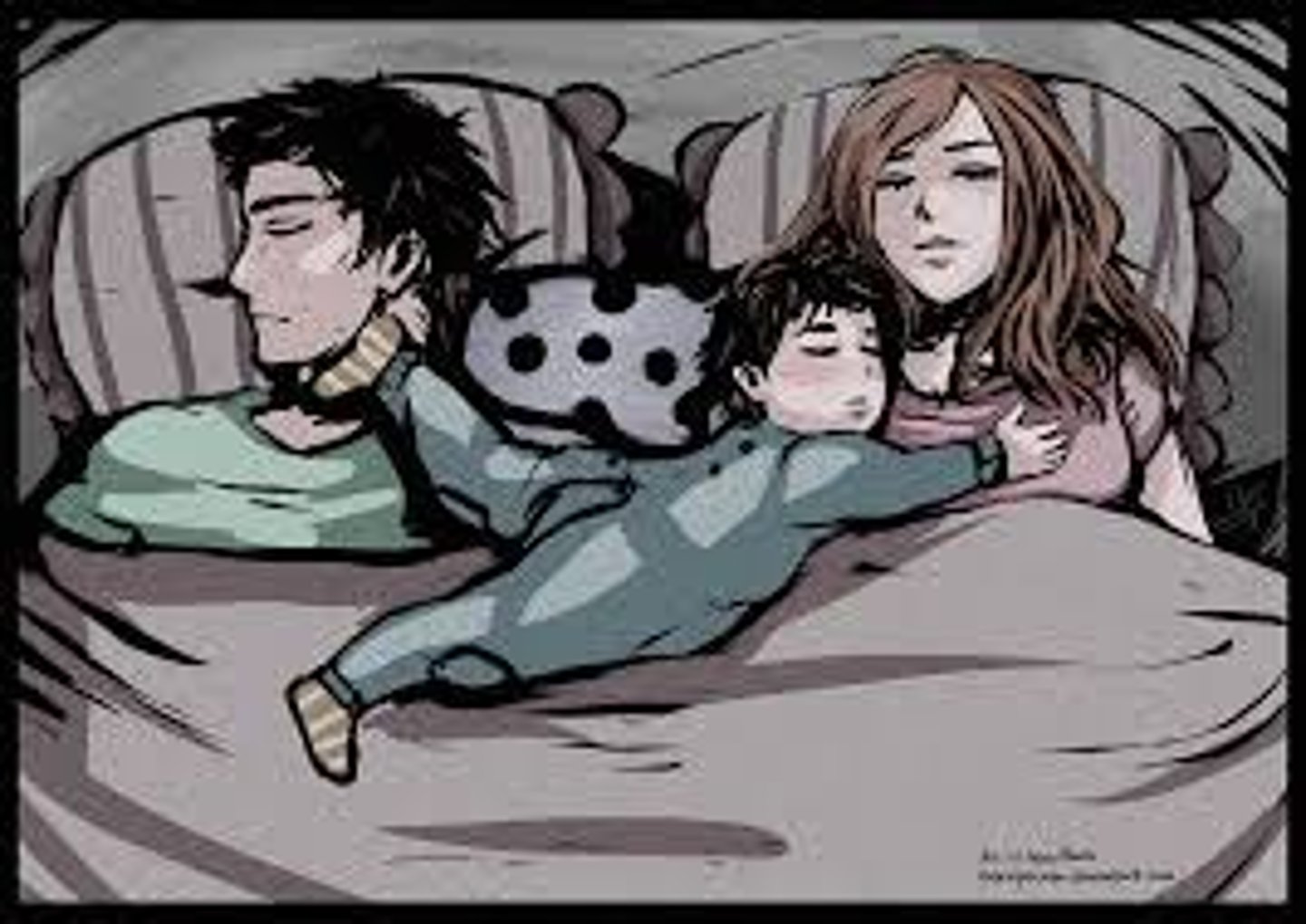
Oedipus Complex

- A classical psychoanalytic theory introduced by Sigmund Freud, asserting that during the phallic stage of psychosexual development (typically ages 3 to 6), a young boy develops an unconscious sexual desire for his opposite-sex parent (the mother) and views his same-sex parent (the father) as a rival or competitor for her attention and affection.
<p>- A <u><mark data-color="#eff6d3" style="background-color: rgb(239, 246, 211); color: inherit;">classical psychoanalytic theory </mark></u>introduced by Sigmund Freud, asserting that <u><mark data-color="#f0f1d3" style="background-color: rgb(240, 241, 211); color: inherit;">during the phallic stage of psychosexual development </mark></u>(typically ages 3 to 6), a <strong>young boy</strong> develops an <strong>unconscious sexual desire for his opposite-sex parent (the mother)</strong> and <strong>views his same-sex parent (the father) as a rival or competitor</strong> for her <strong>attention </strong>and <strong>affection</strong>.</p>
19
New cards

Electra Complex

- A parallel concept introduced by Carl Jung to describe the female experience during the same developmental stage, wherein a young girl experiences an unconscious attraction to her father and harbors feelings of rivalry, jealousy, and hostility toward her mother.
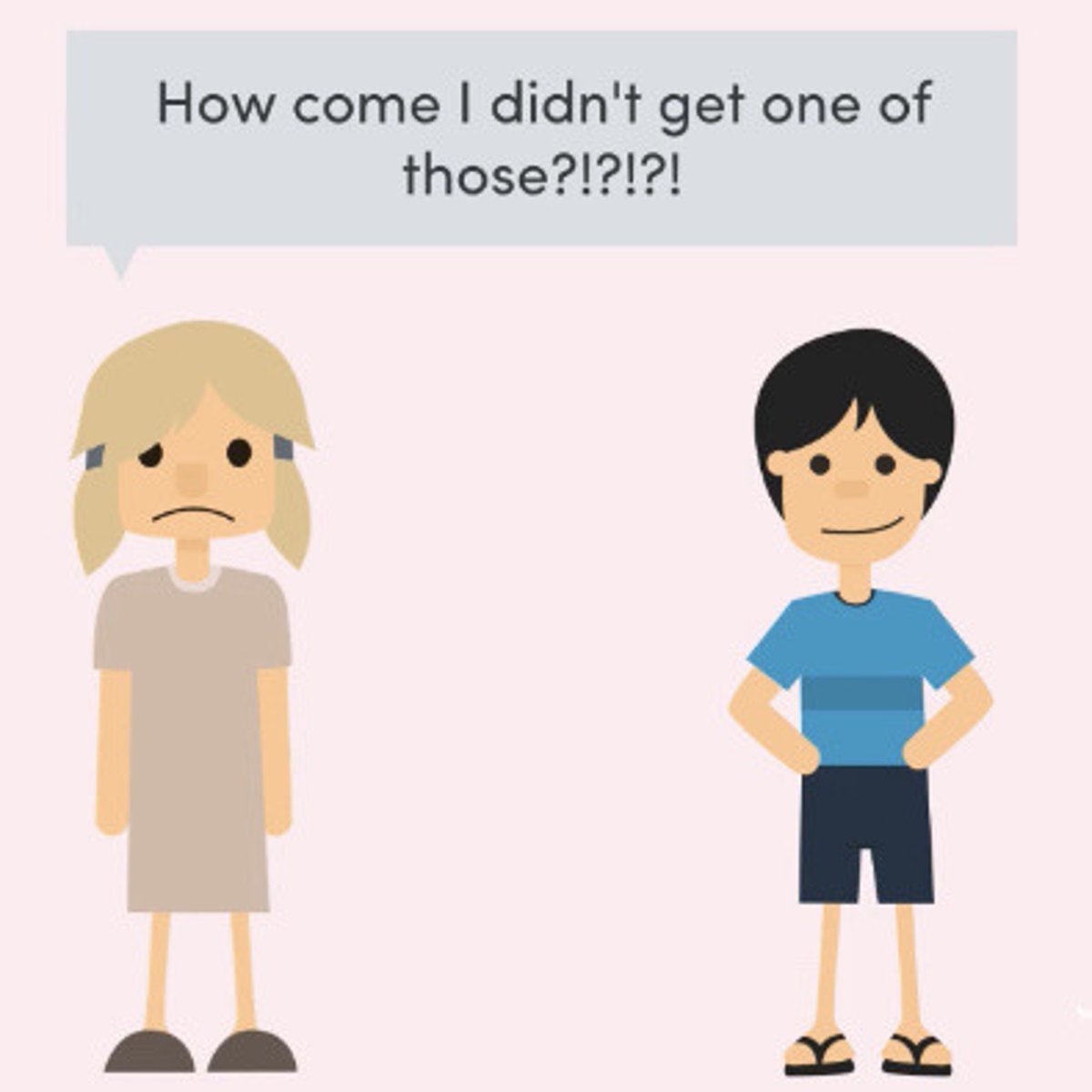
<p>- A parallel concept introduced by <strong>Carl Jung</strong> to describe the female experience during the same developmental stage, wherein a <strong>young girl experiences an unconscious attraction to her father</strong> and harbors feelings of rivalry, jealousy, and <strong>hostility toward her mother.</strong></p>
20
New cards

LATENCY STAGE

- (Industry vs. Inferiority)

AGE RANGE: 6- 12 years

EROGENOUS ZONE: None (dormant)

KEY CONFLICT: School and Social Skills - The child focuses on learning, friendship, and achievements.

POSITIVE OUTCOME: Competence, productivity, and social skills

POSSIBLE FIXATION (If unresolved): Latency fixation - Lack of motivation, poor social skills, feeling inferior

<p>- (Industry vs. Inferiority)</p><p><strong>AGE RANGE:</strong> 6- 12 years</p><p><strong>EROGENOUS ZONE: </strong>None (dormant)</p><p><strong>KEY CONFLICT:</strong> <span style="color: red;"><strong>School and Social Skills</strong></span> - The child focuses on learning, friendship, and achievements.</p><p><strong>POSITIVE OUTCOME:</strong> Competence, productivity, and social skills</p><p><strong>POSSIBLE FIXATION (If unresolved):</strong> <span style="color: red;"><strong>Latency fixation </strong></span>- Lack of motivation, poor social skills, feeling inferior</p>
21
New cards

GENITAL STAGE

- (Intimacy vs. Isolation)

AGE RANGE: 12 years and up

EROGENOUS ZONE: Genitals

KEY CONFLICT: Adolescent Development - The person seeks intimate relationships and deeper connections

POSITIVE OUTCOME: Love, intimacy, and meaningful relationships

POSSIBLE FIXATION (If unresolved): Genital fixation - commitment issues, difficulty with intimacy, isolation

<p>- (Intimacy vs. Isolation)</p><p><strong>AGE RANGE:</strong> 12 years and up</p><p><strong>EROGENOUS ZONE: </strong>Genitals</p><p><strong>KEY CONFLICT:</strong> <span style="color: red;"><strong>Adolescent Development</strong></span> - The person seeks intimate relationships and deeper connections</p><p><strong>POSITIVE OUTCOME: </strong>Love, intimacy, and meaningful relationships</p><p><strong>POSSIBLE FIXATION (If unresolved):</strong><span style="color: red;"><strong> Genital fixation</strong></span> - commitment issues, difficulty with intimacy, isolation</p>
22
New cards

five stages of psychosexual development

- Sigmund Freud's Theory of Psychosexual Development proposes that personality develops through a series of five childhood stages, during which the pleasure-seeking energies of the id become focused on certain erogenous zones (sensitive areas of the body).

- According to Freud, if a child experiences frustration or overindulgence during any stage, they can develop a fixation, meaning they become spiritually or behaviorally stuck in that stage, which shapes their adult personality traits and potential psychological conflicts.
<p>- <strong>Sigmund Freud's Theory of Psychosexual Development</strong> proposes that personality develops through a <strong>series of five childhood stages</strong>, during which the <u><mark data-color="yellow" style="background-color: yellow; color: inherit;">pleasure-seeking energies of the id become focused on certain erogenous zones (sensitive areas of the body).</mark></u></p><p>- According to Freud, if a child experiences frustration or overindulgence during any stage, they can develop a <strong>fixation</strong>, meaning they become <u><mark data-color="yellow" style="background-color: yellow; color: inherit;">spiritually or behaviorally stuck in that stage</mark></u>, which shapes their adult personality traits and potential psychological conflicts.</p>
23
New cards

ERIK ERIKSON

- a pioneer in taking a life-span perspective

- proposed stage theories, believed in qualitative change
<p>- a <strong>pioneer </strong>in <strong>taking a life-span perspective</strong></p><p>- proposed stage theories, believed in qualitative change</p>
24
New cards

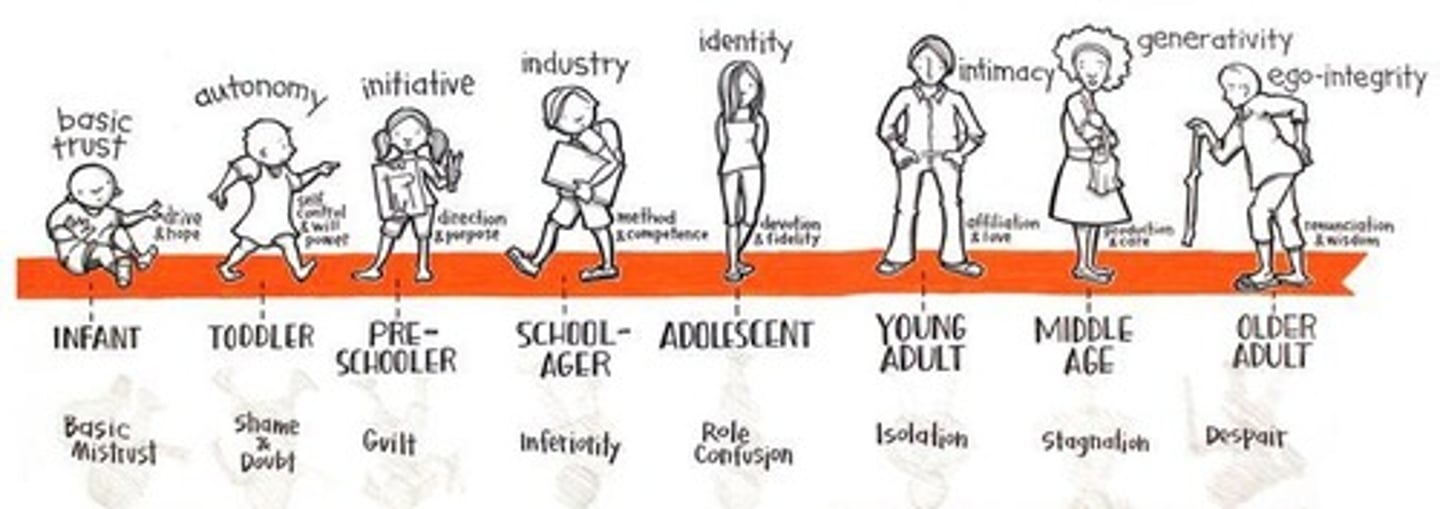
ERIK ERIKSON'S PSYCHOSOCIAL DEVELOPMENT STAGES

- Each stage involves what Erikson originally called a crisis in personality.

- Each stage requires the balancing of a positive trait and a corresponding negative one

- Successful resolution of each crisis puts the person in a particularly good position to address the next crisis.
<p>- Each stage involves what Erikson originally called a crisis in personality.</p><p>- Each stage requires the balancing of a positive trait and a corresponding negative one</p><p>- Successful resolution of each crisis puts the person in a particularly good position to address the next crisis.</p>
25
New cards

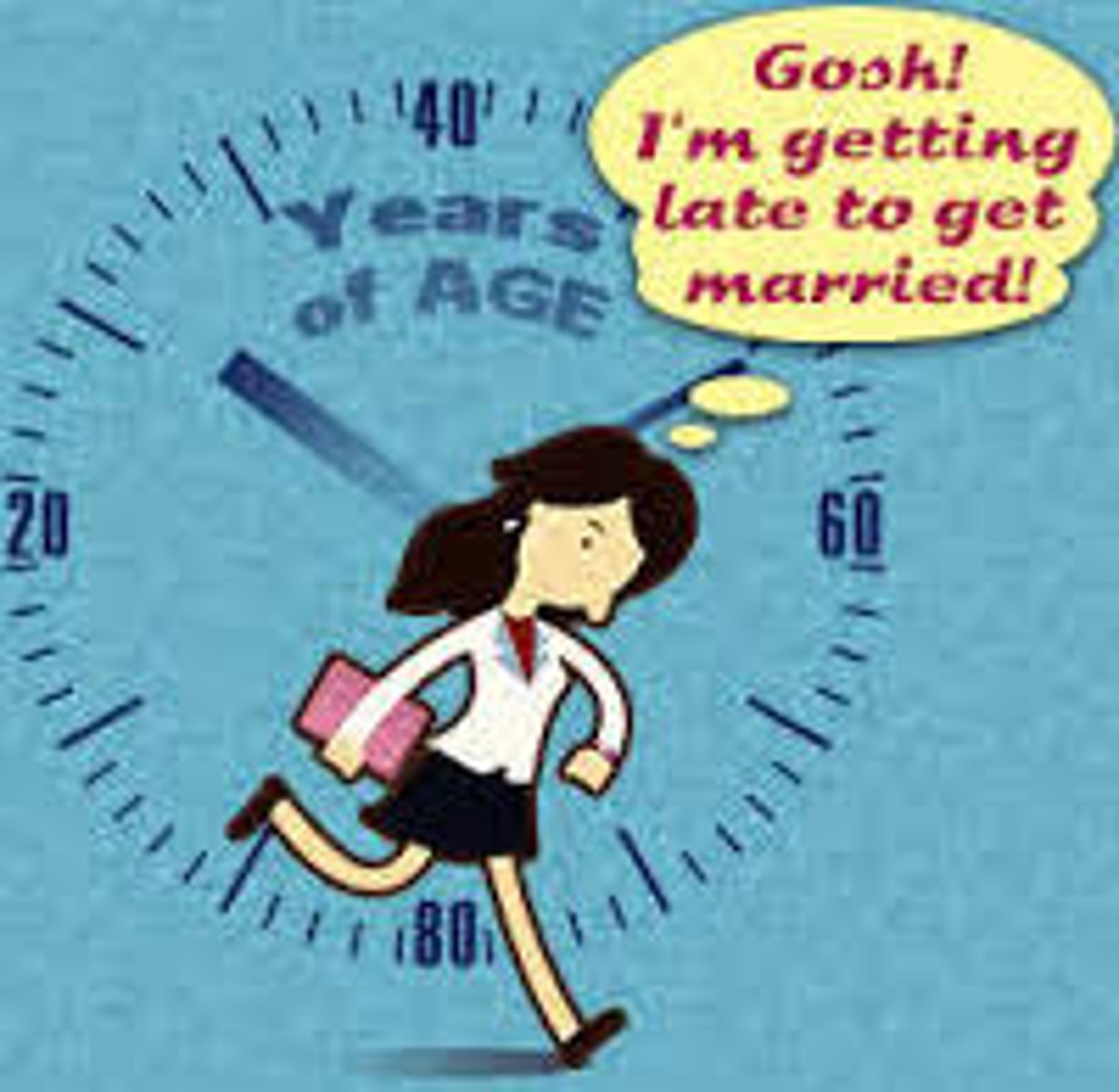
social clock

—the conventional, culturally preferred timing of important life events.

- big events
<p>—the conventional, culturally preferred timing of important life events.</p><p>- big events</p>
26
New cards

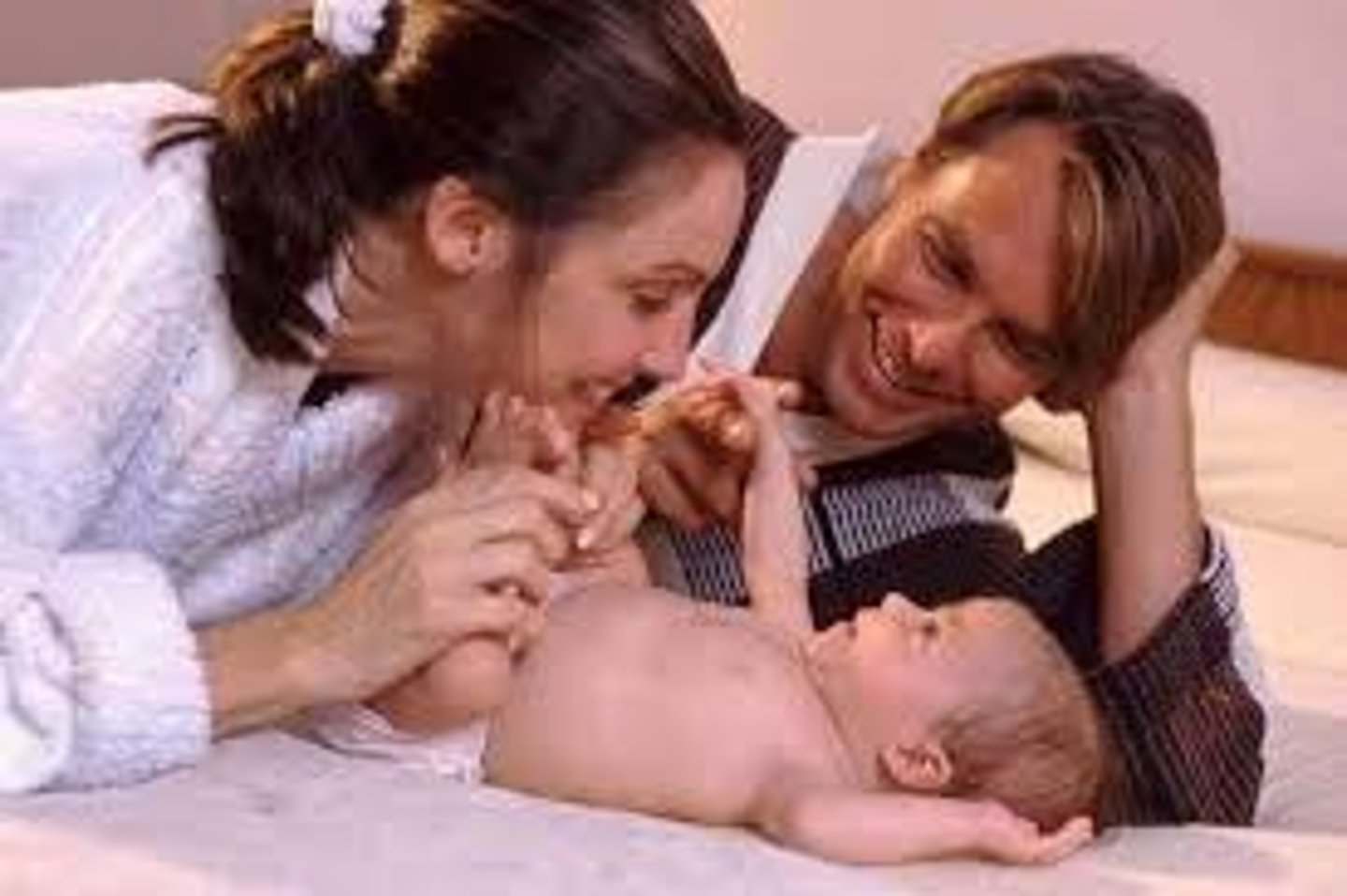
infancy

AGE RANGE: 0-1 year

PSYCHOSOCIAL CRISIS: Trust VS. Mistrust

DESCRIPTION (Simple): The baby learns to trust caregivers who provide love and care.

POSITIVE OUTCOME: Hope - The baby feels safe and secure.
<p>AGE RANGE: 0-1 year</p><p>PSYCHOSOCIAL CRISIS: Trust VS. Mistrust</p><p>DESCRIPTION (Simple): The baby learns to trust caregivers who provide love and care.</p><p>POSITIVE OUTCOME: Hope - The baby feels safe and secure.</p>
27
New cards

Early Childhood

AGE RANGE: 1-3 years

PSYCHOSOCIAL CRISIS: Autonomy VS. Shame & Doubt

DESCRIPTION (Simple): The child learns to do things independently, like eating, walking, and using the toilet.

POSITIVE OUTCOME: Will - The child feels independent.
<p>AGE RANGE: 1-3 years</p><p>PSYCHOSOCIAL CRISIS: Autonomy VS. Shame &amp; Doubt</p><p>DESCRIPTION (Simple): The child learns to do things independently, like eating, walking, and using the toilet.</p><p>POSITIVE OUTCOME: Will - The child feels independent.</p>
28
New cards

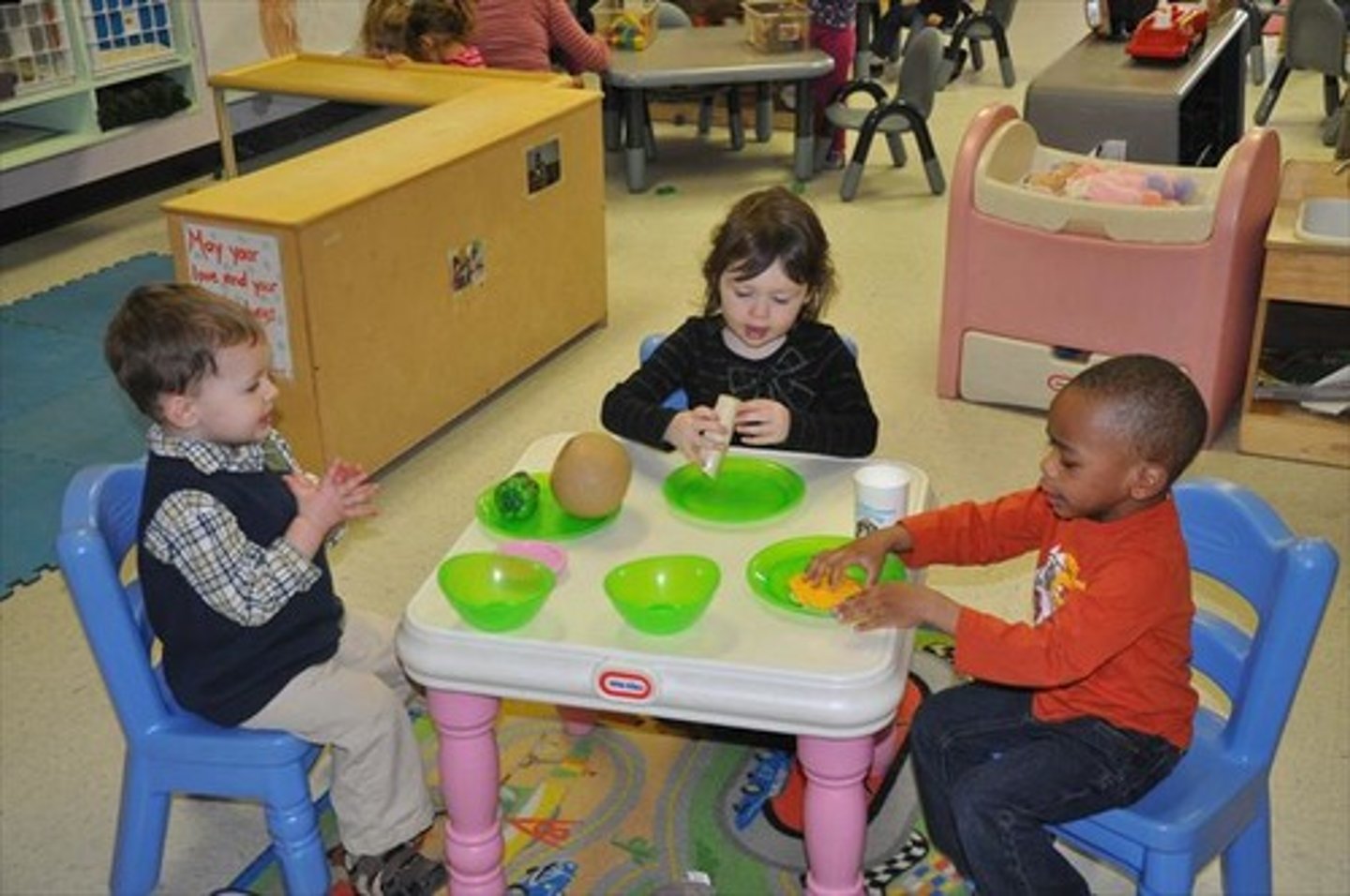
Preschool Years

AGE RANGE: 3-6 years

PSYCHOSOCIAL CRISIS: Initiative VS. Guilt

DESCRIPTION (Simple): The child explores, makes choices, and tries new things.

POSITIVE OUTCOME: Purpose - The child feels confident and capable.
<p>AGE RANGE: 3-6 years</p><p>PSYCHOSOCIAL CRISIS: Initiative VS. Guilt</p><p>DESCRIPTION (Simple): The child explores, makes choices, and tries new things.</p><p>POSITIVE OUTCOME: Purpose - The child feels confident and capable.</p>
29
New cards

School Age

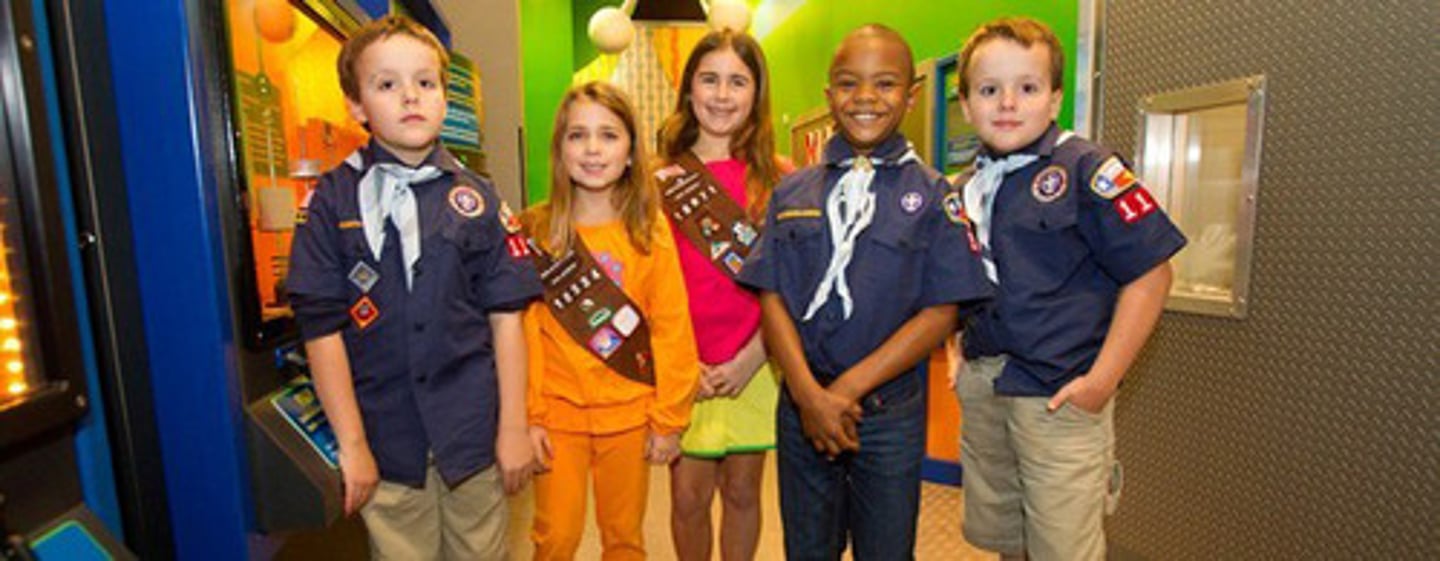
AGE RANGE: 6- 12 years

PSYCHOSOCIAL CRISIS: Industry VS. Inferiority

DESCRIPTION (Simple): The child learns new skills, works hard, and feels proud of achievements.

POSITIVE OUTCOME: Competence - The child feels capable and useful.
<p>AGE RANGE: 6- 12 years</p><p>PSYCHOSOCIAL CRISIS: Industry VS. Inferiority</p><p>DESCRIPTION (Simple): The child learns new skills, works hard, and feels proud of achievements.</p><p>POSITIVE OUTCOME: Competence - The child feels capable and useful.</p>
30
New cards

Adolescence

AGE RANGE: 12-18 years

PSYCHOSOCIAL CRISIS: Identity VS. Role Confusion

DESCRIPTION (Simple): The teenager tries to figure out who they are and what they believe.

POSITIVE OUTCOME: Fidelity - The teen has a strong sense of self.

<p>AGE RANGE: 12-18 years</p><p>PSYCHOSOCIAL CRISIS: Identity VS. Role Confusion</p><p>DESCRIPTION (Simple): The teenager tries to figure out who they are and what they believe.</p><p>POSITIVE OUTCOME: Fidelity - The teen has a strong sense of self.</p>
31
New cards

Young Adulthood

AGE RANGE: 18-40 years

PSYCHOSOCIAL CRISIS: Intimacy VS. Isolation

DESCRIPTION (Simple): The young adult builds close relationships and shares life with others.

POSITIVE OUTCOME: Love - The person can give and receive love.

<p>AGE RANGE: 18-40 years</p><p>PSYCHOSOCIAL CRISIS: Intimacy VS. Isolation</p><p>DESCRIPTION (Simple): The young adult builds close relationships and shares life with others.</p><p>POSITIVE OUTCOME: Love - The person can give and receive love.</p>
32
New cards

Middle Adulthood

AGE RANGE: 40-65 years

PSYCHOSOCIAL CRISIS: Generativity VS. Stagnation

DESCRIPTION (Simple): The adult wants to help others and contribute to the next generation.

POSITIVE OUTCOME: Care - The person feels productive and useful.

<p>AGE RANGE: 40-65 years</p><p>PSYCHOSOCIAL CRISIS: Generativity VS. Stagnation</p><p>DESCRIPTION (Simple): The adult wants to help others and contribute to the next generation.</p><p>POSITIVE OUTCOME: Care - The person feels productive and useful.</p>
33
New cards

Late Adulthood

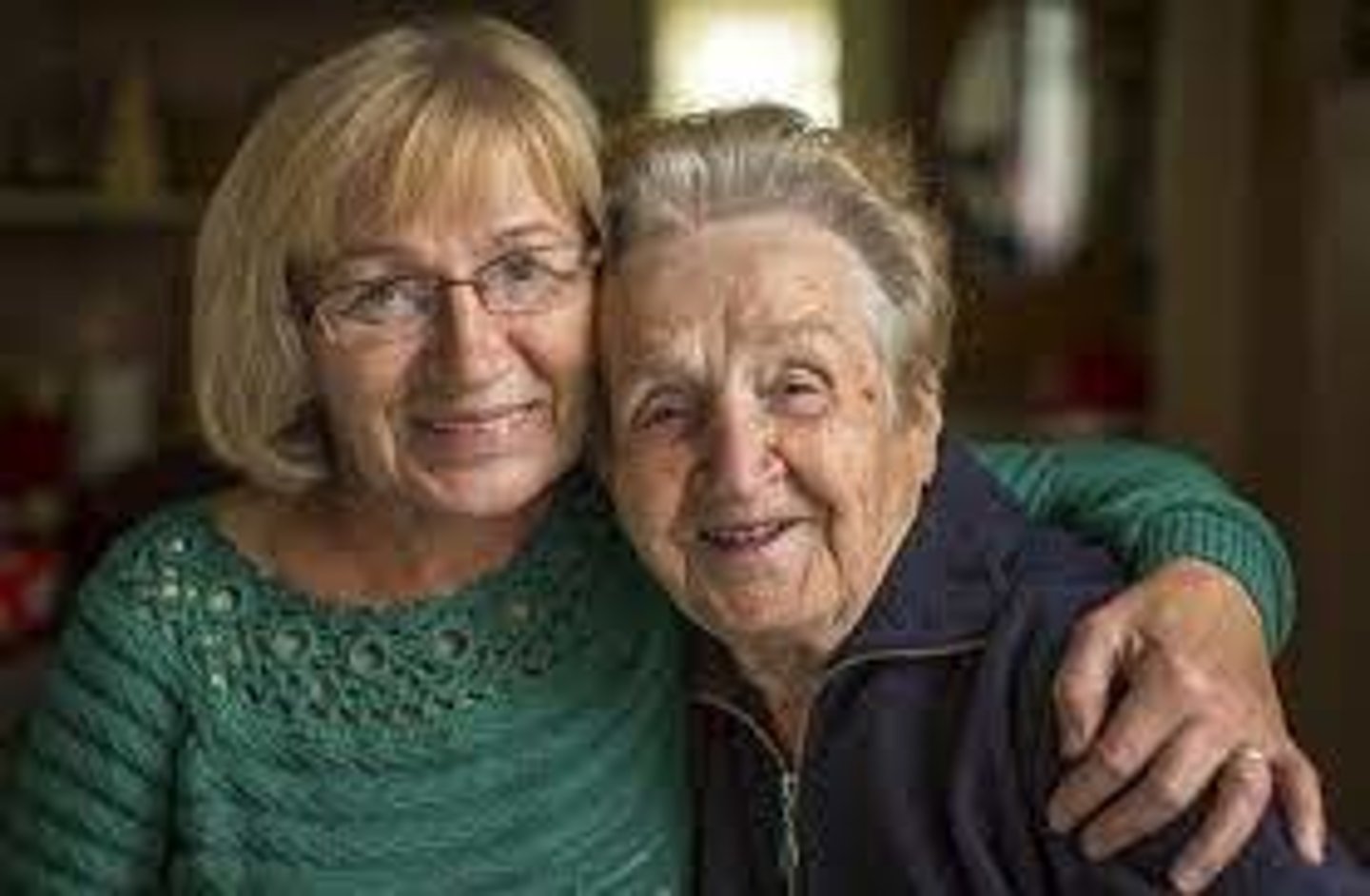
AGE RANGE: 65 years and up

PSYCHOSOCIAL CRISIS: Ego Integrity Vs. Despair

DESCRIPTION (Simple): The older adult looks back on life and feels satisfied with their journey.

POSITIVE OUTCOME: Wisdom - The person feels peace and fulfiilment.
<p>AGE RANGE: 65 years and up</p><p>PSYCHOSOCIAL CRISIS: Ego Integrity Vs. Despair</p><p>DESCRIPTION (Simple): The older adult looks back on life and feels satisfied with their journey.</p><p>POSITIVE OUTCOME: Wisdom - The person feels peace and fulfiilment.</p>
34
New cards

LEARNING

- Not interested in the inner working of the mind because those processes could not be directly

observed.

35
New cards

tabula rasa

- Psychologists at the time also viewed the mind as?

additional info: is a Latin phrase that translates to "blank slate".

Popularized by the philosopher John Locke, it is the belief that individuals are born without any pre-existing knowledge, mental content, or built-in traits.

Instead, all of a person's knowledge, habits, and behaviors are written onto their mind over time through their experiences, sensory perceptions, and interactions with the environment.

<p>- Psychologists at the time also viewed the mind as?</p><p>additional info: is a Latin phrase that translates to "blank slate".</p><p>Popularized by the philosopher John Locke, it is the belief that individuals are born without any pre-existing knowledge, mental content, or built-in traits.</p><p>Instead, all of a person's knowledge, habits, and behaviors are written onto their mind over time through their experiences, sensory perceptions, and interactions with the environment.</p>
36
New cards

BEHAVIORISM

- a mechanistic theory that describes observed behavior as a predictable response to experience

(meaning it treats the individual as a passive organism shaped entirely by environmental inputs and external forces.)
<p>- a mechanistic theory that describes observed behavior as a predictable response to experience</p><p>(meaning it treats the individual as a passive organism shaped entirely by environmental inputs and external forces.)</p>
37
New cards

CLASSICAL CONDITIONING

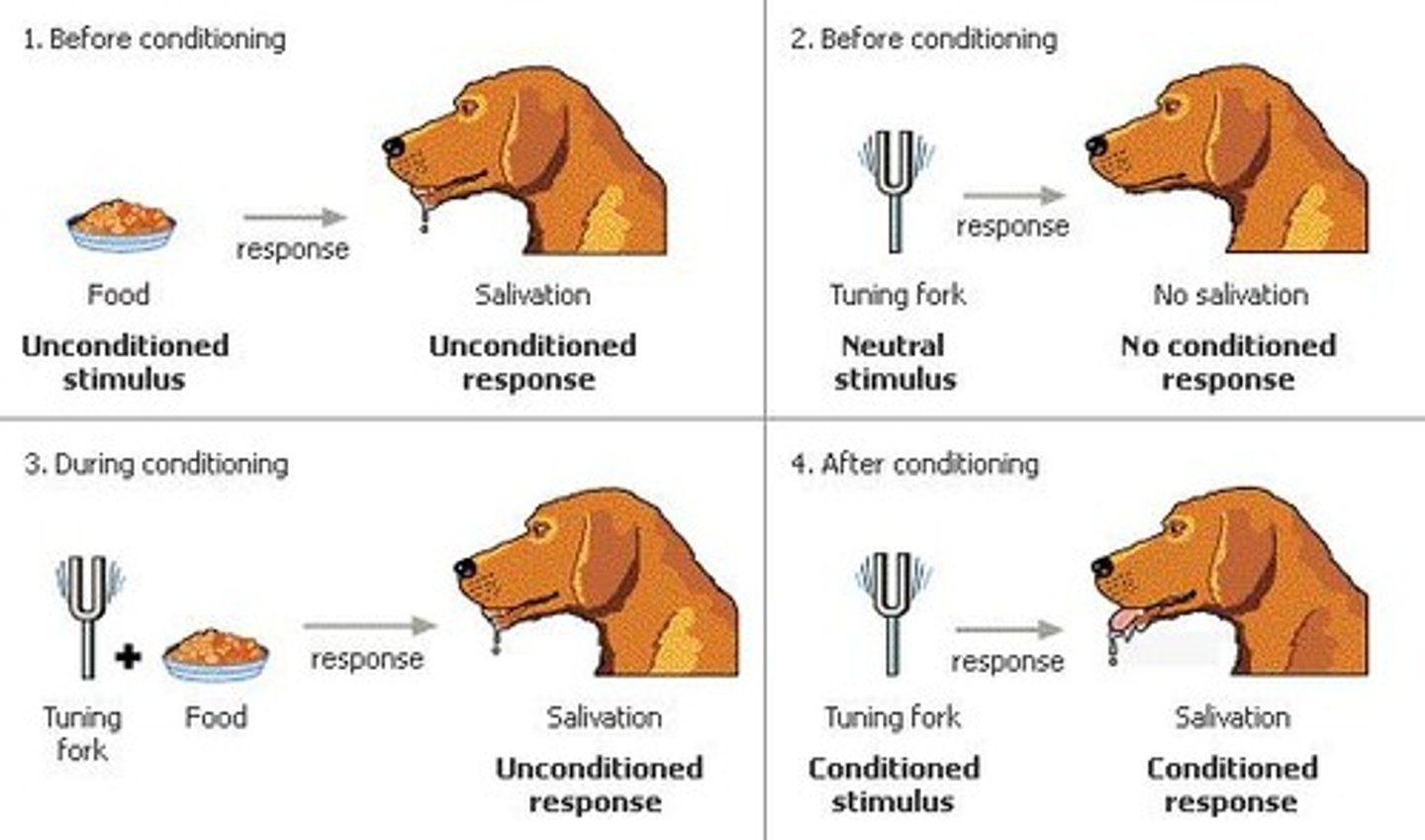
- Learning that occurs when a neutral stimulus becomes associated with a naturally occurring stimulus.

- The person learns to respond to a stimulus that was previously neutral.

- Discovered by Ivan Pavlov

KEY POINTS:

- Involuntary response

-Association between stimuli

-No consequences needed

Example: A child hears a bell (neutral stimulus) every time the teacher gives a pop quiz (unconditioned stimulus). Later, the child feels anxious (conditioned response) just by hearing the bell.

EXAMPLES IN DAILY LIFE:

- Feeling hungry when you smell food.

- Feeling scared when you hear thunder after a bad experience.

- Salivating at the sound of a mixer because it reminds you of food preparation.
<p>- Learning that occurs when a neutral stimulus becomes associated with a naturally occurring stimulus.</p><p>- The person learns to respond to a stimulus that was previously neutral.</p><p>- Discovered by Ivan Pavlov</p><p>KEY POINTS:</p><p>- Involuntary response</p><p>-Association between stimuli</p><p>-No consequences needed</p><p>Example: A child hears a bell (neutral stimulus) every time the teacher gives a pop quiz (unconditioned stimulus). Later, the child feels anxious (conditioned response) just by hearing the bell.</p><p>EXAMPLES IN DAILY LIFE:</p><p>- Feeling hungry when you smell food.</p><p>- Feeling scared when you hear thunder after a bad experience.</p><p>- Salivating at the sound of a mixer because it reminds you of food preparation.</p>
38
New cards

OPERANT CONDITIONING

- Learning that occurs through consequences.

- Behavior is strengthened or weakened depending on the result.

- Behavior changes based on its consequences.

- Discovered by B.F. Skinner

example: A student studies hard and gets praise from the teacher (positive reinforcement). The student is more likely to study hard again.

EXAMPLES IN DAILY LIFE:

- Getting a reward for good grades.

- Getting a toy when you clean your room.

- Losing phone privileges after breaking rules.

- Praising a child when they share with others.

KEY POINTS:

-Voluntary behavior

- Based on consequences

- Rewards increase behavior

-Punishments decrease behavior

39
New cards

SOCIAL LEARNING THEORY

- Bandura believed that behaviors are learned by observing and imitating models
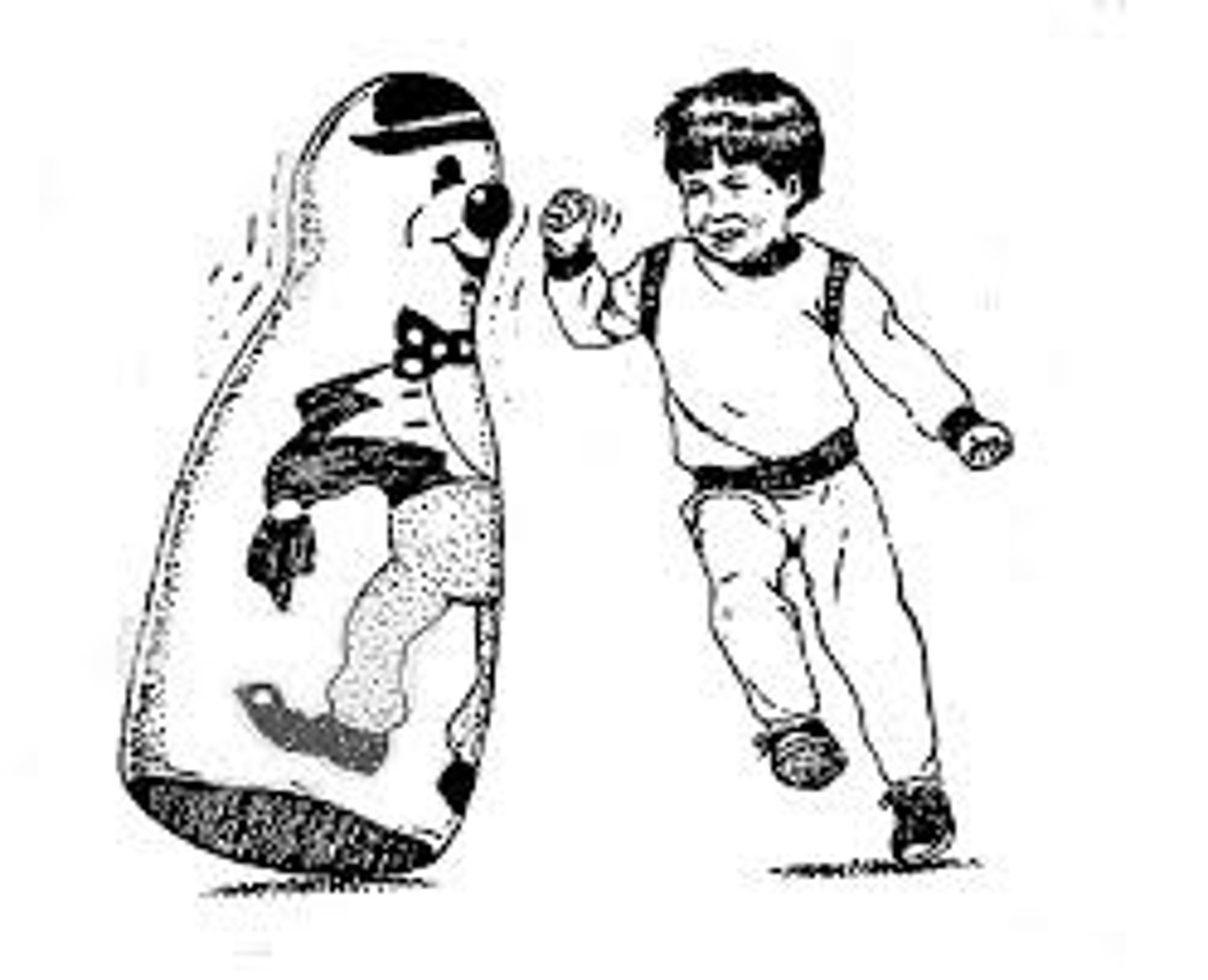
<p>- Bandura believed that behaviors are learned by observing and imitating models</p>
40
New cards

REINFORCEMENT

- Something pleasant is given to increase a behavior.

- behavior is strengthened, increasing the likelihood that the behavior will be repeated

Key points:

- increases the chance of a behavior happening again.

- It can be positive (adding something pleasant) or negative (removing something unpleasant).
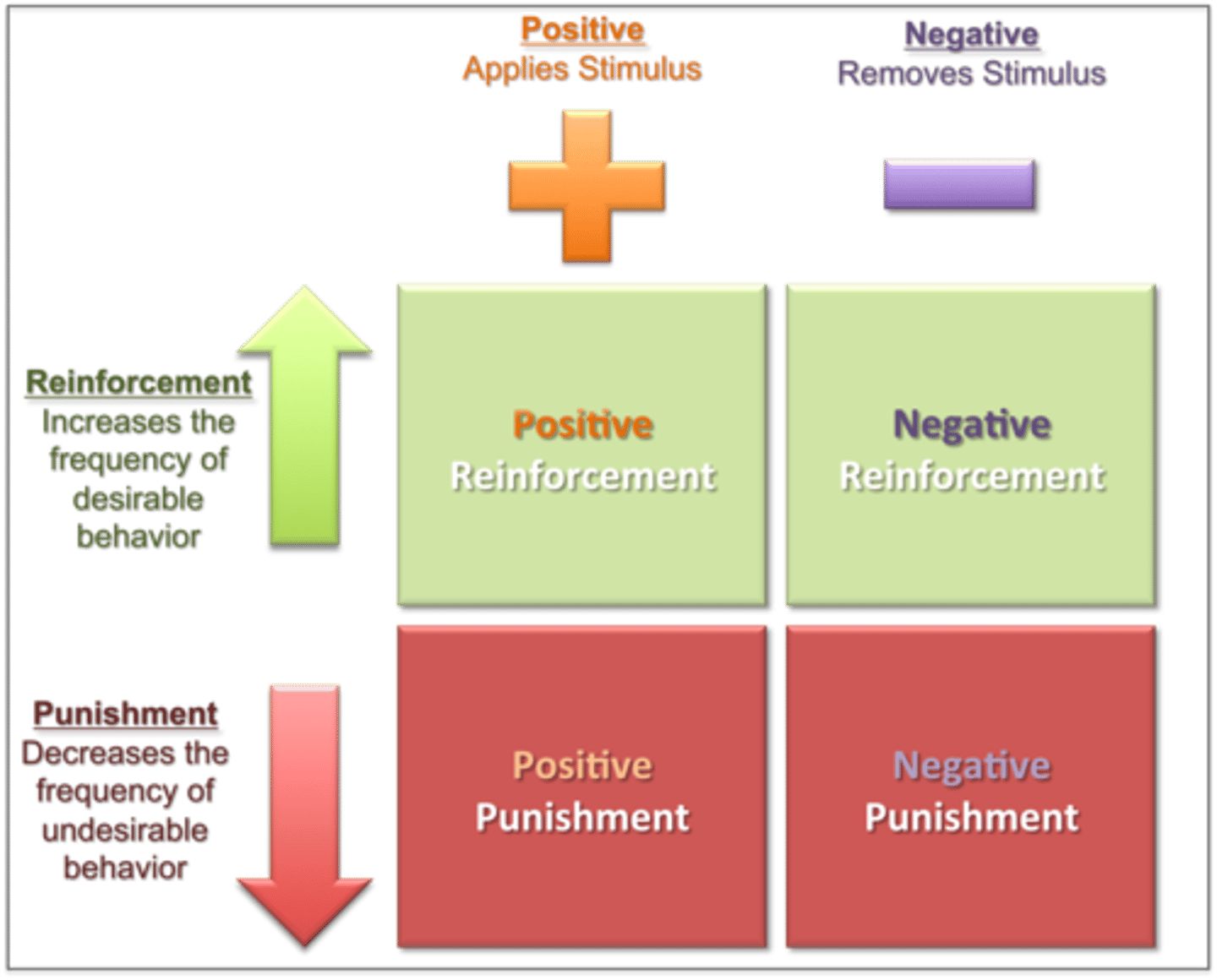
<p>- Something pleasant is given to increase a behavior.</p><p>- behavior is strengthened, increasing the likelihood that the behavior will be repeated</p><p>Key points:</p><p>- increases the chance of a behavior happening again.</p><p>- It can be positive (adding something pleasant) or negative (removing something unpleasant).</p>
41
New cards

POSITIVE REINFORCEMENT

- Add something pleasant to increase the behavior.

Example: Behavior Studying hard + Add: Gets a reward (praise, treat, gift) = Result: More likely to study hard again
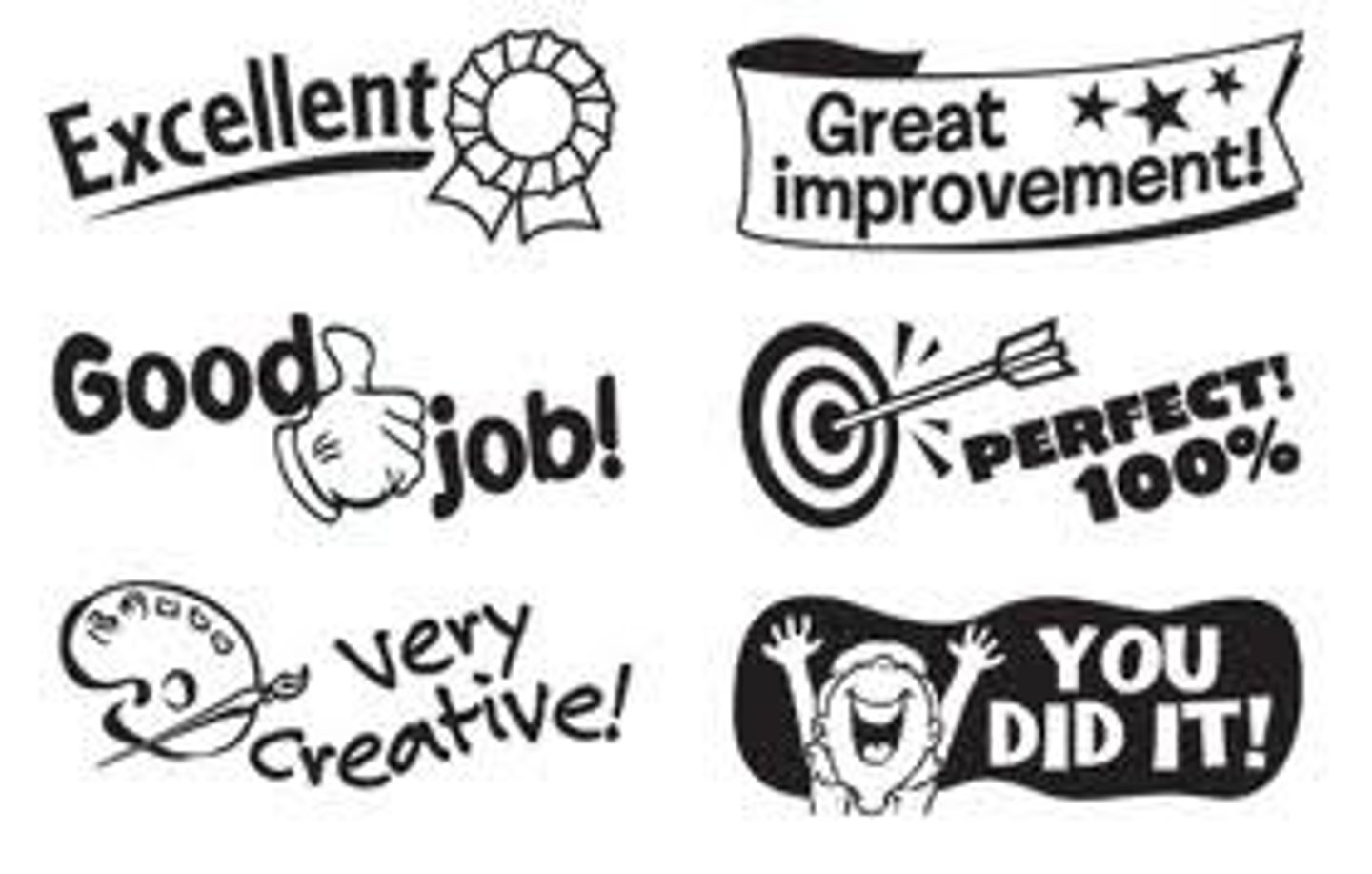
<p>- Add something pleasant to increase the behavior.</p><p>Example: Behavior Studying hard + Add: Gets a reward (praise, treat, gift) = Result: More likely to study hard again</p>
42
New cards

NEGATIVE REINFORCEMENT

- Remove something unpleasant to increase the behavior.

Example: Behavior: Completes homework + Remove: No more extra homework = Result: More likely to do homework again
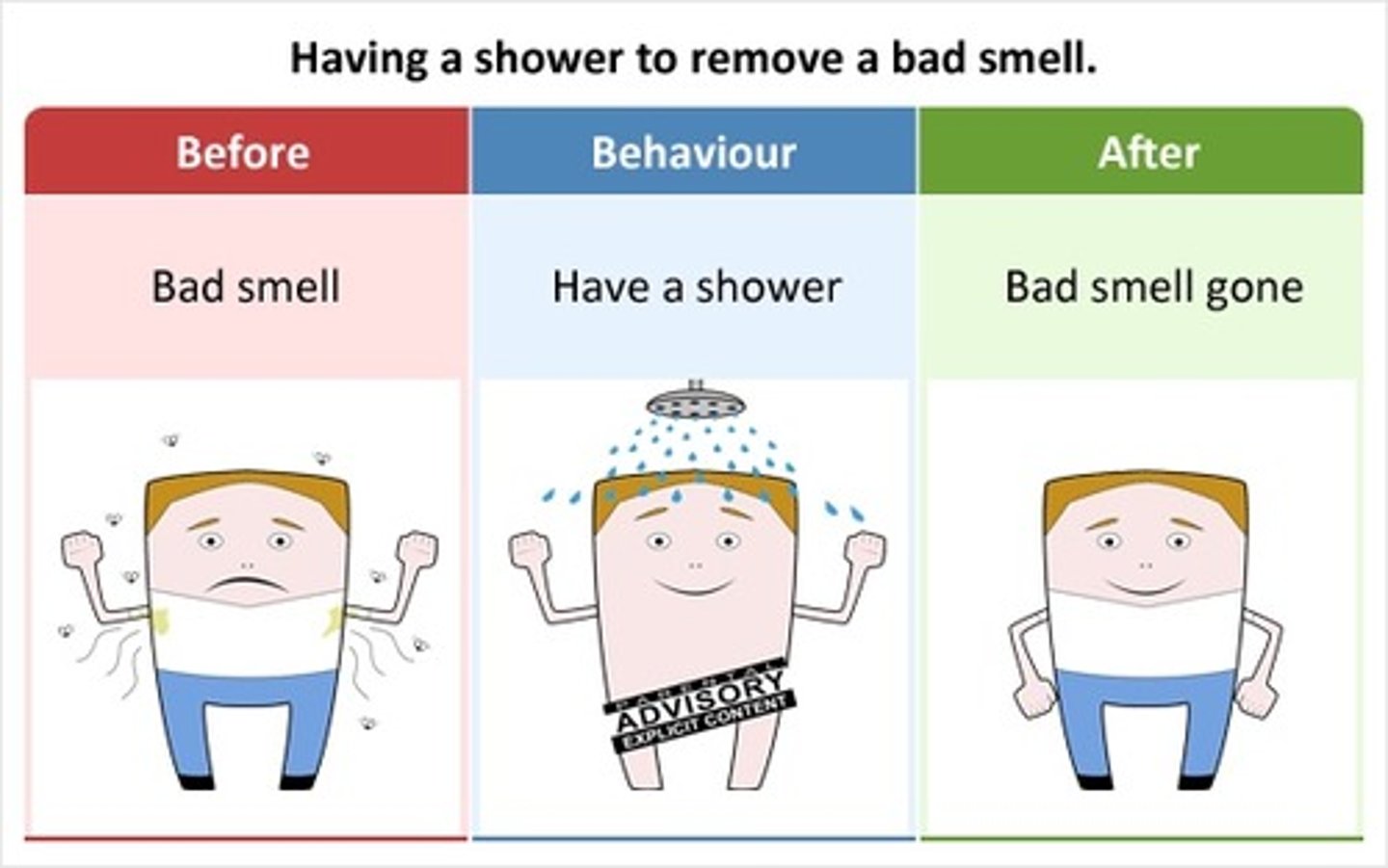
<p>- Remove something unpleasant to increase the behavior.</p><p>Example: Behavior: Completes homework + Remove: No more extra homework = Result: More likely to do homework again</p>
43
New cards

PUNISHMENT

- Something unpleasant is given to decrease a behavior.

- behavior is weakened, decreasing the likelihood of repetition
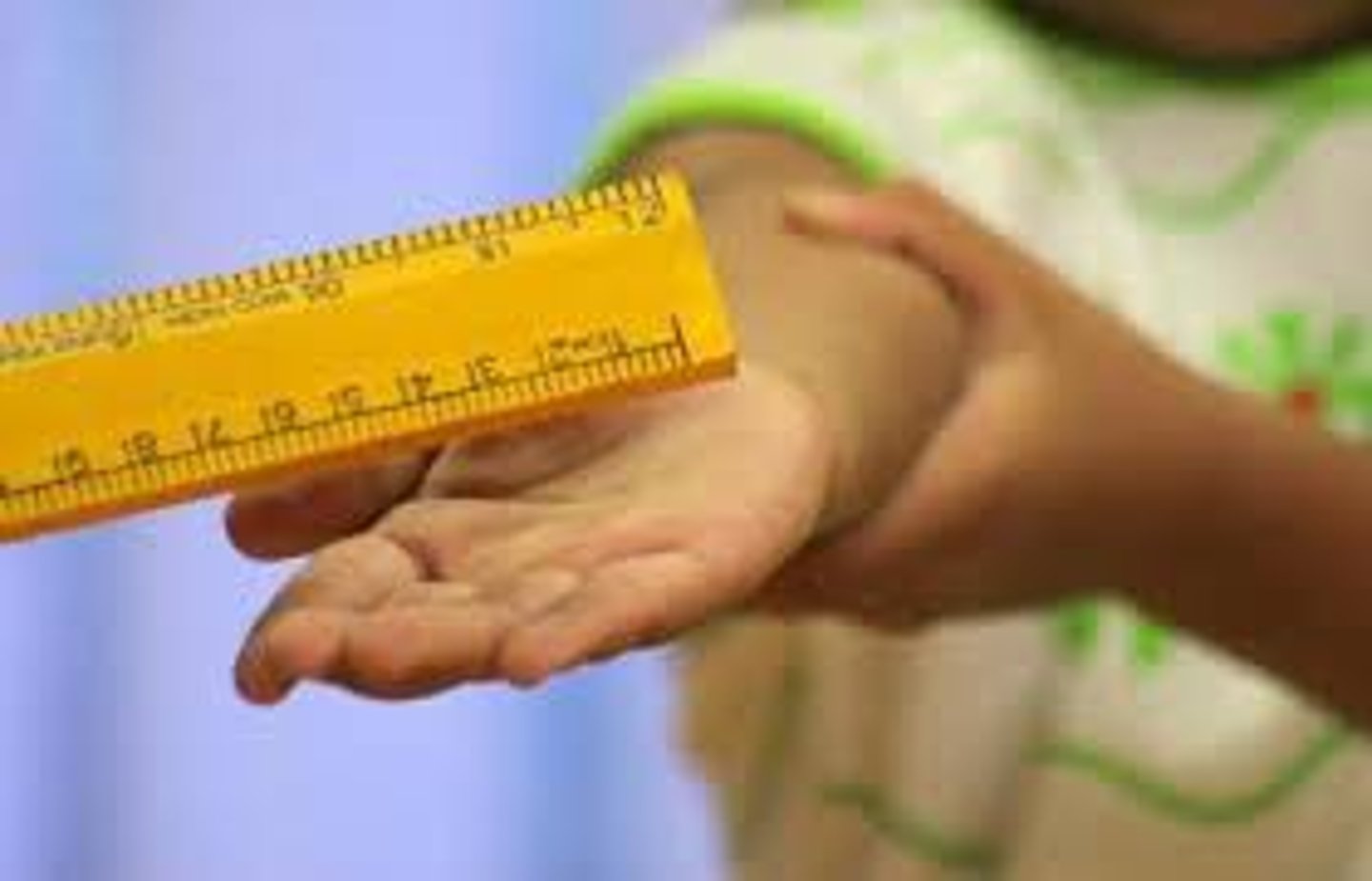
<p>- Something unpleasant is given to decrease a behavior.</p><p>- behavior is weakened, decreasing the likelihood of repetition</p>
44
New cards

POSITIVE PUNISHMENT

- Add something unpleasant to decrease the behavior.

Example: Behavior: Talking back + Add: Gets scolded (yelled at) = Result: Less likely to talk back again
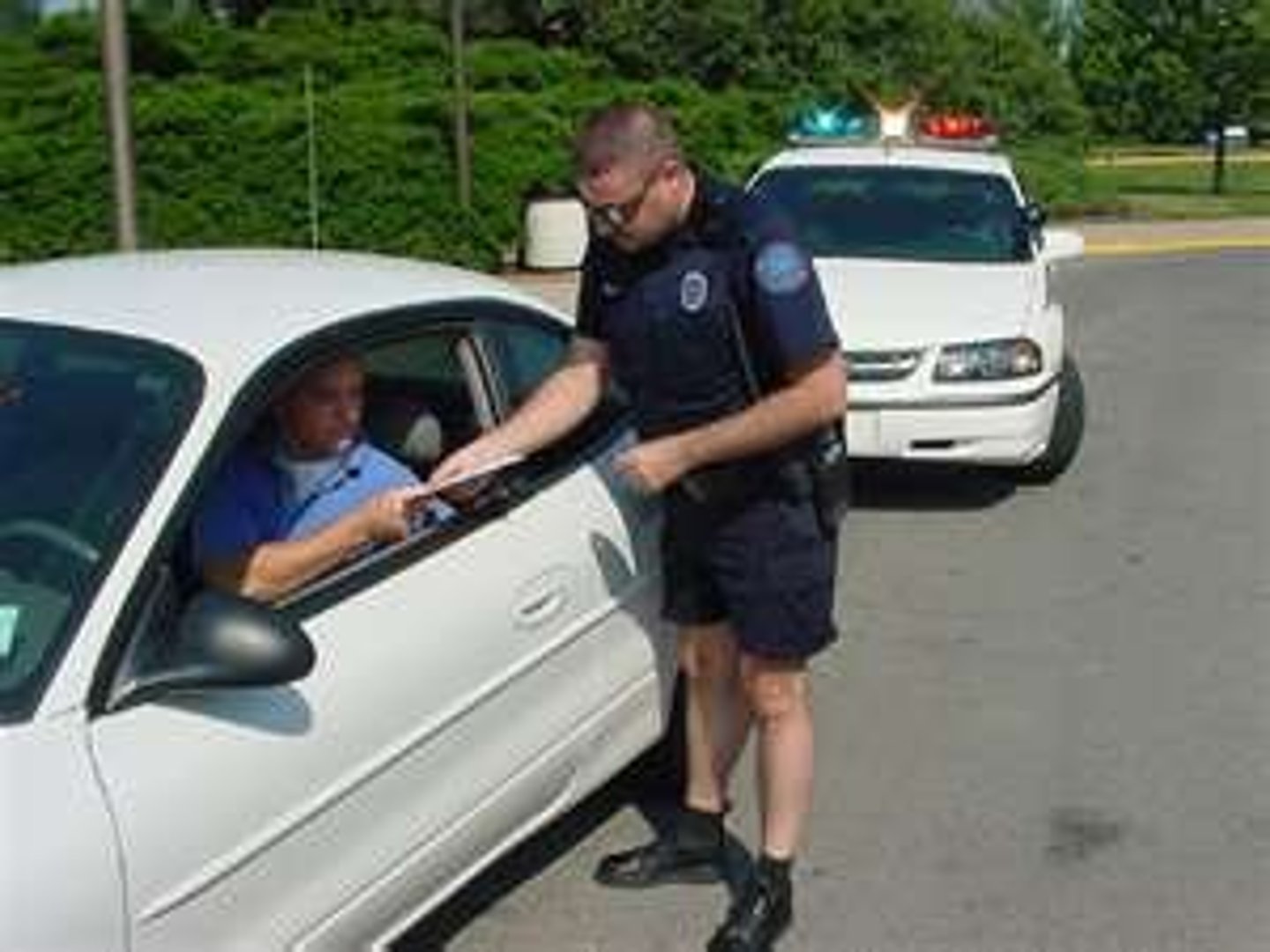
<p>- Add something unpleasant to decrease the behavior.</p><p>Example: Behavior: Talking back + Add: Gets scolded (yelled at) = Result: Less likely to talk back again</p>
45
New cards

NEGATIVE PUNISHMENT

- Remove something pleasant to decrease the behavior.

Example: Behavior: Does not clean room + Remove: Loss of phone or game time = Result: Less likely to not clean room again

<p>- Remove something pleasant to decrease the behavior.</p><p>Example: Behavior: Does not clean room + Remove: Loss of phone or game time = Result: Less likely to not clean room again</p>
46
New cards

JEAN PIAGET

- developed the cognitive-stage theory that reintroduced the concept of scientific inquiry into mental states.
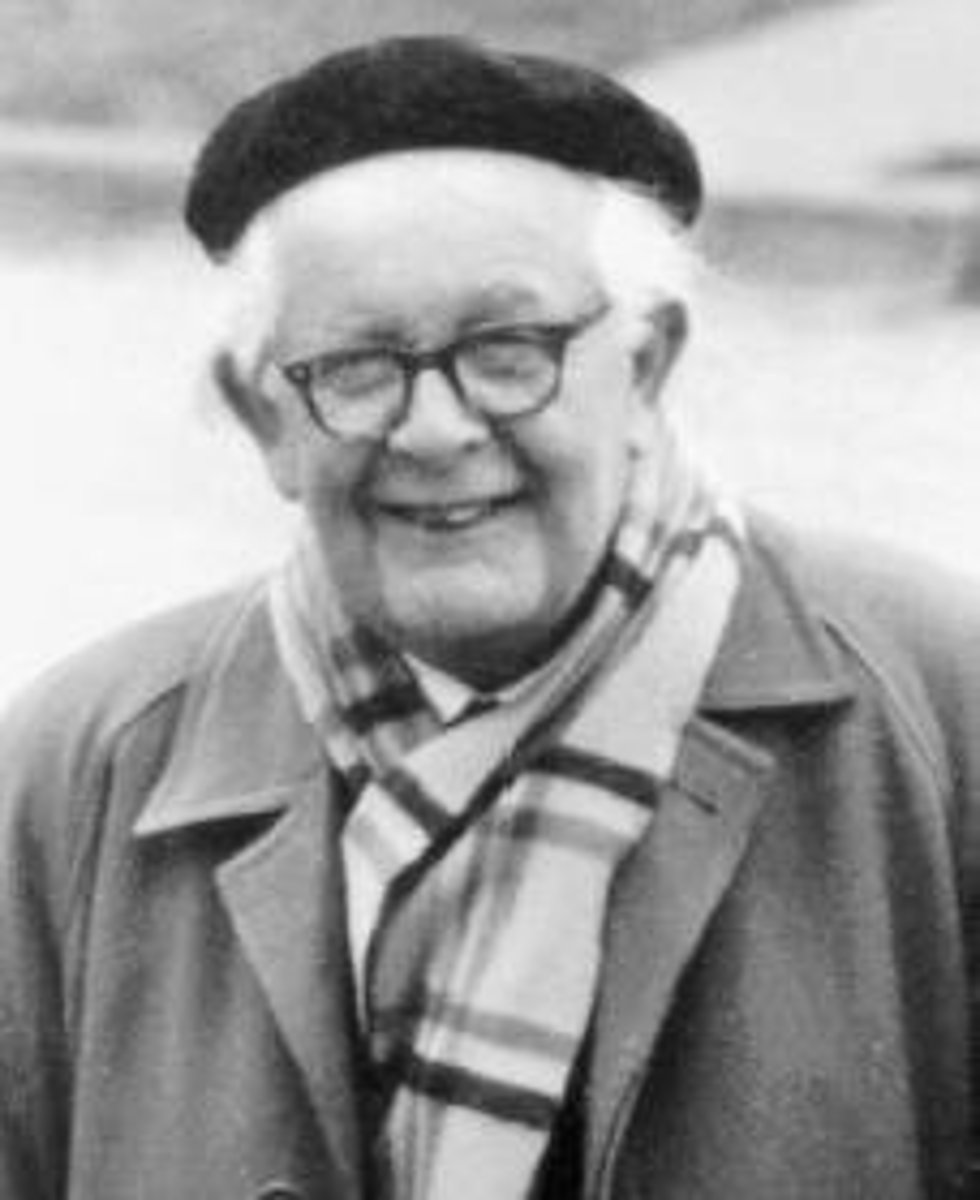
<p>- developed the cognitive-stage theory that reintroduced the concept of scientific inquiry into mental states.</p>
47
New cards

PIAGET'S COGNITIVE-STAGE THEORY

- According to Piaget, children are "little scientists" who actively build their understanding of the world.

- is a developmental perspective—most famously championed by Jean Piaget—which asserts that human intelligence and thinking abilities develop through a series of distinct, qualitative stages.

- viewing the individual as an active explorer who constructs their own understanding of the world.
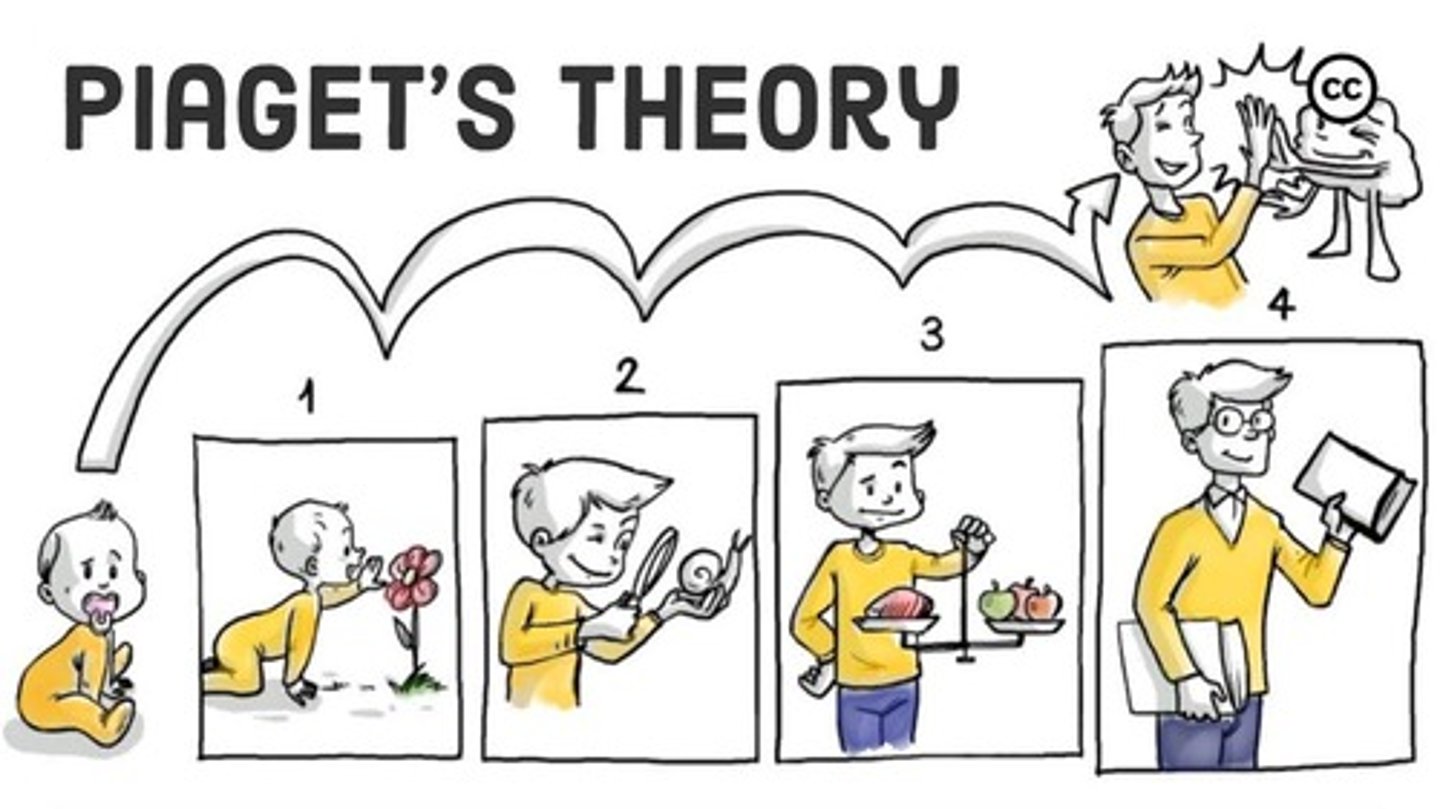
<p>- According to Piaget, children are "little scientists" who actively build their understanding of the world.</p><p>- is a developmental perspective—most famously championed by Jean Piaget—which asserts that human intelligence and thinking abilities develop through a series of distinct, qualitative stages.</p><p>- viewing the individual as an active explorer who constructs their own understanding of the world.</p>
48
New cards

SENSORIMOTOR STAGE

AGE RANGE: 0-2 years

KEY IDEA: The baby learns about the world through the senses and actions.

EXAMPLE: A baby shakes a rattle and hears a sound.

WHAT THE CHILD CAN DO:

- Explores objects by looking, touching, and mouthing.

- Learns that objects exist even when not seen (object permanence).
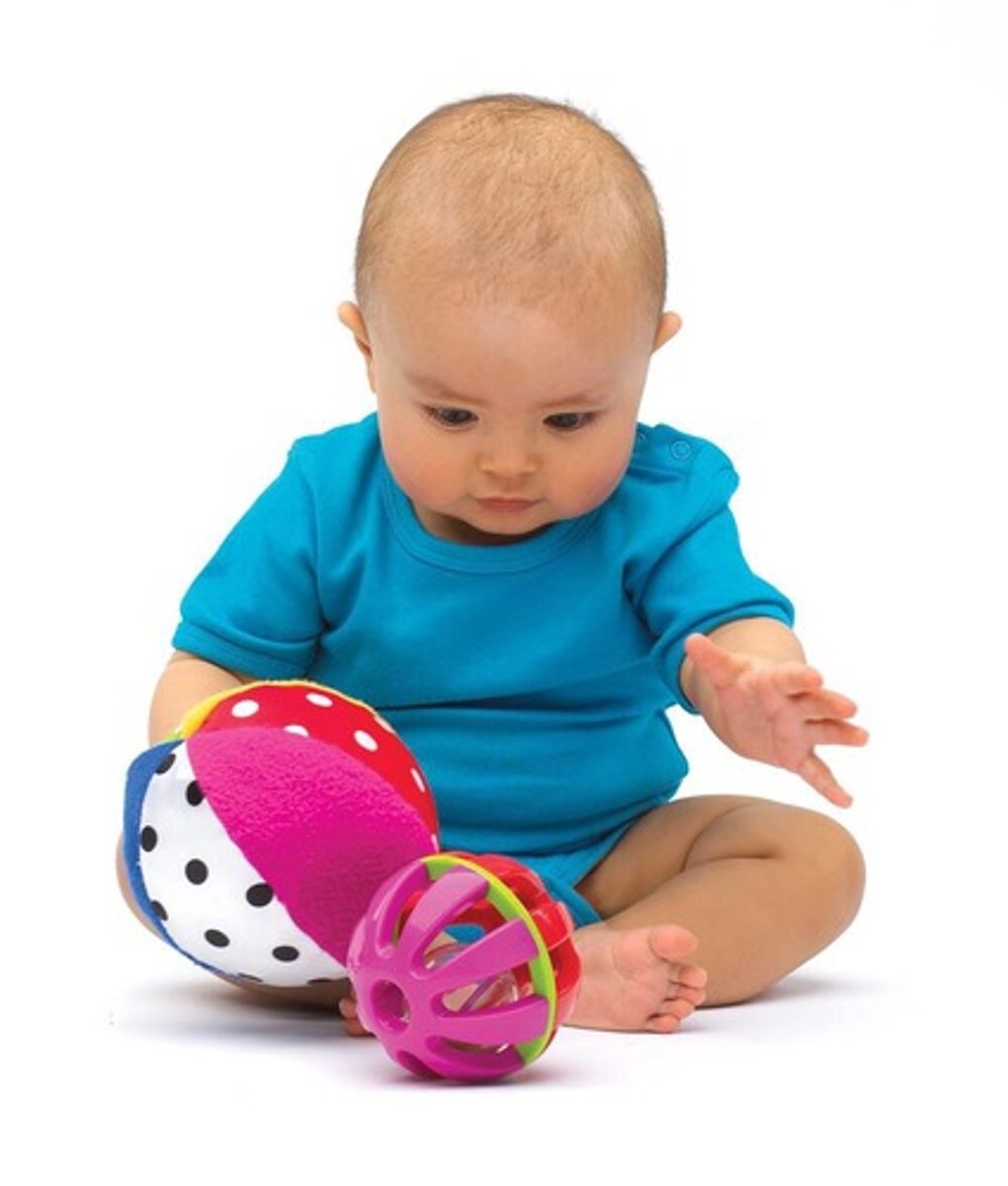
<p>AGE RANGE: 0-2 years</p><p>KEY IDEA: The baby learns about the world through the senses and actions.</p><p>EXAMPLE: A baby shakes a rattle and hears a sound.</p><p>WHAT THE CHILD CAN DO:</p><p>- Explores objects by looking, touching, and mouthing.</p><p>- Learns that objects exist even when not seen (object permanence).</p>
49
New cards

PREOPERATIONAL STAGE

AGE RANGE: 2-7 years

KEY IDEA: The child uses symbols and language but thinks in a very concrete way.

EXAMPLE: A child thinks the bigger glass has more juice.

WHAT THE CHILD CAN DO:

- Uses words and pictures. Thinks is egocentric (sees things from their own point of view).

- Has trouble understanding that quantity stays the same (conservation).
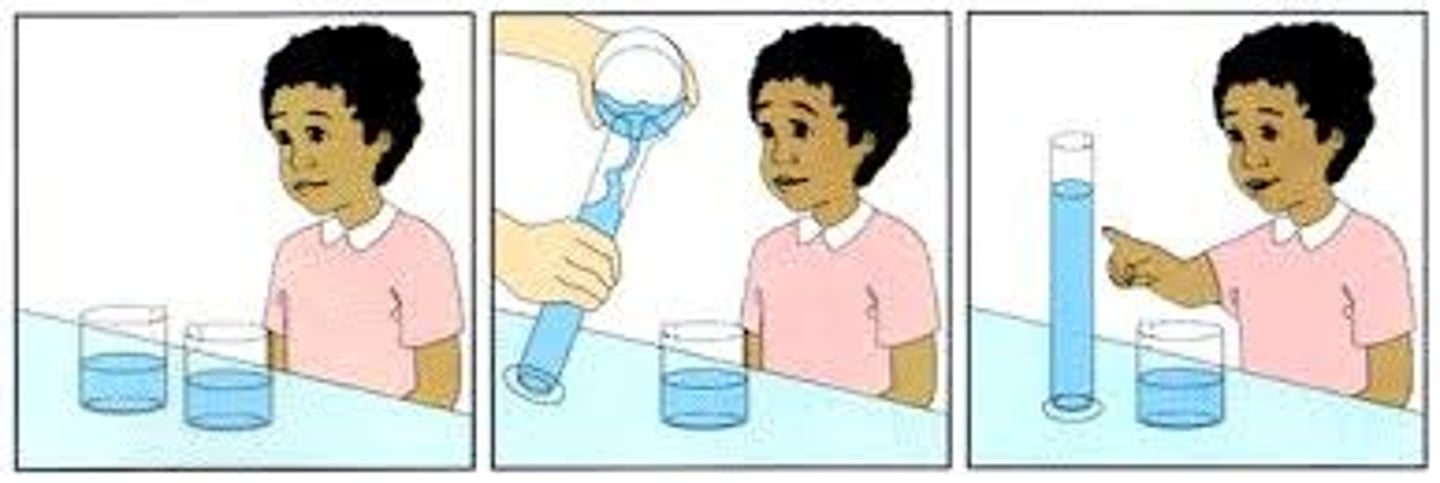
<p>AGE RANGE: 2-7 years</p><p>KEY IDEA: The child uses symbols and language but thinks in a very concrete way.</p><p>EXAMPLE: A child thinks the bigger glass has more juice.</p><p>WHAT THE CHILD CAN DO:</p><p>- Uses words and pictures. Thinks is egocentric (sees things from their own point of view).</p><p>- Has trouble understanding that quantity stays the same (conservation).</p>
50
New cards

CONCRETE OPERATIONAL STAGE

AGE RANGE:7-11 years

KEY IDEA: The child can think logically about concrete events or objects.

EXAMPLE: A child understands that 6+ 2 is the same as 2 + 6

WHAT THE CHILD CAN DO:

- Understands conservation (number, length, weight).

- Can classify, compare, and sort objects.

- Solves problems step by step.
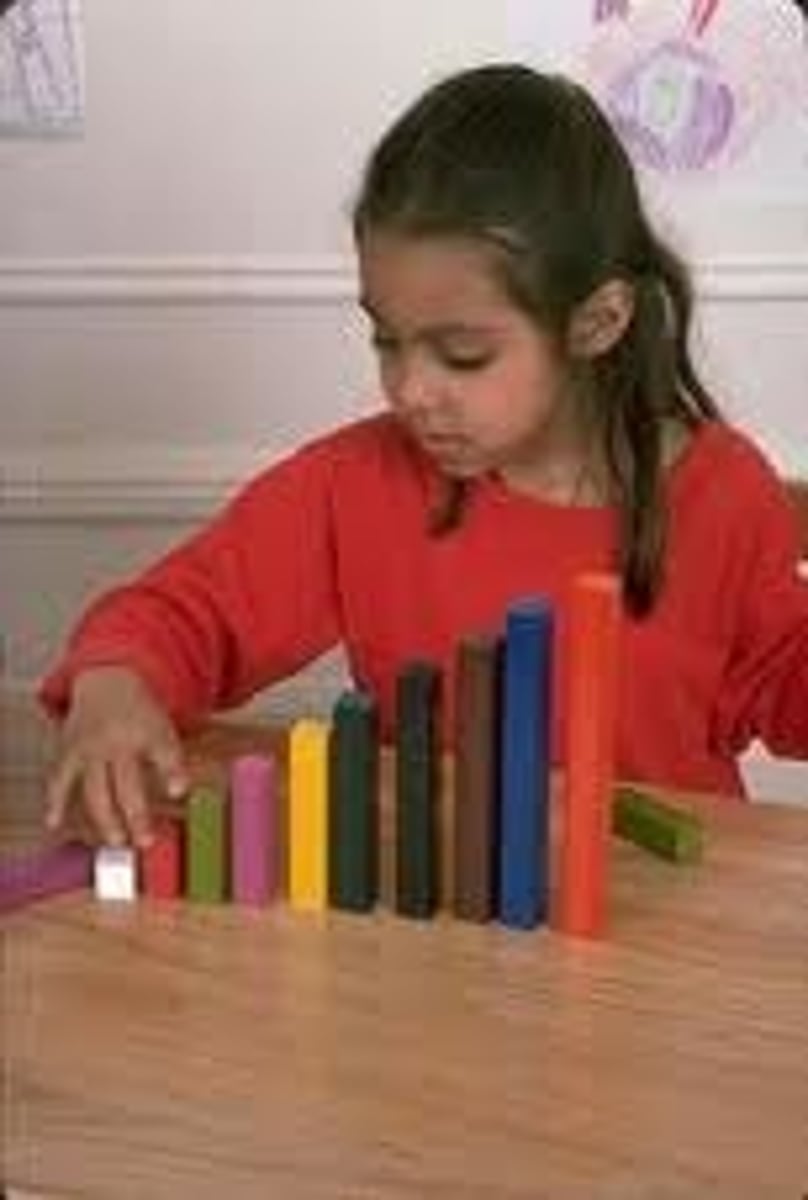
<p>AGE RANGE:7-11 years</p><p>KEY IDEA: The child can think logically about concrete events or objects.</p><p>EXAMPLE: A child understands that 6+ 2 is the same as 2 + 6</p><p>WHAT THE CHILD CAN DO:</p><p>- Understands conservation (number, length, weight).</p><p>- Can classify, compare, and sort objects.</p><p>- Solves problems step by step.</p>
51
New cards

FORMAL OPERATIONAL STAGE

AGE RANGE: 11 years and up

KEY IDEA: The person can think abstractly, reason logically, and consider possibilities.

EXAMPLE: A teen thinks about the future and plans different possibilities.

WHAT THE CHILD CAN DO:

- Thinks about abstract ideas and concepts.

- Uses logic and reasoning.

- Plans for the future and considers many possibilities.
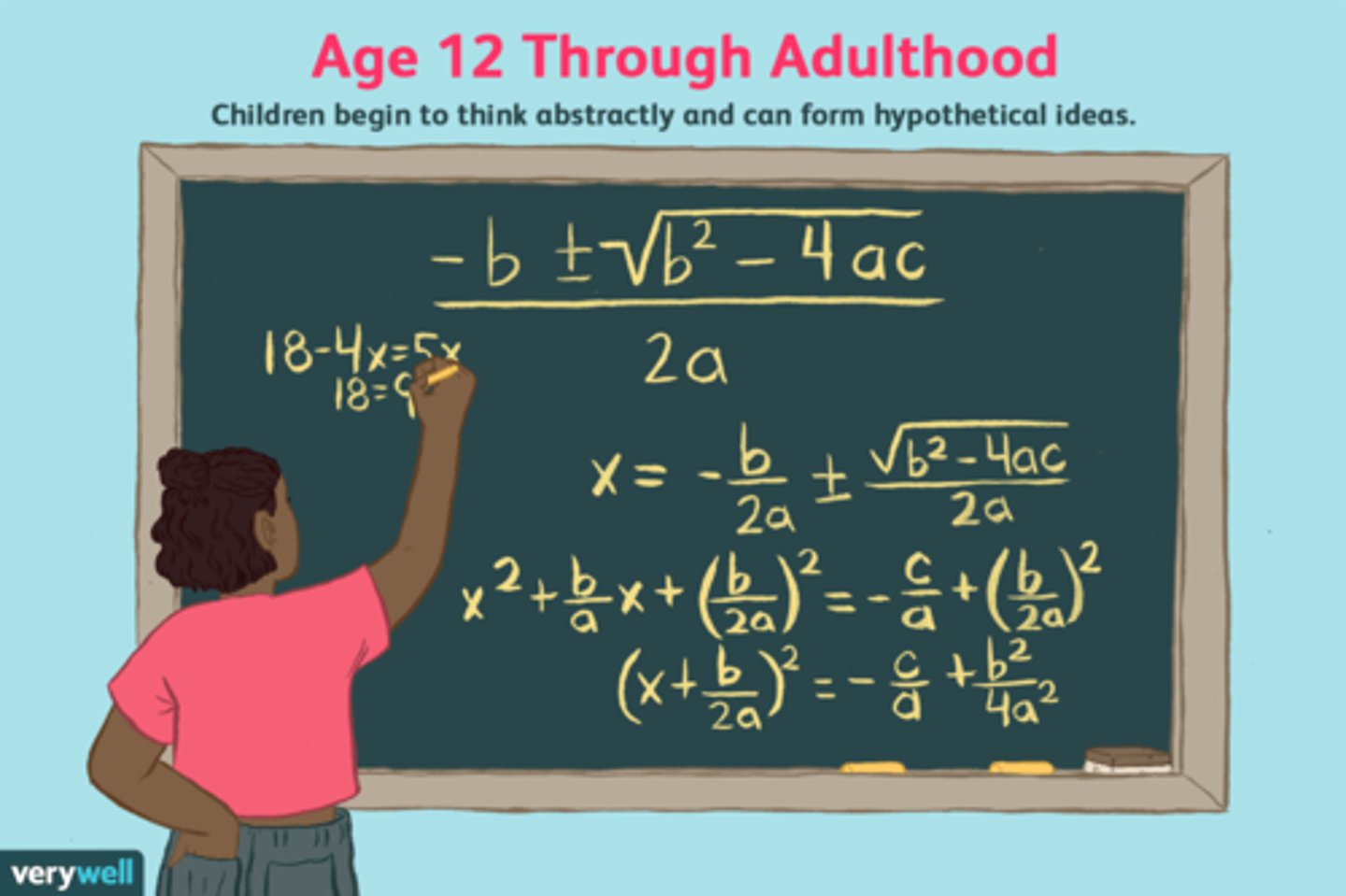
<p>AGE RANGE: 11 years and up</p><p>KEY IDEA: The person can think abstractly, reason logically, and consider possibilities.</p><p>EXAMPLE: A teen thinks about the future and plans different possibilities.</p><p>WHAT THE CHILD CAN DO:</p><p>- Thinks about abstract ideas and concepts.</p><p>- Uses logic and reasoning.</p><p>- Plans for the future and considers many possibilities.</p>
52
New cards

ORGANIZATION

- tendency to create categories, by observing the characteristics that individual members of a category

<p>- tendency to create categories, by observing the characteristics that individual members of a category</p>
53
New cards

ADAPTATION

- Piaget's term for adjustment to new information about the environment, achieved through processes of assimilation and accommodation.

(how your brain adjusts to the outside world when it discovers something brand new. It is like updating the apps on a phone so they can handle new games.)

Example (The Animal Mistake)

Step 1 (Assimilation): A toddler has a mental folder for "Dog" (four legs, furry, barks). One day, they see a Poodle for the first time. They look at it, notice it fits the rules, and say, "Look, a dog!" They successfully fitted the new information into their old folder.

Step 2 (The Mistake): The next day, the toddler sees a Cat for the first time. Because it is furry and has four legs, they mistake it for a dog and yell, "Look, a big dog!"

Step 3 (Accommodation): The child's parent says, "No, that's a cat. It goes meow, and it climbs trees." The toddler's brain now has to use accommodation. It realizes the "Dog" folder is wrong for this animal, so it creates a brand-new mental folder labeled "Cat." Their brain has successfully adapted!
<p>- Piaget's term for adjustment to new information about the environment, achieved through processes of assimilation and accommodation.</p><p>(how your brain adjusts to the outside world when it discovers something brand new. It is like updating the apps on a phone so they can handle new games.)</p><p>Example (The Animal Mistake)</p><p>Step 1 (Assimilation): A toddler has a mental folder for "Dog" (four legs, furry, barks). One day, they see a Poodle for the first time. They look at it, notice it fits the rules, and say, "Look, a dog!" They successfully fitted the new information into their old folder.</p><p>Step 2 (The Mistake): The next day, the toddler sees a Cat for the first time. Because it is furry and has four legs, they mistake it for a dog and yell, "Look, a big dog!"</p><p>Step 3 (Accommodation): The child's parent says, "No, that's a cat. It goes meow, and it climbs trees." The toddler's brain now has to use accommodation. It realizes the "Dog" folder is wrong for this animal, so it creates a brand-new mental folder labeled "Cat." Their brain has successfully adapted!</p>
54
New cards

Schemes or Schemas

- ways of organizing information about the world

- people create increasingly complex cognitive structures
<p>- ways of organizing information about the world</p><p>- people create increasingly complex cognitive structures</p>
55
New cards

ASSIMILATION

- Using what you already know to understand something new.

- The new information is fit into what the child already knows.

- fit new information into what you already know.

Key Points:

- He uses his old knowledge to understand the new thing

- The child does not change his idea.

Example: A toddler has a mental folder for "Dog" (four legs, furry, barks). One day, they see a Poodle for the first time. They look at it, notice it fits the rules, and say, "Look, a dog!" They successfully fitted the new information into their old folder.
<p>- Using what you already know to understand something new.</p><p>- The new information is fit into what the child already knows.</p><p>- fit new information into what you already know.</p><p>Key Points:</p><p>- He uses his old knowledge to understand the new thing</p><p>- The child does not change his idea.</p><p>Example: A toddler has a mental folder for "Dog" (four legs, furry, barks). One day, they see a Poodle for the first time. They look at it, notice it fits the rules, and say, "Look, a dog!" They successfully fitted the new information into their old folder.</p>
56
New cards

ACCOMMODATION

- Changing what you know to understand something new.

- The new information does not fit, so the child changes her understanding.

- Change what you know to understand something new.

Example: A toddler knows only four-legged cats. She sees a raccoon and calls it a "kitty." Her parent corrects her. The toddler adjusts her schema to understand that not all small, four-legged furry animals are cats
<p>- Changing what you know to understand something new.</p><p>- The new information does not fit, so the child changes her understanding.</p><p>- Change what you know to understand something new.</p><p>Example: A toddler knows only four-legged cats. She sees a raccoon and calls it a "kitty." Her parent corrects her. The toddler adjusts her schema to understand that not all small, four-legged furry animals are cats</p>
57
New cards

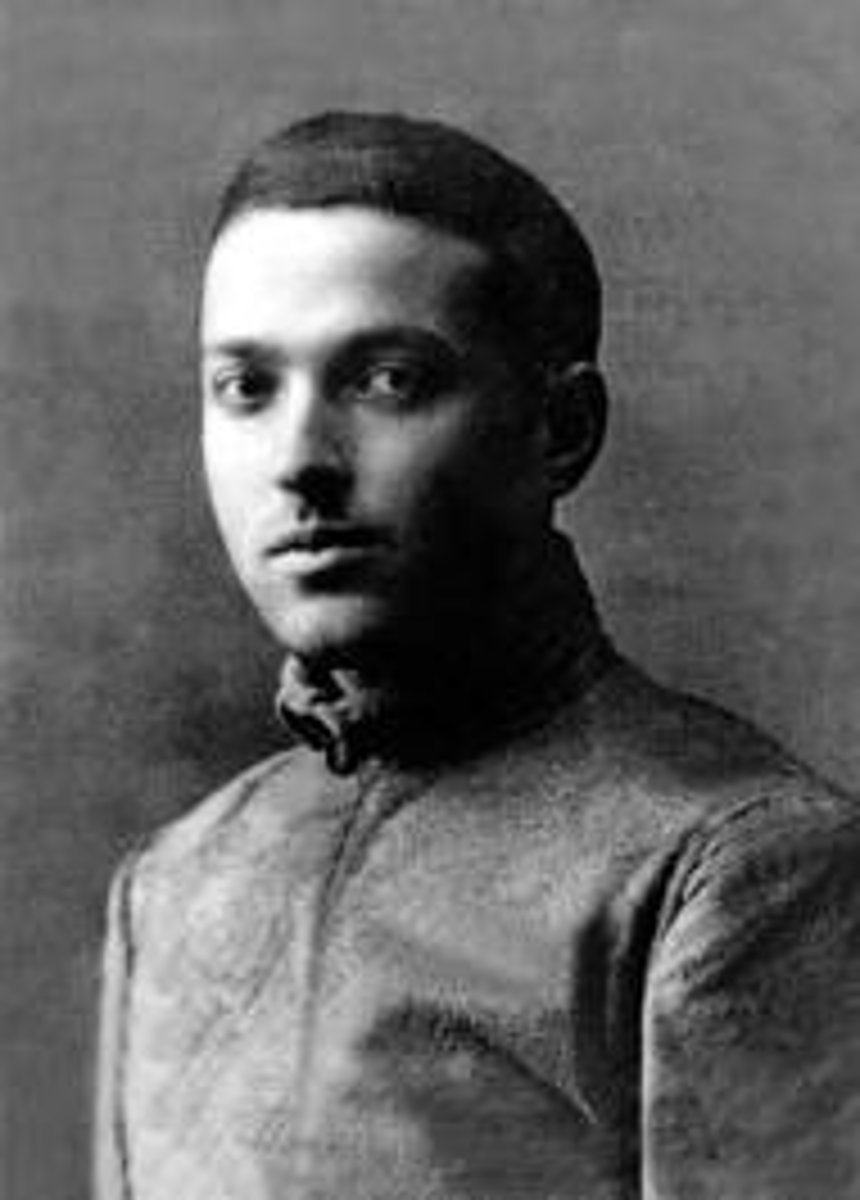
LEV VYGOTSKY

- focused on the social and cultural processes that guide children's cognitive development in his sociocultural theory.
<p>- focused on the social and cultural processes that guide children's cognitive development in his sociocultural theory.</p>
58
New cards

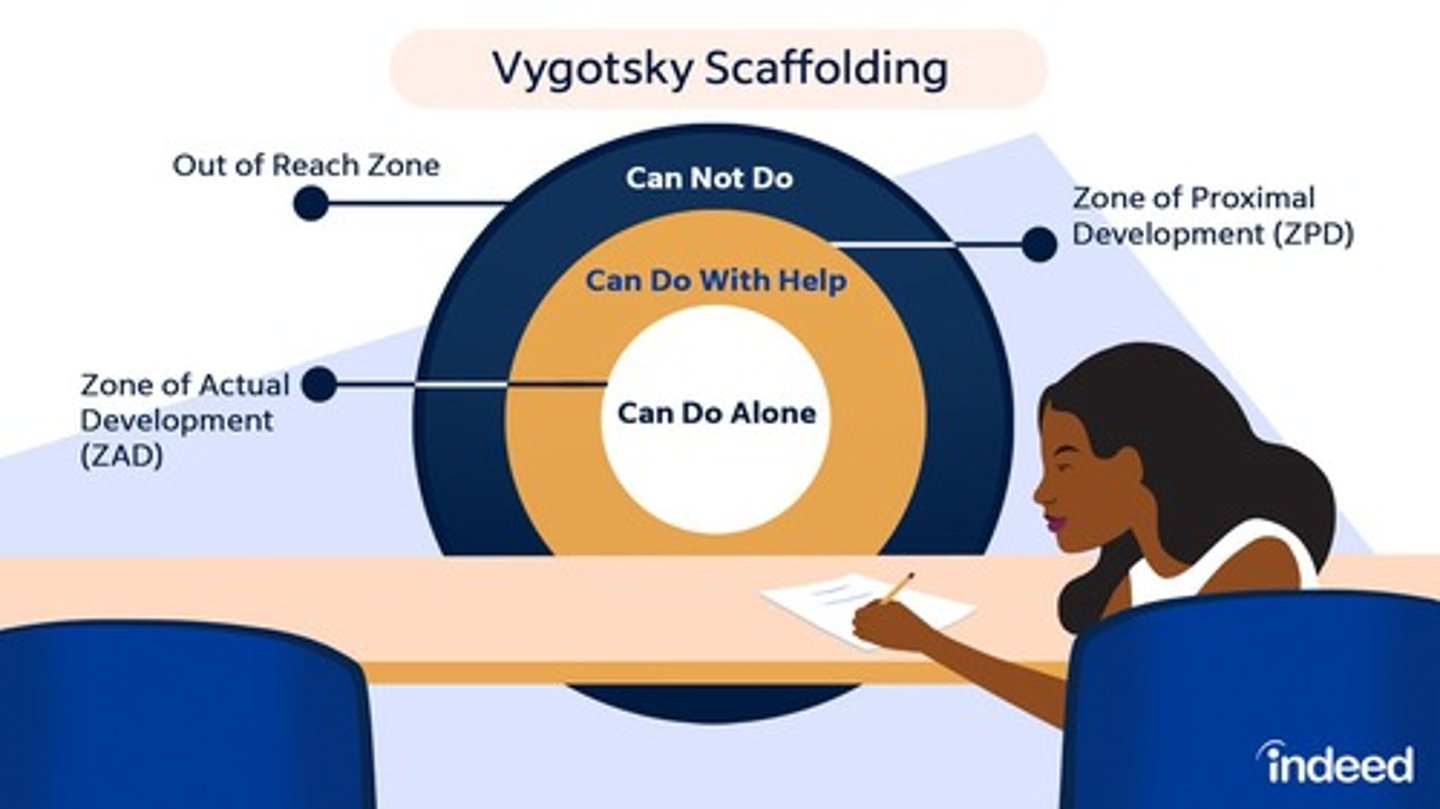
ZONE OF PROXIMAL DEVELOPMENT (ZPD)

- the gap between what they are already able to do by themselves and what they can accomplish with assistance.

EXAMPLE: A child cannot solve a puzzle alone, but can solve it with help from a teacher or parent. The puzzle is in the child's ZPD.

[ Cannot Do Alone ] (Too difficult) ---> [ CAN DO WITH HELP (ZPD) ] (Scaffolding applied) ---> [ Can Do Independently ] (Skill mastered)

<p>- the gap between what they are already able to do by themselves and what they can accomplish with assistance.</p><p>EXAMPLE: A child cannot solve a puzzle alone, but can solve it with help from a teacher or parent. The puzzle is in the child's ZPD.</p><p>[ Cannot Do Alone ] (Too difficult) ---&gt; [ CAN DO WITH HELP (ZPD) ] (Scaffolding applied) ---&gt; [ Can Do Independently ] (Skill mastered)</p>
59
New cards

SCAFFOLDING

- Temporary support to help a child master a task.

- - the help or support guven by the teacher or parent (giving hints, demonstrating first step, asking guide questions, encouraging)

(the parent gradually lets go for longer stretches until the support is no longer needed. Leo has now expanded his independent capabilities.)
<p>- Temporary support to help a child master a task.</p><p>- - the help or support guven by the teacher or parent (giving hints, demonstrating first step, asking guide questions, encouraging)</p><p>(the parent gradually lets go for longer stretches until the support is no longer needed. Leo has now expanded his independent capabilities.)</p>
60
New cards

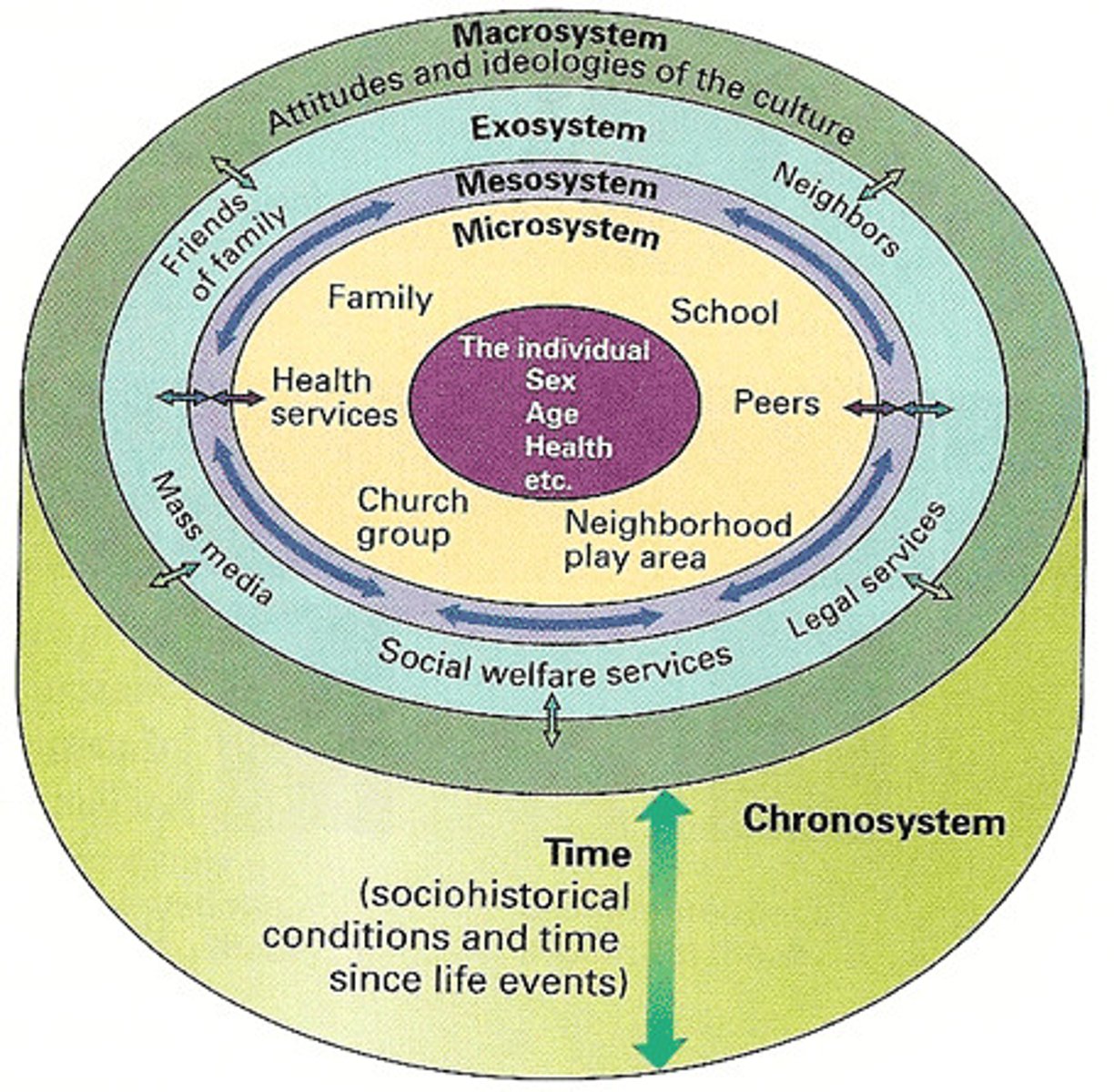
URIE BROFENBRENNER

- approach to understanding processes and contexts of human development that identifies five levels of environmental influence.
<p>- approach to understanding processes and contexts of human development that identifies five levels of environmental influence.</p>
61
New cards

DARWIN'S THEORY

- it draws on findings of anthropology, ecology, genetics, ethology, and evolutionary psychology to explain the adaptive, or survival, value of behavior for an individual or species.

62
New cards

case study

ethnographic study

correlational study

experiment

4 basic research designs:

63
New cards

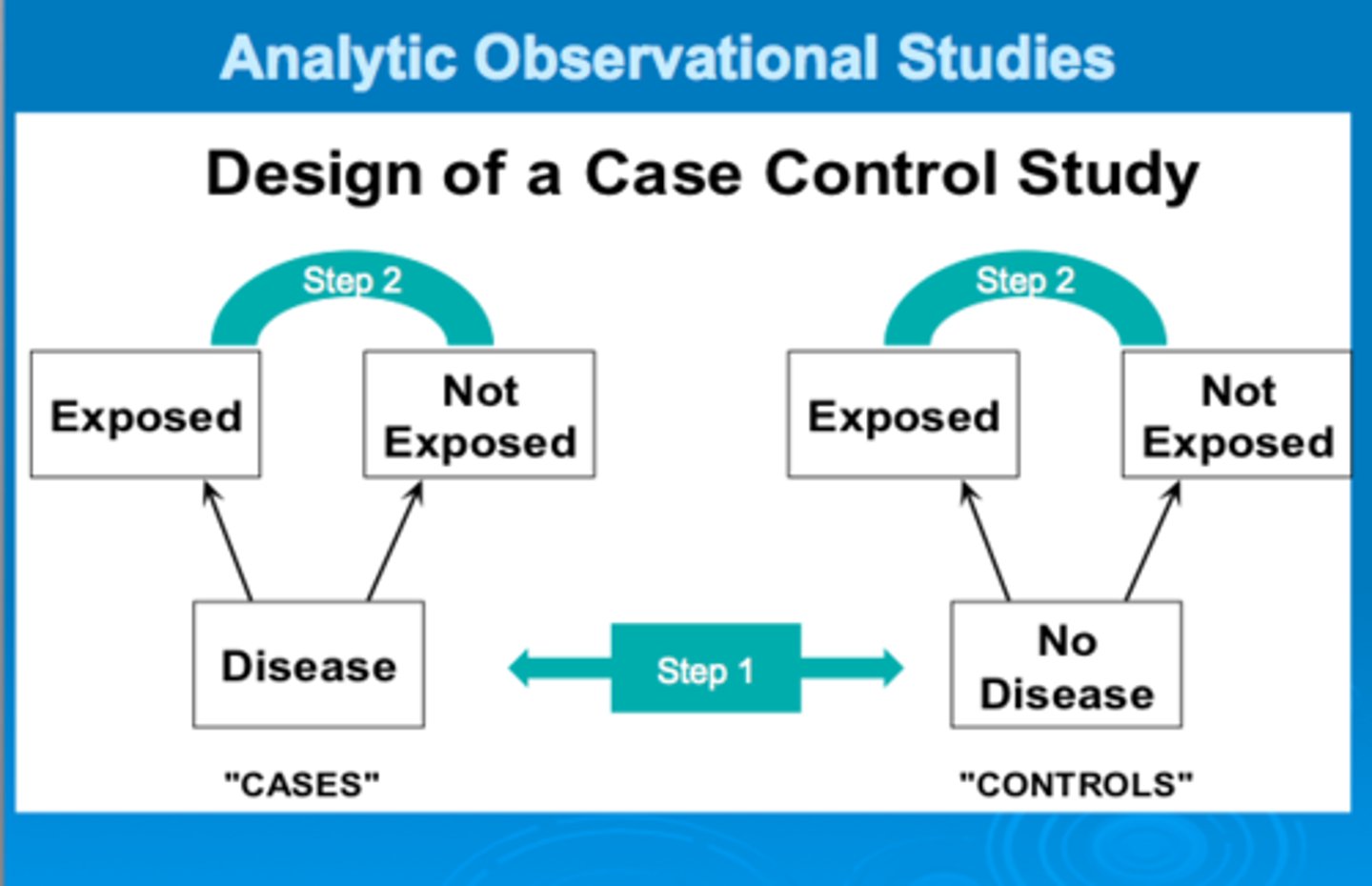
case study

Main Characteristics: In-depth study of a single individual.

Advantages: Detailed behavioral picture; generates hypotheses.

Disadvantages: Cannot generalize; no cause/effect; not directly testable.
<p>Main Characteristics: In-depth study of a single individual.</p><p>Advantages: Detailed behavioral picture; generates hypotheses.</p><p>Disadvantages: Cannot generalize; no cause/effect; not directly testable.</p>
64
New cards

Ethnographic Study

Main Characteristics: In-depth study of a culture or subculture.

Advantages: Overcomes cultural bias; tests universality of phenomena.

Disadvantages: Subject to observer bias.
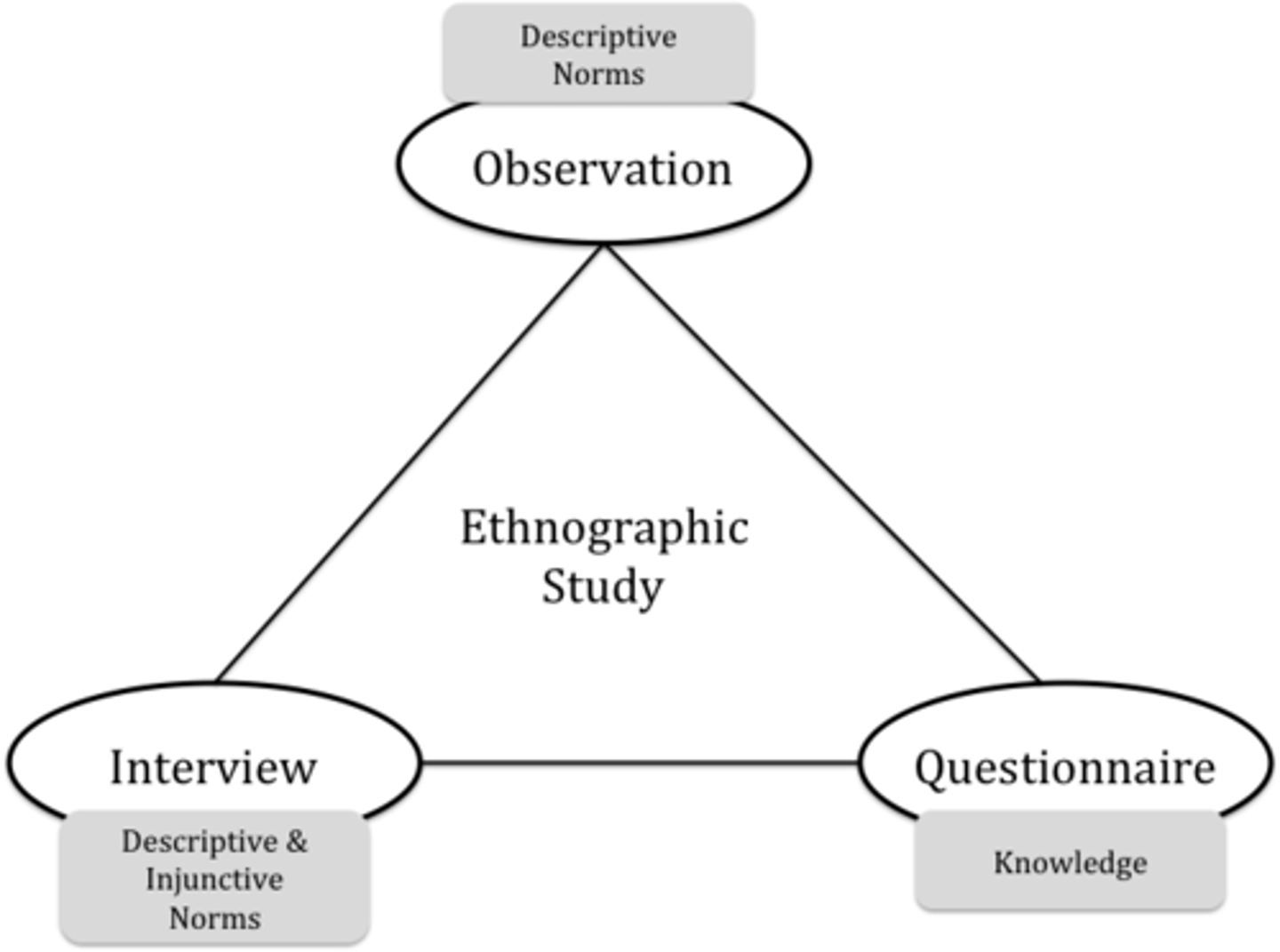
<p>Main Characteristics: In-depth study of a culture or subculture.</p><p>Advantages: Overcomes cultural bias; tests universality of phenomena.</p><p>Disadvantages: Subject to observer bias.</p>
65
New cards

Correlational Study

Main Characteristics: Finds positive or negative relationships between variables.

Advantages: Enables prediction; suggests causal hypotheses.

Disadvantages: Cannot establish cause and effect.
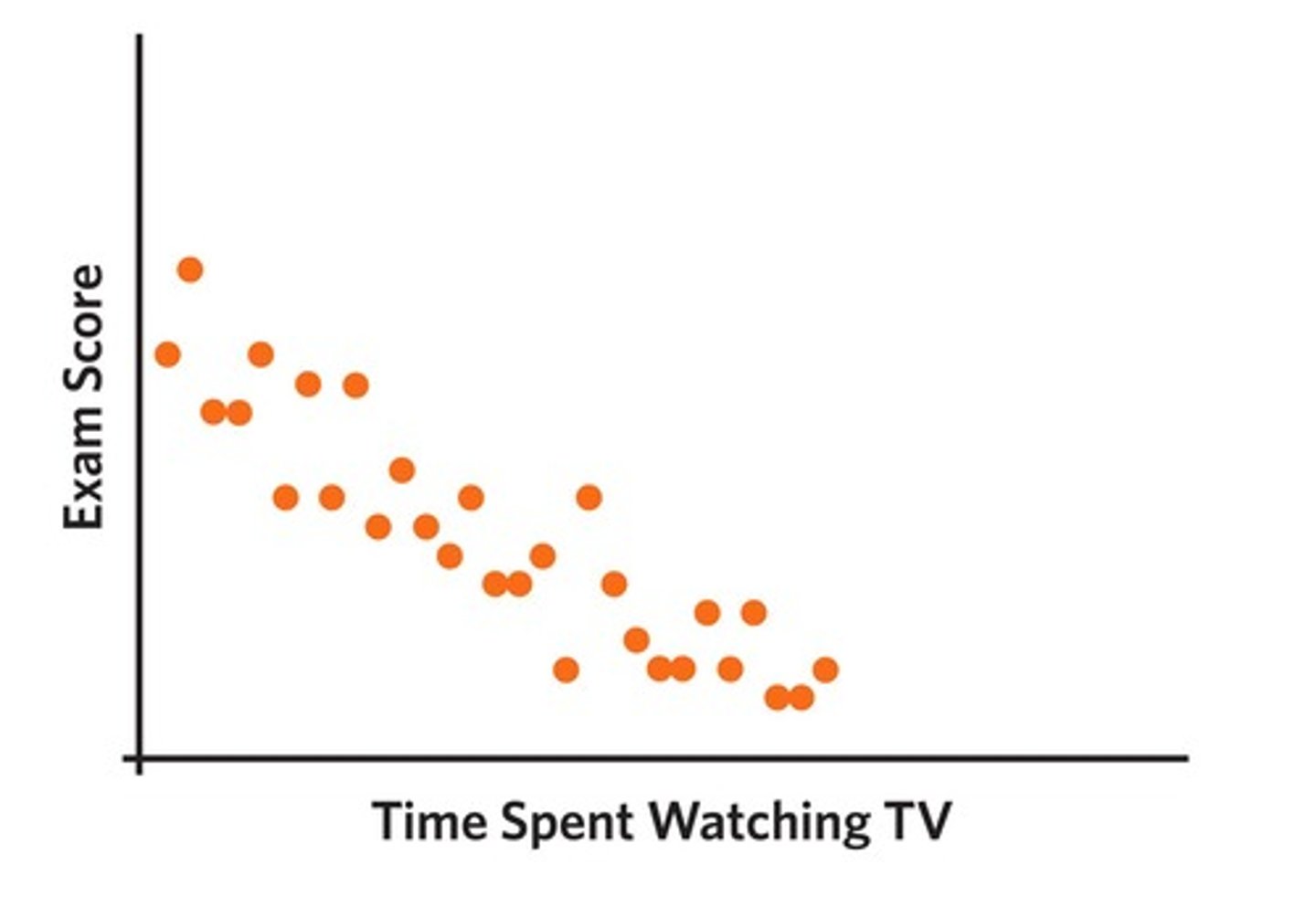
<p>Main Characteristics: Finds positive or negative relationships between variables.</p><p>Advantages: Enables prediction; suggests causal hypotheses.</p><p>Disadvantages: Cannot establish cause and effect.</p>
66
New cards

Experiment

Main Characteristics: Controlled procedure manipulating an independent variable.

Advantages: Establishes cause and effect; highly controlled and repeatable.

Disadvantages: Laboratory findings may not generalize to the real world.
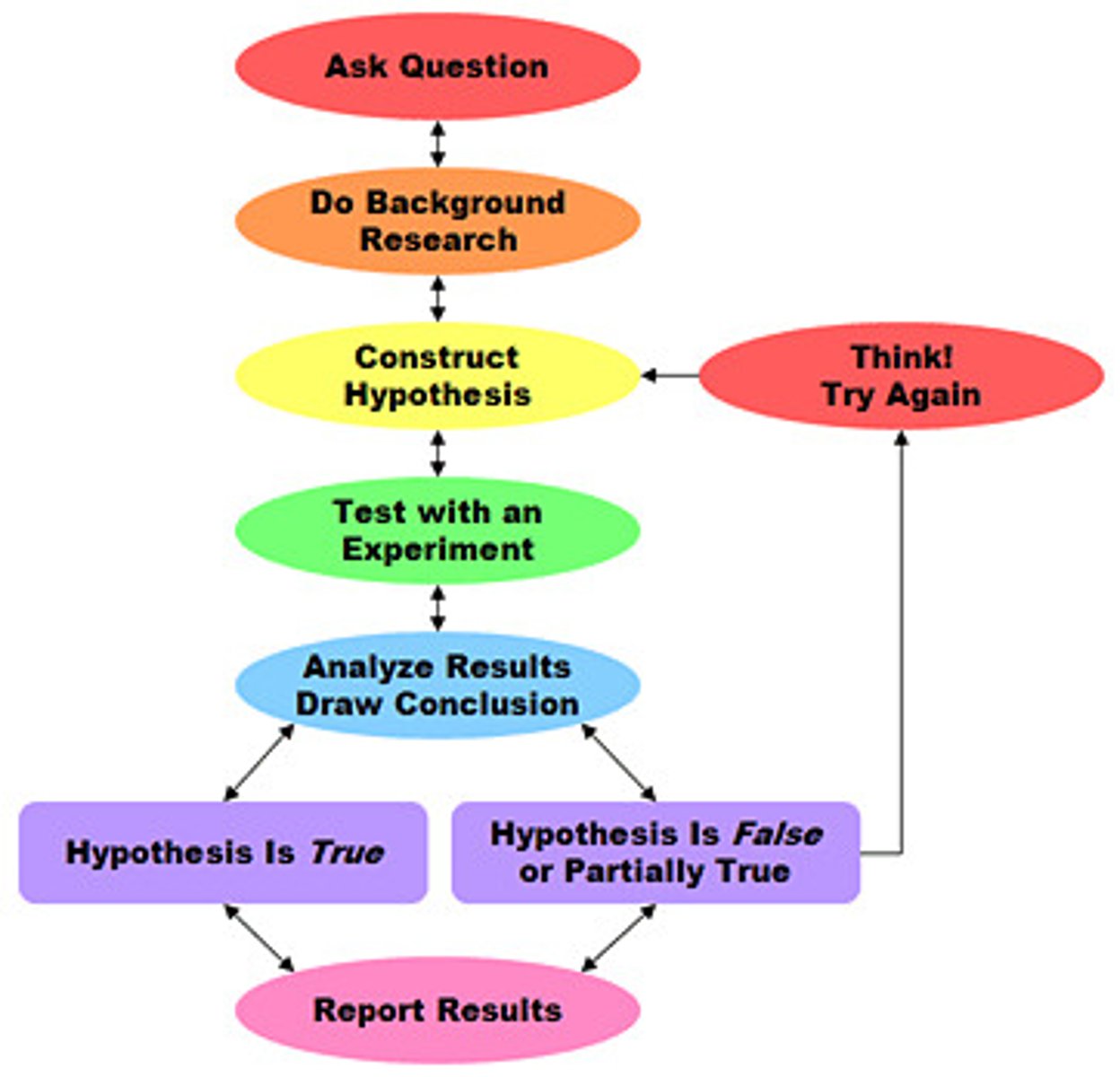
<p>Main Characteristics: Controlled procedure manipulating an independent variable.</p><p>Advantages: Establishes cause and effect; highly controlled and repeatable.</p><p>Disadvantages: Laboratory findings may not generalize to the real world.</p>



