Circulatory System
 Call Kai
 Learn
Learn Practice Test
 Spaced Repetition
 Match
Match Flashcards
 Knowt Play
1/43

There's no tags or description
Looks like no tags are added yet.
Name | Mastery | Learn | Test | Matching | Spaced | Call with Kai | Chat |
|---|
No analytics yet
Send a link to your students to track their progress
44 Terms
Which of the following structures is responsible for protecting, lubricating, and stabilizing the heart?
A.
Pericardium
B.
Atria
C.
Ventricle
D.
Septum
E.
Aorta
Pericardium
Which of the following heart structures typically contains deoxygenated blood?
A.
Left ventricle
B.
Aorta
C.
Right atrium
D.
Pulmonary vein
E.
Left atrium
Right atrium
Which of the following structures prevents backflow of blood between the left atrium and ventricle?
A.
Tricuspid valve
B.
Pulmonary valve
C.
Aortic valve
D.
Mitral valve
Mitral valve/Bicuspid valve
Which of the following sequences correctly describes the order of valves that blood passes through as it flows through the heart?
A.
Mitral valve → Aortic valve → Tricuspid valve → Pulmonary valve
B.
Tricuspid valve → Pulmonary valve → Aortic valve → Mitral valve
C.
Pulmonary valve → Tricuspid valve → Aortic valve → Mitral valve
D.
Tricuspid valve → Pulmonary valve → Mitral valve → Aortic valve
E.
Mitral valve → Tricuspid valve → Pulmonary valve → Aortic valve
Tricuspid valve → Pulmonary valve → Mitral valve → Aortic valve
All of the following animals are correctly paired with their number of heart chambers EXCEPT one. Which one is the EXCEPTION?
A.
Monkey - 4
B.
Hummingbird - 4
C.
Crocodile - 3
D.
Frog - 3
E.
Salmon - 2
Crocodile - 3 - they have 4 chmabers
Which of the following best describes the primary function of capillaries?
A.
Transport oxygenated blood at the highest pressure
B.
Return deoxygenated blood to the heart
C.
The main site for gas exchange between blood and tissues
D.
Actively pump nutrients into the tissues
E.
Synthesize proteins needed by tissues
The main site for gas exchange between blood and tissues
Which of the following structures brings blood to the right atrium?
A.
Pulmonary veins
B.
Tricuspid valve
C.
Pulmonary arteries
D.
Aorta
E.
Superior vena cava
Superior vena cava
Which of the following sequences correctly describes the order of blood flow through the heart?
A.
Right atrium → Left ventricle → Pulmonary circuit → Left atrium → Right ventricle
B.
Right ventricle → Right atrium → Pulmonary circuit → Left atrium → Left ventricle
C.
Right atrium → Right ventricle → Pulmonary circuit → Left atrium → Left ventricle
D.
Right atrium → Right ventricle → Pulmonary circuit→ Left ventricle → Left atrium
E.
Right atrium → Pulmonary circuit → Right ventricle → Left atrium → Left ventricle
Right atrium → Right ventricle → Pulmonary circuit → Left atrium → Left ventricle
Which of the following structures contains the lowest O2 concentration?
A.
Pulmonary arteries
B.
Pulmonary veins
C.
Aorta
D.
Left Atrium
E.
Right Atrium
Pulmonary arteries
Which of the following is the correct order of structures that blood passes through after leaving the aorta?
A.
Pulmonary arteries → Capillaries → Pulmonary veins
B.
Systemic arteries → Capillaries → Systemic veins
C.
Right Atrium → Right Ventricle → Capillaries → Left Atrium → Left Ventricle
D.
Left Atrium → Left Ventricle → Capillaries → Right Atrium → Right Ventricle
E.
Systemic veins → Capillaries → Systemic arteries
Systemic arteries → Capillaries → Systemic veins
Which anatomical structure in the heart initiates the coordinated contraction of the cardiac muscles?
A.
Atrioventricular node
B.
Bundle of His
C.
Purkinje fibers
D.
Sinoatrial node
E.
Aorta
Sinoatrial node
Which of the following is the correct order of the electrical conduction pathway within the heart?
A.
AV node → SA node → Purkinje fibers → Bundle of His
B.
SA node → AV node → Purkinje fibers → Bundle of His
C.
SA node → AV node → Bundle of His → Purkinje fibers
D.
Bundle of His → Purkinje fibers → AV node → SA node
E.
AV node → SA Node → Bundle of His → Purkinje fibers
SA node → AV node → Bundle of His → Purkinje fibers
In an electrocardiogram (EKG), what does the ‘QRS’ complex represent?
A.
Ventricular repolarization
B.
Atrial repolarization
C.
Ventricular depolarization
D.
Atrial depolarization
E.
Purkinje fiber repolarization
Ventricular depolarization
Which of the following would increase blood pressure?
A.
Decreasing the heart rate
B.
Decreasing the cardiac output
C.
Decreasing the stroke volume
D.
Decreasing the viscosity of the blood
E.
Decreasing the diameter of the blood vessels
Decreasing the diameter of the blood vessels - BP = cardiac output (CO) x systemic vascular resistance (SVR). Decreasing the diameter of the blood vessels would result in a higher SVR and increased blood pressure.
Which of the following is likely to occur as a result of a higher stroke volume?
A.
Lower systemic vascular resistance
B.
Increased cardiac output
C.
Increased heart rate
D.
Decreased blood pressure
E.
Decreased heart rate
Increased cardiac output - The stroke volume (SV) is the total amount of blood that gets pushed out of the ventricles and is found using the equation SV = EDV (before contraction) – ESV (after contraction).
Cardiac output (CO) is the volume of blood discharged from both ventricles each minute. It is represented by the equation CO = SV x Heart Rate (contractions per minute).
All of the following are true of arterioles EXCEPT one. Which one is the EXCEPTION?
A.
Carries oxygenated blood away from the heart
B.
Have a smooth muscle layer
C.
Can constrict and dilate
D.
Regulate blood pressure
E.
Have valves to prevent blood backflow
Have valves to prevent blood backflow
Which of the following blood vessels have the greatest total surface area and cross-sectional area?
A.
Arteries
B.
Veins
C.
Arterioles
D.
Capillaries
E.
Venules
Capillaries
Which of the following best describes oncotic pressure?
A.
The pressure exerted by proteins in the blood that helps maintain fluid balance
B.
The high pressure of the fluid against the internal vessel walls resulting in filtration
C.
The equilibrium pressure where there is no net movement
D.
The pressure created by precapillary sphincters contracting
E.
The pressure exerted by the red blood cells that help regulate filtration
The pressure exerted by proteins in the blood that helps maintain fluid balance
At the arteriole end of the capillaries, there is ___________ of fluid.
A.
Increased oncotic pressure
B.
No net movement
C.
Net filtration
D.
Decreased hydrostatic pressure
E.
Net reabsorption
Net filtration
Which of the following best describes the function of precapillary sphincters?
A.
Direct blood flow accords with the body’s needs
B.
Prevent the backflow of blood from arteries to veins
C.
Facilitate the exchange of oxygen and carbon dioxide in the lungs
D.
Directly regulate blood pressure
E.
Increases the heart rate by adjusting the flow of blood back to the heart
Direct blood flow accords with the body’s needs
Which of the following best describes the function of the placenta in fetal development?
A.
Synthesizes essential amino acids for the fetus
B.
Facilitates the exchange of nutrients, gasses, and waste between the mother and fetus
C.
Provides oxygenation from the fetus for the maternal blood
D.
Stores deoxygenated blood and waste for the fetus to recycle
E.
Creates red blood cells for the fetus to develop
Facilitates the exchange of nutrients, gasses, and waste between the mother and fetus
If the foramen ovale fails to close long after birth, which of the following is most likely to occur?
A.
Reduced blood flow to the lower body
B.
Oxygenated blood will continue to bypass the liver
C.
Increased blood flow to the lungs
D.
Mixing of oxygenated and deoxygenated blood between atriums
E.
Higher blood pressure in the veins
Mixing of oxygenated and deoxygenated blood between atriums
Which of the following structures allows fetal circulation to bypass the liver by connecting the umbilical vein to the inferior vena cava?
A.
Ductus arteriosus
B.
Umbilical artery
C.
Ligamentum venosum
D.
Foramen ovale
E.
Ductus venosus
Ductus venosus
Which two structures are linked by the ductus arteriosus?
A.
Umbilical vein and inferior vena cava
B.
Right atrium and pulmonary artery
C.
Pulmonary artery and left ventricle
D.
Pulmonary artery and aorta
E.
Right atrium and left atrium
Pulmonary artery and aorta
Which of the following structures carries waste and deoxygenated blood away from the fetus?
A.
Umbilical artery
B.
Kidneys
C.
Ductus venosus
D.
Umbilical Vein
E.
Liver
Umbilical artery
Which of the following can be altered in order to effectively adjust blood pressure?
A.
Number of cardiac muscle cells
B.
Cell membrane composition
C.
Increased platelet production
D.
Diameter of nervous tissue in blood vessel walls
E.
Blood volume
Blood volume - An increase in blood volume increases blood pressure, while a decrease lowers blood pressure.
All of the following would increase blood pressure EXCEPT one. Which one is the EXCEPTION?
A.
Increasing blood volume
B.
Increasing excretion
C.
Increasing plaque buildup in arteries
D.
Increasing heart rate
E.
Epinephrine causing vasoconstriction
Increasing excretion
Which of the following structures has the lowest blood pressure?
A.
Arterioles
B.
Veins
C.
Capillaries
D.
Venules
E.
Arteries
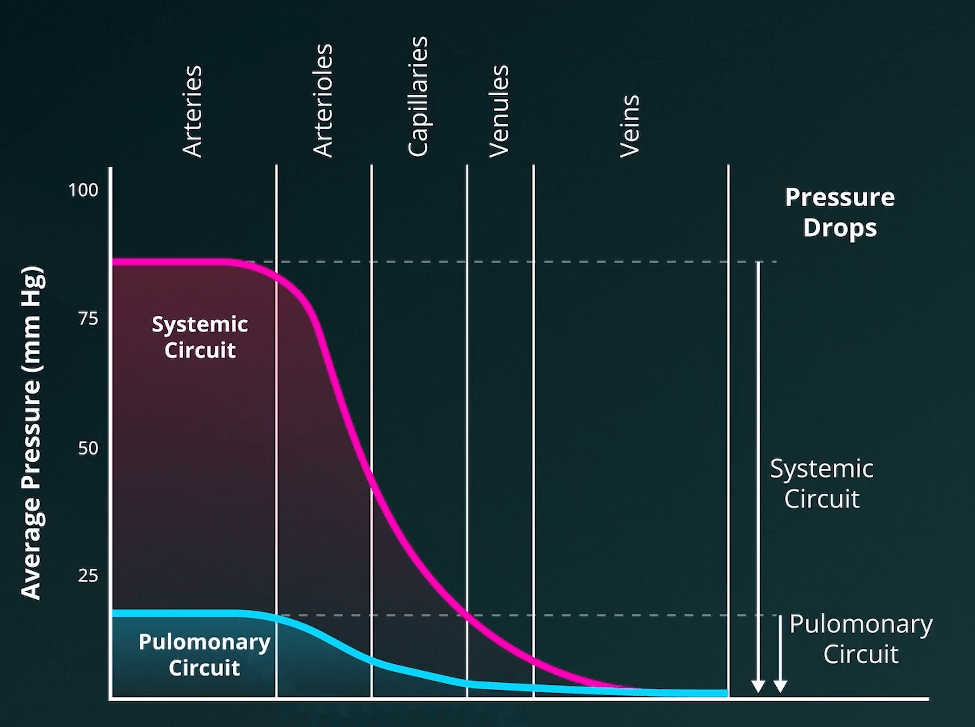
Veins
Which type of tissue classification does blood belong to?
A.
Connective
B.
Epithelial
C.
Muscle
D.
Nervous
E.
Endocrine
Connective
All of the following are components of plasma in blood EXCEPT one. Which one is the EXCEPTION?
A.
Antibodies
B.
Hormones
C.
Proteins
D.
Platelets
E.
Salts
Platelets
What are the glycoproteins found on the surface of a red blood cell that can trigger an immune response?
A.
Myoglobin
B.
Antibodies
C.
Cholesterol
D.
Antigens
E.
Hemoglobin
Antigens
Which type of antibodies does an individual with type B blood produce?
A.
Anti-A
B.
Anti-B
C.
Anti-O
D.
Anti-A and Anti-B
E.
No antibodies
Anti-A
Which of the following (donor → recipient) blood transfusions will result in agglutination?
A.
Type O → Type AB
B.
Type A → Type AB
C.
Type B → B
D.
Type AB → A
E.
Type O → Type A
Type AB → A - Agglutination is a reaction where particles in a liquid clump together when antigens are surrounded by multiple antibodies. This reaction occurs when incompatible blood types are mixed, resulting in an immune reaction between the antibodies and antigens present.
A donor with type AB blood carries both A and B antigens. If the recipient has type A blood, they possess A antigens and produce anti-B antibodies. Therefore, if type AB blood is transfused into a recipient with Type A blood, agglutination will occur. This is because the recipient's anti-B antibodies will attack the B antigens present in the donor's AB blood.
Which of the following blood types can be safely transfused into an individual with type B- -blood?
A.
B+
B.
AB+
C.
O-
D.
O+
E.
AB-
O- - An individual with type B- blood has type B antigens on their red blood cells but lacks Rh antigens, indicating they are Rh-negative. Therefore, they can accept blood from donors who are either B- or O-.
A father has type AB blood, and the mother has type O blood. What is the probability that their child will have type O blood?
A.
0%
B.
25%
C.
50%
D.
75%
E.
100%
0%
All of the following are true statements about erythrocytes EXCEPT one. Which one is the EXCEPTION?
A.
Have a biconcave shape to increase their surface area
B.
Contains hemoglobin that transports oxygen throughout the body
C.
Contains ribosomes to produce hemoglobin
D.
The most abundant cell type in blood
E.
Very flexible to fit through small vessels
Contains ribosomes to produce hemoglobin
Which of the following molecules is primarily responsible for buffering the pH range in the blood plasma?
A.
Carbon dioxide
B.
Hydrogen ions
C.
Phosphate
D.
Bicarbonate
E.
Oxygen
Bicarbonate
Which of the following is the primary function of the enzyme carbonic anhydrase?
A.
Lower blood pH by increasing proton release from hemoglobin
B.
Trigger hemoglobin to release oxygen to specific tissues in need
C.
Catalyze the reaction that regulates the intracellular phosphate buffering system
D.
Directly neutralize the acidic compounds in the blood
E.
Regulate pH balance by catalyzing the conversion of carbon dioxide and water into carbonic acid
Regulate pH balance by catalyzing the conversion of carbon dioxide and water into carbonic acid
Which type of junction does the blood-brain barrier consist of?
A.
Tight junction
B.
Gap junction
C.
Synapse
D.
Plasmodesmata
E.
Desmosome
Tight junction
All of the following molecules could cross the semipermeable blood-brain barrier EXCEPT one. Which one is the EXCEPTION?
A.
Oxygen
B.
Albumin
C.
Carbon dioxide
D.
Cortisol
E.
Vitamin D
Albumin - The blood-brain barrier allows water, some gasses, small lipid-soluble molecules (steroid hormones), and fat-soluble vitamins to pass.
When a blood vessel breaks, which of the following is first to the site of injury?
A.
Clotting factors
B.
Prothrombin
C.
Fibrin
D.
Thrombin
E.
Platelets
Platelets
Which of the following best describes the positive feedback mechanism seen in blood clotting?
A.
Breaks in blood vessels are eventually repaired to minimize blood loss
B.
The formation of thrombin increases its own production by activating more clotting factors that convert prothrombin to thrombin
C.
Fibrinogen is converted into fibrin, which in turn promotes further production of fibrinogen
D.
Platelets, once activated, release substances that inhibit further platelet aggregation to control the clot size
The formation of thrombin increases its own production by activating more clotting factors that convert prothrombin to thrombin
Which enzyme catalyzes the conversion of fibrinogen into fibrin?
A.
Platelets
B.
Prothrombin
C.
Thrombin
D.
Fibrinase
E.
Hemoglobin
Thrombin
How are leeches used in medical treatments?
A.
Provide local anesthesia during minor surgeries
B.
Increase the strength of fibrin
C.
Prevent blood clots and improve blood circulation
D.
Provide antibodies to an infection
E.
Serve as a diagnostic tool for detecting blood clots
Prevent blood clots and improve blood circulation